Waltey
Zgodba o najstarejšem bratu
Tisoč in ena noč · arabska pripovedna tradicijaO besedilu
Zgodba o najstarejšem bratu
- Vir
- Tisoč in ena noč
- Avtor
- arabska pripovedna tradicija
- Jezik branja
- English
- Jezik izvirnika
- Arabic
- Čas branja
- 6 min branja
- Obseg
- 5 strani
- Naslov izvirnika
- حكاية الأخ الأكبر - الليلة ٣٠
O izvirniku
Tisoč in ena noč
Zgodbe v zgodbah, polne trgovcev, dvorov, preoblek in nočnih zapletov. Bralni jezik je English, izvirnik pa prihaja iz vira Tisoč in ena noč v jeziku Arabic.
Besedilo
Zgodba o najstarejšem bratu
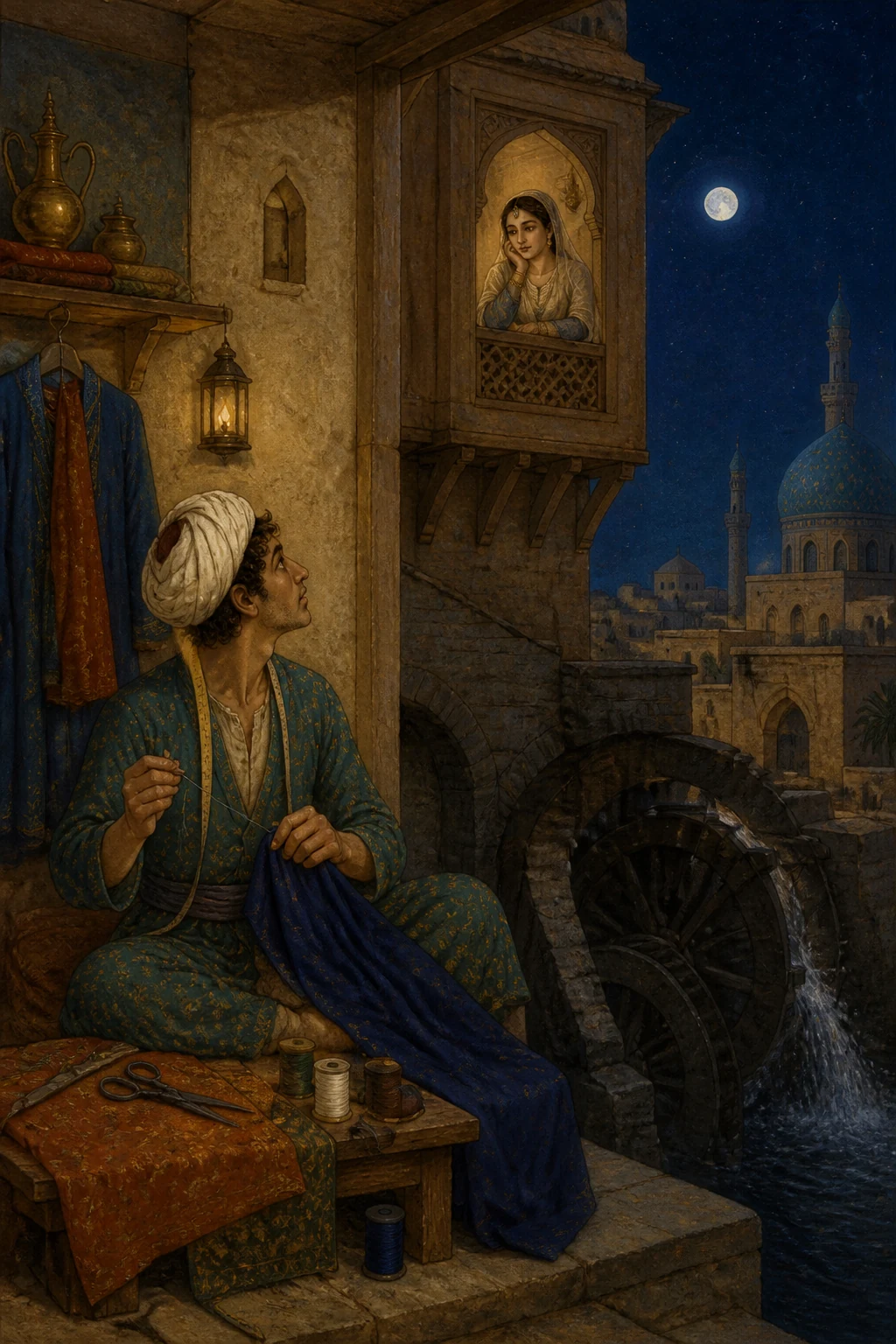
Know, then, O Commander of the Faithful, that my first brother, the lame one, was a tailor in Baghdad. He worked in a shop he had rented from a wealthy man who lived above it, and on the ground floor of the man’s house there was a mill. One day, as my lame brother sat sewing in his shop, he raised his head and saw a woman as lovely as the rising full moon at the projecting window of the house, looking out at the passersby. The moment he saw her, his heart was caught in the snares of love, and he spent the whole day gazing at her, neglecting his sewing until evening. The next morning he opened his shop and sat down to work, but with every stitch he glanced up at the window. He went on in this way for some time, scarcely sewing anything worth a dirham. Then one day the owner of the house came to my brother with some cloth and said, “Cut this out for me and make it into shirts.” “I hear and obey,” replied my brother. He kept cutting until, by nightfall, he had cut out twenty shirts, without tasting a morsel of food. Then the man asked him, “What is your charge?” My brother said nothing, for the young woman signaled to him with her eyes to take no payment. Though he sorely needed even a single copper coin, he spent three days eating and drinking next to nothing, so hard did he labor at the sewing. When he had finished their work, he brought them the shirts. The young woman had told her husband of my brother’s infatuation, though my brother knew nothing of this, and the two had agreed to make him sew for them without pay and amuse themselves at his expense.
When my brother had finished all their work, they played a trick on him and married him to their slave girl. On the night when he was to go in to his bride, they told him, “Spend tonight in the mill. Tomorrow all will be well.” Believing that they meant him well, my brother spent the night alone in the mill. The young woman’s husband went and gave the miller a hint that he should make my brother turn the mill. At midnight the miller came in, saying, “This ox is doing no work, though there is so much wheat, and the customers are asking for their flour. I shall harness him to the mill until all the wheat is ground.” So he harnessed my brother to the mill and kept him at it until nearly dawn. Then the owner of the house came, saw my brother harnessed to the mill while the miller lashed him with a whip, and went away, leaving him there. Early that morning, the slave girl whom my brother had married came and released him from the mill. “My mistress and I were deeply distressed by what happened to you,” she said, “and we have been very worried about you.” He had been so badly beaten that he could not find his tongue to answer her. He returned home, and there the sheikh who had drawn up the marriage contract came and greeted him, saying, “God give you life! May your marriage be blessed! You must have passed the night in bliss and delight, embracing your bride from evening until morning.” My brother replied, “May God grant no peace to a liar, you thousandfold pimp! By God, I came only to grind in place of the ox until morning.” “Tell me what happened,” said the sheikh. My brother told him the whole story, and the sheikh said, “Your star was not in accord with hers. But if you wish, I can alter the marriage contract and draw up a better one, so that your star will agree with hers.” My brother said, “See whether you have any other trick left to play.”
Then my brother left him and went to his shop, hoping someone would bring him work whose wages would buy him food. Presently the slave girl came to him, having plotted this new trick with her mistress, and said, “My mistress longs for you. She has gone upstairs to look at your face from the window.” Before my brother knew it, the lady appeared at the window, weeping and saying, “Why have you broken off all dealings with us?” He gave her no answer, so she swore that everything that had happened to him in the mill had been against her wishes. When my brother looked upon her loveliness and beauty, he forgot all he had suffered, accepted her excuse, and rejoiced to see her. He greeted her and spoke with her, then sat at his sewing for a while. Afterward the slave girl came to him and said, “My mistress sends you greetings and says that her husband intends to spend tonight with some friends. Once he has gone to them, you can come to our house and pass the night with my mistress in the sweetest pleasure until morning.” Now her husband had said to her, “How shall we arrange for him to come to you, so that I can seize him and drag him before the governor?” She had replied, “Leave me to devise a trick that will disgrace him and make him notorious throughout this city.” But my brother knew nothing of women’s wiles.
When evening came, the slave girl went to my brother and brought him back to her mistress, who said to him, “By God, my dear sir, I have longed for you so much!” “For God’s sake,” he replied, “make haste and give me a kiss before anything else.” Scarcely had he finished speaking when the young woman’s husband appeared from his neighbor’s house, seized my brother, and said, “By God, I will not let you go until we stand before the chief of police!” My brother pleaded with him, but he would not listen. Instead, he took him to the governor’s house, where the governor had him whipped, mounted him on a camel, and paraded him through the streets of the city while people cried out, “This is the reward of anyone who intrudes upon another man’s women!” He fell from the camel and broke his leg, and so became lame. Then the governor banished him from the city, and he set out with no idea where to go. I was so distressed that I went after him and brought him back, and I have provided him with food and drink ever since.
The caliph laughed at my tale and said, “Well done!” But I replied, “I cannot accept this honor from you unless you listen while I tell you what happened to the rest of my brothers. And do not think me a man of many words.” The caliph said, “Tell me what happened to all your brothers. Delight my ears with these charming tales, and spare no detail in recounting such amusing adventures.”
Izvirnik
حكاية الأخ الأكبر - الليلة ٣٠
Naslednje strani prikazujejo izvirno besedilo za primerjavo.
فلما كانت الليلة ٣٠
فاعلم يا أمير المؤمنين أن الأول وهو الأعرج كان صنعته الخياطة ببغداد، فكان يخيط في دكان استأجرها من رجل كثير المال، كان ذلك الرجل ساكنًا على الدكان، وكان في أسفل دار الرجل طاحون، فبينما أخي الأعرج جالس في الدكان في بعض الأيام يخيط، إذ رفع رأسه فرأى امرأة كالبدر الطالع في روشن الدار، وهي تنظر إلى الناس، فلما رآها أخي تعلَّق قلبه بحبها، وصار يومه ذلك ينظر إليها، وترك اشتغاله بالخياطة إلى وقت المساء. فلما كان وقت الصباح فتح دكانه وقعد يخيط، وهو كلما غرز غرزة ينظر إلى الروشن، فمكث على ذلك مدة لم يخِطْ شيئًا يساوي درهمًا؛ فاتفق أن صاحب الدار جاء إلى أخي يومًا من الأيام ومعه قماش، وقال له: فصِّلْ لي هذا، وخيِّطه أقمصة. فقال أخي: سمعًا وطاعة. ولم يزل يفصِّل حتى فصَّل عشرين قميصًا إلى وقت العشاء، وهو لم يَذُقْ طعامًا. ثم قال له: كم أجرة ذلك؟ فلم يتكلَّمْ أخي، فأشارَتْ إليه الصبيَّة بعينها لا تأخذ منه شيئًا. وكان محتاجًا إلى فلس، واستمر ثلاثة أيام لا يأكل ولا يشرب إلا القليل بسبب اجتهاده في تلك الخياطة، فلما فرغ من الخياطة التي لهم أتى إليهم بالأقمصة، وكانت الصبية قد عرَّفت زوجَها بحال أخي، وأخي لا يعلم ذلك، واتفقت هي وزوجها على استعمال أخي في الخياطة بلا أجرة، بل يضحكون عليه.
فلما فرغ أخي من جميع أشغالهما، عمِلَا عليه حيلةً، وزوَّجاه بجاريتهما، وليلةَ أراد أن يدخل عليها قالَا له: بِتِ الليلةَ في الطاحون إلى غدٍ يكون خيرًا. فاعتقد أخي أن لهما قصدًا صحيحًا، فبات في الطاحون وحده، وراح زوج الصبية غمز الطحان عليه حتى إنه يدوِّره في الطاحون، فدخل عليه الطحان في نصف الليل، وجعل يقول: إن هذا الثور بطال مع أن القمح كثير، وأصحاب الطحين يطلبونه، فأنا أعلقه في الطاحون حتى يخلص طحين القمح. فعلَّقه في الطاحون إلى قريب الصبح، فجاء صاحب الدار فرأى أخي معلَّقًا في الطاحون، والطحان يضربه بالسوط، فتركه ومضى، وبعد ذلك جاءت الجارية التي عقد عليها، وكان مجيئها في بكرة النهار، فحَلَّتْه من الطاحون وقالت: قد شَقَّ عليَّ وعلى سيدتي ما جرى لك، وقد حملنا همك. فلم يكن له لسان يرد جوابًا من شدة الضرب، ثم إن أخي رجع إلى منزله، وإذا بالشيخ الذي كتب الكتاب قد جاء وسلَّمَ عليه، وقال له: حيَّاك الله، زواجك مبارك، إنك بِتَّ الليلةَ في النعيم والدلال، والعناق من العشاء إلى الصباح. فقال له أخي: لا سلَّمَ الله الكاذبَ يا ألف قوَّاد، واللهِ ما جئت إلا لأطحن في موضع الثور إلى الصباح. فقال له: حدِّثني بحديثك. فحدَّثه أخي بما وقع له، فقال له: ما وافق نجمك نجمها، ولكن إذا شئتَ أن أغيِّر لك عقدَ العقد أغيِّره لك بأحسن منه، لأجل أن يوافق نجمُك نجمَها. فقال له: انظر إنْ بقي لك حيلة أخرى.
ثم إن أخي تركه، وأتى إلى دكانه ينتظر أحدًا يأتي إليه بشغل يتقوَّت من أجرته، وإذا هو بالجارية قد أتت إليه، وكانت اتفقت مع سيدتها على تلك الحيلة، فقالت له: إن سيدتي مشتاقة إليك، وقد طلعت السطح لترى وجهك من الروشن. فلم يشعر أخي إلا وهي قد طلعت له من الروشن، وصارت تبكي وتقول: لأي شيء قطعتَ المعاملة بيننا وبينك؟! فلم يردَّ عليها جوابًا، فحلفت له أن جميع ما وقع له في الطاحون لم يكن باختيارها؛ فلما نظر أخي إلى حسنها وجمالها، ذهب عنه ما حصل له، وقبل عذرها وفرح برؤيتها، ثم سلَّم عليها وتحدَّث معها، وجلس في خياطته مدةً، وبعد ذلك ذهبت إليه الجارية وقالت له: تسلِّمُ عليك سيدتي، وتقول لك إن زوجها قد عزم على أنه يبيت عند بعض أصدقائه في هذه الليلة، فإذا مضى عندهم تكون أنت عندنا، وتبيت مع سيدتي في ألذ عيش إلى الصباح. وكان زوجها قد قال لها: ما يكون العمل في مجيئه عندك حتى آخذه وأجرَّه إلى الوالي. فقالت: دعني أحتال عليه بحيلة، وأفضحه فضيحة يشتهر بها في هذه المدينة. وأخي لا يعلم شيئًا من كيد النساء.
فلما أقبل المساء جاءت الجارية إلى أخي وأخذته، ورجعت به إلى سيدتها، فقالت له: واللهِ يا سيدي إني مشتاقة إليك كثيرًا. فقال: بالله عجِّلي بقبلة قبل كل شيء. فلم يتم كلامه إلا وقد حضر زوجُ الصبية من بيت جاره، فقبض على أخي وقال له: واللهِ لا أفارقك إلا عند صاحب الشرطة. فتضرَّع إليه أخي فلم يسمعه، بل حمله إلى دار الوالي، فضربه بالسياط، وأركبه جملًا، ودوَّره في شوارع المدينة، والناس ينادون عليه: هذا جزاء مَن يتهجَّم على حريم الناس. ووقع من فوق الجمل فانكسرَتْ رجله، فصار أعرج، ثم نفاه الوالي من المدينة، فخرج لا يدري أين يقصد، فاغتظتُ أنا فلحقتُه، وأتيت به والتزمت بأكله وشربه إلى الآن.
فضحك الخليفة من كلامي، وقال: أحسنتَ. فقلت: لا أقبل هذا التعظيم منك دون أن تصغي إليَّ حتى أحكي لك ما وقع لبقية إخوتي، ولا تحسب أني كثير الكلام. فقال الخليفة: حدِّثني بما وقع لجميع إخوتك، وشنِّفْ مسامعي بهذه الرقائق، واسلك سبيلَ الإطناب في ذكر هذه اللطائف.
Nadaljuj z branjem