Prevod
It is also told that there were once two men in the city of Alexandria, one a dyer named Abu Qir and the other a barber named Abu Sir. They were neighbors in the market, the barber’s shop standing beside the dyer’s. The dyer was a lying swindler and a thoroughly wicked fellow, so brazen that his cheek might have been hewn from solid rock or cut from the threshold of a Jewish synagogue. He felt no shame at any disgraceful thing he did before others. Whenever anyone brought him cloth to dye, his custom was to ask for his payment first, pretending that he needed it to buy the ingredients for the dye. The customer would pay him in advance, and he would spend the money on food and drink. Then, once the owner had gone, he would sell the cloth as well and spend its price on more food and drink and whatever else he pleased. He ate only the choicest delicacies and drank only the finest liquors that steal away men’s wits. When the owner of the cloth came back, he would tell him, “Come tomorrow before sunrise, and you will find your cloth dyed.” The customer would go away, saying to himself, “One day is not so far from the next.” But when he returned the following day at the appointed time, the dyer would say, “Come tomorrow. I had no time yesterday, for I had guests and had to attend to them until they left. Come tomorrow before sunrise and take your cloth, all dyed.” The man would leave and return on the third day, only to be told, “I had a good excuse yesterday: my wife gave birth in the night, and I spent the whole day seeing to things. But come tomorrow without fail and take your cloth.” When he came at the appointed time, the dyer would invent another excuse on the spot and swear to it. But morning overtook Shahrazad, and she fell silent, leaving her tale untold.
When it was the nine hundred and thirty-first night,
She said: It has reached me, O fortunate King, that whenever the owner of an article came to the dyer, he would invent an excuse on the spot and swear to it. He went on making promises and breaking them whenever the man returned, until at last the customer lost patience and said, “How often will you tell me ‘tomorrow’? Give me my cloth. I do not want it dyed.” He would reply, “By Allah, my brother, I am ashamed to face you, but I shall tell you the truth. May Allah bring harm upon all who harm others in their possessions!” “Tell me what happened,” the man would say. “As for your cloth,” the dyer would reply, “I dyed it a color beyond compare and hung it on the line, but it was stolen, and I do not know who stole it.” If the owner was a good-natured man, he would say, “May Allah make good my loss.” If he was ill-tempered, he would persist in making a scene and raising a scandal, but he would get nothing from him, even if he complained to the governor. The dyer carried on in this way until his name became notorious. People warned one another against Abu Qir and made a byword of him, and all ceased to deal with him. Only those who knew nothing of his ways fell into his hands. Even so, scarcely a day passed without someone making a scene and publicly disgracing him. His business dwindled as a result, and he took to sitting inside the shop of his neighbor, Abu Sir the barber, opposite his own dyehouse. If he saw someone who knew nothing of him standing at the dyehouse door with an article to be dyed, he would rise from the barber’s shop and ask, “What do you want, my good man?” The other would answer, “Take this and dye it for me.” “What color do you want?” he would ask, for despite all his hateful qualities, he could dye every color, though he never dealt honestly with anyone and his wicked nature always prevailed. Then he would take the article and say, “Pay me in advance, and come tomorrow to collect it.” The customer would pay him and leave. Once the owner had gone his way, Abu Qir would take the article to the market and sell it, buying meat, vegetables, tobacco, fruit, and whatever else he needed with the proceeds. Whenever he saw one of those who had entrusted him with something to dye standing outside his shop, he would keep out of sight and not show himself. He continued in this way for years.
One day, it happened that he took an article from a formidable man, then sold it and spent the money. Its owner came looking for him every day but never found him in the shop, for whenever Abu Qir saw anyone whose property he held, he would slip away into Abu Sir the barber’s shop. At last, worn out by his fruitless visits, the man went to the judge and returned with an officer, who nailed the shop door shut in the presence of a group of Muslims and sealed it. Inside, he had found nothing but a few broken vats and nothing worth the value of the man’s property. The officer took the key and told the neighbors, “Tell him to bring this man’s property and come to me for the key to his shop.” Then the man and the officer went away. Abu Sir said to Abu Qir, “What is the matter with you? Everyone who brings you anything loses it. Where has this formidable man’s property gone?” “Neighbor,” he replied, “it was stolen from me.” Abu Sir said, “How extraordinary! Every article anyone gives you is stolen by a thief! Have you made enemies of all the thieves? I think you are lying. Tell me the truth of your affairs.” “Neighbor,” he said, “no one has stolen anything from me.” “Then what do you do with people’s goods?” asked Abu Sir. “Whatever anyone brings me, I sell it and spend the money.” Abu Sir said, “Is that lawful for you in the sight of Allah?” Abu Qir replied, “I do it only because I am poor. My trade is slack, and I am a poor man with nothing to my name.” He began to complain of the lack of business and the difficulty of earning a living. Abu Sir, in turn, complained of the slackness of his own trade, saying, “I am a master without equal in this city, yet no one comes to me for a shave because I am a poor man. Brother, I have come to hate this trade.” Abu Qir the dyer said, “I too have come to hate my trade for want of business. But, brother, what keeps us in this town? Let us leave it together and see other people’s lands. We carry our trades in our hands, and they are in demand in every country. If we travel, we shall breathe fresh air and find relief from this great burden.” Abu Qir went on praising travel to Abu Sir until he longed to set out, and the two agreed to make the journey. But morning overtook Shahrazad, and she fell silent, leaving her tale untold.
When it was the nine hundred and thirty-second night,
She said: It has reached me, O fortunate King, that Abu Qir went on praising travel to Abu Sir until he longed to set out, and the two agreed to make the journey. Abu Qir rejoiced that Abu Sir wished to travel, and recited these verses of the poet:
Leave home in search of noble things, and travel far afield: five benefits the traveler’s wanderings yield—relief from care, a livelihood to earn, knowledge and manners, and a noble friend. And if they say that travel brings distress and grief, scatters companions, and entails hardship, a young man’s death is better than a life of shame at home among informers and the envious. When they had resolved to travel, Abu Qir said to Abu Sir, “Neighbor, we have become brothers, and there is no difference between us. Let us recite the Fatiha and pledge that whichever of us finds work shall earn enough to feed the one who is idle. Whatever is left we shall put into a chest, and when we return to Alexandria, we shall divide it fairly and equally between us.” Abu Sir replied, “So be it.” They recited the Fatiha, pledging that the one who worked would earn enough to feed the one who was idle. Then Abu Sir locked his shop and gave the keys to its owner, while Abu Qir left his key with the judge’s officer and his shop locked and sealed. They gathered what they needed and set out the following morning, boarding a galleon on the salt sea. They sailed that very day, and fortune favored them. To complete the barber’s good luck, there was not a single barber aboard the galleon, though it carried a hundred and twenty men besides the captain and the sailors. When they unfurled the sails, the barber rose and said to the dyer, “Brother, we are at sea and shall need food and drink, yet we have only a few provisions. Someone may say to me, ‘Come, barber, shave me,’ and I can shave him for a loaf, a half-dirham, or a drink of water, and both you and I will benefit.” “Very well,” said the dyer. Then he laid down his head and slept. The barber rose, took his tools and basin, and laid a rag over his shoulder to serve as a towel, for he was poor. He made his way among the passengers, and one of them said, “Come, master, shave me.” He shaved the man, who gave him a half-dirham when he had finished. The barber said, “Brother, I have no need of this half-dirham. A loaf of bread would be more useful to me here at sea, for I have a companion, and our provisions are scanty.” The man gave him a loaf and a piece of cheese and filled his basin with fresh water. He took these to Abu Qir and said, “Take this loaf, eat it with the cheese, and drink what is in the basin.” Abu Qir took them from him and ate and drank.
Afterward, Abu Sir the barber took up his tools, laid the rag over his shoulder, and, carrying the basin in his hand, made his way among the passengers. He shaved one man for two loaves and another for a piece of cheese. His services were much in demand, and whenever anyone said, “Shave me, master,” he asked for two loaves and a half-dirham, for there was no other barber aboard. By sunset he had collected thirty loaves and thirty half-dirhams, as well as cheese, olives, and cured fish roe. Whatever he asked for, people gave him, until he had a plentiful store. He shaved the captain and complained to him of their lack of provisions for the journey. The captain said, “You are most welcome. Bring your companion every evening and dine with me. Have no worries as long as you are sailing with us.” Then he returned to the dyer and found him still asleep, so he woke him. When Abu Qir opened his eyes, he saw a great store of bread, cheese, olives, and fish roe beside his head, and asked, “Where did you get all this?” “From the bounty of Allah Most High,” replied Abu Sir. Abu Qir was about to eat, but Abu Sir said, “Do not eat any of this, brother. Leave it for another time when we may need it. I shaved the captain and complained to him of our scanty provisions, and he said to me, ‘You are most welcome. Bring your companion every evening and dine with me.’ Tonight will be our first supper with the captain.” Abu Qir replied, “I am seasick and cannot rise from where I lie. Let me have my supper from this food, and go to the captain by yourself.” “Very well,” said Abu Sir. He sat watching him eat, and saw him break off mouthfuls as though he were quarrying stones from a mountain, then gulp them down like an elephant that had not eaten for days. He crammed in one mouthful before swallowing the last, glaring like a ghoul at the food before him and snorting like a hungry bull over straw and beans. Just then a sailor came and said, “Master, the captain says to bring your companion and come to supper.” Abu Sir asked Abu Qir, “Will you come with us?” “I cannot walk,” he replied. So the barber went alone. He found the captain seated before a spread of twenty dishes or more, waiting with his companions for the barber and his friend. When the captain saw him, he asked, “Where is your companion?” “Sir,” he replied, “he is seasick.” “No harm will come to him,” said the captain. “The sickness will pass. Come and dine with us, for I have been waiting for you.” Then the captain set aside a platter of kebabs and added something from every dish until there was enough for ten men. When the barber had eaten, the captain said, “Take this platter to your companion.” Abu Sir took it to Abu Qir and found him grinding away at the food with his teeth like a camel, hastily following one mouthful with another. Abu Sir said, “Did I not tell you not to eat? The captain is generous. Look what he has sent you when I told him you were seasick.” “Give it here,” he said. Abu Sir handed him the platter, and he seized it, ravenous for it and all the other food, like a snarling dog, a ravening beast, a roc swooping down upon pigeons, or a man on the point of starvation who suddenly sees something to eat. He fell to eating, and Abu Sir left him and went to drink coffee with the captain. When he returned, he found that Abu Qir had eaten everything on the platter and tossed it aside empty. But morning overtook Shahrazad, and she fell silent, leaving her tale untold.
When it was the nine hundred and thirty-third night,
She said: It has reached me, O fortunate King, that when Abu Sir returned to Abu Qir, he found he had eaten everything on the platter and tossed it aside empty. He took it and handed it to one of the captain’s servants, then returned to Abu Qir and slept until morning. The following day, Abu Sir went about shaving, and whatever he received he gave to Abu Qir, who ate and drank and remained where he sat, rising only to relieve himself. Every evening Abu Sir brought him a full platter from the captain. They continued in this fashion for twenty days, until the galleon anchored in the harbor of a city. They disembarked and entered the city, where they took a room in a khan. Abu Sir furnished it, bought everything they needed, and brought some meat and cooked it. Abu Qir had been asleep ever since entering the room and did not wake until Abu Sir roused him and set the meal before him. When he woke, he ate, then said, “Do not blame me, for I am dizzy.” Then he went to sleep again. They continued in this fashion for forty days. Every day the barber would take his tools and go about the city, earning whatever fell to his lot, then return to find Abu Qir asleep. He would wake him, and the moment he opened his eyes, Abu Qir would fall ravenously upon the food, eating like a man who could never be filled or satisfied, then go back to sleep. He carried on like this for another forty days. Whenever Abu Sir said to him, “Let me sit and rest, and go out and walk about the city. It is a delightful place, full of wonderful sights, and has no equal among cities,” Abu Qir the dyer would reply, “Do not blame me, for I am dizzy.” Abu Sir the barber would not distress him or say anything that might hurt his feelings. On the forty-first day, the barber fell ill and could not go out to work, so he enlisted the doorkeeper of the khan, who ran their errands and brought them food and drink. All the while Abu Qir ate and slept. For four days the barber continued to ask the doorkeeper to see to their needs. Then his illness grew worse, until he lost consciousness. As for Abu Qir, hunger so tormented him that he rose and searched through Abu Sir’s clothes. Finding a sum of money, he took it, locked Abu Sir inside the room, and went off without telling anyone. The doorkeeper was in the market and did not see him leave.
Abu Qir went straight to the market and dressed himself in fine clothes. Then he began roaming the city and looking about him. He found it unlike any city he had ever seen, and all its people’s clothes were white or blue, with no other color among them. He went to a dyer and saw that everything in his shop was blue. Taking out a handkerchief, he said, “Master, take this handkerchief and dye it, and I will pay your fee.” “The fee for dyeing this is twenty dirhams,” the man replied. “In our country,” said Abu Qir, “we dye such a thing for two dirhams.” “Go and have it dyed in your country, then. I will dye it only for twenty dirhams, and not a coin less.” Abu Qir asked him, “What color do you intend to dye it?” “Blue,” replied the dyer. “I want you to dye it red.” “I do not know how to dye red.” “Green, then.” “I do not know how to dye green.” “Yellow.” “I do not know how to dye yellow.” Abu Qir went on naming colors one after another, until the dyer said, “In our country there are forty master dyers, neither one more nor one less. When one of us dies, we teach his son. If he leaves no son, our number is reduced by one. If a man has two sons, we teach one of them, and if he dies, we teach his brother. Our trade is strictly regulated, and we know no dye but blue, and no other.” Abu Qir the dyer said, “Know that I too am a dyer, and I know how to dye every color. I should like you to employ me for wages, and I will teach you all the colors, so that you may outshine the whole guild of dyers.” The man replied, “We never allow a stranger to enter our trade.” “And if I open a dyehouse of my own?” “You can never do that.” Abu Qir left him and went to a second dyer, who gave him the same answer as the first. He continued from one dyer to another until he had visited all forty masters, but none would accept him either as a hired worker or as a master. Then he went to the head of the dyers’ guild and told him what had happened, but he too replied, “We do not allow a stranger to enter our trade.” Abu Qir grew furious and went up to complain to the king of the city. “O King of the Age,” he said, “I am a stranger here, and my trade is dyeing. Such and such things have happened to me with the dyers. I can dye many shades of red, such as rose and jujube-red; many shades of green, such as the green of growing crops, pistachio, and parrot’s wing; many shades of black, such as charcoal and kohl; and many shades of yellow, such as orange…” He went on naming all the colors, then said, “O King of the Age, not one of the dyers in your city can dye any of these colors. They know only how to dye blue, yet they would not accept me among them either as a master or as a hired worker.” The king said, “You have spoken the truth. But I shall open a dyehouse for you and give you capital, and you need not concern yourself with them. Whoever interferes with you, I shall hang him at his shop door.” Then he summoned the builders and told them, “Go with this master and walk through the city with him. Whatever place takes his fancy, turn its owner out, whether it be a shop, a khan, or anything else, and build him a dyehouse as he wishes. Do whatever he commands you, and do not go against anything he says.” Then the king dressed him in a handsome suit of clothes, gave him a thousand dinars, and said, “Spend this on yourself until the building is finished.” He also gave him two mamluks to serve him and a horse with embroidered trappings. Abu Qir put on the clothes and mounted the horse, looking like an emir. The king had a house cleared for him and ordered it furnished, and his command was carried out. But morning overtook Shahrazad, and she fell silent, leaving her tale untold.
When it was the nine hundred and thirty-fourth night,
She said: It has reached me, O fortunate King, that the king had a house cleared for Abu Qir and ordered it furnished. It was furnished for him, and he settled there. The next day he mounted his horse and rode through the city with the master builders walking before him. He kept looking about until a place took his fancy, and he said, “This is a good site.” They turned its owner out and brought him before the king, who paid him more for his property than he could have wished. Building began, and Abu Qir told the builders, “Build this and that, and do such and such,” until they had made him a dyehouse without equal. Then he went to the king and told him that the dyehouse was finished, but that he needed money to put it into operation. The king said, “Take these four thousand dinars as capital, and show me what your dyehouse can produce.” He took the money and went to the market, where he found indigo plentiful and very cheap, and bought all the supplies he needed for dyeing. Then the king sent him five hundred lengths of cloth. He set to work dyeing them in every color, then hung them out before the dyehouse door. When people passed, they saw a marvel the like of which they had never seen in their lives. Crowds gathered at the door, gazing and asking, “Master, what are these colors called?” He would tell them, “This is red, this is yellow, and this is green…” and name the colors for them. They began bringing him cloth and saying, “Dye it for us like this or that, and take whatever you ask.” When he had finished dyeing the king’s cloth, he took it up to the royal court. The king was delighted with the colors and bestowed lavish gifts upon him. All the soldiers began bringing him cloth, saying, “Dye it for us like this.” He dyed it to their liking, and they showered him with gold and silver. His fame spread, his dyehouse became known as the Sultan’s Dyehouse, and prosperity flowed to him from every side. Not one of the dyers dared say a word against him. Instead, they came to kiss his hands and apologize for their former treatment of him, offering their services and saying, “Take us as your servants.” But he would not accept a single one of them. He acquired male and female slaves and amassed a great fortune.
Such was the case with Abu Qir. As for Abu Sir, after Abu Qir had taken his money, locked the room, and gone away, leaving him ill and unconscious, he lay abandoned inside with the door locked upon him. Three days passed in this way. Then the doorkeeper of the khan noticed that the room was locked and that, by sunset, he had seen neither of its occupants and heard nothing of them. He said to himself, “Perhaps they have gone away without paying for their room, or perhaps they are dead. What can have become of them?” He went to the door and found it locked, but heard the barber groaning inside. Seeing the key in the lock, he opened the door and went in. There lay the barber, moaning. “May no harm befall you,” he said. “Where is your companion?” The barber replied, “By Allah, only today have I come to my senses after my illness. I have been calling out, but no one has answered. For Allah’s sake, brother, look for the purse beneath my head, take five half-dirhams from it, and buy me something to keep me alive, for I am terribly hungry.” The doorkeeper reached out and took the purse, but found it empty. “The purse is empty,” he told the barber. “There is nothing in it.” Abu Sir the barber knew then that Abu Qir had taken its contents and fled. “Have you not seen my companion?” he asked. “I have not seen him for three days,” replied the doorkeeper. “I thought you had gone away together.” The barber said, “We did not go away. He coveted my money, took it, and fled when he saw that I was ill.” Then he wept and sobbed. The doorkeeper of the khan said to him, “Take heart. Allah will repay him for what he has done.”
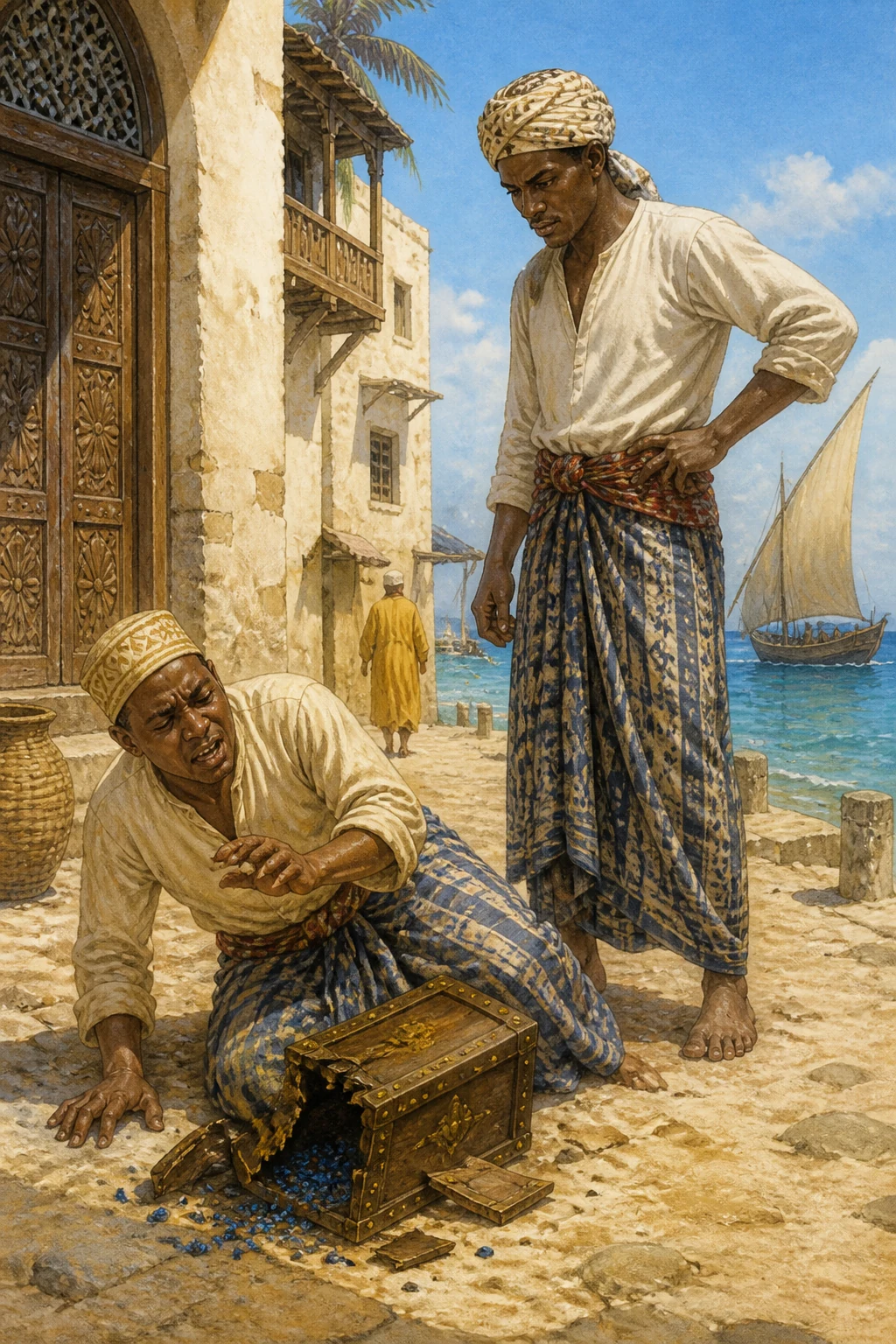
The doorkeeper went and cooked him some soup, ladled it into a bowl, and brought it to him. He continued to look after him for two months, supporting him from his own purse, until at last the fever broke in a sweat and Allah cured him of his illness. When he was on his feet again, Abu Sir said to the doorkeeper, “If Allah Most High gives me the means, I shall repay you for your kindness. Yet only Allah, in His bounty, can truly reward it.” The doorkeeper replied, “Praise be to Allah for your recovery. I did it only to seek the favor of Allah the Generous.” Then the barber left the khan and walked through the markets. Fate brought him to the market where Abu Qir’s dyehouse stood. He saw cloth dyed in many colors hanging outside the door, with crowds gathered to look at it. He asked a man of the city, “What is this place, and why do I see people crowding around it?” The man replied, “This is the Sultan’s Dyehouse, which he built for a stranger named Abu Qir. Whenever he dyes a piece of cloth, we gather to admire its color, for our country has no dyers who know how to make these colors. Certain things happened between him and the dyers here…” He told him of Abu Qir’s dealings with the dyers, how he had complained of them to the sultan, and how the sultan had supported him, built him this dyehouse, and given him one thing after another. He related all that had happened. Abu Sir rejoiced and said to himself, “Praise be to Allah, who has prospered him and made him a master. The man may be excused: perhaps he was so occupied with his trade that he forgot you. But you treated him kindly and honored him when he was idle. When he sees you, he will be glad and honor you in return for your kindness.” He went toward the dyehouse door and saw Abu Qir seated on a lofty cushion upon a raised stone bench at the entrance, wearing clothes fit for a king. Before him stood four black slaves and four white mamluks, all dressed in the finest garments. He saw ten slaves standing at work, for Abu Qir had taught them the dyer’s craft after buying them. He himself sat among cushions like a grand vizier or a mighty king, doing nothing with his own hands, but merely saying, “Do this and that.” Abu Sir stood before him, thinking that when he saw him, he would rejoice, greet him, honor him, and put him at ease. But the moment their eyes met, Abu Qir said, “You villain! How many times have I told you not to stand at the door of this establishment? Do you mean to disgrace me before everyone, you thief? Seize him!” The slaves rushed after him and caught him. Abu Qir sprang to his feet, took a stick, and said, “Throw him down!” They threw him down, and he struck him a hundred blows on the back. Then they turned him over, and he struck him a hundred blows on the belly, saying, “You villain, you traitor! If I see you standing at the door of this dyehouse after today, I shall send you straight to the king, who will hand you over to the governor to have your head struck off. Get away, and may Allah grant you no blessing!” Abu Sir went away brokenhearted by the beating and humiliation he had suffered. Those present asked Abu Qir the dyer, “What has this man done?” He told them, “He is a thief who steals people’s cloth.” But morning overtook Shahrazad, and she fell silent, leaving her tale untold.
When it was the nine hundred and thirty-fifth night,
She said: It has reached me, O fortunate King, that Abu Qir beat Abu Sir and drove him away, telling the people, “This is a thief who steals people’s cloth. He has stolen cloth from me time and again, but I said to myself, ‘May Allah forgive him, for he is a poor man,’ and would not make trouble for him. I paid people the value of their cloth and gently warned him to stop, but he would not desist. If he returns once more, I shall send him to the king, who will put him to death and rid people of his mischief.” So the people began reviling Abu Sir after he had gone. Such was the case with Abu Qir. As for Abu Sir, he returned to the khan and sat reflecting on what Abu Qir had done to him. He remained seated until the pain of the beating had subsided, then went out and walked through the markets of the city. It occurred to him to visit a bathhouse, so he asked a man of the city, “Brother, which way is the bathhouse?” “What is a bathhouse?” the man replied. “A place where people wash themselves and remove the dirt from their bodies. It is one of the finest pleasures in the world.” The man said, “Go to the sea.” “I want a bathhouse.” “We do not know what a bathhouse is. What is it like? We all go to the sea. Even the king goes to the sea when he wishes to wash.” When Abu Sir learned that there was no bathhouse in the city and that its people knew neither what one was nor how it worked, he went to the king’s court. Entering his presence, he kissed the ground before him, prayed for him, and said, “I am a stranger in this land, and my trade is keeping a bathhouse. I entered your city and wished to go to the baths, but could not find a single bathhouse here. How can so beautiful a city be without one, when it is among the greatest pleasures of this world?” The king asked, “What is a bathhouse?” Abu Sir began describing it to him and said, “Your city will not be complete until it has a bathhouse.” “You are most welcome,” said the king. He clothed him in a suit without equal and gave him a horse and two black slaves. Then he bestowed upon him four slave girls and two mamluks, provided him with a furnished house, and honored him even more generously than he had the dyer. He sent the builders with him, saying, “Build him a bathhouse wherever he chooses.” Abu Sir took them through the heart of the city until he found a place he liked. He pointed it out, and they began building. He guided them in its design until they had built him a bathhouse without equal. Then he ordered them to decorate it, and they adorned it so wonderfully that it became a delight to all who saw it. He went up to the king and told him that the building and decoration were complete. “It lacks only the furnishings,” he said. The king gave him ten thousand dinars, which he took and used to furnish the bathhouse, hanging towels in rows upon the lines. Everyone who passed the door stared at it, bewildered by the beauty of its decoration. Crowds gathered to admire this thing the like of which they had never seen in their lives, asking, “What is this?” Abu Sir would tell them, “This is a bathhouse,” and they marveled at it. Then he heated the water and set the bathhouse in operation, making a flowing fountain in the pool that enchanted all the townspeople who saw it. He asked the king for ten mamluk boys not yet come of age, and the king gave him ten as beautiful as moons. Abu Sir scrubbed them with the bath mitt, saying, “This is what you must do for the customers.” Then he lit incense and sent a crier through the city to proclaim, “O people, come to the bathhouse! It is called the Sultan’s Bathhouse!” The crowds flocked to it, and he directed the mamluks to wash their bodies. People went down into the bathing pool and came out again, then sat in the vaulted hall while the mamluks massaged them as Abu Sir had taught them. For three days, people came to the bathhouse, enjoyed its services, and left without paying. On the fourth day, the king resolved to visit it. He mounted with the great officers of his realm and rode to the bathhouse, where he undressed and went in. Abu Sir entered with him and rubbed and massaged him, rolling the dirt from his body in little twists and showing them to him. The king was delighted, and his skin became so smooth and clean that his hand squeaked as it passed over his body. After washing him, Abu Sir mixed rose water into the water of the bathing pool. The king immersed himself, then came out with his skin refreshed, feeling a vigor such as he had never known. Afterward, Abu Sir seated him in the vaulted hall, where the mamluks massaged him while the censers breathed the fragrance of precious aloeswood. The king said, “Master, is this the bathhouse?” “Yes,” he replied. “By my life,” said the king, “my city has only truly become a city with this bathhouse.” Then he asked, “What fee do you charge each person?” Abu Sir replied, “I shall take whatever you command.” The king ordered a thousand dinars to be given to him and said, “Take a thousand dinars from everyone who bathes here.” Abu Sir said, “Pardon me, O King of the Age, but people are not all alike. Some are rich and some are poor. If I take a thousand dinars from each person, the bathhouse will stand idle, for a poor man cannot afford a thousand dinars.” “Then what will you do about the fee?” asked the king. “I shall leave it to people’s generosity,” he replied. “Each shall give whatever he can afford and is willing to offer, and we shall take from each according to his circumstances. In that way, people will flock to us. The rich will give according to their station, and the poor according to what they can willingly spare. Thus the bathhouse will prosper and become a place of great consequence. But a thousand dinars is a king’s gift, and not everyone can afford it.” The great officers of state agreed with him and said, “This is the truth, O King of the Age. Do you suppose everyone is like you, O mighty King?” The king replied, “What you say is true. But this is a poor stranger, and we are bound to honor him. He has built us this bathhouse, the like of which we have never seen. Only through it has our city gained such beauty and distinction. It is little enough if we honor him by paying a greater fee.” They said, “If you wish to honor him, do so from your own wealth. A king honors the poor by keeping the price of the baths low, so that his subjects may pray for him. As for the thousand dinars, even we, the great officers of your state, are unwilling to give so much. How, then, could the poor be willing to do so?” The king said, “O great officers of my realm, on this occasion each of you shall give him a hundred dinars, a mamluk, a slave girl, and a black slave.” “Yes,” they replied, “we shall give him that. But after today, everyone who enters shall pay only what he freely chooses.” “Very well,” said the king. So each of the great officers gave him a hundred dinars, a slave girl, a mamluk, and a black slave. The number of those who bathed with the king that day was four hundred. But morning overtook Shahrazad, and she fell silent, leaving her tale untold.
When it was the nine hundred and thirty-sixth night,
She said: It has reached me, O fortunate king, that the number of grandees who bathed with the king that day was four hundred, so that their gifts amounted to forty thousand dinars, four hundred mamluks, four hundred male slaves, and four hundred slave girls—a princely gift indeed. The king himself gave him ten thousand dinars, ten mamluks, ten slave girls, and ten male slaves. Abu Sir came forward, kissed the ground before the king, and said, “O fortunate king, whose judgment is wise, what place could hold me and all these mamluks and slaves, male and female?” The king replied, “I only commanded my courtiers to do this so that you might amass a great fortune. Perhaps you will think of your country and your family, long for them, and wish to return home; then you will have taken a handsome sum from our land to support you in your own.” “O king of the age, may God exalt you,” said Abu Sir, “such a multitude of mamluks and slaves, male and female, is fit for kings. Had you ordered that I be given ready money, it would have served me better than this army. They must eat and drink and be clothed, and whatever money I earn will not suffice to maintain them.” The king laughed and said, “By God, you speak the truth! They have become a mighty host, and you cannot afford to support them. But will you sell them to me for a hundred dinars apiece?” “I sell them to you at that price,” he replied. The king sent for the treasurer to bring the money, and when he brought it, paid Abu Sir the full price for them all. Then he bestowed them upon their former masters, saying, “Let anyone who recognizes his slave, slave girl, or mamluk take him or her back, for I give them to you.” They obeyed the king’s command, and each took back those who belonged to him. Abu Sir said, “May God grant you ease, O king of the age, as you have relieved me of these ghouls, whom none but God could feed to satiety!” The king laughed at his words and agreed with him, then took the grandees of his court and went from the bathhouse to his palace. Abu Sir spent that night counting the gold, putting it into bags, and sealing them. He had twenty male slaves, twenty mamluks, and four slave girls to attend him. When morning came, he opened the bathhouse and sent out a crier to proclaim, “Whoever enters the bathhouse and bathes may give whatever his generosity allows and his sense of honor dictates.” Abu Sir sat beside the money chest, and customers flocked in. Each, on coming out, put down whatever he could readily spare, and before evening the chest was filled with the bounty of Almighty God.
Then the queen wished to visit the bathhouse. When Abu Sir heard this, he divided the day into two parts for her sake, setting aside the hours from dawn until noon for men, and those from noon until sunset for women. When the queen came, he stationed a slave girl behind the money chest. He had taught four slave girls the work of bath attendants until they became skilled at it. The queen was delighted when she entered, and her heart was gladdened; she left a thousand dinars. His fame spread throughout the city, and everyone who entered, rich or poor, treated him generously. Prosperity came to him from every quarter. He became acquainted with the king’s officers and gained friends and companions. The king came one day each week and gave him a thousand dinars, while the remaining days were for grandees and poor folk alike. Abu Sir took pains to please everyone and treated them with the utmost kindness. One day the king’s sea captain came to the bathhouse. Abu Sir undressed and went in with him, massaged him, and showed him exceptional courtesy. When the captain came out, he prepared sherbet and coffee for him, and when he wished to pay, Abu Sir swore that he would take nothing. The captain was grateful for all the kindness and hospitality he had received, and wondered what gift he could offer the bathkeeper in return.
Such was the case with Abu Sir. As for Abu Qir, he heard everyone singing the praises of the bathhouse. Each would say, “This bathhouse is surely paradise on earth! God willing, my friend, you must come with us tomorrow to this splendid bath.” Abu Qir said to himself, “I must go like everyone else and see this bathhouse that has turned all their heads.” So he put on his finest clothes, mounted a mule, and took four male slaves and four mamluks to walk before and behind him, then set out for the bathhouse. He dismounted at its entrance, where he smelled the fragrance of aloeswood and incense, saw people going in and coming out, and found the raised benches crowded with men of high and low station. As he entered the vestibule, Abu Sir saw him, rose to greet him, and rejoiced at his coming. Abu Qir said, “Is this how honest friends behave? I have opened a dyehouse and become the master dyer of the city. I have made the king’s acquaintance and attained prosperity and distinction, yet you never come to see me or ask after me, nor do you say, ‘Where is my companion?’ I have worn myself out searching for you, sending my slaves and mamluks to look through the inns and everywhere else, but they could find no trace of you, and no one could tell them anything.” Abu Sir replied, “Did I not come to you, only for you to call me a thief, beat me, and disgrace me before everyone?” Abu Qir looked distressed and said, “What are you saying? Was it you I beat?” “Yes, it was I,” replied Abu Sir. Abu Qir swore a thousand oaths that he had not recognized him, saying, “There was a man who looked just like you, who used to come every day and steal people’s cloth. I thought you were he.” He began to lament and strike his hands together, saying, “There is no power and no might save in God, the Most High, the Almighty! We have wronged you. But if only you had made yourself known and said, ‘I am so-and-so.’ The fault lies with you for not telling me who you were, especially when I was distracted by so much work.” Abu Sir said, “May God forgive you, my friend. This was decreed in the unseen, and it is for God to make amends. Come in, take off your clothes, bathe, and enjoy yourself.” “For God’s sake, forgive me, my brother,” said Abu Qir. “May God absolve and forgive you,” he replied. “It was something ordained for me from all eternity.” Then Abu Qir asked, “And how did you come by all this good fortune?” “He who opened the way for you opened it for me,” replied Abu Sir. “I went to the king and told him about the bathhouse, and he ordered it built for me.” Abu Qir said, “Just as you are acquainted with the king, so am I.” But morning overtook Shahrazad, and she fell silent, leaving her tale untold.
When it was the nine hundred and thirty-seventh night,
She said: It has reached me, O fortunate king, that when Abu Qir and Abu Sir had exchanged these reproaches, Abu Qir said, “Just as you are acquainted with the king, so am I. God Almighty willing, I shall make him love you and honor you even more for my sake. He does not know that you are my companion, so I shall tell him and commend you to his care.” Abu Sir replied, “I have no need of a recommendation, for He who inclines hearts to kindness is ever present. The king and his whole court already love me, and he has given me such and such.” He told him all that had happened, then said, “Take off your clothes behind the money chest and enter the bath. I shall come in with you to massage you.” Abu Qir undressed and entered, and Abu Sir went in with him, massaged and soaped him, helped him dress, and attended to him until he came out. Then he brought him luncheon and sherbet, and everyone marveled at the honors he showered upon him. Afterward Abu Qir wished to give him something, but he swore he would take nothing, saying, “You should be ashamed to offer! You are my companion, and there is no distinction between us.” Then Abu Qir said to Abu Sir, “My friend, by God, this is a magnificent bathhouse, but your arrangements lack one thing.” “What do they lack?” he asked. “The preparation of orpiment and lime that removes hair easily,” he replied. “Make some, and when the king comes, present it to him and teach him how to remove his hair with it. He will love you dearly and honor you.” “You are right,” said Abu Sir. “God willing, I shall make it.” Then Abu Qir went out, mounted his mule, and rode to the king. Entering his presence, he said, “I come to offer you faithful counsel, O king of the age.” “What counsel?” asked the king. “I have heard that you have built a bathhouse.” “Yes,” he replied. “A stranger came to me, and I had it built for him, just as I established the dyehouse for you. It is a splendid bathhouse and an ornament to my city.” He began describing its beauties, until Abu Qir asked, “Have you been inside it?” “Yes,” said the king. “Praise be to God, who delivered you from the evil of that villain, that enemy of the faith—the bathkeeper!” “What is the matter with him?” asked the king. Abu Qir said, “Know, O king of the age, that if you enter it again after today, you will perish.” “Why?” he asked. “The bathkeeper is your enemy and the enemy of the faith. He only persuaded you to build the bathhouse because he means to poison you there. He has made something for you, and when you enter, he will bring it and say, ‘This is a preparation which, when rubbed on the lower parts, makes the hair fall away easily.’ But it is no remedy: it is a terrible affliction and a deadly poison. The sultan of the Christians has promised this villain that if he kills you, he will release his wife and children from captivity, for they are prisoners in the Christian sultan’s hands. I was a captive with him in their country, but I opened a dyehouse and dyed cloth for them in many colors, so they interceded with the king on my behalf. The king asked me, ‘What do you desire?’ I asked for my freedom, and he set me free. I came to this city and saw this man in the bathhouse, and asked him, ‘How were you and your wife and children delivered?’ He said, ‘My wife, my children, and I remained in captivity until one day the king of the Christians held an assembly. I attended among the others and stood with the crowd. I heard them discussing kings until they mentioned the king of this city. Then the Christian king sighed and said, “No one in this world has vexed me save the king of such-and-such a city. Whoever devises a way to kill him shall have whatever he desires.” I stepped forward and said, “If I contrive to kill him for you, will you free me, my wife, and my children?” He replied, “Yes, I shall free you all and grant you whatever you desire.” So we made this agreement, and he sent me aboard a galleon to this city. I went to this king, and he built me the bathhouse. Nothing remains now but to kill him, return to the Christian king, redeem my wife and children, and ask him for whatever I wish.’ I asked, ‘What scheme have you devised to kill him?’ He replied, ‘It is a very simple scheme, as easy as can be. He comes to me at this bathhouse, and I have prepared something for him containing poison. When he comes, I shall say, “Take this preparation and rub it on your lower parts, for it removes the hair.” He will take it and apply it, and the poison will work in him for a day and a night until it reaches his heart and kills him. That will be the end of it.’ When I heard him say this, I feared for you, for I have enjoyed your bounty, and so I have told you.”
When the king heard these words, he flew into a terrible rage and said to the dyer, “Keep this secret.” Then he called for a visit to the bathhouse, so that he might turn doubt into certainty. When he entered, Abu Sir undressed as usual and attended to him, massaging him. Afterward he said, “O king of the age, I have made a preparation for removing the hair from the lower parts.” “Bring it to me,” said the king. Abu Sir set it before him, and when the king found that it smelled foul, he became certain it was poison. Enraged, he shouted to his officers, “Seize him!” They arrested Abu Sir, and the king left, seething with anger. No one knew the cause of his fury; in his rage he told no one, and none dared ask him. He dressed and went up to the audience hall, then had Abu Sir brought before him with his arms bound. He sent for the captain, and when he arrived, the king said, “Take this villain and put him in a sack with two hundredweight of unslaked lime. Tie the mouth of the sack over him and the lime, put it in your boat, and come beneath my palace. You will see me sitting at the window. Ask me, ‘Shall I throw him in?’ and I shall say, ‘Throw him in.’ When I say that, cast him overboard, so that the lime may slake upon him and he may die both drowned and burned.” “I hear and obey,” replied the captain. He took Abu Sir from the king’s presence to an island opposite the palace and said to him, “My good man, I came to your bathhouse only once, and you honored me, attended to all my needs, and gave me great pleasure in your company. You swore you would take no payment, and I grew very fond of you. Tell me, then, what has happened between you and the king? What harm have you done him, that he should be angry with you and command me to put you to such a dreadful death?” Abu Sir replied, “By God, I have done nothing, nor do I know of any offense I have committed against him to deserve this.” But morning overtook Shahrazad, and she fell silent, leaving her tale untold.
When it was the nine hundred and thirty-eighth night,
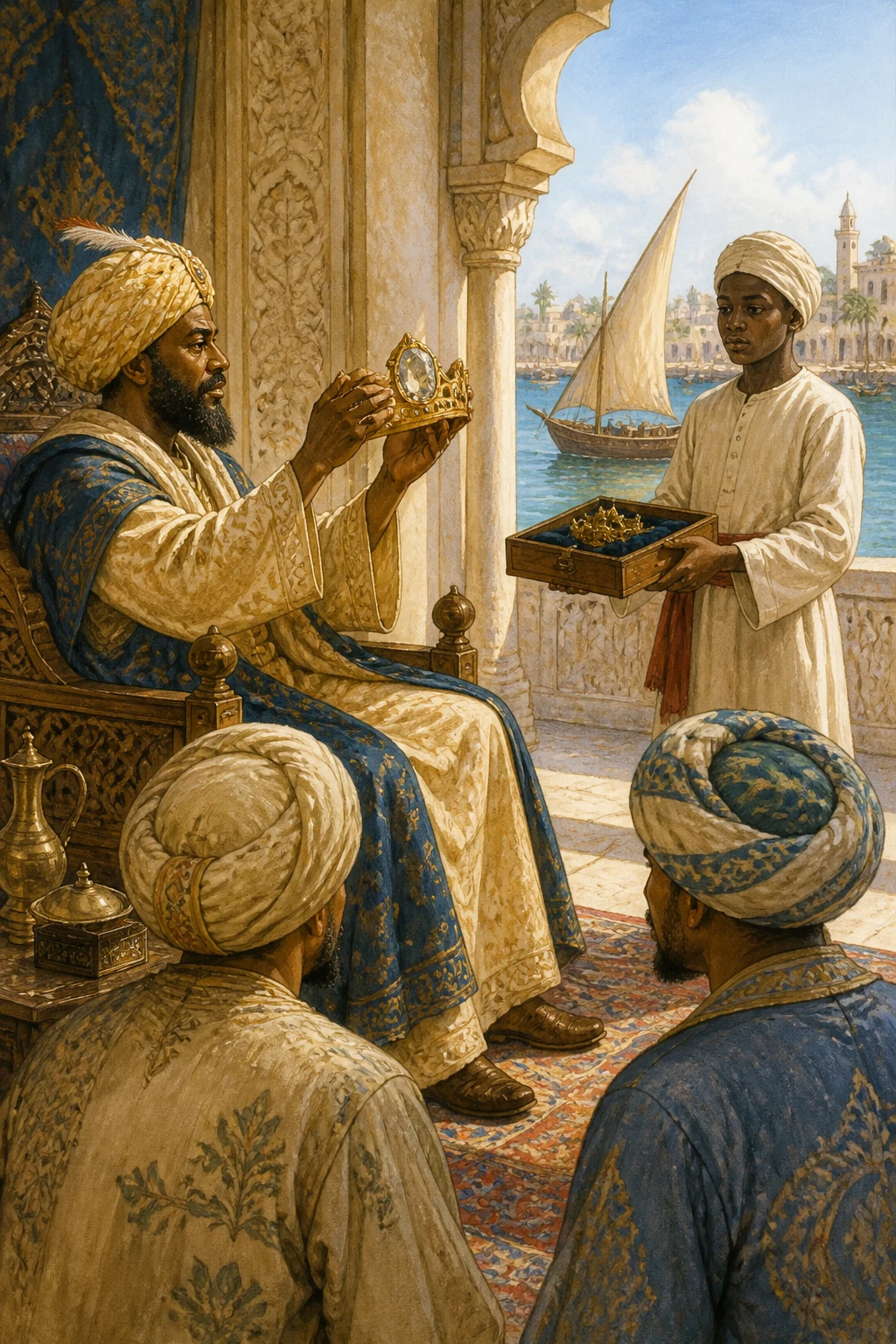
She said: It has reached me, O fortunate king, that when the captain asked Abu Sir why the king was angry with him, he replied, “By God, my brother, I have done him no wrong to deserve this.” The captain said, “You enjoyed such favor with the king as no one before you ever attained, and everyone who possesses a blessing is envied. Perhaps someone envied your good fortune and whispered something against you to the king, provoking this terrible anger. But you are welcome here, and no harm shall come to you. Just as you honored me when we were strangers, so I shall save you. Once I have rescued you, however, you must stay with me on this island until a galleon leaves the city bound toward your country, and I shall send you aboard it.” Abu Sir kissed the captain’s hand and thanked him. The captain then brought the lime, put it in a sack, and added a great stone as large as a man, saying, “I put my trust in God.” He gave Abu Sir a net and said, “Cast this net into the sea; perhaps you will catch some fish. I am responsible for supplying the king’s kitchen with fish every day, but this misfortune of yours has kept me from fishing. I fear the cook’s boys will come to fetch the fish and find none. If you catch something, they will find it ready while I go beneath the palace and carry out my trick, pretending to cast you into the sea.” Abu Sir replied, “I shall fish. Go, and may God help you.” The captain put the sack in the boat and rowed until he came beneath the palace. Seeing the king sitting at the window, he called, “O king of the age, shall I throw him in?” “Throw him in,” said the king, waving his hand. At that moment something flashed and fell into the sea. What had fallen was the king’s ring. It was enchanted: whenever the king grew angry with someone and wished to kill him, he pointed at him with the right hand, on which he wore the ring. A flash would issue from it and strike the man he pointed at, and his head would fall from his shoulders. It was only because of this ring that his armies obeyed him and he subdued mighty rulers. When it slipped from his finger, he concealed the loss and dared not say, “My ring has fallen into the sea,” for fear that the soldiers would rise against him and kill him. So he kept silent.
Such was the case with the king. As for Abu Sir, after the captain had gone, he took the net, cast it into the sea, and drew it up full of fish. He cast it a second time, and again it came up full. He kept casting it, and each time it came up full of fish, until a great heap lay before him. Then he said to himself, “By God, it is a long time since I ate fish.” He chose a large, fat fish and said, “When the captain comes, I shall ask him to fry this for my dinner.” He cut its throat with a knife he had with him, but the blade caught in its gullet, and there he saw the king’s ring. The fish had swallowed it, and Providence had driven it toward the island and into his net. He took the ring and put it on his little finger, knowing nothing of its powers. Just then two of the cook’s servants came to fetch the fish. When they reached Abu Sir, they asked, “Good man, where has the captain gone?” “I do not know,” he replied, gesturing with his right hand. As he pointed toward them and said, “I do not know,” both their heads fell from their shoulders. Abu Sir was astonished and began saying, “Who can have killed them?” He grieved for them and pondered what had happened. Then the captain arrived, saw the great heap of fish and the two dead men, and noticed the ring on Abu Sir’s finger. “My brother,” he cried, “do not move the hand with the ring on it! If you move it, you will kill me.” Abu Sir marveled at these words: “Do not move the hand with the ring on it, for if you move it, you will kill me.” When the captain reached him, he asked, “Who killed these two lads?” “By God, my brother, I do not know,” replied Abu Sir. “You speak the truth,” said the captain. “But tell me, where did you get this ring?” “I found it in this fish’s gullet.” “You speak the truth. I saw it flashing as it fell from the king’s palace into the sea, when he pointed toward you and told me, ‘Throw him in.’ As he gestured, I cast in the sack, and the ring slipped from his finger and fell into the water. This fish swallowed it, and God sent it to you so that you caught it. It is your allotted fortune. But do you know the powers of this ring?” Abu Sir replied, “I did not know it had any powers.” The captain said, “Know that our king’s army obeys him only for fear of this ring, for it is enchanted. Whenever the king is angry with someone and wishes to kill him, he points it at him, and his head falls from his shoulders. A flash issues from the ring, and its ray strikes the person who has angered him, killing him instantly.” When Abu Sir heard this, he rejoiced greatly and said to the captain, “Take me back to the city.” “I will,” replied the captain, “for I no longer fear the king on your behalf. Whenever you point your hand at him with the intention of killing him, his head will fall before you. Even if you wished to kill the king and his whole army, you could do so without hindrance.” Then he took him into the boat and set out with him for the city. But morning overtook Shahrazad, and she fell silent, leaving her tale untold.
When it was the nine hundred and thirty-ninth night,
She said: It has reached me, O fortunate king, that after the captain had taken Abu Sir into the boat, he brought him to the city. On arriving, Abu Sir went up to the king’s palace and entered the audience hall. He found the king seated with his soldiers before him, deeply distressed over the ring, yet unable to tell any of them that it was lost. When the king saw him, he said, “Did we not throw you into the sea? How did you manage to escape?” Abu Sir replied, “O king of the age, when you ordered me to be cast into the sea, your captain took me to an island and asked why you were angry with me. He said, ‘What have you done to the king that he should order your death?’ I replied, ‘By God, I know of no wrong I have done him.’ He said, ‘You held a high place in the king’s favor. Perhaps someone envied you and spoke against you to him, making him angry. But I came to your bathhouse, and you honored me. In return for your hospitality there, I shall rescue you and send you home.’ Then he put a stone in the boat in my place and threw it into the sea. But when you pointed toward me, the ring fell from your hand into the water, and a fish swallowed it. I was on the island catching fish, and that fish came up among the others. I took it, intending to roast it, and when I opened its belly, I found the ring inside. I took it and put it on my finger. Two kitchen servants came to fetch the fish, and I gestured toward them, knowing nothing of the ring’s power, and their heads fell off. Then the captain returned, recognized the ring on my finger, and told me of its enchantment. So I have brought it to you, for you have shown me kindness and honored me beyond measure, and your goodness has not been wasted on me. Here is your ring; take it. If I have done anything against you that deserves death, tell me my offense and kill me. I absolve you of all guilt for my blood.” He drew the ring from his finger and handed it to the king. Seeing Abu Sir’s goodness, the king took the ring, murmured over it, and felt his spirit return to him. He rose to his feet, embraced Abu Sir, and said, “My good man, you are one of the truest sons of honest folk. Do not hold this against me, but forgive what I have done to you. Had anyone else possessed this ring, he would never have given it back.” Abu Sir replied, “O king of the age, if you wish me to forgive you, tell me what offense made you so angry that you ordered my death.” The king said, “By God, this noble deed has proved to me that you are innocent and guilty of nothing. But the dyer told me such and such.” He related what the dyer had said, and Abu Sir replied, “By God, O king of the age, I do not know the king of the Christians. I have never been to Christian lands, nor has the thought of killing you ever crossed my mind. But this dyer was my companion and neighbor in the city of Alexandria. Life grew hard for us there, and we left because we could not earn a living. We recited the Fatiha together, pledging that whichever of us found work would feed the one who had none. Then such and such befell me at his hands.” He told the king everything that had happened between him and Abu Qir the dyer: how he had taken his money and abandoned him sick in a room at the inn; how the doorkeeper had supported him during his illness until God restored his health; and how he had then gone out, taking his tools and walking through the city as usual. On his way he had seen a dyehouse surrounded by a crowd, and, looking in through the doorway, had found Abu Qir seated on a raised bench. He had entered to greet him, only to be beaten and abused, accused of being a thief, and thrashed cruelly. He told the king everything from beginning to end, then said, “O king of the age, it was he who told me to make the preparation and present it to you. He said, ‘The bathhouse is complete in every respect, except that this preparation is missing.’ Know, O king of the age, that it is harmless. We make it in our country, where it is one of the necessities of the bath. I had forgotten it, but when the dyer came and I honored him, he reminded me of it and told me to make it. Send, O king of the age, for the doorkeeper of such-and-such an inn and the workers in the dyehouse, and question them all about what I have told you.” The king sent for the inn’s doorkeeper and the dyehouse workers. When they had all arrived, he questioned them, and they told him the truth. Then he sent for the dyer, saying, “Bring him barefoot, bareheaded, and with his arms bound.” The dyer was sitting at home, delighted at Abu Sir’s death, when suddenly the king’s officers burst in upon him, struck him about the neck, bound his arms, and brought him before the king. There he saw Abu Sir sitting beside the king, with the inn’s doorkeeper and the dyehouse workers standing before him. The doorkeeper said, “Is this not your companion, whose money you stole and whom you left sick in a room at my inn, after doing such and such to him?” The dyehouse workers said, “Is this not the man you ordered us to seize and whom we beat?” Then the king perceived Abu Qir’s wickedness and saw that he deserved a torment more severe than the questioning of Munkar and Nakir. “Take him,” said the king, “and parade him through the city in disgrace.” But morning overtook Shahrazad, and she fell silent, leaving her tale untold.
When it was the nine hundred and fortieth night,
She said: It has reached me, O fortunate king, that when the king heard the testimony of the inn’s doorkeeper and the dyehouse workers, he became certain of Abu Qir’s villainy and condemned him, saying to his officers, “Take him and parade him through the city in disgrace, then put him in a sack and throw him into the sea.” Abu Sir said, “O king of the age, grant my intercession for him, for I have forgiven him everything he has done to me.” The king replied, “Though you may forgive him for the wrong he did you, I cannot forgive him for the wrong he did me.” Then he shouted, “Take him and parade him in disgrace!” Afterward they put him in a sack with lime and threw him into the sea, and he died both drowned and burned. The king said, “Abu Sir, ask a boon of me, and it shall be granted.” He replied, “My wish is that you send me back to my own country, for I no longer desire to remain here.” The king gave him a great sum in addition to the money, gifts, and favors he had already bestowed, then presented him with a galleon laden with riches. Its sailors were mamluks, and he gave them to him as well, after offering to make him his vizier, an honor Abu Sir declined. Then Abu Sir took leave of the king and sailed away, owning everything aboard the galleon, even the sailors, who were his mamluks. He sailed on until he reached the land of Alexandria. They anchored off its coast and went ashore. One of his mamluks saw a sack lying at the water’s edge and said, “My lord, there is a large, heavy sack beside the seashore, tied at the mouth, and I do not know what is in it.” Abu Sir came and opened it, and found Abu Qir inside, for the sea had carried him toward Alexandria. He took him out and buried him near the city, built a shrine over him, endowed it with property, and inscribed these verses above the tomb’s entrance:
A man is known among mankind by what he does; the noble man’s deeds are worthy of his birth. Speak no ill of others, lest ill be spoken of you: often a man hears his own words turned against him. Shun foul speech and never utter it, whether your talk be earnest or in jest. A dog that faithfully guards what is precious is kept, while the mighty lion is chained for its folly. Upon the sea float the carcasses of the wilderness, while pearls lie cast away beneath its sand. No sparrow would contend against a hawk but for its recklessness and feeble wit. In the heavens, upon the pages of the air, is written: “He who does good shall be rewarded in kind.” Beware of seeking sugar from the bitter colocynth: each thing’s taste returns to its own nature. Abu Sir lived on for a time, and then God took him to Himself. They buried him beside the grave of his companion Abu Qir, and for that reason the place was called Abu Qir and Abu Sir, though it is now known as Abu Qir. This is what has reached us of their story. Glory be to Him who abides forever, by whose will the nights and days revolve.