Waltey
Zgodba o Abu Hasanu ad Daradžu in gobavcu Abu Džafarju
Tisoč in ena noč · arabska pripovedna tradicijaO besedilu
Zgodba o Abu Hasanu ad Daradžu in gobavcu Abu Džafarju
- Vir
- Tisoč in ena noč
- Avtor
- arabska pripovedna tradicija
- Jezik branja
- English
- Jezik izvirnika
- Arabic
- Čas branja
- 7 min branja
- Obseg
- 5 strani
- Naslov izvirnika
- حكاية أبي الحسن الدرَّاج وأبي جعفر المجذوم - الليالي ٤٨١ إلى ٤٨٢
O izvirniku
Tisoč in ena noč
Zgodbe v zgodbah, polne trgovcev, dvorov, preoblek in nočnih zapletov. Bralni jezik je English, izvirnik pa prihaja iz vira Tisoč in ena noč v jeziku Arabic.
Besedilo
Zgodba o Abu Hasanu ad Daradžu in gobavcu Abu Džafarju
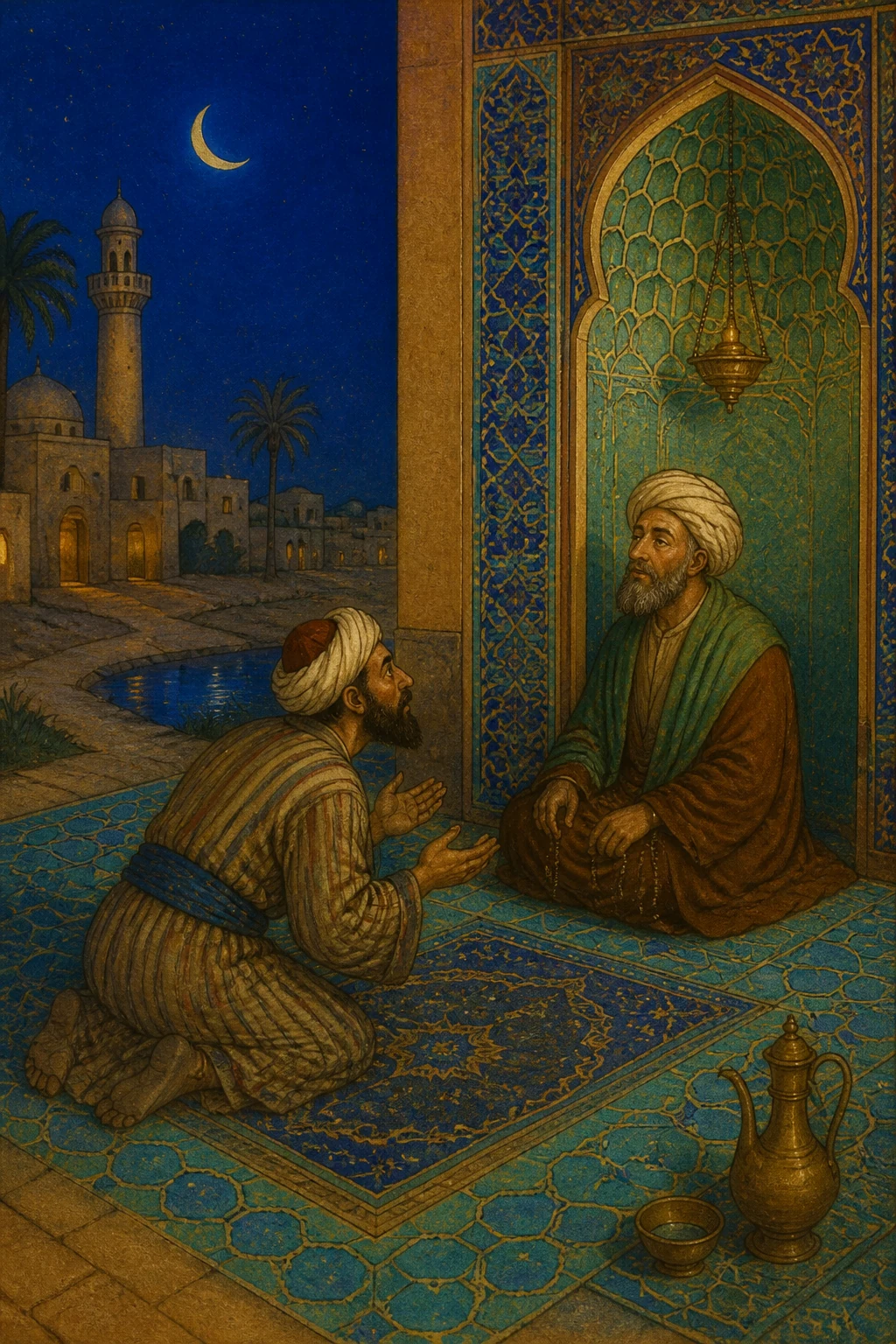
It is also related that Abu al-Hasan al-Darraj said: I used often to travel to Mecca—may God increase its glory—and people would follow me because I knew the road and remembered the watering places. One year, when I wished to make the journey to God’s Sacred House and visit the tomb of His Prophet, blessings and peace be upon him, I said to myself, “I know the road, so I shall go alone.” I walked until I reached al-Qadisiyyah, entered the town, and went to the mosque. There I saw a holy ecstatic sitting in the prayer niche. When he saw me, he said, “Abu al-Hasan, I ask to accompany you to Mecca.” I thought to myself, “I have fled from companions; how, then, should I take holy ecstatics for company?” Then I told him, “I travel with no one,” and he said no more. When morning came, I set out alone and continued by myself until I reached al-Aqabah and entered the mosque. There I found the ecstatic in the prayer niche. “Glory be to God!” I said to myself. “How has this man arrived here before me?” He raised his head, smiled at me, and said, “Abu al-Hasan, things are done for the weak that fill the strong with wonder.” I spent that night bewildered by what I had seen. In the morning I set out alone once more, but when I reached Arafat and went to the mosque, there was the man sitting in the prayer niche. I threw myself upon him and said, “Master, I beg to accompany you,” and began kissing his feet. “That cannot be,” he said. I began to weep and sob at being denied his company, but he told me, “Compose yourself, for weeping will not help you.” And dawn overtook Shahrazad, and she fell silent, leaving her tale untold.
Then, when it was the four hundred and eighty-second night,
She said: It has reached me, O fortunate king, that Abu al-Hasan said: When I saw the holy ecstatic sitting in the prayer niche, I threw myself upon him and said, “Master, I beg to accompany you,” and began kissing his feet. He told me, “That cannot be.” I began to weep and sob at being denied his company, but he said, “Compose yourself, for weeping will not help you.” Then his own tears flowed, and he recited these verses:
Do you weep at my distance, when you caused the parting, and seek a return when no return is possible? You looked upon my weakness and my outward sickness and said, “A sickly man, who can neither come nor go.” Have you not seen that God, exalted in His majesty, bestows kindness beyond His servant’s imagining? Though in the eyes of men I am as you see me, my body marked by grievous infirmity, and though I have no provisions to carry me to the place where pilgrims come before my Lord, I have a Creator whose kindness works unseen for me: He has no equal, and I cannot do without Him. Go safely on your way, and leave me to my solitude, for the One keeps the lonely stranger company. Then I left him, and thereafter I never came to a watering place without finding that he had reached it before me. When I arrived in Medina, however, I lost all trace of him and could learn nothing of his whereabouts. I met Abu Yazid al-Bistami, Abu Bakr al-Shibli, and groups of spiritual masters, and told them my story and lamented my plight. They said, “Far from you now is the hope of gaining his company! This is Abu Ja‘far the Ecstatic, for whose sanctity the rain clouds are summoned, and through whose blessing prayers are answered.” When I heard these words, my longing to meet him grew, and I asked God to bring us together. Then, as I stood at Arafat, someone tugged at me from behind. I turned, and there was that very man. At the sight of him I gave a great cry and fell unconscious. When I came to, he was nowhere to be found. My yearning grew all the fiercer, every way seemed closed to me, and I asked God Most High to let me see him again. Only a few days passed before he once more tugged at me from behind. I turned, and he said, “I charge you to come to me and ask for what you need.” I asked him to offer three prayers for me: first, that God should make poverty dear to me; second, that I should never go to sleep with my next day’s sustenance assured; and third, that He should grant me the sight of His noble face. He offered these prayers for me and vanished from my sight, and God has answered his prayers on my behalf. As for the first, God has made poverty dear to me, and by God, there is nothing in this world I love more. As for the second, for so many years now I have never gone to sleep with my next day’s sustenance assured, yet God has never left me in want of anything. And I hope that God will graciously grant me the third, answering that prayer as He answered the two before it, for He is generous and bountiful. May God have mercy on the poet who said:
The poor man’s bearing is devotion and dignity; his garments are tatters and rags. Pallor adorns him, just as the moon is sometimes adorned by its waning light. Long nights spent standing in prayer have wasted him, and tears pour freely from his eyes. Remembrance of God is his companion in his dwelling, and the Almighty keeps him company through the night. Through the poor man, those who seek refuge receive succor, as do the beasts and birds. For his sake God sends forth His trials, and through his merit the rains descend. If one day he prays for a calamity to be lifted, the oppressor perishes and the tyrant is brought low. All creation is a patient, sick unto death, and he is its compassionate, generous physician. His signs are plain: when you look upon his face, hearts grow clear and lights shine forth. O you who turn away from such men, blind to their worth, alas, your sins have veiled them from your sight! You hope to catch up with them, yet you are fettered; burdens of sin have held you back from all you long for. Had you known their worth, you would have answered them, and rivers would have flowed from your eyes for their sake. I offer the scent of blossoms to one whose nose is stopped; a broker knows the worth of cloth. Hasten, then, to your Lord and ask for union with Him: perhaps destiny will favor your endeavors, and you will find relief from bitter estrangement and rejection, and attain all you desire and choose. His bounty is ample for all who hope in Him, and He is God, the One, the All-Compelling.
Izvirnik
حكاية أبي الحسن الدرَّاج وأبي جعفر المجذوم - الليالي ٤٨١ إلى ٤٨٢
Naslednje strani prikazujejo izvirno besedilo za primerjavo.
فلما كانت الليلة ٤٨١
ومما يُحكَى أن أبا الحسن الدراج قال: كنتُ كثيرًا ما آتي مكة زادها الله شرفًا، وكان الناس يتبعونني لمعرفتي بالطريق وحفظ المناهل؛ فاتفق في عام من الأعوام أني أردتُ الوصول إلى بيت الله الحرام وزيارة قبر نبيه عليه الصلاة والسلام، وقلت في نفسي: أنا عارف بالطريق فأذهب وحدي. ومشيت حتى وصلت إلى القادسية فدخلتها وأتيت المسجد، فرأيت رجلًا مجذوبًا قاعدًا في المحراب، فلما رآني قال: يا أبا الحسن، أسألك الصحبة إلى مكة. فقلت في نفسي: إني فررتُ من الأصحاب وكيف أصحب المجذوبين؟ ثم قلت له: إني لا أصحب أحدًا. فسكت عني. فلما أصبح الصباح مشيتُ في الطريق وحدي، ولم أزل منفردًا حتى وصلت إلى العقبة ودخلت المسجد، فلما دخلته وجدتُ الرجل المجذوب في المحراب، فقلتُ في نفسي: سبحان الله! كيف سبقني هذا إلى ها هنا؟ فرفع رأسه إليَّ وتبسَّمَ وقال: يا أبا الحسن، يُصنَع للضعيف ما يتعجَّب منه القوي. فبتُّ تلك الليلة متحيِّرًا مما رأيت، فلما أصبحت سلكت الطريق وحدي، فلما وصلت إلى عرفات وقصدتُ المسجد، إذا الرجل قاعد في المحراب؛ فتراميتُ عليه وقلتُ له: يا سيدي، أسألك الصحبة. وجعلتُ أقبِّل قدمَيْه، فقال: ليس لي إلى ذلك سبيل. فجعلتُ أبكي وأنتحب لما حُرِمت من صحبته، فقال لي: هوِّنْ عليك، فإنه لا ينفعك البكاء. وأدرك شهرزاد الصباح فسكتَتْ عن الكلام المباح.
فلما كانت الليلة ٤٨٢
قالت: بلغني أيها الملك السعيد، أن أبا الحسن قال: لما رأيتُ الرجلَ المجذوب قاعدًا في المحراب، تراميتُ عليه وقلتُ له: يا سيدي، أسألك الصحبة. وجعلت أقبِّل قدمَيْه، فقال لي: ليس إلى ذلك سبيل. فجعلتُ أبكي وأنتحب لما حُرِمته من صحبته. فقال لي: هوِّنْ عليك، فإنه لا ينفعك البكاء. وأجرى العَبَرات ثم أنشد هذه الأبيات:
أَتَبْكِي عَلَى بُعْدِي وَمِنْكَ جَرَى الْبُعْدُ وَتَطْلُبُ رَدًّا حِينَ لَا يُمْكِنُ الرَّدُّ
نَظَرْتَ إِلَى ضَعْفِي وَظَاهِرِ عِلَّتِي وَقُلْتَ سَقِيمٌ لَا يَرُوحُ وَلَا يَغْدُو
أَلَمْ تَرَ أَنَّ اللهَ جَلَّ جَلَالُهُ يَمُنُّ بِلُطْفٍ مَا تَخَيَّلَهُ الْعَبْدُ
لَئِنْ كُنْتَ فِي رَأْيِ الْعُيُونِ كَمَا تَرَى وَبِالْجِسْمِ مِنْ فَرْطِ الزَّمَانَةِ مَا يَبْدُو
وَلَيْسَ مَعِي زَادٌ لِيُوصِلَنِي إِلَى مَحَلٍّ بِهِ يَأْتِي إِلَى سَيِّدِي الْوَفْدُ
فَلِي خَالِقٌ أَلْطَافُهُ بِي خَفِيَّةٌ وَلَيْسَ لَهُ نِدٌّ وَلَا مِنْهُ لِي بُدُّ
فَسِرْ سَالِمًا عَنِّي وَدَعْنِي وَغُرْبَتِي فَإِنَّ الْغَرِيبَ الْفَرْدَ يُؤْنِسُهُ الْفَرْدُ
فانصرفتُ من عنده، وكنتُ بعد ذلك لا آتي منهلًا إلا وجدتُه قد سبقني؛ فلما وصلتُ إلى المدينة غاب عني أثره وعمي عليَّ خيره، فلقيتُ أبا يزيد البسطامي وأبا بكر الشبلي وطوائف الشيوخ، وأخبرتهم بقصتي وشكوتُ إليهم قضيتي، فقالوا: هيهات أن تنال بعد ذلك صحبته؛ هذا أبو جعفر المجذوب، بحرمته تستقي الأنواء، وببركته يستجاب الدعاء. فلما سمعتُ منهم هذا الكلام زاد شوقي إلى لقائه، وسألت الله أن يجمعني عليه، فبينما أنا واقف بعرفات إذا بجاذب يجذبني من خلفي، فالتفَتُّ إليه فإذا هو ذلك الرجل، فلما رأيتُه صحتُ صيحةً عظيمةً، ووقعتُ مغشيًّا عليَّ؛ فلما أَفَقْتُ ما وجدتُه، زاد وَجْدي لذلك وضاقت عليَّ المسالكُ، وسألت الله تعالى رؤيته. فلم يكن إلا أيام قلائل وإذا به يجذبني من خلفي، فالتفَتُّ إليه فقال: عزمتُ عليك أن تأتيني وتسأل حاجتك. فسألته أن يدعو لي ثلاث دعوات: الأولى أن يحبِّب الله إليَّ الفقرَ، والثانية ألَّا أبيت على رزق معلوم، والثالثة أن يرزقني النظر إلى وجهه الكريم. فدعا لي هذه الدعوات وغاب عني، وقد استجاب الله دعاءه لي؛ أما الأولى فإن الله حبَّبَ إليَّ الفقر، فوالله ما في الدنيا شيء هو أحبُّ إليَّ منه. وأما الثانية فإني منذ كذا سنة ما بتُّ على رزقٍ معلومٍ، ومع ذلك لا يحوجني الله إلى شيء، وإني لَأرجو أن يمنَّ اللهُ عليَّ بالثالثة، ويكون قد أجاب فيها كما أجاب في الاثنتين قبلها، إنه كريم مفضال، ورحم الله مَن قال:
زِيُّ الْفَقِيرِ تَبَتُّلٌ وَوَقَارُ وَلِبَاسُهُ الْخُلْقَانُ وَالْأَطْمَارُ
وَالِاصْفِرَارُ يَزِينُهُ وَلَرُبَّمَا بِسَرَارِهَا تَتَزَيَّنُ الْأَقْمَارُ
قَدْ شَفَّهُ طُولُ الْقِيَامِ بِلَيْلِهِ وَدُمُوعُهُ مِنْ جَفْنِهِ مِدْرَارُ
فَأَنِيسُهُ فِي دَارِهِ تَذْكَارُهُ وَجَلِيسُهُ فِي لَيْلِهِ الْجَبَّارُ
إِنَّ الْفَقِيرَ بِهِ يُغَاثُ الْمُلْتَجِي وَكَذَلِكَ الْأَنْعَامُ وَالْأَطْيَارُ
وَلِأَجْلِهِ يُجْرِي الْإِلَهُ بَلَاءَهُ وَبِفَضْلِهِ تُتَنَزَّلُ الْأَمْطَارُ
وَإِذَا دَعَا يَوْمًا بِكَشْفِ مَلَمَّةٍ هَلَكَ الظَّلُومُ وَعُطِّلَ الْجَبَّارُ
فَالْخَلْقُ أَجْمَعُهُمْ مَرِيضٌ مُدْنَفٌ وَهْوَ الطَّبِيبُ الْمُشْفِقُ الْمِدْرَارُ
سِيمَاهُ تَبْدُو إِنْ نَظَرْتَ لِوَجْهِهِ صَفَتِ الْقُلُوبُ وَلَاحَتِ الْأَنْوَارُ
يَا رَاغِبًا عَنْهُمْ وَلَمْ تَرَ فَضْلَهُمْ حَجَبَتْكَ وَيْحَكَ عَنْهُمُ الْأَوْزَارُ
تَرْجُو لِحَاقَهُمُ وَأَنْتَ مُقَيَّدٌ قَدْ أَخَّرَتْكَ عَنِ الْمُنَى أَوْزَارُ
لَوْ كُنْتَ تعْرِفُ قَدْرَهُمْ لَأَجَبْتَهُمْ وَجَرَتْ لَهُمْ مِنْ جَفْنِكَ الْأَنْهَارُ
إِنِّي إِلَى الْمَذْكُومِ شَمُّ أَزَاهِر الثَّوْبُ يَعْرِفُ قَدْرَهُ السِّمْسَارُ
فَاسْرِعْ إِلَى مَوْلَاكَ وَاسْأَلْ وَصْلَهُ فَعَسَى تُسَاعِدُ سَعْيَكَ الْأَقْدَارُ
وَتُرَاحُ مِنْ فَرْطِ التَّبَاعُدِ وَالْقِلَى وَتَنَالُ مَا تَهْوَى وَمَا تَخْتَارُ
فَجَنِيُّهُ رَحْبٌ لِكُلِّ مُؤَمِّلٍ وَهْوَ الْإِلَهُ الْوَاحِدُ الْقَهَّارُ
Nadaljuj z branjem