Prevod
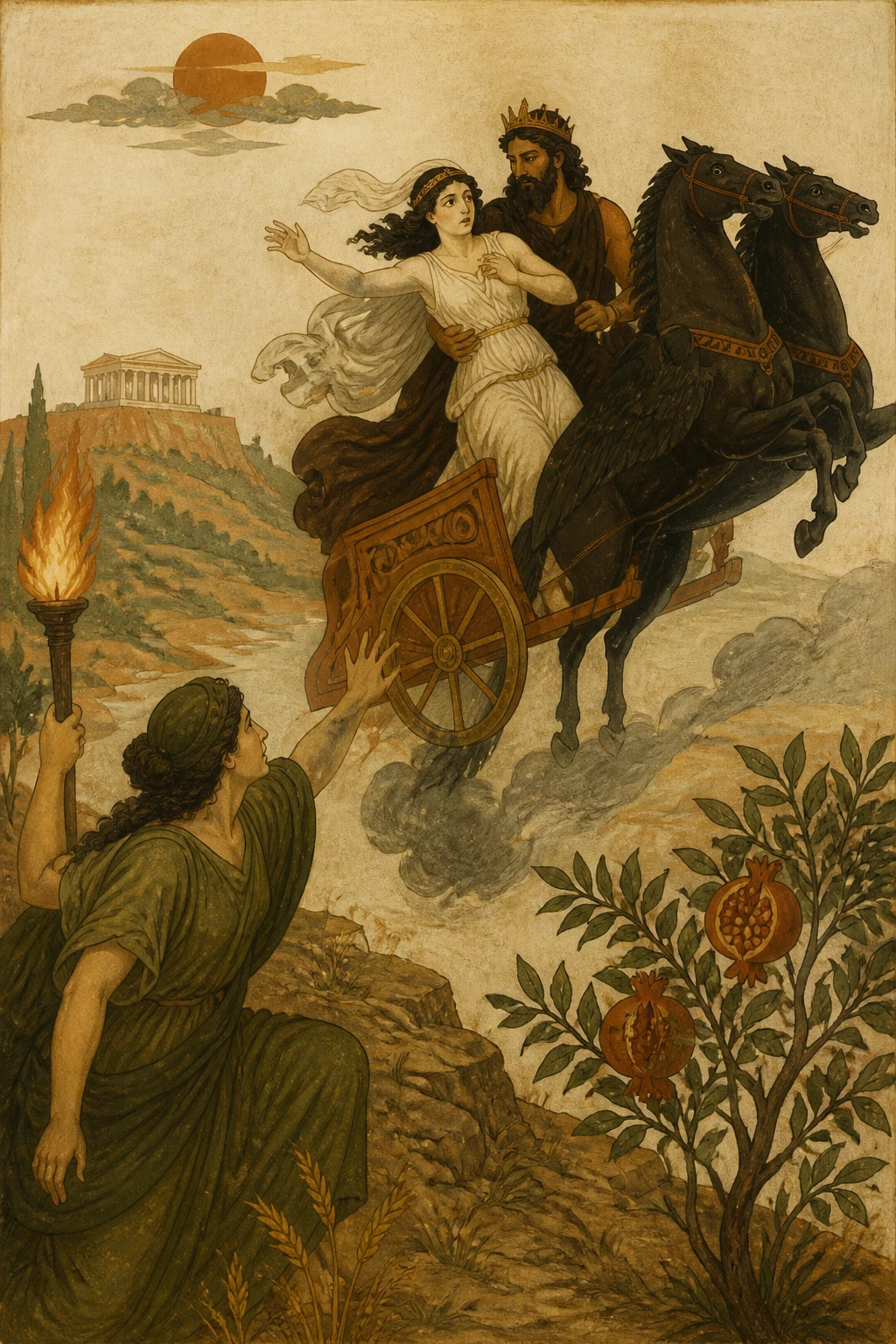
1. Zeus married Hera and fathered Hebe, Eileithyia, and Ares, but he also lay with many women, both mortal and immortal. By Themis, daughter of Uranus, he fathered the daughters known as the Seasons—Eirene, Eunomia, and Dike—and the Fates—Clotho, Lachesis, and Atropos; by Dione, Aphrodite; by Eurynome, daughter of Oceanus, the Graces—Aglaia, Euphrosyne, and Thalia; by Styx, Persephone; and by Mnemosyne, the Muses: first Calliope, then Clio, Melpomene, Euterpe, Erato, Terpsichore, Urania, Thalia, and Polymnia.
2. Calliope and Oeagrus, though Apollo was the reputed father, had Linus, whom Heracles killed, and Orpheus, who practised singing to the lyre and whose song moved stones and trees.
When his wife Eurydice died from a snakebite, Orpheus went down to Hades, wishing to bring her back, and persuaded Pluto to send her up. Pluto promised to do so, provided that Orpheus did not turn around on his way until he had reached his own house. But Orpheus, doubting him, turned around and looked at his wife, and she went back again. Orpheus also founded the mysteries of Dionysus, and he lies buried in Pieria, where he was torn apart by the Maenads.
3. Clio fell in love with Pierus, son of Magnes, through the wrath of Aphrodite, for she had reproached the goddess for her love of Adonis. She lay with him and bore a son, Hyacinthus, with whom Thamyris, son of Philammon and the nymph Argiope, fell in love. Thamyris was the first man to love other males.
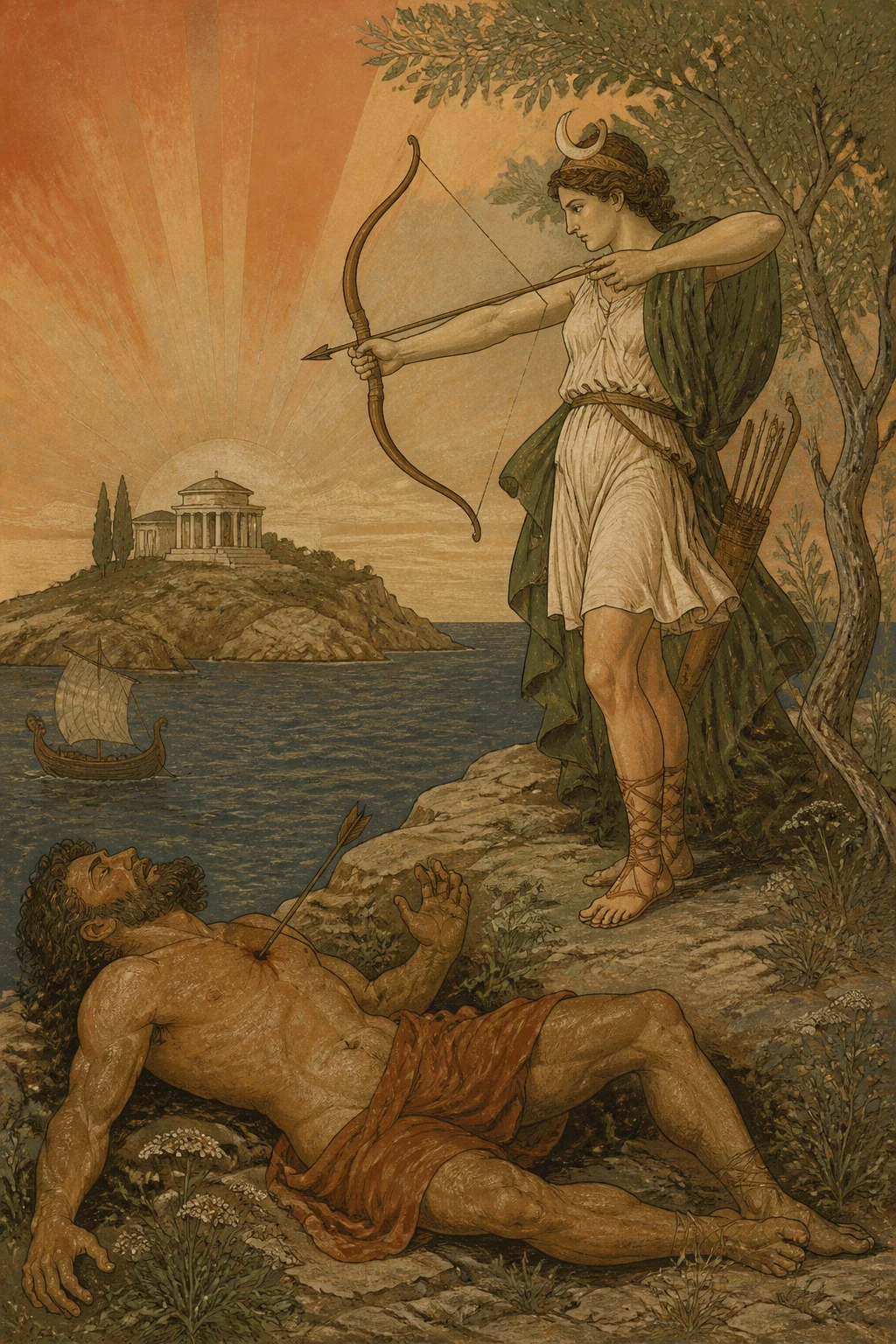
Later, however, Apollo accidentally killed his beloved Hyacinthus with a cast of the discus. Thamyris, who excelled in beauty and in singing to the lyre, challenged the Muses to a musical contest, agreeing that, if he proved the better, he would lie with them all, but if he lost, he would be deprived of whatever they wished. The Muses won and deprived him both of his sight and of his skill in singing to the lyre.
4. Euterpe and the river Strymon had Rhesus, whom Diomedes killed at Troy; some, however, say that he was Calliope’s son. Thalia and Apollo had the Corybantes, and Melpomene and Achelous had the Sirens, of whom we shall speak in our account of Odysseus.
5. Hera gave birth to Hephaestus without lying with a male, though Homer says that she bore him too by Zeus. Zeus hurled him from heaven when he came to the aid of Hera, who had been bound. For Zeus had hung her from Olympus because she had sent a storm against Heracles as he sailed home after capturing Troy. Hephaestus fell on Lemnos and was crippled in both feet, but Thetis saved him.
6. Zeus lay with Metis, though she changed into many forms to avoid his embrace. When she became pregnant, he swallowed her before she could give birth, for Earth foretold that, after the daughter she was about to bear, she would give birth to a son who would become ruler of heaven. Fearing this, Zeus swallowed her. When the time came for the birth, Prometheus—or, as others say, Hephaestus—struck his head with an axe, and Athena sprang from the crown of his head beside the river Triton, fully armed.