O besedilu
Zapah
- Vir
- Pentameron
- Avtor
- Giambattista Basile
- Jezik branja
- English
- Jezik izvirnika
- Neapolitan
- Čas branja
- 8 min branja
- Obseg
- 7 strani
- Naslov izvirnika
- Jornata II IX LO CATENACCIO
O izvirniku
Pentameron
Baročna, divja starejša plast evropske pravljice, polna obratov in pretiravanj. Bralni jezik je English, izvirnik pa prihaja iz vira Pentameron v jeziku Neapolitan.
Besedilo
Zapah
_Lucia goes to fetch water from a fountain and meets a slave, who takes her to a splendid palace, where she is treated like a queen. But her envious sisters persuade her to see who sleeps beside her at night; discovering a handsome young man, she loses his favor and is cast out. After wandering for years in misery, heavily pregnant, she reaches her lover’s home, where she gives birth to a son; after various adventures, they are reconciled, and she becomes his wife._ _The misfortunes suffered by poor Lisa moved every heart to great compassion, and more than a few eyes grew red, with tears trembling on their lashes, for nothing stirs pity more than the sight of someone suffering innocently. But now it was Ciommetella’s turn to set the spinning wheel of storytelling in motion, and she began._ The counsels of envy have always fathered misfortune, for beneath the mask of kindness they hide the face of ruin. Whoever finds fortune within his grasp should imagine a hundred people forever stretching cords across his path to trip him up, as happened to a girl who, through her sisters’ wicked advice, fell from the very top of the ladder of happiness; and it was only heaven’s mercy that saved her from breaking her neck.
Once upon a time there was a mother with three daughters. Such dire poverty had taken root in her house—which was a sewer into which every flood of misfortune poured—that she sent them out begging to keep body and soul together. One morning, having come by some cabbage leaves thrown away by the cook of a great house, she wanted to cook them and told her daughters, one after another, to go to the fountain for a little water;
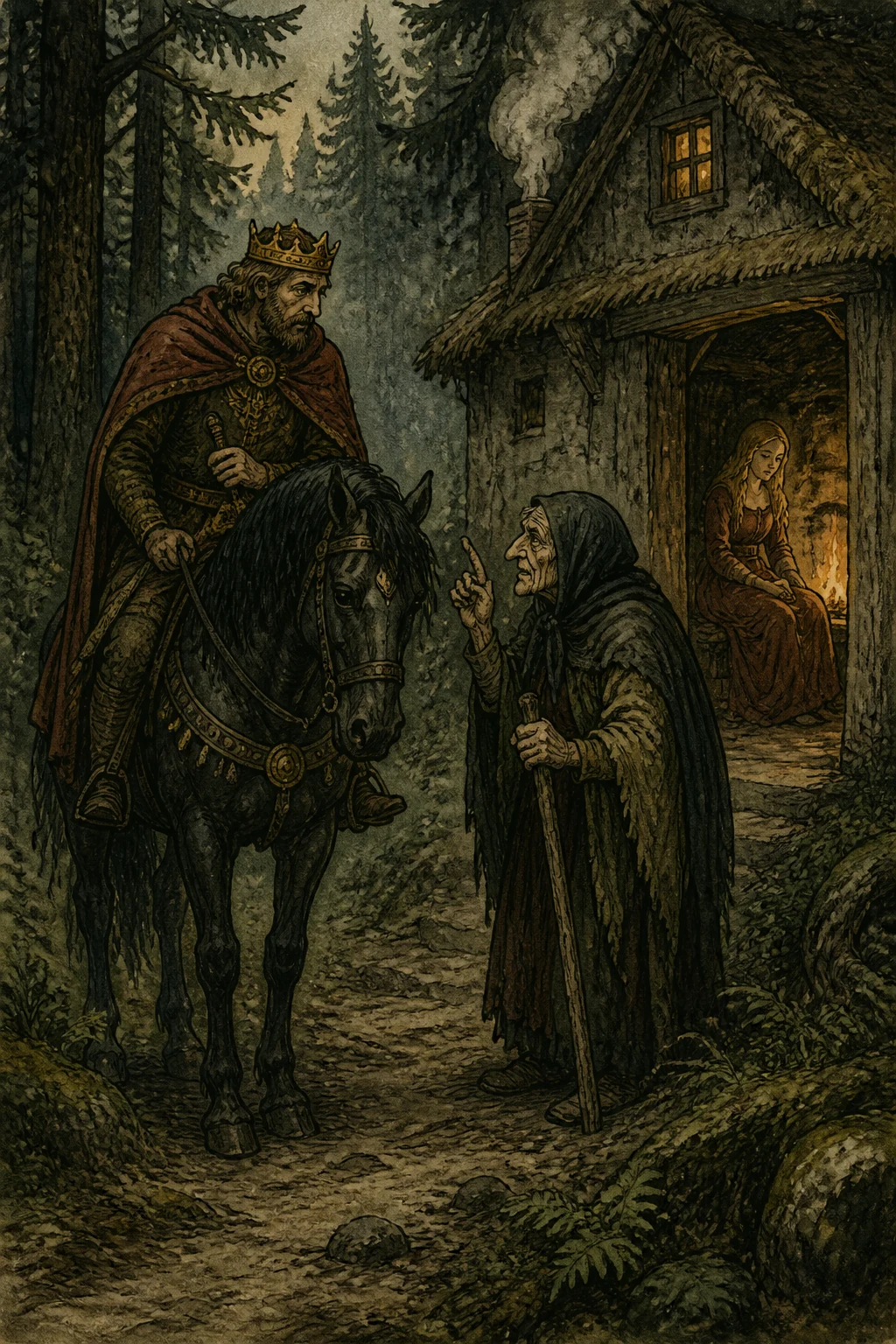
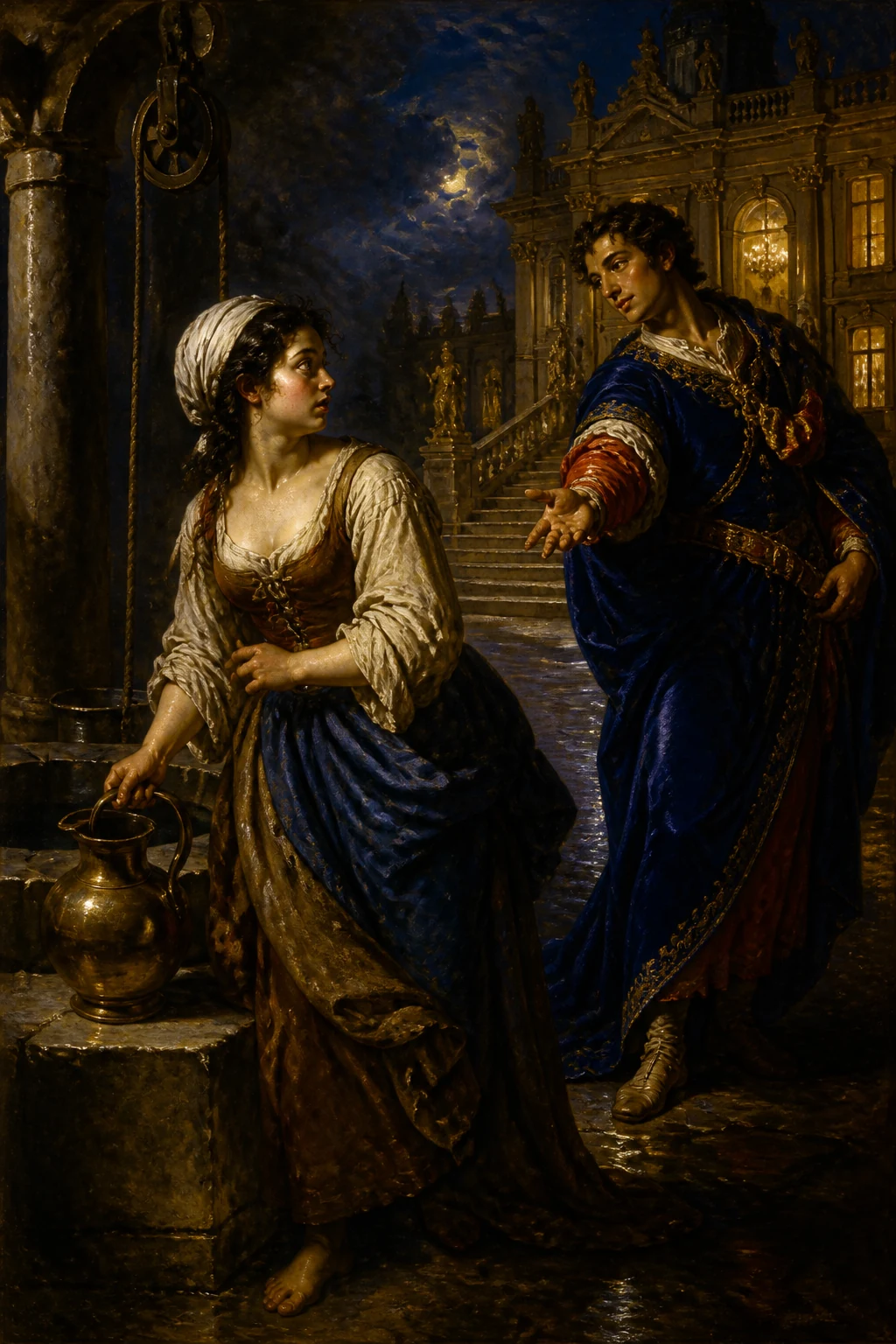
but each tossed the task to the next, like a cat ordering its own tail about, until the poor mother said, “Give an order, and do it yourself!” Taking up the pitcher, she was about to run the errand herself, though she was so old she could scarcely drag her legs along. But Luciella, the youngest, said, “Give it here, Mother dear. Though I hardly have strength enough for myself, I still want to spare you this trouble.” Taking the pitcher, she went outside the city to a fountain which, seeing the flowers swooning with fear of the night, splashed water in their faces. There she found a handsome slave, who said, “My pretty girl, if you will come with me to a grotto not far from here, I will give you all sorts of lovely things.” Luciella, who was always hungry for a kindness, replied, “Let me take this little bit of water to Mother, who is waiting for me, and I will come straight back.” She carried the pitcher home, then, on the pretext of going out to beg for a crust, returned to the fountain. Finding the same slave there, she followed him, and he led her through a grotto of tufa, hung with maidenhair fern and ivy, into a magnificent underground palace, all gleaming with gold. A splendid meal was set before her at once, while two strapping, pretty serving girls came to strip off her few rags and dress her from head to foot. That evening they put her to bed in a bed embroidered all over with pearls and gold; and as soon as the candles were put out, someone came to lie beside her. This went on for many days. At last the girl felt a longing to see her mother and told the slave, who went into a room, spoke to someone—I know not whom—and came out again with a great purse of crowns, telling her to give it to her mother. He urged her not to forget the way, but to return quickly, without saying where she had come from or where she was staying;
so the girl went, and when her sisters saw her so beautifully dressed and so well cared for, they were fit to burst with envy. When Luciella was ready to return, her mother and sisters wanted to go with her, but she refused their company and returned through the same grotto to the same palace. After spending several more months there in peace, she felt the same longing again, and was sent to her mother with the same warning and the same gifts. After this little business had happened three or four times, always fanning the hot winds of envy in her sisters’ swollen bellies, those ugly harpies racked their brains until, through an ogress, they learned the whole story. The next time Luciella came to see them, they said, “Though you have chosen to tell us nothing of your pleasures, you should know that we know everything, and that every night you are given a sleeping draught, so you cannot discover that a most handsome young man sleeps beside you. But you will always have your happiness doled out by halves unless you resolve to take the advice of those who love you. After all, you are our own flesh and blood, and we want your good and your happiness. So when you go to bed tonight and the slave brings your nightcap, ask him to fetch a napkin for you to wipe your mouth, and cleverly pour the wine out of the glass, so that you can stay awake through the night. When you see that your husband is asleep, open this padlock: whether he likes it or not, he will have to break the spell, and you will be the happiest woman in the world.” Poor Luciella, who did not know that beneath this velvet saddle lay a chafing sore, among these flowers a serpent, and in this golden basin poison, believed her sisters’ words. Returning to the grotto, when night came she did as those wicked creatures had told her; and when everything was hushed and silent, she struck a light and lit a candle. Beside her she saw the very flower of beauty, a young man who was all lilies and roses. At the sight of such loveliness she said, “Faith, you shall never slip through my fingers now!” Taking the padlock, she opened it, and saw a crowd of women carrying beautiful spun yarn on their heads;
one of them dropped a skein, and Luciella, who was kindness itself, forgot where she was and called out, “Pick up your yarn, madam!” At her cry, the young man awoke;
and was so displeased to have been discovered by Luciella that he immediately summoned the slave, had her dressed in her old rags, and sent her away. Looking as pale as someone just out of hospital, she returned to her sisters, who drove her off with harsh words and harsher deeds. So she went begging through the world until, after a thousand hardships, the poor wretch, now heavily pregnant, reached the city of Torre-Longa. Going to the royal palace, she begged for a little shelter on the straw, and a lady-in-waiting, who was a kind soul, took her in. When the time came to unburden her belly, she gave birth to a boy so beautiful he was a nugget of gold. But on the very first night after his birth, while everyone else was asleep, a handsome young man entered the room, saying, “O my beautiful son, if my mother only knew, in a golden basin she would bathe you, in golden swaddling bands she would wrap you; and if no cock ever crowed, never would I leave you.” Having spoken these words, at the first crowing of a cock he slipped away like quicksilver;
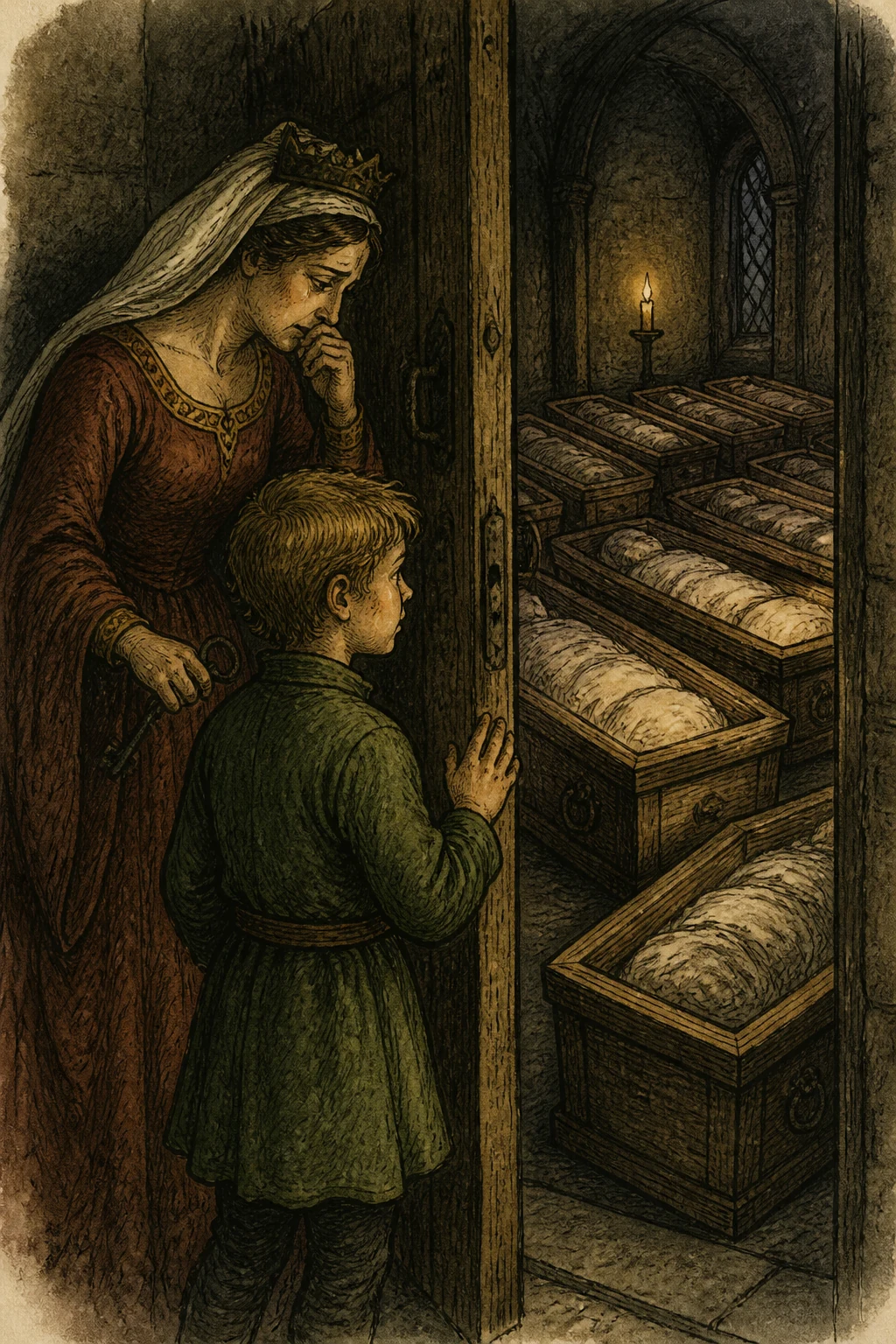
the lady-in-waiting noticed this, and when she saw that he came every night to sing the same tune, she told the queen. As soon as the sun, like a physician, had discharged all the stars from the hospital of heaven, the queen issued a most cruel decree that every cock in the city should be killed, making all the hens widows and shorn of their mates at a stroke. That evening, when the same young man returned, the queen, who was on the alert and not wasting time picking over lentils, recognized him as her son and clasped him tightly in her arms. Now an ogress had laid a curse upon this prince, condemning him to wander forever far from home until his mother embraced him and no cock crowed. So the moment he was in his mother’s arms, the enchantment was undone and the dreadful turmoil ended. Thus the mother found she had gained a grandson as precious as a jewel, and Luciella found a husband as handsome as a fairy prince. Her sisters, hearing of her newfound grandeur, had the brazen effrontery to come and visit her; but they were given pie for cake, and paid back in their own coin, learning, to their hearts’ bitter anguish, _That heartache is the child of Envy._
Izvirnik
Jornata II IX LO CATENACCIO
Naslednje strani prikazujejo izvirno besedilo za primerjavo.
_Lucia va ped’acqua a na fontana, e ttrova no Schiavo, che la mette a no bellissimo palazzo dov’è trattata da Regina; ma da le ssore ’nvidiose consigliata a bedere co chi dormesse la notte, trovatolo no bello giovane nne perde la grazia ed è cacciata; ma da dapò essere juta sperta, e demerta grossa prena na maniata d’anne, arriva ’n casa de lo nnammorato, dove fatto no figlio mascolo, dapò varie socciesse, fatto pace, le deventa mogliere._ _Moppe a gran compassione lo core de tutte le ddesgrazie passate da la poverella de Lisa, cchiù de quatto fecero l’uocchie russe co le lagreme ’n ponta, che non è ccosa, che cchiù tetelleca la piatate, quanto lo bedere chi perisce ’nnozentemente: ma toccanno a Cciommetella de votare sto filatorio, cossì decette._
Li consiglie de la ’nvidia sempre foro patre de le ddesgrazie, perchè sotto la mascara de lo bene chiudeno la facce de le rroine, e la perzona che se vede la mano a li capille de la fortuna, deve mmagenarese d’avere a tutt’ore ciento, che le metteno le ffonecelle tirate ’nnanze li piede pe ffarelo tommoliare, comme soccesse a na figliola, che pe lo male consiglio de le ssore, cadette da coppa la scala de la felecetà, e fu mmeserecordia de lo cielo, che non se rompesse lo cuollo.
Era na vota na mamma, ch’aveva tre figlie, che pe la pezzentaria granne, ch’aveva pigliato pede a la casa soja (la quale era chiaveca, dove correvano le lave de le desgrazie) le mannava pezzenno pe mantenere la vita, ed avenno na matina abboscato certe ffronne de caole jettate da no cuoco de no palazzo, e bolennole cocinare, disse una ped’una a le ffiglie, che ghiessero pe no poco d’acqua a la fontana; ma l’una co l’autra se la pallottiava, e la gatta commannava la coda, tanto che la povera mamma disse, commanna, e fa tu stessa, e pigliata la lancella, doveva ire essa pe sto servizio, ancora che pe la gran vecchiezza non poteva strascinare le gamme; ma Luciella, ch’era la cchiù ppiccerella disse, da ccà mamma mia ca si bè n’aggio tanta forza,
quanto mme vasta, puro te voglio levare sto travaglio; e ppigliatase la lancella, jette fora la Cetate, dove steva na fontana, che pe bedere li sciure smajate pe la paura de la notte, le jettava acqua ’nfacce, dove trovaje no bello schiavo, che le disse, bella fegliola mia, se vuoje venire co mmico a na grotta poco lontano, te voglio dare tante belle coselle. Luciella, che steva sempre speruta pe na grazia, le respose, lassame portare sto poco d’acqua a mmamma, che m’aspetta, ca subeto torno; e pportata la lancella a la casa, co scusa de ire cercanno quarche tozza, tornaje a la fontana, dove trovato lo medesemo schiavo se l’abbiaje appriesso, e fu portata pe ddinto na grotta de tufe apparata de capille viennere, e d’ellere dinto a no bellissimo
palazzo sotto terra, ch’era tutto lampante d’oro, dove le fu subbeto apparecchiata na bellissima tavola, e fra tanto scettero doje belle schiantune de vajasse a spogliarela de chille poche straccie, che portava, ed a vestirela de tutto punto: facennola corcare la sera a no lietto tutto racamato de perne, e d’oro; dove comme furo astutate le ccannele, se venne a ccorcare uno, la quale cosa duraje na mano de juorne: all’utemo venne golio a sta figliola de vedere la mamma, e lo disse a lo schiavo, lo quale trasuto a na cammara, parlato non saccio co chi, tornaje fora dannole no gran vorzone de scute, e decennole, che le ddesse a la mamma: allecordannole a no scordarese de la via, ma che tornasse priesto, senza dire da dove veneva, nne dove stesse:
ora juta la fegliola, e bedennola le ssore cossì bella vestuta, e cossì bona trattata, n’appero na ’nvidia da crepare; e bolennosenne tornare Luciella, la mamma, e le ssore la vozero accompagnare; ma essa refutanno la compagnia, se nne tornaje a lo medesemo palazzo pe la stessa grotta; e stanno n’autra mano de mise cojeta, all’utemo le venne lo stisso sfiolo, e fu co lo stisso protiesto, e co li stisse donative mannata a la mamma; e doppo essere socciesso sto chiajeto tre, o quatto vote, co rrefonnere sempre sceroccate de ’nvidia a la guallara de le ssore; all’utemo tanto scervecaro ste brutte arpie, che pe bia de n’Orca sapettero tutto lo fatto comme passava, e benuta n’autra vota da loro Luciella, le dissero, si bè non c’aje voluto dicere niente de
li guste tuoje, agge da sapere, ca nuje sapimmo ogne cosa, e ca ogne nnotte essennose dato l’adduobbio, non te puoje addonare, ca dorme co ttico no bellissemo giovane; ma tu starraje sempre co st’allegrezza a repieneto, si non te resuorve de fare lo consiglio de chi te vo bene; all’utemo si sango nnuostro, e desiderammo l’utele e lo gusto tujo: perzò quanno la sera te vaje a ccorcare, e bene lo schiavo co lo sciacqua dente, e tu decennole che te piglia na tovaglia pe te stojare lo musso, jetta destramente lo vino da lo becchiero, azzò puozze stare scetata la notte; e comme vedarraje mariteto addormuto, apre sto catenaccio, ca a ddespietto sujo besogna che sfaccia sto ’ncanto, e tu restarraje la cchiù ffelice femmena de lo munno. La povera Luciella,
che non sapeva, ca sotto sta sella de velluto nc’era lo garrese, dinto sti sciure nc’era lo serpe, e dinto sto vacile d’oro nc’era lo ttuosseco, credette a le pparole de le ssore, e ttornata a la grotta, e benuta la notte, fece comme le dissero chelle ’mmiciate, ed essenno tutte le cose zitto, e mmutto, allomaje co lo focile na cannela, e se vedde a canto no sciore de bellezza, no giovane che non bedive autro, che giglie e rrose; essa vedenno tanta bellezzetudene cosa, disse affè ca no mme scappe cchiù da le granfe; e pigliato lo Catenaccio l’aperze, e bedde na mano de ffemmene, che portavano ’ncapo tanto bello filato; a una de le cquale cascata na matassa, Luciella, ch’era no cunno de lemmosena, non recordannose dove steva, auzaje la voce decenno,
auza Maddamma lo ffilato; a lo quale strillo, scetatose lo Giovane; sentette tanto desgusto d’essere stato scopierto da Luciella, che a la medesema pedata chiammato lo schiavo, e fattole mettere le primme straccie ncuollo, nne la mannaje, che co no colore de sciuto da lo spitale tornaje a le ssore, da le quale fu co ttriste parole, e peo fatte cacciata, pe la quale cosa se mese a pezzire pe lo munno, tanto che dapò mille stiente, essenno la negrecata grossa prena, arrevaje a la cetate de Torre-Longa, e ghiuta a lo Palazzo riale, cercaje quarche poco de recietto ’ncoppa a la paglia; dove na dammecella de corte, ch’era na bona perzona, la raccouze; ed essenno l’ora de scarrecare la panza, fece no figlio accossì bello, ch’era na puca d’oro; ma la
primma notte, che nnascette, mentre tutte l’autre dormevano, trasette no bello giovane a cchella cammara, decenno: o bello figlio mio, se lo sapesse mamma mia, ’nconca d’oro te lavarria, ’n fasce d’oro te ’nfasciarria, e si maje gallo cantasse, maje da te me parterria: cossì decenno, a la primma cantata de gallo squagliaje comm’argiento vivo; de la quale cosa, essennose addonata la dammecella, e bisto, ch’ogne nnotte veveva lo stisso a ffare la stessa museca, lo ddisse a la Regina, la quale subbeto che lo Sole, comm’a miedeco, lecenziaje da lo spitale de lo Cielo tutte le stelle, fece no banno crodelissimo, che s’accedessero tutte li galle de chella Cetate, facenno tutto a no tiempo vedole, e ccarose quanta galline nc’erano, e ttornanno la sera
chillo medesemo giovane, la Regina, che steva sopra lo fierro, e no sceglieva nemmiccole, recanoscette ch’era lo figlio, e l’abbracciaje strettamente, e perchè la mardezzione data da n’Orca a sto Prencepe era, che sempre jesse spierto, lontano da la casa soja, ’nfiche la mamma no l’avesse abbracciato, e lo gallo non avesse cantato, tanto che ssubeto, che fu tra le braccia de la mamma se desfece sto percanto, e scompette lo tristo ’nfruscio. Cossì la mamma se trovaje avere acquistato no nepote, comme na gioja; Luciella trovaje no marito comme no fato, e le ssore avuto nova de le grannezze soje, se ne venettero co na facce de pepierno a trovarela; ma le fu rresa pizza pe ttortano, e fforo pagate de la stessa moneta, e co gran crepantiglia d’arma
canoscettero, _Ca figlio de la ’Nvidia è l’antecore._
Nadaljuj z branjem