Waltey
Vstajenje Gouverneurja Morrisa
045 The Rising of Gouverneur Morris
Myths and Legends of Our Own Land · Charles M. SkinnerO besedilu
Vstajenje Gouverneurja Morrisa
- Vir
- Myths and Legends of Our Own Land
- Avtor
- Charles M. Skinner
- Jezik branja
- Slovenščina
- Jezik izvirnika
- English
- Čas branja
- 4 min branja
- Obseg
- 3 strani
- Naslov izvirnika
- 045 The Rising of Gouverneur Morris
O izvirniku
Myths and Legends of Our Own Land
Obsežna zgodovinska zbirka ameriških legend, ki jih je Skinner zbral in avtorsko rekonstruiral. Bralni jezik je Slovenščina, izvirnik pa prihaja iz vira Myths and Legends of Our Own Land v jeziku English.
Besedilo
Vstajenje Gouverneurja Morrisa
Gouverneur Morris, ameriški poslanik na dvoru Ludvika XVI., je bil ob koncu vladavine terorja precej bogatejši zaradi srebrnine, draguljev, pohištva, slik, kočij in drugega, kar so mu francoski plemiči zaupali v varstvo, da jim tega sankiloti ob plenjenju mesta ne bi zaplenili; toliko aristokratov je bilo namreč pobitih, toliko jih je odšlo v izgnanstvo ali si nadelo druga imena, da za te predmete ni bilo mogoče najti ne dedičev ne lastnikov. Nekateri, ki so menili, da je Francija dežela, iz katere je najbolje oditi, so prišli v Ameriko, kjer so pustolovci že tolikokrat prej našli blagostanje, begunci pa mir. Maršal Ney in Bernadotte naj bi med revolucijo služila v ameriški vojski, v Hogansburgu v zvezni državi New York pa so častitega Eleazerja Williamsa, misijonarja episkopalne cerkve, ki je tam pokopan na cerkvenem pokopališču, razglasili za izginulega sina Ludvika XVI. O vprašanju »Ali je med nami Bourbon?« se je pogosto razpravljalo; toda sam se je izogibal pozornosti javnosti in mirno nadaljeval svoje dušnopastirsko delo.
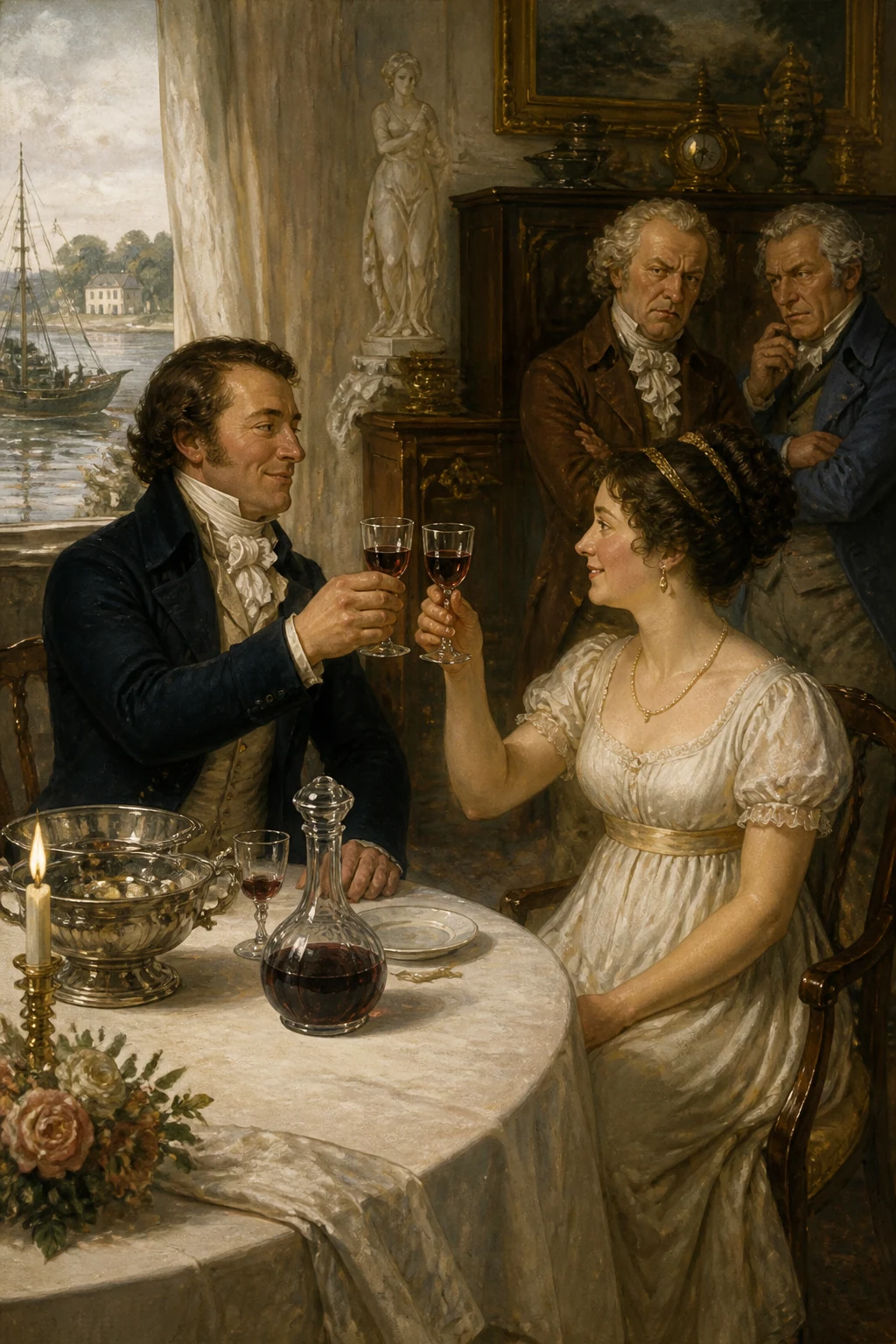
Vse premoženje, ki je ostalo v rokah gospoda Morrisa in ga ni nihče zahteval nazaj, so ob njegovi vrnitvi s poslaniške službe prepeljali v njegov dvorec v Port Morrisu; ko so sosedje videli, kako veliko je to bogastvo, sta zrasla tako njihov ugled zanj kakor njihova zavist. Nekoč je ob vinu trčil s kozarcem ob ženin kozarec in rekel, da bo, če mu rodi moškega potomca, ta sin podedoval njegovo bogastvo. Sorodnika, ki sta sedela pri mizi, sta ob teh besedah izmenjala pogleda in njegovi ženi namenila prav nič prijazen pogled. Minilo je leto. Sin se je rodil, Gouverneur Morris pa je bil mrtev.
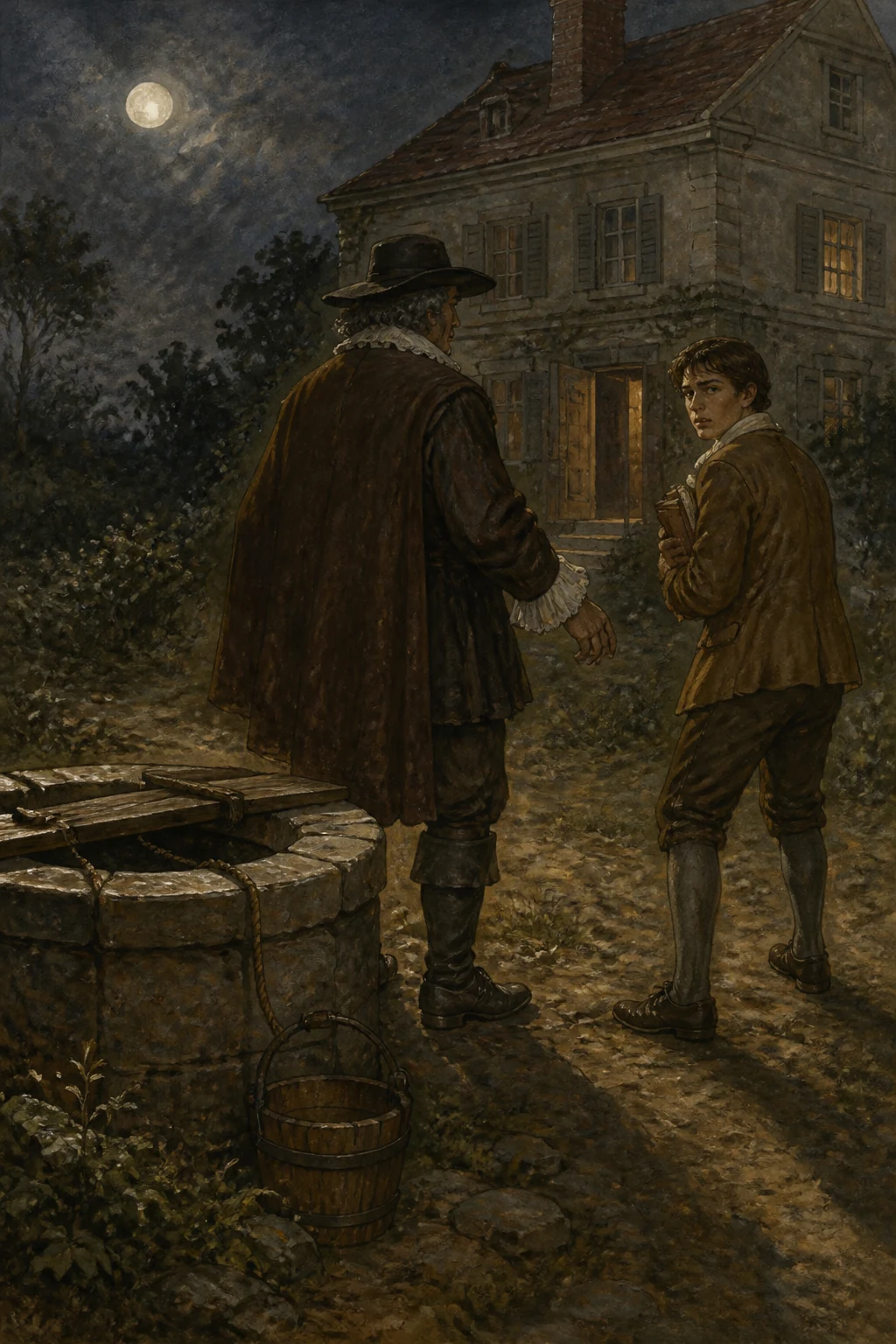
Prva noč leta 1817 je, služinčad spi, vdova pa pozno v noč sedi ob ognju z dojenčkom v naročju in od časa do časa prisluhne vetru v dimniku, udarjanju toče ob polkna, bučanju reke Bronx in trkanju ledenih plošč, ki jih nosi po njej; ob tem pa misli na moža in na zlovešči izraz, ki ga je njegova obljuba priklicala na obraza njegovih bratrancev. Tedaj se zunaj zasliši topot konjskih kopit in kmalu zatem zahteva, naj odpre vrata. Po vratnih polnilih udarjajo z obteženimi jahalnimi biči in moški glas zavpije: »Anne Morris, prinesi nam oporoko našega bratranca, sicer bomo vdrli v hišo in jo vzeli sami.« Žena stisne dojenčka k prsim, vendar ne odgovori. Spet zaropotajo biči; toda zdaj se v sobi zbira meglica in prevzame jo nenavadna začaranost, kajti mar leva na grbu nad vrati ne dihata in mar se portreti v okvirih ne premikajo?
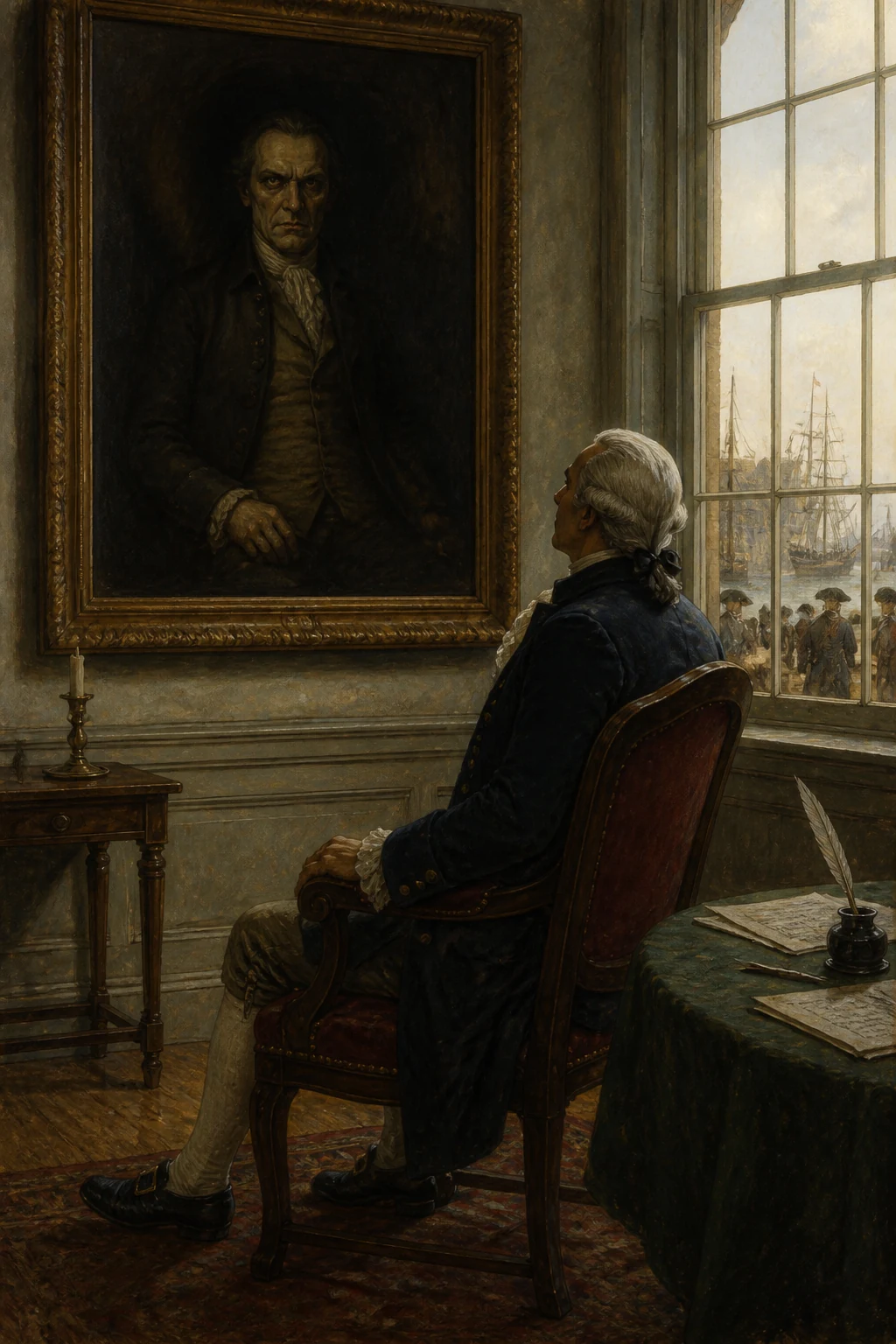
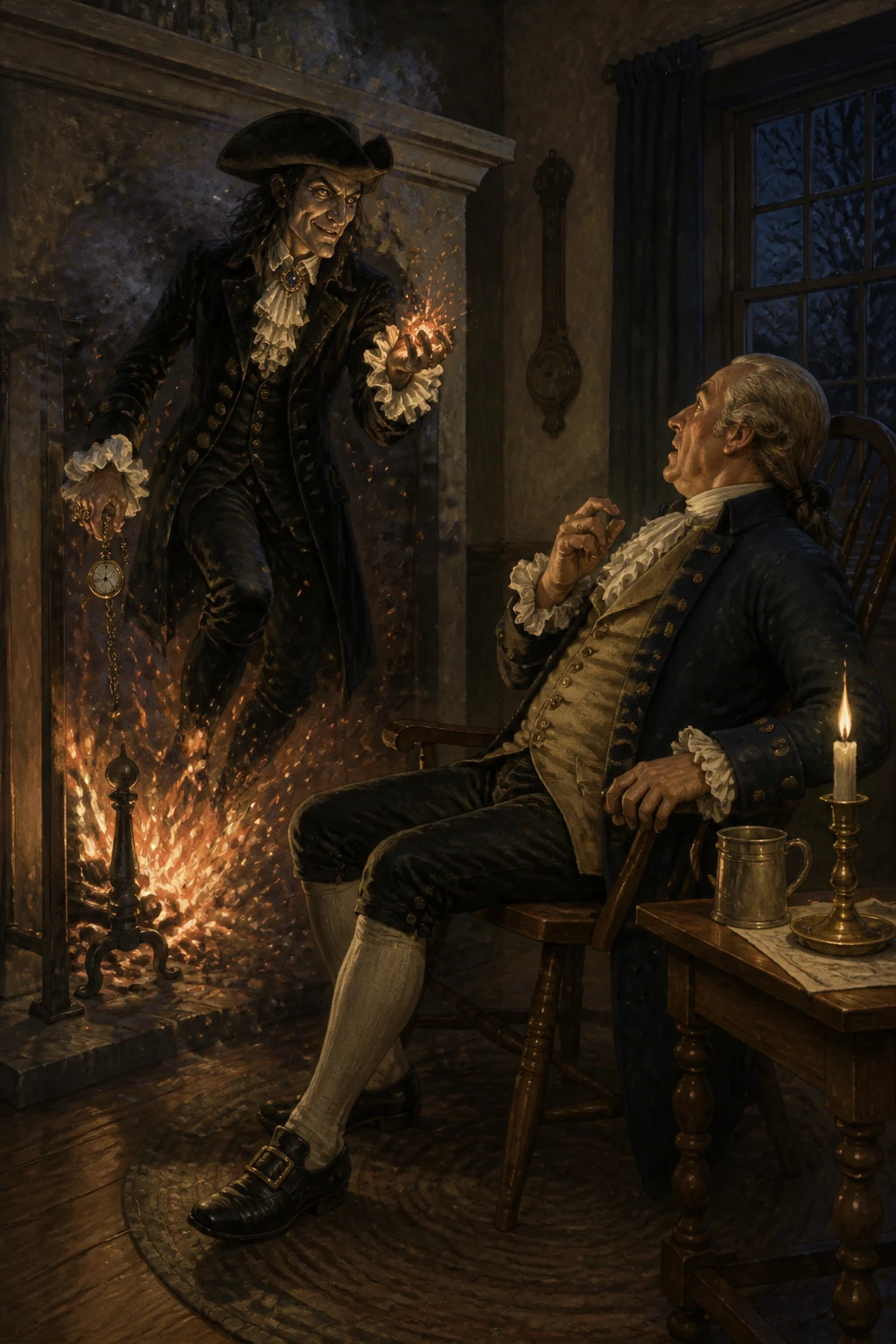
Res se. Zaslišita se šelestenje oblačil in žvenket jekla, nato pa neki stari bojevnik skoči iz okvira; ko pristane, njegov oklep zažvenketa, in trikrat udari z mečem ob ščit ter pozove Gouverneurja Morrisa, naj stopi na dan. Nekdo se premakne v sobi, kjer je Morris umrl; po hodniku se zaslišijo enakomerni koraki, ki jih v istem ritmu spremlja rožljanje nožnice; vrata se odprejo in v sunku vetra, ki vdre skoznje, vdova zasliši krik, nato pa galop dveh konj, ki hitro zamre v daljavi. Medtem ko strmi predse, se prikaže njen mož, oblečen kakor za življenja, in z nasmehom vzame svečnik s kaminske police, ji pomigne, naj mu sledi, ter gre iz sobe v sobo. Tedaj vdova prvič spozna, kakšno bogastvo je ob rojstvu pripadlo njenemu otroku, kajti prikazen ji pokaže skrivne predale v pisalnih omarah, kjer so skriti denar, lastninske listine in dragi kamni, ter na nepričakovanih tečajih odmakne slike in dele stenskega opaža, za katerimi se razkrijejo police, polne tkanin, srebrnine in čipk; nato se vrne k ognjišču in se skloni, kot bi hotel poljubiti ženo in dečka, a ura odbije eno zjutraj in izgine v svoj portret na steni.
Izvirnik
045 The Rising of Gouverneur Morris
Naslednje strani prikazujejo izvirno besedilo za primerjavo.
Gouverneur Morris, American minister to the court of Louis XVI, was considerably enriched, at the close of the reign of terror, by plate, jewels, furniture, paintings, coaches, and so on, left in his charge by members of the French nobility, that they might not be confiscated in the sack of the city by the sans culottes; for so many of the aristocracy were killed and so many went into exile or disguised their names, that it was impossible to find heirs or owners for these effects. Some of the people who found France a good country to be out of came to America, where adventurers had found prosperity and refugees found peace so many times before. Marshal Ney and Bernadotte are alleged to have served in the American army during the Revolution, and at Hogansburg, New York, the Reverend Eleazer Williams, an Episcopal missionary, who lies buried in the church-yard there, was declared to be the missing son of Louis XVI. The question, “Have we a Bourbon among us?” was frequently canvassed; but he avoided publicity and went quietly on with his pastoral work.
All property left in Mr. Morris's hands that had not been claimed was removed to his mansion at Port Morris, when he returned from his ministry, and he gained in the esteem and envy of his neighbors when the extent of these riches was seen. Once, at the wine, he touched glasses with his wife, and said that if she bore a male child that son should be heir to his wealth. Two relatives who sat at the table exchanged looks at this and cast a glance of no gentle regard on his lady. A year went by. The son was born, but Gouverneur Morris was dead.
It is the first night of the year 1817, the servants are asleep, and the widow sits late before the fire, her baby in her arms, listening betimes to the wind in the chimney, the beat of hail on the shutters, the brawling of the Bronx and the clash of moving ice upon it; yet thinking of her husband and the sinister look his promise had brought to the faces of his cousins, when a tramp of horses is heard without, and anon a summons at the door. The panels are beaten by loaded riding-whips, and a man's voice cries, “Anne Morris, fetch us our cousin's will, or we'll break into the house and take it.” The woman clutches the infant to her breast, but makes no answer. Again the clatter of the whips; but now a mist is gathering in the room, and a strange enchantment comes over her, for are not the lions breathing on the coat of arms above the door, and are not the portraits stirring in their frames?
They are, indeed. There is a rustle of robes and clink of steel and one old warrior leaps down, his armor sounding as he alights, and striking thrice his sword and shield together he calls on Gouverneur Morris to come forth. Somebody moves in the room where Morris died; there is a measured footfall in the corridor, with the clank of a scabbard keeping time; the door is opened, and on the blast that enters the widow hears a cry, then a double gallop, passing swiftly into distance. As she gazes, her husband appears, apparelled as in life, and with a smile he takes a candelabrum from the mantel and, beckoning her to follow, moves from room to room. Then, for the first time, the widow knows to what wealth her baby has been born, for the ghost discloses secret drawers in escritoires where money, title deeds, and gems are hidden, turns pictures and wainscots on unsuspected hinges, revealing shelves heaped with fabrics, plate, and lace; then, returning to the fireside, he stoops as if to kiss his wife and boy, but a bell strikes the first hour of morning and he vanishes into his portrait on the wall.
Nadaljuj z branjem