Waltey
Usnjeni predpasnik
Cuentos antiguos
Cuentos de Navidad, de la patria y antiguos · Emilia Pardo BazánO besedilu
Usnjeni predpasnik
- Vir
- Cuentos de Navidad, de la patria y antiguos
- Avtor
- Emilia Pardo Bazán
- Jezik branja
- English
- Jezik izvirnika
- Español
- Čas branja
- 7 min branja
- Obseg
- 6 strani
- Naslov izvirnika
- 034 El mandil de cuero
O izvirniku
Cuentos de Navidad, de la patria y antiguos
Sedemintrideset avtorskih zgodb v treh zgodovinskih knjižnih skupinah. Bralni jezik je English, izvirnik pa prihaja iz vira Cuentos de Navidad, de la patria y antiguos v jeziku Español.
Besedilo
Usnjeni predpasnik
Do not imagine that what I am about to relate happened in our own day or in our own lands, or that it is invention or fiction. If it holds any useful moral, it is that history has meaning and lessons to teach. Woe to humankind if history amounted to nothing more than the oppression of the weak by the strong, the triumph of violence!
Once upon a time there was a king of Persia whom many call Nemrod, though according to better-founded accounts his name must have been Doac, and he slew and succeeded that Yemsid whose sin was to believe himself perfect. This Doac was a magician, a sorcerer, and a man of learning; but instead of applying his knowledge as his predecessors had done—founding cities, teaching and spreading arts and crafts, vanquishing the divs, or spirits of evil, in single combat, establishing the first pearl fisheries, sinking the first turquoise mines, spreading knowledge of the alphabet and of those signs which, inscribed upon brick or stone, preserve the memory of great deeds through the ages—the wicked Doac used his magic only to concoct and distil potions and poisons and to devise ever more ingenious tortures, for he delighted in pain, and groans were sweet music to his ears. Until Doac’s reign, the Persians had not known how a bundle of rods tears the flesh, or how a rope tightens about the throat. When asked what Doac taught his subjects, the chronicle replies that he taught them to flog and to hang.
Heaven, doubtless weary of him, afflicted Doac with a cruel and shameful ailment. One morning, as he prepared to enjoy the pleasures of the bath, the king noticed that a large wart had sprouted on each shoulder, as big as an egg and shaped exactly like a serpent’s head—flat, greenish, hideous. At first these growths caused him no pain, but before long they ulcerated and tormented him so atrociously that Doac flew into fits of rage. Worst of all, since he would not show his loathsome affliction to physicians or to any living soul, he had to wash, tend, and dress himself alone, treating the sores with whatever poultices and ointments he could find in his magical repertoire. Despairing at last of so many remedies that had proved useless, and casting fresh spells, he awoke one day convinced that the only cure was a man’s brains, applied while still warm to the festering wounds.
Let no one be appalled at the ignorance this reveals in Doac’s time, for even in our own we have seen sheep’s caul, a pigeon split lengthwise, and a piece of beef prescribed for application to lupus sores. That this bloody medicine must have had some effect is shown by the gradual emptying of the prisons throughout the kingdom of Persia: two prisoners were executed daily so that their brains could be removed. But nothing in this world is inexhaustible, not even imprisoned criminals; and so, when the supply of fresh brains ran out, a tribute of two men a day was imposed, collected by henchmen and executioners sent here and there to seize them. From large families they would generally choose the sickly, the deformed, the crippled, the old, the useless. When Doac learned of this, he flew into a furious rage, swearing that if they went on giving him the refuse and the worst of his subjects’ brains, he would slit all their throats. The executioners then resolved to sacrifice the flower of Yspahan, to satisfy the king.
They did not, however, venture to seek victims among the powerful—the great lords or the officers of the royal household—but almost at once they remembered that a poor blacksmith named Cavé had two sons, straight and splendid as a pair of golden pines, exceedingly handsome and skilled in every bodily exercise. Thinking them good prey, they caught them unawares in the public square, cut their throats, split open their skulls, and carried their brains, still warm, to Doac.
Cavé was working at his forge when his neighbours, some out of compassion and others out of officiousness, came to bring him the dreadful news. At first it seemed as though the wretched father had not grasped the unheard-of calamity they were recounting: frozen, motionless, speechless, he listened to the tale of horror. Suddenly his grief burst forth with the fearful fury of a lion that snaps its chain and tears away the bars of its cage with a single swipe. What roused Cavé was the knowledge that his sons had been singled out for the blade precisely because they were strong, intelligent, and handsome. “Not to leave me even one for comfort! Ah! By the eternal light of the Sun, I swear I shall have my revenge.” And as he cried out, the blacksmith brandished his enormous hammer; and as he swung it, great mounds of bronze flesh, hardened by labour, swelled upon his bare arm, black with slag.
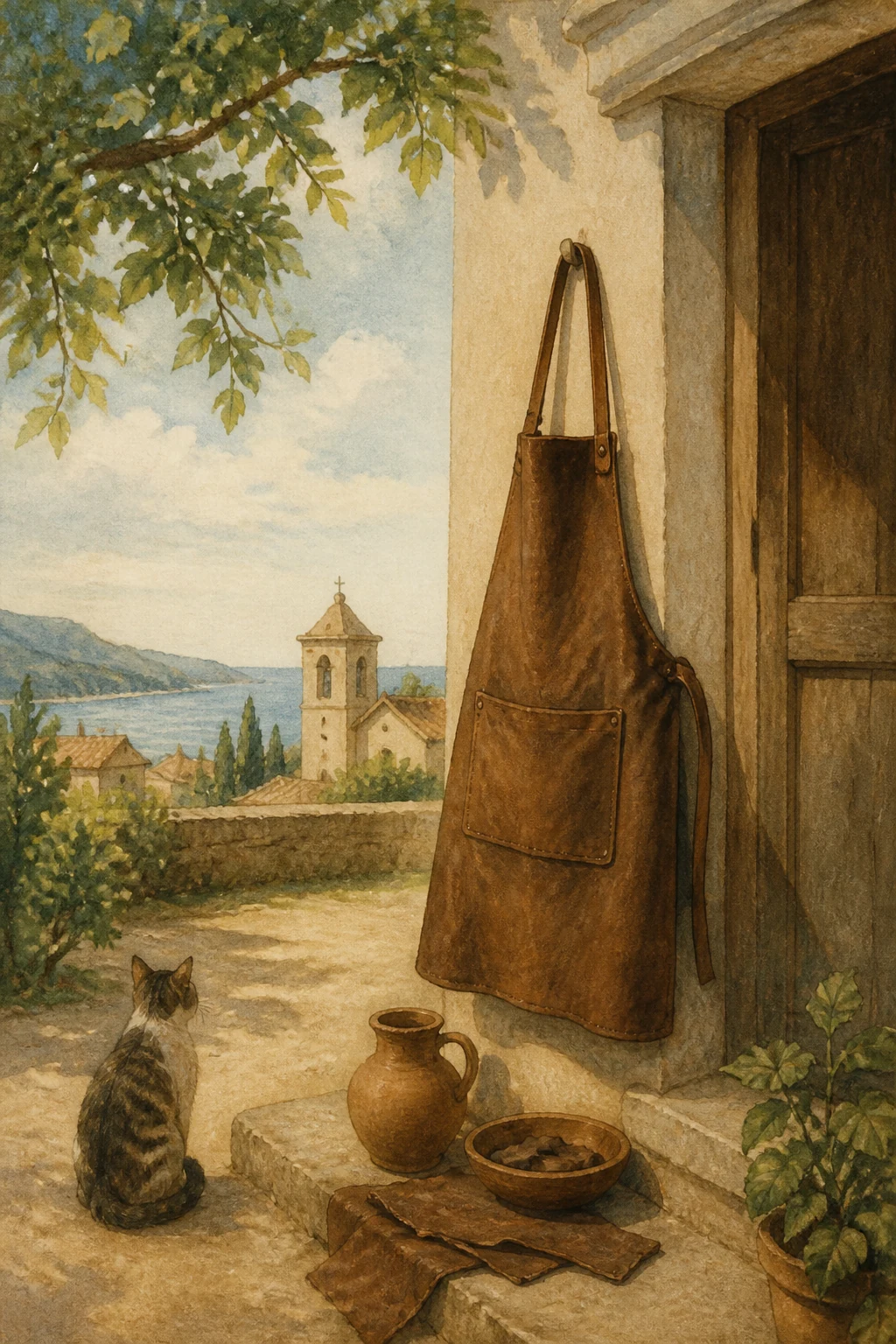
Unfastening the broad leather apron that protected him, Cavé tied it to the end of a pole, and with the apron for a standard and the hammer for a weapon, went out into the square, shouting curses against Doac. At the despairing father’s cry, a strange thing happened: the inhabitants of Yspahan, who had lain numb and frozen with fear, recovered their vigour and shook off their stupor. Seeing that there was a man who dared to raise a standard, they rushed to gather round him, wild with enthusiasm, and the rebellion broke out so suddenly that the tyrant had time only to flee in disgrace with his women and his treasures.
Once far from Yspahan, Doac gathered an army of more than a hundred thousand men and returned, determined to scatter the hordes led by a craftsman whose banner was a filthy, blackened leather apron. But things went badly for him, for Doac’s embroidered standard of silk and gold, studded with pearls and bearing the seven planets and the moon as its emblems, was forced to retreat before the scrap of leather that displayed only the marks of labour and the traces of human sweat. And Doac’s head, dripping blood, livid, its features twisted in the grimace of death, was impaled upon the pole that held the leather apron, while Cavé’s troops, having stripped the tyrant of his garments, roared with laughter at the two warts on his shoulders that resembled serpents’ heads...
When his army acclaimed him king, the blacksmith flatly refused to accept the crown. He himself chose Prince Feridún to reign, and Feridún later became a great monarch and a profound scholar, teaching the Persians astronomy, medicine, and botany. The only glory that fell to Cavé the blacksmith was embodied in his apron, which Feridún adopted as the royal standard. Whenever Feridún went into battle and, without false shame or concern for others’ opinions, set before him that scrap of leather representing the sanctity of labour and the protest against injustice and the abuse of power, it was as though he carried a talisman: victory was assured. Whenever he felt ashamed of the leather apron, he suffered defeat. Because the apron was lost amid the upheavals and vicissitudes of the Greek invasion—that apron which symbolized the warning that a monarch must not fill the cup of iniquity lest the cup of heavenly wrath overflow—because, I say, Cavé’s standard and its tradition of independence disappeared, the Persians, a people of the noblest origins and the highest intellectual gifts, sank into the backwardness, servility, and degradation in which they rot today.
Izvirnik
034 El mandil de cuero
Naslednje strani prikazujejo izvirno besedilo za primerjavo.
No creáis que esto que voy á referir sucedió en nuestros días ni en nuestras tierras, ni que es invención ó ficción. Si encierra alguna moraleja aprovechable, consistirá en que la historia tiene sentido y enseñanza. ¡Ay del género humano si la historia se redujese á la opresión del débil por el fuerte, al triunfo de la violencia!
Érase que se era un rey de Persia, á quien muchos llaman Nemrod, pero que según versiones más fundadas debió de llamarse Doac, y fue matador y sucesor de aquel Yemsid cuyo pecado consistía en creerse perfecto. Este Doac era mago, brujo y sabidor; pero en vez de ejercitar su ciencia según la habían ejercitado sus predecesores--fundando ciudades, enseñando y propagando artes é industrias, venciendo en singular batalla á los divos ó genios del mal, estableciendo las primeras pesquerías de perlas, horadando las primeras minas de turquesas, popularizando el conocimiento del alfabeto y de los signos que trazados sobre ladrillo ó piedra conservan al través de las edades el recuerdo de los hechos insignes,--el empecatado Doac sólo utilizó su magia para componer y destilar filtros y venenos y refinar ingeniosos suplicios, porque se deleitaba en el dolor, y los gemidos eran para él regalada música. Hasta el reinado de Doac, no sabían los persas cómo desgarra las carnes un haz de varillas, ni cómo aprieta la nuez una soga. Cuando se pregunta qué enseñó Doac á sus súbditos, la crónica responde que enseñó á azotar y ahorcar.
Cansado sin duda el cielo, infligió á Doac un padecimiento cruel y vergonzoso. Una mañana, al disponerse á gozar las delicias del baño, notó el rey que en cada hombro le había salido gruesa verruga, tamaña como un huevo y de la mismísima figura que una cabeza de serpiente--chata, verdosa, horrible.--Al principio no dolían las tales excrecencias, pero no tardaron en ulcerarse y causar atroz martirio, que determinaba en Doac accesos de rabia, siendo lo peor que como no quería enseñar á los médicos ni á persona viviente su asqueroso alifafe, tenía que lavarse, curarse y vestirse solo, y atender á las úlceras con las plastas y ungüentos que encontraba en su repertorio mágico. Desesperado ya de tantas recetas que habían salido vanas, y realizando nuevos conjuros, un día amaneció con la persuasión de que el único remedio eran los sesos de un hombre, aplicados calientes aún á las enconadas heridas.
No vaya nadie á asustarse de la ignorancia que esto acusa en los tiempos de Doac, pues aún en los nuestros hemos podido ver que se receta el redaño del carnero, el pichón abierto en canal, y el trozo de carne de buey sobre el lupus. Que la sangrienta medicina sería algo eficaz, se demuestra con que poco á poco fueron vaciándose las prisiones del reino de Persia; diariamente ejecutaban á dos presos para sacarles el meollo. Mas no hay en el mundo cosa que no se agote, y también los criminales encerrados; así es que, cuando faltó la ración de meollo fresco, se fijó un tributo de dos hombres por día, que cobraban sayones y verdugos enviados aquí y allí á requisar. Solían éstos elegir, entre las familias numerosas, el individuo enfermizo, deforme, imposibilitado, el viejo, el inútil. Y ocurrió que enterándose Doac de esta circunstancia, montó en furiosa cólera, jurando que si seguían dándole el desecho y lo peor de los sesos de sus vasallos, los degollaría á todos. Entonces los verdugos resolvieron sacrificar lo más florido de Yspahan, para dejar al rey satisfecho.
No se determinaron, sin embargo, á buscar víctimas entre la gente poderosa--magnates, empleados de la casa real;--pero, en los primeros instantes, acordáronse de que un pobre herrero, llamado Cavé, tenía dos hijos como dos pinos de oro, gallardos en extremo y diestros en todos los ejercicios corporales; y pareciéndoles buena presa, los sorprendieron en la plaza pública, los degollaron, les abrieron el cráneo, y llevaron á Doac su masa cerebral caliente todavía.
Hallábase Cavé trabajando en su forja, cuando los vecinos, entre compasivos é indiscretos, acudieron á darle la fatal nueva. Al pronto pareció como si el mísero padre no se hubiese enterado de la inaudita desventura que le comunicaban: helado, inmóvil, mudo, escuchó la relación del atroz caso. De súbito, su pena estalló formidable cual transporte de león que rompe la cadena y arranca de un zarpazo los hierros de la jaula. Lo que hizo saltar á Cavé fue saber que precisamente por ser sus hijos fuertes, inteligentes y hermosos, los habían señalado para la cuchilla. «¡No dejarme ni siquiera uno para consuelo! ¡Ah! Juro por la luz eterna del Sol que me vengaré.» Y el herrero, gritando así, blandía su enorme martillo, y al blandirlo, montañas de carne bronceada, endurecida por el trabajo, se acumulaban en su brazo desnudo y negro de escoria.
Desciñéndose el amplio mandilón de cuero que le protegía, Cavé lo ató á la punta de un palo, y con el mandil por estandarte y el martillo por arma, salió á la plaza profiriendo clamores de maldición contra Doac. A la voz del desesperado padre, sucedió un extraño fenómeno: los habitantes de Yspahan, que yacían aletargados y helados de miedo, recobraron energía, sacudieron la modorra; al ver que existía un hombre que se atrevía á enarbolar un estandarte, corrieron á rodearle locos de entusiasmo, y la sedición estalló tan repentina, que el tirano sólo tuvo tiempo de huir vergonzosamente con sus mujeres y sus tesoros.
Lejos ya de Yspahan, juntó Doac un ejército de más de cien mil hombres, y volvió dispuesto á disolver las hordas que un artesano capitaneaba y que tenían por bandera sucio y denegrido mandil de cuero. Pero avínole mal, porque el bordado guión de Doac, de seda y oro, recamado de perlas, ostentando por emblemas los siete planetas y la luna, hubo de retroceder ante el pedazo de suela que sólo lucía los estigmas del trabajo y las huellas del humano sudor; y la cabeza de Doac, goteando sangre, lívida, contraída por la mueca de la agonía, quedó hincada en el palo que sostenía el mandil de cuero, mientras las tropas de Cavé, habiendo despojado al tirano de sus vestiduras, se reían á carcajadas de las dos verrugas que en sus hombros figuraban cabezas de serpiente...
Al ser saludado rey por su ejército, el herrero se negó rotundamente á aceptar la corona. Él mismo señaló para reinar al príncipe Feridún, que después fue un gran monarca y un sabio profundo, y enseñó á los persas la astronomía, la medicina y la botánica. La única gloria que cupo á Cavé el herrero se cifró en su mandil, que Feridún tomó por estandarte regio. Siempre que al entrar en batalla Feridún, sin falso rubor ni respetos humanos, colocaba ante sí aquel trozo de suela que representaba la santidad del trabajo y la protesta contra la injusticia y el abuso del poder, era como si llevase un talismán: tenía la victoria segura. Cuando se avergonzaba del mandil de cuero, salía derrotado. Por haberse perdido en las revueltas y vicisitudes de la invasión griega el mandil, símbolo de que no debe el monarca colmar la copa de la iniquidad para que no se desborde la de la ira celeste; por haber desaparecido, digo, el estandarte de Cavé y su tradición de independencia, llegaron los persas, pueblo nobilísimo en su origen y de altas facultades intelectuales, al atraso, al servilismo y á la abyección en que hoy se pudren.
Nadaljuj z branjem