Waltey
Upravnik province Tinta
Tradiciones peruanas
Tradiciones peruanas · Ricardo PalmaO besedilu
Upravnik province Tinta
- Vir
- Tradiciones peruanas
- Avtor
- Ricardo Palma
- Jezik branja
- English
- Jezik izvirnika
- Español
- Čas branja
- 9 min branja
- Obseg
- 7 strani
- Naslov izvirnika
- 009 El corregidor de Tinta
O izvirniku
Tradiciones peruanas
Šestindvajset Palmovih avtorskih zgodovinskih tradicij iz konkretnega Gutenbergovega zvezka. Bralni jezik je English, izvirnik pa prihaja iz vira Tradiciones peruanas v jeziku Español.
Besedilo
Upravnik province Tinta
A criminal was being hanged, and his wife said: “Do not grieve, my dear; the rope may yet break.” ANONYMOUS. I It was November 4, 1780, and the priest of Tungasuca, to celebrate his patron saint, who was also the patron of His Majesty Charles III, had gathered the parish’s most prominent residents for a sumptuous luncheon, along with a few friends from neighboring towns who had been arriving since dawn to wish him a happy birthday.
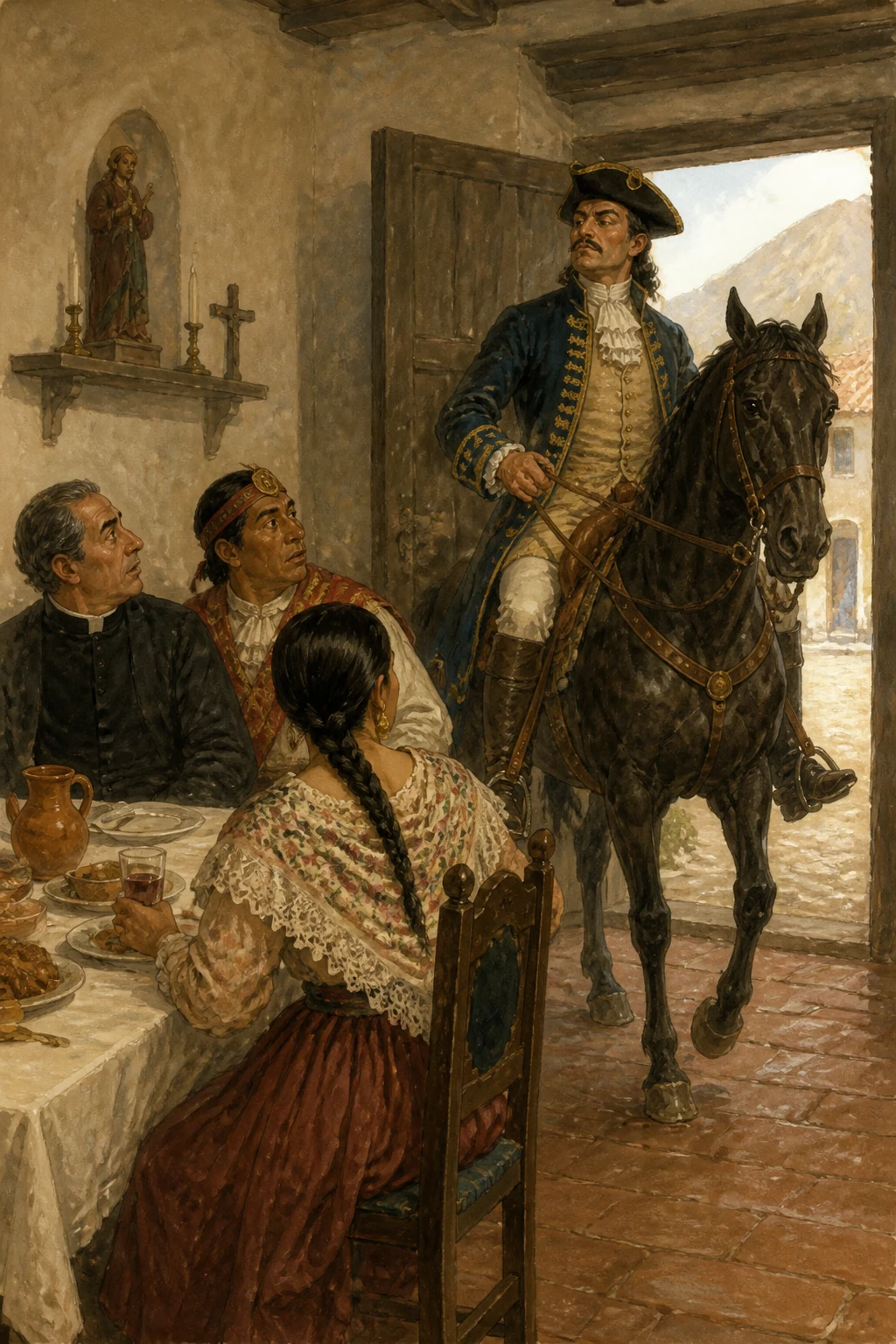
The priest, don Carlos Rodríguez, was an easygoing, charitable cleric, undemanding in his collection of tithes and other parish dues—apostolic qualities that made him the idol of his parishioners. That morning he sat at the head of the table, with a descendant of the Incas, don José Gabriel Tupac-Amaru, on his left, and doña Micaela Bastidas, the cacique’s wife, on his right. The wine flowed freely, and with it came the most unrestrained merriment. Suddenly the gallop of a horse was heard; it stopped at the rectory door, and its rider, without removing his spurs, strode into the dining room.
The newcomer was don Antonio de Arriaga, corregidor of the province of Tinta, a Spanish hidalgo so puffed up with the antiquity of his lineage that he lorded it over Europeans and creoles alike as mere commoners. Coarse in speech, rough in manner, cruel to the Indians conscripted for the mita, and so miserly that, had he been born a clock instead of a man, he would have begrudged even giving the time—such was His Lordship. And to crown his disrepute, the ecclesiastical judge and canons of Cuzco had solemnly excommunicated him for certain encroachments upon Church authority.
All the guests rose when the corregidor entered. Without so much as acknowledging the cacique don José Gabriel, he dropped into the chair the latter had occupied, and the Indian nobleman moved to the other end of the table, giving no sign that he had noticed the high-and-mighty Spaniard’s discourtesy. After a few commonplace remarks, having regaled his stomach with the food and moistened his tongue, His Lordship said:
“Do not imagine, sir, that I have ridden all the way from Yanaoca merely to pay my respects.” “Your Lordship knows,” replied the parish priest, “that whatever brings you is always welcome in this humble cottage.”
“For your sake, I am glad to have satisfied myself that a report I received yesterday was false. Had I found it true, I swear I would have paid no heed to cassocks or tonsures, but would have had you bound and given you a thrashing you would remember for the rest of your days. So long as I wield the staff of office, no priestling is going to bluster at me.”
“God is my witness that I do not know what has prompted Your Lordship’s angry words,” murmured the priest, cowed by Arriaga’s insolent remarks.
“I know my own mind and need no partner in my dance, señor don Carlos. A fine sort of fellow I should be to tolerate the reading of censures in my district, under my very nose, as it were, or those scraps of excommunication the old fool acting as ecclesiastical judge in Cuzco keeps sending out against me. By the soul of my father, may he rest in glory, I will do as I please with the first priest who steps out of line in my jurisdiction! And take care not to get my blood up or put me in the least ill humor, for I shall be off to Cuzco in a trice and make mincemeat of those potbellied, concubine-keeping canons!”
So engrossed was the corregidor in his coarse boasting, interrupted only by deep draughts of wine, that he failed to notice don Gabriel and several of the guests slipping out of the room.
II At six that evening, the insolent hidalgo was galloping toward the town where he lived when his horse was lassoed, and don Antonio found himself surrounded by five armed men, whom he recognized as fellow guests at the priest’s table.
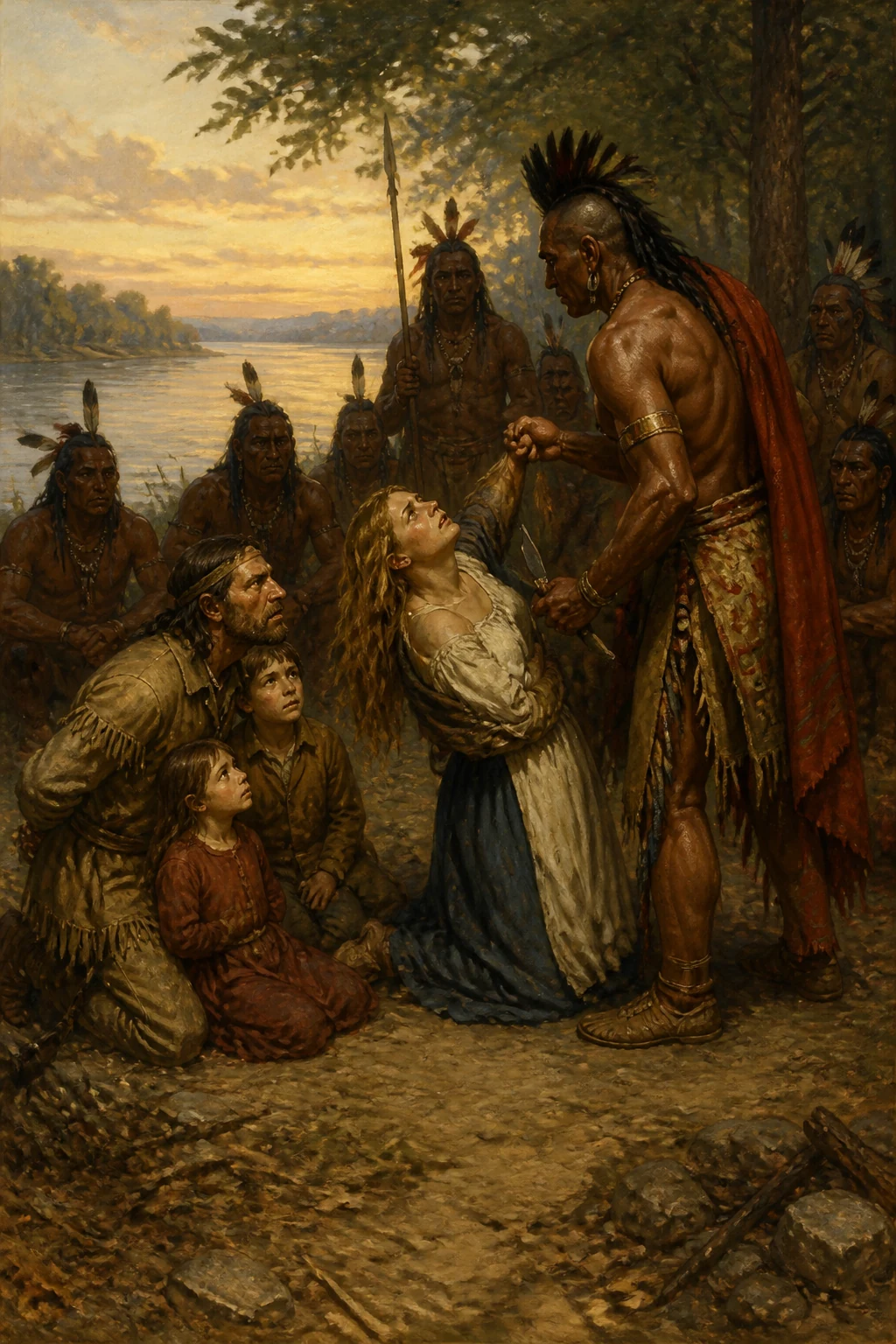
“Surrender yourself, sir,” said Tupac-Amaru, who led the group. And before the hapless corregidor could offer the slightest resistance, they riveted a pair of fetters around his ankles and took him to Tungasuca. Indians immediately set out carrying dispatches to Upper Peru and other places, and Tupac-Amaru raised the standard of revolt against Spain.
A few days later, on November 10, a gallows stood before the chapel of Tungasuca; and the haughty Spaniard, dressed in his uniform and accompanied by a priest who exhorted him to die as a Christian, heard the town crier proclaim:
This is the justice that don José Gabriel I, by the grace of God, Inca, King of Peru, Santa Fe, Quito, Chile, Buenos Aires, and the continent of the South Seas, Duke and Lord of the Amazons and of the great Paititi, commands to be carried out upon the person of Antonio de Arriaga, as a tyrant, traitor, enemy of God and His ministers, corrupter, and forger.
The executioner, a black slave belonging to the unfortunate corregidor, then tore off his uniform as a sign of degradation, dressed him in a shroud, and put the rope around his neck. But when his body had been raised a few inches from the ground, the rope snapped; and Arriaga, taking advantage of the Indians’ natural surprise at this incident, ran toward the chapel, crying: “I am saved! I claim sanctuary! The Church protects me!”
The hidalgo was just about to enter the sanctuary when the Inca Tupac-Amaru barred his way and seized him by the neck, saying: “The Church offers no refuge to such a scoundrel as you! The Church offers no refuge to one excommunicated by the Church!”
The executioner took hold of the condemned man once more and soon completed his bloody task. III Here we ought to bring this traditional tale to a close; but the plan of our work requires us to devote a few lines, by way of epilogue, to the viceroy during whose administration this event occurred.
His Excellency don Agustín de Jáuregui, a native of Navarre and a member of the family of the counts of Miranda and Teba, a knight of the Order of Santiago and lieutenant general of the royal armies, was serving as president of Chile when Charles III appointed him to replace the viceroy don Manuel Guirior, who was unjustly and ignominiously dismissed. The knight Jáuregui arrived in Lima on June 21, 1780, and, in truth, none of his predecessors had assumed command under worse auspices.
On the one hand, the savages of Chanchamayo had just burned and plundered several civilized settlements; on the other, increased taxes and the tyrannical methods of the royal inspector Areche had provoked serious disturbances, in which many corregidors and sales-tax collectors fell victim to popular fury. It might be said that the whole country was ablaze, even though Guirior had suspended collection of the hateful and excessive levies pending a wiser decision by the monarch to reverse his policy.
Moreover, war had broken out between Spain and England in 1779, and repeated reports from Europe assured the new viceroy that the mistress of the seas was fitting out a fleet bound for the Pacific.
Jáuregui—whose surname means “the lord’s residence” in Basque—had to fortify the coast and equip it with artillery, organize militias, and strengthen the navy in anticipation of piratical attacks. These measures entailed heavy expenditure, which deepened the public distress.
Don Agustín de Jáuregui had occupied the viceregal throne for barely four months when news arrived of the killing of the corregidor Arriaga, and with it the report that throughout a territory extending more than three hundred leagues, the cacique Tupac-Amaru was being proclaimed Inca and sovereign of Peru.
This is not the place to recount the history of that tremendous revolution, which, as is well known, placed the colonial government in grave danger. Very little more would have been needed for independence to have been achieved then and there.
On April 6, the Friday of Sorrows, in the year 1781, the Inca and his principal followers were taken prisoner and subjected to the most barbarous horrors. Tongues and hands were cut off, bodies quartered; there were hangings and executions by the garrote. There was no end to the atrocities Areche authorized.
With the execution of the Inca, his wife doña Micaela, his sons, and his brothers, the revolutionaries lost their unifying center. Yet the spark was not extinguished until July 1783, when don Felipe Tupac, brother of the ill-fated Inca and leader of the natives of Huarochirí, was executed in Lima. “Thus,” says Dean Funes, “ended this revolution, and history will scarcely offer another more justified or less fortunate.”
The arms of the house of Jáuregui were: a shield divided per chevron reversed, the first field gold, bearing a spreading oak and a boar passant; the second red, bearing a silver castle with a flag; the third blue, bearing three fleurs-de-lis.
It is said that on April 26, 1784, the viceroy don Agustín de Jáuregui received a gift of a small basket of cherries, a fruit of which His Excellency was very fond, and that he had scarcely eaten two or three when he fell senseless to the floor. Thirty hours later, the great door of the palace reception hall was opened; and there, in an armchair beneath the canopy, sat Jáuregui in full dress uniform. In accordance with the prescribed ceremony, the court clerk, followed by the Royal Audiencia, advanced to within a few paces of the canopy and called out three times: “Your Excellency, don Agustín Jáuregui!” Then, turning to those assembled, he pronounced the required words: “Gentlemen, he does not answer. He is dead! He is dead! He is dead!” He then produced an official record, and the judges affixed their signatures to it.
Thus did the Indians avenge the death of Tupac-Amaru.
Izvirnik
009 El corregidor de Tinta
Naslednje strani prikazujejo izvirno besedilo za primerjavo.
CRÓNICA DE LA ÉPOCA DEL TRIGÉSIMO TERCIO VIRREY
Ahorcaban a un delincuente y decía su mujer: --No tengas pena, pariente, todavía puede ser que la soga se reviente.
ANÓNIMO.
I
Era el 4 de noviembre de 1780, y el cura de Tungasuca, para celebrar a su santo patrón, que lo era también de su majestad Carlos III, tenía congregados en opíparo almuerzo a los más notables vecinos de la parroquia y algunos amigos de los pueblos inmediatos que, desde el amanecer, habían llegado a felicitarlo por su cumpleaños.
El cura don Carlos Rodríguez era un clérigo campechano, caritativo y poco exigente en el cobro de los diezmos y demás provechos parroquiales, cualidades apostólicas que lo hacían el ídolo de sus feligreses. Ocupaba aquella mañana la cabecera de la mesa, teniendo a su izquierda a un descendiente de los Incas, llamado don José Gabriel Tupac-Amaru, y a su derecha a doña Micaela Bastidas, esposa del cacique. Las libaciones se multiplicaban y, como consecuencia de ellas, reinaba la más expansiva alegría. De pronto sintióse el galope de un caballo que se detuvo a la puerta de la casa parroquial, y el jinete, sin descalzarse las espuelas penetró en la sala del festín.
El nuevo personaje llamábase don Antonio de Arriaga, corregidor de la provincia de Tinta, hidalgo español muy engreído con lo rancio de su nobleza v que despotizaba, por plebeyos, a europeos y criollos. Grosero en sus palabras, brusco de modales, cruel para con los indios de la mita y avaro hasta el extremo de que si en vez de nacer hombre hubiera nacido reloj, por no dar no habría dado ni las horas, tal era su señoría. Y para colmo de desprestigio, el provisor y canónigos del Cuzco lo habían excomulgado solemnemente por ciertos avances contra la autoridad eclesiástica.
Todos los comensales se pusieron de pie a la entrada, del corregidor, quien, sin hacer atención en el cacique don José Gabriel, se dejó caer sobre la silla que éste ocupaba, y el noble indio fué a colocarse a otro extremo de la mesa, sin darse por entendido de la falta de cortesía del empingorotado español. Después de algunas frases vulgares, de haber refocilado el estómago con las viandas y remojado la palabra, dijo su señoría:
--No piense vuesa merced que me he pegado un trote desde Yanaoca sólo para darle saludes.
--Usiría sabe--contestó el párroco--que cualquiera que sea la causa que lo trae es siempre bien recibida en esta humilde choza.
--Huélgome por vuesa merced de haberme convencido personalmente de la falsedad de un aviso que recibí ayer, que a haberlo encontrado real, juro cierto que no habría reparado en hopalandas ni tonsuras para amarrar a vuesa merced y darle una zurribanda de que guardara memoria en los días de su vida; que mientras yo empuñe la vara, ningún monigote me ha de resollar gordo.
--Dios me es testigo de que no sé a qué vienen las airadas palabras de su señoría--murmuró el cura, intimidado por los impertinentes conceptos de Arriaga.
--Yo me entiendo y bailo solo, señor don Carlos. Bonito es mi pergenio para tolerar que en mi corregimiento, a mis barbas, como quien dice, se lean censuras ni esos papelotes de excomunión que contra mí reparte el viejo loco que anda de provisor en el Cuzco, y ¡por el ánima de mi padre, que esté en gloria, que tengo de hacer mangas y capirotes con el primer cura que se me descantille en mi jurisdicción! ¡Y cuenta que se me suba la mostaza a las narices y me atufe un tantico, que en un verbo me planto en el Cuzco y torno chafaina y picadillo a esos canónigos barrigudos y abarraganados!
Y enfrascado el corregidor en sus groseras baladronadas, que sólo interrumpía para apurar gordos tragos de vino, no observó que don Gabriel y algunos de los convidados iban desapareciendo de la sala.
II
A las seis de la tarde el insolente hidalgo galopaba en dirección a la villa de su residencia, cuando fué enlazado su caballo; y don Antonio se encontró en medio de cinco hombres armados, en los que reconoció a otros tantos de los comensales del cura.
--Dése preso vuesa merced--le dijo Tupac-Amaru, que era el que acaudillaba el grupo.
Y sin dar tiempo al maltrecho corregidor para que opusiera la menor resistencia, le remacharon un par de grillos y lo condujeron a Tungasuca. Inmediatamente salieron indios con pliegos para el Alto Perú y otros lugares, y Tupac-Amaru alzó bandera contra España.
Pocos días después, el 10 de noviembre, destacábase una horca frente a la capilla de Tungasuca; y el altivo español, vestido de uniforme y acompañado de un sacerdote que lo exhortaba a morir cristianamente, oyó al pregonero estas palabras:
Esta es la justicia que don José Gabriel I, por la gracia de Dios, Inca, rey del Perú, Santa Fe, Quito, Chile, Buenos Aires y continente de los mares del Sur, duque y señor de los Amazonas y del gran Paititi, manda hacer en la persona de Antonio de Arriaga por tirano, alevoso, enemigo de Dios y sus ministros, corruptor y falsario.
En seguida el verdugo, que era un negro esclavo del infeliz corregidor, le arrancó el uniforme en señal de degradación, le vistió una mortaja y le puso la soga al cuello. Más al suspender el cuerpo, a pocas pulgadas de la tierra, reventó la cuerda; y Arriaga, aprovechando la natural sorpresa que en los indios produjo este incidente, echó a correr en dirección a la capilla, gritando: ¡Salvo soy! ¡A iglesia me llamo! ¡La iglesia me vale!
Iba ya el hidalgo a penetrar en sagrado, cuando se le interpuso el Inca Tupac-Amaru y lo tomó del cuello, diciéndole:
--¡No vale la iglesia a tan pícaro como vos! ¡No vale la iglesia a un excomulgado por la Iglesia!
Y volviendo el verdugo a apoderarse del sentenciado, dió pronto remate a su sangrienta misión.
III
Aquí deberíamos dar por terminada la tradición; pero el plan de nuestra obra exige que consagremos algunas líneas por vía de epílogo al virrey en cuya época de mando aconteció este suceso.
El excelentísimo señor don Agustín de Jáuregui, natural de Navarra y de la familia de los condes de Miranda y de Teba, caballero de la Orden de Santiago y teniente general de los reales ejércitos, desempeñaba la presidencia de Chile cuando Carlos III relevó con él, injusta y desairosamente, el virrey don Manuel Guirior. El caballero de Jáuregui llegó a Lima el 21 de junio de 1780, y francamente, que ninguno de sus antecesores recibió el mando bajo peores auspicios.
Por una parte, los salvajes de Chanchamayo acababan de incendiar y saquear varias poblaciones civilizadas; y por otra, el recargo de impuestos y los procedimientos tiránicos del visitador Areche habían producido serios disturbios, en los que muchos corregidores y alcabaleros fueron sacrificados a la cólera popular. Puede decirse que la conflagración era general en el país, sin embargo de que Guirior había declarado en suspenso el cobro de las odiosas y exageradas contribuciones, mientras con mejor acuerdo volvía el monarca sobre sus pasos.
Además en 1779 se declaró la guerra entre España e Inglaterra, y reiterados avisos de Europa afirmaban al nuevo virrey que la reina de los mares alistaba una flota con destino al Pacífico.
Jáuregui (apellido que, en vascuence, significa residencia del señor), en previsión de los amagos piráticos, tuvo que fortificar y artillar la costa, organizar milicias y aumentar la marina de guerra, medidas que reclamaron fuertes gastos, con los que se acrecentó la penuria pública.
Apenas hacía cuatro meses que don Agustín de Jáuregui ocupaba el solio de los virreyes, cuando se tuvo noticia de la muerte dada al corregidor Arriaga, y con ella de que en una extensión de más de trescientas leguas era proclamado por Inca y soberano del Perú el cacique Tupac-Amaru.
No es del caso historiar aquí esta tremenda revolución que, como es sabido, puso en grave peligro al gobierno colonial. Poquísimo faltó para que entonces hubiese quedado realizada la obra de la Independencia.
El 6 de abril, viernes de Dolores del año 1781, cayeron prisioneros el Inca y sus principales vasallos, con los que se ejercieron los más bárbaros horrores. Hubo lenguas y manos cortadas, cuerpos descuartizados, horca y garrote vil. Areche autorizó barbaridad y media.
Con el suplicio del Inca, de su esposa doña Micaela, de sus hijos y hermanos, quedaron los revolucionarios sin un centro de unidad. Sin embargo, la chispa no se extinguió hasta julio de 1783, en que tuvo lugar en Lima la ejecución de don Felipe Tupac, hermano del infortunado Inca, caudillo de los naturales de Huarochirí. «Así--dice el deán Funes--terminó esta revolución, y difícilmente presentará la historia otra ni más justificada ni menos feliz.»
Las armas de la casa de Jáuregui eran: escudo cortinado, el primer cuartel en oro con un roble copado y un jabalí pasante; el segundo de gules y un castillo de plata con bandera; el tercero de azur, con tres flores de lis.
Es fama que el 26 de abril de 1784 el virrey don Agustín de Jáuregui recibió el regalo de un canastillo de cerezas, fruta a la que era su excelencia muy aficionado, y que apenas hubo comido dos o tres cayó al suelo sin sentido. Treinta horas después se abría en palacio la gran puerta del salón de recepciones; y en un sillón, bajo el dosel, se veía a Jáuregui vestido de gran uniforme. Con arreglo al ceremonial del caso el escribano de cámara, seguido de la Real Audiencia, avanzó hasta pocos pasos distante del dosel, y dijo en voz alta por tres veces: ¡Excelentísimo señor don Agustín Jáuregui! Y luego, volviéndose al concurso, pronunció esta frase obligada: Señores, no responde. ¡Falleció! ¡Falleció! ¡Falleció! En seguida sacó un protocolo, y los oidores estamparon en él sus firmas.
Así vengaron los indios la muerte de Tupac-Amaru.
Nadaljuj z branjem