Prevod
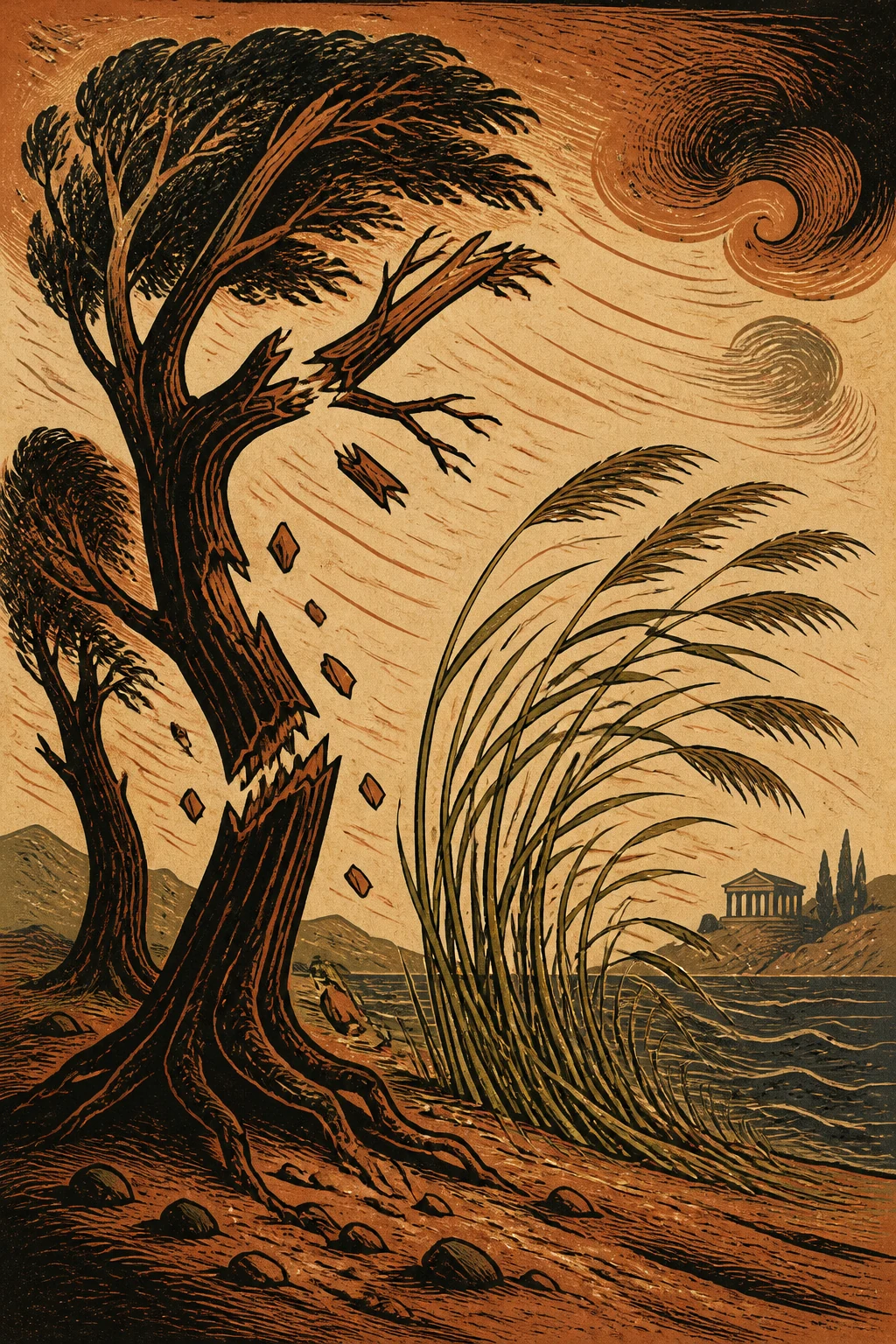
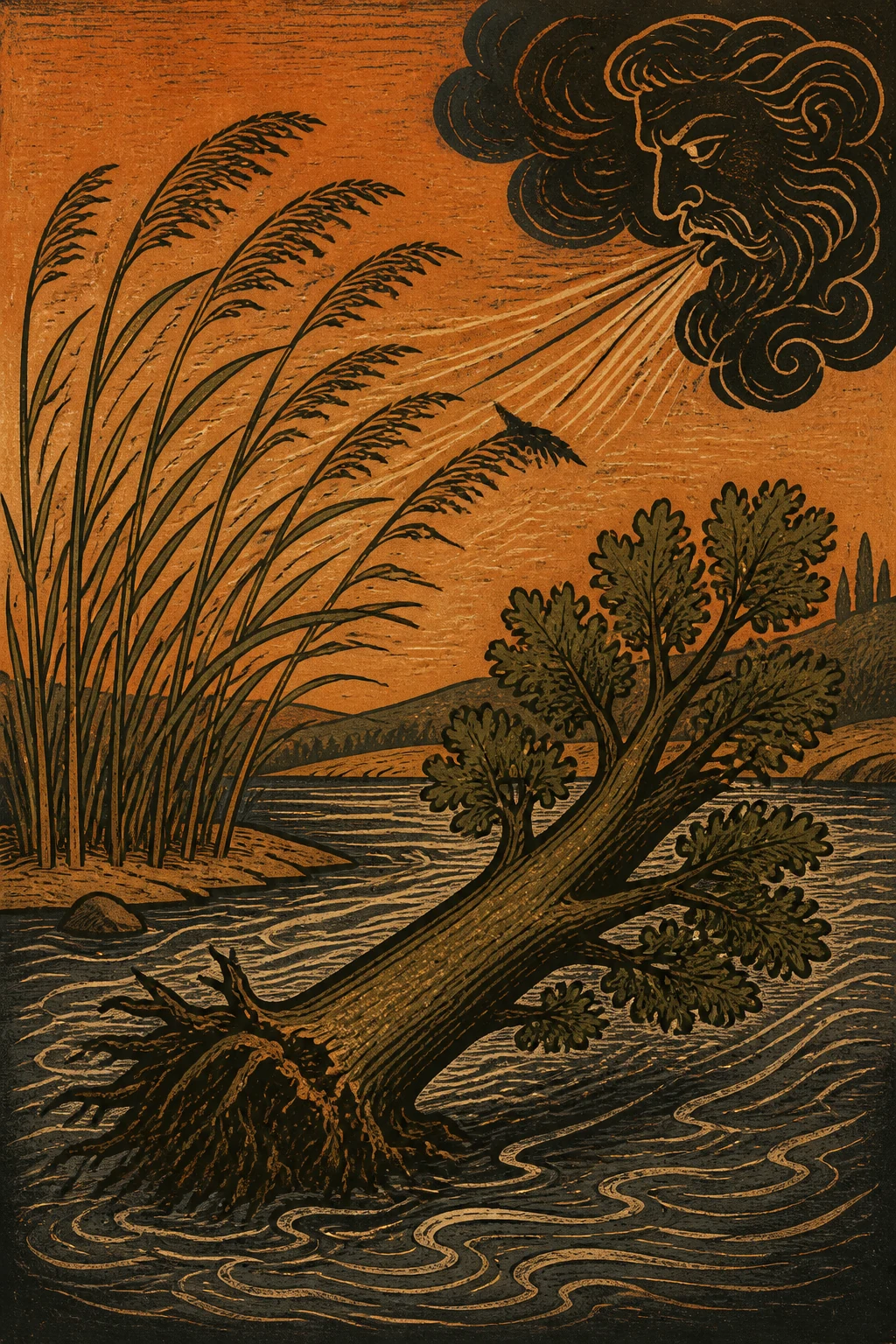
A reed and an olive tree were arguing over which had greater endurance, steadiness, and strength. The olive tree taunted the reed for being weak and bending so easily before every wind, but the reed said nothing. It waited a little while, until a strong wind arose. The reed, though shaken and bent by the gusts, came through unharmed, while the olive tree, rooted firmly in place and resisting the winds, snapped beneath their force. Then the reed reproached the olive tree for taking vain [and fruitless] pride in its own strength.
The fable shows that those who yield to circumstances and to those stronger than themselves fare better than those who contend with their superiors. [Or, that one should not stand against those who are stronger.]