Prevod
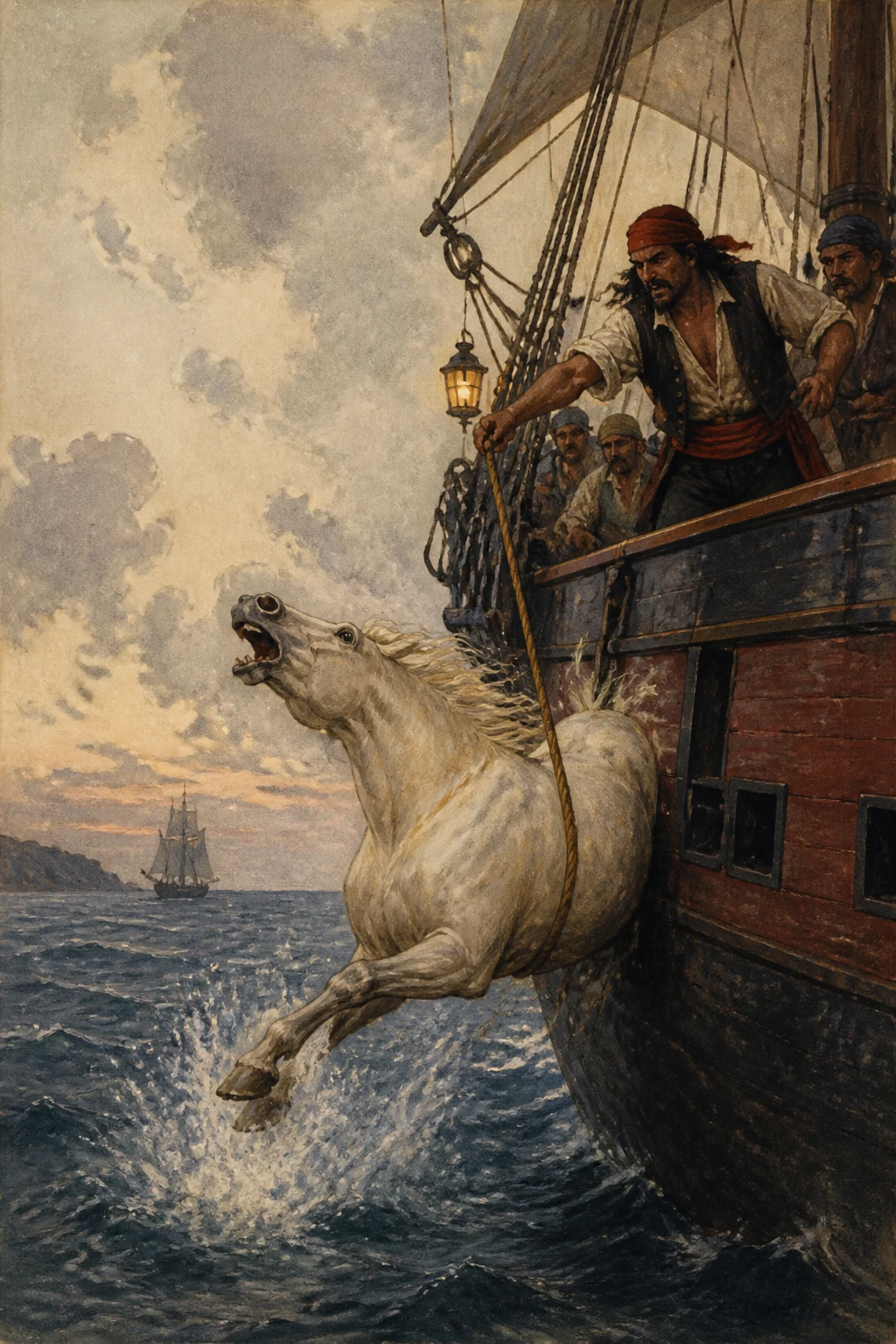
Long ago in India there lived a man named Sanghata. He set sail for the Port of Gold with five hundred merchants aboard his ship, when suddenly a fierce wind arose and drove the vessel southward, swift as an arrow loosed from a bow. They were swept into an unknown land, and, thankful merely to have reached shore, they all hurried ashore in confusion. Before long, some ten exceedingly beautiful women appeared, passing by as they sang. The merchants had felt forlorn in this strange country, but the sight of such lovely women filled them with joy, and they called out to them. The women came at their call, and proved lovelier still at close quarters, charming beyond compare. The five hundred merchants gazed at them in boundless admiration. One of the merchants said to the women, “We set out in search of treasure, but an evil wind drove us to this unknown land. We were beside ourselves with distress, yet the sight of you has banished every care from our hearts. Now, please take us with you at once and give us shelter. Our ships are all wrecked, and we have no way to return home.” “Then come along with us,” the women replied, and went ahead to lead the way. When the merchants reached their dwelling, they found a high white earthen wall stretching all around it, with an imposing gate. The women led them inside and immediately locked the gate. Within were many separate houses, each standing apart from the others, but not a single man. The merchants each took a wife and settled there, loving and being loved without measure. They could scarcely bear to be parted for a moment. As they lived together, however, Sanghata noticed that his wife took a long nap every day. Lovely though her face was, whenever she fell asleep she looked a little uncanny. Troubled by this strangeness, he quietly rose one day and went to look about. There were enclosures of all kinds, and among them he found one surrounded by a high earthen wall, its door securely locked. He climbed up at the side and looked within. There were many people there: some dead, others groaning. White bones and red, flesh-stripped corpses lay in great numbers. Sanghata beckoned to one man who was still alive and asked, “Who are you people, and why are you kept here like this?” The man answered, “I come from southern India. I was sailing on a trading voyage when an evil wind drove me off course and brought me to this island. Here I was deceived by women of extraordinary beauty, and lived with them, forgetting all thought of returning home. Every child they bore was a girl. While we lived here, loving them beyond measure, another ship of merchants arrived. Then they did this to their former husbands and made us their daily food. When another ship comes, you too will meet this fate. Find some way to flee, and quickly! These demons sleep for about three hours in the daytime. If you make good your escape then, you may get away. But this place where we are confined is secured with iron on every side, and every means of escape has been cut off. There is no way for us to flee.” He spoke through his tears. “So that was why I felt something was wrong,” Sanghata thought. He went back and told the other merchants everything. All were stunned and terrified, and while the women slept, Sanghata led them down to the shore. Together they turned toward the distant realm of Potalaka and raised their voices in prayer to Kannon. Then a great white horse came swimming over the waves from out at sea, approached the merchants, and lay flat before them. Believing this to be an answer to their prayers, every one of them clambered onto its back. Meanwhile, the women awoke and found not a single man remaining. “They have escaped!” they cried, and all rushed down to the shore. There they saw the men riding out across the sea on a wretched-looking horse. At once the women changed into demons some ten feet tall, and leaped four or five hundred feet into the air, shouting and raging. Among the merchants was one who recalled how wonderfully kind his wife had been. His grip slipped, and he fell into the sea. The rakshasas scrambled over one another, tore him apart, and devoured him. The horse carried the others to the western shore of southern India and lay down. The merchants dismounted in great joy, and the horse vanished as though it had been extinguished. Sanghata was so deeply frightened that after reaching this country he told no one what had happened. Two years passed. Then the rakshasa woman who had been his wife came to his house. She was even lovelier than before, beautiful beyond words. She said to Sanghata, “Perhaps some bond from a former life drew us together, for I loved you more dearly than anyone. How could you abandon me and run away like that? In our country, creatures of that kind sometimes appear and devour people. That is why we keep our gates securely locked and build our walls so high. When those demons heard so many people shouting on the shore, they came in a fury, and that was what you saw. It was certainly no doing of ours. Since you left, I have longed for you so painfully, and wondered whether you felt nothing of the same love for me.” And she wept bitterly. An ordinary man might well have believed her. But Sanghata flew into a rage, drew his sword, and made to kill her. Bitterly reproaching him, she left his house and went to the palace, where she made her plea: “Sanghata has been my husband for many years. Now he has abandoned me and refuses to live with me. To whom else can I appeal? I beg His Majesty to judge my case.” Every court noble and attendant who saw her was utterly captivated by her beauty. The king heard of her and peered out to look. She was lovely beyond all telling. Compared with her, all the many consorts and queens he had known seemed mere clods of earth, while she was a jewel. “What sort of heart can Sanghata have, to refuse to live with such a woman?” he wondered. He summoned Sanghata and questioned him. Sanghata replied, “This is no creature to be admitted into Your Majesty’s presence. She is dreadful beyond measure. Some terrible calamity will surely follow.” With that, he withdrew. On hearing this, the king thought, “What a worthless fellow this Sanghata is!” He then commanded a chamberlain, “Very well, very well. Have her brought in by the rear entrance.” She was brought to him toward dusk. He summoned her close and gazed upon her. Her presence, her figure, her face, her manner—everything about her was fragrant and endlessly alluring. After the two lay down together, the king did not rise for two or three days, nor did he attend to the affairs of state. Sanghata came to the palace and said, “A terrible thing must have happened! What a dreadful business! Surely His Majesty has already been killed.” But no one would listen. On the morning of the third day, before the shutters had been raised, the woman was seen emerging from the royal bedchamber. Her eyes had changed, and she looked terrifying. There was blood upon her mouth. For a little while she surveyed her surroundings, then sprang from beneath the eaves as though taking flight, disappeared into the clouds, and was gone. People went to the bedchamber to report what had happened, only to find blood flowing from within the bed curtains. Alarmed, they looked inside. A single blood-red skull remained; there was nothing else. The uproar throughout the palace was beyond description. The grief of the king’s subjects, men and women alike, knew no bounds. His son, the crown prince, immediately ascended the throne. Sanghata was summoned and questioned about the whole affair. “It was precisely because she was such a creature,” he replied, “that I urged you to drive her away at once. Now, if I may receive an imperial command, I shall go and destroy them.” The new king told him that his requests would be granted. Sanghata said, “Let a hundred soldiers armed with swords and a hundred armed with bows and arrows be put aboard swift ships and sent out with me.” Everything was done as he requested. Sanghata took this force and sailed to the island of the rakshasas. First he put about ten men dressed as merchants ashore. As before, jewel-like women came singing toward them and lured the merchants into their stronghold. The two hundred soldiers followed close behind, burst in, and began cutting the women down and shooting them. For a while the women looked at them reproachfully, putting on pitiful expressions, but Sanghata ran among his men, shouting commands in a mighty voice. Then the women assumed their demonic forms and rushed upon them with gaping mouths. But the soldiers split their heads with swords and cut off their hands and feet, while those who tried to flee through the air were shot down with arrows. Not one remained. They set fire to the houses and burned them to the ground, leaving the land utterly deserted. Sanghata returned and reported all this to the king, who thereupon bestowed that country upon him. Taking the two hundred soldiers with him, he went to live there and prospered greatly. It is said that his descendants are the rulers of that country to this day.