Waltey
Hasan iz Basre
Tunisische Märchen und Gedichte · Hans StummeO besedilu
Hasan iz Basre
- Vir
- Tunisische Märchen und Gedichte
- Avtor
- Hans Stumme
- Jezik branja
- English
- Jezik izvirnika
- Tunisian Arabic in Latin transcription
- Čas branja
- 48 min branja
- Obseg
- 38 strani
- Naslov izvirnika
- 002 Hsán elbásrí
O izvirniku
Tunisische Märchen und Gedichte
Tunizijske pripovedi v zgodovinskem latiničnem zapisu govorjenega arabskega jezika. Bralni jezik je English, izvirnik pa prihaja iz vira Tunisische Märchen und Gedichte v jeziku Tunisian Arabic in Latin transcription.
Besedilo
Hasan iz Basre
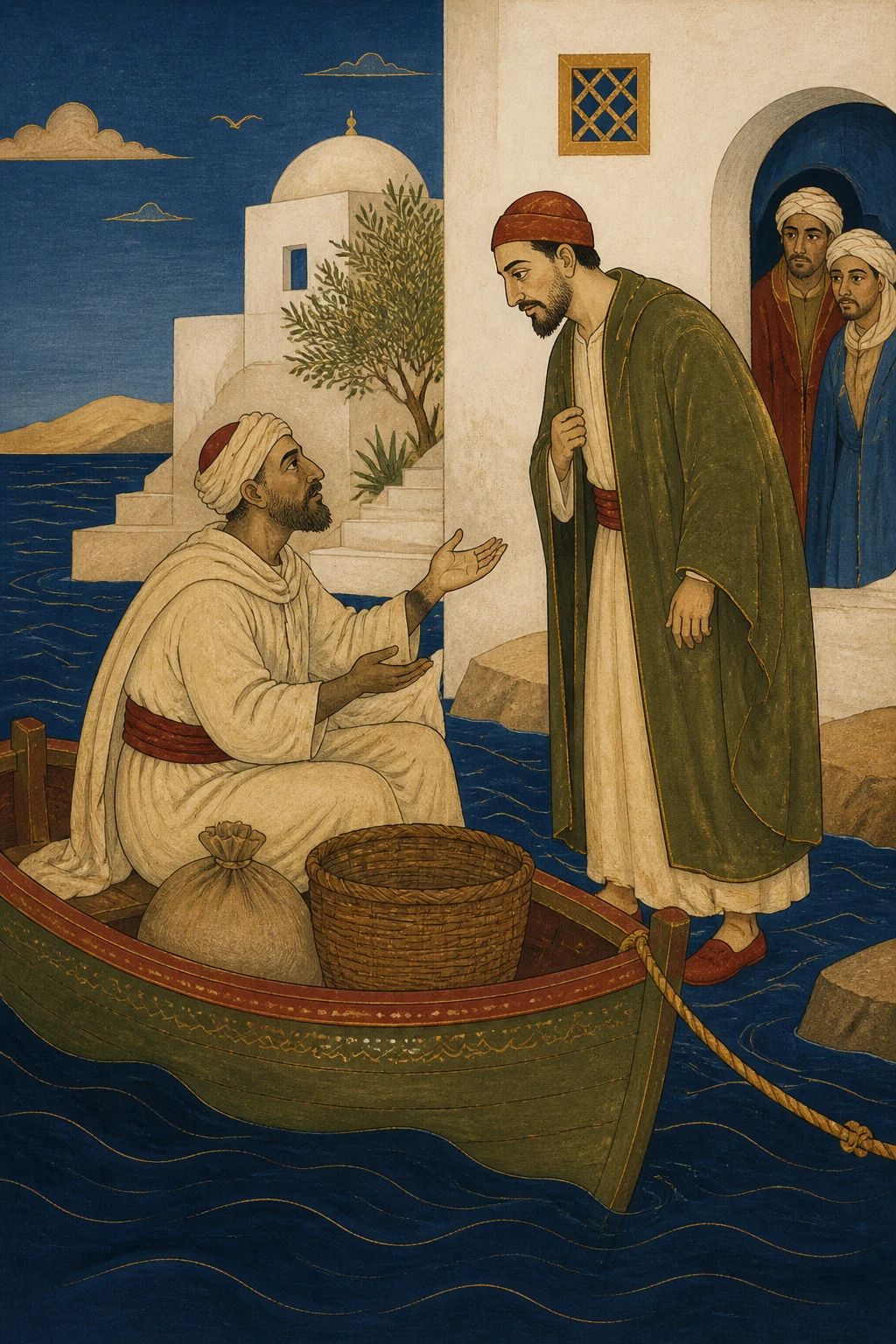
There was once a merchant, a wealthy man, who died and left his son to take his place. But the son did not follow his clever father’s example. He began squandering his fortune until he was penniless. When his money was gone, his mother said to him, “Open a shop and buy and sell in it, so you can earn a living and become a merchant like your father. You must not remain idle and let people laugh at you.” He listened to his mother, opened a shop, and began buying and selling. One day, as he was sitting in his shop, a man came in and said, “Peace be upon you.” “And upon you be peace and the mercy of God,” he replied. The man said, “Hasan, your father was a dear friend of mine. Praise be to God that he left a son behind him! I have been asking after you until at last I found you. I should like to stay with you. Listen to my advice, and I shall make you like your father.” He stayed as his guest for three days. On the third day he said, “Come, I will teach you a craft by which you can earn your living.” He took a little box from his bag and opened it. Inside was a powder for making gold. “Go and buy me some iron rods,” he said.
Hasan bought them and brought them to him. The man heated the fire and laid the iron rods upon it. When they were hot, he sprinkled the powder over them, and they turned to gold. “Take them to the market,” he said. Hasan took them to the market and sold each one for a hundred mahbubs. He brought back the money, and the man asked, “Do you like this craft?” Then he said, “Come, bring me some more rods.” Hasan brought more rods. The man put them on the fire, sprinkled the powder over them, and they became like the others. Hasan went and told his mother. “My son,” she said, “in my heart I do not like this guest.” “You too!” he exclaimed. He silenced his mother, saying, “In two years he will make me a rich man.” His mother said no more and brought supper for him and his guest. After they had eaten, they drank coffee. The guest put a drug into Hasan’s coffee, and Hasan al-Basri fell unconscious. The man put him in a chest, lifted it up, and carried him away in the night. In the morning his mother rose to find that neither her son nor the guest was there. Both were gone. She went out to the shops and searched, but found nothing. She returned home and sat weeping, poor woman. In the room where her son had slept she made a grave, and every day she came to it and wept. She believed her son was dead and buried him in that grave in her thoughts. Meanwhile, the man who had carried him away in the chest traveled with him for three days. Then he opened the chest and gave him an antidote to the drug. Hasan woke, sneezed, and said, “Praise be to God!” Then he asked, “Whose hands am I in now?” “In the hands of Ibrahim the Magian,” the man replied. “How can this be?” said Hasan. “You came to me, I received you as a guest in my house, you ate bread and salt with me, and now you betray me?” “I came a year’s journey to find you,” he said, “so that I might catch you and get you into my power.” He took a copper drum from his bag, and three she-camels appeared. Each man mounted one, and the third carried their provisions. They set off, covering a month’s journey every day. He traveled with Hasan for ten days.
After ten days Hasan said to the Magian, “Let me rest, and give me some water to drink.” They made the camels kneel and took out enough water to satisfy their thirst. When they had drunk, Hasan al-Basri looked around and saw a mountain rising very high into the sky. “What is that mountain?” he asked. “It is called the Mountain of Clouds,” the man replied. Hasan looked to his right and saw a palace gleaming high in the heavens. “Ibrahim,” he asked, “is that palace inhabited or empty?” “Do not ask me about it,” he said. “My enemies live there.” They mounted and went on toward the mountain, which stood straight before them. They reached its foot and dismounted. Then Ibrahim took one of the she-camels and slaughtered it. “Hasan, skin it,” he said. And Hasan skinned it.
When he had skinned it, they emptied its belly. Ibrahim said, “Come, I will show you what to do now. I shall put you inside it and sew it up around you. Vultures will come and carry you to the mountaintop. When you reach the summit and feel that they have set you on the ground, take out your knife and slit the camel’s belly. When you come out, the vultures will fly away. Stand on the summit, and you will see a chamber before you. Enter it, and you will find a cupboard. Above the cupboard is a tablet covered with writing. Bring it to me, and I shall return you to your home.” Hasan brought the tablet. “Come,” Ibrahim said, “give me the tablet you have fetched.” “I will not give it to you until you first take me home.” “Give me the tablet, and I will take you home.” Hasan handed it to him. The moment he had it, Ibrahim said, “Stay there and die of hunger and thirst!” He went away and left Hasan wandering in hunger and thirst. Hasan roamed the mountaintop, eating grass and turning things over in his mind. “What am I doing here?” he said to himself. He thought of pulling up the esparto grass and making ropes from it, so that he could fashion a ladder. He began twisting and twisting the grass into rope, measuring it as he went. But he found that there was still a long way down: the mountain plunged far below him. “Come, I will go down,” he said. He bound himself securely with the esparto rope and thought, “Whether I live or die!” Then he lowered himself down until he reached the end of the rope.
He looked below him. There was still a great distance to the bottom. He proclaimed his faith, closed his eyes, and let go. He fell and landed in water, finding himself unharmed. He swam until he reached the shore. Then he walked along the seashore for ten
days, eating grass and snails. At last, one day, he saw a palace in the distance and made his way toward it. This was the very palace he had asked Ibrahim about, when Ibrahim had told him, “That is my enemies’ palace.” He reached it and waited at the gate for three or four hours, but no one appeared. He entered and found couches and food and drink ready. He ate, drank, and rested. Then he went into a small chamber and hid, saying, “I shall see who owns this palace.”
Now the palace belonged to a sultan of the jinn. Suitors had asked for his daughters, but he would not allow them to marry. He summoned the sages of the jinn and said, “Build me a palace containing everything that mouth and tongue can describe.” They built him a palace three years’ journey away from them all. The king of the jinn rode out to inspect it and found it to his liking. He sent his seven daughters to live there. They lived there until Hasan al-Basri came. Hasan hid in the little chamber, saying, “I shall
see who its owners are.” The girls went out hunting every day. When they returned from the hunt, each went to her room; they washed their faces and ate. The youngest sister found Hasan al-Basri in the chamber and said, “Who is this? A human or a jinni?” “A human, of humankind,” he replied. “Are you Hasan al-Basri?” she asked.
“Yes, I am Hasan al-Basri.” “You are Hasan, whom Ibrahim the Magian brought here! He used you for his purpose and left you on the mountaintop. How many men like you he has brought and left to die of hunger and thirst! But your allotted life in this world is not yet over. That man is a cheat and a deceiver.” Then she said, “You shall stay here with us. Wait here. Do not leave the room.” “Very well,” he said. She went to her sisters and asked, “If a guest comes to us, shall we harm him or welcome him?” “If he is a good man, we shall welcome him. If he is wicked, we shall harm him.” “He is good,” she said. “That is what I was waiting to hear. I shall go and bring him.” She brought him in, and they greeted him. “You are here now,” they said. “Stay here with us.” While they were sitting in the palace, they opened a window and saw an army encamped around it. “What is this?” they asked. The commander came forward and said, “Your father says he wishes you to come to him. There is a wedding, and he would like you to stay for a month, until the festivities are over.” The youngest sister said, “Hasan, we are going away and shall be absent for a month. Come, I will show you something.” She took him through the palace and showed him all the rooms. “You may open every one of these rooms,” she told him, “except this door. Do not open it. You will want for nothing; all your provisions are here in the palace.” He stayed there for the first day and the second. Then he began to grow restless.
“They told me not to open that room,” he said. “I shall never know unless I open it.” He opened the door and found a ladder leaning against the wall. He climbed it and came out onto a terrace. Looking to right and left, he saw a wonderfully beautiful garden, filled with flowers and fruit beyond anything mouth or tongue could describe. There was a pool in it. As he sat looking, he saw ten doves approaching. They alighted at the edge of the pool. One took off her feather garment and became a woman. All ten did the same. They went down into the water, swimming and playing naked, while he sat watching them.
He fell in love with one of them, the most beautiful of all. He crept down, but they saw him and fled. He went back sick with love and lay down. When his sisters returned from their father’s house, they found him ill. “What is wrong, brother?” the youngest asked. “I am ill. I have no strength.” “Surely you have opened that door I warned you not to open!” “I opened it,” he said, “and saw something such as I had never seen in my life.
Doves came, took off their feather garments, and swam. I fell in love with one of them.” “Curse Satan!” she said. “This will be a difficult thing for you.” But he said, “I must have her.” At last, when he began to weep, she said, “I will see what can be done for you. They come once a month. When they come, go up onto the terrace and watch for them. When you see them take off their feather garments and begin to swim, go down and steal the garment of the one who has captivated you. Without her garment she cannot fly.” He waited until the month was over.
He went to the place. The doves came and took off their garments in their usual spot. He crept down very quietly and stole the garment of the one who had captivated him. His sister had told him, “When you steal the garment, do not speak. They will call out, ‘You who have stolen the garment, give it back! We shall give you riches, we shall give you riches!’ If you speak, they will harm you.” He obeyed his sister and kept silent. He remained silent until the time came for them to fly away. Each took her garment and flew off, but the one whose garment he had stolen stayed behind. Hasan caught her. “Now I have you!” He took her to his youngest sister, who said to her, “Welcome! What a blessing your visit brings us!” But the girl wept and wept. The youngest brought her other sisters, and they greeted her. She began to rail at them. “You keep a human in your house to steal the daughters of kings!” The eldest sister said, “When he caught you, did he do anything shameful to you? Did he hurt you?” “He did not hurt me.” “Then why do you weep? Woman is for man, and man is for woman.” For three days she wept and refused to marry him. And what did Hasan do during those days? He came and kissed his youngest sister, begging for her help. She told the girl, “Hasan al-Basri waits upon you and serves you like a servant, though you are no better than he is. Look at his bearing: it is the bearing of kings.” At last her heart softened toward marriage. They drew up the marriage contract, and Hasan married her and stayed with them for a time. Then he began to long for his mother. He went to his sisters and said, “I should like to go and see my mother. I do not know whether she is alive or dead.” “Very well,” they said. “God bless you. Go.” But his youngest sister looked at him and said, “Stay three more days, and then go. In three
days Ibrahim the Magian will bring another Muslim and put him on the mountaintop. He will try to make him do what he made you do.” Ibrahim brought a man and stopped at the foot of the mountain. The girl said, “Go, Hasan, and kill him.” “He is a magician,” Hasan replied. “I cannot kill him.” “I will give you a sword,” she said. “It has talismans engraved upon it. This sword will kill him.” Hasan took the sword, and they all mounted and set out. They found Ibrahim at the foot of the mountain, tormenting the man. He did not see the girls; he saw only Hasan with the sword in his hand. His sister had warned him, “Do not speak to him, or he will throw powders over you and turn you to dust.” Ibrahim said, “Am I not your father?” Hasan kept silent, struck him, and cut off his head. Then he untied the captive Muslim and took him to the palace. The man rested and recovered his breath. They gave him some money and a mount, and he returned to his own country. The copper drum that had belonged to Ibrahim the Magian was a magic drum. Hasan took it and put it in his bag.
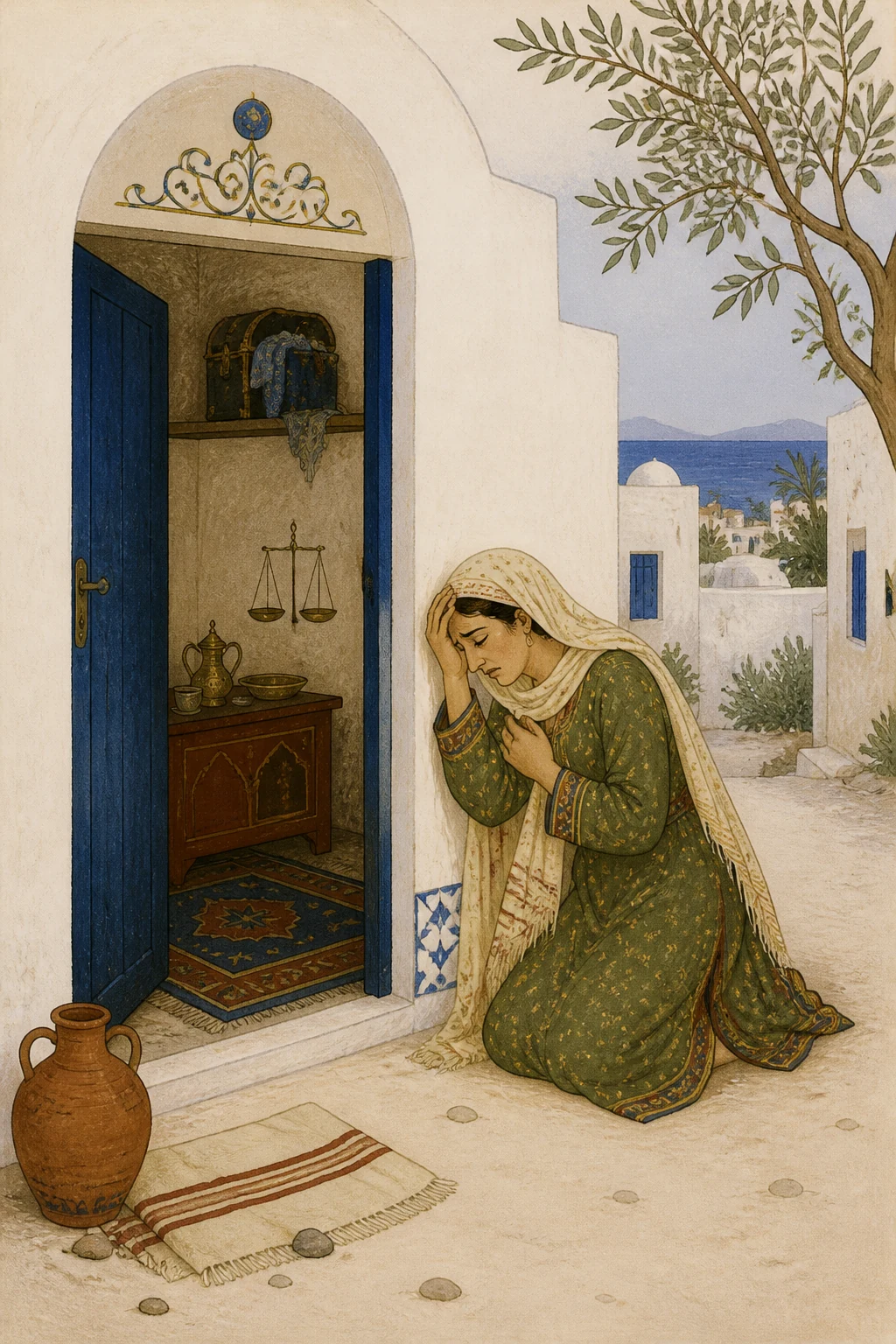
“My sisters,” he said, “I have now been away from my dear mother for three years.” “We shall not keep you from your mother,” they said. “We give you leave to go.” “My sisters,” he said, “I give you my word that I shall come back to visit you.” He took out the drum and beat it, and the camels appeared. He mounted one, his wife mounted another, and the third carried their provisions. The sisters gave him some money, and he returned to the city of Basra. He went to his mother’s house and knocked on the door. His poor mother was sitting there weeping. “Who is it?” she asked. “Open!” he said. She heard her son’s voice, and her heart leaped. She opened the door. Her son came in and took her hands, and she began kissing him. “My dear son,” she said, “you have been away so long! You have been gone three years.” “Here I am,” he said. “I shall not leave you again.” He brought in his wealth, and his mother rejoiced in him and in the woman he had married. Then she said to him, “You cannot spend this wealth here in this town. Let us go to Baghdad and live under the sultan’s protection, where no one knows where you came from.” “God bless our venture,” he said.
He took out the drum and beat it, and three camels appeared. His mother mounted one, his wife another, and he the third. When he reached Baghdad, he bought a house and moved into it with his wealth and belongings. He lived there for three years, and his wife bore him two sons, one after the other. He named one Nasr and the other Mansur. Then he said to his mother, “I shall go and visit my sisters. I gave them my promise that I would come and see them. It would be shameful not to go.” “Go, my son,” she said, “but do not stay away too long.” “I shall be away for six months,” he said. “After six months I shall return.” When he was about to leave, he called his mother and said, “Come and look. My wife’s feather garment is locked in this chest. Take care of it, lest she fly away in it.” His wife listened and heard what they were saying. Then he went out.
He took out the drum and beat it, and three camels appeared. He loaded two with goods to offer as gifts, mounted the third, put his trust in God, and set off. He reached his sisters, greeted them, and they rejoiced to see him. He stayed with them. Now he was in the palace, and the tale returns to his wife. After two months she said to his mother, “Mother, I am dirty. I should like to go to the bathhouse.” “Your husband left me strict instructions,” she replied. “He told me not to let you go out of the door. How can I let you go?” The young woman grew distressed and began to weep. Her mother-in-law took pity on her and said, “Come, then, let us go.” She gathered her things, took her children, and went with her mother-in-law to the bathhouse. They entered. As she took off her clothes, the women stared at her with their mouths open. She went in and bathed.
Among them was a slave girl belonging to Zubayda, the wife of al-Rashid. She too gazed at Hasan’s wife. “When I return to my mistress,” she thought, “I shall tell her about this woman I have seen in the bathhouse. There is no beauty like hers in the whole world.” She returned to her mistress, and Zubayda asked, “What is the matter with you? Why have you taken so long?” “My lady,” she said, “I saw a woman whose beauty has no equal in all the world. She was what delayed me. I stayed there looking at her.” “Do not say such things,” Zubayda said. “I swear it is true! There is a woman beside whom you are not worth a single hair.” “Do you know where she lives?” “My lady, when she left the bathhouse, I followed her until I saw which house she entered.” Zubayda called for the steward of the palace, whose name was Baba Surur, and said, “Go with the slave girl. She will show you the house of the beautiful woman she has told me about. Bring her here.” Baba Surur went with the girl, and she showed him the house. He knocked, and the old woman came to the door. “Who is it?” she asked. “The sultan’s steward.” She opened the door, and he entered. “I hope nothing is wrong?” she said. “Nothing at all. My mistress has sent me to fetch the woman who is staying with you, so that she may see her.” “The woman who is staying with me does not go out. Her husband is away.” “I must bring her,” he said. “I cannot let you take her.” But he took her by force, and she brought her children with her. The old woman came too, locking the house behind her. They reached al-Rashid’s palace and went upstairs. Al-Rashid’s wife saw the young woman and gazed at her, turning her this way and that. They took off her outer clothes and seated her on a chair, staring in wonder at her extraordinary beauty. The musicians began to play, and the women sang and made merry.
The women rose to dance, but she had not yet danced. Zubayda looked at her and said, “Now it is your turn.” “Very well,” she replied. She rose and danced, leaving them all astonished, so beautifully did she dance. “Well done!” said Zubayda. “If I had my feather garment,” she replied, “I would show you something wonderful.” “Where is your garment?” they asked. “In my mother-in-law’s keeping.”
Zubayda said, “Bring it, old woman.” “My lady, I have no such thing.” The young woman said, “She has it locked in a chest.” The old woman began to cry out, but Zubayda said, “Be quiet! Come here, Baba Surur. Go to the house, break open the chest, and bring the garment.”
Baba Surur went to the house, broke open the chest, and brought the feather garment. They unfolded it and said, “Come, my lady, here is your garment.” She took it and put it on, became a dove, and hopped onto the window ledge, performing before them. They were delighted. “What a marvelous performance this is with the garment!” they said. She took her children, putting one under her right wing and the other under her left.
She sprang up onto the roof. Then she turned to her mother-in-law and said, “Mother, if your son is a lover who yearns for me, if the wind of longing carries him away, let him come to the Island of Waq-Waq.” She flew away and was gone. The old woman wept, saying, “Ah, my son’s wife has gone!” And the others wept with her.
She returned home, saying, “When my son comes back and cannot find his wife and children, he will kill me.” She went into one of the rooms and dug three graves, two small and one large. “When my son returns,” she said, “and asks me where his children and his wife are, I shall tell him they died.”
Meanwhile, her son said to his sisters, “I am going home to my mother, my wife, and my children.” “God bless you,” they said. “We shall not keep you from your wife, your children, and your mother.” He took out the copper drum, and three camels appeared. One carried the gifts, one the provisions, and he mounted the third and set off for home. When he reached his house, he made the camels kneel and knocked at the door. “Who is it?” his mother asked. “Open!” he said.
She heard her son’s voice and opened the door. He brought the camels inside, and his mother rejoiced to see him. He unloaded the goods, dismissed the camels, and they went away. He sat down and said, “What is the matter? Neither my wife nor my children are here.” She wept. “My son, they died. If you do not believe me, come and see their graves in the room.” She took him to the graves of his wife and children. “Tell me how they died,” he said. Then he said, “Mother, bring me the pickaxe and the spade.” She brought them. “I shall dig them up,” he said, “so that I can see my wife and children.” He dug into the first grave and found nothing. “Tell me the truth,” he said, “or I shall kill you.” “If lying can save a life,” she said, “truth can save it better still. My son, she wept until I took pity on her, and I took her to the bathhouse. One of al-Rashid’s slave girls saw her and went to tell Zubayda. Zubayda sent for her and had her taken by force. She danced before them, and they admired her dancing. Then she told them, ‘If I had my feather garment, I would show you something wonderful.’ They asked her, ‘Where is your garment?’
“She told them, ‘My mother-in-law has it.’ They ordered me to bring it, but I refused. Then the palace steward came by force, broke open the chest, and took the garment. He brought it to her, and she put it on. As soon as she had put it on, she took her children and left. She told me, ‘If your son is a lover who yearns for me, if the wind of longing carries him away, let him come to the Island of Waq-Waq.’”
The poor man fell silent and spent that night with his mother. The next day he took out the drum and beat it. Three she-camels appeared. He mounted and returned to his sisters. When they saw him, they were astonished. “What can have happened? He has come back so soon!” They welcomed him gladly. His youngest sister took him into her room and said, “Tell me what has happened.” He collapsed. When he came to himself, she asked, “What is wrong, dear brother? Surely all is well?” “My wife and children have gone!” “Did she say anything when she left?” “She told my mother, ‘If your son is a lover who yearns for me, if the wind of longing carries him away, let him come to the city of Waq-Waq.’” “Ah, brother,” she said, “this is a hard thing!” He wept and sobbed until he fainted. His youngest sister went to the others and brought them into the room. “What has happened now?” they asked. He told them, and they began to comfort him. But he said, “My children, or I shall die!” His youngest sister turned to him. “Hasan, tell us: what did she say when she left?” He repeated her words. They lowered their eyes and looked at one another. The eldest looked at him and said, “Brother, give up this matter. It is beyond you and beyond her.” He wept and sobbed. The six sisters rose and each went to her own room. His youngest sister, who loved him dearly, stayed beside him. She sprinkled him with water until he recovered. “Hasan,” she said, “give up this matter.”
“Either I shall have my wife and children,” he replied, “or I shall die.” “Be patient,” she said. “Do not torment yourself. God willing, you will be reunited with your children and your wife. Be patient.” Then she said, “Hasan, we have an uncle, an old man without children. He loves us dearly, and once a year he comes to stay with us for a little while. When he comes, we shall tell him, and he will find some way to help you. If he says, ‘I will take you to them,’ you may consider your wife and children as good as restored to you. But if he says, ‘I cannot take you to them,’ then God alone can help you.” Hasan al-Basri waited a little while, and their uncle arrived riding an elephant. They rejoiced to see him. After three days the youngest girl went to him and said, “Uncle, I am your little daughter.” “Tell me what you want,” he said. “There is a human staying here with us. His wife and children have been taken from him.” “Who is his wife?”
“A daughter of the Great King, one of those who put on dove garments and fly.” “That is difficult!” he said. The girl began to weep. When he saw her tears, he said, “Bring him to me.” She brought Hasan, who bent to kiss him and sat down beside him. “Tell me your story, Hasan.” Hasan told him all that had happened.
“Hasan,” he said, “give up this matter. It is too difficult for you and for me. Take another wife. Your sisters will give you money, and I shall give you money too.” “Either I shall have my wife and children,” he replied, “or I shall die.” “Wait until I have finished my visit with my brother’s daughters.” When his visit was over, he mounted the elephant to go home, and Hasan mounted behind him. The elephant flew away with them until they came to a mountaintop. The old man dismounted and found a cave. “Hasan,” he said, “wait here. Be patient.
“A black horse will come to you, without a single marking. Mount it.” He put a letter into Hasan’s hand and said, “The horse will carry you to the mouth of a cave. Stay there for three days. If a man dressed in red comes out, abandon all hope in this world. But if a man dressed in white comes out, be assured that you will reach your wife.” The horse flew with him and set him down at the mouth of the cave. He stayed there for three days. Then a gray-haired man dressed in white came out and said, “Welcome, Hasan.” He took him by the hand and led him into the cave.
“What do you seek, Hasan?” Hasan told him about his wife and children. “My son,” the old man said, “this is a difficult thing. Put it out of your mind. There are many women. Take another wife. You are still young, and she will bear you children.” “No, no,” he said. “I want my wife and children, or I shall perish.” “Let us go to the students,” the old man said. The students whom he taught came to him and said, “His heart is burning for his children, not for women. You would be doing a good deed if you helped him reach them.” The sheikh summoned an ifrit, and when it came he said, “Hasan, climb onto its back and close your eyes. You will find yourself with my brother, who is older than I am. Mount it. It will set you down at the mouth of a cave. Stay there for three days. After three days a little boy will come out and ask what you want. Give him the letter I have written to my brother. Then wait another three days. If a black servant comes out, abandon all hope in this world. But if the same boy comes out again, be assured that you will reach your wife and children.” Hasan al-Basri climbed onto the ifrit’s back and put the letter in his bag. The ifrit set him down at the mouth of the cave. He waited three days. A boy dressed in white came out, and Hasan gave him the letter. He waited another three days. Then a little boy in white clothes came out and said, “Come in with me, Hasan.” He led him to the sheikh. Hasan approached, kissed him, and handed him the letter. The sheikh read it and laughed. “Hasan,” he said, “this is a difficult matter.” “I place myself in your hands,” Hasan replied. “Do you know how many years’ journey lie between you and your country? The master of the elephant who carried you away from the girls took you two years’ journey. The horse carried you another two years’ journey to my brother’s dwelling, and from my brother’s dwelling the ifrit carried you three years’ journey. Do you know my brother’s name? My brother is called Abd al-Zayyad, and I am called Abd al-Quddus. Come, I shall give you a marid of the jinn, who will carry you a year’s journey. You will come to a mountain full of birds, flying and singing. Do not speak. Stop your ears with cotton. After the birds, he will carry you a year’s journey through fire. You will find a mountain filled with fire, with flames pouring out of it. Then he will carry you another year’s journey. Once you have passed the wild beasts, he will take you through wilderness where you will see neither human nor jinni.
“He will set you down on the seashore, with a country before you. I shall give you a letter to the sultan of that country.” He gave him the letter, and the marid carried him away. It carried him past the mountain of fire, with flames pouring out of it, past the wild beasts, and through the wilderness, until they reached the country.
A man met him and asked, “Where are you going?” “To the king.” “Come, I will take you to his house.” He led him to the king’s house, and Hasan handed over the letter. The sultan read it, kissed it, and treated Hasan with honor. “Hasan, my son, welcome!” he said. “You are a human, yet you have reached this dwelling. Your star is in the ascendant. Stay here with me and rest. God willing, He will grant your desire. You shall stay with me for a month.” “Yes, very well,” Hasan said. “Every month,” the sultan continued, “the ships come and take goods from here to the land of the Great King, where your wife is. I shall entrust you to a captain, who will put you ashore. My son, when he sets you ashore, you will find an army encamped in huts made of wood.
“Do not let anyone see you. Go to the first hut that stands before you, enter it, and hide. When its mistress comes, fall at her feet and weep. Say, ‘My lady, I have fallen from the sky.’ If she takes pity on you, your wish will be fulfilled. But if she does not welcome you, then God alone can help you.” “God bless our venture,” Hasan said. He stayed there for a month, until the ships came, loaded their goods, and prepared to sail. The king sent for the captain and said, “Put this young man ashore in the country to which you are sailing. I wish no one but you to see him.” He entrusted Hasan to the captain, who took him aboard, and they sailed away.
When they reached the country, Hasan looked out from the ship and saw huts made of wood. There were eighty thousand in the army, all women, without a single man. When darkness fell, the captain said, “Come, young man, go ashore.” Hasan went ashore. The women came and bought the goods, buying everything. Hasan went to the camp, entered a hut, and hid inside. Its mistress had not yet returned. He waited there until she came. As she took off her clothes, he fell at her knees and began to weep. “How have you come here, my son Hasan?” she asked. “My lady, I place myself under your protection. I have fallen from the sky.” She was the stewardess of the camp, and the ruler of the army was Hasan’s wife’s sister, whose name was Manar al-Nisa. The old woman said, “If your wife is in this army, I shall bring you to her.” He spent the night with her. When they rose, she said, “At daybreak they all go down to bathe. I shall take you there and put you where you can watch. Look carefully and see whether you recognize your wife among them.” “God bless you,” he said. She dressed him as a slave girl and took him to his place, where he watched. But after looking at all the women, he did not find his wife. “I have not found her,” he told the old woman. “Come with me,” she said. He went with her to her hut. “Stay here until I return.” The stewardess went to the queen who ruled the whole army and said, “My lady, a poor human has come to us, looking for his wife and children.” “Bring him to me,” the queen said. “I shall not bring him unless you promise me safe conduct for him and swear that you will not hurt him.” “I grant him safe conduct. I shall not harm him.” “Since you have granted him safety, I shall bring him.” The stewardess went to Hasan and said, “Come, Hasan. Get up. Let us go to the queen.” “Very well,” he said. “Do you know how to speak in her presence?” she asked. “Take care not to say more than you should.”
She took him by the hand and led him up to the queen. He stood before her, and she said, “Speak, my son.” “My wife and children have come into this land.” “Would you recognize your wife if you saw her?” “What do you mean? Would I not recognize my own wife and children? She bore my children.” The queen ordered all the women to come before him with their faces uncovered. They came in, and he looked at them. After they had all passed, she asked, “Hasan, did you recognize your wife among them?” “No,” he said. “I did not.” She turned to the old woman and said, “I am the only one left whom he has not seen!” “He must see you too, my lady.” The queen looked at the stewardess and said, “By all that is true, if it were not for the care of the nurse who raised me, I would kill you this instant.”
“Now I am in a predicament,” she said. “I gave him my word, and you gave him yours too. We must not let him go away brokenhearted.” Then she said, “Come and stand here, in front of me.” When he stood before her, she said, “God has indeed favored you, allowing you to come face to face with the daughters of kings.” She uncovered her face and said, “Come, look at me. Look closely. Am I the one?” The moment he saw her, he fell to the ground. “What is the matter?” she asked. “Am I the one?” “No,” he said, “not you. But she looks just like you. You and she are like a bean split in two.” The queen turned to the governess. “What is the meaning of this?” “He has seen all the women,” she answered, “and not one of them stirred him. But when he saw me, he fell down.” “Perhaps she is one of your sisters. Who can tell?” The governess looked at Nur en-Nisa. “It can only be your sister,” she said. “She was away from us for so many years, and when she returned she brought two children with her. Whenever we asked her about them, she told us, ‘I found them abandoned, so I took them in and brought them up.’” The queen said to her, “Take Si Hasan home with you as your guest, and put him somewhere safe.” She took Si Hasan to her palace and said, “Stay here. I shall be away from you for a little while. Everything you need will be brought to you; you need neither toil nor trouble yourself.” Then she returned to the queen. The queen gave her a letter and said, “Tell my father we have a celebration here, and I want my sister to come and stay with me for a while.” She added, “Once my father gives her permission, go to my sister and ask her to give you the children. Bring them on ahead, and come quickly.” The governess went to the king and gave him the letter. He read it and understood what it said. “This is the dream I had,” he told those around him. “Tell us about it,” they said. “I dreamed that I held seven flowers in my hand. One of them was lovelier than all the others, and I loved it dearly. I wished to keep it beside me on my throne. But a bird swooped down from the sky and snatched it away.” He had awakened in alarm. “Ever since that dream,” he told them, “I have feared that something might happen to my daughter.” “You must not keep her from her sister,” they said. So he told her, “Go to your sister, then. I bid you farewell.
“I do not know whether you will return to me or not.” She went back to her house, where the queen’s governess came to her. “My lady,” she said, “give me the children to take with me. You can follow in three
days, at your leisure.” The princess began to wonder. “Why has my sister sent for the children to go ahead of me? Could there be some reason?” The governess understood what she was thinking. “My lady, do not trouble your mind,” she said. “Their aunt has had two outfits made for them and wants to try them on.” “God bless her,” said the princess, and handed the children over to her.
“God willing, I shall be with you on the third day,” she said. The woman set off with the children. When she reached the queen, the queen took them from her and said, “Bring Hasan.” She went and fetched him. Si Hasan stood before the queen, who said, “You have traveled from land to land in search of your wife and children. If you have spoken the truth, you shall be saved; if you have not, all your efforts have been in vain.” She brought him closer and uncovered the children’s faces. As soon as they saw Hasan, they cried, “Father! Father!” They began jumping for joy, embracing and kissing him. The queen looked at him. “Are these your children, Hasan?” “Yes,” he answered. She turned to the governess. “Were it not for the debt I owe you for bringing me up, I would have both you and Hasan killed. Go home. As for Hasan, have him taken out of the country and cast away.” The governess returned home, and Si Hasan was carried out of the country and abandoned. The queen seized the two children, fastened a chain around each one’s neck, and secured them to the wall until their mother arrived. “Seize her!” she ordered. They seized her and brought her before the queen. “Ah, you shameless creature!” she said. “You go whoring in the land of mortals, bear children in secret, and then bring a man’s children here! If that was what God had ordained for you, why did you not leave his children with him? Must you bring a mortal here to disgrace us?” She ordered her punished. They gave her five hundred strokes of the rod, then the queen put her in prison with her children before her. Now the tale returns to Si Hasan. He opened his eyes and found himself in a desolate wilderness. He looked around in despair, thinking he must have died. He wandered through the waste, eating grass and whatever small creatures he could find along the seashore. At last he saw a town ahead of him. “Let me make for that town,” he said. “There I shall either die or live.” Si Hasan walked on, but the town was still far away when he came upon two boys fighting. They were brothers.
“Why are you fighting?” he asked. “Over our father’s inheritance,” they answered. “And what did your father leave you?” “A cap and a wand. Our father was a sage, a sorcerer among the sorcerers of the jinn.” “What is special about this cap and wand?” he asked. “If you take the wand and trace a circle on the ground with it, seven kings of the jinn will appear before you, and each king rules fourteen tribes. As for the cap, when you put it on your head, neither mortal nor jinn can see you.” Hasan thought to himself, “Unless you take them, you will never return to your mother, your children, or your wife. Your country is fourteen years’ journey away.” “Boys,” he said, “I shall settle this for you.”
“You cannot settle it,” they said. “We have been to the bey, the judge, and the mufti, and none of them could decide between us.” “I shall settle it for you now.” “How will you settle it? He wants the cap, and I want the cap. He wants the wand, and I want the wand.” “Put the cap and wand down beside me. I shall throw a stone far away, and whichever of you brings it back first shall have both the cap and the wand.” He threw the stone, and off they raced to see who could fetch it first. He put the cap on his head and took the wand in his hand. When they came racing back, they could find neither Si Hasan nor anyone else. They searched here and there, but found nothing. They turned to one another. “Did I not tell you, brother? Our father warned us. He said, ‘A mortal will come and take them out of your hands,’ and he told us how we would know him. But we forgot. Our hearts were blind.” Meanwhile Si Hasan returned to the governess in the queen’s palace. He touched her on one side and then the other, but she could see no one. She turned around. “Is that you, Si Hasan of Basra?” “Yes,” he said. “Have you got the cap and the wand?” “Yes.” “Go quickly, then. Save yourself, and take your wife and children away. They are suffering the most dreadful torment.” He went to them and freed his wife and children from their chains.
She picked up one child, he picked up the other, and they went out. But as he was about to leave, the great gate through which he had entered closed against him. He turned to his wife. “I had not reckoned with this gate,” he said. “Soon day will break, and they will catch us and kill us all.”
While he was wondering what to do, the governess opened the gate. “Well, Si Hasan,” she said, “have you tasted the anguish of death? I shall only let you through if you take me with you. If you leave me here, the queen will kill me.” “Yes, come,” he answered. “I swear before God that I shall take you with me.” They went out. Once they were outside, the governess spoke an incantation. A jar appeared, and she mounted it and flew on ahead of them. “Now watch,” she said. “When we reach the open country, we shall have no more need to concern ourselves with any of them. I could turn the sea loose upon this whole country and change them all into fish, but I fear God’s punishment.” “Come,” they said, “let us get out of the country.” They left the country, and Si Hasan took out the wand and traced a circle on the ground. The seven kings of the jinn appeared. “Show me what you can do for me,” he said. “This is my hour of need. Bring me all the armies under your command, so that I may see them.” “You could not bear the sight,” they said. “Some are as tall as palm trees, some are headless bodies, and some have only half a human form.” “Then let one carry me, and another carry my wife.” “We are kings,” they answered. “It does not befit us to serve as mounts. My lord, the king whose daughter you have taken is greater than we are and rules over us. Yet for your sake we are going to fight him and oppose him.” “Then find a way,” he said.
“My lord,” they said, “we shall bring you a horse of the jinn, and another for your wife, and another for the old woman.” They brought the horses, each with a saddlebag full of provisions, so that whenever a rider grew hungry, he had only to reach in and eat. They mounted and set off, flying the distance of a three years’ journey. Now the tale returns to her sister, the queen. In the morning she rose and said, “Bring that woman here. I shall have her beaten and tortured.” They went to fetch her, but found neither the woman nor the children. They returned to the queen. “They are not there,” they said. She realized what had happened. “Hasan has taken her!” She ordered the armies to prepare for war, pursue her, and bring her back. She also wrote to her father, telling him, “My sister has been carried off.” At once he sent her two kings, each with an army. “You must bring her back,” he said, “even if you have to cross half the world.” She took the armies and went in pursuit. The old woman looked back and saw the troops coming behind them.
“Come, Si Hasan,” she said. “Prepare yourself for battle.” Si Hasan dismounted and made a camp in a sheltered place among the mountains, where he could leave his wife and children. He summoned the kings. “This is the great day,” he said. “Sit and watch,” they told him. “You have no lack of men.” Si Hasan sat watching as the armies hurled themselves upon one another. They began fighting in the sky: on one side rain, on another thunder, on another stones, on another hail, and on another snow. Night fell, and they withdrew to rest. Si Hasan turned to his army. “What have you accomplished?” “We have taken thirty thousand prisoners,” they said, “and killed two hundred thousand of them. God willing, tomorrow, when day breaks, we shall finish the matter.” Day broke, and the battle began again. They defeated the enemy and captured the queen and the kings sent by her father. Si Hasan had them all as prisoners, along with thirty thousand soldiers.
When they were brought before Si Hasan, and the queen who had fought against him stood there, the governess sprang up. “Ah, daughter of a whore!” she cried. “What does she deserve? Give me a sword, and I shall strike off the shameless creature’s head.” Her sister, Hasan’s wife, rose in tears. She caught hold of the old woman and threw herself upon her. “Mother,” she pleaded, “for the sake of the care with which you brought us up, grant me her life.” “Did you not see what she did to you?” said the old woman. “She tortured you, had you beaten, and put you and your children in chains.” “The wrong was hers,” she replied. “Let forgiveness be mine.” The old woman turned to the queen. “Do you see? Your sister is younger than you, yet she takes pity on you, while you tortured her. Her heart is tender, and yours is hard.” “I repent, my lady,” the queen said. The old woman released her and the kings who were with her, and they made their peace. Hasan’s wife turned to the old woman. “Send her back to her country, and do her no harm.” She gave her word before God that she would not harm her.
The old woman and the queen returned to their country. The queen wrote to her father, saying, “I did not find my sister.” Si Hasan and his wife mounted, and the kings of the jinn carried them on their way. Then Si Hasan began to think. “I must go to the king who sent me across the sea and pay him a visit. If I do not, I shall be an ungrateful wretch, a man of no breeding.”
He went to the king. The king was seated in his court dispensing justice when Si Hasan entered. He turned to him. “Have you accomplished your purpose, my son?” “Yes, I have.” “You are a fortunate man. No one who has gone to that country has ever returned unharmed.” Hasan stayed with him for three days, and the king was delighted to have him. After three days he gave him a letter. “This letter is for Sheikh Abd al-Quddus. Ask him to recite the Fatiha for us.” Then he said, “Would you like me to provide you with something to carry you on your way?” “May God increase your bounty,” Hasan answered. “I already have what I need.” He mounted and traveled on until he reached Sheikh Abd al-Quddus. The sheikh was sitting there when Hasan entered. “Welcome, welcome, Si Hasan! Thank God for your safe return.” Hasan went in and began kissing the sheikh’s hands. The sheikh asked him, “Have you accomplished your purpose?” “Yes,” he answered, and handed him the king’s letter. The sheikh read it. “Tell me, my friend,” he said, “what happened to you.”
Hasan told him everything that had befallen him. When he came to the cap and the wand, the sheikh said, “You are going back to the land of mortals now. You will have no further use for them. I shall take the cap and wand.” “What if her father or her brothers should come after me?” Hasan asked. “Have no fear,” he said. “Any jinn her father sends must pass this way, and I shall let no one reach you. I shall also write you a letter. Whenever you are in distress, erase a line of it. You are still my son, and I shall watch over you.” “My lord,” said Hasan, “my country is still far away. How am I to get home?” “By something swifter than what you have.” He summoned two birds of the jinn. “Do you wish to go to your mother in Baghdad?” “First I should like to visit my sisters in the palace, who were so kind to me.” “Mount these birds. They will carry you a three years’ journey in two hours.” He mounted and reached his sisters, who rejoiced to see him and celebrated his wedding anew. He stayed a month. Then he turned to his youngest sister. “I long for my mother. God’s favor lies in a parent’s blessing!” “We shall not keep you from your mother,” she said. “Stay with us just another three days, and then go home.” She turned to her sisters. “Let each of you who loves me give Hasan a present.” They gave him jewels, money, and diamonds. Si Hasan grew rich enough to become a great merchant. He beat the drum, and the ships came. He embarked with his wealth, his wife, and his children, and, putting his trust in God, returned to the city of Baghdad and his mother. She was sitting at home when there came a knock at the door. She went out. “Who is there?” “Open the door. It is Hasan, your son.” She rejoiced and threw her arms around his neck. “How I have missed you, my son!” He was happy, and stayed with her. In time he grew restless, opened a shop in the great market, and began buying and selling there. One day al-Rashid found himself short of money. “I shall levy a million or two million on the merchants,” he said. The merchants protested. “We are only people working to earn our bread. We do not have such money.”
Si Hasan of Basra heard them talking and went to sit beside them, so that he could listen closely. “Do not trouble yourselves,” he said. “I shall go to al-Rashid and give him the money.” The merchants rejoiced. “Go home,” he told them, “and sleep in peace.” In the morning al-Rashid was sitting in judgment when the chief doorkeeper announced, “My lord, the merchants of the city have come.” They entered, approached the sultan, bowed low before him, and withdrew. Si Hasan stepped forward. “My lord,” he said to al-Rashid, “whatever is required of the people of this city, I undertake to pay it.” “May God reward you with goodness!” said al-Rashid. Si Hasan brought the money. Then al-Rashid declared, “Si Hasan shall be my trusted vizier, governor of the city, and my deputy!”
Izvirnik
002 Hsán elbásrí
Naslednje strani prikazujejo izvirno besedilo za primerjavo.
Fémma wâhet-tâzir uhattílzir mabsût uhattäzir hâda mät; qxad wúlrlü fibúqxatú, mä zäsi klf bûb hâdëq, zä , bdä júsruf flhâk essîra hátta flis. kîf ëflis, úmmu qalítlü áxmel hânût, bîx uísri fîha, bäs tirbah, bas twálli klf bûk täzir, bäsina tuqxódsi hämel widahkù xalîk ennäs. msä smáx kläm úmmü, xamél hânût uqxád ibîx uisrï fîha. jûm milläljäm hûa qâxad filhânût uzä râzel uqâllii sëlâmu xalêkum. qâllù xalêkum esselâm uráhmt alla, qâllù ja hsán énti bûk sàhbï jäsir , elhámdu lilla élli halla hííftü. äna zît nínsid xalîk hátta lqytek únháb núqxod mxâk; tísmax kláml bäs róddek' 2 kîf bûk. qxád nixäh dyf tlät' äljäm. nhâr ettälit jûm qâllù âja nwarrîk sánxa lï txîs bîha. zbid búkka minmektûbù, hall hâdîk elhúkka, ulhùkka fîha xábra mtâx dëhéb. qâllu ämsi 'srîli qudbân hadîd.
srä uzâbhûmlù; sàxxen-nâr , hátt xannâr qudbân elhadîd; súlmú, dérder xâlîhum elxábra, wallâu dëhéb. qâllu ëddîhum lissûq. eddähum lissûq, bâhhum kûll wâhed bmiét mâhbûb. zablu 'Iflûs, qâllu xazbi- téksï hassánxa? qâllu âja zîblî qudbân uhrîn. zâblu qudbân uhrîn, háthum xannâr, dérder xâlîhum elxábra, wallâu kîf luhrîn. msä hkä lúmmu, úmmu qâlet ja wúldí äna flqàlbï mä nhäbbsi haddyf. qalílha hatt' énti zäda! skit xalûmmù, qâl irôdnï fixamîn mabsût. siktit xalîh úmmu uzâbitlù 'lxasâ hûa uddyf. báxdma txassâu, sárbu elqáh- wa, hâtlù filqáhwa elbúnz. hsán elbâsrï tâh. háttü fîsandûq uhäzzü, hráz bîh fillîl. ussbâh qâmt úmmu, mâ qxádsi wúldha umâ qxádsi ecldyf, msâu. hárzet elbárra lilhwânet, férkset, mâ lqâts. wallât ldârha
uqáxdet tibkî miskîna. zät lilbît lï kän júrqud fîha wúldha, xámlet qbár udzî kulljûm xandelqbár utibkï. häsbet wúldha mat udifnittù filqbár. — klf häzzu fissandûq, sär bîh mäsit tlät' äljäm. hall xalîli essandûq, xatâh dúdd elbúnz, fâq, xatás, qâl elhamdúlla. qâl äna xánd ëskûn talïwa ? qâl xandë brahîm elmzûsis. qâl kïfâs énti zîtnï udäi- jiftek fidâri, uklît mxâjâ húbz umíleh utaxdárnl? qâl zît nsîr xalîk msîr xâm, bäs nhásslek unzîbek fîdï. zbid minmektûbù tâ'bl' ënhâs 9 tläta xassäriät. zâu; kull wâhed rkíb xalâ xassârîjâ uxassärijä häzzet elxawîn. säru, kun-nhâr isîrù msîr ëshàr. qxad sair bîh xásr' äljäm.
baxd xásr' äljäm qâl hsán lilmzûsi hallîni nirtäh waxtîni mâ nistë- qat. bärreku ezzmäl, zibdù nsyb ma istëqâtù. sárbu elmuîha tläffet hsán elbásri, isûf fizbél xâlï jasir fissma. qâl asnûa hâk ezzbél? qâllù ísmü zbél esshâb. tläffet xalâ imînù, isûf fîqsàr inâxï ftqálb essëmâ, qâllû jä brâhîni halqsár xâiner willä färax? qâllû mâ tinsidnîsi xâlîh, fib. xadâjâ . rikëbû usébbû fizzëbél; ezzëbél qabílhum, huma masín mqâbel ezzëbél. wúslü táht ezzëbél, nízlü. kïf nízlü, brahím áédd wâhëda minhélxassâriât, dbáhha. qâl ja bsán 'sláhha. sláljha si bsán.
klf slábha, fârrëxûlha zûfhâ. brabîm qâl âja nwarrîk äs táxmel täuwa. qâllû täuwa nhóttek Mûfha unljÉjet xalîk. qâllû iziûk ennsûr, ihizzûk hátta 'tallëxûk ërrâs' ezzbél. kîf tûsël erras ezzbél utésmax rûhëk hattûk filqâxa, ézbid elmûs usérrig zûf ennâga. kîf tûhruz, jóhorbü ennsûr, ityrû. ûquf flrâs ezzëbél, tsûf tqâblek bit, ëdhulylha , télqa hziina fîba; télqa lûha mektûba füq elhzäna, zîbha wîza ur- róddek libiîqxotek. zäb ellûli. qallû brabîm liât axtîni 'Mb II zibt- hûlï. qâl mâ naxtîs illä trúddní libûqxotî qbél. qâllû axtîni ellûeh urróddek. mäddlü ellûh, kîf mäddhälü, qâllû ûqxod fémma, mût fissárr ulxatás. msä xâlîh uhalläh idûr bissárr ulxatás. qxad fôq ezzëbél idûr, jâkul filhsîs wihámmem fixáqlü, qâl äs íhrü äna qâxad
hûnî? wihámmem fixáqlü iqállax filhálfa ujáxmel fahbél, bas jáxmel sellûm. bdä jíftil, jíftil wiqîs, lqä rûhû mäzäl hâbët jäsir, mäzäl ezzëbél xâraq jäsir. qâl âja nàhabët. rbât rûhû bilhálfa mlîh ubám- mem, qâl ënmût nxîs. habát; kîf habát usúl xalahádd elhbél. tläffet 6 eltäll ", mäzäl xârëq jäsir lota, sähhed uxâmmëd xâinîli uséíjib rûhû, tâh Kita, zä filmä, lqä rûhû la säu lä . bdä ixûm hátta hráz lissótt elbárra. qxad mâsî xalhâsît elbhár xásr' aijäm, jâkul filhsîs ulbebbûs. hátta nhâr minnharât säf fiqsár bëxîd; séb flhalqsár uhâdâk elqsár élli nsíd xâlîh brâhîm uqâllû hâdâ qsár elxâdâjâ. usúl lilqsár, qxad Üäta árbxa saxât ftbäb elqsár, mâ dlmr hád. dljál lilqsár, lqâ früsät umakëla hädrubäs. Ida usráb wurtäb; zä filmaqsôra uthábba, qâl hátt' ënsûf eskûn mwäli" 'lqsár.
ulqsár luida, müläh sultán mtâx ezzän. hatbûh fîbnâtû, mä häbsi jaxtîhum izzäuüzü. näda lilhúkma mtâx ezzän, qâlhum axmelûli sár, nhäbbü fîh mâ iqûl elfúmm ullsän. xamlûlû qsár msîr tlâta snîn xalabûhum. rkib mlék ezzän, rkíb uzä itfárraz fîh, säfü, lqâh xallkîf. bxát bnâtû essébxa jûsknû fémma. sûknû fémma, hátta zähum hsán elbâsrï. sï bsán elbásrl thábba filmaqsôra, qâl hátt' ënsûf eskûn mwâlîh. elbnât júhurzü kulljûm istâdû. zâu 'lbënat milmásjad, kull wâhëda timsi lbîtha, jáhslü 'zûhhumio ujûftrû.
úhthum essxîra lqât sí hsán elbâsrï filmaqsôra, qâlet âskûii hâda, ins u'llä zän? qâl ins niinhiâr ezzinsi. qátlü énti hsán elbásri? qâl naxám ana hsán elbâsrï. qâlet énti hsán, élli zâbek brâhîm elmzûsï uqdâ bîk hâztû uhallâk fémma frâs ezzëbél. râu qaddäs zäb minwâhed kîfek uhallâhum imûtû fissárr ulxatás; énti xùmrëk mäzäl fiddinjä, xassäs umakkâr hâdâka hûa. qälitlü tóqxod mxâna hûna; ësténna , ma túhruz mellbît, óqxod. qälilha ralîh. msat lah- wâtha, qältilhum kîf izînâ hád dyf, ndurrûh willä nyferhü bîh? qâlû känü mlîh, nyferhü bîh, känü dûnl ndurrûh. qältilhum mlîh, âna fhelkilma nsténna, nirnsï nzîbû. zabittû, séllëmû xâlîh, qâlûlu énti hûna, óqxod nixâna hûnl. qâxadîn filqsár, hállú sebbäk, lqâu xùrdï •xáskar dâir bilqsár, qâlû âsnûa hâda? tqáddem elkbîr mtáhhum ,
qâl bûkum qâl nhâb dziûni, xàndî xërs, sthît tóqoxdü shár hátta ïtimm elfárah. ettófla 'ssxîra, úhthum essxîra, qâlet ja hsán hûna, áhna mâsîn nxîbù xalîk shár. qälitlü nwarrîk. seddíttü , dauürúttü filqsár, warrâtu elbiût kullîka. qälitlü elbiût elkùllikâja hëllhum, illä halbäb hâda mâ thëllûs; mâ tistháq hátta hâza, môntek hûnl filqsár. qxád ennhâr lûël unnhâr ettânï. dâqtë hlûqû.
qalûlu hâk elbît mâ thëllhâs. qâl mâ náxref willä nhëllha. hall hakelbît hâdîka, jélqa sellûm mansûb xallhît, tláx xassellûm, jélqa sátha; tláx, hzár xallimîn uxallisâr, säf säniä fînû jäsir ufîha mâ iqûl elfumm ullsän, minnäüwär ulxlál, ufihä zäbiä. elhâsel qxád júhzur, säf fixásra hmämät zëjîn, hâbëtû xalahäsit ezzäbiä. wáhda nizxet qisrithä, wallät mrâ. kúlhum elxásra wallâu hékka. hábetü ixûmû, ixíunü ujílaxbü uhûma xârâjâ , uhûa qâxad itfárraz.
xazbíttü wâhëda mynlium, hâdî lúa elmiziäna fîhum. habát júhtyl, safûh, hárbü. räuwah mryd millxásáq, räuwah rqád. kïf räuwähü hwátü mnánde 6 bûhum, lqaûh mryd. qátlu ettófla sxíra äs bîk jä hûja? qâl mryd, mâ naqdárg. qälitlü hallît bälek 7 hâkelbâb élli wâssîtek mâ thëllûs! qälilhä hallîtû usift hâza lï xômrï mâ sifthäs; zâu hmämät unézxû qsûrhum uxâmû, uxazbitnî wâhda mynhum.
qalitlü énxal essïtân uhassÉ sxîb xalîk. hûa qâl läzim. elhâsel, kîf bdä jibkï, qâlt ëndâbbër xalîk lükän ! hûma izîu merrâs eshár liras ëshàr. kïf izîu, etlax lissátha uxë ss xalîhum. kïf trâhum jínzexü qsûrhum wixûmU, àhâbët, esraq elqisra intâx II hâztek bîha, bläsl qísra mâ tnäzzimsi tyr . qxád isténna hátta xláq hasshár. msä lilbúqxa. zâu 'lhmämät, nézxü qsûrhum ftbuqxóthum kîf elxâda.
häbat hûa bisswÉjâ, júhtyl, sráq elqísra mtâx Ii häätü bîha. qalítlü úbtu, klf tísraq elqísra, ma titkellémsi, uhûnia ixâjëtû jä II sráqt elqísra, roddëhânnâ, naxniûk, naxniûk; tkellémt idurrûk. smáx klam úhtü, skit, säkit bâqï hátta zä elwâ'qt Ii niäs' itírü fill, kull wäheda sit qîsritha utâret; hâdîka, élll qisritlia hûa sráq, qáxdet, séddha sí hsán: häk hsúlt! séddha weddäha lúhtu 'ssxíra, qältilhä xassëlâma, zäritnä bárka. elhâsel qáxdet tibkï tibkï. zäbet bwäthä luhrîna, séllëmù xâlîha. qâmet hîâ tsíbb fîhum, qaltilhum xàndëkum lins ftdârkum, jísraq bnät elmlûk! qâlet lúht elkbîra klf séddek, xâmelléksi hâza dûnîâ, darrékâi? qâlet ma darrënîs. qâlet xäläs tibkï? elmrâ îlhâ errâzel urrâzel îlû elmrâ. qáxdet tlät' äijäm tibkï,
ma habbitsi 'zzwäz, usî hsán äs jáxmel fihälläijäm? izî wibüsílha lúht essxîra sï hsán elbásri izrîlek wihëdim fik kîf elhdîm wúnti mâksi hîr mynnû, sûf data dat elmlûk. tâb hâtârhâ lizzwäz. Itítbú 'ssdâq, xárres xâlîha, qxád hdâhum múdda. twáhhes ùmmû, zä lljwâtû, (lälilbum sthît nímsi lúmmí nsûfba, ma naxréfsi lúa häljä wülä mîta. qalûlû mlîh, allâh ibärek, ämsi. hazrytlu tu 'ssxíra, qfdet zîd tlät' äljäm ubáxd' 4 ämsi; brâhîm elmzûsl niäzällü tlät' äijäm izîb míslim âbor, ihóttü flrâs ezzbél, ihäbh jaxmíllü kîfli xaméllek énti. brfihîm zäb wâhed râzel, báttü táht ezlbél. qâlt elbnàjâ ämsi si hsán úqtlú. qâl hûa hkîm, ma näzzims núqtlü. qalítlü naxtík syf, hassyf mektûb bazfâr , hassyf hûa Ii júqtlü. msä, hdä essyf urikbu elkûll umsâu. lqaûh táht ezzbél ixádileb firrâzel. hûa
mä safhúmsi, sâf si hsán wáhedü ussyf fídü. wâssâtu úhtü, qalítlü mâ tkellëmûs, mâkâns isëîjib xâlîk xabrât, iróddek trâb. qâllû brâhîm maní bûk? skit si hsán, dárbü, nahhâlû râsû usëijib elmislim elmkéttef, sÉjïbû weddäh lilqsár. rtäh helmíslim utnéffes, waxtaûh nsyb milflûs uräkkebüh, räuwah lblädü. tábelt ennhíis Ii käiiet xândë brâhîm elmzûsl, tábelt hykma. bdäha hsán, hâtthâ flmektûbû.
qälilhum ja hwâtî, täuV ana tläta snîn xâib xalumîmtl. qälülü mâ nsiddûksi xalaúmmuk, naxtiûk qillt ësmâh. qälilhum ja hwâtî, nax- tîkuru kilma nzîkum ntúll xâlîkum. 2bid ettábla, dráb xâlîha, hrázlü rkib xalawâhda umártü xalawâhëda uwâhëda häzzet elxawîn. xâtaûh nsyb milflûs urâTïwab. limdînt básra. räTrwah Idar úmmü, usúl, dáqq elbäb. úmmü miskîna qáxdet tibkï, qâlt ââkûn? qâl hell! sémxët hîâ hess wúldha; dráb qálbha, hallet elbäb. zaz wúldha, séddha bïdîha uhîâ bdät ëtbûs fîb, qâlt ja ulîdï, ënti xybt jäsir, xybt tläta snîn. qâl liânî zît, mâxâdsi nxîb xalîk. zâTîuz elniäl ufárbet bib úmmü ufárbet bilmrâ lï wúldha dzäüuzhä. ljazrytlu úmmü, qálítlü halmäl mâ tnezzímsi tákelü fihélblüd; qâlet nimsîu limdîënt buxdâd, núsknü táht essultân, ma jaxarfûs xalîk mnin zît. qâl allâh ibärek.
zbid häkettäbla, dràbhâ, zâu tlata znâib. wâhëda rikbit xalîha úmmü, wâhëda xalîha mártü, wâhëda xalîha búa. usúl limdînt buxdâd, srä dâr, zäz liddâr ezzdîda II srähä, bmälü uhwaizü. qxad tläta snîn säkin fémma, hátta wúldet mártü; zabítlü zúz uläd, wâhed xalarâs wâhed. wâhed semmäh násr uwâhed mansûr. — hzar lûmmû, qâl nimsî ntúll xalahwâtl, xatîthum elxàhëd, élli nzî ntúll, kîf mâ ninisîsï xÉb. qälitlü ulîdï bárra, mâ tâbtâs xalîjâ. qâl ënxîb xalîk sítta báxd sittä Shór nzîk. kîf zä mas' jimsï, nädä lummü, qâl îza sûf halqisra mtäx mártl mahtûta fissandûq, rôddë bälek xalihä, bälek elmrâ tyr bîha. elmrâ tsánnet, semxëthum âs iqûlû. hráz elbárra.
zbíd häkettäbla udráb xalîha, harzülü tläta zmäl. xábba zûz ezmäl bilhwâiz, bäs jehëdîhum hëdâjâ, rkíb xalazmél utwákkel xálálla umsä. usúl lahwätü, séllem xalîhum ufárhü bîh uqxád bahdâhum. — hûa tâuwa qâxad filqsár, jërzax elkläm elmártü. qáxdet sahrîn, házret lúmmü, qâltilha jâ'mml, äna twassáht, sthït nimsî lilhäm- mäm. qältilhä râzlek wâssânï, qâllï mâ thallihäs túhruz millbäb, uklfäs äna näzzim nsÉjibek. txássit nûr enriisä, wallät tibkï uxam- mithä siihfët xalîha, qâlet äj' ämsi. lämmet hwaizhfi uhäzzet ulldätha 3 uxaminithä mxâha. msâu lilhämmäm, zäzü. hîâ tinzax fähwaizhä, qáxadü ennsä 'hëllu fâmhum , qáxadu itfàrrëzû fîha. dáhlet, xáslet.
fémma zäriä mizzwârï zübída márt errsíd. qáxdet tsûf fîha mxâhum; házret, qâlet kîf räWah lilla, nahkilha xâlîha, lqyt mrâ filhämmam zînha mä femmäs filmûndo. ralluhët lillähä , qâlet zübída fis bîk, eltâuwa btyt? qâlet jä lilla, äna rît énta élli mä femmäs zînha fil¬ mûndo elkúll. hädika lî xattlitnï, qxâttë núhzur fîha. qâltilha mâ tqûl halkläm. qâlet wálla bilminzidd , fémma mrâ énti mâ dzîsi lsaqhâ. qâlet taxréfs buqxótha win túskun? qâlet jä lilla hîâ hárzet millhämmäm wäna qxâttë ntébbax fîha, hátta sifthä win zäzet. xâjëtet zubîda xala qâiddâr , ismû bâba srûr, qátlü ämsi mxazzäriä, twarrîk dâr elmrâ 'zzîna lï qâlitli xalîha, zibhä. msä mxâha baba srûr, warrâtû 'ddâr. dáqq elbäb, haräitlü 'lxazûza, qâlet askûn? qâl
qâiddâr mtâx essultân. ballet elbäb, zäz. qátlu mâu lä sau? qâl lä sau lä swîjâ; baxtitnî lillâja bas níddi 2 elmrâ It xándek, tsufhä lillâja. qälitlü elmrâ II xàndï mâ tuhrússi , râzilhâ xâib. qälüha läzim nzîbha. qâlet mä näzzims naxtihälek tiddîha. eddäha bissyf, häzzet ulädhä mxâha. ljárzet elxazûza mxâha uqâflët eddâr. wúslü ldâr errësîd, tálexü lilxalî, safítha márt errësîd, túljzur Mä udäi- îo rétbâ, nezzëxétha hwäizhä, qaxxâdéthâ fôq elkursî, jùbuzrû fîha, bâhtîn flhezzîn elxrîb. dârbu 'lmüsíka, qáxadü jílaxbü wixannîu.
qâmu ennsä jisthü. mäzälet hîâ mâ satháts. hazertühä zübída, qäl¬ tilhä täuwa trîqëk. qältilhä ôj. qâmet, sátbat. hallâthum kullîka bâhtîn, sátbat fînû jäsir. qältilhä zubîda sahhêt. qâlet lukän qiserti xándl, nwarrîkum elxrîb. qâlu qisertek wînhl? qâlet taht îd xámmti. qältilhä zubîda zîbha jä xâzûza. qâlt läla mâ xandîsi. qältilhä râhi xándha mâqfûl xalîha hssandûq. bdät elxazûza txâjet, qâlet úskut xalîjâ, îza bâba srûr, ämsi liddâr, kássar essandûq uzîb elqisra.
msä bâba srûr liddâr, kássar essandûq uzäb elqisra. hällu elqisra, qalûlha âja lilla, hâhl qisertek. hdätha, Ubsithä, wallät hmämä, nâggëzet fôq essebbäk, láxbet quddämhum. xazébhum hâda, qâlu hâdâ láxb mühymm xallqísra. häzzet ulädhä, wâhed hattéttü táht eznäh uwâhed hattéttü táht eznäh, wâhed xallîmîn uwâhed xallîsâr. näggezet, zat fôq esstáh. tläfftit lxammithä, qâlet jä xámmti, lükän wúldek xâsaq umistâq wihízzü rîh listiâq, jimsï lzîrt elwâqwâq.
târet, msät. bkät elxazûza, tqûl hâ, mart wúldl msät, uqáxadü jibkîu. rauûhët ldârha, qâlet kïf wúldl 'zî umâ jelqâs màrtû waulädü, juqtúnnl. zat lbît millbiût, háfret tlata qbûr, ësxâr uwâhed kbyr. qâlet kîf izîni wúldl winsidnl wîn uladi uwîn mártl, nqúllu matú. wüldhä zä lahwâtû, qâl mas' ralïwah lúmmi umàrtï wulâdï. qälülü ibärek, áhna mâ nemenxûksi minmártek wukîdek wúmmuk. zbid tábelt ennhâs, zâu tläta , wâhëda häzzet elhëdâjâ, wâhëda häzzet elxawîn uwâhëda rkib xalîha hûa uségged râïïwah. usúl ldârû, barrek ezzmäl udáqq bâb eddâr. úmmú qâlt âskûn? qâl hell.
sémxët héss wùldhâ, hallet elbäb. zäuuz ezzmäl liddâr, farhët blh úmmü. hábbet elhwâiz, sê'îjib ezzmäl, msâu. qxád, qälüha äs bîh, lä s fémma lä márti la ulädi. bkät, qälitlü jä wùldï matü, käd- dibtnï, îza sûf qbûrhum filbît. eddätü xalamártu wulädü. Ii, qâl bkîll kïf mâtfl. qâl jä úraml zîblï elfäs ulmisha. zäbitlü, qâl bäs ensûf márti wuladi, nahfër xalîhuin. hfár xalqbár lûël, ma lqâs; qâl qúlli elháqq willä núqtlek. qátlu iläkän elkídlb inäzzi, essúdüq án- za wánza. qalítlü ja wúldi, bkät xähjä usahhfytnï, eddîtha lilhäm- mâm, safítha zäriä mtâx errsîd, msät et lzûbîda. báxtet zübída, häzzithä bissyf. klf láxbet quddämbum waxzébhum láxbha, qältilhum lükan qíserti xándí, nwarrîkum haza mübymma. qälülliä win qísertek?
qältilhum xandë xàmmtï. qälüll zîb hâdîk elqysra. äna mâ babbits. îo zä qäiddär bissyf, kásser essandûq ubäzz elqisra. eddähälhä. líbsit qisritha. kïf líbsit qisritha, häzzet ulädha umsät. uqälitll lükkn wüldek xâsaq 2 umistâq wihizzü rîh listiâq, jimsî lzîrt elwâqwâq. skit xalarûhû miskîn ubat bâkellîla fémma xandúmmü. munxúdwa íbíd 3 ettábla, drâbhâ, zâu tläta xassäriät. rkíb, wálla lahwátü. kïf is sâfûh stáxezbü, qâlû kïf essíbba, wálla fîsa! fárhü bîh, seddittu úhtu 'ssxîra, zauuzúttü lilbît, qälitlü bkîll äs fémma. uhùa tâh. fâq, qälitlü äs bîk jä uhÉja, mâu lä saû? qâl márti waulâdï msâu! qâlet qälitsi bâza kïf ëmsat? qâl qâlet lûmmï iläkän wúldek xâsaq umistâq wihízzü rîh liâtiâq, jimsï limdînt elwâqwâq. qälitlü âb, jä bûja, bâza
sâxîba! bkä udhis, tâh. msat tu 'ssxîra, msät lahwâtha luhrîna, zâbytlmm lilbît. qälülü klfäs elfsâla tâuwa? hkälhum. bdâu isábbrü wulädl illä nmût. tläfftet úhtu 'ssxîra, qâlet jä hsán, ähkl, kïf msät äs qâlet. qâl. wâttâu xâlnîhum uházrü lbxádhum. hazrítlu 'lkbîra, qátlü jä bûja, útruk hassêi, saxîb xalîk uxälhiä. bkä udhis. elbnät essittä qämü, kull wâhëda msät lbithä. qáxdet hdäh úhtu 'ssxîra, thäbbü jäsir. rassittü bilmâ hátta fâq. qátlü ja hsán, útruk hassëi.
qälühä ámma márti wulfidl willä nmût. qälitlü úsbur, mâ thótt ftbälek sÉ, insaîiâ tidzmáx bülädek umártek, úsbur. qälitlü jä hsán, i'áu xándna xàmmënâ, râzl ëkbîr umâ xandûs ëdnâ , râu ihâbbnà jäsir umillxâm lilxâm izî júqxod xándna swÉjâ. râu, kïf izî, ñqulülü uhûa idàbbër xalîk. kiln qâllek nwâ'ssëlek, ähsib ulädek umártek xandek, ukän qâllek mâ nwâssëléksi, 6 wîlek rábbí. qxád si hsán elbásri, sténna múdda qlîla uxámmhum zä rakib xalfil. fárhü bîh. baxtlät' aijam- zät ettórla 'ssxîra, zät lxâmmhâ, qälitlü äna bnÉitek, ja xámml. qâl qúlll 's thäbb! qâlet qxad xándna hûna millíns uxándü mártu wûlidâtu tménxú xâlîh. qâl âskûn hîâ mártü?
qâlet bínt elmlék lákbar, élli jílibsü qisrât elhmäm wityrû. qâl saxîb ! qâmet tíbki ettófla. kïf sâfha tibkï, qälilbä zlbhûlî. ziibethôlû, käbb xâlîh uqxâd bahdäh. qâl âbkîll ja hsán. hkalu âs ïzrâ xâlîh. qâllû ja hsán, útruk liasse!, lnä sxîba xalîk ûxalîjâ; hûd wahd' úhra, wâhwâtek jaxtiûk elrriäl wäna naxtîk. qâl ämma màrtï wulâdï willä nmût. qâllû úsbur hátta ntimmë ziârtî mxä bnät hûja. tämm äärtü, rkíb xallfil nias' iräuwah urkíb ahsán urâb. târ bîhum elfîl, îo zâu fûq râs ëzbél. nzil, lqâ xâr, qâllû ja hsán úsbur hûnl, sténna.
qâl izîk hsân ákhal, ma fîli amârà, érkib xallahsân. xatâh zwäb fîdû, qâllû isîr bîk lahsân, ihóttek xalaftimmë xâr, túqxod tlíít' äijäm fémma ; kän hrázlek râzel läbis láhmar, Éjis middinjä, ukän hrázlek râzel labis lábjad, ämmen élli tûsël lmártek. târ büi lahsân, háttü Mumm elxâr, qxáde tlät' äijäm fémma; hrázlü râzel säib, xándü Ibas ábjad, qâllû xassëlâma, ja hsán. séddû mnîdû 'zaûuzû lilxâr.
qâllû as tútlub ja hsán? hkälü xalamártu wulàdu. qâllû ja ulîdî, hädi hâza saxîba, útruk hassÉ mymbälek, ennsä jäsir, tâhu mrä úhra, énti mäzilt ësxîr, udzîblek uläd. qâllû lälä, nhäb márti wâulâdï willa nsîëh. qâllû nimsîu littúlba. hazrûlu ettúlba, Il 'qàrrï fîhum, qalûlû elkibda harqyttû xahljâtr ulädü, mô xalahâtër ennsâ, táxmel ëmlîh twâ'ssëlû. essîh nädä lxafrît; za, qâllû jâ hsán érkib xaladâhrû, xàmmëd xaïnîk, télqa rûhëk hda hûja, liûa sêib áktar minnï; érkib, ihóttek Múmm xâr, óqxod tlät' äijäm ubaxtlät' äijäm 3 juhrúzlek ulíd sxír, iqúllek âs thäbb? taxtîh ezzwäb Ii ktibt äna lhûja. tóqxod tlät' äijäm uhrîn; kän juhrúzlek usyf ákhal, éjis mid¬ dinjä, ukiîn juhrúzlek ulíd kïf bikrl, ämmen élli tûsël lmártek wulädek. si hsán elbásri rkíb fuqdáhr elxafrít, hátt ezzwäb fimek-
tûbû. háttú fifúmm elxâr, qxad tlät' äijäm. hráz ulíd läbis lábjad, xatâh ezzwäb. qxad tlät' äijäm uhrîn; hrázlü 'lid sxîr läbis kíswa byda. qâllû zûz mxâjâ, hsán. zâuuzû lissîh, tqáddem xâlîh ubäsu, mäddlu 'zzwäb. qrâ ezzwäb udhák. qâl ja hsán, hâdâ sê saxîb. qâllû tobt bîn ïdîk. qâllû taxréfsi bînk ubinárdek qaddas minsnä? qâllû sâhb elfîl Ii häzzek min hdälbnät , sär bïk msîr xamîn, ulahsân silr bîk eldâr hûja xâmîn umindâr hûja sär bîk elxafrît tläta snîn. qâllû xaréftsi hûj' as ismû? qâl hûja ismû xábd ezzeijäd wäna ismï xábd elquddûs. qâllu âja naxtîk märid mizzän, isîr bîk mäsjet xâm. dzî fîzbél, télqa ezzëbél miljän bittiûr, ityrü wixannîu. ma titkell émsi, sidd wudnîk bilqtùn. báxd ettiûr isîr bïk xâm finnâr, télqa zbél
miliän binnâr, tubruz ennâr minnü. ubaxdäs isîr bïk xâm 1 ubàxdntâ txaddâu elhûs isîr bïk filqlfâr, lä trâ lä ins ulä zän. ihóttek xalasótt elbhár, tqâblek bläd. qâllù naxtîk zwäb lïsultân helblâd. Jfâtâh ezzwäb, sär bih märid niizzäu, sär bïli liíbél ennâr, túhruz ennâr nryniiû, sär bilí filhûs, sär bib filqlfâr; wuslù lilbläd. xñrdú wâhed, qâl wîn mäil? qâl mäsl lilmlék. qâllù âja niddîk Idârù. eddäh Idar elmlék; mäddlu 'zzwäb; essultân qrâ ezzwäb, bâsù, sárrefü. qâllù ja hsán, ja idîdï, xasseläma! énti ins usúlt laddâr hâdï, nízmtek fittâlax. énti óqxod l.ujâja 'rtilb, insálla rábbi jáqdí hâztek. tóqxod hdâja 2 shár. qâllù naxám, mlîh. qâllù kull shár izîu 'ssqâii'3, jiddîu 4 minhûnî lard elmlék lákbar élli fîha mártek. râu naxtîk ftjid wâhed riiis, ihâbbëtek xassótt. ja wùldî,
kîf iliábbetek xassótt, télqa xúrdl ulxúrdl bânîn miñhséb. ma thálli hádd isûfek, hátta tûsël linnauwâla lï dzî quddämek lûla. údhul fîha uthábba. kîf dzî mülätha, tyh xandsâqîha wúbkí, qûl ja lilla, tóbt missëmà. kânhl xátfet xâlîk, hâztek titqdâ 6 ukânhï mâ farhâtsi bïk, îli wîlek rábbi. qâl allâh ibârek. qxád fémma mùtt esliár, hátta zâu essqâif, wùsqù essélxa uzâu msâfrîn. bxât elmlîk lirrêis, qâl liâllùlid liábbetü físótt elbläd, élli timsîlhâ; habbît mâ sûfù hádd ill' énti bárk. xatâh fïjid errais, liábbetü filbâbûr usâfërù.
usúl lilbläd, isûf millbàbûr, isûf nwâwul mtâx hséb. elxurdî fîli tmânîn élf, elkûll ensä, mä femmäs râzel. dlâmët eddmjä, qâl erráis âja ulid, àhabët. habát xassótt. häkennsä zâu, srâu sélxa, elkûll sraûha. msä si hsán lilxúrdl, dhál näuwäla uthábba fîha, umùlâtha mäzält mä zäts. hûa qâxad fémma umùlâtha zät. nízxat hwäizha, tâh jtánd rkäibhä uqxád jibkl. qâlet kîf síbbtek ja wúldl hsán? qâl ja lilla fltûlk uxórdek, tóht missêmâ. uhîâ ukîlt elxurdî, ulxúrdl elhâkem mtâxù úht márt ahsán, ísmliá mnâr ennisa. qalítlü iläkän mártek fhelxúrdi hâda, nwassëlek lîha. bat hdähä; qâmù, qâlet kîf jëtlax ennhâr, elkûll jàhabëtù ixûmù. niddîk lbúqxa, nhóttek fémma, titfárraz, wúhzur, taxréfsi mártek fîhum. qâl allâh ibârek. lâbbsittù
lut zäriä uzä fibúqxotú, tfárraz. báxdla s itfárraz finnsa elkûll, mâ lqäs mártü. qalílha mä lqyts. qalítlü íza mxäjä. msä mxâha lbîthâ, qátlñ óqxod hûm hattalîn nzîk. msat lilmélika, lî táhkiim filxùrdî elkúll, msät lîha ukîlt elxúrdí, qältilhä ja lilla, zäna qátxa milling, iläuuz xalamártü wmüädü. qältilhä elmélika zïbhûlï. qältilhä ma nzîbhûlek ilä ma taxtîni lämän mâ ddurrûs. qältilhä ämmintü mâ ndurrûâ. qältilhä kîf ämmintü nzîbhûlek. msätlü lukîla qälitlü âja s sí hsán, qûm, nimsiu lilmélika. qâl mlîh. qälitlü kîf titkéllem qud- dämhä, táxref kîf titkéllem? rodd bälek mâ titkellémsi ezzêid.
seddíttu mnîdû, tallëxëttû lilmélika. zâ quddäm elmélika, qátlü ëtkéllem ja wùldï. qâl márti widädl dáblü lhallárd hädl. qälitlü mártek kîf tsûfha taxréíha? qâl âs maxnâh? ma náxref máítl îo waulàdi? zäbet mxâjâ lüläd. ámrt elmélika lizmîx ennsâ izîu izûzïï uzûhhum xarâja. zâu ennsâ, dáblü, uhûa itfárraíí fîbum. báxdma sán-tü 'lkúll, qälitlü ja hsán, xaréftsi mártek fîbum? qâl lalä, mâ xaréfts. tläfftit hîâ lilxazûza, qâlet mazilt ill' äna mä safnîs! qâlet läzim, jä lilla, isûfek. bázert elmélika lilukîla, qâlet wállá bilmin- zidd, lükän mä nuljzúrsi 'rrabbâjâ II rabbîtnï, willä täuwa nùqtlek.
qâlt äna hsúlt, xatítü 'lkílma, wúnti zäda xatítü 'lkílma, bäs mä jimsîsï hâtëru mâqhôr. qâlt âja îza hûnl. ûqëf quddämliä, qâlet xatâk rábbí sáxdek, hátta wallît ëtqâbel bnät elmlûk. xarrât wùzhehâ (jälitlü âja sûf, ûhzuT mlîh 2 äna? hûa säfhä, hua tâh. qátlü äs bîk, äna hîâ? qâl lä, mos énti, hîâ sbîhtek, énti wârjaha fûla tqásmet xalatnîn. tléfftet lilukîla, qâlet âsnû' essbéb? qâlt ennsâ elkúll säfhum, hátta wâhda mâ xaréf, wäna kîf sâfnî, tâh. qâlet bälek wâhda minhwâtek, âskûn jáxref! bázret mnâr ennisä, qâlet hädl läzim tkûn illä úhtl nür ennisä; râhi xâbet xalîna qaddäs minsnä , ukîf zät, zäbet zûz uläd fîjidhâ. kîf niidûha 4 xäblmm, qältinna lqîthum mlâïïwahîn, zibthum, rabbîthum. qältilhä ëddi si hsán xándek dyf, hóttü flbúqxa filamän. eddät sí hsán, hattéttü
filqsár emtáhha, qátlü 'qxod hûnï, äna nxîb xalîk sweljä mizzemän, râu kùllsë izî lîdek, lä tisqä lä titxëb. wallât lilmélika, xatâtha zwäb, qältilhä qui lbâba, xândënâ fárab, nhäbb úbti túqxod hûnl ShÉjir minzemän. uqältilhä kîf bâbâ jaxtîlia 'ttesrîh, ämsi lûhtï taxtîk lulïdât, túsbuq bîhum wîza fîsa. msät lilmlék, xatâtu eázwáb, qrâh, fhém elktîba, qâl liddâira, hädl elmnäm' élli nhnthä. qälfilü xäurt- hänna . qâl sift filmnäm xándi sébxa zuhurât fîdî, ufîhum zúhra, hî' elfâiqa, unhäbb hazzúhra jäsir, niadâbîjâ nebláhba fîkirsï. habát ' * . í xäliha tyr missëmâ, htàf'hâ. fâq blj' elmnäm. qälilhum miuhalmnäma hädl 'na Jjâif xalabintl tizrîlhâsi hâza. qâlûlû mâ temnahhäsi xalaùhthâ. qälilha häk mäs' timsï lúbtek, nséllem xalîk släm elwidâx;
lâ náxref xalîk illä twálli, illä ma twallîs. wallat ldärha, zátha ulrilt elmélika, qältilhä ja lilla, axtîni lulidät nhizzhum, wúnti baxd tlät' äljäm tilhaq ñxáqlek. qâmet liámmet ftxäqalhä, qâlet úhti elwäs baxtítll xallulidät jísubqíl, ándrás fémma minsbéb? féhëmët luidla, qältilhä jä lilla ma thot se ftbälek, hâléthum fásslet zûzë ksâwi, thäb tqîs xalîhum. qâlt allâh ibärek. xatâtha, lüläd fljidba iisëîjïrithâ.
qältilhä insálla nhâr ettälit jûm nálilat xalîk. raiïwâhët lïmrâ , häzzet lüläd. wuslet lilmélika, hdät minxàndbâ lüläd. qältilhä zîb hsán. msät zabíttü. tláx quddäm elmélika sï hsán, qälitlü, râk zît mymbläd libläd utlauuz xalamártek wuulädek; ysdaq ftqäulek, känü hqyq ténzâ, kanü ininxîr hqyq, râk msît hlxadém. zaufizyttü 'lmélika uxarrät uzûh lüläd. hûma säfü hsán, qâlù jä bâba, ja baba, bdâu inäggezü wyferhü bîli wibüsüh. házrytlu elmélika, qälitlü hâdûla ulädek, jä hsán? qâl naxám. házert elmélika lilukîla, qältilhä lükän mou háqq errabâjâ lî rabbîtnî, énti wahsán nuqtflkum. qâlet âja énti râuwah ldârek wahsán harrëzûh nrilbläd, lâïïwahûh. lukîla râïïwaht eldârhâ usï hsán harrezûh milbläd, lâuwâhûh. séddet lüläd litnîn, kull wâhed hattétlü ñráqabtü sélsl' usâmmaréttû filhît,
hátta zät úmmhum. qâlet siddûha. seddûha, ziibûlia quddämha, qâlet âh, jä fäzda , tímsi tizna fibläd elíns udzíb uläd utóhfob udzîb uläd errâzel hûnï! jáhhí klf rade râbbï hallîtlû ûlâdû xâdî! hat-thàllî lins izîna hûnï 'tkéssef xalîna! tmékkëmï bîha, xataûhà hamsumiét xasâ uhattétha filhabës uhattëtilha uladhä qûddàmha. — tâïïwa jërzax elkläm lsl hsán. hall xâinîh, jélqa rûhû filhlâ ëltiâlï. tlâfïet hsán, Éjis minnéfs ulhiâ; jähsib rûhû mât. 6 miisi filhlâ hämel, jâkul filhsîs ulbebbôs ulhamfôs xalasótt elbhár. saf bläd quddämü, qâl âja nûqsëd helbläd, anima fîha mytt ù'ilâ xëst. témm 6 si hsán ho sait, mäzält elblad bëxîdâ xâlîh. jélqa zûz uläd itëxârkû, hum' â'hwa.
qâl xäläs titxârkû? qâlûlû xalawùrt bûna. qälilhum asnûa wúrt bûkum? qähllü säsiä uqdyb. qâlûlû bûna kàn âhkîm, sahhâr minsah- hârt ezzän. qälilhum äsmä lissäsiä ulqdyb? qâlûlû elqdyb kïf tsiddü utáxmel bîh dûra xallqâxa, juhrûzûlek sébxa mïilûk min- mûlûk ezzän ukúll ëmlék jähkum xala arbaxtâsen qbîla. ussasiä, klf théthâ xalarâsek, inâxâds i§ûfek lä ins ulä zän. hzár hsán, qâl üä mâ hëzthûmsi, ma wah lä lúmmuk la lulädek la lmártek, bînk ubin blädek msîr arbaxtâsen sná. qâl äna nufsúlkum, ja uläd.
qälülu énti mâ tnâzzémsi tufsmmä, áhna msinä lilbëi ulilqâdï ulil- myftï, bñrü fïfsànna. qâl äna nufsúlkum täuwa. qâlû klfäs thäb tuf- súnna? búa ihäbb essäsiä wäna nhäbb essäsiä; hfia ihäbb elqdyb wäna nhäbb elqdyb. qâl hóttu essäsi' ulqdyb bahdAjä täuwa unarmil- kum házra bëxîda. élli 'zîb elbázra lûël, jâhud essäsiä wúlqdyb lin. rmâllmm èlhàzra, msâu jizzârâu âskûn izîb elházra lûl. hûa hátt essäsiä xalarâsû usédd elqdyb fîdu. wallAu jizzarâu, mâ lqâu lâ si hsán la xîrû. dâru minbûnï, dâru minhûnl, mâ lqaûs. tlâffëtû lbxádhum, qâlû inäni qútlek ja hûja, bûna wâssAna, qâl izîkum wâhed millins wihizzhum mimbîn ïdîkum waxtAn'äüsAfü; áhna nsîua, qlùbn' axmât . — sï hsán wálla lükilt elxúrdi lbâlâs elmélika, méssha minhûnl, méssha minhûnl, mâ rät hád. tléfftet, qâlet häksi
sï hsán elbásri énti? qälilhä nxám. qátlü hëzt essäsiä ulqdyb? qâl nxám. qátlü ämsi täuwa, ségged râsek, hízz mártek wuladek, râhum filxädäb lákbar. msälhum, sÉjib mártu usÉjib ulädü millhädid. lúa häzzet ulid uhûa häzz ulíd uhárzü. hûa zä hâre2, ulbäb elkbîr, Il zäz mínnü, tsákkar xälih. tläffet elmártü, qâl halbàb mâ xàndï fîh ähsäb. qâl tâuwa jëtlax xâlîn' ennhâr wiêiddûna, juqtlûnâ 'lkúll.
hûa qâxad ihámmem ulükila hallet elbäb. qátlü âh jä si hsán, dúqt xásert elmût? qátlü mâ hallitlek elbäb illä mâ thallînl nimsi mxâk; îla hallîtnî, tuqtúnui elmélika. qälilhä nxám, âja hûa xàhëd rábbl niddîk mxâja. hárzü. kíf hárzü, xázzmet lükila, zä zîr, ríkbit xazzîr usäret quddämhum. qälitlü ëtfàrrei täuwa, klf dzîna lamhâl , elkúll mâxâds mâ nsälüs xälihum. qälitlü nsëijib xalahalblad xälihum elbhár urróddum elkúll bût, läkinni nhäf miûxaqûbet rábbl. hûma qâlû âja núhurzü milbläd. hárzü milbläd. tläffet sï hsán, zbíd elqdyb, däuwur blh hátt, hádrü sébxa mulûk mtâx ezzän. qälilhum warriûni As rníis' tàxmëhi mxäja; hädä wâ'qt elxásra. qälillmm Aja zïbûlï 'lxâsâker elkúll élli xándkum táht ïdîkum, nitfárraz fihum. qalülü
mâ tnezzéms; fémma lï qádd ennáhla ufémma lï frisa blä râs, ufémma lï stár ëbnâdem. qâl wâhed irekkébni fina, uwâhed irék- keb mártl. qalülü áhna nilûk, môsy qdárna rékkebü. qälülü jä sîdï, halmlék élli zibt énti bíntü, mahsüb ákbar mínna ujáhkum fina, uxalahâtrëk énti más' ënqâtlûh unqâbhûh. qâl âja dábberü klfäs. qâlû âh, ja sîdï, nzîbûlek hsân mizzän ulmártek ulilxazûza zäda hsân. zäbülhum lâ'hsna ukúll âhsàn xándü húrz, fîb elimina; kîf izûëx imídd jídü ujâkul. rikïbû usärü. târù msîr tläta snîn. — täuwa jërzax elkiâm lühthä elmélika. qâmt esstibâh, qâlet zîbû hädl, bäs naxtîha 'kasâ unxaddébhâ. msaûlha, ma lqâu la 'lmrâ lâ lüläd. wallaûlha, qâlû mä femmäs. házret hîâ, qâlet häzzba hsán. ámret xallxasâker, jàxmëlû hadrubâs, jalhqûh' uiroddûha. ukítbit ëzwâb libûha, tháb-
bërû, qâlet úhti tbäzzet. fhâkessâxa bxatílha zûz ëmlûk, kúll ëmlék xándü xúrdi, qâl läzim truddha ukân timsl star eddinjä. häzzet elxasâker, lahqythä. tléfftet elxazûza, saft ezzindï zêi mnurâhum. qâtlù âja si hsán, àxmer-rûhëk hadrubâs. liabát si hsán, xamél lûma fimâ'drab mtéggl bînezzbâl wîn ihótt mártü wulädü. däuiir kum, hâda ennhâr elkbîr. qâlûlu óqxod ëtfàrraz, ma xándek ülä rzäl. qxád si hsán itfárrez, hízmu elxasâker xalabxádhum. bdâu mûhârqât fissëmâ, trîqa stä, trîqa rxád, trîqa hzár, trîqa tebrûrî, trîqa tilz. tâh ellîl, msâu jirtâhû. hzár si hsán lilxâsâker, qâl âs xämiltü? qalûlû häna zíbna- tlatîn elf júsra uqténnâ myiihum miëtîn elf; winsálla xúdwa, kîf jëtlax ennhâr nitfâslû mxâhùm. hátta tláx ennbâr ubdä elhárb mâbînhum. xalbûhum uséddü elmélika ulmlûk
Il minxánd buba, elkûll hdähum si hsán júsra utlâtîn elf xáskar. kîf zâbûhum quddäm si hsán uzäbü quddämu elmélika, élli kante tqâtel fîb, nâggëzet luidla, qâlt êly ja bytt elqábba, âs jilzímha? qâlt âxtîni syf, han-iiahhîllia 'rrâs elfazda. qâmt úhthB, márt ahsán, bkät. qâmet seddítha, tâhet xâlîh' uqältilbä já 'mmï, bháqq errab- bâjâ lî rabbîtna, seffáxni filia, qâlt elxazûza, ma rîts as xámlet mxâk, kânet txáddeb fîk waxtätek laxsâ uhattéttek filhadîd énti wuulädek. qâlet elhtâ minha ukáfü mínni. elxazûza qâlet lilmélika, rîtsi úhtek ásxar mínnek, sùhfët xalîk, wúnti xaddébtha; lúa qálbha shîf wúnti qàlbëk käsah. qaltilba äna täiba lilla, sëîjlbitha usÉjibit elmlûk élli mxâha. tsâmhû; wallât márt ahsán lilxâzûza, qâlet ruddha
Ibuqxótha, mä ddurrhäs. xatâtba xàhëd rábbi élli mâ ddurrhäs. laxzûza wulmélika räu"wähü lbladlmm. kitbit ëzwâb lbûha, qâlet mâ lqyts úhti. rkíb si hsán täuwa hû' umârtû. rkíb usärü bîh mlûk ezzän. wálla si hsán ihámmem fíxáqlü, läzim nímsi lilmlék, lï rekkébnl filbhár untúll xalíh, klf mâ nimsîsi, nwállí zúgtl , qlíl lásl. msä lilmlék; elmlék qxad jáhkum fiddîwân usîdï hsán zäz. tläffet elmlék, qâl qdyt hâztek, jâ wúldl? qâllû naxám, qdyt. qâllu énti missxâd, mâ femmâà wâhed, zä Ihelbläd uräuwah sälim. dâf xándü tli.it' äljäm ufráh bîh jäsir. baxd tlät' äijäm xatâh tiskra, qällü ettískra lissíh xábd elquddûs. qúllü jaqrânna 'lfäthä, qâllû thäbsi nzîblek xäläs nwassëlek? qâllû ikéttar hîrek, mälla xàndï. rkib usar bátta hlát lissíh xábd elquddûs. essîh xábd elquddûs qâxad uliûa
zäz. qâllû ehëlén uséhëlén, sï hsán, xassëlâma. dhâl, bda ibûs fïdîn essîh. essîh nsíd fïhsàn, qâllû qdytsi hâztek? qâllû naxám. mâdïu ettískra minxánd elmlék. qrâhâ, qâllû 'hkîli, jâ sîdi, âs ïzrâlek. hkâlû billi zrâ xalíh elkúll. qâllû kïf hkâlû xassasîâ ulqdyb, énti mäsl lbárr ëlins täuwa, mâxâds jyslhü bîk. äna nâhu 'ssâsîâ uhûja bûha wílla tizrílísi hâza. qâllû lä, mâ tljâfs. qâl ezzän II 'zîu min- xàndë bûhâ, läzim itxaddâu hûni umâ nhálli hátta hádd izîk. uqâllû niktíblek tiskëra, kîf idyq bîk elhâl, ämhi star minhä, wûnti bäqi wûldï urrûddë bâli xalîk , qâllû jâ sîdï, eddinjä mâzâlte bëxîdâ, xäläs nûsël elblâdï? qâllû ásrax mílli xándek. amár xalazûz tim* mizzan, qâllû thäb tímsi líunmuk lbuxdâd? qâllû nhäbb entúll qbél
xalahwâtï filqsár, élli xámlfi mxâj' elmlîh. qâllû erkib fôq ettiûr, mäsjet tläta snîn iwâsslûk ftsâxâtîn. rkíb, usúl lahwâtû, fárhü bîh uxarrsûlû xërs Szdîd. qxád shár. tläffet lúhtu 'ssxîra, qâl twahhást wälittl jä rdâit álla rdâit elwaldîn! qalitlû mâ nemenxûksi xalaûm- muk. zîd ûqxod hdäna tlät' äijäm uljrîn urâuwah. tläfftet lahwâtha, let élli 'hâbbnî, jáxti hëdîjâ lahsán. hëdaûh, xataûh niizzûher umilflûs umiddiâmûnt. stáxna si hsán, wálla markántí. dráb ettäbla, zâu 'lxassäriät, rkíb uhäzz elmäl umártü wuulädü, utwákkel xalállá- ralïwah limdînt buxdâd lúmmü. hîâ qâxda, ulbäb dáqdaq, hárzet, qâlt âskûn? qâl hëll, äna hsán, wúldek. fárhet bîh utâhet xalaxóñqú, qâlet twahhástek jä ulîdï. fráh, qxád hdähä. qläq, háll hänüt fissûq
elkbîr, qxád ibîx uísrl fémma. jûm millâîjâm errësîd tháss filflûs, qâl nímsi nárml melliûn willâ melliûnîn xattuzzâr. qâmu ettuzzâr, qâlû áhna näs , nihïdnnû bäs nxîsû, mâ xannâs 5 elflûs. smáx sï hsán elbásrl, smáhhum itkéllëmû, msä qxád hdâhum bäs isánnet mlîh elhádra. qâl mâ thottü ftbälkum se, äna nímsi lirrësîd, naxtîh elflûs. fárhu ettuzzâr. qalíllmm bárra, bätü mithennîn ussbâh qâxad jáhkum ubâsbâuwâb xâjet ja sîdi tuzzâr elbläd zâu. zâzû, tqàddëmû xassuftân, kébbíi xalîh uwàhhërû. tqáddem sí hsán, qâl lirrësîd ja sîdï, ma jílzim éhl elbläd, äna mitkéllef bîb. qâllu errësîd zäzäk 1 allâhu bilahsân! si hsán zäb elflûs; tléffet errësîd, qâl si hsán hûa luzîr elÉmân mtâxi uhâkem elbläd hlîftl!
Nadaljuj z branjem