O besedilu
Tat in gostilničar
- Vir
- Ezopove basni
- Avtor
- Ezop / Karl Halm
- Jezik branja
- English
- Jezik izvirnika
- Ancient Greek
- Čas branja
- 2 min branja
- Obseg
- 2 strani
- Naslov izvirnika
- 196. Κλέπτης καὶ Πανδοχεύς. (F. 423. C. 425.)
O izvirniku
Ezopove basni
Kratke basni, kjer živali v nekaj potezah razkrijejo človeške slabosti. Bralni jezik je English, izvirnik pa prihaja iz vira Ezopove basni v jeziku Ancient Greek.
Besedilo
Tat in gostilničar
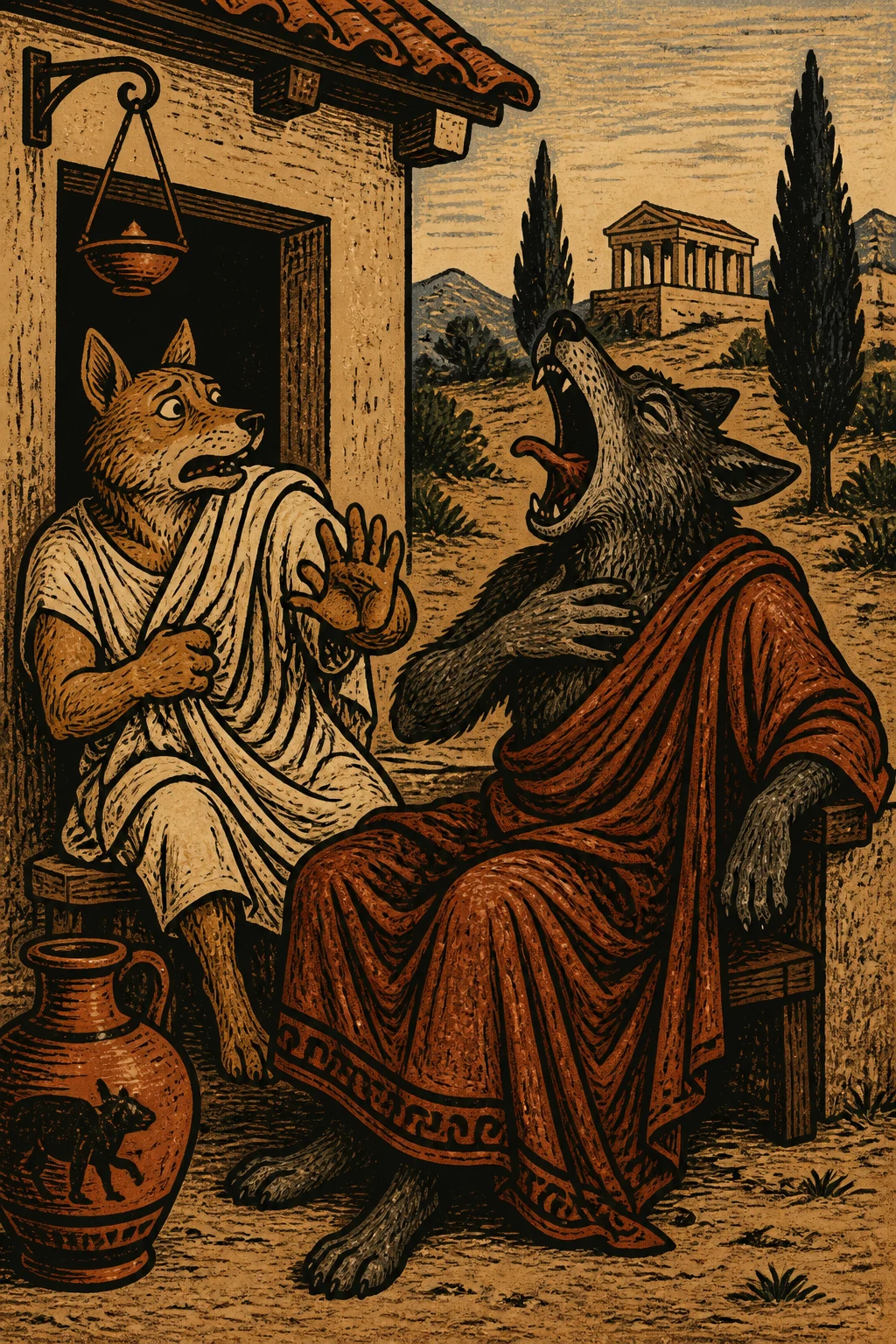
A thief took lodgings at an inn and stayed there for several days, hoping to find something to steal. When no opportunity arose, he noticed one day that the innkeeper had put on a fine new tunic, for it was a feast day, and was sitting outside the inn’s door. No one else was about, so the thief went over, sat down beside him, and began to talk. After they had been talking for some time, the thief yawned, and as he yawned he howled like a wolf. “Why are you doing that?” the innkeeper asked. “I will tell you,” the thief replied, “but please look after my clothes, for I shall leave them here. You see, sir, I do not know what brings on this yawning—whether it is because of my sins or for some other reason, I cannot say. But whenever I yawn three times, I turn into a wolf that eats people.” With that, he yawned a second time and howled again, just as before. Hearing this, the innkeeper believed the thief and grew frightened. He rose to flee, but the thief caught him by the tunic and pleaded, “Wait, sir! Take my clothes so that I do not lose them.” As he pleaded, he opened his mouth and began to yawn a third time. Terrified that he would be eaten, the innkeeper slipped out of his tunic, leaving it behind, and ran into the inn, where he locked himself away in an inner room. The thief took the tunic and went off.
Such is the fate of those who believe what is not true.
Izvirnik
196. Κλέπτης καὶ Πανδοχεύς. (F. 423. C. 425.)
Naslednje strani prikazujejo izvirno besedilo za primerjavo.
Κλέπτης κατέλυσεν ἔν τινι πανδοχείῳ· διέμενεν δὲ ἐκεῖ ἡμέρας τινὰς προσδοκῶν κλέψαι τι. Ὡς δὲ οὐκ ἐδύνατο τοῦτο ποιῆσαι, μιᾷ τῶν ἡμερῶν ἰδὼν τὸν πανδοχέα ἐνδυθέντα χιτῶνα ὡραῖον καὶ καινὸν (ἦν γὰρ ἑορτὴ), καὶ καθεζόμενον πρὸ τῆς πύλης τοῦ πανδοχείου, καὶ οὐδένα ἄλλον τυχόντα ἐκεῖ, ἐπελθὼν καὶ ὁ κλέπτης ἐκάθισεν πλησίον τοῦ πανδοχέως, καὶ ἤρξατο διηγεῖσθαι μετʼ αὐτοῦ. Καὶ διηγούμενοι ὥρᾳ ἱκανῇ, ἐχασμήσατο ὁ κλέπτης, καὶ ὁμοῦ μετὰ τοῦ χασμᾶσθαι ἀρυᾶτο ὥσπερ λύκος. Ὁ δὲ πανδοχεύς φησι πρὸς αὐτόν· „τί οὕτως ποιεῖς;“ Καὶ ὁ κλέπτης ἀπεκρίθη· „νῦν ἀναγγελῶ σοι· ἀλλὰ δέομαί σου, ἵνα φυλάξῃς τὰ ἱμάτιά μου· ἐνταῦθα γὰρ καταλείψω. Ἐγὼ, κύριέ μου, οὐκ οἶδα, πόθεν μοι ἐπέρχεται τὸ χασμᾶσθαι οὕτως, ἢ διὰ τὰς ἁμαρτίας μου, ἢ διὰ ποίαν αἰτίαν, οὐ γινώσκω· ὅταν οὖν χασμηθῶ τρεῖς βολὰς, γίνομαι λύκος ἐσθίων ἀνθρώπους.“ Καὶ ταῦτα εἰπὼν ἐχασμήσατο ἐκ δευτέρου, καὶ πάλιν ὠρυᾶτο, καθάπερ καὶ το πρῶτον. Ἀκούσας οὖν ταῦτα ὁ πανδοχεὺς καὶ πιστεύσας τῷ κλέπτῃ ἐφοβήθη, καὶ ἀναστὰς ἠβούλετο φυγεῖν· ὁ δὲ κλέπτης δραξάμενος αὐτὸν τοῦ χιτῶνος, παρεκάλει αὐτὸν λέγων· „ἀνάμεινον, κύριέ μου, καὶ λαβὲ τὰ ἱμάτιά μου, ἵνα μὴ ἀπολέσω αὐτά· καὶ παρακαλῶν αὐτὸν, ἀνοίξας τὸ στόμα αὑτοῦ ἤρξατο χασμᾶσθαι ἐκ τρίτου. Ὁ δὲ πανδοχεὺς φοβηθεὶς, μήπως φάγῃ αὐτὸν, κατέλιπε τὸν ἑαυτοῦ χιτῶνα, καὶ εἰσελθὼν δρομαῖος εἰς τὸ πανδοχεῖον, κατησφαλίσατο εἰς τὸ ἐνδότερον. Καὶ ὁ κλέπτης λαβών τὸν χιτῶνα ἀπῆλθεν.
Οὕτω πανθάνουσιν οἱ τὰ μὴ ἀληθῆ πιστεύοντες.
Nadaljuj z branjem