Waltey
Taščici gradita gnezdo
020 THE ROBINS BUILD A NEST
Živalske zgodbe Clare Dillingham Pierson · Clara Dillingham PiersonO besedilu
Taščici gradita gnezdo
- Vir
- Živalske zgodbe Clare Dillingham Pierson
- Avtor
- Clara Dillingham Pierson
- Jezik branja
- Slovenščina
- Jezik izvirnika
- English
- Čas branja
- 6 min branja
- Obseg
- 5 strani
- Naslov izvirnika
- 020 THE ROBINS BUILD A NEST
O izvirniku
Živalske zgodbe Clare Dillingham Pierson
Devetindevetdeset avtorskih zgodb o živalih na kmetiji, travniku, v gozdu, ob ribniku in ponoči. Bralni jezik je Slovenščina, izvirnik pa prihaja iz vira Živalske zgodbe Clare Dillingham Pierson v jeziku English.
Besedilo
Taščici gradita gnezdo
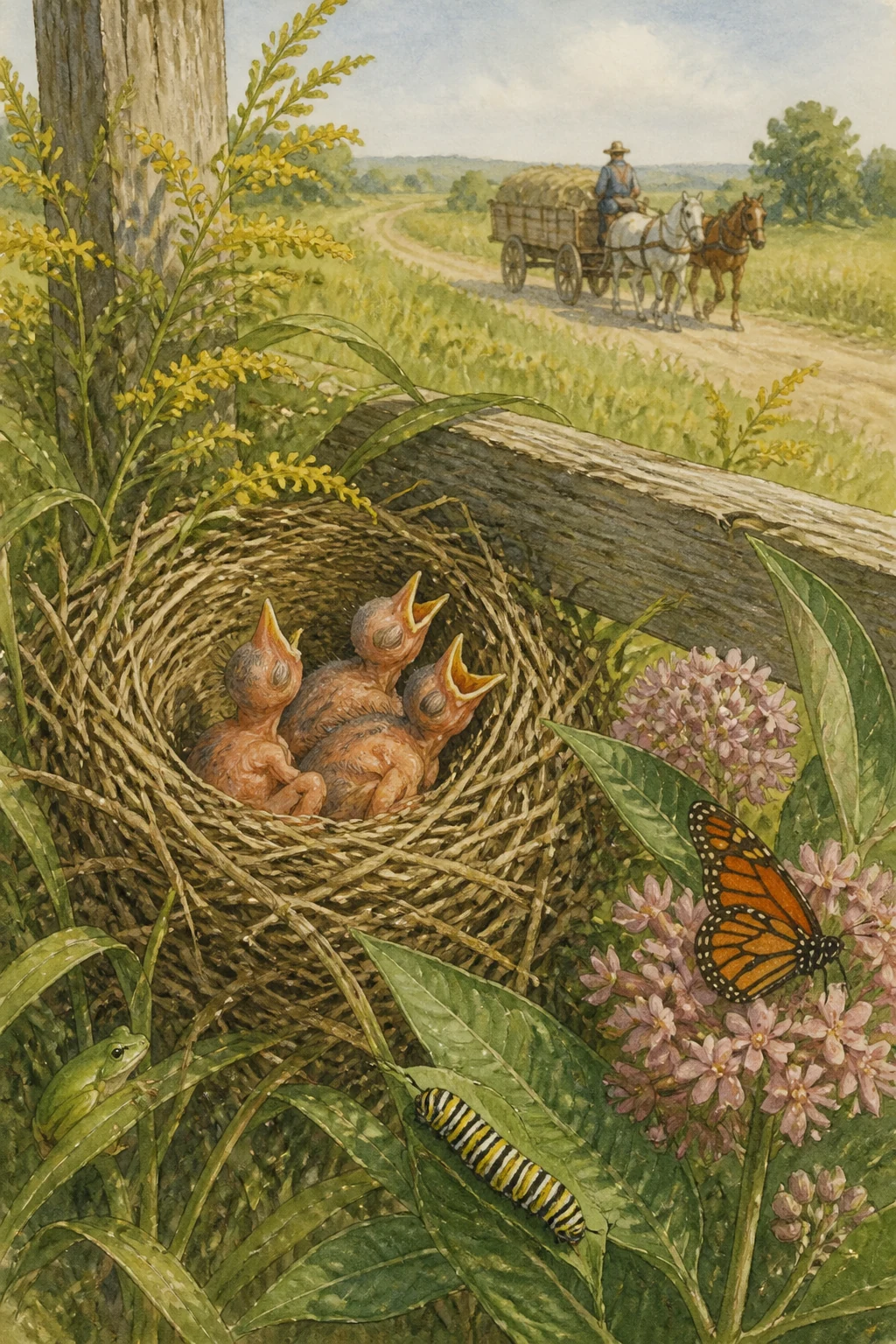
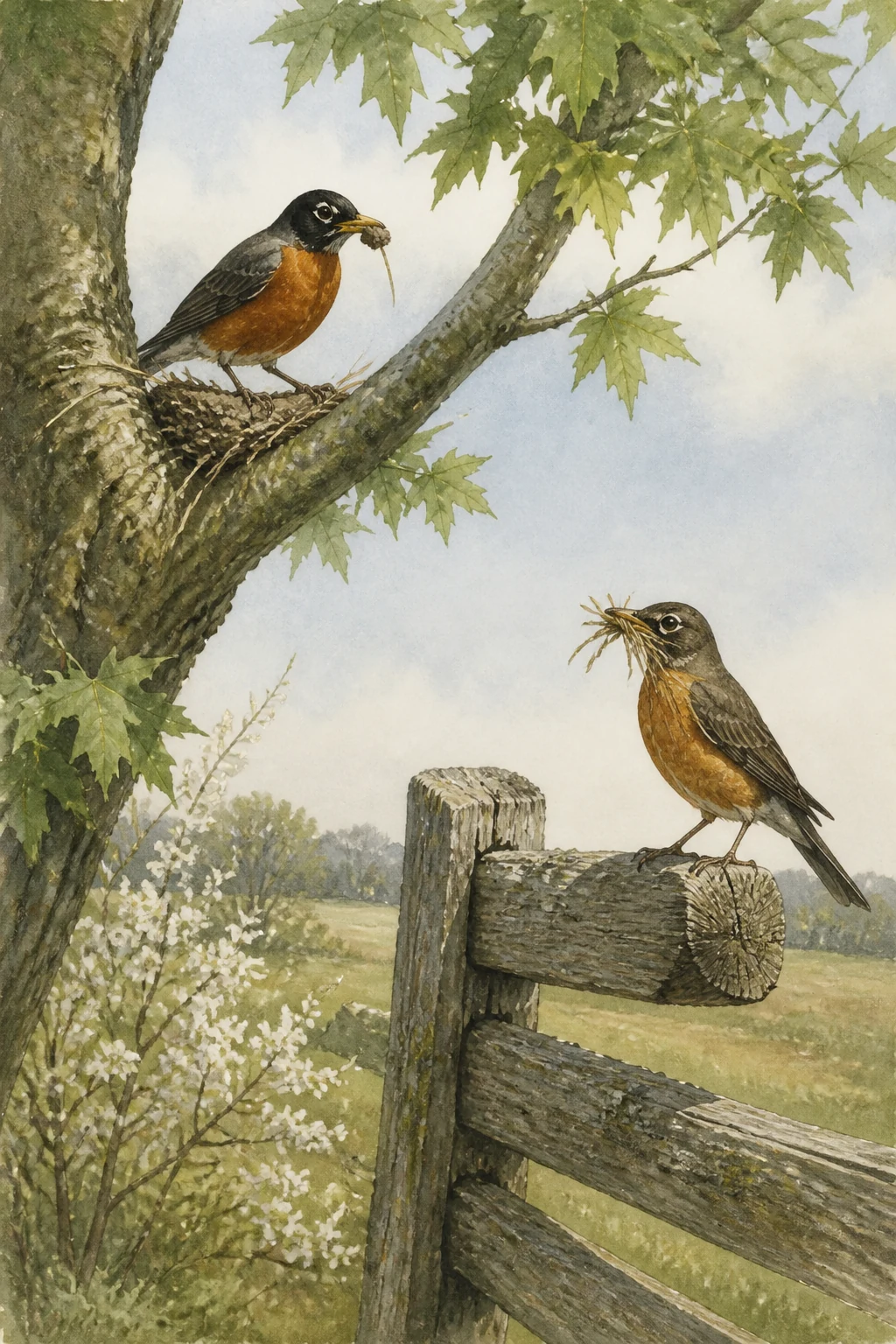
Ko sta gospod Tašček in gospa Taščica spomladi začela graditi gnezdo, se nista povsem strinjala, kje naj bi stalo. Gospod Tašček je bil zelo odločen ptič in si je vtepel v glavo, da bo najprimernejši kraj najnižje razcepišče na javorju. Šel je celo tako daleč, da je tja znosil tri kljune blata in vanj zataknil dve suhi travni bilki. Gospa Taščica pa si je gnezdo želela na koncu druge prečke od vrha ograje iz razklanih brun. Rekla je, da je tam dovolj visoko nad tlemi, da bo na varnem in suhem, pa spet ne tako visoko, da bi se ptiček, ki bi padel iz gnezda, preveč poškodoval. Poleg tega je bila zgornja prečka na koncu široka in bi jih prav lepo varovala pred dežjem.
»Pa še čisto enake barve bo gnezdo kot prečke,« je rekla, »tako da bi ga celo Rdeča veverica komaj opazila.« Rdečih veveric ni marala in za to je imela dober razlog, saj je bila nekoč že poročena, in če ne bi bilo neke Rdeče veverice, bi zdaj morda že imela otroke, velike kakor ona sama.
»Pravim, da je drevo pravi kraj zanj,« je rekel gospod Tašček, »in jaz imam najbolj živo obarvano perje na prsih.« To je rekel zato, ker v ptičjih družinah tisti, ki ima najbolj živo obarvano perje na prsih, misli, da ima pravico odločati.
Gospa Taščica je bila dovolj modra, da mu ni ugovarjala, kadar je govoril tako. Samo stresla je perje, naredila deset hitrih korakov, nagnila telo naprej, pozorno pogledala v tla in iz njih izvlekla nekaj za večerjo. Nato je zaprhutala okoli javorjevega razcepišča, kakor da nikoli ni pomislila na noben drug kraj. Gospod Tašček si je zaželel, da ne bi bil tako odločen in da je ne bi opomnil na svoje prsno perje. »Navsezadnje,« si je mislil, »bi bila morda tudi tista prečka na ograji čisto dobra.« To si je mislil, izrekel pa ni. Taščku ni vselej lahko popustiti in nekomu z bolj pustim prsnim perjem pokazati, da se zaveda svoje zmote.
Tisto noč sta sedela na javorju in spala z glavama pod perutmi. Že dolgo pred sončnim vzhodom, ko so se prvi žarki šele dotikali vrhov gozdnih dreves, sta se zbudila, bistrih oči in spočita, si uredila perje, zapela svojo jutranjo pesem: »Veselo, veselo, le pogumno!« in odletela iskat hrano. Po zajtrku sta se lotila gnezda. Gospa Taščica je pogosto nehala delati, si ogledovala lubje in kljuvala vanj. »Veliko blata bo treba,« je rekla, »da zapolniva to globoko razcepišče in prideva do dovolj širokega prostora za gnezdo.«
Drugič je rekla: »Dragi moj, bojim se, da je suha trava, ki jo prinašaš, presvetla. Na javorjevem lubju se prav dobro vidi. Ali ne moreš najti kakšne temnejše?«
Gospod Tašček je iskal in iskal, a nič temnejšega ni mogel najti. Ko je letel mimo ograje, je opazil, da je skoraj enake barve kakor trava v njegovem kljunu.
Čez čas so nebo začeli prekrivati mehki sivi oblaki. »Le kaj bo,« je rekla gospa Taščica, »če začne deževati, preden končava? Blato je zdaj ravno dovolj mehko, da se lepo dela z njim, ta prostor pa je tako odprt, da bi dež zlahka odplaknil vse, kar sva naredila.«
In res je začelo deževati, in to prav kmalu. Debele kaplje so padale tako silovito, da bi človek pomislil, da z neba padajo kamenčki. Gospod Tašček in gospa Taščica sta si kar najhitreje namastila perje: s kljunoma sta jemala maščobo iz žepkov na hrbtu in si jo nanašala na peresa. Tako sta dobila najboljši nepremočljivi obleki, ki za povrh nista bili prav nič težki. Ko je dež ponehal, sta se otresla in si ogledala svoje delo.
»Mislim,« je rekla gospa Taščica možu, »da imaš prav, ko praviš, da bi bilo bolje pustiti ta kraj in začeti znova kje drugje.«
Gospod Tašček pa se nikakor ni mogel spomniti, da bi kdaj rekel kaj takega. Zelo pozorno je pogledal ženo in nagnil črno glavico na stran, da so se mu pokazale vse črne in bele proge na grlu. Videti je bilo, da sploh ne ve, da jo opazuje, ko je poskakovala okoli napol zgrajenega gnezda, ga tu drezala in tam potiskala ter se na vse pretege trudila, da bi ga spravila v red. Mislil je, da bo kaj rekla, pa ni. Tedaj je vedel, da mora prvi spregovoriti. Trznil je z repom, nagnil glavo in si skozi kljun potegnil nekaj rjavih peres iz peruti. Potem se je vzravnal in iztegnil, kolikor se je mogel, ter rekel: »No, če se že strinjaš z menoj, bi bilo veliko bolje, da tukaj nehaš delati in začneš drugje.«
»Skoraj škoda se mi zdi,« je rekla. »Seveda so še drugi kraji, ampak …« Zdaj je gospod Tašček že natanko vedel, kaj mu je storiti. »Na pretek jih je,« je rekel. »Nikar se ne muči več s tem. Tisti prostor na ograji je izvrsten. Čudim se, da ga ni zasedel že kak drug ptič.« Med govorjenjem je odletel naprej, naravnost na tisto mesto, ki si ga je gospa Taščica izbrala že na začetku.
Bila je zelo modra ptica in je predobro vedela, da ne sme reči: »Saj sem ti rekla.« Saj veste, če to rečemo, gre vse narobe. Pogledala je ograjo, stekla po njenem vrhu in pri tem ljubko obračala prstke navznoter, se presenečeno ozrla naokrog in rekla: »Aha, tisti prostor?«
»Da, gospa Taščica,« je rekel njen mož, »tisti prostor. Se ti zdi z njim kaj narobe?« »Ne-e,« je rekla. »Mislim, da bi se dalo kaj narediti z njim.« Kmalu je bilo novo gnezdo že napol zgrajeno in gospa Taščica je delala, srečna, da bolj ne bi mogla biti. Vsake toliko je za hip odnehala in zapela svojo popoldansko pesem: »Ali misliš, kaj počneš? Ali misliš, kaj počneš? Ali mi-isliš?«
Tudi gospod Tašček je delal, in koliko polnih kljunov blata, koliko drobnih vejic in kako velikih šopov suhe trave sta znosila v ta dom! Nekoč gospoda Taščka dolgo ni bilo nazaj, in ko se je vrnil, mu je iz kljuna bingljal lep kos bele bombažne vrvice. Tega sta namestila na zunanjo stran. »Saj ne, da bi se rada postavljala,« sta rekla, »ampak nekako se nama je zdelo, da je tam zanjo najprimernejše mesto.«
Gospod Tašček je bil zelo ponosen na svoje gnezdo in na svojo ženo. Če se je le dalo, ni nikoli odletel daleč stran. Nekoč ga je slišala govoriti gospodu Liščku, da je bila »gospa Taščica zelo prijazna in je gradila tam, kjer je izbral on, ter da je bila tudi potem, ko je vztrajal, naj se z drevesa preselita na ograjo, še vedno nadvse dobre volje«.
»Da,« je rekla gospa Taščica gospe Liščkovki, »res sem bila nadvse dobre volje.« Potem se je veselo, žvrgoleče zasmejala in gospa Liščkovka se je zasmejala z njo. Bili sta povsem zadovoljni ptici, čeprav nista imeli najbolj živo obarvanega perja na prsih in nista vztrajali, da mora biti vse po njuno. In gospa Taščica je bila nekoč že poročena.
Izvirnik
020 THE ROBINS BUILD A NEST
Naslednje strani prikazujejo izvirno besedilo za primerjavo.
When Mr. and Mrs. Robin built in the spring, they were not quite agreed as to where the nest should be. Mr. Robin was a very decided bird, and had made up his mind that the lowest crotch of a maple tree would be the best place. He even went so far as to take three billfuls of mud there, and stick in two blades of dry grass. Mrs. Robin wanted it on the end of the second rail from the top of the split-rail fence. She said it was high enough from the ground to be safe and dry, and not so high that a little bird falling out of it would hurt himself very much. Then, too, the top rail was broad at the end and would keep the rain off so well.
"And the nest will be just the color of the rails," said she, "so that even a Red Squirrel could hardly see it." She disliked Red Squirrels, and she had reason to, for she had been married before, and if it had not been for a Red Squirrel, she might already have had children as large as she was.
"I say that the tree is the place for it," said Mr. Robin, "and I wear the brightest breast feathers." He said this because in bird families the one who wears the brightest breast feathers thinks he has the right to decide things.
Mrs. Robin was wise enough not to answer back when he spoke in this way. She only shook her feathers, took ten quick running steps, tilted her body forward, looked hard at the ground, and pulled out something for supper. After that she fluttered around the maple tree crotch as though she had never thought of any other place. Mr. Robin wished he had not been quite so decided, or reminded her of his breast feathers. "After all," thought he, "I don't know but the fence-rail would have done." He thought this, but he didn't say it. It is not always easy for a Robin to give up and let one with dull breast feathers know that he thinks himself wrong.
That night they perched in the maple-tree and slept with their heads under their wings. Long before the sun was in sight, when the first beams were just touching the tops of the forest trees, they awakened, bright-eyed and rested, preened their feathers, sang their morning song, "Cheerily, cheerily, cheer-up," and flew off to find food. After breakfast they began to work on the nest. Mrs. Robin stopped often to look and peck at the bark. "It will take a great deal of mud," said she, "to fill in that deep crotch until we reach a place wide enough for the nest."
At another time she said: "My dear, I am afraid that the dry grass you are bringing is too light-colored. It shows very plainly against the maple bark. Can't you find some that is darker?"
Mr. Robin hunted and hunted, but could find nothing which was darker. As he flew past the fence, he noticed that it was almost the color of the grass in his bill.
After a while, soft gray clouds began to cover the sky. "I wonder," said Mrs. Robin, "if it will rain before we get this done. The mud is soft enough now to work well, and this place is so open that the rain might easily wash away all that we have done."
It did rain, however, and very soon. The great drops came down so hard that one could only think of pebbles falling. Mr. and Mrs. Robin oiled their feathers as quickly as they could, taking the oil from their back pockets and putting it onto their feathers with their bills. This made the finest kind of waterproof and was not at all heavy to wear. When the rain was over they shook themselves and looked at their work.
"I believe," said Mrs. Robin to her husband, "that you are right in saying that we might better give up this place and begin over again somewhere else."
Now Mr. Robin could not remember having said that he thought anything of the sort, and he looked very sharply at his wife, and cocked his black head on one side until all the black and white streaks on his throat showed. She did not seem to know that he was watching her as she hopped around the partly built nest, poking it here and pushing it there, and trying her hardest to make it look right. He thought she would say something, but she didn't. Then he knew he must speak first. He flirted his tail and tipped his head and drew some of his brown wing-feathers through his bill. Then he held himself very straight and tall, and said, "Well, if you do agree with me, I think you might much better stop working here and begin in another place."
"It seems almost too bad," said she. "Of course there are other places, but----"
By this time Mr. Robin knew exactly what to do. "Plenty of them," said he. "Now don't fuss any longer with this. That place on the rail fence is an excellent one. I wonder that no other birds have taken it." As he spoke he flew ahead to the very spot which Mrs. Robin had first chosen.
She was a very wise bird, and knew far too much to say, "I told you so." Saying that, you know, always makes things go wrong. She looked at the rail fence, ran along the top of it, toeing in prettily as she ran, looked around in a surprised way, and said, "Oh, that place?"
"Yes, Mrs. Robin," said her husband, "that place. Do you see anything wrong about it?"
"No-o," she said. "I think I could make it do."
Before long another nest was half built, and Mrs. Robin was working away in the happiest manner possible, stopping every little while to sing her afternoon song: "Do you think what you do? Do you think what you do? Do you thi-ink?"
Mr. Robin was also at work, and such billfuls of mud, such fine little twigs, and such big wisps of dry grass as went into that home! Once Mr. Robin was gone a long time, and when he came back he had a beautiful piece of white cotton string dangling from his beak. That they put on the outside. "Not that we care to show off," said they, "but somehow that seemed to be the best place to put it."
Mr. Robin was very proud of his nest and of his wife. He never went far away if he could help it. Once she heard him tell Mr. Goldfinch that, "Mrs. Robin was very sweet about building where he chose, and that even after he insisted on changing places from the tree to the fence she was perfectly good-natured."
"Yes," said Mrs. Robin to Mrs. Goldfinch, "I was perfectly good-natured." Then she gave a happy, chirpy little laugh, and Mrs. Goldfinch laughed, too. They were perfectly contented birds, even if they didn't wear the brightest breast feathers or insist on having their own way. And Mrs. Robin had been married before.
Nadaljuj z branjem