Prevod
Once upon a time there was a poor prince. His kingdom was very small, but it was still large enough to marry on, and marry he would.
Now it was certainly rather bold of him to dare say to the Emperor’s daughter, “Will you have me?” But dare he did, for his name was famous far and wide, and a hundred princesses would have gladly said yes. But just see whether she did.
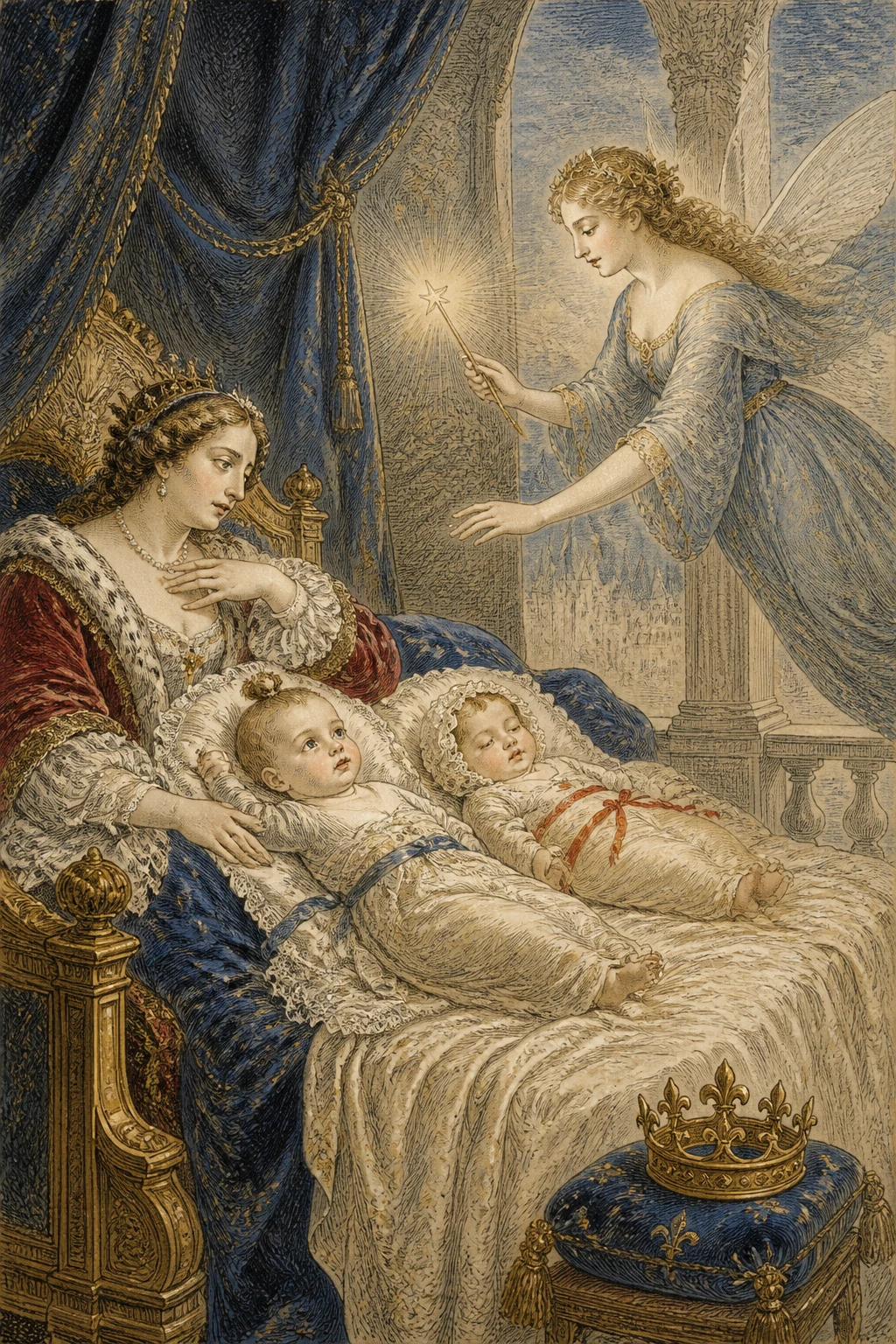
Now let us hear what happened. On the grave of the Prince’s father grew a rose tree—oh, such a lovely rose tree! It flowered only once every five years, and then bore just one blossom, but that rose smelled so sweet that anyone who breathed its fragrance forgot all their sorrows and cares. He also had a nightingale that could sing as though every lovely melody were gathered in its little throat. The Princess was to have that rose and that nightingale, so both were put into great silver cases and sent to her.
The Emperor had them carried before him into the great hall, where the Princess was playing “Paying Visits” with her ladies-in-waiting. When she saw the great cases with the presents inside, she clapped her hands for joy.
“If only it were a little pussycat!” she said. But then out came the rose tree with its lovely rose. “Oh, how beautifully it is made!” said all the ladies-in-waiting.
“It is more than beautiful!” said the Emperor. “It is exquisite!” But the Princess touched it and was ready to cry. “Fie, Papa!” she said. “It is not artificial—it is real!”
“Fie!” said all the courtiers. “It is real!” “Let us see what is in the other case before we lose our tempers,” the Emperor suggested. And out came the nightingale. It sang so beautifully that, for the moment, no one could say a word against it.
“Superbe! Charmant!” said the ladies-in-waiting, for they all spoke French, each worse than the next. “How that bird reminds me of the late Empress’s musical box,” said an old gentleman of the court. “Ah yes! Exactly the same tone, the same expression!”
“Yes!” said the Emperor, and he wept like a little child. “Surely it cannot be real!” said the Princess. “Yes, it is a real bird!” said those who had brought it.
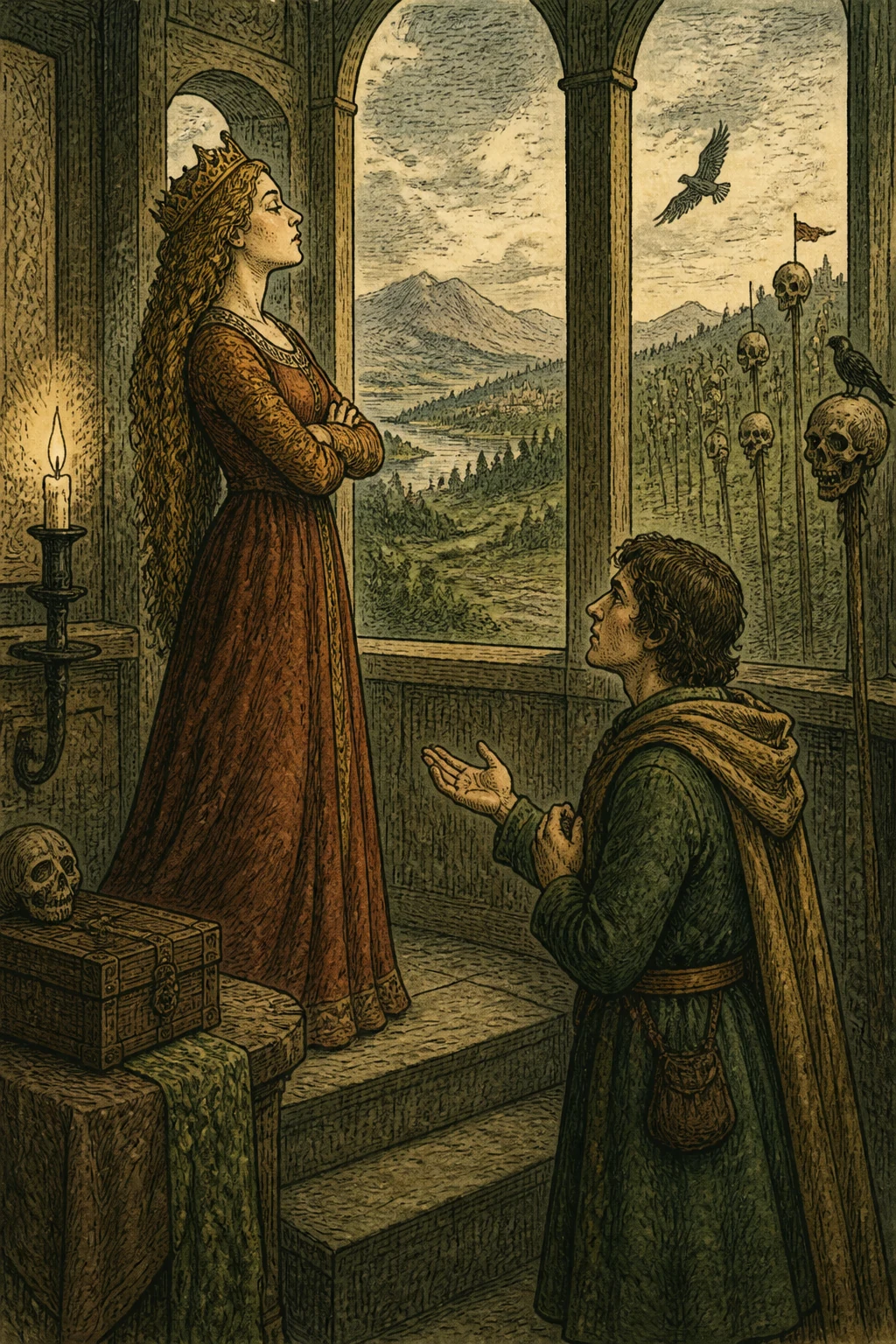
“Then let the bird fly away,” said the Princess, and she would not hear of receiving the Prince. But he would not be discouraged. He smeared his face with brown and black, pulled his cap down over his head, and knocked at the palace door.
“Good day, Emperor!” he said. “Might I find employment here at the palace?” “Yes, certainly!” said the Emperor. “I need someone to look after the pigs, for we have a great many!”
And so the Prince was appointed imperial swineherd. He was given a wretched little room down by the pigsty, and there he had to stay. But all day long he sat at work, and by evening he had made a pretty little pot with bells all round it. As soon as the pot began to boil, the bells rang out sweetly and played the old tune:
“Ach, du lieber Augustin, All is gone, gone, gone!” But the most ingenious thing of all was that, if you held your finger in the steam from the pot, you could immediately smell what was cooking at every hearth in town. Now that was something quite different from the rose.
Presently the Princess came strolling by with all her ladies-in-waiting. When she heard the tune, she stopped and looked very pleased, for she too could play “Ach, du lieber Augustin.” It was the only tune she knew, and she played it with one finger.
“Why, that is the tune I can play!” she said. “He must be a cultivated swineherd! Listen, go down and ask him what that instrument costs!” So one of the ladies-in-waiting had to run in, though she put on wooden clogs first. “What do you want for that pot?” the lady asked.
“I want ten kisses from the Princess!” said the Swineherd. “Heaven preserve us!” said the lady-in-waiting. “Yes, and I will not take less!” answered the Swineherd.
“What an insolent fellow!” said the Princess, and walked on. But she had gone only a little way when the bells rang out so sweetly: “Ach, du lieber Augustin, All is gone, gone, gone!”
“Listen,” said the Princess, “ask him whether he will take ten kisses from my ladies-in-waiting!” “No, thank you!” said the Swineherd. “Ten kisses from the Princess, or I keep the pot.”
“What a nuisance!” said the Princess. “But then you must stand in front of me so that no one can see!” And the ladies-in-waiting stood before her and spread out their skirts, and the Swineherd received his ten kisses, and she received the pot.
Well, what fun they had! All evening and all the next day the pot had to be kept boiling. There was not a single hearth in town without their knowing what was cooking there, whether at the chamberlain’s or the shoemaker’s. The ladies-in-waiting danced and clapped their hands.
“We know who is having sweet soup and pancakes! We know who is having porridge and meat patties! How interesting it is!” “Yes, but keep it to yourselves, for I am the Emperor’s daughter!”
“Heaven preserve us!” they all said. The Swineherd—that is to say, the Prince, though they thought he was nothing but a real swineherd—did not let the day pass without making something. This time he made a rattle that, when swung round, played every waltz and polka known since the creation of the world.
“Why, that is superb!” said the Princess as she passed by. “I have never heard a lovelier composition! Listen, go in and ask him what that instrument costs—but I am not kissing him!”
“He wants a hundred kisses from the Princess!” said the lady-in-waiting who had gone in to ask. “I think he must be mad!” said the Princess, and walked on. But after she had gone a little way, she stopped. “One must encourage the arts!” she said. “I am the Emperor’s daughter! Tell him he shall have ten kisses, as he did yesterday. He can take the rest from my ladies-in-waiting!”
“But we would so much rather not!” said the ladies-in-waiting. “Nonsense!” said the Princess. “If I can kiss him, so can you! Remember, I give you board and wages!” And so the lady-in-waiting had to go in to him again.
“A hundred kisses from the Princess,” he said, “or each of us keeps what is ours!” “Stand in front of me!” she said, and all the ladies-in-waiting stood before her, and he began to kiss her.
“What can that crowd be doing down by the pigsty?” said the Emperor, who had stepped out onto the balcony. He rubbed his eyes and put on his spectacles. “Why, it is the ladies-in-waiting up to their tricks! I had better go down to them!” And he pulled up the backs of his slippers, for they were shoes whose heels he had trodden down.
Goodness, how he hurried! As soon as he reached the courtyard, he walked very quietly, and the ladies-in-waiting were so busy counting the kisses, to make sure everything was fair, that they never noticed the Emperor. He rose on tiptoe.
“What is this?” he said when he saw them kissing, and struck them on the head with his slipper just as the Swineherd was receiving his eighty-sixth kiss. “Heraus!” said the Emperor, for he was angry, and both the Princess and the Swineherd were banished from his empire.
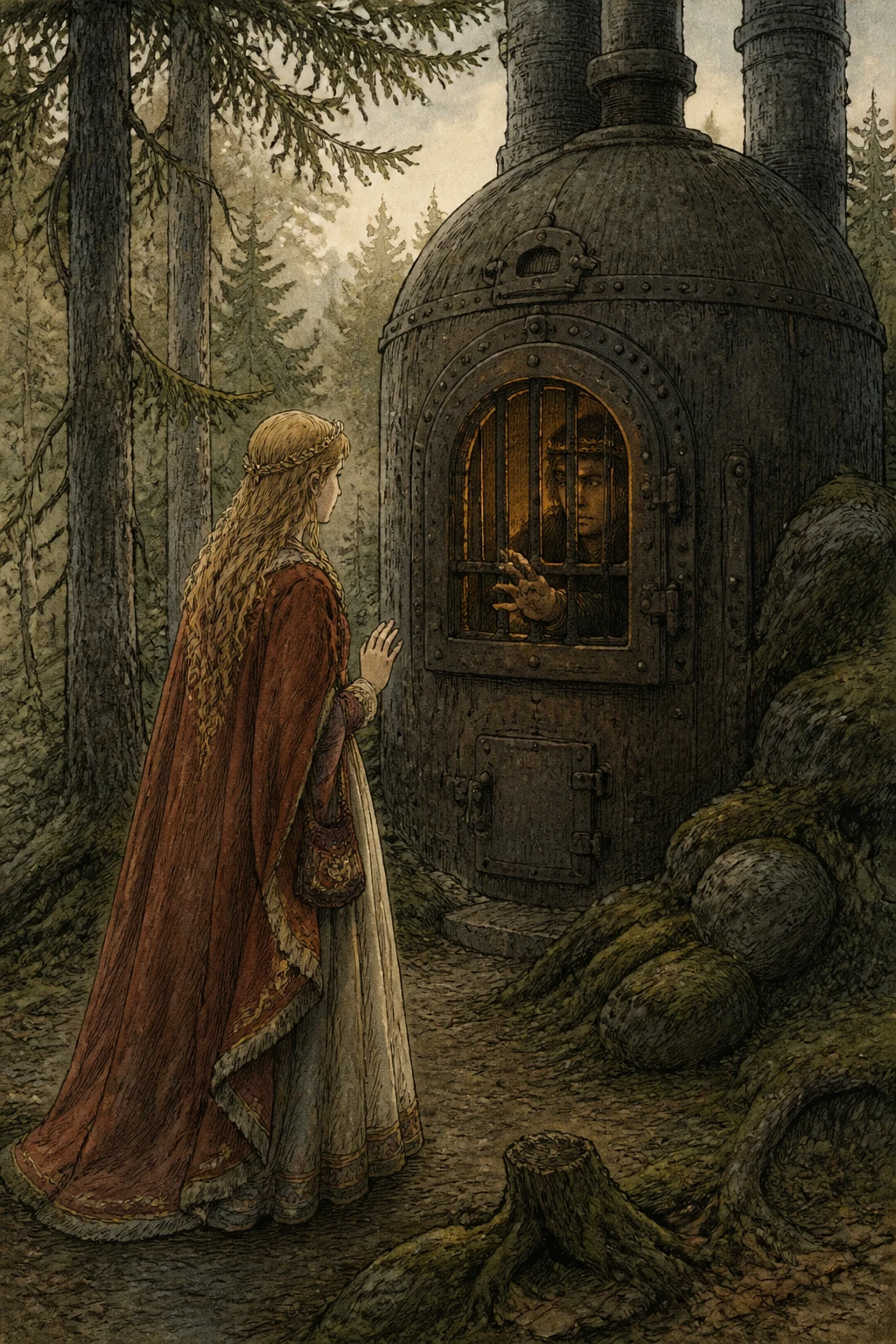
There she stood, crying, while the Swineherd scolded and the rain poured down. “Oh, what a wretched creature I am!” said the Princess. “If only I had accepted that handsome Prince! Oh, how unhappy I am!”
Then the Swineherd went behind a tree, wiped the black and brown from his face, threw off his shabby clothes, and stepped out in his princely finery, looking so handsome that the Princess could not help curtseying to him.
“I have come to despise you!” he said. “You would not have an honest prince! You had no appreciation for the rose or the nightingale, yet you could kiss a swineherd for a musical toy! Now you may make the best of it!” And he went into his kingdom and shut the door in her face. Now she truly had cause to sing:
“Ach, du lieber Augustin, All is gone, gone, gone!”