Waltey
Sebična gosenica
021 THE SELFISH TENT-CATERPILLAR
Živalske zgodbe Clare Dillingham Pierson · Clara Dillingham PiersonO besedilu
Sebična gosenica
- Vir
- Živalske zgodbe Clare Dillingham Pierson
- Avtor
- Clara Dillingham Pierson
- Jezik branja
- Slovenščina
- Jezik izvirnika
- English
- Čas branja
- 7 min branja
- Obseg
- 5 strani
- Naslov izvirnika
- 021 THE SELFISH TENT-CATERPILLAR
O izvirniku
Živalske zgodbe Clare Dillingham Pierson
Devetindevetdeset avtorskih zgodb o živalih na kmetiji, travniku, v gozdu, ob ribniku in ponoči. Bralni jezik je Slovenščina, izvirnik pa prihaja iz vira Živalske zgodbe Clare Dillingham Pierson v jeziku English.
Besedilo
Sebična gosenica
Šotorskim gosenicam bi težko rekli travniške prebivalke, saj so le redko zapustile svoja drevesa in se plazile po tleh. Pa vendar jablanove šotorske gosenice nikomur niso dovolile, da bi jim rekel gozdne prebivalke. »Živimo na jablanah in divjih češnjah,« so govorile, »in skoraj vedno nas boste našli v sadovnjakih ali na drevesih ob cesti. Obstajajo tudi gozdne šotorske gosenice, a nikar nas ne zamenjujte z njimi. Me pripadamo drugi veji družine, jablanovi veji.«
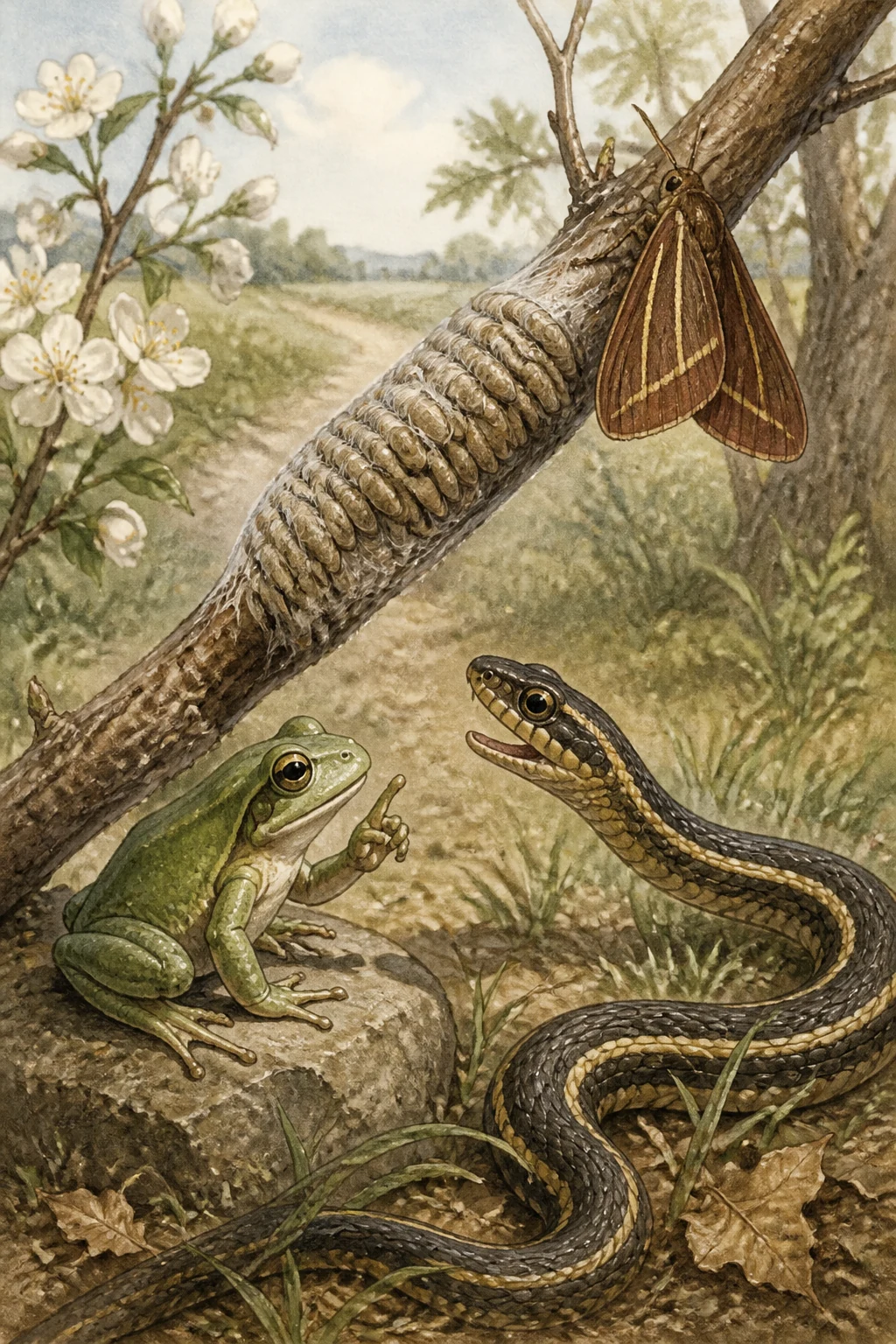
Drevesna rega je rekla, da se prav dobro spominja, kdaj so bila jajčeca odložena na divjo češnjo ob robu travnika. »Bilo je na začetku lanskega poletja,« je dejala, »in nočna metuljka, ki jih je odložila, je bila nadvse prijazna rdečerjava gospa, približno tako velika kot navaden rumen metulj. Spominjam se, da je imela na vsakem sprednjem krilu dve svetlorumeni progi. Z njo je prišel še en nočni metulj, a ni ostal. Bil je manjši od nje in je imel enake vzorce. Ko je odšel, me je vprašala, ali nas kdaj obiščejo rumenokljune kukavice.«
»Zakaj pa je to vprašala?« je rekla podveznica. »Kaj ne veš?« je vzkliknila drevesna rega. Nato je podveznici nekaj zašepetala.
Podveznica se je od presenečenja zvila in vzkliknila: »Res?« Vso jesen in zimo so bila številna, številna jajčeca, ki jih je odložila rdečerjava nočna metuljka, lepo na toplem in varnem na vejici, kamor jih je položila. V vrstah so obdajala vejico in bila dobro prekrita, da so se držala skupaj in ostala na toplem. Zimski vetrovi so vejico zibali sem ter tja, mrzli dež je na jajčecih zmrzoval, mehke snežinke so se spuščale iz oblakov in jih prekrivale, nato pa se spet topile in odtekale v bleščečih kapljicah. Nekega jutra je bila vsa divja češnja odeta v čudovite dolge, lesketajoče se kristale ivja; a obroč jajčec je še vedno ostajal na svojem mestu okoli vejice in življenje v njih je spalo ter čakalo, da ga pomladni sončni žarki obsijejo in prebudijo.
Ko pa so pomladni sončni žarki zares prišli! Še preden so se listni brsti odprli, so iz obroča jajčec prilezle drobcene ličinke, gosenji otročički, in začele objedati brste. Delale so čisto, čisto majhne grižljaje, zato so bile videti kakor lepo vzgojeni otroci. Toda veste, njihova usteca so bila tako majhna, da velikih grižljajev sploh niso mogle narediti, in morda le ni bila olika tista, zaradi katere so tako nežno grizljale.
Ko so se vse šotorske gosenice izlegle in pojedle prav vse listne brste v bližini obroča jajčec, so se začele spuščati po drevesu proti deblu. Ustavile so se pri precej velikem razcepu med vejami. »Zgradimo ga tukaj,« je rekla tista na čelu. »Tale kraj bo čisto pravi.«
Nekaj šotorskih gosenic je reklo: »Pa dajmo!« Druge pa: »Nikar!« Neki mladenič je rekel: »Ah, dajte no! Malo niže je večji razcep.« Seveda bi moral reči: »Mislim, da vam bo večji razcep bolj všeč,« toda bil je še mlad in, saj veste, te ličinke niso imele ne očeta ne matere, da bi jih učila lepega govorjenja. Bile so sirote in pravi čudež je, da so se sploh naučile govoriti.
Potem so nekatere šotorske gosenice odšle naprej do večjega razcepa, druge pa so ostale zadaj. Več jih je odšlo kakor ostalo, in ko so tiste pri manjšem razcepu to videle, so popustile ter se pridružile svojim bratom in sestram, kakor je bilo tudi prav. Prav je bilo storiti tisto, kar je bilo všeč večini.
Da so postavile šotor, je bilo treba veliko dela. Vse so pomagale: predle so na stotine in tisoče belih svilenih niti, jih polagale drugo ob drugo, jih križale, pritrjevale konce na veje in vejice ter pri tem niso pozabile pustiti odprtin, skozi katere je bilo mogoče zlesti noter in ven. Nikoli niso delale ves dan, saj bi kmalu oslabele in ne bi več mogle presti, če si ne bi vzele odmora za jed. V šotoru je bilo skoraj vedno nekaj gosenic, vse pa so bile doma le zgodaj zjutraj, pozno popoldne ali ponoči. Preostali čas so bile razkropljene po drevesu in so se hranile. Seveda so prišli tudi mrzli dnevi, ko so ostale notri. V hladnem vremenu so se premikale počasi in jim je bilo bolj malo do hrane.
Med mladimi gosenicami je bil tudi bratec, ki se je po naključju izlegel prvi in si je očitno domišljal, da ima pravico vselej uveljaviti svojo voljo, ker je minuto starejši od vseh drugih otrok. Včasih je obveljala njegova, ker drugi niso hoteli prepirov. Včasih pa ni, in tedaj je bil silno čemeren in neprijeten ter ni hotel niti odgovoriti, če ga je kdo ogovoril.
Nekega mrzlega dne, ko so vse gosenice ostale v šotoru, si je ta najstarejši brat zaželel najtoplejšega prostora, tistega prav na sredi. Ta bi moral pripadati mlajšim bratom in sestram, saj niso bili tako močni, toda on je svoje kosmato črno-rjavo-rumeno telo z rinjenjem in zvijanjem spravil natanko tja, kamor je hotel, potem pa ozmerjal vse okoli sebe, ker se je moral prerivati, da je prišel tja. Zgodilo se je tako, kakor se vedno zgodi, kadar začne gosenica govoriti grdobije: ni odnehal, dokler ni izrekel tudi reči, ki sploh niso bile resnične. Nihče mu ni ugovarjal, zato je kar naprej godrnjal in se razburjal ter bil nadvse neprijeten.
Ves dan je premišljeval, kako nesrečen je in kako grdo ravnajo z njim in kako bi jim bilo gotovo še kako žal, če bi odšel. Naslednje jutro je res odšel. Dokler je toplo sijalo sonce, mu je šlo prav dobro. Ko pa se je začelo hladiti, so bratje in sestre prilezli mimo njega na poti proti šotoru. »Pridi!« so mu klicali. »Čas je, da gremo domov.«
»M-m!« je rekel najstarejši brat (kar je pomenilo »Ne«). »Jaz ne grem.« »Zakaj pa ne?« so vprašali. »Kar tako,« je rekel. Ko so bili vsi drugi zbrani v šotoru, so se pogovarjali o njem. »Mislite, da je jezen?« je vprašal eden.
»Zaradi česa pa naj bi bil jezen?« je rekel drugi. »Jaz pa mislim, da je res,« je rekel tretji. »Ste opazili, kako so se mu ježile dlačice?« »Se vam ne zdi, da bi morali ponj?« sta vprašala dva ali trije najmlajši.
»Ne,« so rekli starejši. »Ničesar mu nismo storili. Naj se že sam pomiri.« Tako je najstarejši brat, ki je pričakoval, da bodo vse druge gosenice prilezle iz šotora ter ga prosile in pregovarjale, naj se vrne, čakal in čakal in čakal, a nihče ni prišel. Šotor je bil tam in vrata so bila odprta. Samo zlesti bi moral vanj, pa bi bil doma. Čakal je tako dolgo, da je nazadnje moral zapustiti drevo in si spresti kokon, ne da bi se bil še kdaj vrnil k bratom in sestram v šotor. Spredel si je kokon in svilo pomešal z rumenkasto belim prahom, potem pa legel vanj, da bi spal enaindvajset dni in dobil krila. Zadnja misel, ki jo je imel, preden je zaspal, je bila nesrečna in sebična. Verjetno se je tudi prebudil kot nesrečen in sebičen nočni metulj.
Njegovi bratje in sestre so bili žalostni, kadar koli so se spomnili nanj. Toda rekli so: »Kaj pa smo mogli storiti? Ni bilo pravično, da bi dobil vse najboljše, in nikoli mu nismo odgovarjali, kadar je govoril grdobije. Kadar koli bi se lahko vrnil in bili bi prijazni z njim.«
In prav so imeli. Kaj bi sploh lahko storili? Bilo je zelo žalostno, toda kadar je gosenica tako sebična in čemerna, da ne more srečno živeti z drugimi, je veliko bolje, da živi čisto sama.
Izvirnik
021 THE SELFISH TENT-CATERPILLAR
Naslednje strani prikazujejo izvirno besedilo za primerjavo.
One could hardly call the Tent-Caterpillars meadow people, for they did not often leave their trees to crawl upon the ground. Yet the Apple-Tree Tent-Caterpillars would not allow anybody to call them forest people. "We live on apple and wild cherry trees," they said, "and you will almost always find us in the orchards or on the roadside trees. There are Forest Tent-Caterpillars, but please don't get us mixed with them. We belong to another branch of the family, the Apple-Tree branch."
The Tree Frog said that he remembered perfectly well when the eggs were laid on the wild cherry tree on the edge of the meadow. "It was early last summer," he said, "and the Moth who laid them was a very agreeable reddish-brown person, about as large as a common Yellow Butterfly. I remember that she had two light yellow lines on each forewing. Another Moth came with her, but did not stay. He was smaller than she, and had the same markings. After he had gone, she asked me if we were ever visited by the Yellow-Billed Cuckoos."
"Why did she ask that?" said the Garter Snake.
"Don't you know?" exclaimed the Tree Frog. And then he whispered something to the Garter Snake.
The Garter Snake wriggled with surprise and cried, "Really?"
All through the fall and winter the many, many eggs which the reddish-brown Moth had laid were kept snug and warm on the twig where she had put them. They were placed in rows around the twig, and then well covered to hold them together and keep them warm. The winter winds had blown the twig to and fro, the cold rain had frozen over them, the soft snowflakes had drifted down from the clouds and covered them, only to melt and trickle away again in shining drops. One morning the whole wild cherry tree was covered with beautiful long, glistening crystals of hoar-frost; and still the ring of eggs stayed in its place around the twig, and the life in them slept until spring sunbeams should shine down and quicken it.
But when the spring sunbeams did come! Even before the leaf-buds were open, tiny Larvae, or Caterpillar babies, came crawling from the ring of eggs and began feeding upon the buds. They took very, very small bites, and that looked as though they were polite children. Still, you know, their mouths were so small that they could not take big ones, and it may not have been politeness after all which made them eat daintily.
When all the Tent-Caterpillars were hatched, and they had eaten every leaf-bud near the egg-ring, they began to crawl down the tree toward the trunk. Once they stopped by a good-sized crotch in the branches. "Let's build here," said the leader; "this place is all right."
Then some of the Tent-Caterpillars said, "Let's!" and some of them said, "Don't let's!" One young fellow said, "Aw, come on! There's a bigger crotch farther down." Of course he should have said, "I think you will like a larger crotch better," but he was young, and, you know, these Larvae had no father or mother to help them speak in the right way. They were orphans, and it is wonderful how they ever learned to talk at all.
After this, some of the Tent-Caterpillars went on to the larger crotch and some stayed behind. More went than stayed, and when they saw this, those by the smaller crotch gave up and joined their brothers and sisters, as they should have done. It was right to do that which pleased most of them.
It took a great deal of work to make the tent. All helped, spinning hundreds and thousands of white silken threads, laying them side by side, criss-crossing them, fastening the ends to branches and twigs, not forgetting to leave places through which one could crawl in and out. They never worked all day at this, because unless they stopped to eat they would soon have been weak and unable to spin. There were nearly always a few Caterpillars in the tent, but only in the early morning or late afternoon or during the night were they all at home. The rest of the time they were scattered around the tree feeding. Of course there were some cold days when they stayed in. When the weather was chilly they moved slowly and cared very little for food.
There was one young Tent-Caterpillar who happened to be the first hatched, and who seemed to think that because he was a minute older than any of the other children he had the right to his own way. Sometimes he got it, because the others didn't want to have any trouble. Sometimes he didn't get it, and then he was very sulky and disagreeable, even refusing to answer when he was spoken to.
One cold day, when all the Caterpillars stayed in the tent, this oldest brother wanted the warmest place, that in the very middle. It should have belonged to the younger brothers and sisters, for they were not so strong, but he pushed and wriggled his hairy black and brown and yellow body into the very place he wanted, and then scolded everybody around because he had to push to get there. It happened as it always does when a Caterpillar begins to say mean things, and he went on until he was saying some which were really untrue. Nobody answered back, so he scolded and fussed and was exceedingly disagreeable.
All day long he thought how wretched he was, and how badly they treated him, and how he guessed they'd be sorry enough if he went away. The next morning he went. As long as the warm sunshine lasted he did very well. When it began to grow cool, his brothers and sisters crawled past him on their way to the tent. "Come on!" they cried. "It's time to go home."
"Uh-uh!" said the eldest brother (and that meant "No"), "I'm not going."
"Why not?" they asked.
"Oh, because," said he.
When the rest were all together in the tent they talked about him. "Do you suppose he's angry?" said one.
"What should he be angry about?" said another.
"I just believe he is," said a third. "Did you notice the way his hairs bristled?"
"Don't you think we ought to go to get him?" asked two or three of the youngest Caterpillars.
"No," said the older ones. "We haven't done anything. Let him get over it."
So the oldest brother, who had thought that every other Caterpillar in the tent would crawl right out and beg and coax him to come back, waited and waited and waited, but nobody came. The tent was there and the door was open. All he had to do was to crawl in and be at home. He waited so long that at last he had to leave the tree and spin his cocoon without ever having gone back to his brothers and sisters in the tent. He spun his cocoon and mixed the silk with a yellowish-white powder, then he lay down in it to sleep twenty-one days and grow his wings. The last thought he had before going to sleep was an unhappy and selfish one. Probably he awakened an unhappy and selfish Moth.
His brothers and sisters were sad whenever they thought of him. But, they said, "what could we do? It wasn't fair for him to have the best of everything, and we never answered when he said mean things. He might have come back at any time and we would have been kind to him."
And they were right. What could they have done? It was very sad, but when a Caterpillar is so selfish and sulky that he cannot live happily with other people, it is much better that he should live quite alone.
Nadaljuj z branjem