Prevod
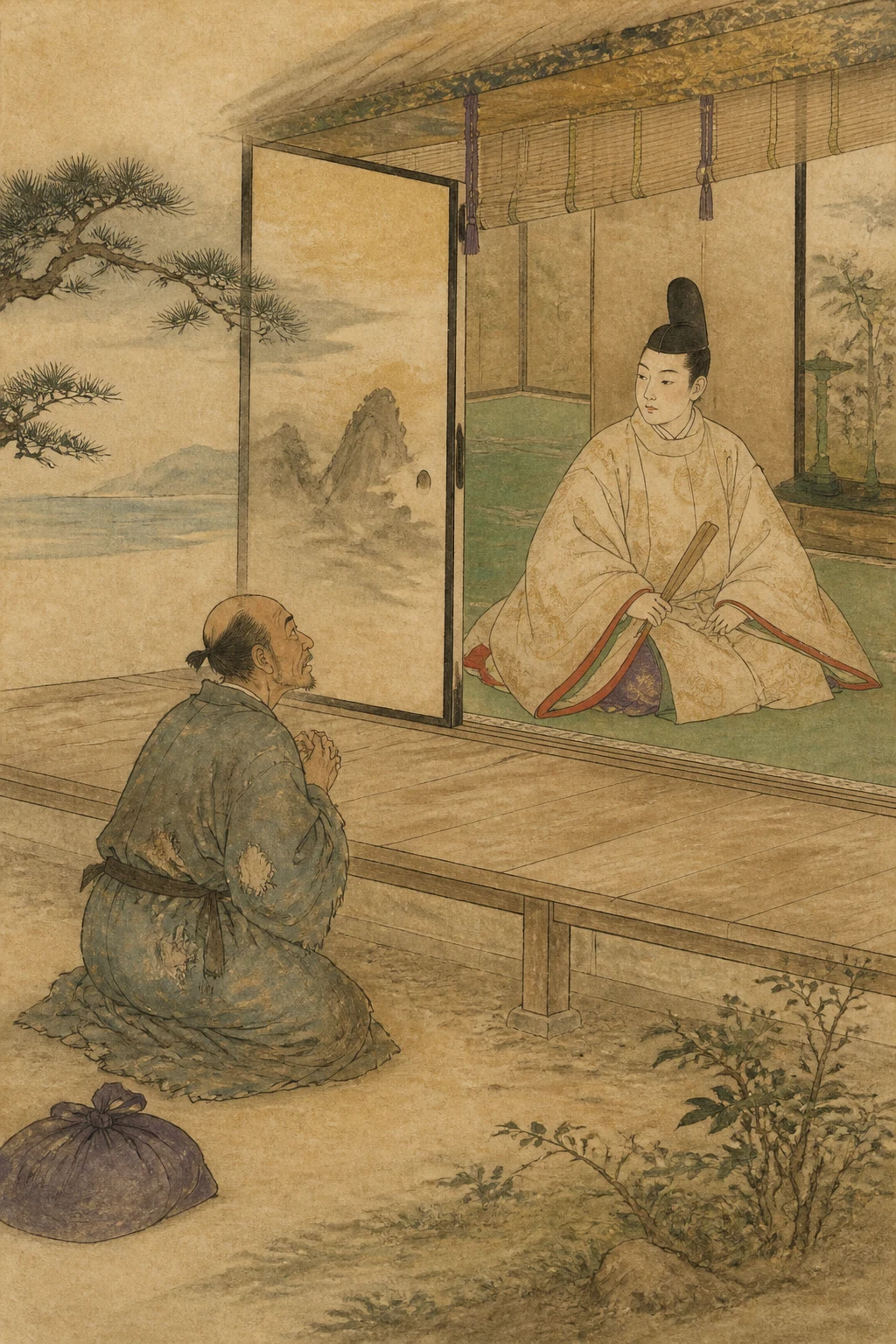
There was once a samurai of little standing whose courtesy name was Sada. Neither his master nor his fellow retainers used his proper name; they simply called him Sada. Though he had no particular accomplishments, he served diligently, and after some years he was put in charge of collecting revenues from an outlying district. Delighted, he went there and lodged with the district official. He spent four or five days discussing the revenues to be collected and then returned to the capital. Now, living in the district official’s household was a woman from the capital who had been led astray and deceived into coming there. Taking pity on her, the official had given her a home and employed her at sewing and similar tasks. She was skilled at such work, and he had grown fond of her. One of Sada’s attendants told him, “There is a woman from the capital at the district official’s house. She is beautiful and has long hair, but he keeps her hidden away and has not even told you about her.” “How vexing!” said Sada. “Why did you say nothing while I was there? It is hateful of you to tell me only now.” “There was a wooden partition beside the place where you were staying,” the attendant replied, “and she was just beyond it. I assumed you knew.” “I had thought I would not go back for a while,” said Sada, “but I shall ask leave, hurry down there, and make that woman mine.” Two or three days later, he said to Tameie, “There were matters I ought to have settled, but I came back leaving them unfinished. If you will grant me leave, I should like to go down again.” “Why did you come back at all if you had left things unfinished? Be off with you at once.” Sada gladly set out. As soon as he arrived, without a word of introduction or explanation, he behaved toward the woman as though she were one of his servants. Even had they long known each other, such conduct would have been unseemly while they were still on distant terms. He took off the shabby hunting tunic he was wearing, which had come apart at a seam, tossed it over the partition, and called loudly, “This is torn. Sew it up and send it back!” Almost at once it was tossed back to him. “What a woman!” he exclaimed in his rough voice. “No sooner does she hear an order to sew something than she has it done and sent back!” But when he picked it up and looked, he found that the seam had not been mended at all. Instead, a letter written on Michinoku paper had been tied to the torn place and the garment thrown back. Puzzled, he unfolded the letter and read: “Though I am no grove of bamboo, / Sada hangs his cast-off robe upon me.” Far from appreciating the grace of the verse, he flew into a rage the moment he saw it. “What a blind woman! I send her something to mend, and she cannot even find the place where the seam has split! She ought to say ‘Sada no,’ yet she writes ‘Sada ga’! Even His Lordship the Governor—whose very name I scarcely dare utter—has never addressed me so in all these years. Who is this woman to call me ‘Sada ga’? I shall teach her a lesson!” He cursed and abused her, threatening to do unspeakable things to her, until she was beside herself and could only weep. In his fury he even turned on the district official. “I shall report this and have you punished!” he declared. The official said, “I took pity on a woman who had no claim on me and gave her shelter, and it seems my reward is to be punished for it.” With reproaches coming from both sides, the woman was terrified and utterly miserable. After raging and scolding in this fashion, Sada returned to the capital. In the retainers’ room he announced, “Something intolerable has happened! An ignorant wretch of a woman has grievously insulted me. Even His Lordship the Governor calls me only ‘Sada.’ What right has this woman to say ‘Sada ga’?” He worked himself into such a fury that those listening could make no sense of him. “But what did she do to make you speak like this?” they asked. “Listen, and I will tell you. In a matter like this, you must all stand together and speak to His Lordship the Governor. Your own good names are at stake.” He then recounted everything just as it had happened. Some exclaimed, “Well, well!” and laughed; many others were disgusted with him. All pitied the woman and admired her refinement. When Tameie heard the story, he summoned Sada and questioned him. Delighted that his grievance was at last being heard, Sada drew himself up importantly and gave his account. Tameie listened to the end, then dismissed him from his service. He took pity on the woman and sent her gifts. Thus, it is said, the man brought about his own ruin.