Waltey
Razbojnik Ōtarō
Uji Shūi Monogatari · anonimna srednjeveška zbirkaO besedilu
Razbojnik Ōtarō
- Vir
- Uji Shūi Monogatari
- Avtor
- anonimna srednjeveška zbirka
- Jezik branja
- English
- Jezik izvirnika
- 日本語
- Čas branja
- 5 min branja
- Obseg
- 4 strani
- Naslov izvirnika
- 033 大太郎盗人事
O izvirniku
Uji Shūi Monogatari
Srednjeveške japonske pripovedi o menihih, duhovih, čudežih, prevarah in vsakdanjih presenečenjih. Bralni jezik je English, izvirnik pa prihaja iz vira Uji Shūi Monogatari v jeziku 日本語.
Besedilo
Razbojnik Ōtarō
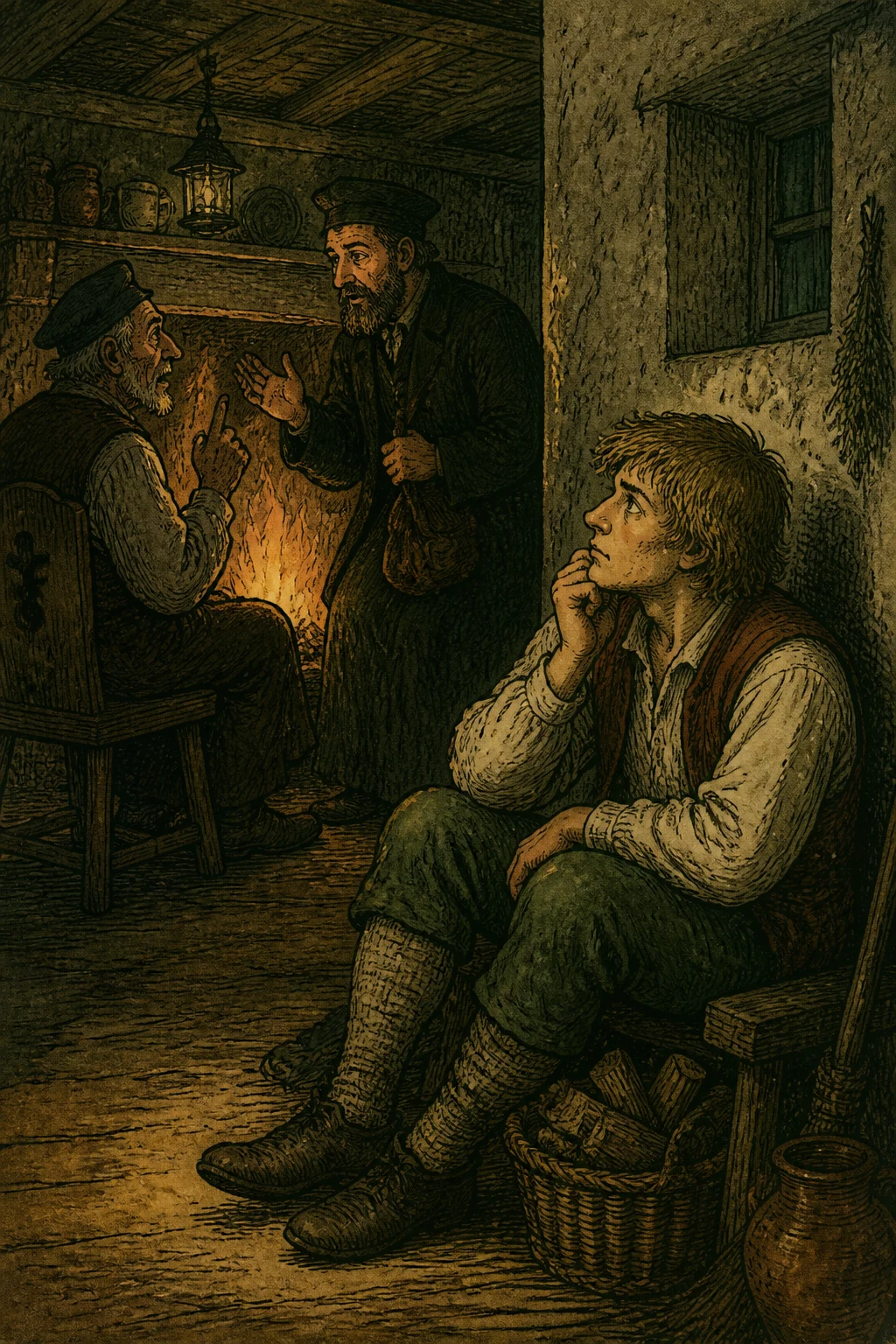
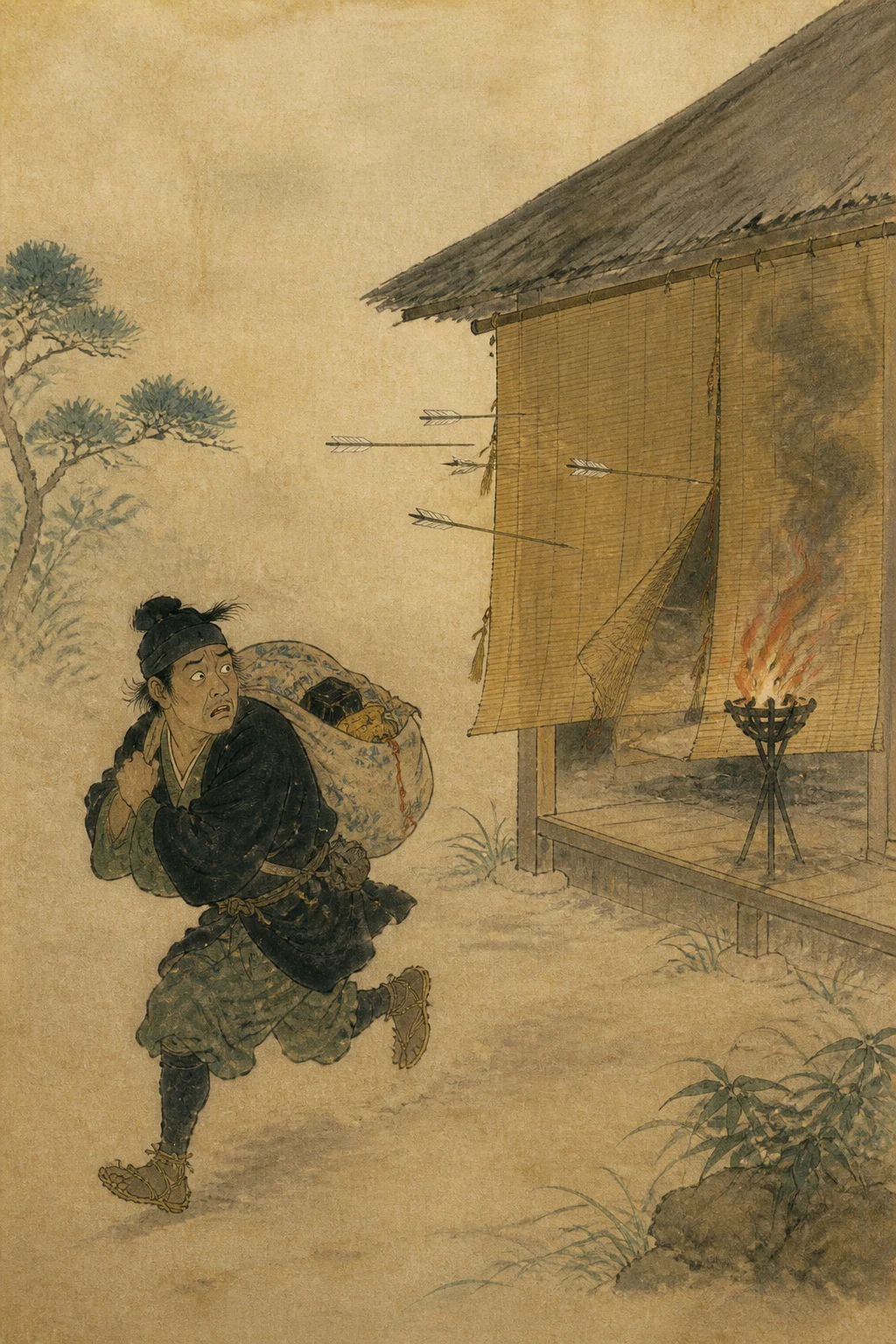
Long ago there was a formidable chief of thieves named Daitarō. He went up to the capital, intending to break into any place that looked worth robbing, and prowled about in search of one. In time he came upon a house whose surroundings were sadly neglected: parts of the gate had fallen down, and others were propped up crookedly. The place stood open and exposed, yet not a single man was to be seen. There were only women, with quantities of cloth spread about for stretching and drying. Dealers in lined robes, Hachijō silk, and other goods were being called inside one after another; the women brought out great quantities of silk, picked through it, and exchanged it for other things. Thinking what a wealth of goods the house must contain, Daitarō stopped and peered in. Just then a southerly wind lifted a bamboo blind. He could not tell what was inside them, but behind it leather trunks were piled high, and in front of them lay an open trunk with what looked like silk scattered about it. At the sight, he thought, “What good fortune! Heaven itself is giving me these riches!” He hurried away, borrowed a length of Hachijō silk, and returned pretending to offer it for sale. Drawing close, he saw that there was not a single man either inside or outside the house, only women. There were indeed many leather trunks; their contents were hidden, but they stood in tall stacks with their lids shut. There was also an extraordinary quantity of silk, with lengths of cloth strewn about, and everything suggested a house overflowing with riches. He asked too high a price for his Hachijō silk, carried it away unsold, and returned it to its owner. Then he went around telling his fellow thieves about the place. That night they came to the house, but as they tried to pass through the gate, it felt as though boiling water were being flung in their faces, and they could not take another step. “What can this be?” they asked. They gathered together and tried to enter, but their terror was too great. “There must be some reason for it. We will leave it alone tonight,” they said, and went away. The next morning Daitarō said, “What could have happened last night?” Taking some of his companions with him and having them carry goods to sell, he returned to investigate. There was nothing whatever to trouble them. The women, with no men among them, were bringing out and putting away the many valuables. Again and again he told himself that there was nothing to fear, and he examined the place closely before leaving. When darkness fell, the thieves made careful preparations and tried once more to enter, but still they were too frightened to go in. “You go first!” “No, you go first!” they urged one another, and that night too they failed to enter. The following morning the house looked just as it had before, with nothing in the least alarming about it. “It must only be our own cowardice,” they decided. That night they again made thorough preparations and went to the house, but as they stood before it they felt even more afraid than on the previous nights. “What can this be?” they said, and withdrew. Then the others declared, “The man who proposed the business ought to go in first. Daitarō must lead the way.” Unable to deny the justice of this, Daitarō cast aside all thought of his own life and went in. The others followed close behind him. Even inside, however, they were still overcome with dread. Creeping softly forward, they saw a light burning in the bare, open house. A blind hanging along the edge of the inner room had been lowered, and the light stood outside it. There were indeed a great many leather trunks. Everything beyond that blind seemed terrifying, and then they heard the sound of an arrow being fitted to a bowstring behind it. Each man felt as though the arrow were already coming at him and piercing his body. Their terror was beyond words. Even as they turned to flee, they felt as though they were exposing their backs to the shot. Somehow they managed to get outside, where they wiped away their sweat. “What was that? Never have I heard anything so dreadful as the sound of that arrow being nocked!” they said to one another, and went home. The next morning Daitarō visited an acquaintance who lived beside the house. At the sight of him, the man welcomed him warmly. “When did you come up to the capital? I had been wondering how you were,” he said. “I have only just arrived, and came straight here,” Daitarō replied. “Then let me offer you a cup of wine.” The man warmed some wine and brought out a large black earthenware bowl to serve as a drinking cup. He raised it in greeting to Daitarō, drank, and handed it to him. Daitarō accepted a bowlful and, holding it in his hands, asked, “Who is living just to the north of you?” His host looked surprised. “Have you not heard? Ōya no Suke Takenobu has lately come up to the capital and is staying there.” At this, Daitarō thought, “Then if we had gone in, every last one of us would have been shot dead!” So utterly did fear rob him of his senses that he flung the wine he had just been given over his host’s head and sprang up to run. As he did so, he fell flat on his face. His astonished host cried, “What is it? What has happened?” But Daitarō fled without so much as looking back. It was at Musa Castle, after his capture, that Daitarō related this terrifying experience.
Izvirnik
033 大太郎盗人事
Naslednje strani prikazujejo izvirno besedilo za primerjavo.
昔大太郎とていみしき盗人の大将軍ありけりそれか京へのほりて物とりぬへき所あらは入て物とらんと思てうかかひありきけるほとにめくりもあはれ門なともかたかたはたうれたるよこ様によせかけたる所のあたけなるに男といふものは一人もみえすして女のかきりにてはり物多とり
ちらしてあるにあはせて八丈うる物なとあまたよひ入てきぬおほくとりいててえりかへさせつつ物ともをかへは物おほかりける所かなと思てたちとまりてみ入れはおりしも南の風の簾を吹きあけたるにすたれのうちになにの入たりとはみえねとも皮子のいとたかくうちつまれたるまへにふたあきて絹なめりとみゆる物とりちらしてありこれをみてうれしきわさかな天たうの我に物をたふなりけりと思て走帰りて八丈一疋人にかりてもてきてうるとてちかくよりてみれは内にも外にも男といふものは一人もなしたた女とものかきりしてみれは皮子もおほかり物はみえねとうつたかくふたおほはれきぬなともことのほかにあり布うち散しなとしていみしく物おほくありけなる所哉とみゆたかくいひて八丈をはうらてもちて帰てぬしにとらせて同類ともにかかる所こそあれといひまはしてその夜きて門にいらんとするにたきり湯をおもてにかくるやうにおほえてふつとえいらすこはいかなる事そとてあつまりていらんとすれとせめて物のおそろしかりけれは
あるやうあらんこよひはいらしとて帰にけりつとめてさてもいかなりつる事そとて同類なとくしてうる物なともたせてきてみるにいかにもわつらはしき事なし物おほくあるを女とものかきりしてとりいてとりおさめすれはことにもあらすと返返思みふせて又くるれはよくよくしたためていらんとするに猶おそろしく覚てえいらすわぬしまついれまついれといひたちてこよひも猶いらすなりぬ又つとめてもおなしやうにみゆるになをけしきけなる物も見えすたたわれかおく病にておほゆるなめりとて又其夜よくしたためて行向てたてるに日比よりも猶物おそろしかりけれはこはいかなる事そといひてかへりていふやうは事をおこしたらん人こそは先いらめ先大太郎か入へきといひけれはさもいはれたりとて身をなきになして入ぬそれにとりつきてかたへも入ぬいりたれとも猶物のおそろしけれはやはらあゆみよりてみれはあはらなる屋のうちに火ともしたり母屋のきはにかけたる簾をはおろして簾の外に火をはともしたりまことに皮子おほかりかの簾の中のおそろ
しくおほゆるにあはせて簾の内に矢を爪よる音のするかその矢のきて身にたつ心ちしていふはかりなくおそろしくおほえて帰いつるもせをそらしたるやうにおほえてかまへていてえてあせをのこひてこはいかなる事そあさましくおそろしかりつるつまよりの音哉といひあはせて帰ぬそのつとめてその家のかたはらに大たらうかしりたりけるものの有ける家に行たれはみつけていみしくきやうようしていつのほり給へるそおほつかなく侍りつるなといへはたた今まうてきつるままにまうてきたる也といへはかはらけまいらせんとて酒わかしてくろきかはらけの大なるを盃にしてかはらけとりて大太郎にさして家あるしのみてかはらけわたしつ大太らうとりて酒を一かはらけうけてもちなからこの北にはたかゐ給へるそといへはおとろきたる気色にてまたしらぬかおほ矢のすけたけのふの此比のほりてゐられたる也といふにさは入たらましかはみな数をつくして射ころされなましと思けるに物もおほえす憶してそのうけたる酒を家あるしに頭よりうちかけて立
はしりける物はうつふしにたをれにけりいへあるしあさましと思てこはいかにこはいかにといひけれとかへりみたにもせすして逃ていにけり大太郎かとられてむさの城のおそろしきよしをかたりける也
Nadaljuj z branjem