Waltey
Prodajaj drago, ne poceni
Swahili Tales · Edward Steere; pripovedovalci z ZanzibarjaO besedilu
Prodajaj drago, ne poceni
- Vir
- Swahili Tales
- Avtor
- Edward Steere; pripovedovalci z Zanzibarja
- Jezik branja
- English
- Jezik izvirnika
- Kiswahili
- Čas branja
- 21 min branja
- Obseg
- 17 strani
- Naslov izvirnika
- 007 Uza Ghali, si Uza Rakhisi
O izvirniku
Swahili Tales
Svahilijske pripovedi z Zanzibarja o zvijači, živalih, vladarjih in nenavadnih preobratih. Bralni jezik je English, izvirnik pa prihaja iz vira Swahili Tales v jeziku Kiswahili.
Besedilo
Prodajaj drago, ne poceni
There was once a very rich man, a minister to the Sultan. He lived his life and had one child, a son named Ali. When the boy reached the age of twenty-five, his father died, leaving him and his mother behind.
Ali inherited his father’s wealth and spent lavishly. At last he went bankrupt and became a poor, despised man, with not a soul in the town who would acknowledge him, neither his own friends nor his father’s. He was still a young man, and he wandered about the town.
Everyone who saw Ali would ask him, “What did you do with your wealth, Ali, to go bankrupt so quickly? Your father left you a great fortune. Had you any sense, Ali, your wealth would have lasted.” Ali would answer, “He who does not understand the meaning is not told the meaning.”
This became his constant answer. Whoever questioned him, he would say, “He who does not understand the meaning is not told the meaning.” Before long, everyone in the town knew that if you asked Ali, “What did you do with your wealth?” he would answer, “He who does not understand the meaning is not told the meaning.”
At last word reached the Sultan. People told him, “Ali, the son of your minister, has gone bankrupt. When people ask him, ‘What did you do with your wealth, Ali, that it vanished so quickly? Your late father left you a great fortune. Had you any sense, Ali, it would have lasted you, for there was so much of it,’ Ali answers whoever questions him, ‘He who does not understand the meaning is not told the meaning.’”
The Sultan said, “Call Ali here, so that I may ask him whether what people say is true, or whether they are slandering him.” The judge rose and said, “Yes, Sultan, these reports are true.” The Sultan sent a soldier to summon Ali at the hour of court, and all those who attended the Sultan’s court were to come and hear whether the things Ali was said to have spoken were true or false.
Ali went and borrowed a ragged kanzu from a poor man, for no one trusted him enough to lend him clothes. Even that kanzu he obtained only through pleading and begging.
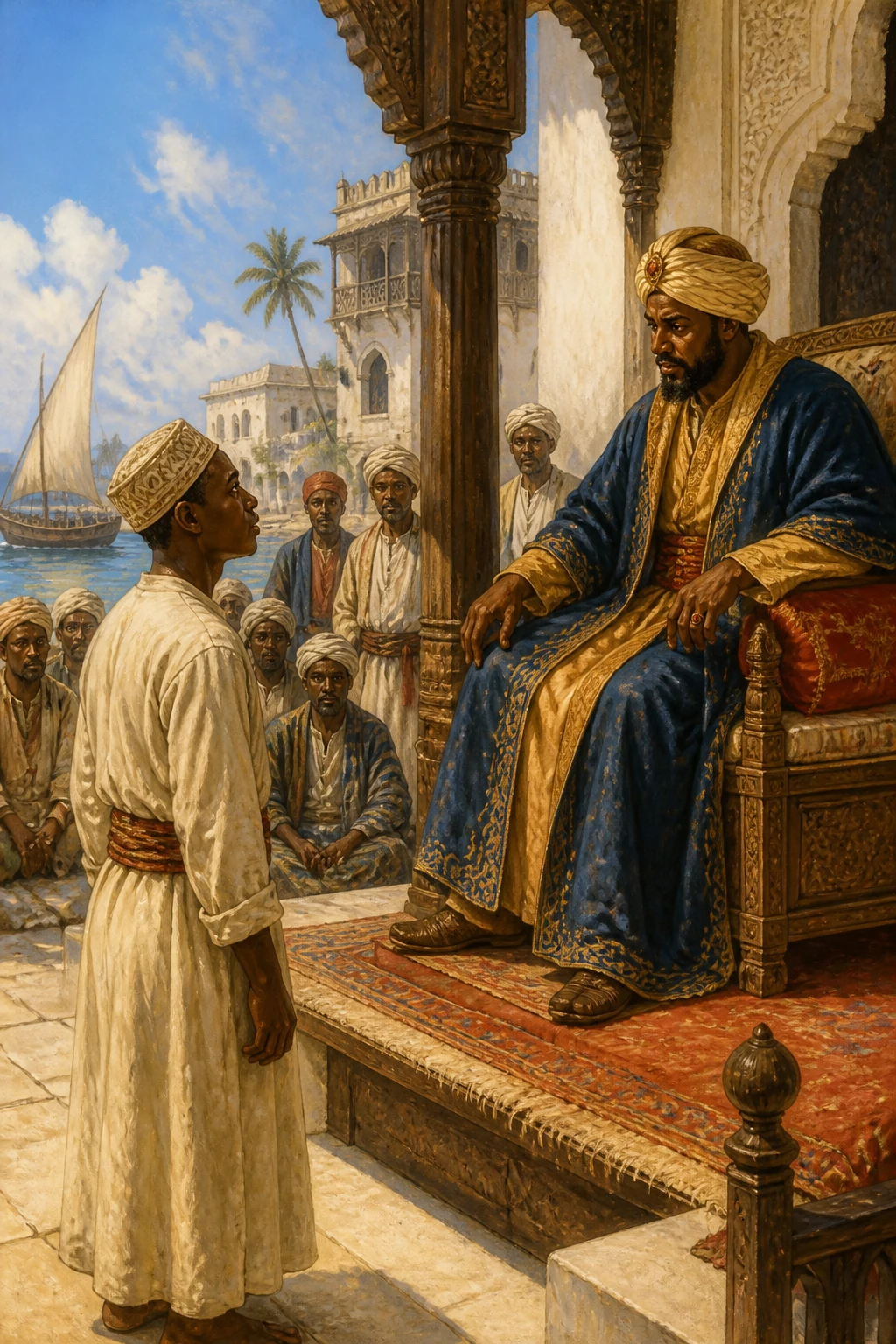
He came to the Sultan’s gate. The court was packed with people, and the Sultan was seated. The Sultan rose and called, “Ali!” He answered, “At your service.” The Sultan said, “Ali, I have heard that your wealth is gone, and that when people question you, you answer, ‘He who does not understand the meaning is not told the meaning.’”
He replied, “Yes, my lord. I divided my wealth into four portions. One portion I cast into the sea; one portion I burned; one portion I lent and shall never be repaid; and with one portion I paid a debt, but have not finished paying it.”
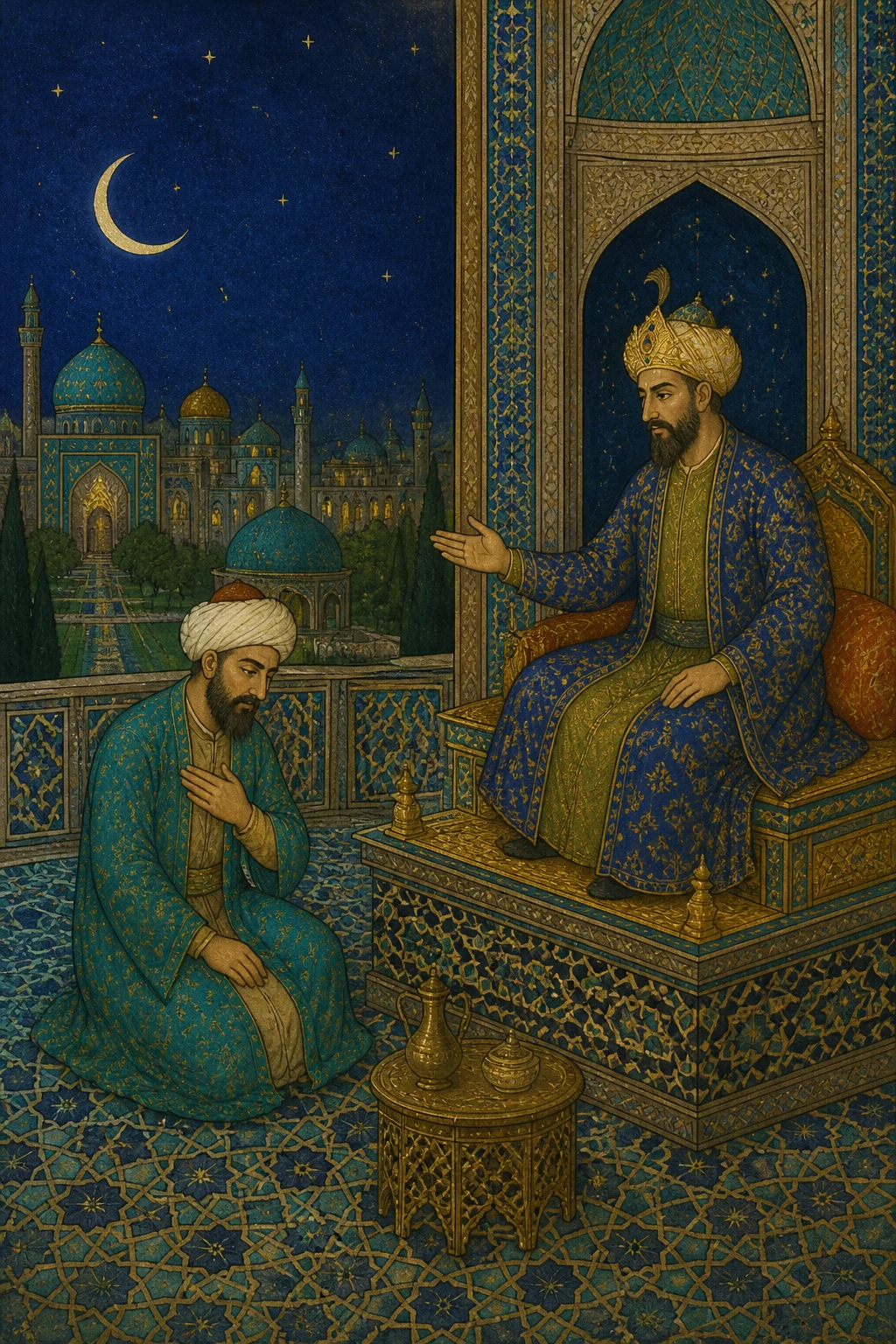
The Sultan said to him, “Ali, sell dear, not cheap.” Ali replied, “Yes indeed, my dear lord.” He left and went his way. At once the Sultan’s minister rose in court and said, “My lord, I know the meaning of these words.” The Sultan answered, “If you can discover their meaning by your own wits, without asking Ali, I, the Sultan, will give you my sultanate. Everything in my dominion, all that speaks and all that does not speak, I give to you. It shall be yours. But if you cannot discover the meaning of these words by your own wits, I shall take all your property. And you must not ask Ali.”
The minister said, “If I cannot discover the meaning of these words by my own wits, I give you, Sultan, everything I possess, all that speaks and all that does not speak, except my wife, who is other people’s daughter and must return to her family. And my head, Sultan, shall be yours to take.”
The Sultan said, “And I shall step down from the throne and become your minister, I who am Sultan.” The minister rose and went home. He bowed his head and thought, then fetched every book in his house. He opened them, searching for the meaning of Ali’s words, but could not find a single one that contained them. So he sat thinking and pondering. “I told the Sultan that I would understand these words by my own wits, yet I have reflected and considered, and still I do not understand them.”
He called, “Juma! Where does that young man Ali live?” The servant asked, “Which Ali, master?” He said, “That young man who had so much wealth, the son of the late minister Hassan, who went bankrupt. Do you not know where he lives? Please take me to him. I have something to ask him. And what I have told you, you must tell no one else. I have set you free so that no one may learn of this matter.”
He answered, “Yes indeed! Yes indeed! I know where he lives. Far away at the very end of the town, there is a little lean-to near the shore. He stays there with that poor cripple who goes about begging. That man is his friend, and he lives with him. He has nowhere else.”
The minister set out at midnight, when everyone was asleep, taking only this one servant, who was his confidant. They walked until they arrived. The minister knocked on the little lean-to and called, “Ali! Ali!” Ali was frightened and did not answer. He called again, “Ali!”
Ali said to his friend, “Wake up, wake up!” His friend asked, “What is it?” He answered, “Someone has knocked on our hut. I wonder, at this hour of the night, is he drunk, or has he come to steal something here? Yet we are paupers and have nothing. Perhaps someone bears us a grudge and wants to take our lives.” He added, “But let us sit quietly and listen first. When he knocks on the door a third time, we shall answer. Perhaps we shall recognize his voice.”
His friend said, “How can you be so foolish, Ali? A man has come in the middle of the night, and we do not know where he is from. People do not usually come knocking at our door. What can this man want of us, unless he has one of three things in mind? If God has granted me insight into these things I am considering in my heart, then it is as Almighty God wills.”
Ali said, “What do you mean, my friend? What are these three things you are considering in your heart? Tell me, so that I too may know, and we may both understand. Tell me the first.”
He said, “First, he wants to steal. Second, he wants to kill us. Third, perhaps he thinks his wife or his slave woman is here. Those are the thoughts in my heart.” Ali answered, “I do not know, my friend. Whatever comes from God is good.”
Ali said, “If he knocks now, I shall answer. If he kills me, let him kill me; if he spares me, so be it. I have no choice but to answer.” The minister knocked and called, “Ali!” He answered, “At your service. Who are you, calling me at this hour of the night, when it is already midnight?” The man replied, “It is I. I have business with you.” Ali said, “I do not know who you are, sir.” He answered, “Do not be afraid. I have come to call you for good, not for evil.” Ali said, “Sir, if you wish to call me, wait until morning.” The minister answered, “I cannot wait here even a single minute. All this talking inside is only delaying you. Please, Ali, come out and hear what I have called you for.”
Ali said, “Very well, sir. I shall put my ear to the door. Tell me your name, and then I shall feel safe enough to come out, for I shall know who you are.”
The minister came close and said, “It is I, the Sultan’s minister. Please come out. I have something to tell you, and it is a private matter.” “Very well, my lord.” Ali went to his poor friend and said, “The Sultan’s minister has come to call me. Whoever refuses a summons refuses what he is summoned for.”
His friend said, “Go, my friend. Perhaps some good awaits you.” Ali opened the door and saw the minister with his one servant. “Good evening, my lord,” he said. “Greetings, Ali,” the minister replied. “Come, let us go to my house.” Ali answered, “Very well, my lord.”
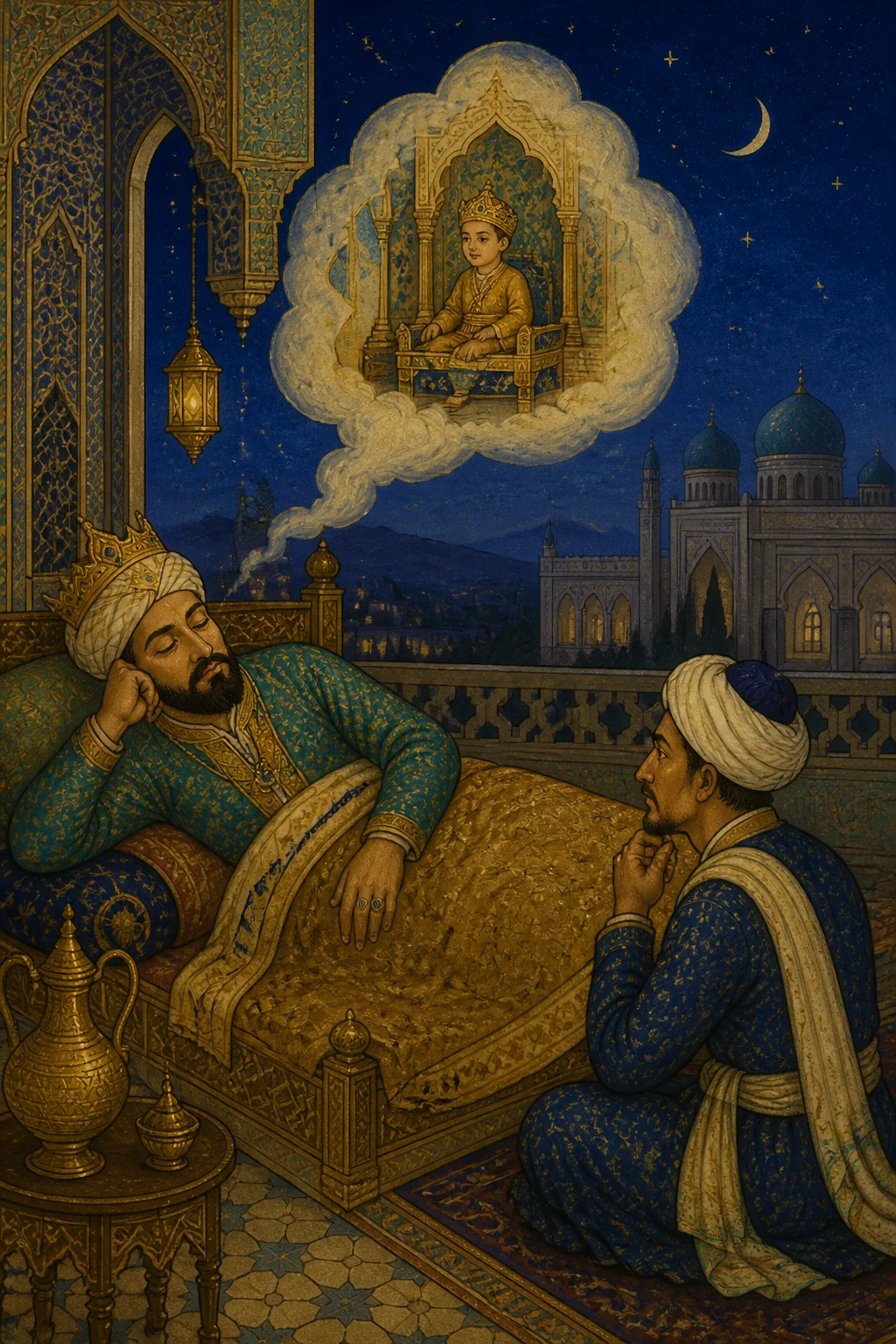
The minister and Ali went together to his house. As the minister went upstairs, one o’clock in the morning was striking. He called his maid, “Mrashi!” She answered, “At your service.” “Tell your mistress to prepare food quickly, before two o’clock strikes, and then come back.”
When Mrashi returned, she said, “Here I am, master.” He told her, “Mrashi, open the chest and bring a length of turban cloth, a white embroidered cap, a kanzu of khuzurungi cloth, and a Seyedia cotton kikoi. I have tied them all together in a red kerchief. Bring them quickly.”
The minister then said to Ali, “I have called you here for your own good. Please let no one know what I say. Keep it to yourself.” Ali answered, “Certainly, my lord. Could I ever reveal your words, my lord?”
He said, “Ali, I want you to explain the words that were reported to the Sultan, and tell me what the Sultan said to you in reply.” Ali answered, “The Sultan told me, ‘Sell dear, not cheap.’”
“Ali, Ali, please explain these words to me.” “How can I explain them to you, when the Sultan told me, ‘Sell dear, not cheap’?” “I shall give you my estate.” Ali answered, “The Sultan told me, ‘Sell dear, not cheap.’”
He said, “Ali, take all my warehouses in the town.” Ali said, “The Sultan told me, ‘Sell dear, not cheap.’” The minister said, “Ali, take all my estates.”
Ali said, “The Sultan told me, ‘Sell dear, not cheap.’” The minister said, “Take everything I possess.” Ali said, “The Sultan told me, ‘Sell dear, not cheap.’”
The minister said, “Take all that speaks and all that does not speak among my possessions, and explain these words to me.” Ali said, “The Sultan told me, ‘Sell dear, not cheap.’”
The minister rose and said, “I shall give you the whole house I live in, and everything it contains, except my wife, who is other people’s daughter and must return to her family.” Ali replied, “Then write me a deed in your own hand.”
The minister called Mrashi. She answered, “At your service, master.” He said, “Bring a pen, ink, and paper from the little cupboard.” Mrashi went and brought them. The minister took the paper and ink and wrote out a deed for Ali: “I have given him everything I possess, all that speaks and all that does not speak, including the house in which I myself live, except my wife, who is other people’s daughter and must return to her family.” The minister took the deed and handed it to Ali.
“It is now four o’clock. Let us go and pray first. When we return from prayers, I shall give you the explanations you seek.” They went downstairs and off to pray, then returned from the mosque. The minister said, “Come now, Ali, tell me, for day is breaking.”
Ali said, “The meaning of ‘He who does not understand the meaning is not told the meaning’ is this: if I explain something to a person without sense, he will not understand. That is why I say to everyone who questions me, ‘He who does not understand the meaning is not told the meaning.’ But when the Sultan summoned me and asked me, I did not withhold the explanation, for the Sultan has sense. And so he answered me, ‘Sell dear, not cheap.’ There is the answer to your question.”
“Then explain how the wealth was lost.” Ali said, “I divided my wealth into four portions. One portion I cast into the sea; one portion I burned; one portion I lent and shall never be repaid; and with one portion I paid a debt, but have not finished paying it.”
“Then tell me, Ali, what does it mean to cast one portion into the sea?” Ali said to the minister, “Forgive me, and bear with whatever I may say. The portion cast into the sea was the money I spent in debauchery with women. That money is lost and I shall never recover it. It is as though I had cast it into the sea, for what sinks into the sea cannot be recovered.”
“And what is the meaning of burning one portion?” Ali said, “I ate lavishly, dressed lavishly, and spent lavishly. That is what I mean by burning it, for it will never return to my hands.”
“Tell me about the third portion. What do you mean by lending it and never being repaid?” He told the minister, “It is like the money a man gives as his wife’s marriage payment. It will never return. That is what I mean when I tell you I have lent it and shall never be repaid.”
He said, “Tell me about the fourth portion. What do you mean when you say you have paid a debt but have not finished paying it?” He told the minister, “It is like a man who gives his mother money, wishing to gladden her heart. But I, her child, do not know whether my mother’s heart is content with what I have done for her. So I say to myself, ‘Perhaps my mother is not yet content with the money I have given her.’ That is what I mean when I tell you that I have paid, but have not finished paying.”
He said, “Thank you, Ali. I have understood your words.” By then the sun was rising, and six o’clock had already struck. The minister sat there, his heart full of joy. “Today I shall gain the sultanate, for I have understood it by my own wits.” He waited until nine o’clock, when the Sultan held court. The minister left his house with nothing but the single kanzu he wore, and went out with joy in his heart.
He walked until he reached the Sultan’s gate. The people there and all the soldiers were astonished. “Ah! The chief minister, who manages all the Sultan’s affairs, comes wearing nothing but a kanzu, without even shoes on his feet!” Everyone marvelled at him, but not one of them knew what was in his heart. Those who knew no better said, “Perhaps his wife has died. That must be why he has come to the Sultan in this state.”
The minister came forward and said, “Good morning, my lord.” The Sultan answered, “May God grant you a good morning, Minister. Welcome.” He sat down. The Sultan said, “Tell me your news. What tidings do you bring?” He answered, “Good tidings. I have come to give you the meaning of those words over which you and I made our agreement, Sultan. I have understood them by my own wits, Sultan.”
The Sultan said, “Explain the first to me.” He answered, “When people asked Ali why his fortune was gone, he told them, ‘He who does not understand the meaning is not told the meaning,’ because those people were fools. Even if he told them, they would not know how to answer him. Is it not better, then, not to tell those who do not understand? For whoever says something to another expects an answer. Would you speak to someone who does not know how to reply? That is why he would not tell them.” The Sultan said, “Yes, indeed, these words are true.” He added, “Minister, explain these four portions to me.”
He said, “The first portion, Sultan, was cast into the sea; another was burned; another was lent and will never be repaid; and with another he paid a debt, but has not finished paying it.”
He said, “Yes, Minister, your words are indeed true. Now tell me the meaning of that portion cast into the sea.” The minister answered, “It is the money Ali took and spent in debauchery away from home. That money was lost. That is what he means by saying that one portion went into the sea.”
He said, “Yes, Minister, that is indeed true.” The Sultan continued, “Once money has been given to women, it cannot be recovered. His words are true: it is as though it had gone into the sea. Now explain the second portion, the one that was burned.”
The minister said, “Ali ate lavishly, dressed lavishly, and spent lavishly. That is what he means by saying that money was burned, for it will never return to his hands.” The Sultan said, “Yes, Minister, these words are indeed true. Once you have spent money on food and bought fine clothes and worn them, it is gone and will not return. Ali has spoken truly: it is as though that portion had been burned.” He said, “Minister, tell me the meaning of the third portion.”
The minister said, “The third portion he lent and will never be repaid.” “What does he mean by lending this money and never being repaid?” The minister said, “It is the money he gave a woman as her marriage payment. When you part from her, she does not return your money. That is why he said, ‘I have lent it and shall never be repaid.’”
He said, “Yes, Minister, these words are indeed true.” The Sultan continued, “A man who gives a woman her marriage payment will not get it back. When you, the husband, have gone bankrupt, that woman will not feel moved to give it to you. Now that you are poor, she sees you as a fool. She no longer acknowledges you as the man who was her husband. Now that you are destitute, you have become ugly too, and she treats you as a fool because you have no money. Yet when you had money, you were a handsome man, a sensible young fellow, and you looked like a Sultan’s son.”
The minister rose and said, “It is true, Sultan. When a man has no money, he is nobody in the eyes of others.” The Sultan said, “Minister, explain the fourth portion to me: paying, yet not having finished paying.”
He told the Sultan, “It means that Ali took one portion of his wealth and gave it to his mother. Yet Ali does not know whether his mother’s heart is content with the money her son has given her. So Ali says, ‘Perhaps my mother is not pleased with what I have done for her.’ That is why Ali says, ‘I have paid, but have not finished paying.’”
The Sultan said, “Yes, Minister.” He rose from his chair and stood before the court, which was packed with people. He called an officer and said, “Go to the barracks and order the commander to have the drum beaten. My minister has now become Sultan, and I have become his minister. All you soldiers, and all who live in the town—Arabs, Swahilis, and all the people of Ngazidja—obey the Sultan.”
The minister rose and took possession of the sultanate. Two days passed. A man walking past the house that had belonged to the minister found Ali at the window, looking out and ordering the groom to saddle a horse, for he wished to go riding. The Arab called, “Ali!” He answered, “Yes?” “Why are you in this house?” Ali replied, “Did not the Sultan tell me, ‘Sell dear, not cheap’? Well, I sold dear.”
“Ah!” The Arab was astonished. How had this Ali come to be in the chief minister’s house? Still, it was no concern of his, and he let the matter rest. Another Arab passed and found Ali downstairs in the reception room. He called, “Ali!” Ali answered, “Yes?” He said, “Why do I find you here, Ali?” Ali replied, “Is this not my house?” “How has this become your house?” “The Sultan told me, ‘Sell dear, not cheap,’ and I sold dear, you see.”
The Arab left and went to the Sultan’s gate. He said, “My master, my lord, I found your servant Ali in your minister’s house. I called, ‘Ali!’ and he answered, ‘Yes?’ I asked, ‘What are you doing in this house?’ Ali replied, ‘The Sultan told me, “Sell dear, not cheap,” and I sold dear.’”
The Sultan was astonished. “So this is what the minister has done to me! We made an agreement that he was not to ask Ali. Yet it turns out he went and asked Ali, and lost all his property in the bargain! Now he has lost on both sides: he has lost his wealth and lost the sultanate as well. Go quickly and call Ali here.” “Very well, my lord.”
The man hurried away and found Ali about to board a boat for an outing. He called, “Ali!” Ali said, “Yes?” He told him, “Quickly! You are summoned to the Sultan.” Ali said, “Very well. The Sultan is still my Sultan.”
Ali went upstairs and called, “Mrashi, find me some fine clothes among those in the chests, for you know them better than anyone else.” Mrashi opened a chest and took out a fine robe, a handsome turban, a splendid shawl, a dagger with a gold-mounted hilt, an Arab Al Busaidi sword, and a little bottle of rose perfume from Istanbul. She brought them to her master.
When Ali saw the clothes, he was delighted. He took them and dressed, then went downstairs with the Arab. They walked until they reached the Sultan’s gate. He was told, “Go into the reception room.” He entered and sat down.
The Sultan came downstairs to hold court, accompanied by the man who had formerly been Sultan and was now minister. The minister was called and answered, “Yes?” He was asked, “Did our conditions mean nothing? Did I not stipulate that you must discover the meaning by your own wits, and not go and ask Ali?” He answered, “Yes.” “Yet you went behind my back and asked Ali.” He said to the Sultan, “I did not ask Ali.” The Sultan said, “Ah! Is Ali not here? Let us call him to stand before you, so that we may establish whether you discovered the meaning by your own wits, or whether Ali told you.” He answered, “Yes, call Ali here.”
The Sultan rose and called Ali. He answered, “At your service, my dear lord.” “Come here,” he said. “How is it, Ali, that you have gone to live in the minister’s house? What do you mean by it?” Ali replied, “Yes, Sultan, you told me, ‘Sell dear, not cheap.’ And here is the deed the minister wrote for me. Read it, Sultan, and you will know that this is true.”
The Sultan took the deed and read it. He said, “Indeed, Ali, you sold dear, not cheap.” The Sultan rose and called the minister. He answered, “At your service, my dear lord.” The Sultan addressed the people: “All of you here in court, great and small—Banyan, Arab, Mahri, Ngazidja, Swahili, and all the people of this land—I have dismissed this man. He holds neither the ministry nor the sultanate. His standing is now that of any other person in the town. And this Ali is now my chief minister. Whoever has a request, man or woman, Arab or European, let them all go to Ali. He is the one who will settle your affairs.”
And this tale was told by Ninsa.
Izvirnik
007 Uza Ghali, si Uza Rakhisi
Naslednje strani prikazujejo izvirno besedilo za primerjavo.
Aliondoka tajiri mkubwa mweuyi mali mengi, naye waziri wa Siiltaui. Akakaa katika ulimwengu wake, akazaa kij'aua kimoja. Na kijana kile, jina lake Ali. Hatta mtoto alipopata mAvaka wa kliamsi u aslierini, babaye akafa. Akasalia yeye na mamaye.
Akarithi inali yake Ali, akatumia mali sana. Hatta Ali akafilisika, akawa maskini tbalili pasiwe mtu mmoja amjuaye katika mji ule, rafiki zake yeye, wala wa babaye. Akawa mtu kijana, akatembea katika mji.
Killa amwonaye Ali bumwuliza, mali yako waliyatendani, Ali, batta ukafilisika upesi? Kwani babayo aliacba mali mengi, nngokuwa na akili Ali, mali yako ungedumu nayo. Ali akaneua, asiojua maaua, baambiwi maana.
Eiawa kazi, neno lake, killa amwulizao bumwambia — asiyojua maana, baambiwi maaua. Hatta yale maneno mji mzima watu wamejua, kamma Ali, akimwuliza — mali yako umcyatendaui, bukujibu, asiyojua maana, baambiwi maana.
Hatta maneno yakafika kwa Sultani. Watu waka-
mwambia Sultani, yule kijana wa waziri wako, Ali, amefilisika, watu wakimwuliza — mali yako, Ali, waliyateudani hatta yakaislia upesi ? Mali yako ni mengi aliokuacliia marehemu babayo, kwani mali yake, ungokuwa na akili, Ali, yaugedumu nawe, kwa yale mali kwa kuwa mengi. Na Ali liujibu, akamwambia amwulizaye — asiojua maana, baambiwi maana.
Sultani akanena, kaniitieni Ali, aje ni'mulize maneno baya kweli wanaonena watu ao wauamsingizia. Akaondoka katbi akanena, naam, kweli, Sultani, manono baya. Akatuma asikari kwcnda kumwita kuja wakati wa baraza, na watu pia walijio katika baraza ya Sultani waje, wasikie, maneno baya anaonena Ali kweli ao uwongo.
Hatta Ali akaenda akaazima kanzu mbovumbovu kwa mtu maskini, kwani bapana mtu anayomwamini kumpa nguo zake, na biyo kanzu Ali apata kwa tafatbali na kwa angukia.
Hatta akaenda mwangoni mwa Sultani, na baraza imejaa tele watu, na Sultani amckaa kitako. Sultani akaondoka, akamwita — Ali ! Akaitika — Lebeka. Akamwambia, Ali, nimesikia maneno kama mali yako yamefilisika, na wewe buwajibu watu wanaokuuliza, buwaambia — Asiyojua maana, baambiwi maana.
Akamwambia — Na'am Bwaua, mali baya naliyapiga mafungu manne, fungu moja nalitia babarini, fungu moja nalipiga moto, fungu moja nalikopcsba wala sitalipwa, fungu moja nimelipa dcni wala sijaisha kulipa.
Sultani akamwambia — Ali, uza gbali, si uza raldiisi. Ali akamwambia — Ee Walla, bababi. Akatoka, akaenda zake.
Akaondoka waziri wake Sultani palepale, katika baraza, akamwambia — Seycdina, mancno haya nayajua maaua yake. Sultani akamjibu, akamwambia, kamma wee uyajuapo maneno liaya maaua zake, billa kumwuliza Ali, uyajue kwa akili yako, mimi Sultani ntakupa usultani wangu, kinacbosema na kisicbosema katika milki yangu, mimi Sultani nimekupa, yako. Na wewe usipojua mancno haya maana zake kwa akili yako, mali yako nitatwaa yote, wallakini usimwulize Ali.
Akanena waziri, nisiiiojua maneno liaya kwa akili zangu, mimi waziri katika milki yangu nimekupa, Sultani, kinenacbo na kisicbonena, ilia mke wangu mtoto wa watu enda kwao, na kitwa ebangu balali yako, Sultani.
Sultani akanena, na mimi ntasbuka katika ufatimc niwe ndiye waziri wako, mimi Sultani.
Akaondoka waziri, akaenda batta nyumba yake, akanama, akafikiri, akaenda akatwaa vyuo viliomo jamii ndani ya nyumba yake. Akavifunua kutazama maana ya maneno ya Ali, asipate kimoja kilicbomo maneno ya Ali. Bassi akakaa kitako akifikiri na kuaza — mimi nimenena kwa Sultani, maneno baya ntayajua kwa akili zangu, nami nimetafakari na kuwaza sikuyajua.
Akamwita, Juma ! yule kijana Ali auakaa wapi ? Akamwambia, Bwana, Ali gaui ?
Akamwambia, kile kijana aliokuwa na mali mengi, kijana cba waziri marebemu Hassan, aliofilisika bumjui anakokaa ? Tafatbali unipelekc, nna mancno naye kutaka kumwuliza. Na maneno baya nimekwambia wcwe, usimwambie mtu tena. Nami nimekuacha bum k^Ya sababu maucno baya asijue mtu.
Akamwambia — Ee Walla ! Ee Walla ! namjua anakokaa. Kule-e-e mwislio wa mji, kuna kipenu kidogo karibu na pwani, ndiko anakokaa kwa yule masikini mwenyi ckongo anayopita akiomba, ndiye rafiki yake, ndiko anakokaa, bana pabali pangine.
Akaondoka waziri usiku, saa ya sita, watu pia wamelala, yeye na mtumwa wake mmoja, buyu mtumwa ndiye msiri wake, wakaeneuda batta wakafika. Akabisba yule waziri katika kile kipenix, akamwita — Ali ! Ali ! Akaogopa, asiitike. Akamwambia — Ali !
Akamwambia rafiki yake, amka, amka. Akamwuliza, kuna nini? Akamwambia, kumepiga mtu kibandani kwetu, nami nataajabu usiku buu, buyu mtu mlevi, ao mtu atakayokuja kwiba buku ndani ? Lakiui sisi fukara, hatuna kitu. Labuda mtu ataka kutubusudu, kututoa robo zetu. Akamwambia, lakiui mimi, na tukae kitako kwanza tusikilize, batta atakajjobisba mwango buu marra ya tatu tumwitikie, bwenda tukamjua sauti yake.
Akamwambia, gissi gani wewe, Ali, kuwa mjinga? Mtu amekuja usiku wa manane, batumjui atokako, na sisi hatuna kawaida ya kuja mtu kubisba mwango kwetu, ataka nini mtu buyu, isipokuwa labuda ana mambo matatu ataka kwetu, kama Muungu amenijalia mambo liaya nayawaza mimi katika robo yangu, ni lile apendalo Mwenyi ezi Muungu.
Akamwambia Ali — Gissi gani, rafiki yangu, maana ya tatu gani baya, unayowaza wewe katika robo yako? Nambie nami najue, tupate kujua sote. Nambia la kwanza.
Akamwambia, la kwanza, ataka kuja kwiba ; la pili, ataka kuja kiituua; la tatu, labuda anasema buku kuna mke wake, ao mtumwa wake mwauamkc. Ndiyo niuayoyawaza
mimi katika rolio yangu. Akamwambia, sijui, rafiki yangu, linalokuja kwa Muuugu lotc jema.
Ali akasema, akibisha sasa nitamwitikia, akiniua na aniue, akiniaclia bass, wala siua buddi ilia kumwitikia.
Akabisha waziri, akamwita — Ali ! Akamwitikia, lebeka, nam weye unayokuja niita usiku, na usiku liuu umekuwa wa manane ? Akamwambia, ni mimi, nina shughuli nawe. Akamwambia, sikujui weye, bwana, uliokuja. Akamwambia, usiogope, nimekuja kwita kwa kheri, sikuja kwita kwa sbari. Akamwambia, bwana, kuniita kwako, ndiko Tinisabiiri hatta assubui. Waziri akamwambia, bapa nilipo, siwezi kukusaburi hatta kwa dakika moja, hivyo unavyonena ndani naona uuakawia. Tafatbali, Ali, toka nje, usikie neno langu nalikwitia.
Akamwambia — Ee Walla, bwana, naveka sikio langu katika mwango iiniambie jina lako, ndiyo nitakapoamini kutoka, kwani ndipo nimekv/i&ha kukujua.
Akaenda waziri akamwambia, ni mimi, Waziri wa Sultaui, tafatbali toka, nna maneno nawe kwambia na mancno baya kwa faraglia. Ee Walla, bwana waugu. Akaenda Ali akamwambia rafiki yakc, yule maskini, nimekuja kwitwa na w^aziri wa Sultaui, akataayo witwa bakataa aitiwalo.
Akamwambia, rafiki yangu enenda, labuda kuua kheri nawe. Akifuugua mwango Ali akirawona waziri na mtumwa wake mmoja. Akamwambia, Bwana, masalkhciri. Akamwambia, marababa, Ali, tuondoke, twende zetu kwangu. Akamwambia — Ee Walla, Bwana.
Yule waziri na Ali wakafnatana hatta mTimbani kwake. Waziri akipanda darini, saa saba ikipiga ya usiku, Waziri akamwita mjakazi wake, Mrashi ! Aka-
306 rZA Gil ALL
itika, lebeka. Kamwambie bibi afanye chakula kv\a upesi, kabla saa ya nane hajapiga, na we we regea.
Alipokiija Mrashi, akamwambia, nimekuja, Bwaua. Akamwambia, Mrashi, ukafuugue kasha, lete kitambi kimoja cha kilcmba, ulete i:a kofia moja nyeupc ya darizi, lete na kanzu moja ya khuzui-ungi, ulete na kikoi kimoja seyedia ya uzi, na zote nimefimga pamoja katika bahasha ya leso nyekimdu, upesi ulete.
Akaondoka waziri akamwambia Ali, nimekwitia kheri, tafuthali maneno yangu haya asijue mtu, weka ndani nafsi yako. Ali akamwambia, Ee Walla, Bwana, mimi maneno yako nayaweza kuyatoa, Bwana ?
Akamwambia, nataka, Ali, unipe maana ya maneno yale waliyomwambia Sultani, unipe na maneno aliokujibu Sultani.
Akamwambia, Sultani ameniarabia, Uza ghali, si uza rakhisi.
Ali, Ali, utafathali ukanambie maneno haya, utanambiaje, na Sultani ameniambia, uza ghali, si uza rakhisi ? Ntakupa shamba laugu,
Akamwambia, Sultani ameniambia, tiza ghali si uza rakhisi.
Akamwambia, Ali, bokhari zangu zote twaa zilio mjini.
Ali akancna, Sultani ameniambia, uza ghali si uza ralvhisi.
Waziri akanena, Ali, twaa yote mashamba yangu.
AH akanena, Sultani ameniambia, uza ghali si uza rakhisi.
Waziri akamwambia, twaa yote milki yangu.
Ali akancna, Sultani ameniambia, uza ghali si uza rakhisi.
Waziri akamwambia, twaa kisemacho na kisichosema katika milki yangu mimi waziri, nami nambie mauencj haya.
AH akanena, Sultani ameniambia iiza ghali si uza rakbisi.
Akaondoka waziri, akam Gambia, ntakupa nynmba yangii yote nnaokaa na mali yaliomo yote, ilia mke mwana wa watu enda kwao.
Akamwambia, bassi sasa niandilde khati ya mkono wako.
Waziri akaniTvita Mrasbi. Akamwitikia, lebeka, Bwana. Akamwambia, lete kalamu na wino na karatasi kishubakani. Mrasld akaenda akaleta. Waziri akakamata karatasi na wino, akamwandikia Ali, nimempa yote milki yangu kinenacbo na kisicbonena, hatta nyumba yangu nikaao mwenyewe, ilia mke mwana wa watu enda kwao. Akatwaa kbati waziri akampa Ali.
Imekuwa saa ya kumi, tuondoke tukasali kwanza, kuregea kwetii kusali nikupe maana zako unazozitaka.
Wakasbuka wakaenda zao kusali, wakarudi mosketini. Akawambia, baya, Ali, nambio, kwani tena kumekucba.
Ali akamwambia, maana ya kunena, asiojua maana baambiwi maana, kwa sababu nikimweleza mtu asiokuwa na akni hatajua. Ndio maana killa aniulizaye nikimwambia — asiojua maana baambiwi maana. Na Sultani aliponiita akaniuliza bayaambiwi, kwani Sultani ana akili. Nayc, ndiyo akauijibu — Uza gbali, si uza rakbisi. Hay a maneno yako.
Bassi nielcze mali baya yalipotea.
Ali akanena, mali baya naliyaj^iga mafungu manne,
fungu moja nalitia baharini, funga mqja nalipiga moto, fungu moja nalikojiesha wala sitalipwa, fungu moja nimelipa deni wala sijaislia kulipa.
Bassi, nambie, Ali, maana ya kiitosa baliariui fungu moja, maana yake nini ?
Ali akamwambia waziri, niwie rathi kwa killa nitakaloucua stahamili. Akamwambia, baharini ni mali ualiyokwencla kufanya usberati ua waanaake, yamepotea mali yale sitayapata tena, bassi kama naliyotia baharini, kwaui kitu kikizama bahari hakipatikani.
Na maana ya kupiga moto fungu moja ?
Ali akaucna, nalikula sana, nalivaa sana, nalitumia Sana, ncliyo maana ya kupiga moto, kwani havitaregea tena katika mikono yaugu.
Nambie fungu la tatu, maana ya kukopeshwa wala hutalipwa nini ?
Akamwambia waziri, ni kama mtu waliompa mkeo mahari yake, haitarudi tena, bassi ndio maaua ya kukwambia nimekopesha wala sitalipwa.
Akamwambia, fungu la nne nambie maana yake ya kunena umelipa deni wala hujaisha kulipa.
Akamwambia waziri, ni kama mtu aliompa mama yake mali kutaka kumfurahisha roho yake, walakini mimi mtoto sijui kama mama yangu nifurahi roho yake kwa haya naliyomtendea, bassi na mimi kijana huucua rohoni mwangu, hajaisha mama yangu kufurahi kwa yale naliompa mali. Ndio maana ya kukwambia, nimelipa wala sijaisha kulipa.
Akamwambia, ahsant, Ali, na mancno yako nimeyasikia.
Nao kumekuwa jua lachomoza, saa kumi na mbili zimekwisha piga. Akakaa waziri ua roho yako furaha,
nitakwenda leo kupata usultani, kwani nimeyajua kwa akili yangu. Akakaa waziri liatta saa ya tatu Sultani amebarizi. Akitoka nyumbani mwake waziri hana kitu ilia kanzu yake moja ilio mwilini mwake. Akatoka na furaka roko yake.
Akaenda katta akafika mbele ya mwango wa Sultani. Watu waliopo na asikari jamii waliopo wakastaajabu. Ab ! Waziri mkubwa, ndiye mwenyi mambo yote ya Sultani, auakuja kwa kanzu moja, batta viatu miguuni hana. Hatta watu wanamtaajabu pasiwe mtu mmoja aliojua alionalo katika roho yake. Wale watu wajinga wakanena, labuda anafiwa na mkewe. Ndiye akaja vile kwa Sultani.
Akaondoka waziri, akamwambia, Subalkbeiri Seyedina. Sultani akamwambia, Allab bilkbeir al wazir, karib. Akakaa kitako.
Sultani akanena, nambie kbabari zako, walizonazo. Akamwambia, kbabari kberi, nimckuja kukupa maana ya maneno yako yale twalioabadiana mimi nawe, Sultani. Nami nimeyajua kwa akili zangu, Sultani.
Sultani akamwambia, nieleze la kwanza.
Akamwambia, yule Ali walipo watu waka'muliza, kwani mali yake yakafilisika, kuwaambia, asiojua maana baambiwi maana, kwa sababu wale watu wajiuga batawaambia maneno yalc. Hawajui la kumjibu, bassi si afatbali bawaambii wasiojua maana ? Kwani mwenyi kumwambia mtu neno ataka kujibiwa. Utamwambia mtu neno bajui la kujibu ? Bassi ndio maana yako asiwaambie. Sultani
akanena, na'am, inna kweli maueno liaja. Akam-.vambia, nipe maana, waziri, ya mafungu manne haya.
Akamwambia, la kwanza, Sulfcaui, lilitoswa babarini fungu moja, na moja lalipig\va moto, na moja lalikopesbwa wala hatalipwa, ua moja araclipa wala hajaisba kulipa.
Akam':\ambia, na'am waziri, inna maueno yako kweli. Akamwambia, nipe maana ya kutoswa babarini fungu moja bili.
Akamwambia, ni mali aliotwaa Ali akacnda kufanya uasberati nje, mali yale yakapotea, ndiyo maana ya kuambiwa, fungu moja lile limeingia babarini.
Akamwambia, na'am waziri, inna neno bili kweli. Sultani akanena, bii fetba kwisba kupelcka waanawake fetba baipatikani tena, kn^eli maneno yake, kama imeingia babarini, Nipe na maana ya fungu la pili liliopigwa moto, nipe maana yake.
Akanena v.'aziri, Ali alikula eana, alivaa sana, alitumia Sana, ndiyo maana ya kupigwa moto mali zile, bazitaregea tena mkononi mwake.
Sultani akanena, na'am inna kweli maueno baya, waziri, kwaai bii mali ukiisba kimimua cbakula, ukanunua na nguo njema, ukavaa, imekwisba potea mali bairiidi. Maneno yake amenena kweli Ali, kama fungn bili limepigwa moto. Akamwambia, nambie, waziri, katika fungu la tatu maana yake.
Waziri akanena, fungu la tatu amelikopesba, wala hatalipwa. Akam^vambia, maana yake nini ya kukopesba mali bayo wala hatalipwa? Waziri akanena, ni mali aliyetoa kumpelekea mahari yake manamke, utapomwacba,
mail yako liakiu'uclisliii, ndio maana, akanena, nimekopesha sitalipwa.
Akamwambia, na'am waziri, inna mancno baya kwcli. Sultani akanena, mwenyi kumpa manamke mabari bapati teua, utakapokuwa manamume amcfilisika, bafanyi robo yake njema yule manamke kukupa. Kwani umekuwa masikini, akuona kama mjinga, bakujui kama aliokuwa mume Avangu, kwani mnekuwa fukara, tena umekuwa mbaya, tena amekufanya mtu mjinga, kwani umekosa mali. Kwani walipokuwa na mali walikuwa manamume mizuri, walikuwa kijana una akili, walionekana kama kijana cba Sultani.
Akaondoka waziri akanena, kweli, Sultani, mtu akikosa mali bawi mtu mbele za watu. Sultani akanena — Waziri, nambie maana ya fungu la nue, kulipa wala bajaisba kulipa.
Akamwambia Sultani, maana yake, Ali alitoa mali katika fungu moja akampa mamaye. Bassi Ali bajui kama mamaye robo yake i ratbi kwa mali aliyopewa na mwanawe. Bassi Ali ananena, labuda mama yangu hajafurabi kwa lile nalilomtendea, ndio maana ya kunena Ali, kulipa wala sijaisba kulipa.
Sultani akamwambia, na'am waziri. Akaondoka kitini akasimama, na baraza imejaa tele watu, akam\\-ita akida, akamwambia, nenda gerezani kamwamuru jemadari apige goma, sasa amekuwa Sultani waziri wangu, na mimi ndiye nimekuwa waziri wake ; na ninyi jamii asikari, na jamii ya walio mliomo katika mji, Waarabu, na Waswabili, na jamii Wangazidja, mtiini Sultani.
Akiondoka, akautwaa usultani waziri. Bass, wakakaa kitako mda wa siku mbili.
Mtu aldpita k'^va nyumba iliokuwa ya waziri amkuta All katika dirisha, anacliungulia anamwainru mchunga kutandika frasi, ataka kwenda kutembea. Yule Mwarabu akamwita, Ali ! Akamwitikia, na'am. Mbona u katika nyumba liii ? Ali akamwambia, Sultani hakuniambia, uza ghali si uza rakbisi, ati ? Nami nimekuza gbali.
Abb ! Yule Mwarabu akataajabu, gissi gani buyu Ali kuwa katika nyumba ya wazii-i mkubwa, lakiui baitburu. Akakaa.
Akapita Mwarabu mgine akamkuta cbini sebulani, akamwita, Ali! Akamwitikia, na'am. Akamwambia, mbona nakuona bapa, Ali ? Akamwambia, bii si nyumba yangu? Gissi gani kuwa bii nyumba yako? Sultani ameniambia, uza gbali si uza rakbisi, nami nimekuza gbali ati.
Akaondoka yule Mwarabu, akaenenda batta mwangoni kwa Sultani. Akamwambia, bwana wangu, seyedi 5 angu, nime-iuta mtumwa wako, Ali, katika nyumba ya waziri wako, nikamwuliza — Ali ! Akaitika, na'am. Unafanyaje katika nyumba bii wewe ? Ali akauijibu, Sultani ameniambia, uza gbali si uza rakbisi, nami nimekuza gbali.
Yule Sultani akataajabu, ndio mambo aliouitenda wazii'i, nami naye twalipana wabadi wa kutosba kumwuliza Ali, kumbe yeye amekwenda kmnwuliza Ali, na mali yake kufilisika ? Bassi sasa mbona amekosa kuwili, amekosa mali yake, amekosa na usultani. Na wcye upesi enenda kamwita Ali aje. Ee Walla, Bwana.
Akitoka mbio kweneuda akamkuta Ali, ataka kuingia masbuani kwenda kutembea. Akamwita, Ali! Akamwambia, na'am. Akamwambia, upesi, imakwitwa kwa
Snltani. Ali akaneua, Ee Walla, ni kama Sultani, Sultani wangu.
Akaondoka Ali akapanda darini, akamwita — Mraslii. nitezamie katika nguo njema ziliomo katika inakasha, kwani wewe ndiye ujuaye zayidi kuliko mgine. Akaenda Mrashi akifungua kasha akitoa jolio mzuri, akatoa kilemba kizuri, akatoa na deuli aali akatoa na janvia moja la temsi la thahabu, akatoa na kitara kimoja cha albunsayidi cba Arabu, akatoa na kitupa cha hal waradi Stambnli, akampelekea bwana.
Alipoziona Ali nguo zile akafurahi, akat^vaa, akavaa, akishuka na yule Mwarabu, wakaenenda hatta wakafika katika mwango wa Sultani. Wakamwambia, pita sebulani. Akapita, akakaa kitako.
Akishuka yule Sultani kuja chini kubaiizi, akashuka na yule aliokuwa Sultani kwanza, sasa aliolcuwa waziri. Akamwambia waziri, akaitika, na'am. Akam^\'uliza, zile sharti zetu hazikufaa, nalikwambia minii sharti zangu ujue kwa akili yako usiende kumwuliza Ali? Akamwambia, naam. Na wewe ukazunguka, ukaenda kumwuliza Ali. Akamwambia Sultani, sikumwuliza Ali. Sultani akancna, Ah ! Ali si huyu yuko ? Akamwambia, tumwite, aje mbele zako tupate kusadiki kama maneno haya kuyajua kwa akili yako wewe, ila kwa Ali kukwambia. Akamwambia, na'am, mwita Ali aje.
Akaondoka Sultani, akamwita Ali. Akamwambia, lebeka, hababi. Akamv.ambia, njoo. Akamwambia, gissi gani wewe, Ali, kweuda kukaa katika nyumba ya wazu'i, una maana gani ? Akamwambia, na'am, Sultani,
waliniambia wewe, uza gliali si iiza laldiisi, na kliati ya waziri liii alioniandikia, nawe soma, Sultani, ujue mambo liaya kweli.
Sultani akaisLika akaisoiua khati, akamwambia, kweli, Ali, umekuza gbali hukuza rakhisi.
Akaoniloka Sultani akamwita waziri. Akamwambiu. lebeka liababi. Akawaambia watu, mlioko katika baraza, mkubwa na mdogo, na Banyaui, na Mwarabu, na M&htberi, na Mngazidja, na Mswabili, na jamii ya watu waliomo katika incbi — bassi mimi nimemwoncloa, bamo katika uwaziri wala katika usultani, hali yake kaiua hali ya waliyo katika mji. Na sasa buyn Ali ndiye amekiiwa waziri waugu mkubwa, killa mtu atakalo, akiwa mume, akiwa mke, akiwa Mwarabu, akiwa Mzungu, wote na waende kwa Ali ndio atakokwisba mambo yenu.
Na hii liaditbi imctckana na Ninsa,
Nadaljuj z branjem