Waltey
Prijateljstvo med mišjo in vranom
Pančatantra · indijska zbirka pripovediO besedilu
Prijateljstvo med mišjo in vranom
- Vir
- Pančatantra
- Avtor
- indijska zbirka pripovedi
- Jezik branja
- English
- Jezik izvirnika
- Sanskrit
- Čas branja
- 16 min branja
- Obseg
- 13 strani
- Naslov izvirnika
- Tantra 02 mitra-samprapti chunk 2
O izvirniku
Pančatantra
Indijske zgodbe o zvijači, prijateljstvu in modrosti v svetu živali in vladarjev. Bralni jezik je English, izvirnik pa prihaja iz vira Pančatantra v jeziku Sanskrit.
Besedilo
Prijateljstvo med mišjo in vranom
On hearing this, Hiraṇyaka too reflected: “This Laghupatanaka seems both eloquent and truthful, so it would be right to make friends with him. But he must never set foot inside my fortress. For it is said—
An enemy creeps forward at first with timid, hesitant movements,
Then freely over the ground, like a lover’s hand over a woman’s body.
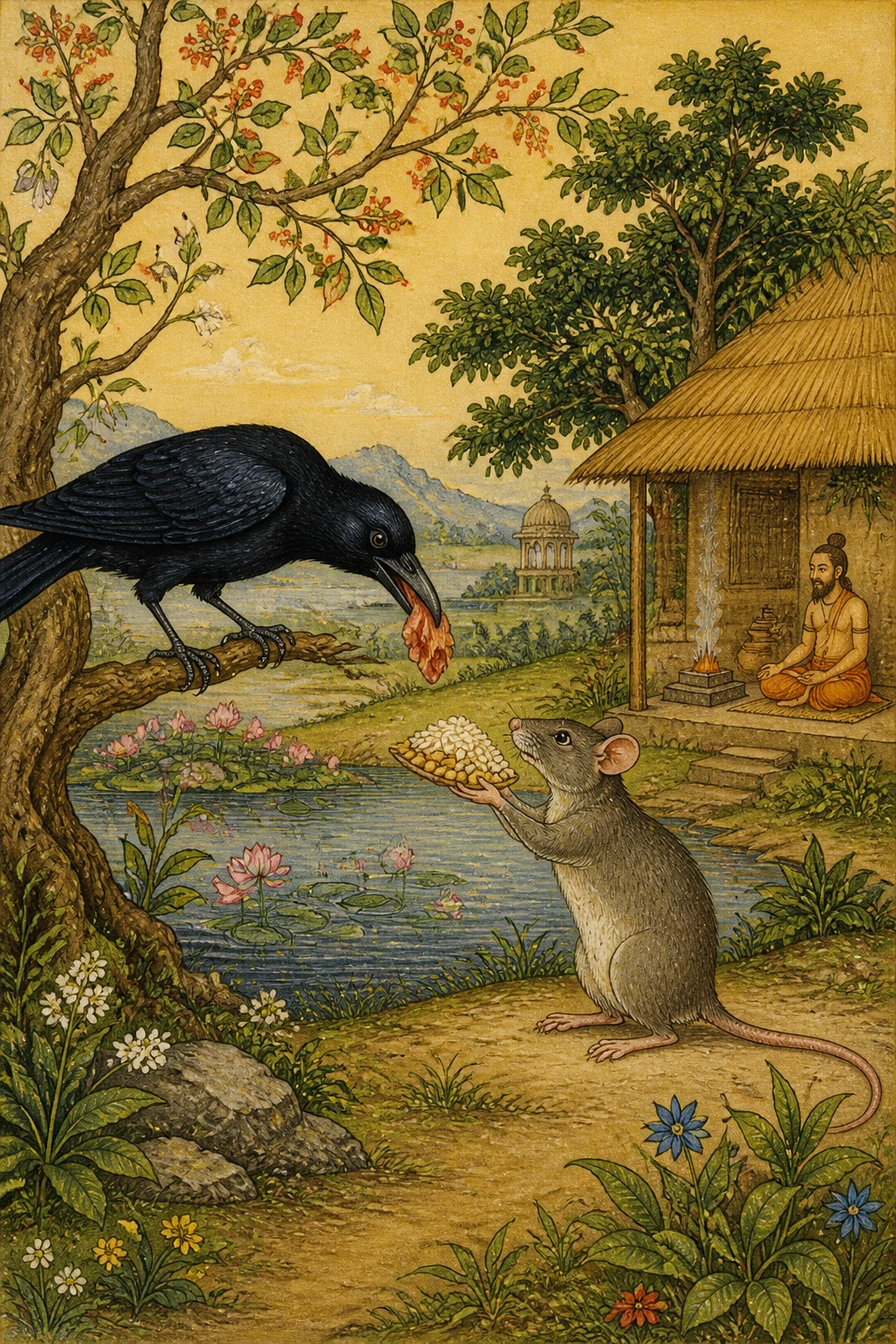
Hearing this, the crow said, “My friend, so be it.” From that time onward, the two lived in the pleasure of conversations filled with wise sayings. They passed their days doing kindnesses for each other. Laghupatanaka brought Hiraṇyaka choice morsels of meat left over from offerings, as well as delicacies of cooked food lovingly gathered for him. Hiraṇyaka, in turn, collected rice and other fine things to eat at night, and offered them to Laghupatanaka when he came at the appointed hour. Indeed, such conduct befitted them both. For it is said—
Giving and receiving, sharing secrets and asking about them,
Eating together and offering food: these are the six marks of affection.
No one’s affection can ever arise without some kindness;
Even the gods grant wishes in return for promised offerings.
Affection in this world lasts only as long as gifts are given;
When the milk runs dry, the calf abandons its mother.
Behold the power of giving, which inspires immediate trust:
By its influence, even hatred turns to friendship in an instant.
Giving, I believe, is dearer even than offspring,
Even to an animal devoid of understanding.
See how the buffalo cow, though she has a calf,
Yields all her milk each day when given oilcake.
Why say more?
Having formed an unbroken affection, inseparable as nail and flesh,
The mouse and the crow became friends by their own choice.
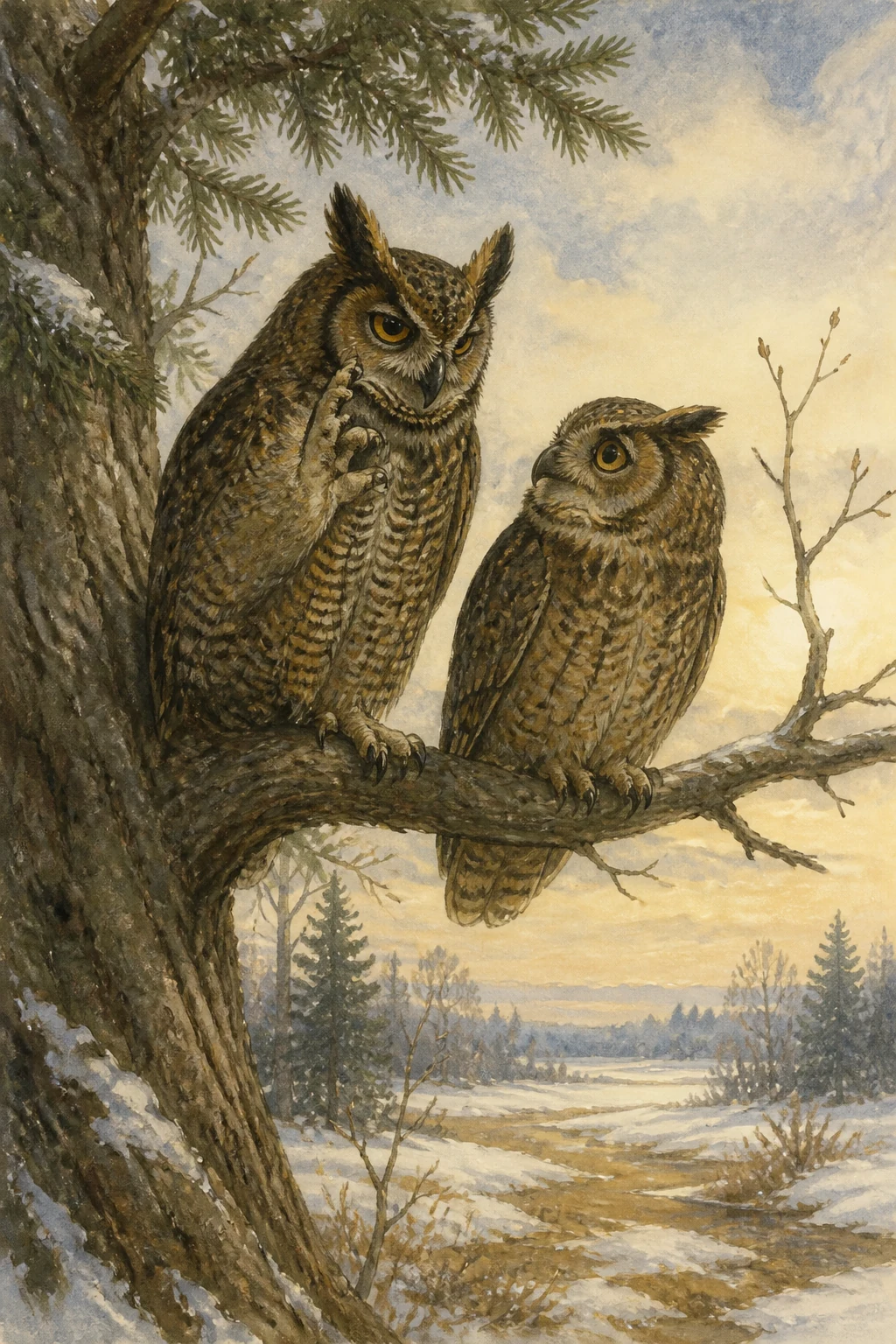
So delighted was the mouse by the crow’s kindness, and so complete was his trust, that he would nestle between his wings and converse with him at all times. Then one day the crow approached him with eyes full of tears and said in a faltering voice, “Dear Hiraṇyaka, I have now grown weary of this country. I shall go elsewhere.”
Hiraṇyaka asked, “My friend, what has caused this discontent?”
The crow replied, “Listen, my friend. A terrible drought has brought famine upon this country. Tormented by hunger, people no longer put out even the smallest offering of food. Worse still, in every house hungry people have set snares to catch birds. I myself was caught in a snare and escaped only because my allotted span of life was not yet over. That is the reason for my discontent. And now, as I am leaving for another land, I cannot hold back my tears.” Hiraṇyaka asked, “Where, then, are you going?”
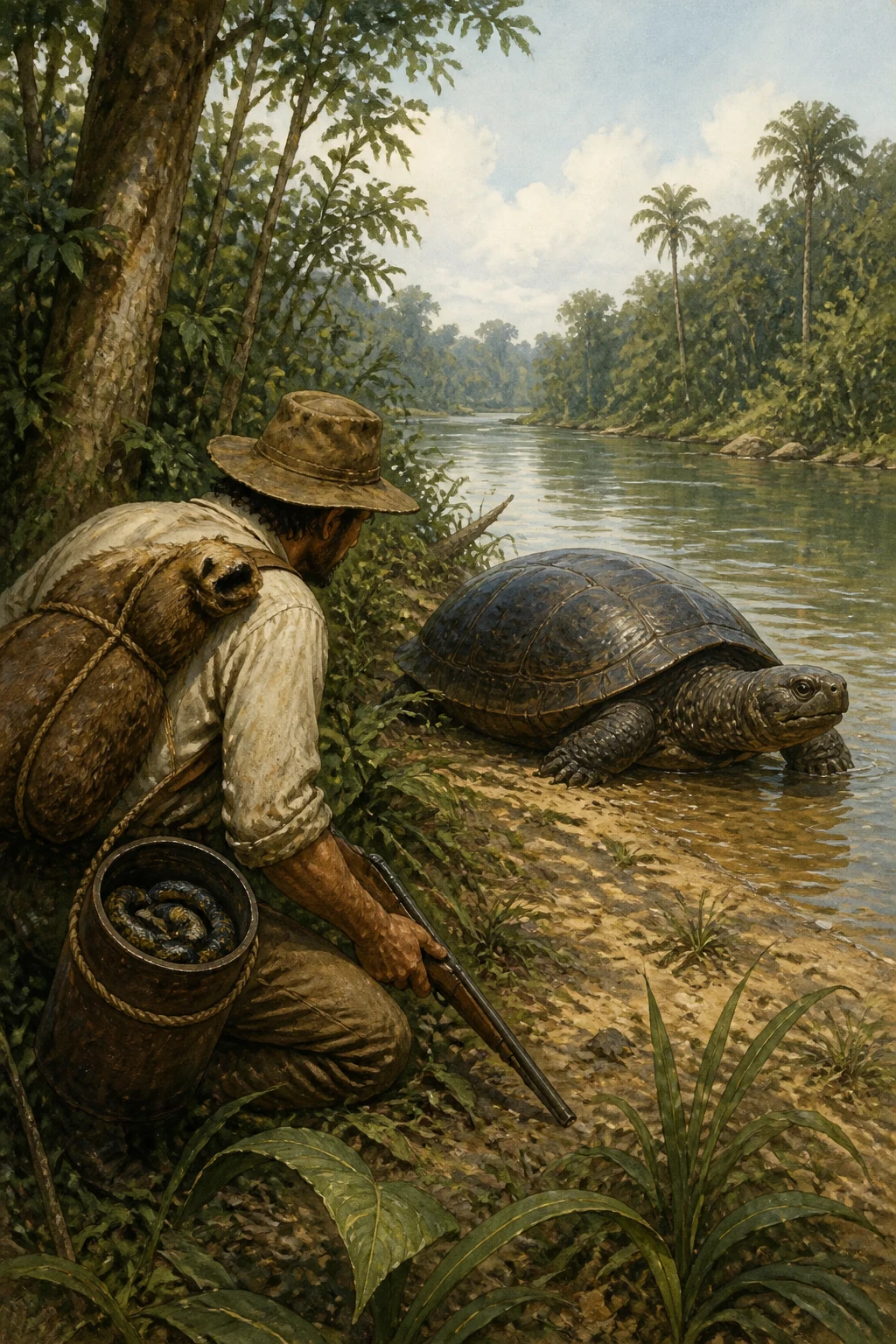
The crow replied, “In the southern country, deep in a dense forest, there is a great lake. There lives a turtle named Mantharaka, a very dear friend, even dearer to me than you. He will give me pieces of fish to eat. Sustained by that food, I shall pass my days happily with him, enjoying conversations full of wise sayings. I do not wish to remain here and watch the birds perish in snares. For it is said—
When drought has ravaged a country and its crops have perished,
Fortunate are those, my dear, who do not stay to see their land ruined and their families destroyed.
What burden is too heavy for the strong? What distance too great for the enterprising?
What country is foreign to the learned? Who is a stranger to those who speak kindly?
Learning and kingship can never be equal:
A king is honored in his own country; a learned man is honored everywhere.”
Hiraṇyaka said, “If that is so, I too shall go with you. I also have a great sorrow.”
The crow asked, “What sorrow is yours, my friend? Tell me.”
Hiraṇyaka replied, “There is much to say about it. Once we arrive there, I shall tell you everything in detail.”
The crow said, “But I travel through the air. How can you accompany me?”
The mouse replied, “If you wish to save my life, you must take me on your back and carry me there. I have no other way.”
Hearing this, the crow said joyfully, “Then I am truly fortunate, for I shall have your company there as well. I know eight different ways of flying, beginning with the steady flight. Climb onto my back, and I shall carry you comfortably to that lake.”
Hiraṇyaka said, “I should like to hear the names of these kinds of flight.”
The crow replied—
“Steady flight, sweeping flight, plunging flight, descending flight,
Curving flight, sideways flight, upward flight, and the eighth, called light flight.”
At these words, Hiraṇyaka immediately climbed onto his back. Carrying him gently, the crow set off in steady flight and in due course reached the lake. Even from a distance, Mantharaka saw Laghupatanaka with a mouse upon his back. Knowing what caution the time and place required, and taking him for no more than an ordinary crow, he quickly slipped into the water. Laghupatanaka placed Hiraṇyaka in a hollow tree on the bank, perched on the tip of a branch, and called out loudly, “Mantharaka! Come out, come out! It is I, your friend, the crow Laghupatanaka. After so long, I have come longing to see you. Come and embrace me! For it is said—
What use is sandalwood mixed with camphor, or cool snow?
None of these is worth a sixteenth part of the touch of a friend.
And again—
Who created this nectar, the two syllables of ‘mitra,’ friend—
A refuge from calamity, a remedy for the burning pain of sorrow?”
Hearing this and recognizing him clearly, Mantharaka hurried out of the water, his body thrilling with joy and his eyes filled with happy tears. “Come, come, my friend!” he said. “Embrace me! It has been so long that I did not recognize you properly. That is why I took refuge in the water. For it is said—
‘Do not associate with one whose strength, family,
And conduct are unknown to you,’ said Bṛhaspati.”
At these words, Laghupatanaka came down from the tree and embraced him. Indeed, it has been well said—
What are streams of nectar poured over the body
Beside the priceless embrace of a friend after a long separation?
Having embraced, the two sat beneath the tree, their bodies still trembling with delight, and told each other the stories of their lives. Hiraṇyaka too bowed to Mantharaka and sat down beside the crow. When Mantharaka looked at him and asked about him, Laghupatanaka said, “My friend, this mouse is named Hiraṇyaka. He is my dear companion, a second life to me. Why say more?
As the streams of rain, as the stars in heaven,
As the grains of sand are beyond counting,
So beyond counting are the virtues of this noble soul.
But he has become deeply disheartened, and has come here to you.”
Mantharaka asked, “What has caused his disillusionment?” The crow replied, “I asked him, but he said, ‘There is much to tell. I shall tell you when we get there.’ So he has not told me either. Now, dear Hiraṇyaka, tell us both what has caused your disillusionment.” Hiraṇyaka began: “Story 1. The Tale of Hiraṇyaka and Tāmracūḍa. In the southern country there is a city called Mahilāropya. Not far from it stands a monastery with a shrine to the blessed Lord Mahādeva. There lived a wandering ascetic named Tāmracūḍa. He sustained himself by going about the city begging for alms. Whatever food remained, he put into his begging bowl, hung the bowl on a wall peg, and then went to sleep for the night. At dawn he gave this food to the servants and instructed them to sweep, plaster, and decorate the shrine thoroughly. One day my kinsmen told me, ‘Master, in that monastery there is always cooked food, kept in a begging bowl hung on a wall peg for fear of mice. We cannot reach it to eat it, but nothing is beyond your reach, master. Why wander elsewhere in vain? Today,
let us go there and, through your favor, eat our fill.’
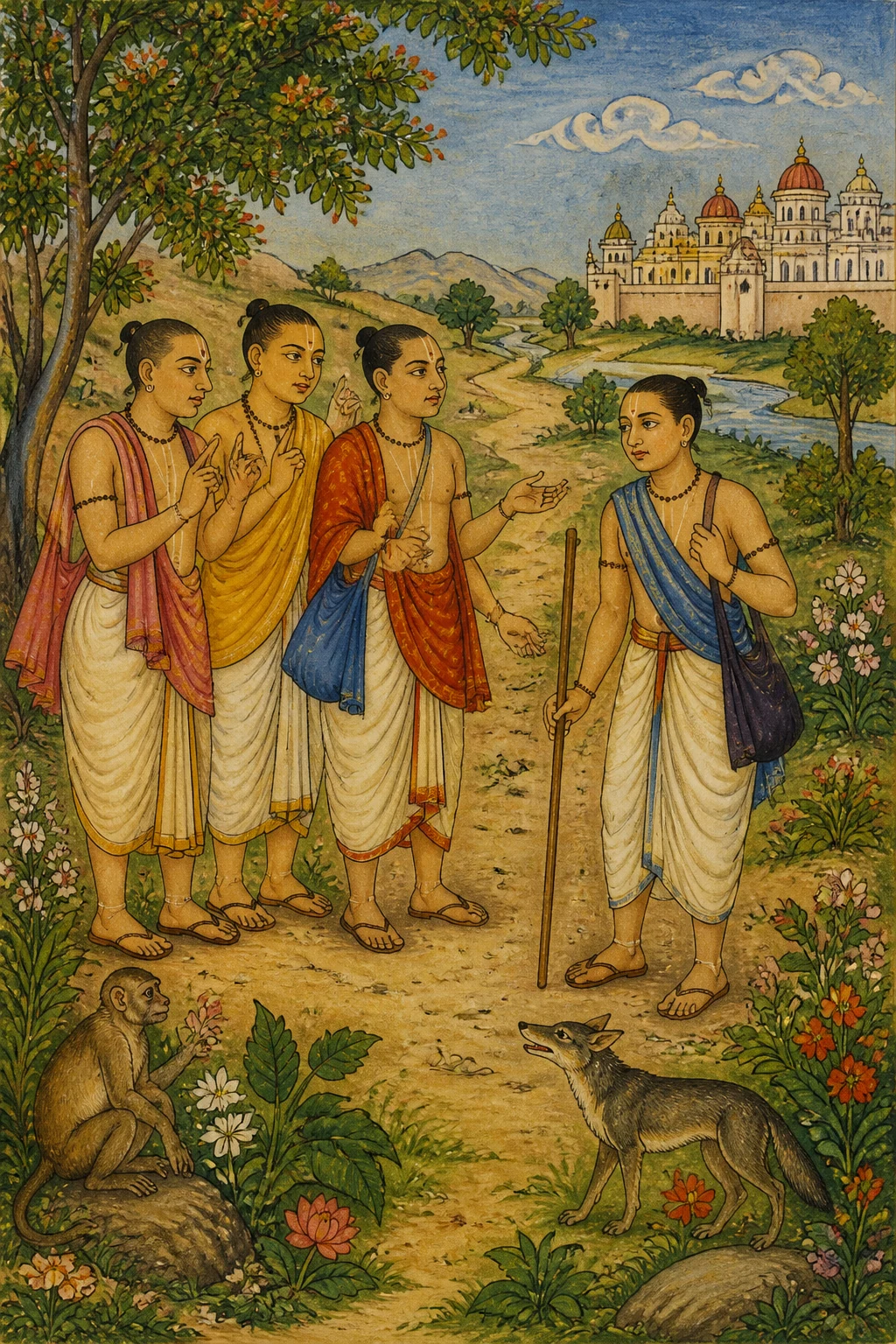
“Hearing this, I went there at once, surrounded by my entire troop. With a leap I landed on the begging bowl. First I handed out the delicacies to my followers, and then ate myself. When everyone was satisfied, I returned home. In this way I ate his food every day. The ascetic guarded it as best he could, but whenever he fell asleep, I climbed up and went about my business. Then one day he made a great effort to keep me away. He brought an old, split bamboo stick, and even as he dozed, he struck the begging bowl with it for fear of me. Though the food remained uneaten, I kept retreating for fear of a blow. Thus he spent the whole night at war with me. Now one day a wandering ascetic named Bṛhatsphig, a friend of his who was traveling on pilgrimage, arrived at the monastery as a guest. Tāmracūḍa rose to welcome him, treated him respectfully, and offered him all the customary hospitality. That night the two lay down together on a bed of kuśa grass and began to discuss matters of religion. But while Bṛhatsphig was speaking, Tāmracūḍa, distracted by his efforts to frighten the mouse, kept striking the begging bowl with the split bamboo and giving his guest empty answers. Absorbed in this, he contributed nothing to the conversation. At last the guest grew very angry and said, ‘Tāmracūḍa! Now I understand: you are no true friend. That is why you take no pleasure in talking with me. I shall leave your monastery this very night and go to another. For it is said—
“Come, come in! Take this seat. Why have we not seen you for so long? What news? You look very thin. Are you well? How glad I am to see you!”
One may always enter without misgiving the homes of those who greet their visiting friends with such affectionate words.
Those who enter a house where the master, on seeing a guest,
Looks away or hangs his head, are bulls without horns.
Where no one rises to welcome you, where there is no sweet conversation,
And no discussion of merits and faults, that is a house you should not visit.
“‘Merely acquiring a monastery has made you proud. You have cast aside affection for your friends. Do you not realize that, under the pretext of taking charge of a monastery, you have earned yourself a place in hell? For it is said—
If your heart is set on hell, serve as a household priest
For a year—or, to save yourself the trouble, manage a monastery for three days.
“‘Fool! You are to be pitied, so puffed up with pride. I shall leave this monastery of yours and go.’
“Hearing this, Tāmracūḍa became frightened and said, ‘Reverend sir, do not speak so! I have no other friend like you. But listen to the reason for my inattention to our conversation. This wicked mouse leaps up to my begging bowl, however high I hang it, and eats the food left in it. Without that food, I cannot even get the monastery swept. To frighten the mouse,
I keep striking the bowl. There is no other reason. And consider this marvel: in leaping, the wretched creature outdoes even cats and monkeys!’
“Bṛhatsphig asked, ‘Do you know where his burrow is?’
“Tāmracūḍa replied, ‘Reverend sir, I do not know exactly.’
“His friend said, ‘His burrow must surely lie above a buried treasure. It is the warmth of that treasure that gives him such spring. For it is said—
Even the warmth that wealth gives off increases a creature’s vigor;
How much more the enjoyment of wealth, joined with generosity!
And again—
Mother, Śāṇḍilī would not exchange her sesame seeds without a reason—
Hulled seeds for unhulled ones. There must be some cause behind it.’
“Tāmracūḍa asked, ‘How was that?’ His friend replied: ‘Story 2. The Tale of the Sesame-Meal Bargain. Once, during the rainy season, I asked a certain brahmin for lodging in a place where I wished to observe a religious vow. He agreed and attended to my needs, and I lived there happily, devoting myself to worship. One day I awoke at dawn and listened closely to a conversation between the brahmin and his wife. The brahmin said, “Wife, tomorrow morning the sun enters its southward course, an occasion when gifts bring boundless rewards. I shall go to another village to receive offerings. You must give some food to a brahmin here in honor of the blessed Sun.” Hearing this, his wife rebuked him harshly: “Where are you, poverty-stricken as you are, to get food to give away? Aren’t you ashamed to talk like that? Since I took your hand in marriage, I have never known any happiness—not a taste of fine food, nor ornaments for my hands, feet, or neck.” Frightened though he was by her words, the brahmin gently replied, “Wife, you should not speak so. For it is said—
Why should one not give a petitioner even half one’s morsel?
When has anyone ever possessed wealth equal to all his desires?
Does not sacred teaching tell us that the reward a rich man gains through lavish gifts
A poor man may gain by giving a single small coin?
A generous man, though humble, is worth seeking out; a miser is not, however great his wealth.
A well with sweet water delights people, not the ocean.
And again—
What use is the empty title ‘King of Kings’ to one who has never shown the greatness of giving?
The wise do not honor the lord of wealth merely for guarding his treasures.
Moreover—
The lordly elephant, though always lean from the flow of his ichor, is praised;
The donkey, though plump, is despised, for he gives nothing.
The water pot, though well formed and well rounded, goes down because it gives nothing;
The crooked, one-eyed ladle rises because it gives.
The cloud, though it gives only water, becomes dear to all the world;
The sun, though called ‘friend,’ forever stretches out his rays like grasping hands, and cannot be looked upon.
“‘“Knowing this, even those overwhelmed by poverty should give something, however little, to a worthy person at the proper time. For it is said—
A gift to a worthy recipient, given with deep faith,
At the proper place and time, by one of understanding, bears boundless fruit.
And again—
One should not be excessively greedy, nor abandon desire altogether;
For one overcome by excessive greed, a crest sprouts from his head.”
“‘The brahmin’s wife asked, “How was that?” He replied: “Story 3. The Tale of the Hunter and the Boar. In a certain woodland lived a tribesman, a Pulinda. One day he set out into the forest to pursue his sinful hunt. As he made his way along, he came upon a huge boar, like the summit of a mountain of black collyrium. Drawing his bow to his ear, he struck it with a sharp arrow. The boar, enraged, ripped open the hunter’s belly with the tip of a tusk that gleamed like the crescent moon, and the Pulinda fell lifeless to the ground. After killing the hunter, the boar too died from the pain of the arrow wound. Meanwhile a jackal, tormented by hunger and near death, came wandering to that spot. When he saw the boar and the tribesman lying there, he was overjoyed and thought, ‘Ah, fate favors me! Here is a meal I never even dreamed of. Indeed, it has been well said—
Even without effort, the fruits of deeds done in a former birth,
Good or bad, come to a man as fate ordains.
And again—
Whatever deed, good or bad, a man has done,
Its fruit he tastes in the appointed place, at the appointed time, and at the appointed age.
“‘“‘Now I shall eat in such a way that this food will sustain me for many days. First I shall eat this sinew cord fastened to the end of the bow. For it is said—
The wise should consume the wealth they have acquired little by little,
Like an elixir of life, never carelessly.’
“‘“Having made up his mind, he put the curved tip of the bow into his mouth and began to chew the sinew. As soon as the cord snapped, the end of the bow tore through his palate and came out through the crown of his head. He too died on the spot. That is why I say: One should not be excessively greedy.” ***********************************************************************
“‘The brahmin continued, “Wife, have you not heard—
Life span, deeds, wealth, learning, and death:
These five are determined while a creature is still in the womb.”
“‘Thus persuaded by him, the brahmin’s wife said, “Very well. I have a small store of sesame seeds in the house. I shall hull them and feed a brahmin with sesame meal.”
“‘Hearing this, the brahmin went off to the village. His wife soaked and rubbed the sesame seeds in warm water, pounded off their husks, and spread them in the sun. But while she was busy with her household work, a dog urinated among the seeds. Seeing it, she thought, “Ah, see how cleverly fate works when it turns against us! These seeds have been made unfit to eat. I shall take them to someone’s house and exchange these hulled seeds for unhulled ones. Anyone would agree to such a bargain.”’
Izvirnik
Tantra 02 mitra-samprapti chunk 2
Naslednje strani prikazujejo izvirno besedilo za primerjavo.
Source ID: panchatantra_gretil_tantra_02_chunk_02
Source URL: https://gretil.sub.uni-goettingen.de/gretil/1_sanskr/5_poetry/4_narr/vispancu.htm
tac chrutvā hiraṇyako 'pi vyacintayat-vidagdha-vacano 'yaṃ dṛśyate laghupatanakaḥ satya-vākyaś ca tad yuktam anena maitrī-karaṇam | paraṃ kadācin mama durge caraṇa-pāto 'pi na kāryaḥ | uktaṃ ca-
bhīta-bhītaiḥ purā śatrur mandaṃ mandaṃ visarpati |
bhūmau prahelayā paścāj jāra-hasto 'ṅganāsv iva
tac chrutvā vāyasa āha-bhadra, evaṃ bhavatu | tataḥ-prabhṛti tau dvāv api subhāṣita-goṣṭhī-sukham anubhavantau tiṣṭhataḥ | parasparaṃ kṛtopakārau kālaṃ nayataḥ | laghupatanako 'pi māṃsa-śakalāni medhyāni baliśeṣāṇy anyāni vātsalyāhṛtāni pakvānna-viśeṣāṇi hiraṇyakārtham ānayati | hiraṇyako 'pi taṇḍulān anyāṃś ca bhakṣya-viśeṣāl laghupatanakārthaṃ rātrāv āhṛtya tat-kālāyātasyārpayati | athavā yujyate dvayor apy etat | uktaṃ ca-
dadāti pratigṛhṇāti guhyam ākhyāti pṛcchati |
bhuṅkte bhojāyate caiva ṣaḍ-vidhaṃ prīti-lakṣaṇam
nopakāraṃ vinā prītiḥ kathañcit kasyacid bhavet |
upayācita-dānena yato devā abhīṣṭadāḥ
tāvat prītir bhavel loke yāvad dānaṃ pradīyate |
vatsaḥ kṣīra-kṣayaṃ dṛṣṭvā parityajati mātaram
paśya dānasya māhātmyaṃ sadyaḥ pratyaya-kārakam |
yat-prabhāvād api dveṣo mitratāṃ yāti tat-kṣaṇāt
putrād api priyataraṃ khalu tena dānaṃ
manye paśor api viveka-vivarjitasya |
datte khale tu nikhilaṃ khalu yena dugdhaṃ
nityaṃ dadāti mahiṣī sasutāpi paśya
kiṃ bahunā-
prītiṃ nirantarāṃ kṛtvā durbhedyāṃ nakha-māṃsavat |
mūṣako vāyasaś caiva gatau kṛtrima-mitratām
evaṃ sa mūṣakas tad-upakāra-rañjitas tathā viśvasto yathā tasya pakṣa-madhye praviṣṭas tena saha sarvadaiva goṣṭhīṃ karoti | athānyasminn ahani vāyaso 'śru-pūrṇa-nayanaḥ samabhyetya sagadgadaṃ tam uvāca-bhadra hiraṇyaka, viraktiḥ sañjātā me sāmprataṃ deśasyāsyopari tad anyatra yāsyāmi |
hiraṇyaka āha-bhadra kiṃ virakteḥ kāraṇam |
sa āha-bhadra, śrūyatāṃ | atra deśe mahatyānāvṛṣṭyā durbhikṣaṃ sañjātam | durbhikṣatvāj jano bubhukṣā-pīḍitaḥ ko 'pi bali-mātram api na prayacchati | aparaṃ gṛhe gṛhe bubhukṣita-janair vihaṅgānāṃ bandhanāya pāśāḥ praguṇīkṛtāḥ santi | aham apy āyuḥ-śeṣatayā pāśena baddha uddharito 'smi | etad virakteḥ kāraṇam æ| tenāhaṃ videśaṃ calita iti bāṣpa-mokṣaṃ karomi |
hiraṇyaka āha-atha bhavān kva prasthitaḥ ?
sa āha-asti dakṣiṇā-pathe vana-gahana-madhye mahāsaraḥ | tatra tvatto 'dhikaḥ parama-suhṛt kūrmo mantharako nāma | sa ca me matsya-māṃsa-khaṇḍāni dāsyati | tad-bhakṣaṇāt tena saha subhāṣita-goṣṭhī-sukham anubhavan sukhena kālaṃ neṣyāmi | nāham atra vihaṅgānāṃ pāśa-bandhanena kṣayaṃ draṣṭum icchāmi | uktaṃ ca-
anāvṛṣṭi-hate deśe sasye ca pralayaṃ gate |
dhanyās tāta na paśyanti deśa-bhaṅgaṃ kula-kṣayam
ko 'tibhāraḥ samarthānāṃ kiṃ dūraṃ vyavasāyinām |
ko videśaḥ savidyānāṃ kaḥ paraḥ priya-vādinām
vidvattvaṃ ca nṛpatvaṃ ca naiva tulyaṃ kadācana |
sva-deśe pūjyate rājā vidvān sarvatra pūjyate
hiraṇyaka āha-yady evaṃ tad aham api tvayā saha gamiṣyāmi | mamāpi mahad duḥkhaṃ vartate |
vāyasa āha-bhoḥ ! tava kiṃ duḥkham ? tat kathaya |
hiraṇyaka āha-bhoḥ ! bahu vaktavyam asty atra viṣaye | tatraiva gatvā sarvaṃ savistaraṃ kathayiṣyāmi |
vāyasa āha-ahaṃ tāvad ākāśa-gatiḥ | tat kathaṃ bhavato mayā saha gamanam ?
sa āha-yadi me prāṇān rakṣasi tadā sva-pṛṣṭham āropya māṃ tatra prāpayiṣyasi | nānyathā mama gatir asti |
tac chrutvā sānandaṃ vāyasa āha-yady evaṃ tad dhanyo 'haṃ yad bhavatāpi saha tatra kālaṃ nayāmi | ahaṃ sampātādikān aṣāv uḍḍīna-gati-viśeṣān vedmi | tat samāroha mama pṛṣṭhaṃ, yena sukhena tvāṃ tat-saraḥ prāpayāmi |
hiraṇyaka āha-uḍḍīnānāṃ nāmāni śrotum icchāmi |
sa āha-
sampātaṃ vipra-pātaṃ ca mahā-pātaṃ nipātanam |
vakraṃ tiryak tathā cordhvam aṣṭamaṃ laghu-saṃjñakam
tac chrutvā hiraṇyakas tat-kṣaṇād eva tad upari samārūḍhaḥ | so 'pi śanaiḥ śanais tam ādāya sampātoḍḍīna-prasthitaḥ krameṇa tat-saraḥ prāptaḥ | tato laghupatanakaṃ mūṣakādhiṣṭhitaṃ vilokya dūrato 'pi deśa-kāla-vida-sāmānya-kāko 'yam iti jñātvā satvaraṃ mantharako jale praviṣṭaḥ | laghupatanako 'pi tīrastha-taru-koṭare hiraṇyakaṃ muktvā śākhāgram āruhya tāra-svareṇa provāca-bho mantharaka ! āgacchāgaccha | tava mitram ahaṃ laghupatanako nāma vāyasaś cirāt sotkaṇṭhaḥ samāyātaḥ | tad āgatyāliṅgaya mām | uktaṃ ca-
kiṃ candanaiḥ sa-karpūrais tuhinaiḥ kiṃ ca śītalaiḥ |
sarve te mitra-gātrasya kalāṃ nārhanti ṣoḍaśīm
tathā ca-
kenāmṛtam idaṃ sṛṣṭaṃ mitram ity akṣara-dvayam |
āpadāṃ ca paritrāṇaṃ śoka-santāpa-bheṣajam
tac chrutvā nipuṇataraṃ parijñāya satvaraṃ salilān niṣkramya pulakita-tanur ānandāśru-pūrita-nayano mantharakaḥ provāca-ehy ehi mitra, āliṅgaya mām | cira-kālān mayā tvaṃ na samyak parijñātaḥ | tenāhaṃ salilāntaḥ-praviṣṭaḥ | uktaṃ ca-
yasya na jñāyate vīryaṃ na kulaṃ na viceṣṭitam |
na tena saṅgatiṃ kuryād ity uvāca bṛhaspatiḥ
evam ukte laghupatanako vṛkṣād avatīrya tam āliṅgitavān | athavā sādhv idam uktam-
amṛtasya pravāhaiḥ kiṃ kāya-kṣālana-sambhavaiḥ |
cirān mitra-pariṣvaṅgo yo 'sau mūlya-vivarjitaḥ
evaṃ dvāv api tau vihitāliṅgitau parasparaṃ pulakita-śarīrī vṛkṣād adhaḥ samupaviṣṭau procatur ātma-caritra-vṛttāntam | hiraṇyako 'pi mantharakasya praṇāmaṃ kṛtvā vāyasābhyāśe samupaviṣṭaḥ | atha taṃ samālokya mantharako laghupatanakam āha-bhoḥ hiraṇyako nāma mūṣako 'yam | mama suhṛd-dvitīyam iva jīvitam | tat kiṃ bahunā-
parjanyasya yathā dhārā yathā ca divi tārakāḥ |
sikatā-reṇavo yadvat saṅkhyayā parivarjitā
guṇāḥ saṅkhyā-parityaktās tadvad asya mahātmanaḥ |
paraṃ nirvedam āpannaḥ samprāpto 'yaṃ tavāntikam
mantharaka āha-kim asya vairāgya-kāraṇam ?
vāyasa āha-pṛṣṭo mayā, param anenābhihitaṃ, yad bahu vaktavyam iti | tat tatraiva gataḥ kathayiṣyāmi | mamāpi na niveditam | tad bhadra hiraṇyaka ! idānīṃ nivedyatām ubhayor apy āvayos tad ātmano vairāgya-kāraṇam |
so 'bravīt-
kathā 1
hiraṇyaka-tāmracūḍa-kathā
asti dakṣiṇātye janapade mahilāropyaṃ nāma nagaram | tasya nātidūre maṭhāyatanaṃ bhagavataḥ śrī-mahādevasya | tatra ca tāmracūḍo nāma parivrājakaḥ prativasati sma | sa ca nagare bhikṣāṭanaṃ kṛtvā prāṇa-yātrāṃ samācarati | bhikṣā-śeṣaṃ ca tatraiva bhikṣā-pātre nidhāya tad-bhikṣā-pātraṃ nāgadante'valambya paścād rātrau svapiti | pratyūṣe ca tad-annaṃ karmakarāṇāṃ dattvā samyak tatraiva devatāyatane saṃmārjanopalepana-maṇḍanādikaṃ samājñāpayati | anyasminn ahani mama bāndhavair niveditam-svāmin, maṭhāyatane siddham annaṃ mūṣaka-bhayāt tatraiva bhikṣā-pātre nihitaṃ nāgadante'valambitaṃ tiṣṭhati sadaiva | tad vayaṃ bhakṣayituṃ na śaknumaḥ | svāminaḥ punar āgamya kim api nāsti | tat kiṃ vṛthāṭanenānyatra | adya
tatra gatvā yathecchaṃ bhuñjāmahe tava prasādāt |
tad ākarṇyāhaṃ sakala-yūtha-parivṛtas tat-kṣaṇād eva tatra gataḥ | utpatya ca tasmin bhikṣā-pātre samārūḍhaḥ | tatra bhakṣya-viśeṣāṇi sevakebhyo dattvā paścāt svayam eva bhakṣayāmi | sarveṣāṃ tṛptau jātāyāṃ bhūyaḥ sva-gṛhaṃ gacchāmi | evaṃ nityam eva tad annaṃ bhakṣayāmi | parivrājako 'pi yathā-śakti rakṣati | paraṃ yadaiva nidrāntarito bhavati, tadāhaṃ tatrāruhyātma-kṛtyaṃ karomi | atha kadācit tena mama rakṣaṇārthaṃ mahān yatnaḥ kṛtaḥ | jarjara-vaṃśaḥ samānītaḥ | tena supto 'pi mama bhayād bhikṣā-pātraṃ tāḍayati | aham apy abhikṣite'py anne prahāra-bhayād apasarpāmi | evaṃ tena saha sakalāṃ rātriṃ vigraha-parasya kālo vrajati |
athānyasminn ahani tasya maṭhe bṛhatsphiṅ-nāmā parivrājakas tasya suhṛt tīrtha-yātrā-prasaṅgena pānthaḥ prāghuṇikaḥ samāyātaḥ | taṃ dṛṣṭvā pratyutthāna-vidhinā sambhāvya pratipatti-pūrvakam abhyāgata-kriyayā niyojitaḥ | tataś ca rātrāv ekatra kuśa-saṃstare dvāv api prasuptau dharma-kathāṃ kathayitum ārabdhau |
atha bṛhasphik-kathā-goṣṭhīṣu sa tāmracūḍo mūṣaka-trāsārthaṃ vyākṣipta-manā jarjara-vaṃśena bhikṣā-pātraṃ tāḍayaṃs tasya śūnyaṃ prativacanaṃ prayacchati | tan-mayo na kiñcid udāharati | athāsāv abhyāgataḥ paraṃ kopam upāgatas tam uvāca-bhos tāmracūḍa ! parijñātaḥ na tvaṃ samyak suhṛt | tena mayā saha sāhlādaṃ na jalpasi | tad-rātrāv api tvadīyaṃ maṭhaṃ tyaktvānyatra mañhe yāsyāmi | uktaṃ ca-
ehy āgaccha samāviśāsanam idaṃ kasmāc cirād dṛśyase kā vārteti sudurbalo 'si kuśalaṃ prīto 'smi te darśanāt |
evaṃ ye samupāgatān praṇayinaḥ pratyālapanty ādarāt teṣāṃ yuktam aśaṅkitena manasā harmyāṇi gantuṃ sadā
gṛhī yatrāgataṃ dṛṣṭvā diśo vīkṣeta vāpy adhaḥ |
tatra ye sadane yānti te śṛṅga-rahitā vṛṣāḥ
sābhyutthāna-kriyā yatra nālāpā madhurākṣarāḥ |
guṇa-doṣa-kathā naiva tatra harmyaṃ na gamyate
tad eka-maṭha-prāptyāpi tvaṃ garvitaḥ | tyaktaḥ suhṛt-snehaḥ | naitad vetsi yat tvayā maṭhāśraya-vyājena narakopārjanaṃ kṛtam | uktaṃ ca-
narakāya matis te cet paurohityaṃ samācāra |
varṣaṃ yāvat kim anyena maṭha-cintāṃ dina-trayam
tan-mukhaṃ, śocitavyas tvaṃ garvaṃ gataḥ | tad ahaṃ tvadīyaṃ maṭhaṃ parityajya yāsyāmi |
atha tac chrutvā bhaya-trasta-manās tāmracūḍas tam uvāca-bho bhagavan ! maivaṃ vada | na tvat-samo 'nyo mama suhṛt kaścid asti | paraṃ tac chrūyatāṃ goṣṭhī-śaithilya-kāraṇam | eṣa durātmā mūṣakaḥ pronnata-sthāne dhṛtam api bhikṣā-pātram utplutyārohati, bhikṣā-śeṣaṃca tatrasthaṃ bhakṣayati | tad-abhāvād eva maṭhe mārjana-kriyāpi na bhavati | tan mūṣaka
muhur muhus tāḍayāmi | nānyat kāraṇam iti | aparam etat kutūhalaṃ paśyāsya durtātmano yan mārjāra-markaṭādayo 'pi tiraskṛtā asyotpatanena |
bṛhatsphig āha-atha jñāyate tasya bilaṃ kasmiṃścit pradeśe |
tāmracūḍa āha-bhagavan na vedmi samyak |
sa āha-nūnaṃ nidhānasyopari tasya bilam | nidhānoṣmaṇā prakūrdate | uktaṃ ca-
ūṣmāpi vittajo vṛddhiṃ tejo nayati dehinām |
kiṃ punas tasya sambhogas tyāga-dharma-samanvitaḥ
tathā ca-
nākasmāc chāṇḍilī mātar vikrīṇāti tilais tilān |
luñcitān itarair yena hetur atra bhaviṣyati
tāmracūḍa āha-katham etat ?
sa āha-
kathā 2
tilacūrṇa-vikraya-kathā
yadāhaṃ kasmiṃścit sthāne prāvṛṭ-kāle vrata-grahaṇa-nimittaṃ kañcid brāhmaṇaṃ vāsārthaṃ prārthitavān | tataś ca tad-vacanāt tenāpi śuśrūṣitaḥ sukhena devārcana-paras tiṣṭhāmi | athānyasminn ahani pratyūṣe prabuddho 'haṃ brāhmaṇa-brāhmaṇī-saṃvāde dattāvadhānaḥ śṛṇomi | tatra brāhmaṇa āha-brāhmaṇi, prabhāte dakṣiṇāyana-saṅkrāntir ananta-dāna-phaladā bhaviṣyati | tad ahaṃ pratigrahārthaṃ grāmāntaraṃ yāsyāmi | tvayā brāhmaṇasyaikasya bhagavataḥ sūryasyoddeśena kiñcid bhojanaṃ dātavyam iti |
atha tac chrutvā brāhmaṇī paruṣatara-vacanais taṃ bhartsayamānā prāha-kutas te dāridryopahatasya bhojana-prāptiḥ | tat kiṃ lajjasa evaṃ bruvāṇaḥ | api ca na mayā tava hasta-lagnayā kvacid api labdhaṃ sukham | na miṣṭhānnasyāsvādanam | na ca hasta-pāda-kaṇṭhādi-bhūṣaṇam |
tac chrutvā bhaya-trasto 'pi vipro mandaṃ mandaṃ prāha-brāhmaṇi ! naitad yujyate vaktum | uktaṃ ca-
grāsād api tad ardhaṃ ca kasmān no dīyate'rthiṣu |
icchānurūpo vibhavaḥ kadā kasya bhaviṣyati
īśvarā bhūri-dānena yal labhante phalaṃ kila |
daridras tac ca kākiṇyā prāpnuyād iti na śrutiḥ
dātā laghur api sevyo bhavati na kṛpaṇo mahān api samṛddhyā |
kūpo 'ntaḥ-svādu-jalaḥ prītyai lokasya na samudraḥ
tathā ca-
akṛta-tyāga-mahimnāṃ mithyā kiṃ rāja-rāja-śabdena |
goptāraṃ na nidhīnāṃ mahayanti maheśvaraṃ vibudhāḥ
api ca-
sadā dāna-parikṣīṇaḥ śasta eva karīśvaraḥ |
adānaḥ pīna-gātro 'pi nindya eva hi gardabhaḥ
suśīlo 'pi suvṛtto 'pi yāty adānād adho ghaṭaḥ |
punaḥ kubjāpi kāṇāpi dānād upari karkaṭī
yacchan jalam api jalado vallabhatām eti sakala-lokasya |
nityaṃ prasārita-karo mitro 'pi na vīkṣituṃ śakyaḥ
evaṃ jñātvā daridryābhibhūtair api svalpāt svalpataraṃ kāle pātre ca deyam | uktaṃ ca-
sat-pātraṃ mahatī śraddhā deśe kāle yathocite |
yad dīyate viveka-jñais tad anantāya kalpate
tathā ca-
atitṛṣṇā na kartavyā tṛṣṇāṃ naiva parityajet |
atitṛṣṇābhibhūtasya śikhā bhavati mastake
brāhmaṇy āha-katham etat ?
sa āha-
kathā 3
śavara-śūkara-kathā
asti kasmiṃścid vanoddeśe kaścit pulindaḥ | sa ca pāparddhiṃ kartuṃ vanaṃ prati prasthitaḥ | atha tena prasarpatā mahān añjana-parvata-śikharākāraḥ kroḍaḥ samāsāditaḥ | taṃ dṛṣṭvā karṇāntākṛṣṭa-niśita-sāyakena samāhataḥ | tenāpi kopāviṣṭena cetasā bālendu-dyutinā daṃṣṭrāgreṇa pāṭitodaraḥ pulindo gatāsur bhūtale'patat |
atha lubdhakaṃ vyāpādya śūkaro 'pi śara-prahāra-vedanayā pañcatvaṃ gataḥ | etasminn antare kaścid āsanna-mṛtyuḥ śṛgāla itas tato nirāhāratayā pīḍitaḥ paribhramaṃs taṃ pradeśam ājagāma | yāvad varāha-pulindau dvāv api paśyati tāvat prahṛṣṭo vyacintayat-bhoḥ ! sānukūlo me vidhiḥ | tenaitad apy acintitaṃ bhojanam upasthitam | athavā sādhv idam uktam-
akṛte'py udyame puṃsām anya-janma-kṛtaṃ phalam |
śubhāśubhaṃ samabhyeti vidhinā saṃniyojitam
tathā ca-
yasmin deśe ca kāle ca vayasā yādṛśena ca |
kṛtaṃ śubhāśubhaṃ karma tat tathā tena bhujyate
tad ahaṃ tathā bhakṣayāmi yathā bahūny ahāni me prāṇa-yātrā bhavati | tat tāvad enaṃ snāyu-pāśaṃ dhanuṣkoṭi-gataṃ bhakṣayāmi | uktaṃ ca-
śanaiḥ śanaiś ca bhoktavyaṃ svayaṃ vittam upārjitam |
rasāyanam iva prājñair helayā na kadācana
ity evaṃ manasā niścitya cāpa-ghaṭita-koṭiṃ mukha-madhye prakṣipya snāyuṃ bhakṣituṃ pravṛttaḥ | tataś ca truṭite pāśe tālu-deśaṃ vidārya cāpa-koṭirmastaka-madhyena niṣkrāntā | so 'pi tadvad enayā tat-kṣaṇāntan mṛtaḥ | ato 'haṃ bravīmi-atitṛṣṇā na kartavyā iti |
***********************************************************************
sa punar apy āha-brāhmaṇi, na śrutaṃ bhavatyā |
āyuḥ karma ca vittaṃ ca vidyā nidhanam eva ca |
pañcaitāni hi sṛjyante garbhasthasyaiva dehinaḥ
athaivaṃ sā tena prabodhitā brāhmaṇy āha-yady evaṃ tad asti me gṛhe stokas tila-rāśiḥ | tatas tilān luñcitvā tila-cūrṇena brāhmaṇaṃ bhojayiṣyāmi iti |
tatas tad-vacanaṃ śrutvā brāhmaṇo grāmaṃ gataḥ | sāpi tilānuṣṇodakena sammardya kuṭitvā sūryātape dattavatī | atrāntare tasyā grha-karma-vyagrāyās tilānāṃ madhye kaścit sārameyo mūtrotsargaṃ cakāra | taṃ dṛṣṭvā sā cintitavatī-aho naipuṇyaṃ paśya parāṅmukhībhūtasya vidheḥ | yad ete tilā abhojyāḥ kṛtāḥ | tad aham etān samādāya kasyacit gṛhaṃ gatvā luñcitair aluñcitān ānayāmi | sarvo 'pi jano 'nena vidhinā pradāsyati iti |
Nadaljuj z branjem