Waltey
Prerok in vitez
Tisoč in ena noč · arabska pripovedna tradicijaO besedilu
Prerok in vitez
- Vir
- Tisoč in ena noč
- Avtor
- arabska pripovedna tradicija
- Jezik branja
- English
- Jezik izvirnika
- Arabic
- Čas branja
- 3 min branja
- Obseg
- 3 strani
- Naslov izvirnika
- حكاية النبي والفارس - الليالي ٤٧٨ إلى ٤٧٩
O izvirniku
Tisoč in ena noč
Zgodbe v zgodbah, polne trgovcev, dvorov, preoblek in nočnih zapletov. Bralni jezik je English, izvirnik pa prihaja iz vira Tisoč in ena noč v jeziku Arabic.
Besedilo
Prerok in vitez
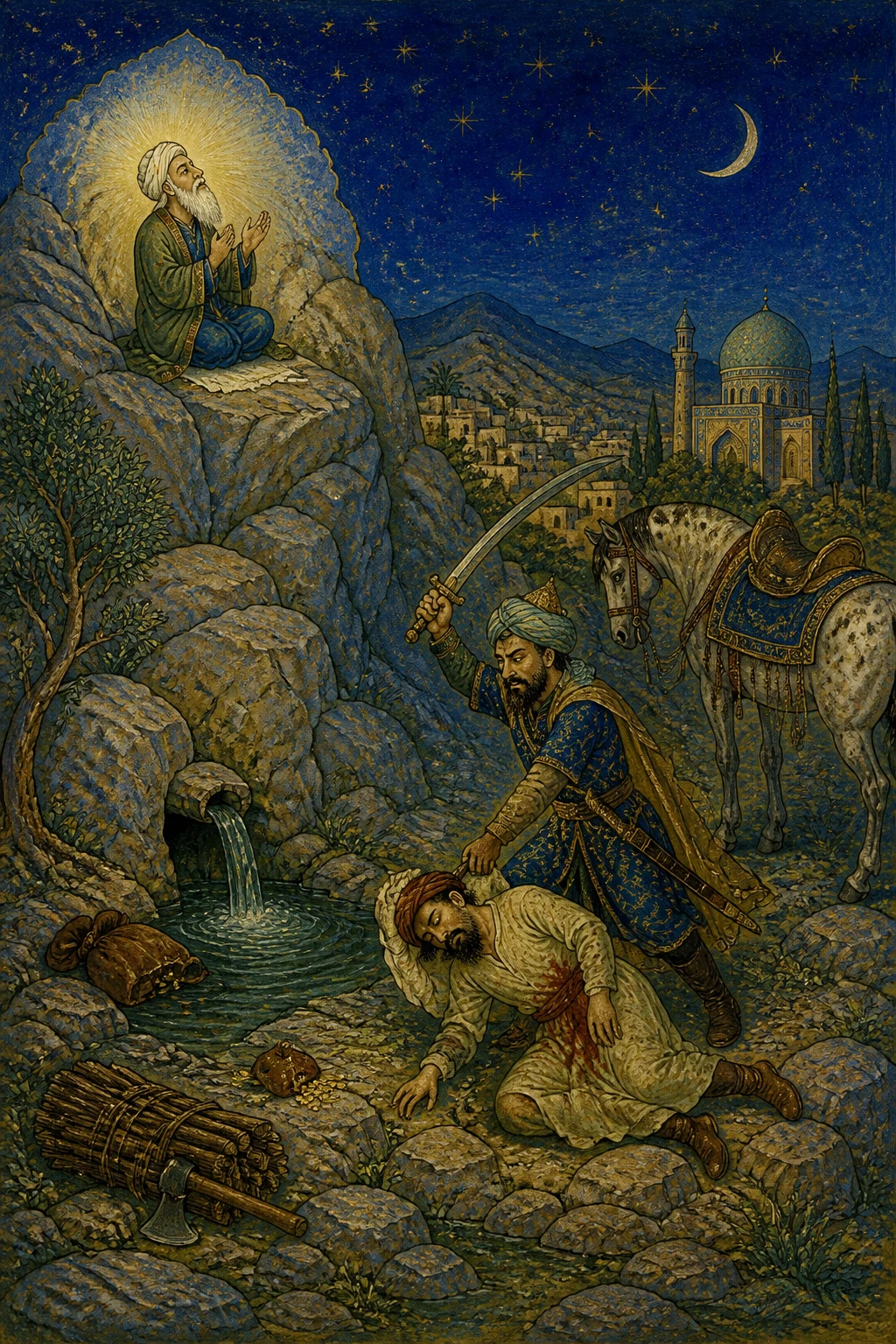
It is told that one of the prophets used to worship upon a lofty mountain, beneath which flowed a spring. By day he would sit high on the mountainside, where no one could see him, remembering God Most High and watching the people who came to the spring. One day, as he sat looking down at the water, he saw a horseman approach, dismount, and set down a pouch that had been hanging about his neck. The man rested and drank, then rode away, leaving behind the pouch, which contained dinars. Presently another man came to the spring, took the pouch of money, drank some water, and went safely on his way. After him came a woodcutter carrying a heavy bundle of firewood on his back, and he sat beside the spring to drink. Just then the first horseman returned in great distress and said to the woodcutter, “Where is the pouch that was here?” “I know nothing of it,” he replied. The horseman drew his sword, struck the woodcutter dead, and searched his clothes, but found nothing. Then he left him there and went on his way. The prophet said, “O Lord, one man has taken a thousand dinars, while another has been unjustly slain.” God revealed to him, “Attend to your worship, for the ordering of My kingdom is no concern of yours. The father of this horseman had seized a thousand dinars belonging to the father of the man who took the pouch, so I enabled the son to recover his father’s wealth. As for the woodcutter, he had killed this horseman’s father, so I enabled the son to exact retribution.” Then the prophet said, “There is no god but You! Glory be to You! You are the Knower of all hidden things.” And dawn overtook Shahrazad, and she ceased her permitted tale.
When it was the four hundred and seventy-ninth night,
She said: It has reached me, O fortunate King, that when God revealed to the prophet, “Attend to your worship,” and told him the truth of the matter, he said, “There is no god but You! Glory be to You! You are the Knower of all hidden things.” On this theme a poet has said:
The prophet saw what lay before his eyes, and asked the meaning of what had come to pass. His eyes had witnessed what he could not understand, and so he said, “O Lord, what is this? The slain man was innocent! This man gained wealth without the least exertion, though he appeared in the guise of one in need; and that man, once alive, now lies dead, guilty of no offence, O Maker of mankind!” “The money was the property of the father of the man you saw arrive; it came to him as an inheritance free of trouble. The woodcutter had slain the horseman’s father, and so the son prevailed and took his vengeance. Leave this aside, O servant of Ours, for in Our dealings with creation lies a secret hidden from the keenest eye. Submit to Our decrees and bow before Our might: Our judgment governs both benefit and harm.”
Izvirnik
حكاية النبي والفارس - الليالي ٤٧٨ إلى ٤٧٩
Naslednje strani prikazujejo izvirno besedilo za primerjavo.
فلما كانت الليلة ٤٧٨
وحُكِي أنَّ نبيًّا من الأنبياء كان يتعبَّد في جبل مرتفع، وتحته عين ماء تجري؛ فكان بالنهار يقعد في أعلى الجبل من حيث لا تراه الناس وهو يذكر الله تعالى، وينظر إلى مَن يَرِدُ العينَ من الناس. فبينما هو ذات يوم قاعد ينظر إلى العين إذ بصر بفارس قد أقبَلَ، ونزل عن فرسه ووضع جرابًا كان في عنقه، واستراح وشرب من الماء، ثم راح وترك الجراب وكان فيه دنانير، وإذا رجل أقبل وأراد العين فأخذ الجراب بالمال وشرب من الماء وانصرف سالمًا. فجاء بعده رجل حطَّاب وهو حامل حزمة حطب ثقيلة على ظهره، وقعد على العين يشرب من الماء، فإذا الفارس الأول قد أقبَلَ لهفان وقال للحطَّاب: أين الجراب الذي كان هنا؟ فقال: لا أدري له خبرًا. فجذب الفارس سيفه وضرب الحطَّاب وقتله، وفتَّشَ في ثيابه فلم يجد شيئًا، فتركه وسار إلى حال سبيله. فقال ذلك النبي: يا رب، واحد أخذ ألف دينار وآخَر قُتِل مظلومًا. فأوحى الله إليه أن اشتغل بعبادتك، فإن تدبير المملكة ليس من شأنك؛ إن والد هذا الفارس كان قد غصب ألف دينار من مال والد هذا الرجل، فمكَّنْتُ الولدَ من مال أبيه، وإنَّ الحطاب كان قد قتل والد هذا الفارس، فمكَّنْتُ الولدَ من القصاص. فقال ذلك النبي: لا إله إلا أنت سبحانك، أنت علَّام الغيوب. وأدرك شهرزاد الصباح فسكتَتْ عن الكلام المباح.
فلما كانت الليلة ٤٧٩
قالت: بلغني أيها الملك السعيد، أن النبي لما أوحى الله إليه أن اشتغل بعبادتك، وأخبره بحقيقة الأمر قال: لا إله إلا أنت سبحانك، أنت علام الغيوب. وأنشد بعضهم في هذا المعنى شعرًا:
رَأَى النَّبِيَّ الَّذِي قَدْ كَانَ بِالْبَصَرِ فَصَارَ يَسْأَلُ عَمَّا كَانَ مِنْ خَبَرِ
إِذْ شَاهَدَتْ عَيْنُهُ مَا لَيْسَ يَفْهَمُهُ فَقَالَ: يَا رَبُّ مَا ذَا وَالْقَتِيلَ بَرِي
هَذَا أَصَابَ الْغِنَى مِنْ دُونِ مَا تَعَبٍ وَكَانَ لَمَّا بَدَا فِي زِيِّ مُفْتَقِرِ
وَذَاكَ قَدْ صَارَ مَيْتًا بَعْدَ عِيشَتِهِ مِنْ غَيْرِ ذَنْبٍ جَنَى يَا خَالِقَ الْبَشَرِ
إِنَّ الدَّرَاهِمَ كَانَتْ مَالَ وَالِدِ مَنْ رَأَيْتُهُ قَدْ أَتَى إِرْثًا بِلَا كَدَرِ
وَكَانَ قَدْ قَتَلَ الْحَطَّابُ وَالِدَ ذَا فَاقْتَصَّ مِنْهُ ابْنُهُ إِذْ فَازَ بِالظَّفَرِ
دَعْ عَنْكَ يَا عَبْدَنَا هَذَا فَإِنَّ لَنَا فِي الْخَلْقِ سِرٌّ خَفَى عَنْ حِدَّةِ النَّظَرِ
سَلِّمْ لِأَحْكَامِنَا وَاخْضَعْ لِعِزَّتِنَا فَحُكْمُنَا قَدْ جَرَى بِالنَّفْعِ وَالضَّرَرِ
Nadaljuj z branjem