Prevod
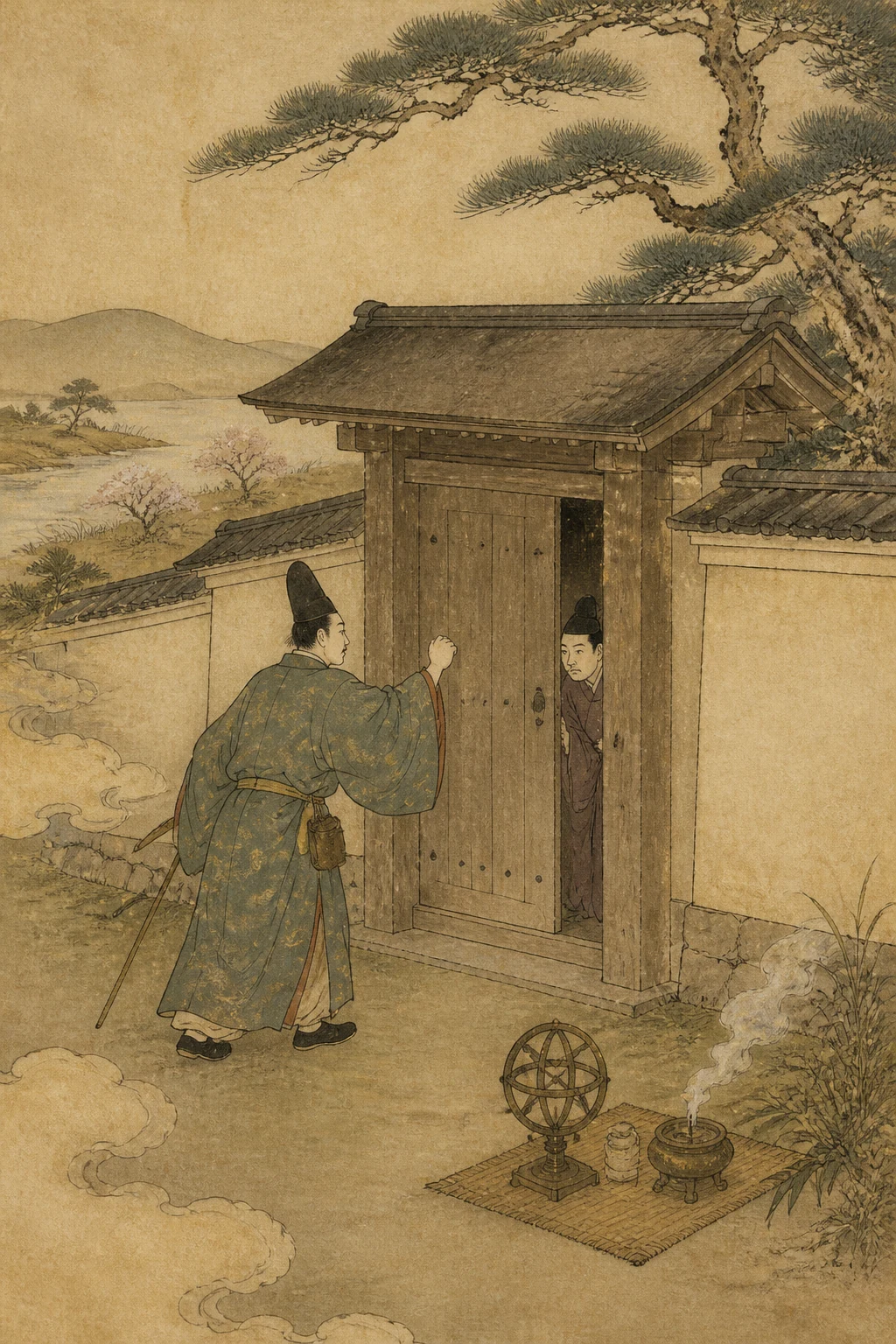
Long ago, north of the imperial capital, there stood a temple called Kamitsu Izumo-dera. Many years had passed since its founding, and its halls were leaning, with no one to see to proper repairs. In those days its superintendent was a monk named Jōkaku, the son of the previous superintendent. Father and son had held the office in succession, both keeping wives and children, and people spoke ill of them. Meanwhile, the temple fell ever further into ruin. Yet when the Great Master Dengyō was in China, considering where to establish the Tendai school, a picture of this site had been sent to him. Asked which of three places—Takao, Mount Hiei, or Kamitsu Temple—would be best, he replied, “The site of this temple is finer than the others, but its monks will be troublesome.” For that reason it was passed over. It was a place of the greatest distinction, yet somehow it had come to this sorry state. Now Jōkaku had a dream. His father, the former superintendent, appeared before him, terribly old and leaning on a staff. “The day after tomorrow, at the hour of the Sheep, a great wind will blow and this temple will fall,” he said. “I am living beneath its roof tiles as a catfish some three feet long. There is nowhere for me to go. There is little water, and the place is cramped and dark; my suffering is dreadful. When the temple falls, I shall tumble out and crawl about the courtyard, and the boys will try to beat me to death. Then I shall come to you. Be sure you keep the boys from striking me, and release me in the Kamo River. There I shall have room to move at last. Once I am in those great waters, I shall live happily.” When Jōkaku awoke, he told the others what he had dreamed. “What can it mean?” they wondered, and the day passed. On the appointed day, toward the end of the hour of the Horse, the sky suddenly clouded over, and a wind arose that snapped trees and wrecked houses. People rushed about in confusion, trying to shore up their homes, but the wind blew harder and harder, bringing down all the houses in the villages and breaking and toppling the trees and bamboo in the fields and hills. Just as foretold, at about the hour of the Sheep the temple was blown down. Its pillars broke, its roof collapsed, and everything lay in utter disorder. Over the years, rainwater had collected above the ceiling boards, and there were many large fish living there. While people from the neighborhood hurried about with buckets, scooping them up, a catfish some three feet long came flopping out into the courtyard. Just as in the dream, it came before Jōkaku. But without stopping to think, so delighted was he by the size of the fish, he took a great iron staff and drove it into its head. Then he called his boy Tarō and said, “Here!” The fish was so large that they could not subdue it, so they took a grass-cutting sickle, slit its gills, wrapped it up, and carried it inside. After gathering up the other fish and putting them into buckets, Jōkaku had the women carry them on their heads and returned to his quarters. His wife said, “Surely this catfish is the fish that appeared in your dream! Why did you kill it?” Though her words troubled him, he replied, “It would have come to the same thing if the other boys had killed it. Why should I not?” Then he said, “We must not share it with outsiders. Our late reverend father will surely be pleased if Tarō and Jirō and the other children eat it.” He chopped it into chunks, cooked it, and ate. “How strange! I wonder why it tastes better than other catfish. It must be good because it is our late reverend father’s flesh. Here, drink some of this broth!” So he urged the others to eat. But as he was eating, a large bone lodged in his throat, and he began to choke and gag. It would not come out, and after much agony he died. His wife was so horrified that she would never eat catfish again, or so the story goes.