Waltey
Pravljica o kači
Grimmove pravljice · Jacob in Wilhelm GrimmO besedilu
Pravljica o kači
- Vir
- Grimmove pravljice
- Avtor
- Jacob in Wilhelm Grimm
- Jezik branja
- English
- Jezik izvirnika
- Deutsch
- Čas branja
- 3 min branja
- Obseg
- 3 strani
- Naslov izvirnika
- Märchen von der Unke
O izvirniku
Grimmove pravljice
Gozdovi, čarobni predmeti in ljudska logika evropske pripovedne tradicije. Bralni jezik je English, izvirnik pa prihaja iz vira Grimmove pravljice v jeziku Deutsch.
Besedilo
Pravljica o kači
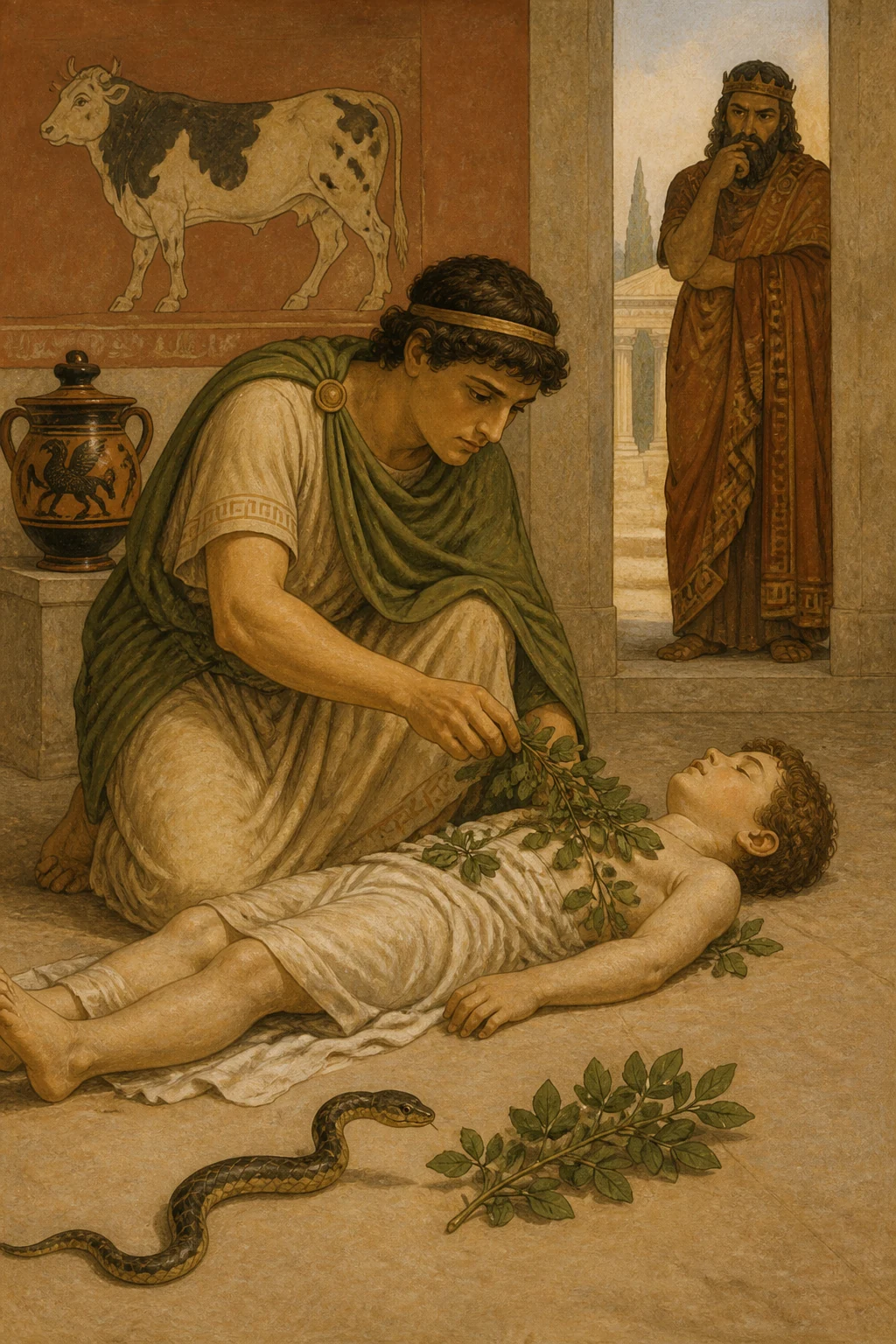
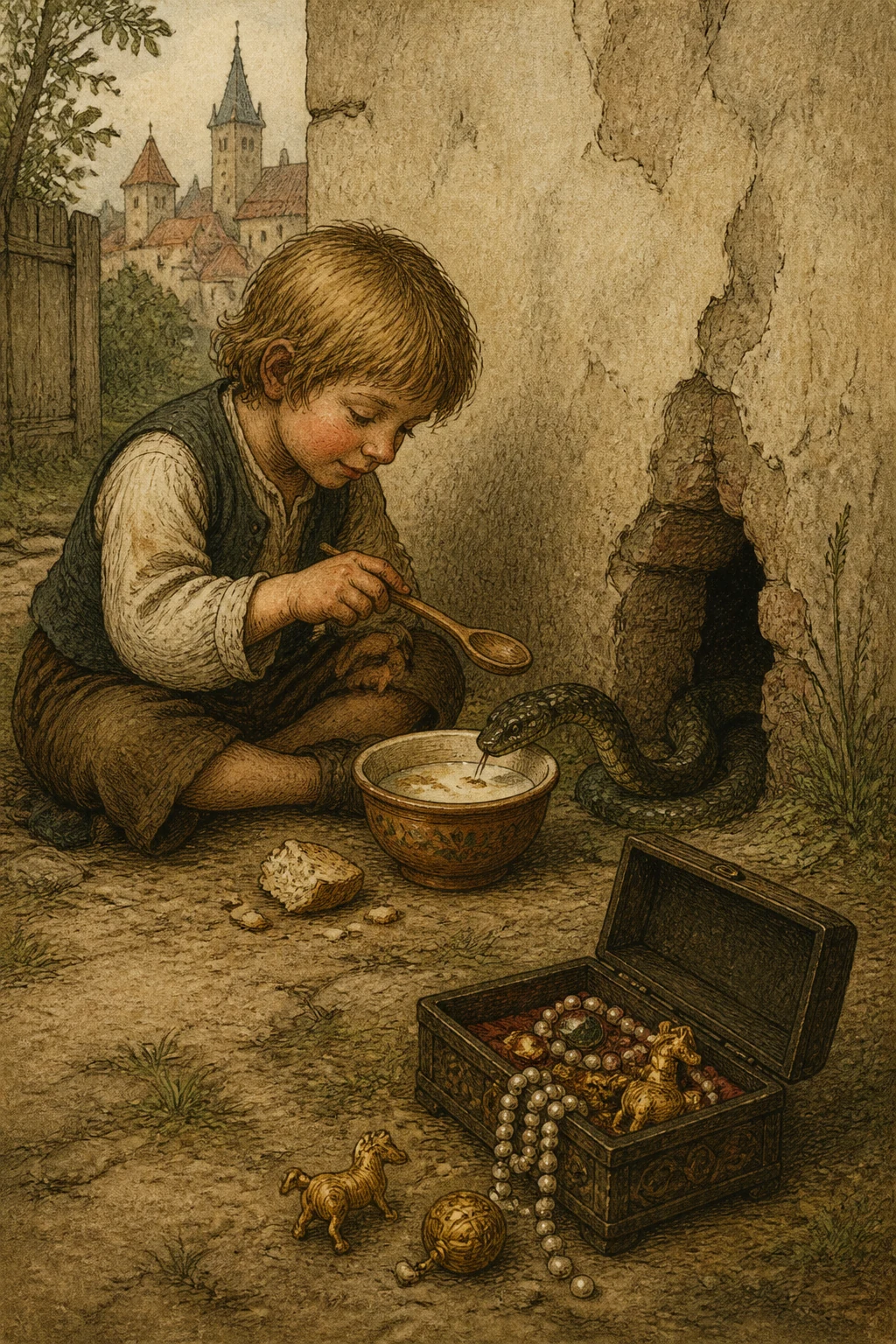
Once upon a time there was a little child whose mother gave it a small bowl of milk and pieces of bread every afternoon, and the child would take it out into the courtyard. Whenever it began to eat, the house snake would come creeping out of a crack in the wall, dip its little head into the milk, and share the meal. The child delighted in this, and if it sat there with its little bowl and the snake did not come at once, it would call, 'Little snake, little snake, hurry along, come here, you little thing; you shall have your bit of bread, and milk to drink your fill.'
Then the snake would come hurrying over and enjoy its meal. It showed its gratitude, too, bringing the child all sorts of lovely things from its secret treasure: gleaming stones, pearls, and golden toys. But the snake drank only the milk and left the pieces of bread untouched. One day the child took its little spoon, tapped the snake gently on the head, and said, 'Little thing, eat some bread too.' The mother, who was standing in the kitchen, heard the child talking to someone, and when she saw it tapping a snake with its little spoon, she ran out with a log and killed the good creature.
From that time on, a change came over the child. As long as the snake had shared its meals, it had grown big and strong, but now it lost its lovely rosy cheeks and grew thin. Before long, the death-bird began to cry in the night, and the robin gathered little twigs and leaves for a funeral wreath, and soon afterward the child lay on its bier.
II An orphan girl was sitting by the town wall, spinning, when she saw a snake come out of an opening at the foot of the wall. Quickly she spread her blue silk kerchief beside her, for snakes are exceedingly fond of such cloth and will go onto nothing else. As soon as the snake caught sight of it, it turned back, then returned carrying a little golden crown, laid it on the kerchief, and went away again. The girl picked up the crown; it glittered and was made of delicate spun gold. Before long the snake returned a second time, but when it no longer saw the crown, it crept up to the wall and, in its grief, struck its little head against it as long as it had any strength left, until at last it lay dead. If the girl had left the crown where it was, the snake would surely have brought still more of its treasures out of the cave.
III The snake calls, 'Hoo-hoo, hoo-hoo,' and the child says, 'Come on out.' The snake comes out, and the child asks after its little sister: 'Have you seen Little Red-Stockings?' The snake says, 'No, I haven't either. Have you, then? Hoo-hoo, hoo-hoo, hoo-hoo.'
Izvirnik
Märchen von der Unke
Naslednje strani prikazujejo izvirno besedilo za primerjavo.
Ein Märchen der Brüder Grimm
I
Es war einmal ein kleines Kind, dem gab seine Mutter jeden Nachmittag ein Schüsselchen mit Milch und Weckbrocken, und das Kind setzte sich damit hinaus in den Hof. Wenn es aber anfing zu essen, so kam die Hausunke aus einer Mauerritze hervorgekrochen, senkte ihr Köpfchen in die Milch und aß mit. Das Kind hatte seine Freude daran, und wenn es mit seinem Schüsselchen dasaß und die Unke kam nicht gleich herbei, so rief es ihr zu
'Unke, Unke, komm geschwind,
komm herbei, du kleines Ding,
sollst dein Bröckchen haben,
an der Milch dich laben.'
Da kam die Unke gelaufen und ließ es sich gut schmecken. Sie zeigte sich auch dankbar, denn sie brachte dem Kind aus ihrem heimlichen Schatz allerlei schöne Dinge, glänzende Steine, Perlen und goldene Spielsachen. Die Unke trank aber nur Milch und ließ die Brocken liegen. Da nahm das Kind einmal sein Löffelchen, schlug ihr damit sanft auf den Kopf und sagte 'Ding, iß auch Brocken.' Die Mutter, die in der Küche stand, hörte, daß das Kind mit jemand sprach, und als sie sah, daß es mit seinem Löffelchen nach einer Unke schlug, so lief sie mit einem Scheit Holz heraus und tötete das gute Tier.
Von der Zeit an ging eine Veränderung mit dem Kinde vor. Es war, solange die Unke mit ihm gegessen hatte, groß und stark geworden, jetzt aber verlor es seine schönen roten Backen und magerte ab. Nicht lange, so fing in der Nacht der Totenvogel an zu schreien, und das Rotkehlchen sammelte Zweiglein und Blätter zu einem Totenkranz, und bald hernach lag das Kind auf der Bahre.
II
Ein Waisenkind saß an der Stadtmauer und spann, da sah es eine Unke aus der Öffnung unten an der Mauer hervorkommen. Geschwind breitete es sein blauseidenes Halstuch neben sich aus, das die Unken gewaltig lieben und auf das sie allein gehen. Alsobald die Unke das erblickte, kehrte sie um, kam wieder und brachte ein kleines goldenes Krönchen getragen, legte es darauf und ging dann wieder fort. Das Mädchen nahm die Krone auf, sie glitzerte und war von zartem Goldgespinst. Nicht lange, so kam die Unke zum zweitenmal wieder: wie sie aber die Krone nicht mehr sah, kroch sie an die Wand und schlug vor Leid ihr Köpfchen so lange dawider, als sie nur noch Kräfte hatte, bis sie endlich tot dalag. Hätte das Mädchen die Krone liegen lassen, die Unke hätte wohl noch mehr von ihren Schätzen aus der Höhle herbeigetragen.
III
Unke ruft 'huhu, huhu,' Kind spricht 'komm herut.' Die Unke kommt hervor, da fragt das Kind nach seinem Schwesterchen 'hast du Rotstrümpfchen nicht gesehen?' Unke sagt 'ne, ik og nit: wie du denn? huhu, huhu, huhu.'
Nadaljuj z branjem