Waltey
Pitagorov nauk o spreminjajočem se svetu
Ovidove preobrazbe · OvidO besedilu
Pitagorov nauk o spreminjajočem se svetu
- Vir
- Ovidove preobrazbe
- Avtor
- Ovid
- Jezik branja
- English
- Jezik izvirnika
- Latin
- Čas branja
- 20 min branja
- Obseg
- 16 strani
- Naslov izvirnika
- Pythagoras Teaches the Changing World
O izvirniku
Ovidove preobrazbe
Pesniški tok antičnih preobrazb, kjer bogovi, ljudje in narava stalno menjavajo obliko. Bralni jezik je English, izvirnik pa prihaja iz vira Ovidove preobrazbe v jeziku Latin.
Besedilo
Pitagorov nauk o spreminjajočem se svetu
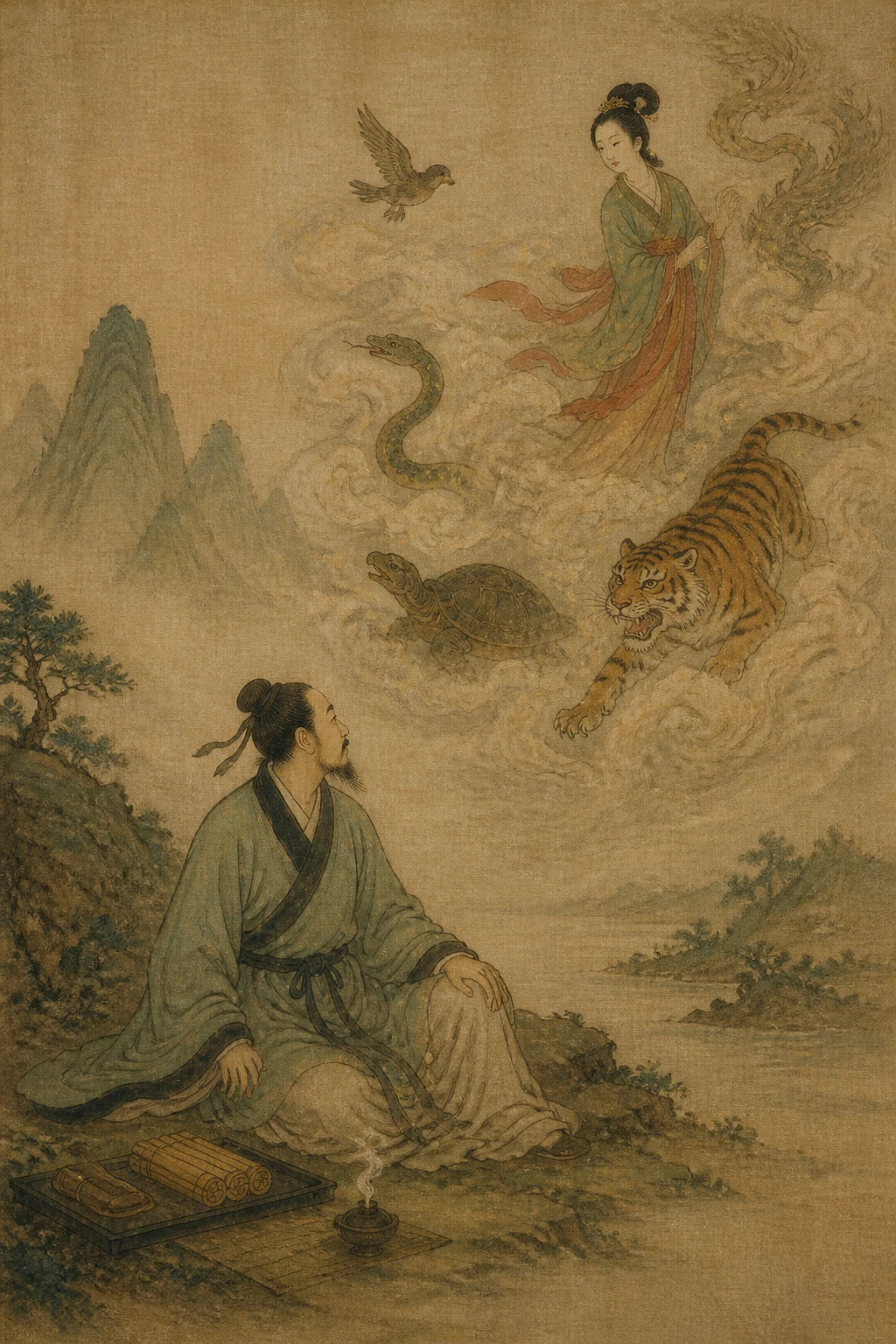
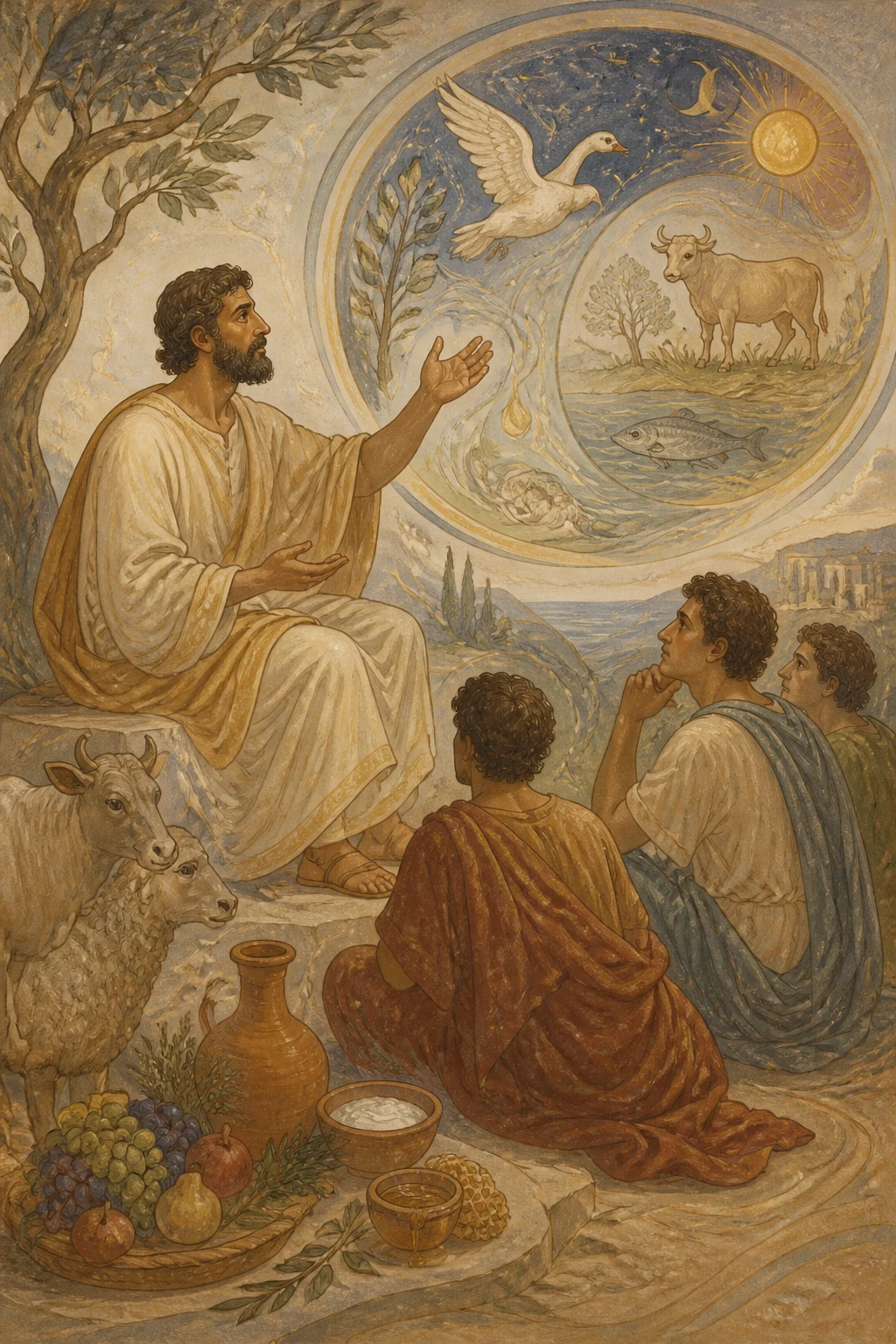
There was a man here, born on Samos, who had fled both Samos and its rulers, and, hating tyranny, had chosen exile. Though the gods were far away in heaven, he approached them in his mind, and what nature denied to human sight he drank in with the eyes of his heart. When thought and tireless study had revealed all things to him, he offered them for all to learn, teaching the silent gatherings that marveled at his words about the beginnings of the mighty world, the causes of things, the nature of the universe, and of the gods; whence snow comes, how lightning is born, whether Jupiter or winds thunder when clouds are torn apart, what shakes the earth, what laws govern the stars in their courses—
and all that lies concealed. He was the first to condemn the serving of animals at table, the first to open his lips with words of wisdom such as these, though none believed them: “Mortals, refrain from defiling your bodies with impious food! There are crops, there are apples weighing down the branches with their burden, and swelling grapes upon the vines; there are sweet herbs, and others that fire can render tender and mild. Nor are you denied the gift of milk, or honey fragrant with thyme blossom.
The lavish earth supplies her riches and gentle nourishment, and offers feasts without slaughter or bloodshed. Wild beasts appease their hunger with flesh, yet not all: horses, sheep, and cattle live on grass. But those whose nature is untamed and savage— Armenian tigers and raging lions, bears and wolves—delight in bloodstained feasts. Alas, what wickedness, to bury entrails within entrails, to fatten one greedy body on another body's substance, and keep one living creature alive by another's death!
With all the wealth that earth, the best of mothers, brings forth, can nothing please you but to chew at pitiful wounds with savage teeth, reviving the customs of the Cyclopes? Can you not appease the hunger of your greedy, ill-governed belly without destroying another life? Yet that ancient age, which we have named the Golden, was blessed with the fruit of trees and the herbs that spring from the ground, and did not stain its lips with blood.
Then birds too beat their wings in safety through the air, and the hare roamed fearlessly among the fields; no trusting fish was caught and dangling from a hook. All creatures lived without treachery, fearing no deceit, and all was filled with peace. But after some malign innovator, whoever he was, begrudged men the food of the gods and thrust flesh into his greedy belly, he opened the road to crime. It may have been in killing wild beasts that iron first grew hot and stained with blood (and that should have sufficed). We admit that creatures which seek our death may be killed without impiety; but though they might be killed, they should not have been eaten.
Wickedness went further still. The pig, it is thought, was the first sacrificial victim to deserve death, because its curved snout rooted up the seeds and cut short the year's promise. The goat, for biting a vine, is said to have been slaughtered at the altar of avenging Bacchus. Their own misdeeds harmed them both! But you, sheep, what have you done, you peaceful flock, born to sustain mankind, bearing nectar in your swelling udders, giving us your wool for soft clothing, and serving us better in life than in death?
What have oxen done, creatures without deceit or guile, harmless and simple, born to endure hard labor? Ungrateful indeed, and unworthy of the gift of grain, is the man who, having just unburdened his companion of the curved plow, can slaughter that fellow laborer, striking with an axe the neck worn hard by toil, with which it had so often broken the stubborn fields for him and brought him so many harvests.
Nor is it enough to commit such a crime: they have made the gods themselves its sponsors, believing the powers above delight in the slaughter of the laboring bullock. A victim without blemish, of surpassing beauty (for pleasing others proves its ruin), adorned with ribbons and gold, is led before the altar. Uncomprehending, it hears the prayers and sees placed on its forehead, between its horns, the grain it helped to grow. Struck down, it stains with blood the knives it may already have glimpsed reflected in clear water.
At once they tear the entrails from its still-living breast and inspect them, searching there for the will of the gods. How then—so great is man's hunger for forbidden food!— do you dare to eat of it, you mortal race? I beg you, do not do this: heed my words! And when you offer your palate the limbs of slaughtered oxen, know and understand that you are chewing your own fellow workers.
And since a god moves my lips, I shall duly follow the god who moves them, reveal my own Delphi, open heaven itself, and disclose the oracles of the divine mind. I shall sing of great things, unexplored by the minds of earlier men, things long concealed. It delights me to travel among the lofty stars, to leave the earth and its dull abode behind, to ride upon a cloud, stand on mighty Atlas's shoulders, and look far down on men wandering everywhere, bereft of reason, and thus exhort them as they tremble in fear of death, unfolding the course of fate: O race struck dumb with terror of cold death, why fear the Styx, the shades, those empty names,
the stuff of poets, the dangers of an imaginary world? Whether the pyre's flames or the wasting of age have destroyed your bodies, know that they can suffer no harm. Souls are free from death. Leaving their former dwelling, they live on, received into new homes. I myself—for I remember—at the time of the Trojan War was Euphorbus, son of Panthous, whose breast was pierced by the heavy spear of the younger son of Atreus.
Not long ago, in Juno's temple at Abas's Argos, I recognized the shield my left arm once had carried. All things change; nothing dies. The spirit wanders, coming from there to here, from here to there, taking whatever limbs it will, passing from beasts into human bodies, and from our bodies into beasts, but never perishing. And just as pliant wax is stamped with new designs, neither remaining as it was nor keeping the same shape, yet still itself the same, so, I teach, the soul remains forever the same, though it migrates into changing forms.
Therefore, lest the belly's cravings conquer reverence, refrain, I warn you, from driving out kindred souls by impious slaughter: let blood not nourish blood! And now, since I am borne across the open sea, my sails full of wind: nothing in all the world endures unchanged. All things flow; every form is fashioned in passing. Time itself glides onward in continual motion, just like a river. For neither a river nor the fleeting hour can stand still; as wave presses on wave, each driven by the one behind and driving that before it, so moments flee and moments follow, ever new. What was before is left behind;
what had not been comes into being, and every instant is renewed. You see the spent night giving way to light, and this bright radiance succeeding black night. The heavens have a different color when all things lie weary in midnight's rest, and when bright Lucifer rides forth on his white horse; another still when the daughter of Pallas, herald of light, stains the world that she will hand to Phoebus.
The god's own shield is red in the morning when it rises from the earth's edge, and red when it sinks below it; at its height it shines white, for there the ether is purer, far removed from the taint of earth. Nor can the shape of Diana by night ever remain the same: today's moon is always smaller than tomorrow's if she is waxing, larger if her orb is waning. And do you not see the year pass through four forms, imitating the stages of our lives?
In early spring it is tender and suckling, most like a little child. Then the young grass swells, bright but without strength, delicate still, delighting farmers with its promise. Then all things bloom, and the nurturing fields play with the colors of flowers, though the leaves have yet no vigor. After spring the year grows stronger and passes into summer, becoming a vigorous youth: no age is stronger, none more fruitful, none more ardent.
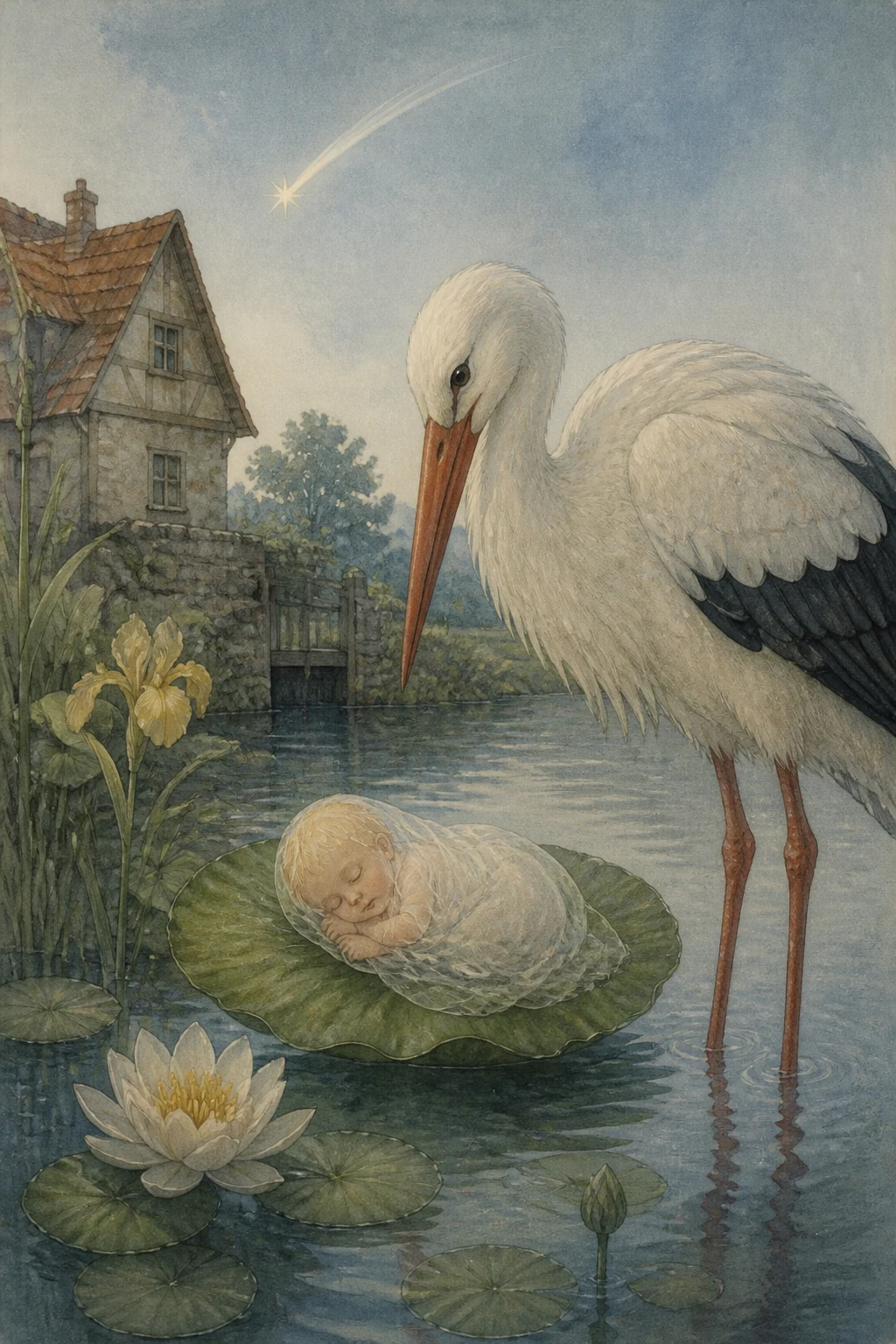
Autumn follows, the heat of youth laid aside, ripe and mellow, temperate between youth and old age, its temples already sprinkled with gray. Then aged winter comes with trembling steps, its hair stripped away, or what remains turned white. Our own bodies too are changing always, without a moment's rest, and tomorrow we shall not be what we have been or are. There was a day when we were only seeds, the first promise of human life, dwelling in our mother's womb.
Nature applied her skillful hands, unwilling that our bodies should be cramped within our mother's swelling belly, and sent us from that home into the open air. Brought into the light, the infant lay without strength; soon it moved on all fours, like the beasts. Little by little, trembling, its knees still weak, it stood, its muscles braced with some support. Then it grew strong and swift, passed through the span of youth, and, its middle years completed, glided down the sloping path of declining age.
Age undermines and pulls apart the strength of earlier years. Old Milo weeps to see his arms hanging limp and slack—those arms whose solid masses of muscle had once been like Hercules' own! Helen too weeps when she sees an old woman's wrinkles in the mirror, and asks herself why she was twice carried away. Time, devourer of all things, and you, begrudging age, destroy everything, and all that your teeth have marred you gradually consume in a lingering death.
Even what we call the elements do not endure. Attend, and I shall teach you the changes they undergo. The everlasting universe contains four primal bodies. Of these, two are heavy, and their own weight carries them downward: earth and water. The other two are weightless and, when nothing presses them, rise upward: air, and fire, purer still than air. Though separated in space, all things are made from these and fall back into them. Earth, dissolved, thins into flowing water; moisture, attenuated, passes into wind and air; and air, its weight removed, flashes up, most rarefied, into the fires above.
Then they return, retracing the same sequence: fire thickens and passes into dense air, air into water, and water, compacted, hardens into earth. Nothing keeps its own appearance. Nature, the renewer of things, makes one form from another. Nothing in all the universe, believe me, perishes; it varies and renews its face. What we call birth is a beginning to be something other than what was before; death is ceasing to be that same thing. Though this may have shifted there, and that come here, the sum of all things remains unchanged.
I cannot believe that anything endures for long in the same form. So, ages, you have passed from gold to iron; so the fortunes of places have so often changed. I myself have seen sea where once there was the firmest land, and land made from the sea. Seashells have lain far from the ocean, and an ancient anchor has been found on mountain peaks. Rushing waters have carved a valley where a plain once lay, and floods have washed a mountain down into the sea.
Once-marshy ground lies parched in dry sand, while land that once endured thirst lies wet beneath stagnant marshes. Here nature has opened fresh springs, and there closed others; so many rivers burst forth when the earth quakes deep below, or sink away, their channels blocked. Thus Lycus, swallowed by a chasm in the earth, emerges far away, reborn through another opening.
Thus mighty Erasinus is swallowed up, then, flowing in a hidden channel, restored to the fields of Argos. And they say the Mysian Caicus, regretting its source and former banks, now follows another course. Amenanus too, rolling Sicilian sands along, now flows, now runs dry when its springs are stopped. Anigrus once supplied drinking water; now it pours out water you would not wish to touch, ever since—unless poets are to be denied all trust—the two-formed creatures washed there the wounds dealt by the bow of club-bearing Hercules.
And does not Hypanis, rising in the Scythian mountains, once sweet, become tainted with bitter salt? Antissa, Pharos, and Phoenician Tyre were once surrounded by waves; none is now an island. Leucas was joined to the mainland in the days of its earliest settlers; now the sea surrounds it. Zancle too, they say, was joined to Italy, until the sea swept away their common boundary and thrust its waters between the lands.
If you seek Helice and Buris, cities of Achaea, you will find them underwater; sailors still point out the sunken towns and their slanting walls. Near Pittheus's Troezen stands a steep hill without a single tree, once a perfectly level stretch of plain, now a mound. For—terrible to tell!— the savage force of winds, imprisoned in blind caverns, longed for some outlet, struggling in vain to enjoy the open sky. Since their whole prison had not a crack through which their blasts could pass, they swelled the outstretched ground, as breath from the mouth inflates a bladder, or the hide stripped
from a two-horned goat. That swelling remained, taking the shape of a lofty hill, and hardened through long ages. Though countless things I have heard or known come to mind, I shall tell a few more. Does not water too give and take new forms? Horned Ammon, your spring is cold at midday, warm at dawn and sunset. They say that wood, wetted with Athamanian waters, catches fire when the moon has dwindled to its smallest orb.
The Cicones have a river that turns the drinker's entrails to stone and coats whatever it touches with marble. Crathis, and Sybaris beside it, near our shores, make hair the color of amber and gold. More wonderful still, there are waters able to change not only bodies but minds as well. Who has not heard of the enfeebling waters of Salmacis and the Ethiopian lakes? Whoever drinks of these either goes mad or falls into an extraordinarily heavy sleep.
Whoever quenches his thirst at the spring of Clitor shuns wine and delights in pure water alone, whether the water has a power opposed to heating wine, or whether, as the local people tell, Amythaon's son, after he had rescued the maddened daughters of Proetus from their frenzy with spells and herbs, cast the purgings of their minds into that spring, leaving its waters hostile to wine.
The Lyncestian stream flows with the opposite effect: whoever drinks too freely from it staggers as though he had drunk unmixed wine. There is a place in Arcadia—the ancients called it Pheneus— whose treacherous waters are mistrusted. Beware of them at night: drunk at night they harm you; by daylight they are harmless. Thus lakes and rivers acquire differing powers.
There was a time when Ortygia floated on the waves; now it stands fixed. Argo feared the Symplegades, drenched in the spray of waves crushed as the rocks collided; now they stand motionless, resisting the winds. Nor will Etna, blazing in her sulfurous furnaces, always be fiery, for she was not always so. For if the earth is a living creature, endowed with life and breathing holes that exhale flame in many places, she may alter the channels of her breath and, whenever she stirs, close these caverns and open others.
Or if swift winds are penned in deep caves, tossing rocks against rocks and matter that contains the seeds of flame, which catches fire from their blows, the caves will be left cold when the winds are still. Or if deposits of bitumen catch fire, or yellow sulfur burns with slender trails of smoke, then, when earth no longer supplies rich fuel to feed the flames, her strength exhausted through long ages, and ravenous nature lacks its nourishment, the fire will not endure hunger: unfed, it will depart.
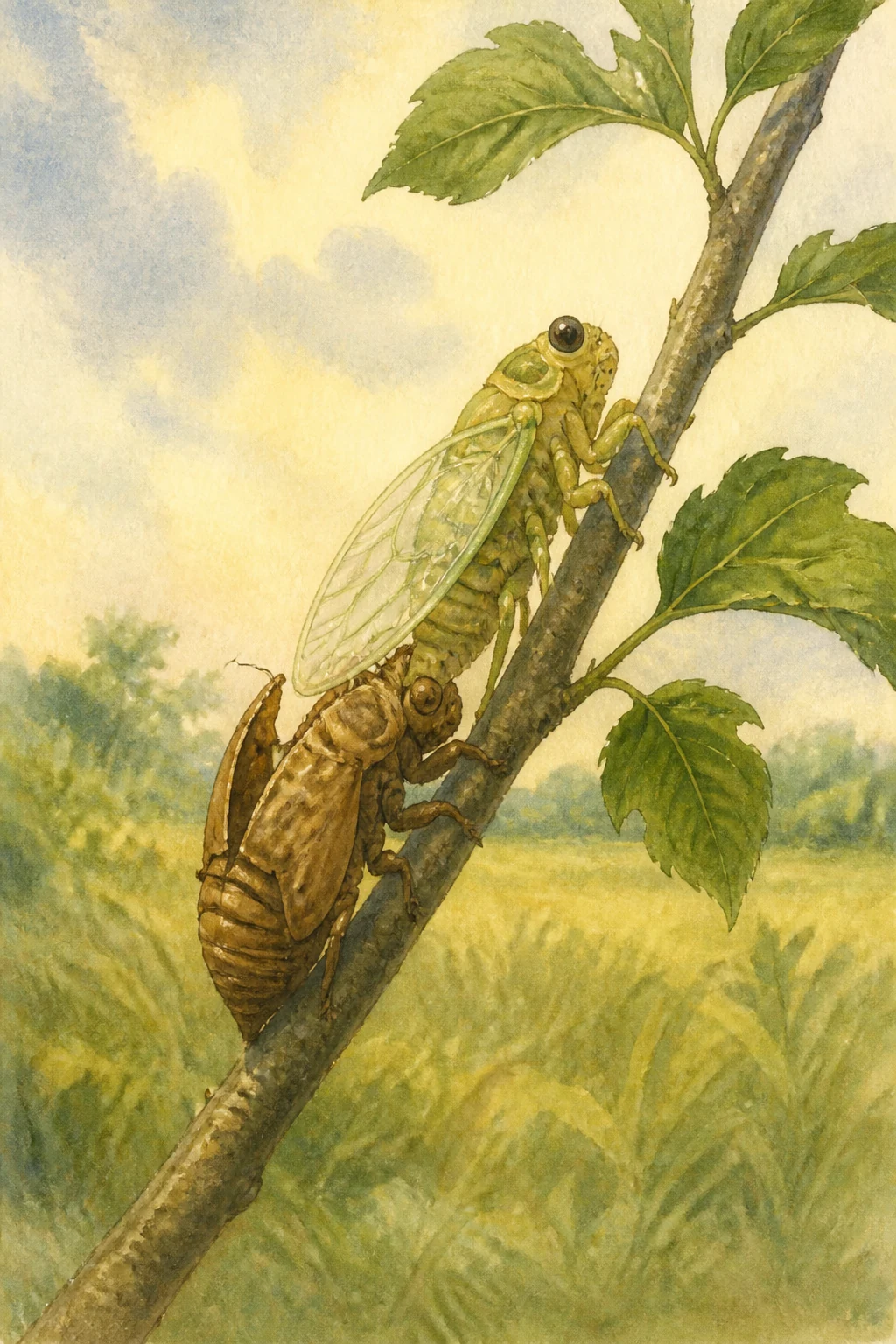
There are men, they say, in Hyperborean Pallene whose bodies become clothed in delicate feathers when they have plunged nine times into Tritonia's lake. I scarcely believe it. Scythian women too are said to practice the same arts, sprinkling their bodies with potions. Yet if any trust is to be placed in proven things, do you not see that bodies which decay with time and moist warmth turn into tiny living creatures?
Go, bury slaughtered bulls of chosen stock: experience has proved that everywhere from their rotting entrails flower-gathering bees are born, which, like their parents, cultivate the fields, delight in toil, and labor for the future. A warhorse buried in the earth gives birth to hornets. If you remove a shore crab's curving claws and bury the rest in earth, from the buried part a scorpion will emerge, threatening with its hooked tail.
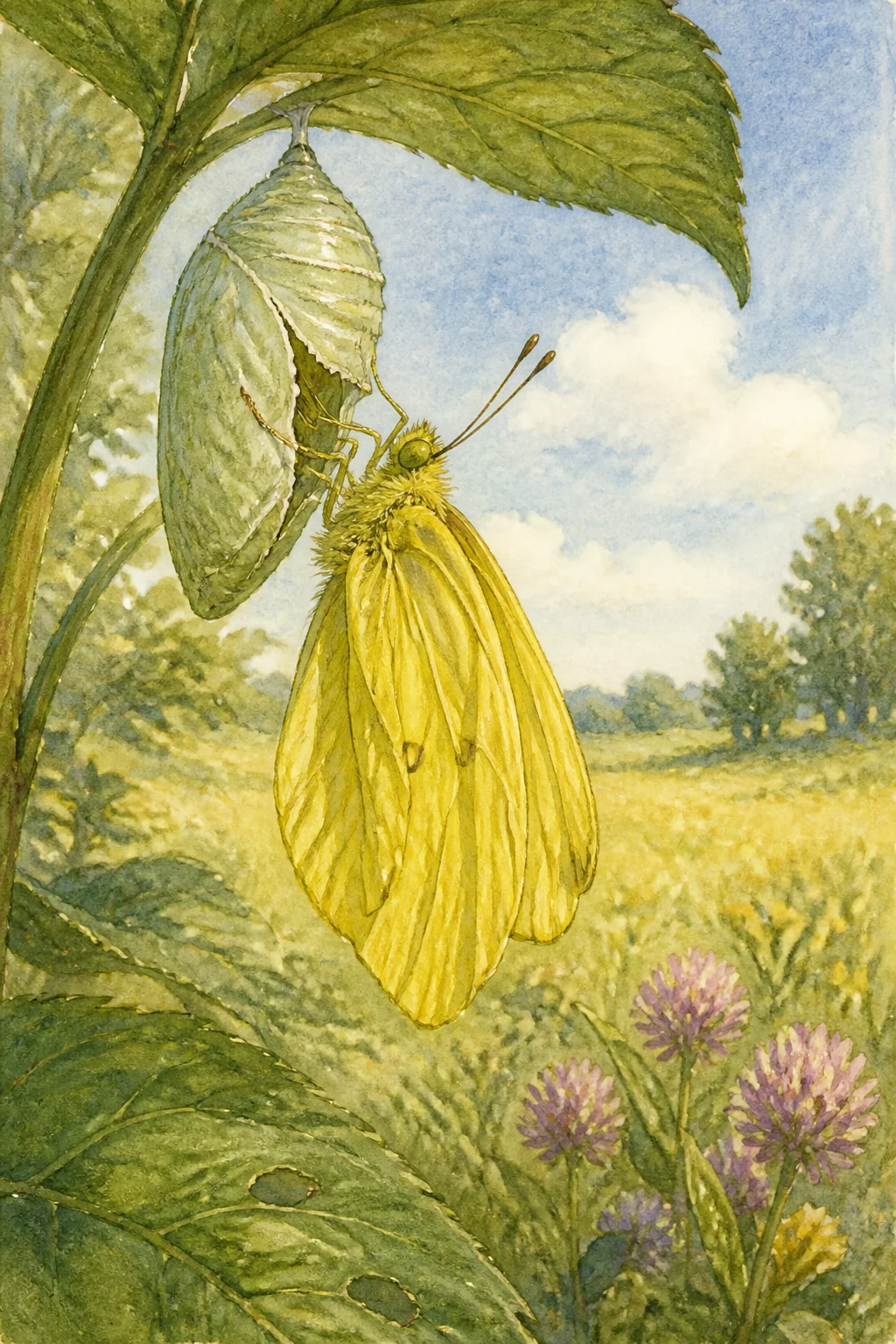
And the caterpillars that weave their white threads among the leaves—a thing farmers have observed— change their shape into that of a death-haunting moth. Mud holds the seeds that generate green frogs, and brings them forth without feet; soon nature gives them limbs fit for swimming, and, to fit them for long leaps as well, their hind legs grow longer than their forelegs.
Nor is the bear's newborn offspring yet a cub, but barely living flesh. By licking it, the mother fashions its limbs, shaping it into a likeness of herself. Do you not see that the young of honey-bearing bees, sheltered in six-sided waxen cells, are born as limbless bodies, acquiring feet and wings only later? Juno's bird, bearing stars upon its tail, Jupiter's armor-bearer, the doves of Cytherea, and every kind of bird—who would think they could be born from the middle of an egg, if he did not know it happened?
Some believe that when the spine has rotted in the sealed tomb, human marrow is transformed into a snake. These creatures, though, derive their beginnings from other kinds. There is one bird that renews and begets itself. The Assyrians call it the phoenix. It lives neither on grain nor herbs, but on tears of frankincense and the juice of balsam. When it has completed five centuries of life, in the boughs of a holm oak or atop a swaying palm it builds a nest with its claws and unsullied beak.
Once it has spread beneath it cassia, ears of fragrant nard, crushed cinnamon, and golden myrrh, it settles above them and ends its life among the perfumes. Then, they say, a little phoenix, destined to live as many years, is born again from its father's body. When age has given it strength to carry the burden, it lifts the heavy nest from the lofty tree's branches and dutifully bears away its cradle and its father's tomb.
Flying through the yielding air to Hyperion's city, it lays it before the sacred doors of Hyperion's temple. Yet if there is anything wonderfully strange in these things, let us marvel at the hyena's change of sex: female just now, submitting to a male, it is now itself a male. The creature nourished by winds and air immediately takes on whatever color it touches.
Conquered India gave lynxes to grape-bearing Bacchus: whatever their bladders release, they say, turns to stone, hardening at the touch of air. So coral too grows hard the moment it touches air; beneath the waves it was a soft plant. Day will end, and Phoebus will bathe his panting horses in the deep sea, before my words can encompass everything transformed into new shapes. So we see times changing, some nations gathering strength, others falling. Thus Troy was great in wealth and men, able to shed so much blood through ten long years; now humbled, she displays only ancient ruins,
and, instead of riches, her ancestors' tombs. Sparta was glorious, mighty Mycenae flourished, as did the citadels of Cecrops and Amphion. Sparta is worthless ground; lofty Mycenae has fallen. What is the Thebes of Oedipus but a name? What remains of Pandion's Athens except its name? Even now, they say, Dardanian Rome is rising, beside the waters of the Tiber, born in the Apennines, laying the foundations of a vast dominion.
As she grows, she too changes form, and one day will be the capital of the boundless world. So prophets and prophetic oracles declare, they say; and, as far as I recall, when Troy's fortunes were collapsing, Helenus, son of Priam, said to Aeneas, weeping and doubtful of his safety: ‘Son of a goddess, if you understand aright my spirit's prophecies, Troy will not wholly fall while you survive!
Fire and sword will make a path for you. You will go, carrying rescued Troy with you, until you and Troy reach a foreign land friendlier than your native soil. I see too a city destined for your Phrygian descendants, greater than any that exists, shall exist, or has been seen before. Other leaders will make her powerful through long ages, but one born of the blood of Iulus will make her mistress of the world. When earth has enjoyed his service, the heavenly dwellings will enjoy his presence: heaven will be his final destination.’ These, as I remember, were the prophecies Helenus sang to Aeneas, bearer of his household gods. I rejoice
that kindred walls are rising, and that Greek victory benefited the Phrygians. Yet lest our horses forget the goal and stray too far afield: heaven and all beneath it, earth and everything within it, change their forms. We too are part of the world, and since we are not bodies alone but winged souls as well, and may enter the homes of wild beasts, or lodge within the bodies of cattle, let us allow those bodies, which may have housed our parents' souls, or our brothers', or those of people bound to us by some other tie, or at least the souls of human beings, to live safe and honored. Let us not heap our bellies with Thyestean feasts!
What an evil habit he acquires, how he prepares himself for shedding human blood, that impious man who slits a calf's throat with a knife, unmoved by its lowing; or who can slaughter a kid whose cries are like a child's, or feed upon a bird he himself has fed! How little separates such acts from outright murder! What further step do they prepare? Let the ox plow, or owe its death to ripe old age; let the sheep furnish armor against the shivering north wind; let well-fed goats offer their udders for our hands to milk.
Take away nets and snares and nooses and treacherous devices. Do not deceive birds with a limed twig, or hem deer in with the feathers they fear, or hide crooked hooks in deceitful bait. Destroy creatures that harm you, but even these only destroy: let your mouths forgo their flesh, and gather gentle nourishment!”
Izvirnik
Pythagoras Teaches the Changing World
Naslednje strani prikazujejo izvirno besedilo za primerjavo.
Source ID: ovid_metamorphoses_story_100 Citation: Ovid, Metamorphoses 15.60-15.478 Original language: Latin Source: PerseusDL canonical-latinLit Source URL: https://github.com/PerseusDL/canonical-latinLit/blob/master/data/phi0959/phi006/phi0959.phi006.perseus-lat2.xml Segmentation certainty: medium 60: Vir fuit hic, ortu Samius, sed fugerat una 61: et Samon et dominos odioque tyrannidis exsul 62: sponte erat, isque, licet caeli regione remotos, 63: mente deos adiit et quae natura negabat 64: visibus humanis, oculis ea pectoris hausit, 65: cumque animo et vigili perspexerat omnia cura,
66: in medium discenda dabat coetusque silentum 67: dictaque mirantum magni primordia mundi 68: et rerum causas et, quid natura, docebat, 69: quid deus, unde nives, quae fulminis esset origo, 70: Iuppiter an venti discussa nube tonarent, 71: quid quateret terras, qua sidera lege mearent — 72: et quodcumque latet; primusque animalia mensis 73: arguit imponi, primus quoque talibus ora 74: docta quidem solvit, sed non et credita, verbis: 75: “Parcite, mortales, dapibus temerare nefandis 76: corpora! Sunt fruges, sunt deducentia ramos 77: pondere poma suo tumidaeque in vitibus uvae,
78: sunt herbae dulces, sunt quae mitescere flamma 79: mollirique queant; nec vobis lacteus umor 80: eripitur, nec mella thymi redolentia flore: 81: prodiga divitias alimentaque mitia tellus 82: suggerit atque epulas sine caede et sanguine praebet. 83: Carne ferae sedant ieiunia, nec tamen omnes: 84: quippe equus et pecudes armentaque gramine vivunt. 85: At quibus ingenium est inmansuetumque ferumque, 86: Armeniae tigres iracundique leones 87: cumque lupis ursi, dapibus cum sanguine gaudent.
88: Heu quantum scelus est in viscera viscera condi 89: congestoque avidum pinguescere corpore corpus 90: alteriusque animantem animantis vivere leto! 91: Scilicet in tantis opibus, quas optima matrum 92: terra parit, nil te nisi tristia mandere saevo 93: vulnera dente iuvat ritusque referre Cyclopum, 94: nec, nisi perdideris alium, placare voracis 95: et male morati poteris ieiunia ventris?
96: At vetus illa aetas, cui fecimus aurea nomen, 97: fetibus arboreis et, quas humus educat, herbis 98: fortunata fuit nec polluit ora cruore. 99: Tunc et aves tutae movere per aera pennas, 100: et lepus impavidus mediis erravit in arvis, 101: nec sua credulitas piscem suspenderat hamo: 102: cuncta sine insidiis nullamque timentia fraudem 103: plenaque pacis erant. Postquam non utilis auctor 104: victibus invidit, quisquis fuit ille, deorum 105: corporeasque dapes avidam demersit in alvum, 106: fecit iter sceleri, primoque e caede ferarum 107: incaluisse potest maculatum sanguine ferrum
108: (idque satis fuerat), nostrumque petentia letum 109: corpora missa neci salva pietate fatemur: 110: sed quam danda neci, tam non epulanda fuerunt. 111: Longius inde nefas abiit, et prima putatur 112: hostia sus meruisse mori, quia semina pando 113: eruerit rostro spemque interceperit anni. 114: Vite caper morsa Bacchi mactatus ad aras 115: dicitur ultoris; nocuit sua culpa duobus!
116: Quid meruistis oves, placidum pecus, inque tuendos 117: natum homines, pleno quae fertis in ubere nectar, 118: mollia quae nobis vestras velamina lanas 119: praebetis vitaque magis quam morte iuvatis? 120: Quid meruere boves, animal sine fraude dolisque, 121: innocuum, simplex, natum tolerare labores? 122: Inmemor est demum nec frugum munere dignus, 123: qui potuit curvi dempto modo pondere aratri 124: ruricolam mactare suum, qui trita labore 125: illa, quibus totiens durum renovaverat arvum, 126: tot dederat messes, percussit colla securi.
127: Nec satis est, quod tale nefas committitur: ipsos 128: inscripsere deos sceleri, numenque supernum 129: caede laboriferi credunt gaudere iuvenci. 130: Victima labe carens et praestantissima forma 131: (nam placuisse nocet) vittis insignis et auro 132: sistitur ante aras auditque ignara precantem 133: imponique suae videt inter cornua fronti, 134: quas coluit, fruges percussaque sanguine cultros 135: inficit in liquida praevisos forsitan unda.
136: Protinus ereptas viventi pectore fibras 137: inspiciunt mentesque deum scrutantur in illis: 138: unde (fames homini vetitorum tanta ciborum!) 139: audetis vesci, genus o mortale? Quod, oro, 140: ne facite, et monitis animos advertite nostris! 141: Cumque boum dabitis caesorum membra palato, 142: mandere vos vestros scite et sentite colonos. 143: Et quoniam deus ora movet, sequar ora moventem 144: rite deum Delphosque meos ipsumque recludam 145: aethera et augustae reserabo oracula mentis.
146: Magna nec ingeniis investigata priorum 147: quaeque diu latuere, canam; iuvat ire per alta 148: astra, iuvat terris et inerti sede relicta 149: nube vehi validique umeris insistere Atlantis 150: palantesque homines passim ac rationis egentes 151: despectare procul trepidosque obitumque timentes 152: sic exhortari seriemque evolvere fati: 153: O genus attonitum gelidae formidine mortis, 154: quid Styga, quid manes et nomina vana timetis, 155: materiem vatum, falsique pericula mundi?
156: Corpora, sive rogus flamma, seu tabe vetustas 157: abstulerit, mala posse pati non ulla putetis! 158: Morte carent animae, semperque priore relicta 159: sede novis domibus vivunt habitantque receptae. 160: Ipse ego (nam memini) Troiani tempore belli 161: Panthoides Euphorbus eram, cui pectore quondam 162: haesit in adverso gravis hasta minoris Atridae: 163: cognovi clipeum, laevae gestamina nostrae, 164: nuper Abanteis templo Iunonis in Argis.
165: Omnia mutantur, nihil interit: errat et illinc 166: huc venit, hinc illuc, et quoslibet occupat artus 167: spiritus eque feris humana in corpora transit 168: inque feras noster nec tempore deperit ullo; 169: utque novis facilis signatur cera figuris 170: nec manet ut fuerat nec formas servat easdem, 171: sed tamen ipsa eadem est: animam sic semper eandem 172: esse, sed in varias doceo migrare figuras.
173: Ergo, ne pietas sit victa cupidine ventris, 174: parcite, vaticinor, cognatas caede nefanda 175: exturbare animas, nec sanguine sanguis alatur! 176: Et quoniam magno feror aequore plenaque ventis 177: vela dedi: nihil est toto, quod perstet, in orbe. 178: Cuncta fluunt, omnisque vagans formatur imago; 179: ipsa quoque adsiduo labuntur tempora motu, 180: non secus ac flumen, neque enim consistere flumen 181: nec levis hora potest, sed ut unda impellitur unda 182: urgeturque eadem veniente urgetque priorem, 183: tempora sic fugiunt pariter pariterque sequuntur 184: et nova sunt semper; nam quod fuit ante, relictum est,
185: fitque quod haud fuerat, momentaque cuncta novantur. 186: Cernis et emensas in lucem tendere noctes, 187: et iubar hoc nitidum nigrae succedere nocti. 188: Nec color est idem caelo, cum lassa quiete 189: cuncta iacent media, cumque albo Lucifer exit 190: clarus equo rursusque alius, cum praevia lucis 191: tradendum Phoebo Pallantias inficit orbem. 192: Ipse dei clipeus, terra cum tollitur ima, 193: mane rubet, terraque, rubet cum conditur ima, 194: candidus in summo est, melior natura quod illic 195: aetheris est terraeque procul contagia fugit.
196: Nec par aut eadem nocturnae forma Dianae 197: esse potest umquam, semperque hodierna sequente, 198: si crescit, minor est, maior, si contrahit orbem. 199: Quid? non in species succedere quattuor annum 200: adspicis, aetatis peragentem imitamina nostrae? 201: Nam tener ac lactens puerique simillimus aevo 202: vere novo est: tunc herba nitens et roboris expers 203: turget et insolida est et spe delectat agrestes.
204: Omnia tunc florent, florumque coloribus almus 205: ludit ager, neque adhuc virtus in frondibus ulla est. 206: Transit in aestatem post ver robustior annus 207: fitque valens iuvenis: neque enim robustior aetas 208: ulla nec uberior, nec quae magis ardeat, ulla est. 209: Excipit autumnus, posito fervore iuventae 210: maturus mitisque, inter iuvenemque senemque 211: temperie medius, sparsus quoque tempora canis.
212: Inde senilis hiems tremulo venit horrida passu, 213: aut spoliata suos, aut quos habet, alba capillos. 214: Nostra quoque ipsorum semper requieque sine ulla 215: corpora vertuntur, nec, quod fuimusve sumusve, 216: cras erimus; fuit illa dies, qua semina tantum 217: spesque hominum primae matrisque habitavimus alvo. 218: Artifices natura manus admovit et angi 219: corpora visceribus distentae condita matris 220: noluit eque domo vacuas emisit in auras.
221: Editus in lucem iacuit sine viribus infans; 222: mox quadrupes rituque tulit sua membra ferarum, 223: paulatimque tremens et nondum poplite firmo 224: constitit adiutis aliquo conamine nervis. 225: Inde valens veloxque fuit spatiumque iuventae 226: transit et emeritis medii quoque temporis annis 227: labitur occiduae per iter declive senectae. 228: Subruit haec aevi demoliturque prioris 229: robora, fletque Milon senior, cum spectat inanes 230: (illos, qui fuerant solidorum mole tororum 231: Herculeis similes!) fluidos pendere lacertos; 232: Flet quoque, ut in speculo rugas adspexit aniles,
233: Tyndaris et secum, cur sit bis rapta, requirit. 234: Tempus edax rerum, tuque, invidiosa vetustas, 235: omnia destruitis, vitiataque dentibus aevi 236: paulatim lenta consumitis omnia morte. 237: Haec quoque non perstant, quae nos elementa vocamus, 238: quasque vices peragant, (animos adhibete!) docebo. 239: Quattuor aeternus genitalia corpora mundus 240: continet; ex illis duo sunt onerosa suoque 241: pondere in inferius, tellus atque unda, feruntur, 242: et totidem gravitate carent nulloque premente 243: alta petunt, aer atque aere purior ignis.
244: Quae quamquam spatio distant, tamen omnia fiunt 245: ex ipsis et in ipsa cadunt, resolutaque tellus 246: in liquidas rarescit aquas, tenuatus in auras 247: aeraque umor abit, dempto quoque pondere rursus 248: in superos aer tenuissimus emicat ignes. 249: Inde retro redeunt, idemque retexitur ordo; 250: ignis enim densum spissatus in aera transit, 251: hic in aquas, tellus glomerata cogitur unda.
252: Nec species sua cuique manet, rerumque novatrix 253: ex aliis alias reddit natura figuras: 254: nec perit in toto quicquam, mihi credite, mundo, 255: sed variat faciemque novat, nascique vocatur 256: incipere esse aliud, quam quod fuit ante, morique 257: desinere illud idem. Cum sint huc forsitan illa, 258: haec translata illuc, summa tamen omnia constant. 259: Nil equidem durare diu sub imagine eadem 260: crediderim: sic ad ferrum venistis ab auro, 261: saecula, sic totiens versa est fortuna locorum.
262: Vidi ego, quod fuerat quondam solidissima tellus, 263: esse fretum, vidi factas ex aequore terras: 264: et procul a pelago conchae iacuere marinae, 265: et vetus inventa est in montibus ancora summis. 266: Quodque fuit campus, vallem decursus aquarum 267: fecit, et eluvie mons est deductus in aequor, 268: eque paludosa siccis humus aret harenis, 269: quaeque sitim tulerant, stagnata paludibus ument.
270: Hic fontes natura novos emisit, at illic 271: clausit, et antiquis tam multa tremoribus orbis 272: flumina prosiliunt aut excaecata residunt. 273: Sic ubi terreno Lycus est epotus hiatu, 274: exsistit procul hinc alioque renascitur ore: 275: Sic modo combibitur, tecto modo gurgite lapsus 276: redditur Argolicis ingens Erasinus in arvis, 277: et Mysum, capitisque sui ripaeque prioris 278: paenituisse ferunt, alia nunc ire Caicum; 279: nec non Sicanias volvens Amenanus harenas 280: nunc fluit, interdum suppressis fontibus aret.
281: Ante bibebatur, nunc, quas contingere nolis, 282: fundit Anigros aquas, postquam, nisi vatibus omnis 283: eripienda fides, illic lavere bimembres 284: vulnera, clavigeri quae fecerat Herculis arcus. 285: Quid? non et Scythicis Hypanis de montibus ortus, 286: qui fuerat dulcis, salibus vitiatur amaris? 287: Fluctibus ambitae fuerant Antissa Pharosque 288: et Phoenissa Tyros, quarum nunc insula nulla est.
289: Leucada continuam veteres habuere coloni: 290: nunc freta circueunt. Zancle quoque iuncta fuisse 291: dicitur Italiae, donec confinia pontus 292: abstulit et media tellurem reppulit unda. 293: Si quaeras Helicen et Burin, Achaidas urbes, 294: invenies sub aquis, et adhuc ostendere nautae 295: inclinata solent cum moenibus oppida mersis. 296: Est prope Pittheam tumulus Troezena, sine ullis 297: arduus arboribus, quondam planissima campi 298: area, nunc tumulus; nam (res horrenda relatu!)
299: vis fera ventorum, caecis inclusa cavernis, 300: exspirare aliqua cupiens luctataque frustra 301: liberiore frui caelo, cum carcere rima 302: nulla foret toto nec pervia flatibus esset, 303: extentam tumefecit humum, ceu spiritus oris 304: tendere vesicam solet aut derepta bicorni 305: terga capro; tumor ille loci permansit et alti 306: collis habet speciem longoque induruit aevo.
307: Plurima cum subeant audita et cognita nobis, 308: pauca super referam. Quid? non et lympha figuras 309: datque capitque novas? Medio tua, corniger Ammon, 310: unda die gelida est, ortuque obituque calescit. 311: Admotis Athamanas aquis accendere lignum 312: narratur, minimos cum luna recessit in orbes. 313: Flumen habent Cicones, quod potum saxea reddit 314: viscera, quod tactis inducit marmora rebus.
315: Crathis et huic Sybaris, nostris conterminus oris 316: electro similes faciunt auroque capillos. 317: Quodque magis mirum est, sunt qui non corpora tantum, 318: verum animos etiam valeant mutare liquores. 319: Cui non audita est obscenae Salmacis undae 320: Aethiopesque lacus? Quos siquis faucibus hausit, 321: aut furit, aut patitur mirum gravitate soporem. 322: Clitorio quicumque sitim de fonte levavit, 323: vina fugit gaudetque meris abstemius undis, 324: seu vis est in aqua calido contraria vino, 325: sive, quod indigenae memorant, Amythaone natus, 326: Proetidas attonitas postquam per carmen et herbas
327: eripuit furiis, purgamina mentis in illas 328: misit aquas odiumque meri permansit in undis. 329: Huic fluit effectu dispar Lyncestius amnis; 330: quem quicumque parum moderato gutture traxit, 331: haud aliter titubat, quam si mera vina bibisset. 332: Est locus Arcadiae (Pheneum dixere priores), 333: ambiguis suspectus aquis, quas nocte timeto: 334: nocte nocent potae, sine noxa luce bibuntur.
335: Sic alias aliasque lacus et flumina vires 336: concipiunt, tempusque fuit, quo navit in undis, 337: nunc sedet Ortygie. Timuit concursibus Argo 338: undarum sparsas Symplegadas elisarum, 339: quae nunc inmotae perstant ventisque resistunt. 340: Nec, quae sulphureis ardet fornacibus, Aetne 341: ignea semper erit, neque enim fuit ignea semper. 342: Nam sive est animal tellus et vivit habetque 343: spiramenta locis flammam exhalantia multis, 344: spirandi mutare vias, quotiensque movetur, 345: has finire potest, illas aperire cavernas; 346: sive leves imis venti cohibentur in antris
347: saxaque cum saxis et habentem semina flammae 348: materiam iactant, ea concipit ictibus ignem, 349: antra relinquentur sedatis frigida ventis; 350: sive bitumineae rapiunt incendia vires 351: luteave exiguis ardescunt sulphura fumis: 352: nempe ubi terra cibos alimentaque pinguia flammae 353: non dabit absumptis per longum viribus aevum 354: naturaeque suum nutrimen deerit edaci, 355: non feret illa famem desertaque deseret ignis.
356: Esse viros fama est in Hyperborea Pallene, 357: qui soleant levibus velari corpora plumis, 358: olim Tritoniacam noviens subiere paludem. 359: Haud equidem credo: sparsae quoque membra venenis 360: exercere artes Scythides memorantur easdem. 361: Siqua fides rebus tamen est addenda probatis, 362: nonne vides, quaecumque mora fluidoque calore 363: corpora tabescunt, in parva animalia verti?
364: I quoque, delectos mactatos obrue tauros 365: (cognita res usu) de putri viscere passim 366: florilegae nascuntur apes, quae more parentum 367: rura colunt operique favent in spemque laborant; 368: pressus humo bellator equus crabronis origo est; 369: concava litoreo si demas bracchia cancro, 370: cetera supponas terrae, de parte sepulta 371: scorpius exibit caudaque minabitur unca; 372: quaeque solent canis frondes intexere filis 373: agrestes tineae (res observata colonis) 374: ferali mutant cum papilione figuram.
375: Semina limus habet virides generantia ranas, 376: et generat truncas pedibus, mox apta natando 377: cura dat, utque eadem sint longis saltibus apta, 378: posterior superat partes mensura priores. 379: Nec catulus, partu quem reddidit ursa recenti, 380: sed male viva caro est: lambendo mater in artus 381: fingit et in formam, quantam capit ipsa, reducit. 382: Nonne vides, quos cera tegit sexangula, fetus 383: melliferarum apium sine membris corpora nasci 384: et serosque pedes serasque adsumere pennas?
385: Iunonis volucrem, quae cauda sidera portat, 386: armigerumque Iovis Cythereiadasque columbas 387: et genus omne avium mediis e partibus ovi, 388: ni sciret fieri, quis nasci posse putaret? 389: Sunt qui, cum clauso putrefacta est spina sepulcro, 390: mutari credant humanas angue medullas. 391: Haec tamen ex aliis generis primordia ducunt: 392: una est, quae reparet seque ipsa reseminet, ales.
393: Assyrii phoenica vocant; non fruge neque herbis, 394: sed turis lacrimis et suco vivit amomi. 395: Haec ubi quinque suae complevit saecula vitae, 396: ilicis in ramis tremulaeque cacumine palmae 397: unguibus et puro nidum sibi construit ore. 398: Quo simul ac casias et nardi lenis aristas 399: quassaque cum fulva substravit cinnama murra, 400: se super imponit finitque in odoribus aevum.
401: Inde ferunt, totidem qui vivere debeat annos, 402: corpore de patrio parvum phoenica renasci. 403: Cum dedit huic aetas vires, onerique ferendo est, 404: ponderibus nidi ramos levat arboris altae 405: fertque pius cunasque suas patriumque sepulcrum, 406: perque leves auras Hyperionis urbe potitus 407: ante fores sacras Hyperionis aede reponit. 408: Si tamen est aliquid mirae novitatis in istis, 409: alternare vices et quae modo femina tergo 410: passa marem est, nunc esse marem miremur hyaenam; 411: id quoque, quod ventis animal nutritur et aura, 412: protinus adsimulat, tetigit quoscumque colores.
413: Victa racemifero lyncas dedit India Baccho: 414: e quibus, ut memorant, quidquid vesica remisit, 415: vertitur in lapides et congelat aere tacto. 416: Sic et curalium quo primum contigit auras 417: tempore, durescit: mollis fuit herba sub undis. 418: Desinet ante dies et in alto Phoebus anhelos 419: aequore tinget equos, quam consequar omnia verbis 420: in species translata novas: sic tempora verti 421: cernimus atque illas adsumere robora gentes, 422: concidere has. Sic magna fuit censuque virisque 423: perque decem potuit tantum dare sanguinis annos, 424: nunc humilis veteres tantummodo Troia ruinas
425: et pro divitiis tumulos ostendit avorum. 426: Clara fuit Sparte, magnae viguere Mycenae, 427: nec non et Cecropis nec non Amphionis arces. 428: Vile solum Sparte est, altae cecidere Mycenae, 429: Oedipodioniae quid sunt, nisi nomina, Thebae? 430: Quid Pandioniae restant, nisi nomen, Athenae? 431: Nunc quoque Dardaniam fama est consurgere Romam, 432: Appenninigenae quae proxima Thybridis undis 433: mole sub ingenti rerum fundamina ponit: 434: haec igitur formam crescendo mutat et olim 435: immensi caput orbis erit. Sic dicere vates 436: faticinasque ferunt sortes quantumque recordor,
437: dixerat Aeneae, cum res Troiana labaret, 438: Priamides Helenus flenti dubioque salutis: 439: “Nate dea, si nota satis praesagia nostrae 440: mentis habes, non tota cadet te sospite Troia! 441: Flamma tibi ferrumque dabunt iter: ibis et una 442: Pergama rapta feres, donec Troiaeque tibique 443: externum patrio contingat amicius arvum. 444: Urbem etiam cerno Phrygios debere nepotes, 445: quanta nec est nec erit nec visa prioribus annis.
446: Hanc alii proceres per saecula longa potentem, 447: sed dominam rerum de sanguine natus Iuli 448: efficiet; quo cum tellus erit usa, fruentur 449: aetheriae sedes, caelumque erit exitus illi.” 450: Haec Helenum cecinisse penatigero Aeneae 451: mente memor refero, cognataque moenia laetor 452: crescere et utiliter Phrygibus vicisse Pelasgos. 453: Ne tamen oblitis ad metam tendere longe 454: exspatiemur equis, caelum et quodcumque sub illo est, 455: inmutat formas tellusque et quidquid in illa est: 456: nos quoque, pars mundi, quoniam non corpora solum, 457: verum etiam volucres animae sumus inque ferinas
458: possumus ire domos pecudumque in corpora condi, 459: corpora, quae possunt animas habuisse parentum 460: aut fratrum aut aliquo iunctorum foedere nobis 461: aut hominum certe, tuta esse et honesta sinamus 462: neve Thyesteis cumulemus viscera mensis! 463: Quam male consuescit, quam se parat ille cruori 464: impius humano, vituli qui guttura cultro 465: rumpit et inmotas praebet mugitibus aures, 466: aut qui vagitus similes puerilibus haedum 467: edentem iugulare potest, aut alite vesci, 468: cui dedit ipse cibos! Quantum est, quod desit in istis 469: ad plenum facinus? Quo transitus inde paratur?
470: Bos aret aut mortem senioribus imputet annis, 471: horriferum contra borean ovis arma ministret, 472: ubera dent saturae manibus pressanda capellae! 473: Retia cum pedicis laqueosque artesque dolosas 474: tollite nec volucrem viscata fallite virga, 475: nec formidatis cervos includite pennis, 476: nec celate cibis uncos fallacibus hamos! 477: Perdite, siqua nocent, verum haec quoque perdite tantum: 478: ora vacent epulis alimentaque mitia carpant!”
Nadaljuj z branjem