O besedilu
Peteršiljčica
- Vir
- Pentameron
- Avtor
- Giambattista Basile
- Jezik branja
- English
- Jezik izvirnika
- Neapolitan
- Čas branja
- 9 min branja
- Obseg
- 7 strani
- Naslov izvirnika
- Jornata II I PETROSINELLA
O izvirniku
Pentameron
Baročna, divja starejša plast evropske pravljice, polna obratov in pretiravanj. Bralni jezik je English, izvirnik pa prihaja iz vira Pentameron v jeziku Neapolitan.
Besedilo
Peteršiljčica
_A pregnant woman eats parsley from an ogress’s garden and, caught in the act, promises her the child she is to bear. She gives birth to Petrosinella; the ogress takes the girl away and shuts her in a tower:
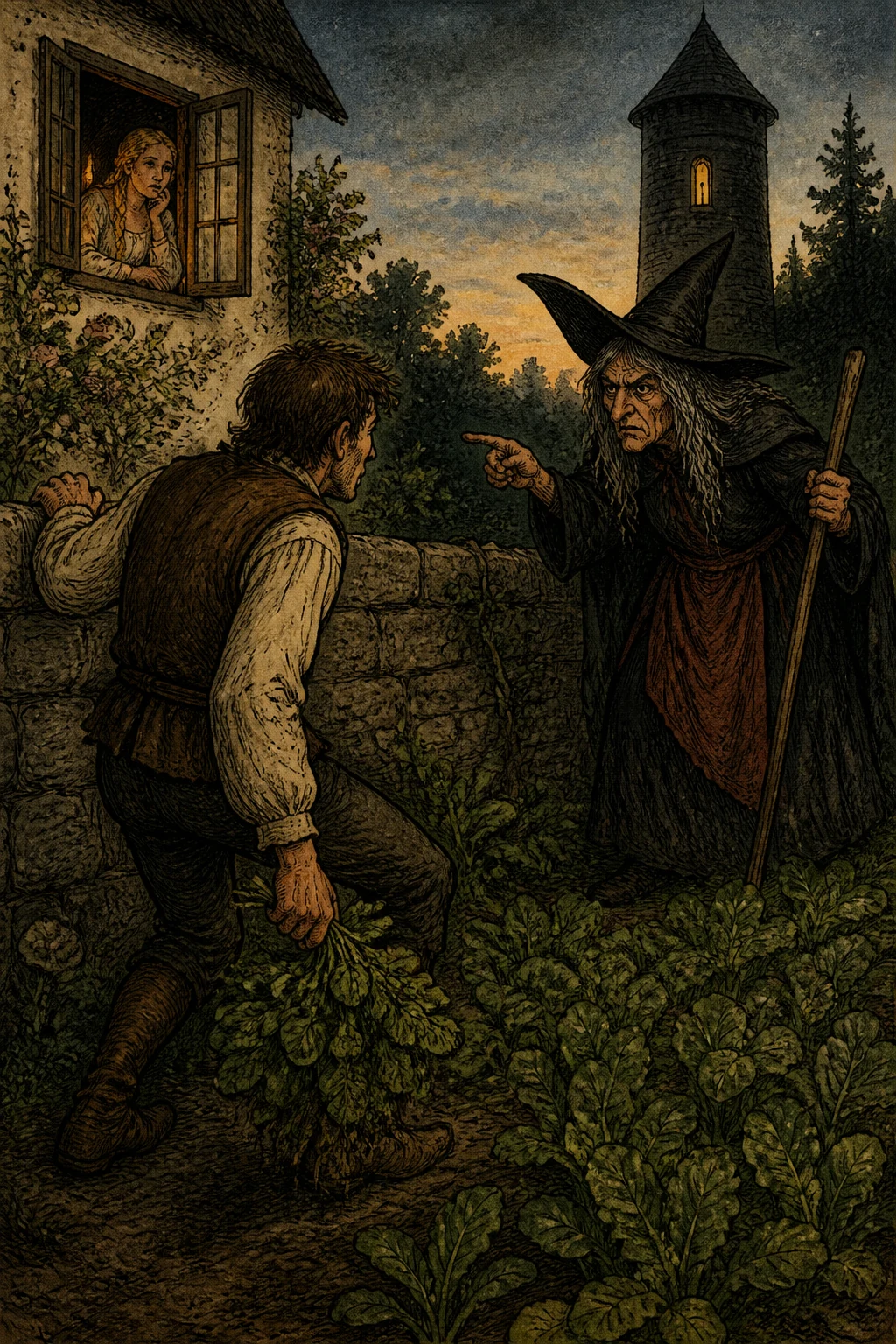
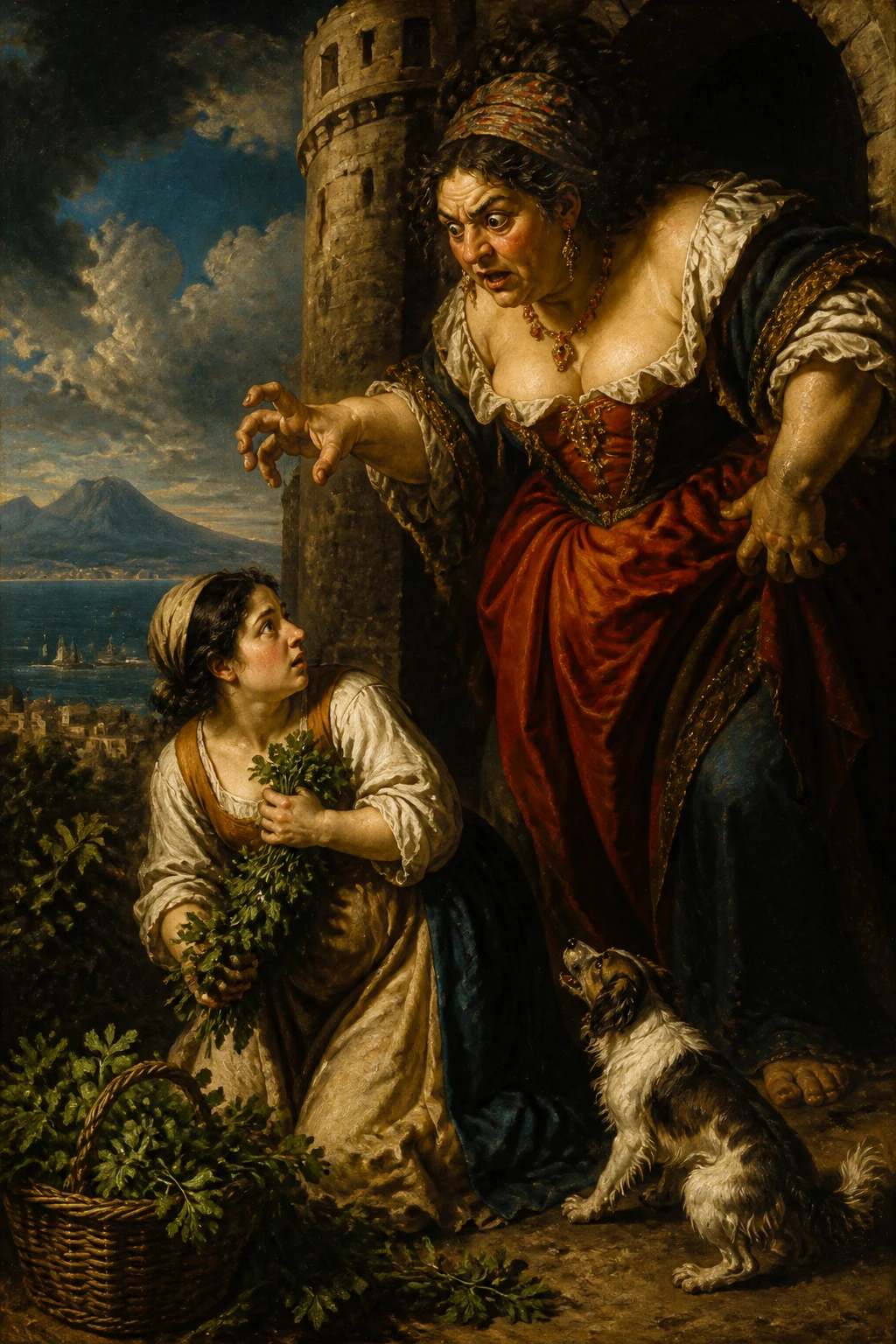
A prince carries her off, and with the help of three acorns they escape the ogress’s clutches. Taken to her lover’s home, she becomes a princess._ _So great is my desire to keep the princess merry that all last night, when not a sound could be heard from one end of the house to the other, I did nothing but rummage through the old chests of my brain and search every nook and cranny of my memory. Among the tales that good soul Mistress Chiarella Usciolo, my uncle’s widow—whom God rest in glory, and may you all enjoy good health—used to tell, I chose those that seemed best suited to giving you one a day. Unless I have put my eyes on backward, I fancy they will please you; and if they cannot serve as armed battalions to rout the troubles of your spirit, they will at least be trumpets to rouse these companions of mine to take the field with greater strength than my poor powers can muster, making up with the abundance of their wit for the shortcomings of my words._ Once upon a time there was a pregnant woman named Pascaddozia, who looked out of a window overlooking an ogress’s garden and saw a lovely bed of parsley. Such a craving seized her that she felt ready to faint; unable to resist, she watched for the ogress to go out, then picked herself a handful. But when the ogress came home and went to make her sauce, she noticed that someone had been wielding a sickle there, and said, “May my neck come unhinged if I catch that crook and don’t make her repent of it! That will teach everyone to eat from their own platter instead of dipping their spoons into other people’s pots.” But the poor pregnant woman kept going down into the garden, until one morning the ogress caught her there and, beside herself with rage and venom, said, “So I’ve caught you, thief, you little robber! Do you pay the rent on this garden, that you come so brazenly to plunder my herbs? Upon my word, I shan’t send you all the way to Rome for your penance!” Wretched Pascaddozia began making excuses, saying that it was neither greed nor a ravenous wolf in her belly that had let the Devil tempt her into this wrongdoing, but her pregnancy: she feared her baby would be born with its face all sprinkled with parsley marks. Indeed, the ogress ought to thank her for not having sent her a stye in the eye. “The bride wants words,” replied the ogress, “but you won’t catch me with that chatter:
your lease on life has run out unless you promise to give me the child you bear, whether boy or girl.” To escape the danger she was in, poor Pascaddozia laid one hand upon the other and swore she would, and the ogress let her go free. When her time came, she gave birth to a little girl so beautiful she was a jewel; and because the child had a pretty sprig of parsley marked upon her breast, she called her Petrosinella. The girl grew a handspan every day, and when she was seven her mother sent her to a schoolmistress. Whenever she went along the road and met the ogress, the creature would say, “Tell your mother to remember her promise.” She repeated this refrain so often that the poor mother, no longer able to bear the tune, said one day, “If you meet that same old woman and she asks about this accursed promise, tell her, ‘Take it, then.’” Petrosinella, who knew nothing of the ways of the world, met the ogress and, when she made her usual demand, innocently answered as her mother had told her. The ogress seized her by the hair and carried her off to a wood where the Sun’s horses never ventured, for they had never been put out to graze in those shadowy pastures. There she shut the girl in a tower she conjured up by magic, without doors or stairs and with only one little window. By this window she climbed up and down on Petrosinella’s hair, which was very, very long, like a ship’s boy scrambling up and down the rigging of a mast. Now it happened one day, while the ogress was away from the tower, that Petrosinella put her head out of the opening and spread her tresses in the sunshine. A prince’s son passed by and, seeing those two golden banners summoning men to enlist in Love’s ranks, and beholding amid those precious waves a siren’s face that enchanted every heart, fell madly in love with such beauty. He sent her a petition of sighs, and it was decreed that he should be admitted to the service of her favour. Their dealings prospered so well that the prince received nods of the head and kisses blown from the hand, winks and curtsies, thanks and offers, hopes and promises, sweet words and honeyed blandishments. After this had continued for several days, they grew so familiar that they arranged to meet. It was to be at night, when the Moon plays hide-and-seek with the stars: she would give the ogress a sleeping draught, then haul him up by her hair. So they agreed, and at the appointed hour the prince presented himself at the tower. Petrosinella let down her tresses at a whistle, and he took hold with both hands and said, “Pull!” Once drawn up, he slipped through the little window into the chamber and feasted on that parsley with the sauce of love. Before the Sun began training his horses to leap through the hoop of the zodiac, he climbed down by the same golden ladder and went about his business. They continued to do this so often that a gossip of the ogress’s noticed it. Taking upon herself the busybody’s office, she insisted on poking her nose into the dung and told the ogress to keep her wits about her, for Petrosinella was making love to a certain young man. She suspected matters had gone further still, judging by the to-ing and fro-ing and all the business being done; and she feared that, once they had bundled up their belongings, they would be out of the house before May. The ogress thanked her gossip for the timely warning and said she would see to barring his way. As for Petrosinella, escape was impossible, for she had laid a spell upon her: unless the girl had in her hand the three male acorns hidden in a beam in the kitchen, any attempt to slip away would be wasted effort. But while they were talking, Petrosinella, who had her ears pricked up and already harboured some suspicion of the gossip, heard their whole conversation. When Night spread out her black garments to keep them from the moths, and the prince came as usual, she made him climb up among the beams and find the acorns. She knew how to use them, having been enchanted by the ogress. They made a little rope ladder, climbed down together, and took to their heels toward the city. But the gossip saw them leaving and began shrieking for the ogress, raising such an uproar that she woke her. On hearing that Petrosinella had run away, the ogress climbed down the same ladder, which was fastened to the little window, and began chasing the lovers. When they saw her bearing down on them faster than a runaway horse, they thought themselves lost. But Petrosinella remembered the acorns and at once threw one to the ground. Up sprang a mastiff so fearsome—oh, mother of mine!—that with jaws gaping wide it rushed barking at the ogress to make a mouthful of her. But she, who was slyer than a bogeyman, put her hand into her pocket, drew out a little loaf, and gave it to the dog, making it lower its tail and abate its fury. Then she set off again after the fugitives. Seeing her draw near, Petrosinella threw down the second acorn, and out came a fierce lion. Lashing its tail upon the ground and shaking its mane, with its great jaws stretched wide, it made ready to tear the ogress to pieces. But the ogress ran back, skinned an ass that was grazing in a meadow, threw its hide over herself, and charged at the lion again. Believing her to be a donkey, the lion took such fright that it is running still. Having cleared this second ditch, the ogress resumed her pursuit of the poor young lovers. Hearing the pounding of her feet and seeing the cloud of dust rising to the sky, they guessed she was coming again. Still afraid the lion might follow her, she had not taken off the ass’s skin; and when Petrosinella threw down the third acorn, out sprang a wolf, which gave the ogress no time to think of another trick, but gobbled her up as though she were a donkey. With their troubles behind them, the lovers made their way at leisure to the prince’s kingdom, where, with his father’s willing consent, he took her for his wife. And after so many tempests of trouble, they proved _That one hour in a safe harbour_ _Makes a hundred years of storms forgotten._
Izvirnik
Jornata II I PETROSINELLA
Naslednje strani prikazujejo izvirno besedilo za primerjavo.
_Na femmena prena se magna li petrosine dell’uorto de n’Orca, e ccoveta ’nfallo, le promette la razza, che aveva da fare: figlia Petrosinella; ll’Orca se la piglia, e la ’nchiude a na Torre: No Prencepe nne la fuje, e ’n vertù de tre gliantre gavitano lo pericolo de ll’Orca, e pportata a la casa de lo ’Nnammorato, deventa Prencepessa._ _E cossì granne lo desederio mio de mantenere allegra la Prencepessa, che tutta sta notte passata dove autro non se sente nè da capo, nè da pede, n’aggio fatto autro, che rrevotare le ccasce vecchie de lo cellevriello, e ccercare tutte li scaracuoncole de la memmoria, scieglienno fra le ccose, che ssoleva contare chella bon’arma de maddamma Chiarella Usciolo, veva de ziemo, che
Ddio l’aggia ’n groleja, e ’nsanetate vosta, che chille cunte, che mme sò pparzete cchiù a pproposeto de ve ne sborzare uno lo juorno; de le cquale, s’io non m’aggio cauzato ll’uocchie a la mmerza, me mmageno che averrite sfazione; o si non serveranno pe squatre armate da sbaragliare li fastidie de ll’anemo vuostro, saranno a lo manco trommette da scetare ste compagne meje a scire ’ncampagna co cchiù potenzia de le ppovere forze meje, pe sopprire co l’abbonnanzia de lo ’ngiegno loro a lo defietto de le pparole meje._ Era na vota na femmena prena chiammata Pascaddozia, la quale affacciatase a na fenestra, che sboccava a no ciardino de n’Orca, vedde no bello quatro de petrosine, de lo quale le venne tanto golio,
che se senteva ascevolire, tanto che non potenno resistere, abistato quanno scette l’Orca, nne cogliette na vrancata. Ma tornata l’Orca a la casa, e volenno fare la sauza, s’addonaje, ca ’nc’era menata la fauce, e ddisse: Me se pozza scatenare lo cuollo, si nce mmatto sto maneco d’ancino, e non ne lo faccio pentire, azzò se ’mpara ogne uno a mmagnare a lo tagliero sujo, e no scocchiariare pe le ppignate d’autro. Ma continoanno la povera prena a rrescennere all’uorto, nce fu na matina ’mmattuta da l’Orca, la quale tutta arraggiata, e ’nfelecata le disse: Aggiote ’ncappata, latra, mariola? E che nne paghe lo pesone de st’uorto, che biene co ttanta poca descrezzione a zeppoliarene l’erve meje? affè ca non te mannarraggio a Rroma pe
ppenetenzia. Pascaddozia nnegrecata commenzaje a scusarese, decenno, ca non pe ccannarizia, o lopa ch’avesse ’n cuorpo, l’aveva cecato lo Diascance a ffare st’arrore, ma pe d’essere prena, e dobbetava, che la facce de la criatura non nascesse semmenata de Petrosine; anze deveva averele grazia, che non l’avesse mannato quarche agliarulo. Parole vò la zita, (respose ll’Orca) no mme nce pische co sse chiacchiare: tu aje scomputo lo staglio de la vita, si non prommiette de dareme la criatura, che farraje, o mascolo o femmena, che se sia. La negra Pascaddozia pe scappare lo pericolo, dove se trovava, nne joraje co na mano ’ncoppa all’autra, cossì l’Orca la lassaje scapola. Ma venuto lo tiempo de partorire, fece na figliola cossì bella, ch’era na
gioja, che pe avere na bella cimma de Petrosino ’mpietto la chiammaje Petrosinella, la quale ogne ghiuorno crescenno no parmo, comme fu de sette anne, la mannaje a la Majesta, la quale sempre che ghieva pe la strata, e se scontrava coll’Orca, le deceva: dì a mmammata, che s’allecorda de la ’mprommessa; e ttanta vote fece sso taluorno, che la scura mamma non avenno cchiù cellevriello de sentire sta museca, le disse na vota, se te scuntre co la soleta vecchia, e te cercarrà sta mmardetta prommessa, e tu le respunne, pigliatella. Petrosinella, che non sapeva de scola, trovanno ll’Orca, e ffacennole la stessa proposta, le respose ’nocentemente comme l’aveva ditto la mamma, e ll’Orca afferratala pe li capille se ne la portaje a no vosco, dove
non trasevano maje li cavalle de lo Sole, pe n’essere affedate a li pascole de chell’ombre, mettennola dinto a na torre, che ffece nascere ped’arte, senza porte, nne scala, sulo co no fenestriello, pe lo quale pe li capille de Petrosinella, ch’erano luonghe luonghe, saglieva, e scenneva comme sole Bratto de nave pe le ’nsarte de l’arvolo. Ora soccesse, ch’essenno fora de chella torre l’Orca, Petrosinella cacciato la capo fora de chillo pertuso, e spase le ttrezze a lo Sole, passaje lo figlio de no Prencepe, lo quale vedenno doje bannere d’oro, che chiammavano l’arme ad assentarese a lo ruollo d’ammore, e mmiranno dinto a chell’onne preziose na facce de Serena, che ’ncantava li core, se ’ncrapicciaje fora de mesura de tanta bellizze; e mmannatole no
memmoriale de sospire, fu decretato, che se l’assentasse la chiazza a la grazia soja, e la mercanzia rescì de manera, che lo Prencepe appe calate de capo, e basate de mano, uocchie a zennariello, e lleverenzie, rengraziamiente, ed afferte, speranze, e prommesse, bone parole, e lliccasalemme: la quale cosa continuata pe cchiù ghiuorne s’addomestecaro de manera, che bennero ad appontamiento de trovarese ’nsieme: la quale cosa doveva essere la notte, quanno la Luna joqua a passara muta co le stelle, ch’essa averria dato l’adduobbio a ll’Orca, e nne l’averria aisato co li capille; e ccossì restate de commegna, venne ll’ora appontata, e lo Prencepe se consegnaje a la torre, dove fatte calare a ffisco le ttrezze de Petrosinella, e afferratose a
ddoje mano, disse, aisa; e ttirato ’ncoppa, schiaffatose sopra no fenestriello dinto la cammara, se fece no pasto de chillo Petrosino de la sauza d’ammore, e nnante che lo Sole ’nvezzasse li cavalle suoje a ssautare pe lo chirchio de lo zodiaco, se nne calaje pe la medesema scala d’oro a fare li fatte suoje; la quale cosa contenoanno spisse vote a ffare, se n’addonaje na Commare de ll’Orca, la quale pigliannose lo ’mpaccio de lo russo, voze mettere lo musso a lla mmerda, e disse a l’Orca, che stesse ’n cellevriello, ca Petrosinella faceva l’ammore co no cierto giovene, e sospettava, che non fossero passate cchiù ’nnante le ccose; perchè vedeva so moschito, e lo trafeco, che se faceva; e ddobetava, che ffatto non leva ejo, non fossero sfrattate
’nnante Majo da chella casa. Ll’Orca rengraziaje la Commare de lo buono avertemiento, e disse, ca sarria stato pensiero sujo de ’mpedire la strata; e Ppetrosinella, otra che non era possibole, che fosse potuta foire ped’averele fatto no ’ncanto, che si n’aveva ’n mano le gliantre mascole dinto a no travo de la cocina, era opera perza, che ppotesse sfilarennella. Ma mentre erano a sti ragionamiente, Petrosinella, che steva co l’aurecchie appezzute, ed aveva quarche sospetto de la Commare, ntese tutto lo trascurzo, e ccomme la notte spase li vestite nigre, perchè se conservassero da le ccarole, venuto a lo ssoleto lo Prencepe, lo fece saglire ’ncoppa li trave, e ttrovare le gliantre, le cquale sapenno comme s’avevano ad adoperare, ped’essere stata fatata da
l’Orca; fatta na scala de fonecella, se ne scesero tutte duje a bascio, e ccommenzaro a toccare de carcagna verzo la Cetate. Ma essenno viste a lo scire da la Commare, commenzaje a strillare, chiammanno ll’Orca, e ttanto fu lo strillatorio, che se scetaje; e ssentenno ca Petrosinella se n’era fojuta, se ne scese pe la medesema scala, ch’era legata a lo fenestriello, e commenzaje a ccorrere dereto li nnammorate, li quale comme la veddero venire cchiù de no cavallo scapolo a la vota lloro, se tennero perdute; ma lecordannose Petrosinella de le gliantre, ne jettaje subeto una ’n terra, ed eccote sguigliare no cane corzo cossì terribile, ch’o mamma mia, co ttanto de canna aperta abbajanno jese ’ncontra all’Orca pe se ne fare no voccone: ma chella ch’era cchiù
mmaliziosa de parasacco, puostese mano a la saccocciola, nne cacciaje na panella, e ddatola a lo cane, le fece calare la coda, e ammosciare la furia, e ttornata a ccorrere dereto a chille, che ffojevano, Petrosinella vistola abbecenare, jettaje la seconna gliantra, ed ecco scire no feroce Lione, che sbattenno la coda ’n terra, e scotolanno li crine co dduje parme de cannarone spaparanzato, s’era puosto all’ordene de fare scafaccio de ll’Orca; e l’Orca tornanno arreto scortecaje n’Aseno, che pasceva ’n miezo a no prato, e ppuostose la pella ’ncoppa, corze de nuovo ’ncontra chillo Lione, lo quale credennose, che ffosse no ciuccio, appe tanta paura, ch’ancora fuje; pe la quale cosa sautato sto secunno fuosso, l’Orca tornaje a ssecotare chille povere giuvane,
che sentenno lo scarponiare, e bedenno la nuvola de la porvere, che s’auzava a lo Cielo, conjetturaro ca l’Orca se ne veneva de nuovo, la quale avenno sempre sospetto, che no la secotasse lo Lione, non se avea levato la pelle dell’Aseno, ed avenno Petrosinella jettato la terza gallozza, nne scette no lupo, lo quale senza dare tiempo all’Orca de pigliare nuovo partito, se la ’nnorcaje comm’ad Aseno, e li nnamorate scenno de ’mpaccio, se ne jettero chiano chiano a lo Regno de lo Prencepe, dove co bona lecienzia de lo patre, se la pigliaje pe mmogliere, e provato dapò tante tempeste de travaglie, _Che n’ora de buon puorto_ _Fa scordare cient’anne de fortuna._
Nadaljuj z branjem