Waltey
Passaconawayeva vožnja v nebesa
096 Passaconaway's Ride to Heaven
Myths and Legends of Our Own Land · Charles M. SkinnerO besedilu
Passaconawayeva vožnja v nebesa
- Vir
- Myths and Legends of Our Own Land
- Avtor
- Charles M. Skinner
- Jezik branja
- Slovenščina
- Jezik izvirnika
- English
- Čas branja
- 3 min branja
- Obseg
- 2 strani
- Naslov izvirnika
- 096 Passaconaway's Ride to Heaven
O izvirniku
Myths and Legends of Our Own Land
Obsežna zgodovinska zbirka ameriških legend, ki jih je Skinner zbral in avtorsko rekonstruiral. Bralni jezik je Slovenščina, izvirnik pa prihaja iz vira Myths and Legends of Our Own Land v jeziku English.
Besedilo
Passaconawayeva vožnja v nebesa
O osebnosti Passaconawaya, mogočnega poglavarja in preroka, je mnogo nejasnega, a o njegovi modrosti ne more biti dvoma. Nekateri zgodovinarji so ga enačili s sv. Aspenquidom, enim prvih domačih misijonarjev med Indijanci, ki je, potem ko so ga francoski jezuiti spreobrnili, potoval od Maina do Tihega oceana, pridigal šestinšestdesetim plemenom, zdravil bolne in delal čudeže, nato pa se vrnil, da bi umrl v štiriindevetdesetem letu starosti. Pokopali so ga na vrhu Agamenticusa v Mainu, kjer so njegovega duha pomirili z daritvami tri tisoč pobitih živali in kjer je še stoletje zatem stal njegov nagrobnik z napisom: »Navzoč, koristen; odsoten, pogrešan; živ, zaželen; umirajoč, objokovan.«
Drugi menijo, da je bil Passaconaway druga oseba. Medvedov otrok — tako bi prevedli njegovo ime — je bil poglavar Merrimacov in spreobrnjenec apostola Eliota. Tako domačini kakor kolonisti so ga občudovali zaradi njegove zgovornosti, poguma in kreposti. Pred spreobrnitvijo je slovel kot čarovnik, ki je skušal s čarovnijami odvrniti vdor belcev v svoje gozdove in gore; z najvišjega vrha Agiochooksov je proti njim klical duhove narave, njegovi domači privrženci pa so zatrjevali, da je v ta namen pripravil vodo, da je gorela, skale, da so se premikale, drevesa, da so plesala, sam pa se je spremenil v gmoto plamenov.
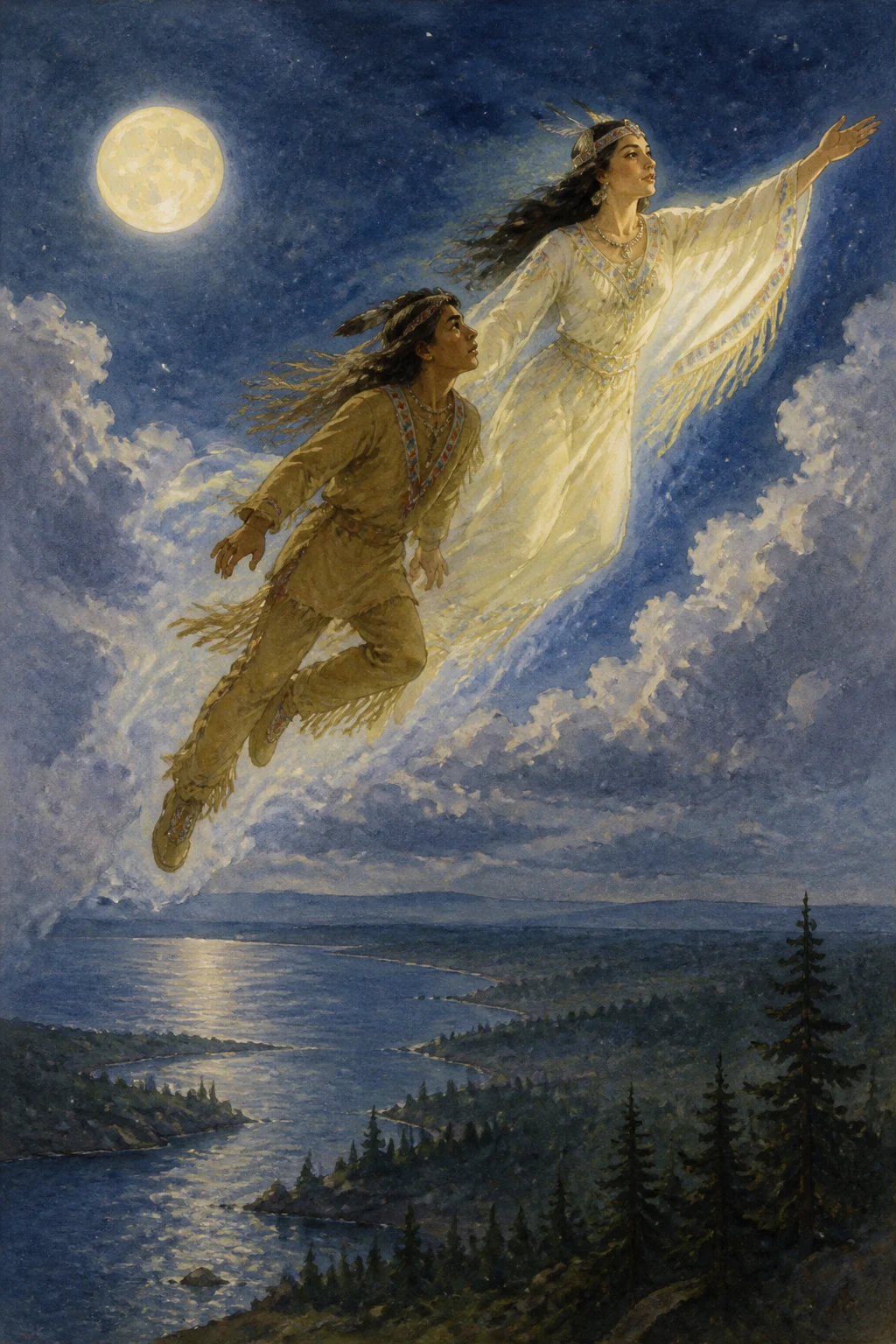
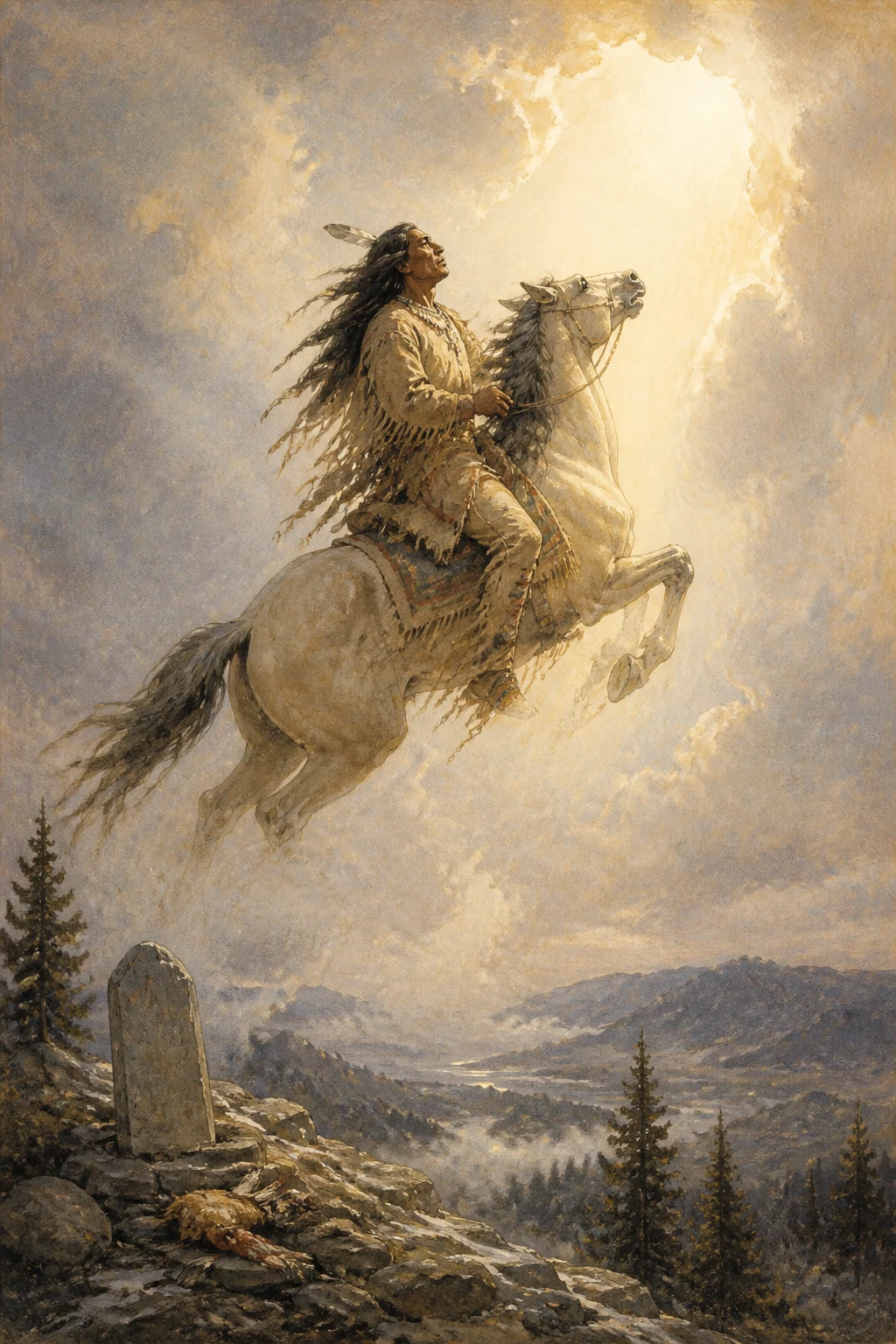
Njegova oblast nad zemeljskimi silami je bila tolikšna, da je lahko pozimi sežgal drevo in iz njegovega pepela priklical zelene liste; mrtvemu lesu je dal zacveteti in kmetovemu cepcu pognati brste, kačji koži pa je znal vdihniti gibanje. Pri stodvajsetih letih se je umaknil iz svojega plemena in živel v samotnem vigvamu med Pennacooki. Neke zimske noči se je zaslišalo tuljenje volkov in skozi vas je pridivjal trop, po trije vpreženi v sani iz mladih hikorijevih dreves, na katerih je stal visok prestol, prekrit s kožuhi. Volkovi so se ustavili pred Passaconawayevimi vrati. Stari poglavar je stopil ven, se povzpel na sani in se odpeljal z zmagoslavnim vzklikom, ki je preglasil bevskanje in renčanje njegove vprege. Čez zamrznjeno gladino Winnepesaukeeja so zdrveli kakor veter in lovec, ki ga je zunaj zadržala pozna ura, se je prestrašen umaknil, ko je zagledal velikana, ki se je vzpenjal pred severnim sijem, in zaslišal njegovo smrtno pesem, odmevajočo od pečin. Skozi brezpotne gozdove in čez soteske so volkovi drveli naprej, ne da bi za hip upočasnili korak, v blodnjave Agiochooksov, proti najvišjemu vrhu, ki mu danes pravimo Washington. Po njegovih strmih, s snegom prekritih brezpotjih se je divja vožnja nadaljevala; približali so se vrhu, sani so vzplamtele, a še vedno se niso ustavili; dosegli so višavo, volkovi so tuleč izginili v temo, voz pa je, ovit v snope ognja, kakor meteor švignil proti nebu in se izgubil med zvezdami zimske noči. Tako je indijanski kralj odšel v nebesa.
Izvirnik
096 Passaconaway's Ride to Heaven
Naslednje strani prikazujejo izvirno besedilo za primerjavo.
The personality of Passaconaway, the powerful chief and prophet, is involved in doubt, but there can be no misprision of his wisdom. By some historians he has been made one with St. Aspenquid, the earliest of native missionaries among the Indians, who, after his conversion by French Jesuits, travelled from Maine to the Pacific, preaching to sixty-six tribes, healing the sick and working miracles, returning to die at the age of ninety-four. He was buried on the top of Agamenticus, Maine, where his manes were pacified with offerings of three thousand slain animals, and where his tombstone stood for a century after, bearing the legend, “Present, useful; absent, wanted; living, desired; dying, lamented.”
By others Passaconaway is regarded as a different person. The Child of the Bear--to English his name--was the chief of the Merrimacs and a convert of the apostle Eliot. Natives and colonists alike admired him for his eloquence, his bravery, and his virtue. Before his conversion he was a reputed wizard who sought by magic arts to repel the invasion of his woods and mountains by the white men, invoking the spirits of nature against them from the topmost peak of the Agiochooks, and his native followers declared that in pursuance of this intent he made water burn, rocks move, trees dance, and transformed himself into a mass of flame.
Such was his power over the forces of the earth that he could burn a tree in winter and from its ashes bring green leaves; he made dead wood blossom and a farmer's flail to bud, while a snake's skin he could cause to run. At the age of one hundred and twenty he retired from his tribe and lived in a lonely wigwam among the Pennacooks. One winter night the howling of wolves was heard, and a pack came dashing through the village harnessed by threes to a sledge of hickory saplings that bore a tall throne spread with furs. The wolves paused at Passaconaway's door. The old chief came forth, climbed upon the sledge, and was borne away with a triumphal apostrophe that sounded above the yelping and snarling of his train. Across Winnepesaukee's frozen surface they sped like the wind, and the belated hunter shrank aside as he saw the giant towering against the northern lights and heard his death-song echo from the cliffs. Through pathless woods, across ravines, the wolves sped on, with never slackened speed, into the mazes of the Agiochooks to that highest peak we now call Washington. Up its steep wilderness of snow the ride went furiously; the summit was neared, the sledge burst into flame, still there was no pause; the height was gained, the wolves went howling into darkness, but the car, wrapped in sheaves of fire, shot like a meteor toward the sky and was lost amid the stars of the winter night. So passed the Indian king to heaven.
Nadaljuj z branjem