Waltey
Otok Block in ladja Palatine
161 Block Island and the Palatine
Myths and Legends of Our Own Land · Charles M. SkinnerO besedilu
Otok Block in ladja Palatine
- Vir
- Myths and Legends of Our Own Land
- Avtor
- Charles M. Skinner
- Jezik branja
- Slovenščina
- Jezik izvirnika
- English
- Čas branja
- 3 min branja
- Obseg
- 3 strani
- Naslov izvirnika
- 161 Block Island and the Palatine
O izvirniku
Myths and Legends of Our Own Land
Obsežna zgodovinska zbirka ameriških legend, ki jih je Skinner zbral in avtorsko rekonstruiral. Bralni jezik je Slovenščina, izvirnik pa prihaja iz vira Myths and Legends of Our Own Land v jeziku English.
Besedilo
Otok Block in ladja Palatine
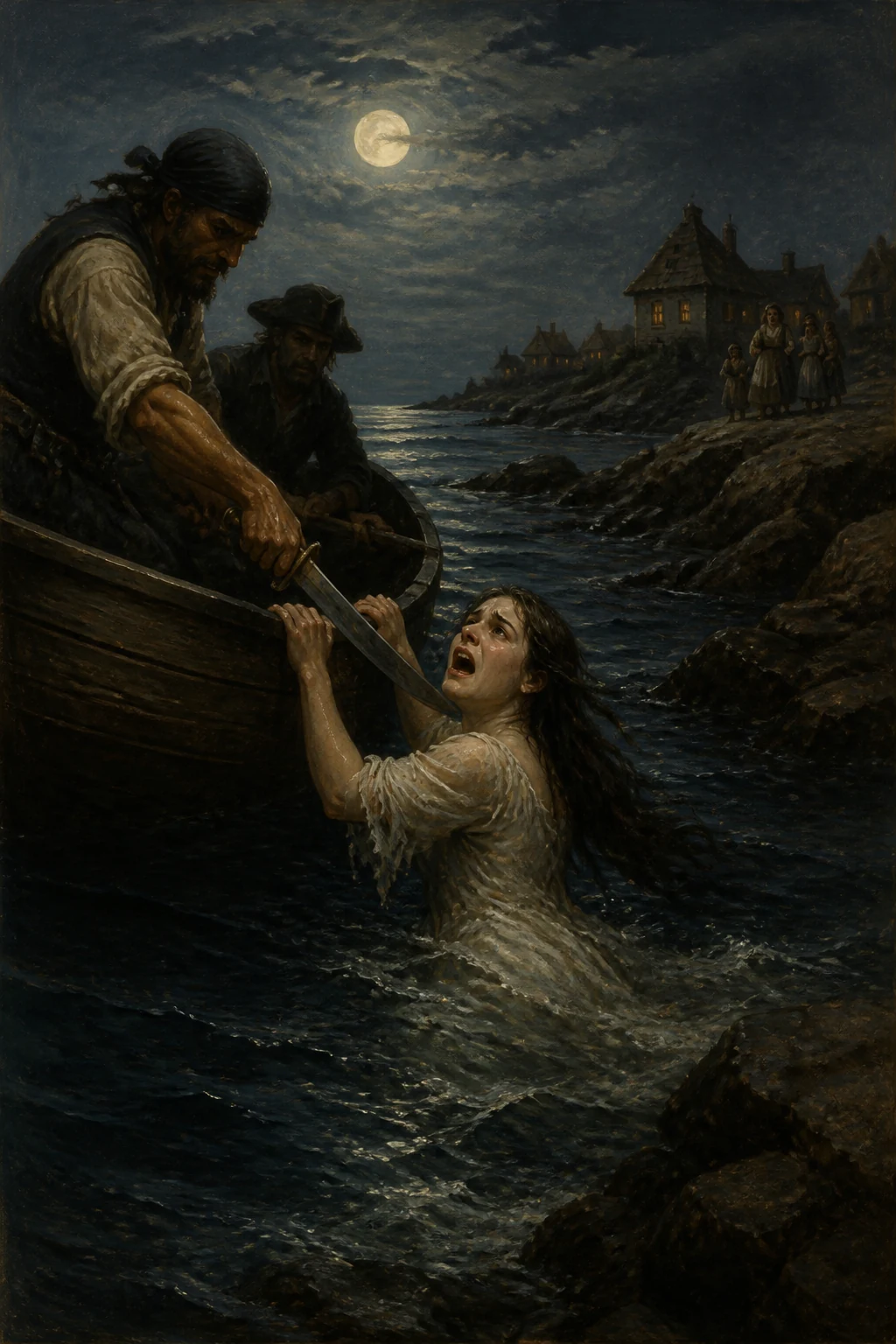
Block Island ali Manisees je vzpetina glinastega resavja med Montaukom in Gay Headom. Za mornarje je bil to zlovešč kraj, za Indijance pa kraj »slabe magije«, kajti možje, ki so tam doživeli brodolom, so bili tudi oropani in trpinčeni — čeprav današnji pošteni otočani to zanikajo —, Indijance pa so pregnali z zemlje njihovih prednikov, potem ko jih je na stotine padlo v njeno obrambo. Pozimi leta 1750–51 je ladja Palatine odplula čez morje proti Filadelfiji z varčnimi nizozemskimi trgovci in izseljenci ter vsem njihovim imetjem. Vihar jih je zadržal in jih prisilil, da so po ledenem morju križarili sem ter tja, ne da bi mogli doseči kopno. Kapitan je umrl — domnevali so, da je bil umorjen —, mornarji, surova druščina celo za tiste čase, pa so opustili vsakršno disciplino, si prilastili zaloge in orožje ter s stradanjem prisilili potnike, da so jim izročili svoj denar.
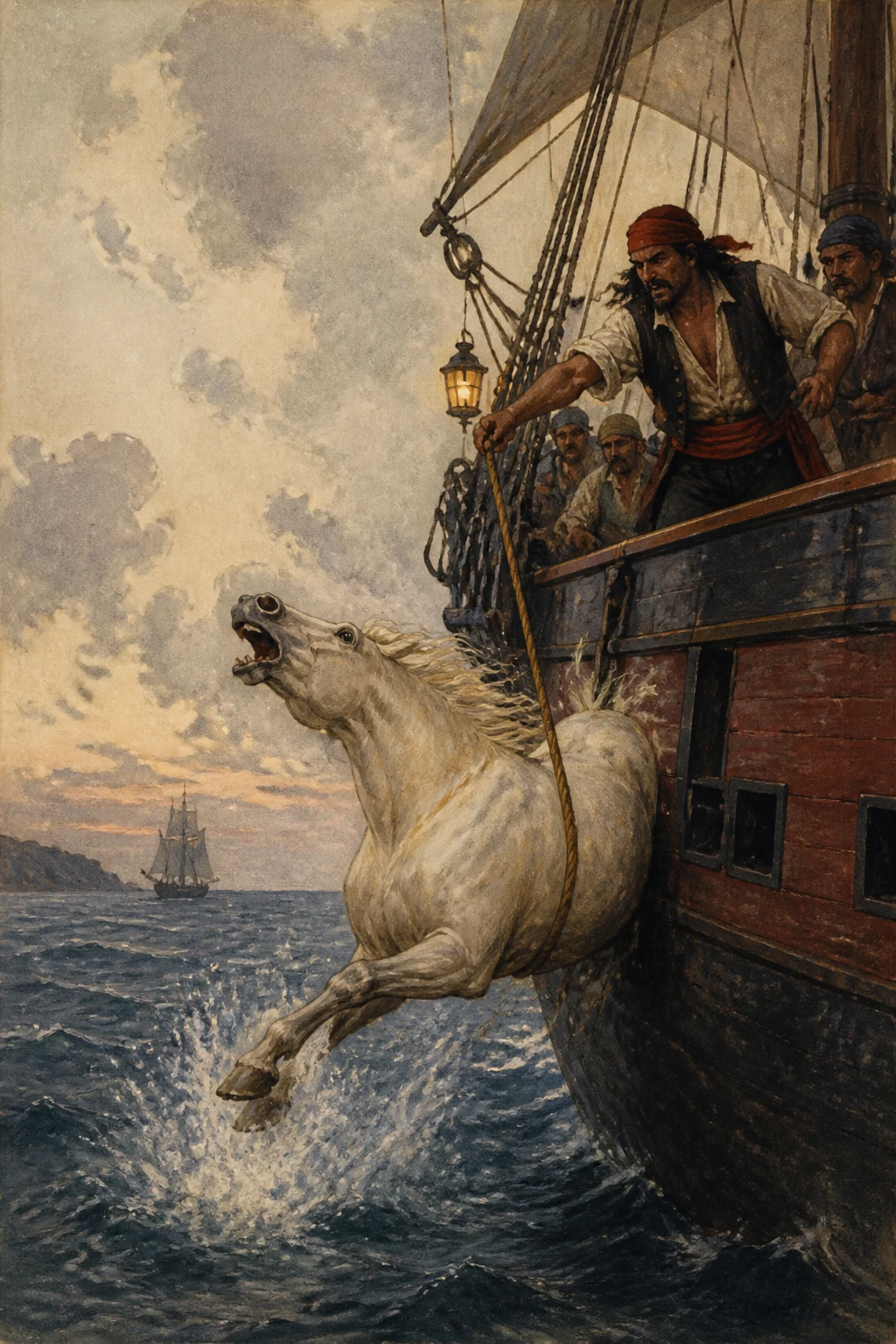
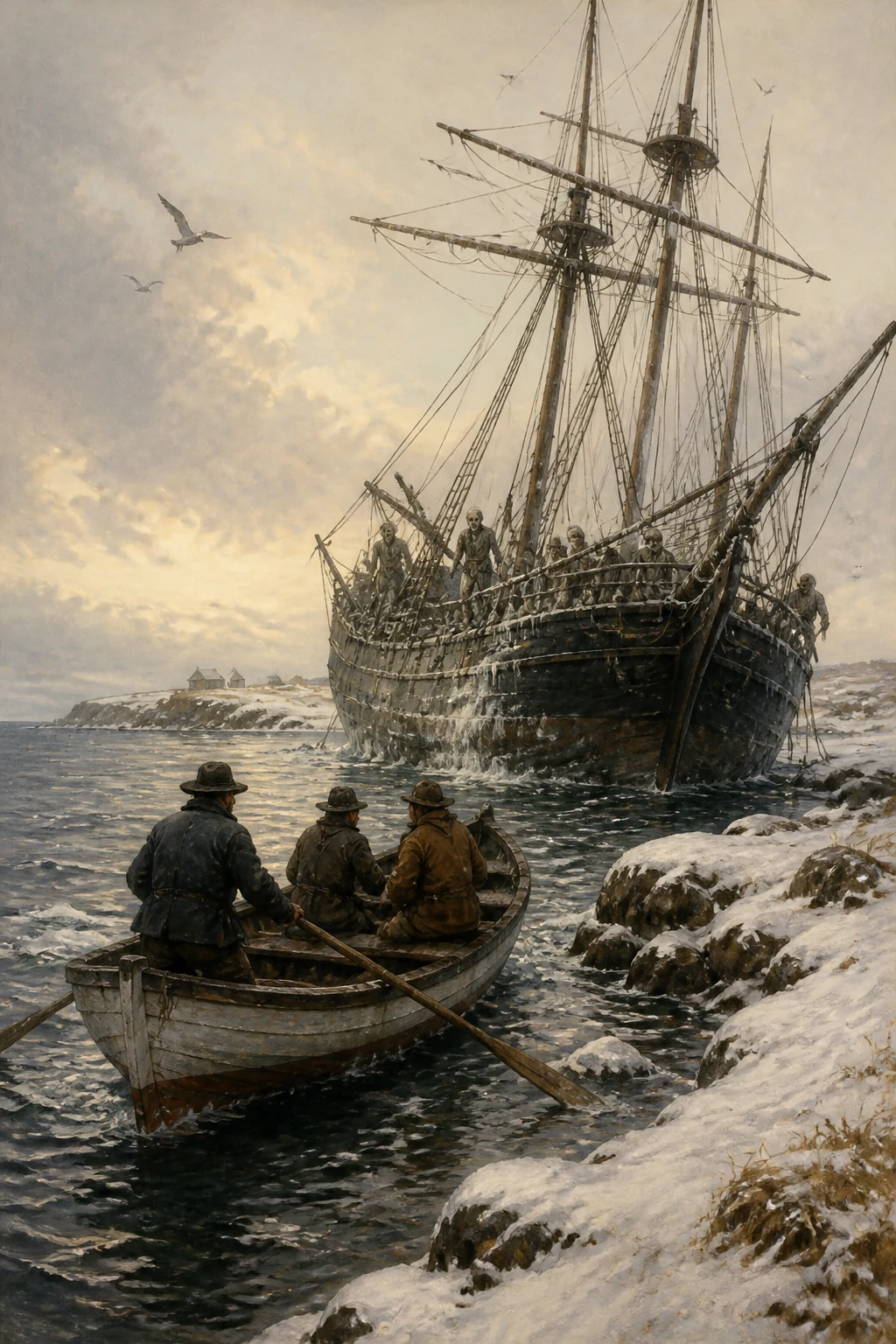
Ko so tisti, ki jim je zmanjkalo denarja, umrli od lakote — za skodelico vode so namreč zahtevali dvajset goldinarjev, za prepečenec pa petdeset riksdalerjev —, so njihova trupla pometali v morje; in ko si je posadka prilastila vse, kar je vzbudilo njen pohlep, se je vkrcala v čolne ter prepustila ladjo in potnike usodi. V tolažbo nam je lahko, da mornarji nikoli niso dosegli pristanišča. Ladja brez krmarja, ki jo je kljub bližini kopnega premetaval vsak veter in na kateri so životarili hodeči okostnjaki, je nekega mirnega nedeljskega jutra nasedla ob Block Islandu, in ljudje, ki so živeli ob obali ter se ukvarjali z reševanjem razbitin, so se odpravili k njej. Najprej so rešili potnike; nato so se vrnili, da bi z ladijskega trupa pobrali vse, kar je posadka pustila za seboj. Ko pa so jo vzeli v vleko, se je dvignil vihar, in ker so videli, da jo bo neizogibno odneslo proč od obale, kjer bi lahko postala nevarna ovira ali zapuščena plavajoča razbitina, so jo zažgali. S skal so gledali, kako jo odnaša v megleno temo, toda ko so plameni segli do vrhov jamborov, je čez morje, ki se je belilo od pene, zadonel krik: na krovu so pozabili blazno žensko. Krik se je še večkrat ponovil, vsakokrat šibkeje, nato pa je ladja zdrsnila v meglo in izginila.
Leto dni pozneje, na večer istega dne v letu, je otočane preplašil pogled na ladjo na odprtem morju, ki so ji plameni oblizovali boke in vrvje, veter pa je pred seboj valil oblake dima. Pred očmi stotin ljudi je zgorela vse do vodne gladine. Naslednjo zimo se je spet prikazala in še leta zatem so jo v rednih presledkih videvali tisti, ki bi ta prizor najraje pozabili; eden izmed domačinov, Indijanec, je ob pogledu na njen sij vsakič zblaznel. Tisti, ki so prisluhnili, pa so nad bučanjem ognja in vode razločili ženski glas, ki je kričal v smrtni muki.
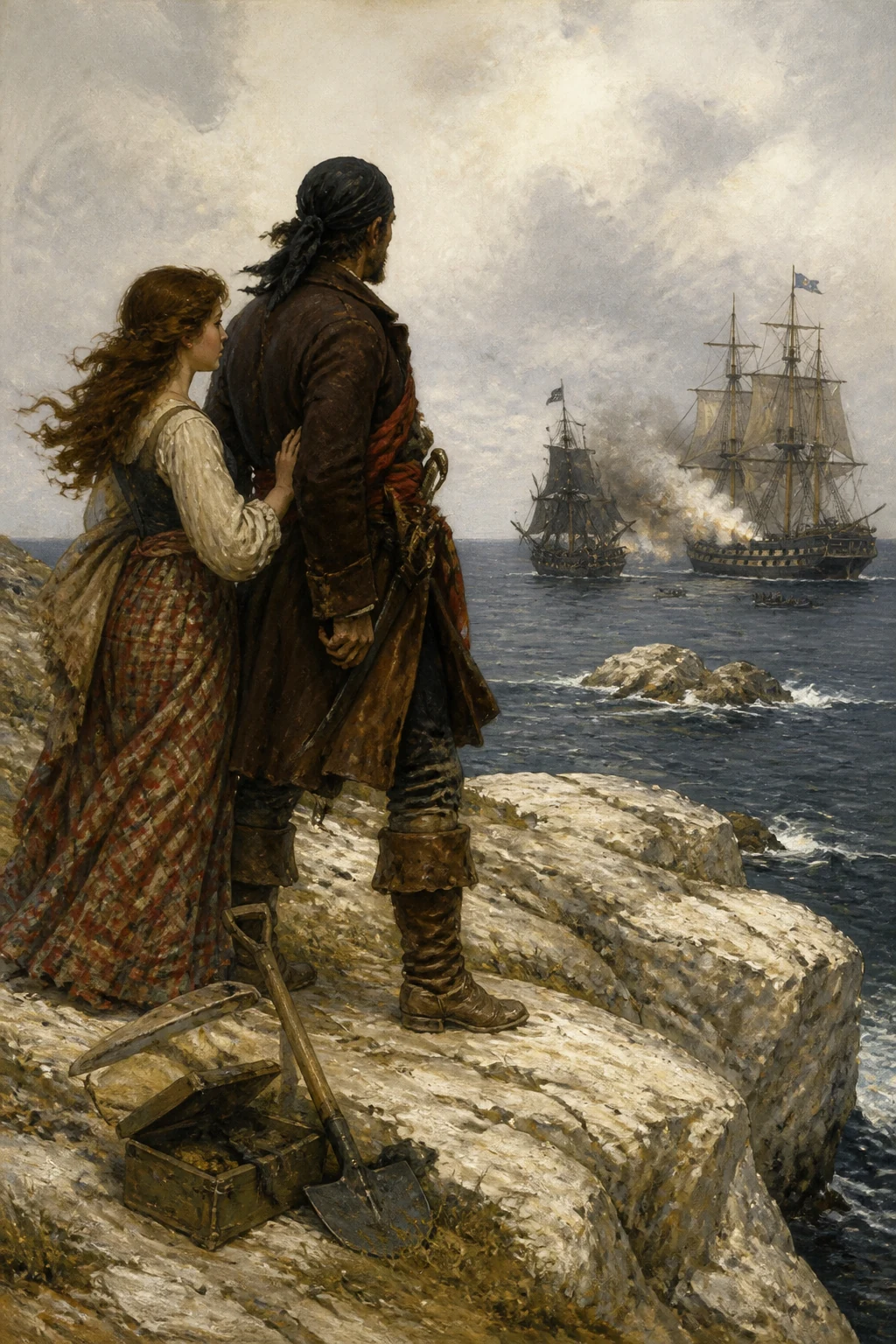
V bistvu enako zgodbo pripovedujejo o nekem rtu na obali Severne Karoline, le da so v tem primeru potnike, ki so prihajali z bavarskega Pfalškega, poklali, še preden so jim pobrali imetje. Kapitan in njegova posadka so napolnili čolne z zakladi in odveslali proti kopnemu, pred tem pa zažgali ladjo in njen grozljivi tovor prepustili plamenom. Ladja jim je sledila skoraj do obale, preden je razpadla, kakor da bi bila živo bitje, odločeno, da se maščuje. Pirati so se izkrcali, toda nobeden ni imel koristi od zločina; vsi so umrli revni in zapuščeni.
Izvirnik
161 Block Island and the Palatine
Naslednje strani prikazujejo izvirno besedilo za primerjavo.
Block Island, or Manisees, is an uplift of clayey moorland between Montauk and Gay Head. It was for sailors an evil place and “bad medicine” for Indians, for men who had been wrecked there had been likewise robbed and ill treated--though the honest islanders of to-day deny it--while the Indians had been driven from their birthright after hundreds of their number had fallen in its defence. In the winter of 1750-51 the ship Palatine set forth over the seas with thrifty Dutch merchants and emigrants, bound for Philadelphia, with all their goods. A gale delayed them and kept them beating to and fro on the icy seas, unable to reach land. The captain died--it was thought that he was murdered--and the sailors, a brutal set even for those days, threw off all discipline, seized the stores and arms, and starved the passengers into giving up their money.
When those died of hunger whose money had given out--for twenty guilders were demanded for a cup of water and fifty rix dollars for a biscuit--their bodies were flung into the sea, and when the crew had secured all that excited their avarice they took to their boats, leaving ship and passengers to their fate. It is consoling to know that the sailors never reached a harbor. The unguided ship, in sight of land, yet tossed at the mercy of every wind and tenanted by walking skeletons, struck off Block Island one calm Sunday morning and the wreckers who lived along the shore set out for her. Their first work was to rescue the passengers; then they returned to strip everything from the hulk that the crew had left; but after getting her in tow a gale sprang up, and seeing that she was doomed to be blown off shore, where she might become a dangerous obstruction or a derelict, they set her on fire. From the rocks they watched her drift into misty darkness, but as the flames mounted to the trucks a scream rang across the whitening sea: a maniac woman had been left on board. The scream was often repeated, each time more faintly, and the ship passed into the fog and vanished.
A twelvemonth later, on the same evening of the year, the islanders were startled at the sight of a ship in the offing with flames lapping up her sides and rigging, and smoke clouds rolling off before the wind. It burned to the water's edge in sight of hundreds. In the winter following it came again, and was seen, in fact, for years thereafter at regular intervals, by those who would gladly have forgotten the sight of it (one of the community, an Indian, fell into madness whenever he saw the light), while those who listened caught the sound of a woman's voice raised in agony above the roar of fire and water.
Substantially the same story is told of a point on the North Carolina coast, save that in the latter case the passengers, who were from the Bavarian Palatinate, were put to the knife before their goods were taken. The captain and his crew filled their boats with treasure and pulled away for land, first firing the ship and committing its ghastly freight to the flames. The ship followed them almost to the beach, ere it fell to pieces, as if it were an animate form, bent on vengeance. The pirates landed, but none profited by the crime, all of them dying poor and forsaken.
Nadaljuj z branjem