Prevod
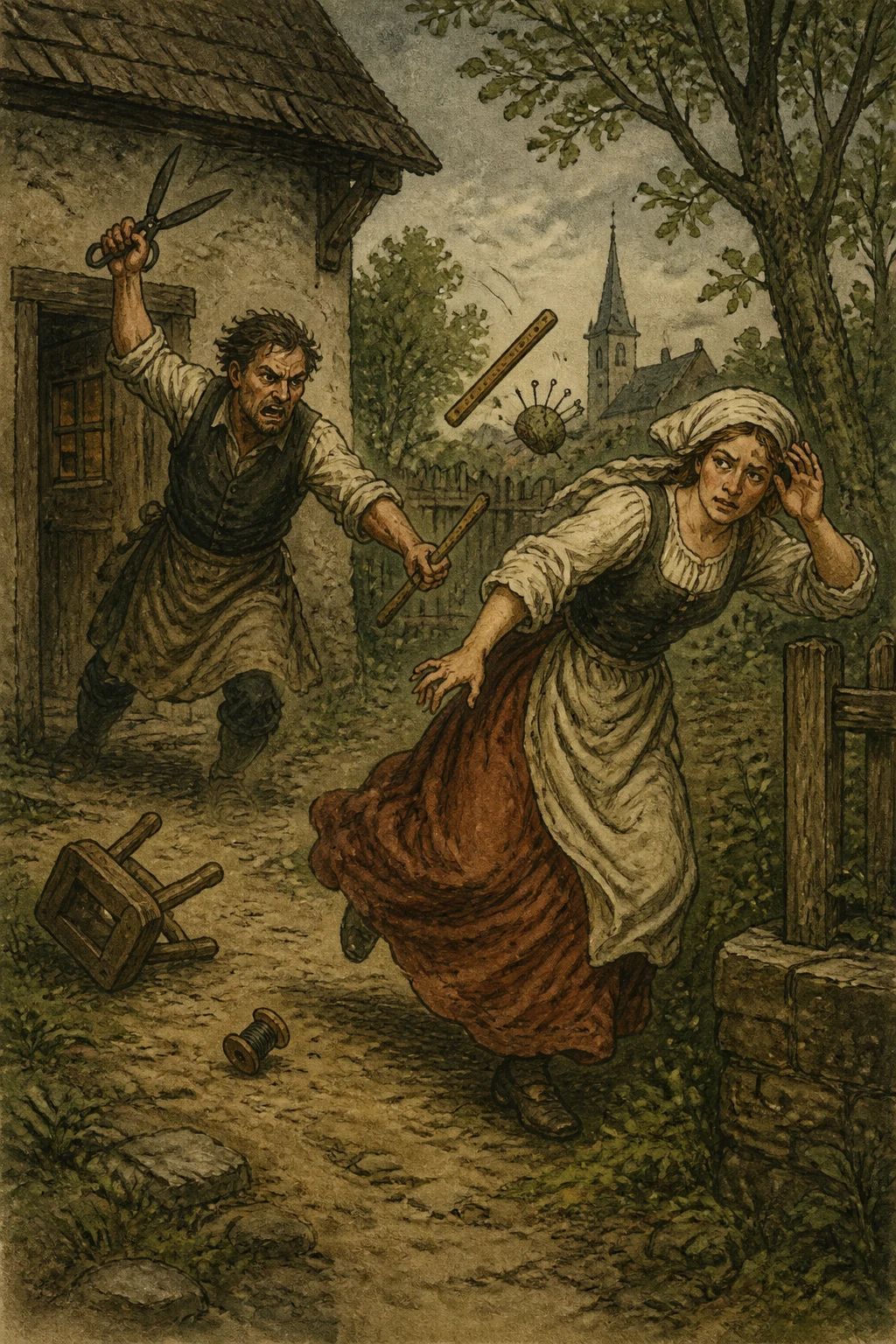
Long ago there was a wrestler named Narimura. At a time when wrestlers from all the provinces had come up to the capital and were awaiting the court wrestling festival, a number of them gathered at the Suzaku Gate to enjoy the cool air. As they wandered about the neighborhood, they passed the east gate of the Imperial University and were about to head south. Many of the university men had also come out to the east gate to cool themselves, and when they saw the wrestlers passing, they barred the way, shouting loudly, “We won’t let you through! We’ll put a stop to you!” Since these were men of a distinguished institution, the wrestlers could hardly force their way past. One of the university men, tall and broad-shouldered, with a cap and outer robe somewhat finer than the others’, stepped out in front and was particularly forceful in holding them back. Narimura took a good look at him. “Come, come, let’s go back,” he said, and they returned to the Suzaku Gate. There he said, “What hateful fellows those university men are! What gives them the right to stop us passing? I thought of simply pushing through, but then I decided to leave it for today and go through tomorrow. That big fellow who stood out in front, shouting and barring our way—he’s the one I can’t stand. If we go through tomorrow, he’s sure to do just as he did today. You there, give him such a kick in the backside that blood runs from his nose.” The wrestler he addressed scratched his side and said, “If I kick him, he’ll be in a sorry state. There’ll be an uproar.” This wrestler was known for his strength, which surpassed that of the others, and for his fleetness of foot; Narimura had chosen him with these qualities in mind. That day they all went home. The following day they summoned a great many wrestlers, including some who had not been there the day before, intending to force their way through by sheer weight of numbers. Perhaps the university men had guessed their purpose, for they too had gathered in greater numbers than before and were noisily shouting that they would stop them. The wrestlers approached in a body. The university man who had been foremost in barring their way the day before came out as usual and stood in the middle of the road, plainly determined not to let them pass. Narimura gave a signal with his eyes to the wrestler he had told to deliver the kick. This wrestler was taller and bigger than the others, a young fellow full of spirit. He hitched his clothes up high and strode forward. The other wrestlers followed close behind, meaning to march straight through, while the university men tried to block them. The wrestler charged at the man who was shouting and raised his leg high to kick him down. But the university man, watching him closely, bent his body and dodged. The kick missed, and as the wrestler’s leg flew up and he began to topple backward, the university man caught it. Holding the wrestler dangling as easily as another man might hold a slender staff, he rushed at the others. At the sight, they fled. He pursued them and hurled the wrestler he was holding after them. The man went flying some twenty or thirty yards and fell in a heap, his body so battered that he could not get up. Paying him no further heed, the university man charged toward Narimura. Narimura saw him coming and fled. His pursuer gave chase without hesitation. Narimura ran toward the Suzaku Gate and darted through a side entrance, but the man was close upon him. Thinking he was about to be caught, Narimura scrambled over the earthen wall of the Ministry of Ceremonial. The man reached out to drag him back, but Narimura was already over, and there was nothing left to seize except the heel of one foot, which still hung down a little. He caught it, shoe and all, and tore away the heel of the shoe together with the skin of Narimura’s heel, as cleanly as though he had sliced it off with a knife. Once inside the wall, Narimura looked at his foot. Blood was streaming from it and would not stop; the heel of his shoe had been torn right away. “That university man who chased me must have astonishing strength,” he thought. “He seems to have used the fellow who tried to kick him as a staff, then thrown him down and smashed him. The world is a wide place, but it is frightening to think there are men like that in it.” The wrestler who had been thrown was unconscious, so they laid him on something and carried him away. Narimura told the deputy captain what had happened. “That university man appears to be a formidable wrestler,” he said. “Even I, Narimura, have no wish to face him.” The deputy captain sought an imperial order, saying, “There is a provision that even a secretary of the Ministry of Ceremonial may serve if he is skilled in the art. Surely, then, there can be no objection to a university man.” A most diligent search was made, but no one ever learned who the man was, and the matter ended there.