Waltey
Mrtvaški zvon na poroki
047 The Knell at the Wedding
Myths and Legends of Our Own Land · Charles M. SkinnerO besedilu
Mrtvaški zvon na poroki
- Vir
- Myths and Legends of Our Own Land
- Avtor
- Charles M. Skinner
- Jezik branja
- Slovenščina
- Jezik izvirnika
- English
- Čas branja
- 4 min branja
- Obseg
- 4 strani
- Naslov izvirnika
- 047 The Knell at the Wedding
O izvirniku
Myths and Legends of Our Own Land
Obsežna zgodovinska zbirka ameriških legend, ki jih je Skinner zbral in avtorsko rekonstruiral. Bralni jezik je Slovenščina, izvirnik pa prihaja iz vira Myths and Legends of Our Own Land v jeziku English.
Besedilo
Mrtvaški zvon na poroki
Mlad Newyorčan je tako vztrajno oblegal srce neke lepotice — to je bilo še v starih knickerbockerskih časih, ko so se ljudje poročali iz ljubezni — da so vsi govorili, da je tako, kot bi bili poročni oklici že objavljeni; a vsi le niso vedeli vsega, kajti nekega lepega jutra je gospodična odšla v cerkev z drugim gospodom — ne s svojim očetom, čeprav je bil dovolj star, da bi to lahko bil — in ko sta prišla ven, sta bila mož in žena. Starejši gospod je bil bogat. Ko je minil prvi naval besa in razočaranja, se je zaljubljenec umaknil iz sveta in se posvetil učenju; in tudi ko je izvedel, da je postala vdova ter ji je zapuščina pokojnega, globoko objokovanega moža zagotovila udobno življenje, ni obnovil znanstva z njo. Grenko se je nasmehnil, ko je slišal, da se je drugič poročila z mladim pustolovcem, ki ji je grenil življenje, a se je za svoje grehe vsaj nekoliko odkupil s tem, da je umrl dovolj kmalu in pustil del njenega premoženja neporabljen.
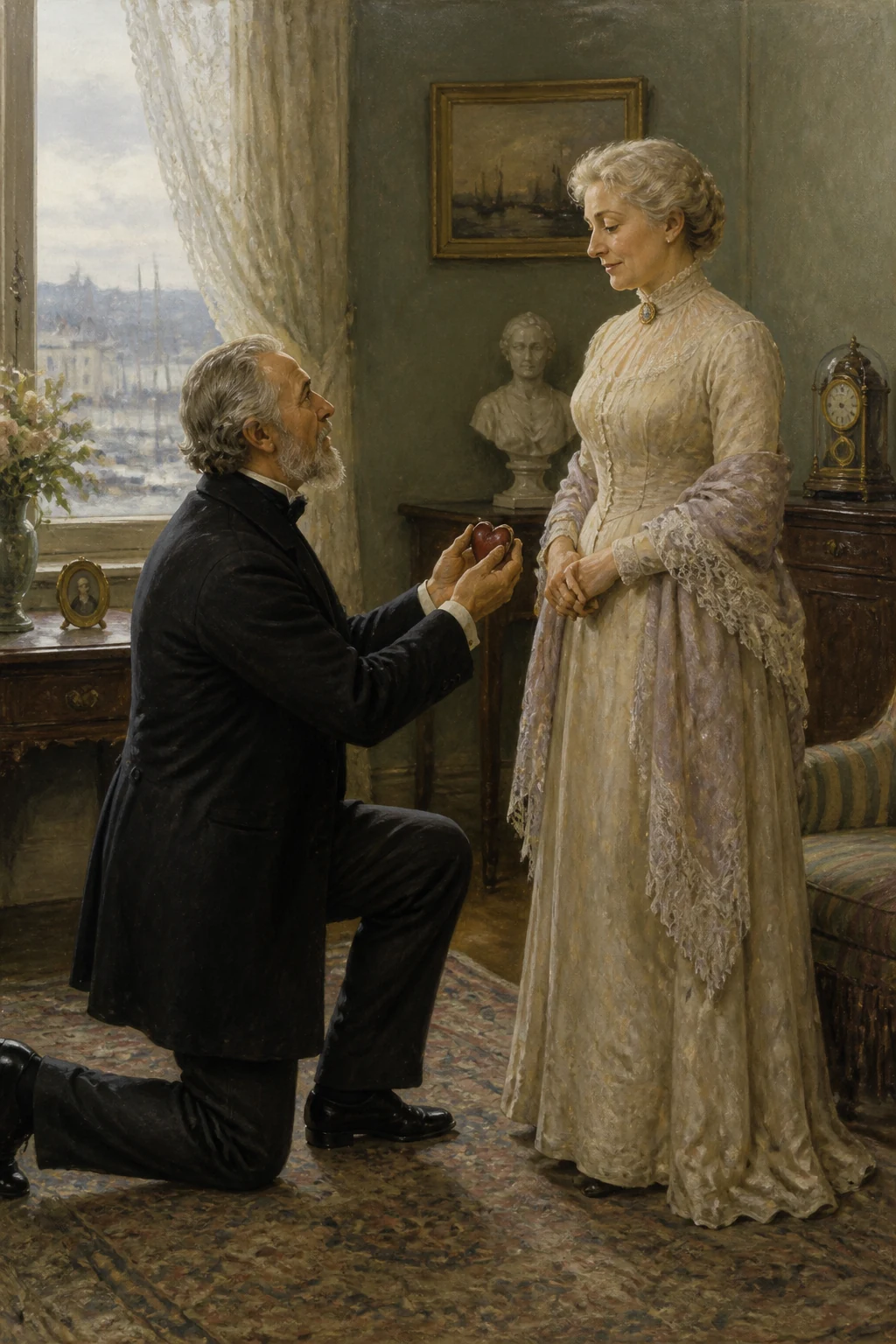
Čez čas se je dvakratna vdova vrnila v New York, kjer je spet srečala ljubimca iz mladosti. Gospod Ellenwood si je pridobil zadržanost učenjaka in je prijatelje pogosto spravljal v zadrego s svojimi posebnostmi; toda po nekaj srečanjih z nekdanjo ljubeznijo je stopil iz svoje mračnosti in ji s spoštljivo slovesnostjo znova položil pred noge srce, ki ga je poteptala pred štiridesetimi leti. Čeprav sta bila oba že precej v letih, je novica o njuni zaroki vzbudila le malo vznemirjenja. Vdova je bila še vedno lepa; snubec je bil tih, uglajen in viteški, združitev njunega premoženja pa bi jima zagotovila brezskrbnost v letih, ki so jima še ostala. Za poroko so izbrali cerkev svetega Pavla na Broadwayu in ženin si je v svoji muhavosti zaželel, da bi se z nevesto srečala šele tam. Ob dogovorjeni uri se je v cerkvi zbrala množica radovednežev; zaslišalo se je ropotanje koles in po cerkveni ladji je stopila druščina družic in prijateljev v krinolinah, z lepotnimi mušicami, v žametu in svili, napudrana, opasana z meči in okrašena z zaponkami; toda prav ko je nevesta prestopila prag in zapustila sončno svetlobo, ki je tako bleščeče obsevala travnate gomile in nagrobnike na cerkvenem pokopališču, je zvon v zvoniku enkrat zamolklo udaril.
Nevesta je stopila k oltarju, in ko se je postavila predenj, je iz zvonika odjeknil še en udarec. Ženina ni bilo. Znova in znova sta bronasto grlo in železni jezik oznanjala žalosten mrtvaški zvon, obrazi pa so bledeli in postajali zaskrbljeni, saj nihče ni znal uganiti, kaj to pomeni. Ženska je z očmi, uprtimi v marmornato grobnico svojega prvega moža, trepetaje čakala, da se skrivnost razjasni, dokler ni vrat zatemnilo nekaj, ob čemer ji je zastal dih — pogrebni sprevod. Orgle so zaigrale slovesno žalostinko, ko je po cerkveni ladji krenil sprevod v črnih plaščih, in nevesta je osupla spoznala, da ga sestavljajo njeni najstarejši prijatelji — sključeni, uveli; razvrščeni v pare, moški in ženska, kakor v posmeh — za njimi pa je z belim obrazom, žarečimi očmi, razmršenimi lasmi in negotovim korakom prihajal ženin v svojem mrtvaškem prtu.
»Pridi,« je rekel, »poročiva se. Krsti sta pripravljeni. Potem pa domov, v grob.« »Kruto!« je zamrmrala ženska. »Naj zdaj nebesa presodijo, kdo od naju je bil krut. Pred štiridesetimi leti si mi vzela vero, uničila moje upe ter drugim podarila svojo mladost in lepoto. Najini življenji sta že skoraj pri koncu, zato sem prišel, da se poročim s teboj kakor ob pogrebnem obredu.« Nato jo je nežneje prijel za roko in dejal: »Vse je odpuščeno. Če ne moreva živeti skupaj, bova vsaj združena v smrti. Čas se skoraj izteka. Poročila se bova za večnost. Pridi.« Nežno jo je objel in jo popeljal naprej. Naj je bila preizkušnja še tako težka, begajoča, strašljiva in ponižujoča, je nevesta iz nje izšla kot boljša ženska.
»Res je,« je rekla, »bila sem nečimrna in posvetna, zdaj pa se mi je na stara leta vrnila najresničnejša ljubezen, kar sem jih kdaj poznala. To je sveta ljubezen. Večno jo bom negovala.« Njuna pogleda sta se srečala in drug drugega sta gledala skozi solze. Duhovnik je slovesno prebral poročni obred, in ko ga je končal, je tiha žalostinka, ki je z orgel spremljala enakomerne udarce zvona, prešla v plemenitejšo melodijo, dokler se niso pogrebni takti naposled izgubili v izbruhu zmagoslavnega sozvočja. Ko se je svatovski sprevod odpravil proti izhodu, je bilo slišati hlipanje dolgo zadrževanih čustev in vzdihe olajšanja; in ko sta novopečena žena in mož stopila do portala, je zvon molčal in sijalo je sonce.
Izvirnik
047 The Knell at the Wedding
Naslednje strani prikazujejo izvirno besedilo za primerjavo.
A young New Yorker had laid such siege to the heart of a certain belle--this was back in the Knickerbocker days when people married for love--that everybody said the banns were as good as published; but everybody did not know, for one fine morning my lady went to church with another gentleman--not her father, though old enough to be--and when the two came out they were man and wife. The elderly man was rich. After the first paroxysm of rage and disappointment had passed, the lover withdrew from the world and devoted himself to study; nor when he learned that she had become a widow, with comfortable belongings derived from the estate of the late lamented, did he renew acquaintance with her, and he smiled bitterly when he heard of her second marriage to a young adventurer who led her a wretched life, but atoned for his sins, in a measure, by dying soon enough afterward to leave a part of her fortune unspent.
In the lapse of time the doubly widowed returned to New York, where she met again the lover of her youth. Mr. Ellenwood had acquired the reserve of a scholar, and had often puzzled his friends with his eccentricities; but after a few meetings with the object of his young affection he came out of his glooms, and with respectful formality laid again at her feet the heart she had trampled on forty years before. Though both of them were well on in life, the news of their engagement made little of a sensation. The widow was still fair; the wooer was quiet, refined, and courtly, and the union of their fortunes would assure a competence for the years that might be left to them. The church of St. Paul, on Broadway, was appointed for the wedding, and it was a whim of the groom that his bride should meet him there. At the appointed hour a company of the curious had assembled in the edifice; a rattle of wheels was heard, and a bevy of bridesmaids and friends in hoop, patch, velvet, silk, powder, swords, and buckles walked down the aisle; but just as the bride had come within the door, out of the sunlight that streamed so brilliantly on the mounded turf and tombstones in the churchyard, the bell in the steeple gave a single boom.
The bride walked to the altar, and as she took her place before it another clang resounded from the belfry. The bridegroom was not there. Again and again the brazen throat and iron tongue sent out a doleful knell, and faces grew pale and anxious, for the meaning of it could not be guessed. With eyes fixed on the marble tomb of her first husband, the woman tremblingly awaited the solution of the mystery, until the door was darkened by something that made her catch her breath--a funeral. The organ began a solemn dirge as a black-cloaked cortege came through the aisle, and it was with amazement that the bride discovered it to be formed of her oldest friends,--bent, withered; paired, man and woman, as in mockery--while behind, with white face, gleaming eyes, disordered hair, and halting step, came the bridegroom, in his shroud.
“Come,” he said,--“let us be married. The coffins are ready. Then, home to the tomb.”
“Cruel!” murmured the woman.
“Now, Heaven judge which of us has been cruel. Forty years ago you took away my faith, destroyed my hopes, and gave to others your youth and beauty. Our lives have nearly run their course, so I am come to wed you as with funeral rites.” Then, in a softer manner, he took her hand, and said, “All is forgiven. If we cannot live together we will at least be wedded in death. Time is almost at its end. We will marry for eternity. Come.” And tenderly embracing her, he led her forward. Hard as was the ordeal, confusing, frightening, humiliating, the bride came through it a better woman.
“It is true,” she said, “I have been vain and worldly, but now, in my age, the truest love I ever knew has come back to me. It is a holy love. I will cherish it forever.” Their eyes met, and they saw each other through tears. Solemnly the clergyman read the marriage service, and when it was concluded the low threnody that had come from the organ in key with the measured clang of the bell, merged into a nobler motive, until at last the funeral measures were lost in a burst of exultant harmony. Sobs of pent feeling and sighs of relief were heard as the bridal party moved away, and when the newmade wife and husband reached the portal the bell was silent and the sun was shining.
Nadaljuj z branjem