Waltey
Mož, ki naj bi gospodinjil
Norske Folkeeventyr · Peter Christen Asbjørnsen in Jørgen MoeO besedilu
Mož, ki naj bi gospodinjil
- Vir
- Norske Folkeeventyr
- Avtor
- Peter Christen Asbjørnsen in Jørgen Moe
- Jezik branja
- English
- Jezik izvirnika
- Norsk
- Čas branja
- 4 min branja
- Obseg
- 3 strani
- Naslov izvirnika
- 043 Manden, som skulde stelle hjemme
O izvirniku
Norske Folkeeventyr
Norveške ljudske pravljice o gozdu, gorah, prebrisanih junakih in nevarnih bitjih. Bralni jezik je English, izvirnik pa prihaja iz vira Norske Folkeeventyr v jeziku Norsk.
Besedilo
Mož, ki naj bi gospodinjil
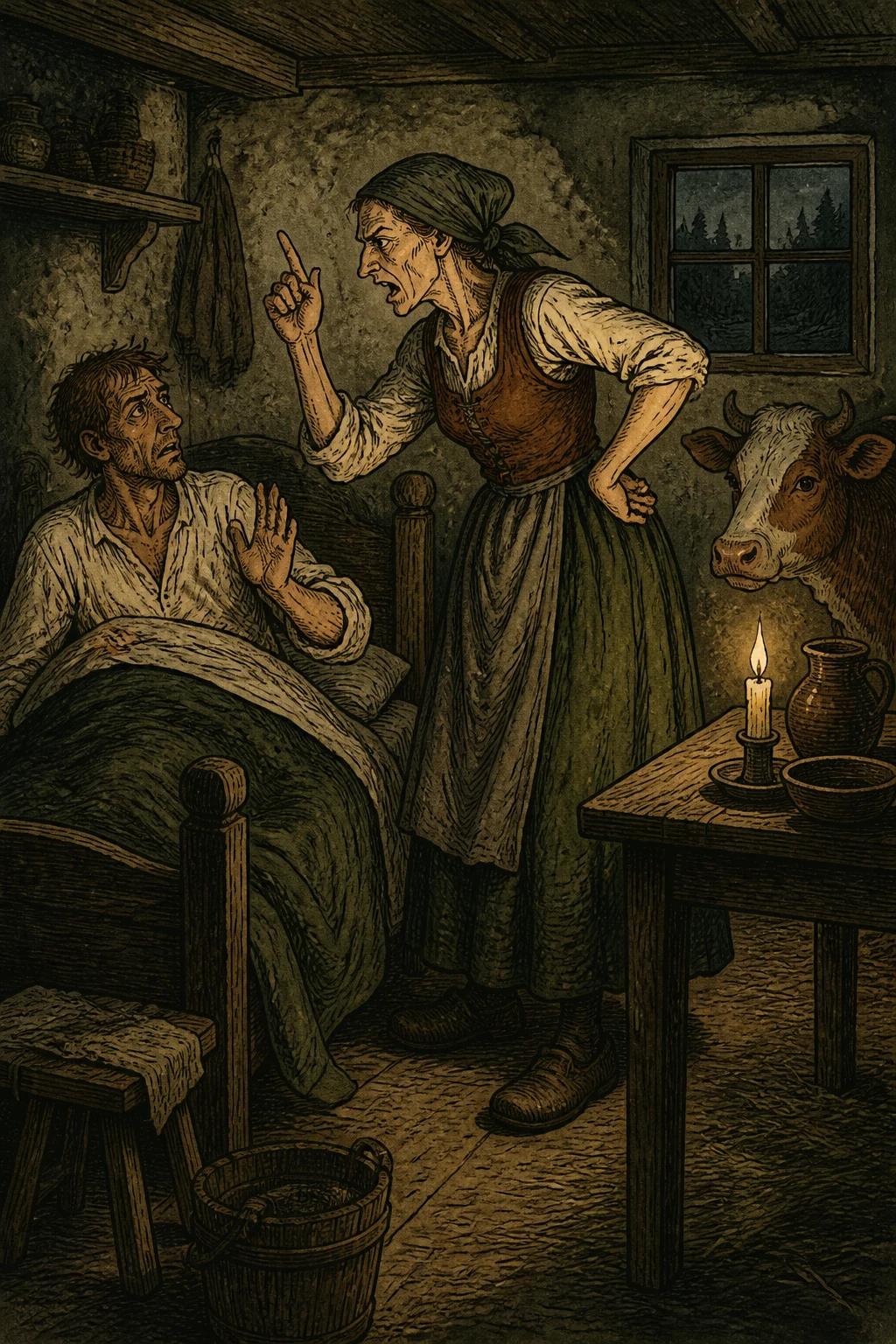
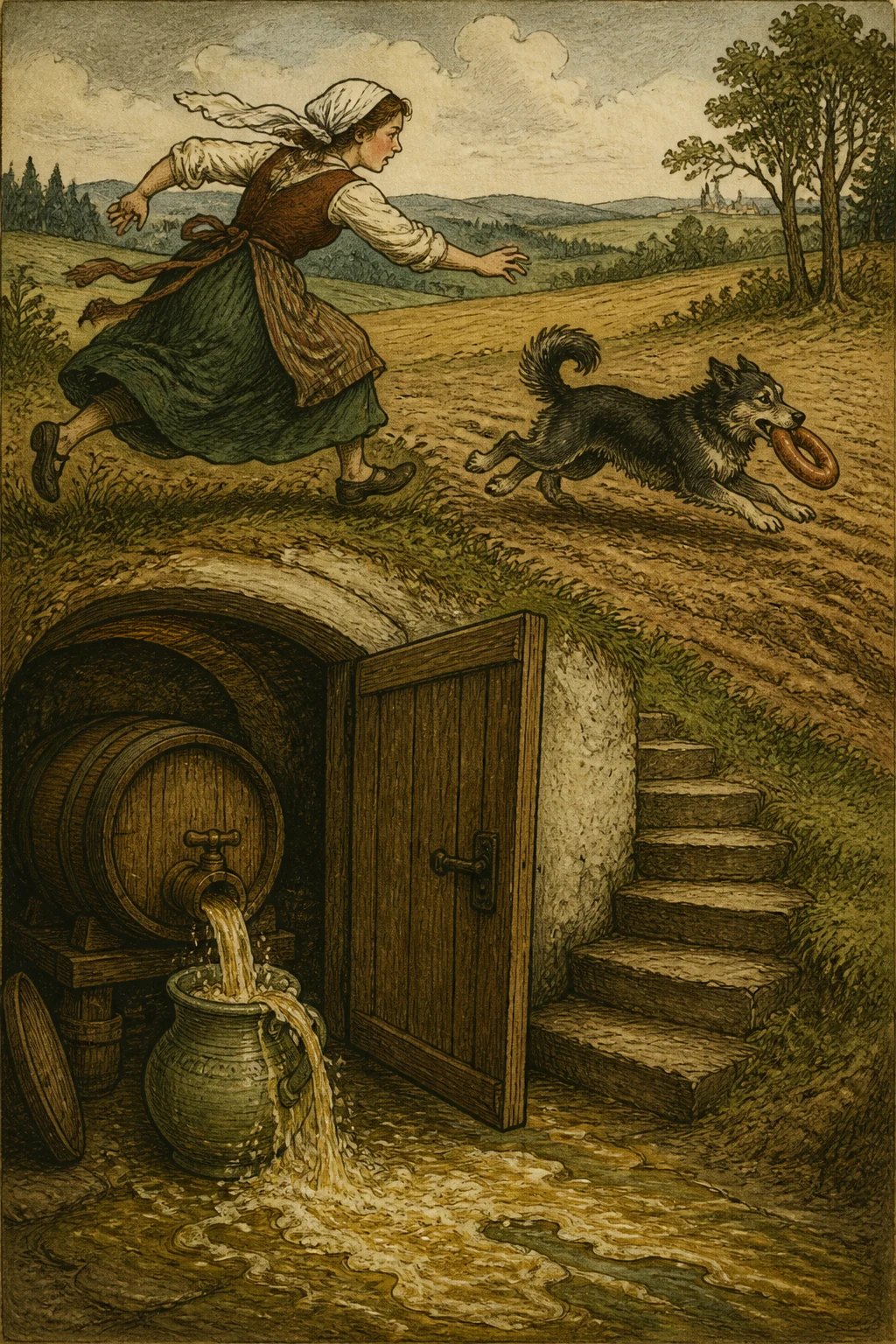
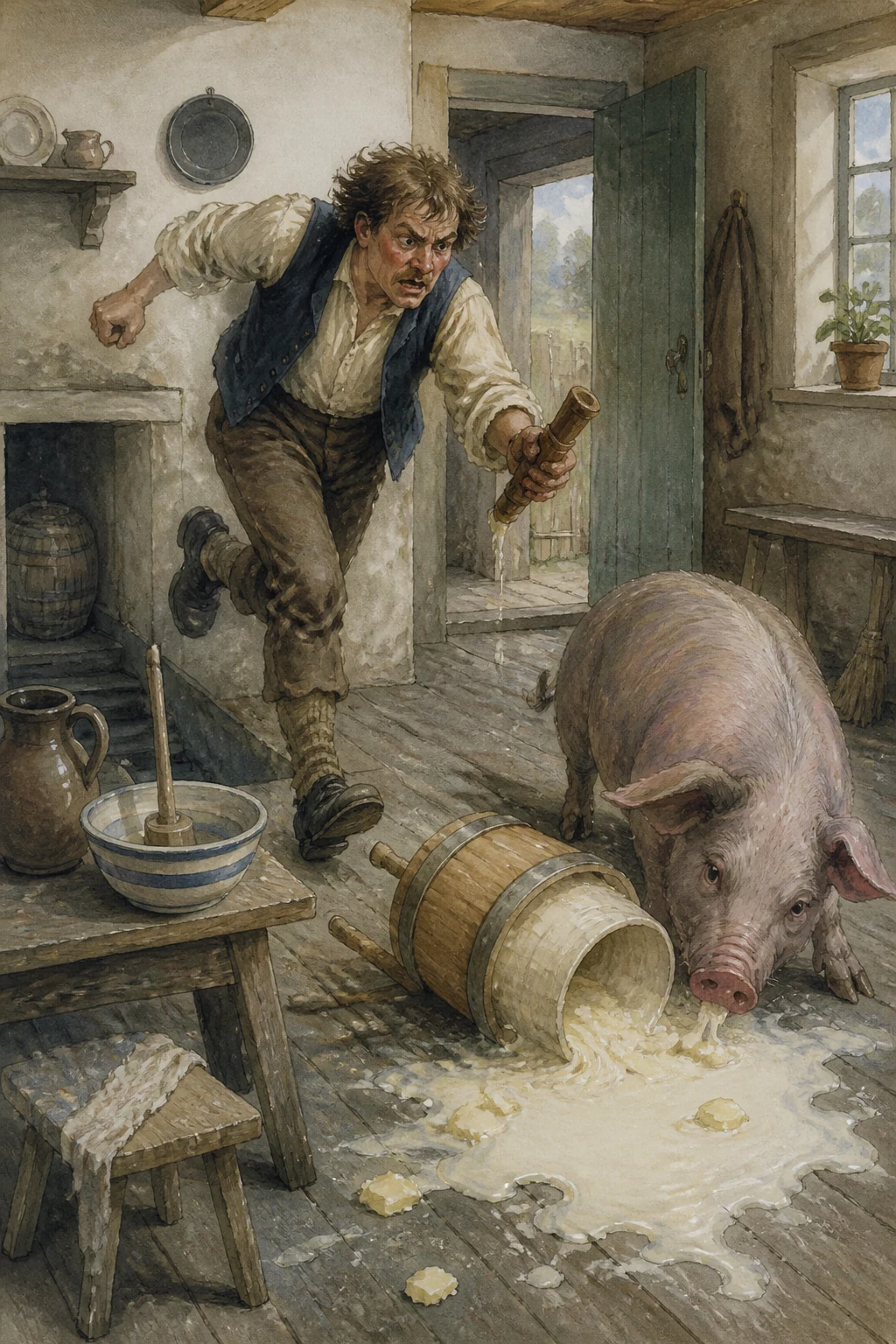
Once upon a time there was a man who was so cross and ill-tempered that he never thought his wife did enough about the house. One evening in the haymaking season he came home growling and scolding and swearing fit to raise the roof. “Dear me, don’t be so angry, husband,” said his wife. “Tomorrow we’ll change work. I’ll go out with the mowers and cut the hay, and you can look after things at home.” The man thought this a fine idea and was quite willing. Early next morning his wife shouldered the scythe and went out into the meadow with the mowers to cut the hay. The man was to set about the housework. First he meant to churn some butter, but after churning a while he grew thirsty and went down to the cellar to draw some ale. While he was filling the ale bowl, he heard that a pig had got into the room upstairs. Off he dashed with the tap-plug in his hand, up the cellar stairs as fast as he could, to stop the pig from knocking over the churn;
but when he saw that the pig had already upset it and stood smacking its lips over the cream that was flowing across the floor, he flew into such a rage that he quite forgot the ale barrel and chased the pig as hard as he could. He caught up with it in the doorway and gave it such a mighty kick that it lay where it fell. Only then did he remember that he still had the tap-plug in his hand, but by the time he reached the cellar, all the ale had run out of the barrel.
Then he went back to the dairy and found enough cream to fill the churn, and set to churning again, for he was determined to have butter for dinner. After he had churned a while, he remembered that the cow they kept at home was still in the byre and had had neither food nor water, though the day was well advanced. He thought it too far to take her to the pasture, so he decided to turn her out onto the roof instead. The cottage had a turf roof, with fine, tall grass growing on it. It stood beside a steep bank, and he thought that if he laid a plank across to the roof, he could surely get the cow up there. But he dared not leave the churn either, for his little child was crawling about on the floor and might easily knock it over, he thought. So he hoisted the churn onto his back and went outside, but before letting the cow onto the roof, he meant to give her some water. He took a bucket to draw water from the well, but as he bent over the edge, the cream ran out of the churn, down the back of his neck, and into the well. By now it was nearly dinnertime, and he still had no butter, so he thought he would make porridge and hung a pot of water over the hearth. When he had done that, it occurred to him that the cow might fall off the roof and break her legs or her neck, so he climbed up to tie her fast. He tied one end of the rope round the cow’s neck, let the other down the chimney, and tied it round his own thigh, for the water in the pot was already boiling and he had to get on with stirring the porridge. While he was busy with this, the cow fell off the roof all the same and hauled the man up the chimney by the rope. There he stuck, while the cow hung outside the wall, dangling between heaven and earth, unable to get free either. His wife had waited an age and a day for him to come and call them home to dinner;
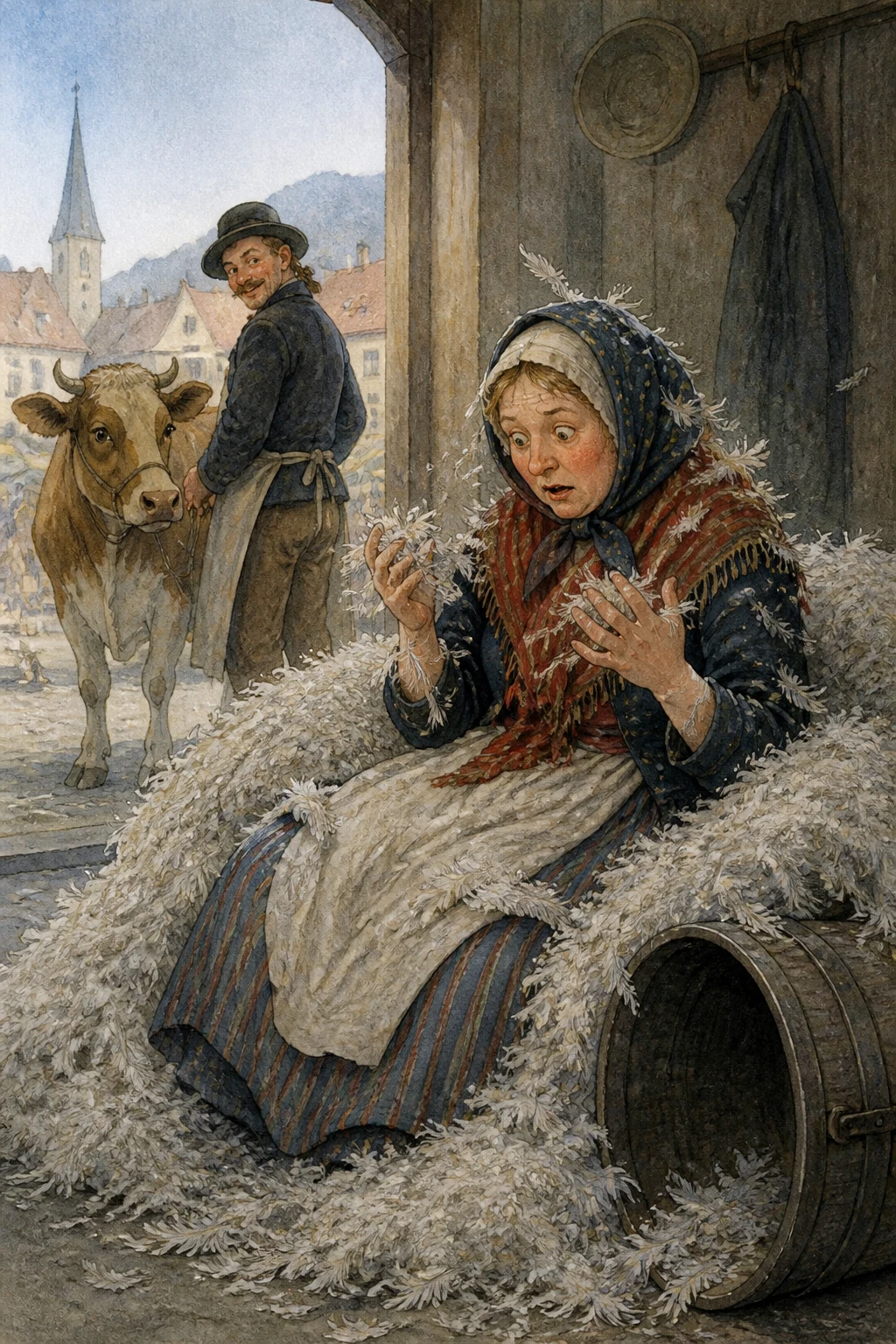
but no call came. At last she thought this was going too far, and home she went. When she saw the cow hanging there in such a dreadful plight, she went over and cut the rope with her scythe. At that very moment the man fell down the chimney, and when his wife came in, she found him standing on his head in the porridge pot.
Izvirnik
043 Manden, som skulde stelle hjemme
Naslednje strani prikazujejo izvirno besedilo za primerjavo.
Der var engang en Mand som var saa grætten og vild, og aldrig syntes han at Konen gjorde Nok i Huset. Saa kom han hjem en Kvæld i Slaataanden, og green og skjændte og bandede, saa at det lyste om ham. „Kjære Vene, vær ikke saa ond, Faer,“ sagde Kjærringen; „i Morgen skal vi bytte Arbeide, jeg skal gaae ud med Slaattekarlene og slaae, saa kan du stelle hjemme.“ Ja, det syntes Manden godt om, og det vilde han gjerne. Tidlig om Morgenen tog Kjærringen Ljaaen paa Nakken og gik ud i Engen med Slaattefolkene og skulde slaae. Manden skulde da til at stelle i Huset. Først vilde han til at kjerne Smør, men da han havde kjernet en Stund, blev han tørst, gik ned i Kjælderen og skulde tappe i Øl. Medens han holdt paa at tappe i Ølbollen,
fik han høre, der var kommen en Griis ind i Stuen. Han afsted med Tappen i Haanden, op igjennem Kjældertrappen som allersnarest og skulde passe Grisen, at den ikke skulde vælte Kjernen; men da han fik see, at Grisen alt havde slaaet Kjernen overende, og stod og smattede paa Fløden, som flømmede udover Gulvet, blev han saa flyvende sindt, at han reent glemte Øltønden og efter Grisen det bedste han kunde. Han naaede den igjen i Døren, og der gav han den et saa dygtig Spark, at den blev liggende paa Flækken. Nu huskede han først paa, at han gik med Tappen i Haanden, men da han kom ned i Kjælderen, var alt Øllet rundet ud af Tønden.
Han gik da paa Mælkeboden igjen og fandt saameget Fløde, at han fik Kjernen fuld, og saa gav han sig til at kjerne, for Smør vilde han have til Middags. Da han havde kjernet en Stund, kom han i Hu at Hjemkoen stod inde endda, og hverken havde faaet Vaadt eller Tørt, skjøndt det var langt paa Dag. Han syntes, det var for langt at gaae til Havnen med den, saa tænkte han, at han skulde slippe den oppe paa Taget; det var Torvetag paa Hytten og der stod stort, gjildt Græs. Hytten laa ved en brat Bakke, og naar han lagde en Planke over paa Taget, saa troede han nok han skulde faae Koen derop. Men Kjærnen turde han ikke slippe heller, for den vesle Ungen hans foer og kravlede om paa Gulvet; den kunde gjerne slaae den overende, tænkte han. Kjernen tog han da paa Ryggen og gik
saa ud, men saa skulde han vande Koen først, førend han slap den paa Taget. Han tog en Bøtte og skulde tage Vand i Brønden med, men da han bøiede sig ud over Kanten, randt Fløden ud af Kjernen og ned i Nakken paa ham og saa ned i Brønden. Det led nu til Middagen, og Smør havde han endda ikke faaet, saa tænkte han, han skulde koge Grød, hængte saa en Gryde med Vand paa Skorstenen. Da han havde gjort det, kom han til at tænke paa, at Koen kunde falde ned af Taget og brække Benene eller Halsen paa sig, gik saa op paa Taget og skulde binde den. Den ene Enden af Rebet bandt han om Halsen paa Koen, slap det saa ned igjennem Piben og bandt Rebhællen om Laaret sit, for Vandet kogte alt i Gryden, og han
maatte til at stampe Grøden. Mens han holdt paa med det, faldt Koen udover Taget ligevel og trak Manden op igjennem Piben ved Rebet; der sad han fast, og Koen, den hang udenfor Væggen og svævede mellem Himmel og Jord, og den kunde heller ikke komme løs. Konen havde ventet i syv Lange og syv Brede paa at Manden skulde komme og raabe hjem til Middags; men det blev ikke noget af. Tilsidst saa syntes hun, det blev for drøit og gik endelig hjem. Da hun fik see at Koen hang saa stygt til, gik hun bort og hug Rebet af med Ljaen; i det samme faldt Manden ned igjennem Peispiben, og da Kjærringen kom ind, stod han paa Hovedet i Grødgryden.
Nadaljuj z branjem