O besedilu
Mož, ki je oživel v krsti
- Vir
- Sou Shen Ji
- Avtor
- Gan Bao
- Jezik branja
- English
- Jezik izvirnika
- 文言
- Čas branja
- 3 min branja
- Obseg
- 2 strani
- Naslov izvirnika
- 368 第15卷 · 第10則
O izvirniku
Sou Shen Ji
Klasični kitajski zapisi o duhovih, čudežih, znamenjih in nenavadnih dogodkih. Bralni jezik je English, izvirnik pa prihaja iz vira Sou Shen Ji v jeziku 文言.
Besedilo
Mož, ki je oživel v krsti
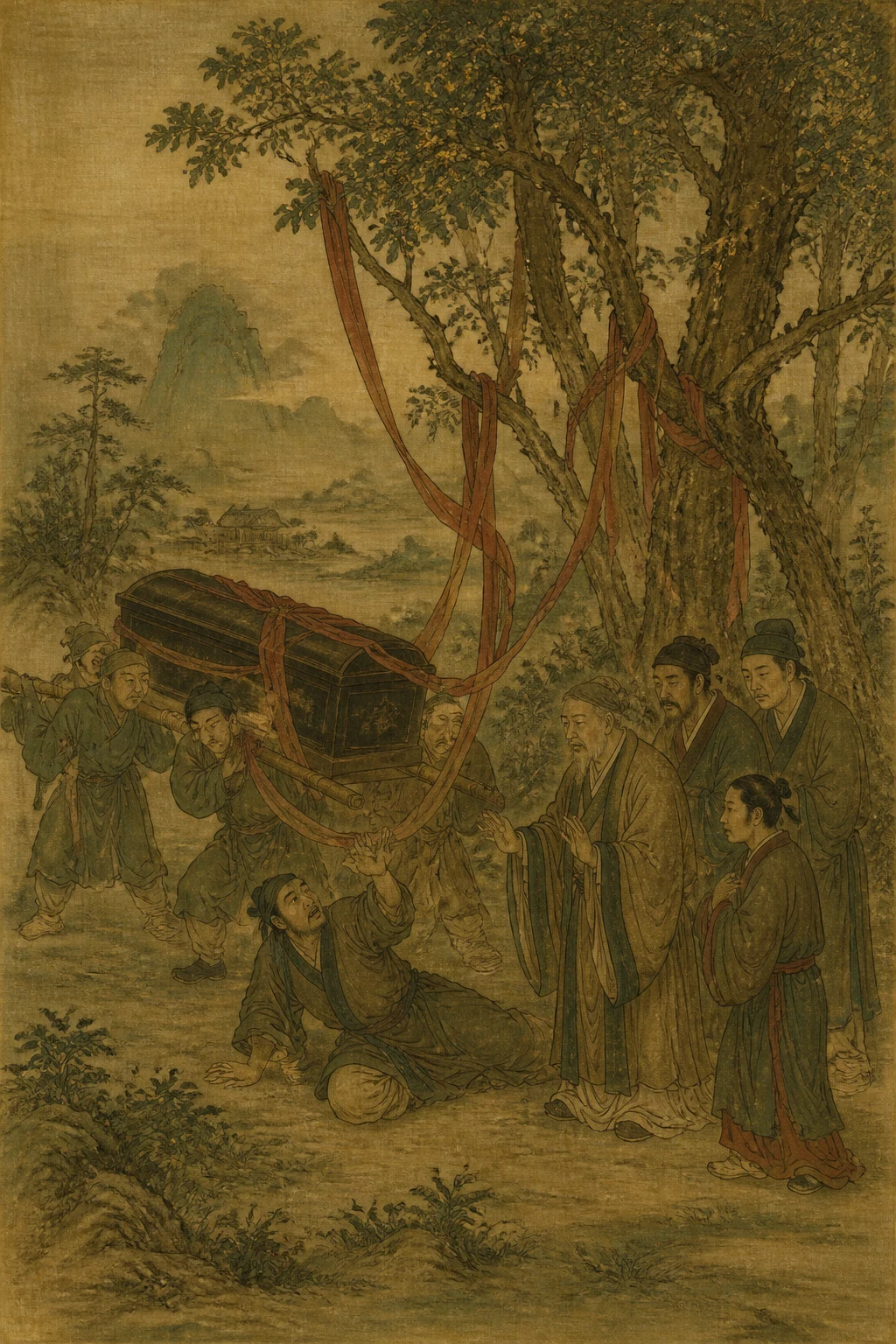
In the twelfth month of the second year of the Xianning era of the Jin dynasty, Yan Ji of Langya, whose courtesy name was Shidu, fell ill and sought medical treatment. Zhang Cuo attended him personally, but he died at Zhang’s house. He had been laid in his coffin for some time when his family came to bring his body home. Yet whenever the funeral banner passed a tree, it would wind itself around the branches and could not be freed. Everyone was deeply moved. Suddenly, the man leading the funeral procession fell to the ground and spoke in Ji’s voice: “My allotted span of life is not yet over. I took too much medicine, and it damaged my five vital organs—that is all. I am about to return to life. Take care not to bury me.” His father laid a hand on the coffin and addressed him: “If you still have life allotted to you and can live again, what more could your own flesh and blood desire? We wish only to take you home now; we will not bury you.” Only then did the banner come free. After they returned home, his wife dreamed that he said to her, “I am going to live again. Open the coffin at once.” She told the others of her dream. That night, his mother and other members of the household also dreamed of him. They wanted to open the coffin immediately, but his father would not allow it. His younger brother Han, who was still a boy, declared with deep feeling: “Extraordinary things have happened since ancient times. Now that we have witnessed such uncanny signs, how can the pain of opening the coffin compare with the wrong we would do him by leaving it shut?” His parents agreed. Together they opened the coffin, and indeed there were signs of life. He had been scraping at the coffin with his hands, leaving his fingers and nails badly injured. His breathing, however, was so faint that they could scarcely tell whether he was alive or dead. They hurriedly used cotton to drip liquid into his mouth. He was able to swallow, so they lifted him out. After several months of devoted care, he gradually began to take more food and drink. He could open his eyes and look about, and bend and stretch his hands and feet, but he could not respond to others or speak. Whatever he needed to eat or drink, he made known through dreams. He remained in this state for more than ten years. His family grew so weary from tending him that they could no longer attend to their other affairs. Han then withdrew from all worldly engagements and cared for him in person, earning renown throughout his province and among his neighbors. In time, Ji grew weaker still, and at last died once more.
Izvirnik
368 第15卷 · 第10則
Naslednje strani prikazujejo izvirno besedilo za primerjavo.
晉咸寧二年十二月,瑯琊顏畿,字世都,得病,就醫,張瑳自治,死於張家。棺斂已久。家人迎喪,旐每繞樹木而不可解。人咸為之感傷。引喪者忽顛仆,稱畿言曰:「我壽命未應死,但服藥太多,傷我五臟耳。今當復活,慎無葬也。」其父拊而祝之,曰:「若爾有命,當復更生,豈非骨肉所願;今但欲還家,不爾葬也。」旐乃解。及還家,其婦夢之曰:「吾當復生,可急開棺。」婦便說之。其夕,母及家人又夢之。即欲開棺,而父不聽;其弟含,時尚少,乃慨然曰:「非常之事,自古有之;今靈異至此,開棺之痛,孰與不開相負?」父母從之。乃共發棺,果有生驗,以手刮棺,指爪盡傷,然氣息甚微,存亡不分矣,於是急以綿飲瀝口,能咽,遂與出之。將護累月,飲食稍多,能開目視瞻,屈伸手足,不與人相當,不能言語,飲食所須,托之以夢。如此者十餘年。家人疲於供護,不復得操事;含乃棄絕人事,躬親侍養,以知名州黨。後更衰劣,卒復還死焉。
Nadaljuj z branjem