Waltey
Deklica, ki se je prerodila v ovco
Uji Shūi Monogatari · anonimna srednjeveška zbirkaO besedilu
Deklica, ki se je prerodila v ovco
- Vir
- Uji Shūi Monogatari
- Avtor
- anonimna srednjeveška zbirka
- Jezik branja
- English
- Jezik izvirnika
- 日本語
- Čas branja
- 3 min branja
- Obseg
- 3 strani
- Naslov izvirnika
- 167 或唐人女ノ羊ニ生タル不知シテ殺事
O izvirniku
Uji Shūi Monogatari
Srednjeveške japonske pripovedi o menihih, duhovih, čudežih, prevarah in vsakdanjih presenečenjih. Bralni jezik je English, izvirnik pa prihaja iz vira Uji Shūi Monogatari v jeziku 日本語.
Besedilo
Deklica, ki se je prerodila v ovco
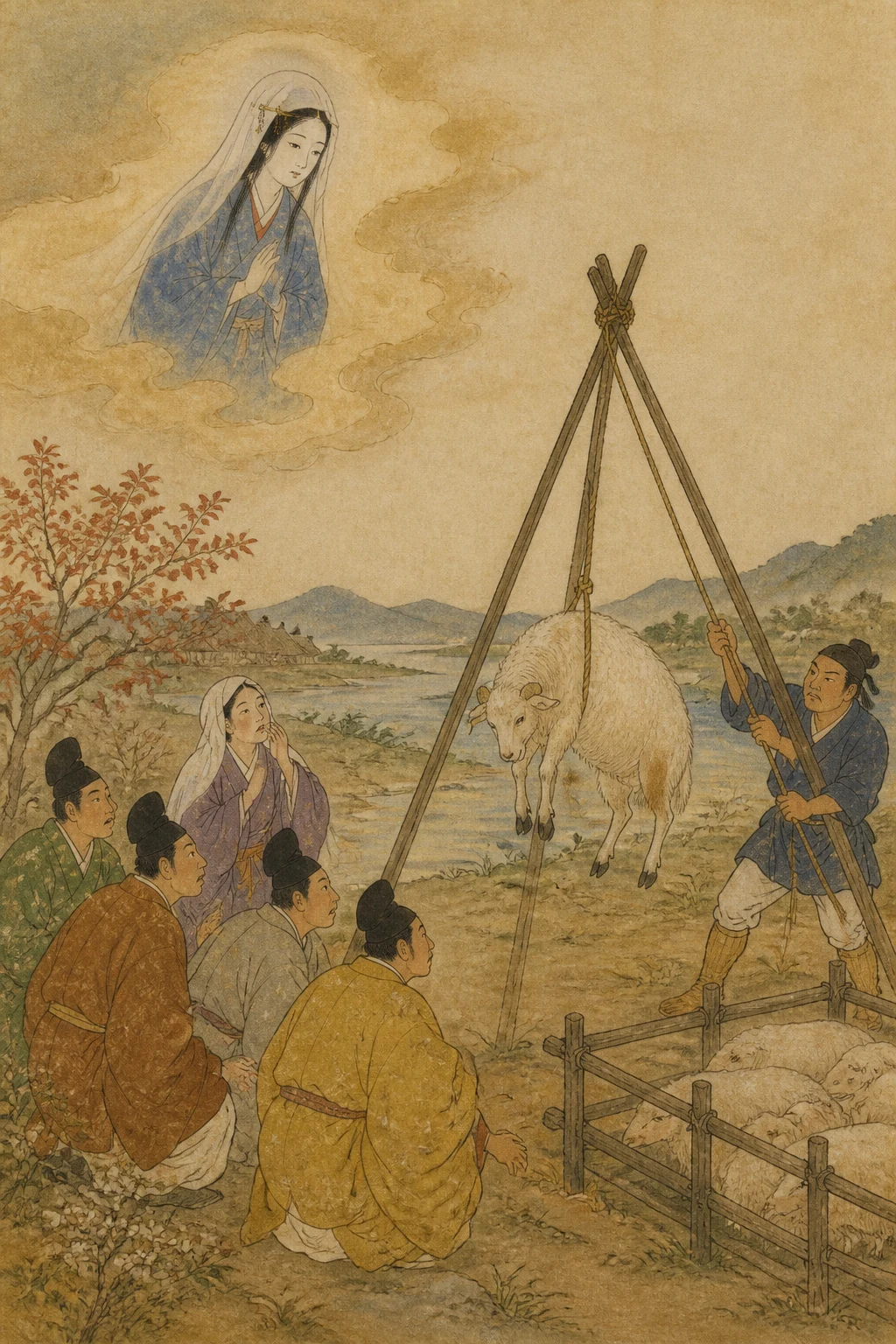
Long ago in China, there lived a man named Keisoku who had been appointed to some provincial office and was preparing to leave for his post. He had an only daughter, a girl of matchless charm, who died when she was little more than ten years old. Her parents’ grief knew no bounds. About two years later, he went to his country home and gathered his close kin and other relatives to tell them that he would soon be leaving for the province. He bought a sheep at the market to serve to his guests. That night, the girl’s mother dreamed that her dead daughter came to her wearing a blue robe, her head wrapped in white cloth, and a set of jade hairpins in her hair. She looked just as she had in life. “When I was alive,” she told her mother, “you and Father loved me dearly and let me have whatever I wished. So I would take things and use them, or give them away to others, without telling you. Though it was not stealing, I sinned by doing these things without your knowledge, and because of that I have now been born as a sheep. I have come to repay what I owe you. Tomorrow I am to be slaughtered, in the form of a sheep with a white neck. Please, I beg you, spare my life.” The mother awoke in alarm. Early the next morning she went to the place where the food was being prepared, and there, sure enough, was a bluish sheep with a white neck. Its legs and back were white too, and it had two patches on its head, just where a person would wear hairpins. Seeing it, the mother said, “Do not kill this sheep yet. When my husband returns, I shall explain everything to him and have it spared.” When the governor came back from his outing, however, he complained, “Why is the food for our guests so late?” The servants replied, “We were about to slaughter this sheep and prepare it, but your lady stopped us. She told us not to kill it yet, saying she would speak to you and have it spared.” He flew into a rage. “Do not let her indulge in such nonsense!” he said. They had hung the sheep up to kill it when the guests came to look. What they saw was a lovely, sweet-faced girl of a little over ten, suspended by a rope tied to her hair. “I am this governor’s daughter,” the girl said. “I have been reborn as a sheep. Gentlemen, please save my life today!” “Whatever you do, whatever you do, you must not kill her!” the guests cried. “We shall go and speak to him.” But while they were gone, the cook, who saw only an ordinary sheep, thought, “He is sure to be angry at the delay,” and struck it dead. To the man who killed it, its cries sounded like nothing more than the bleating of a sheep. He butchered it and prepared it in various ways, roasting some and frying some, but the guests left without eating a bite. Puzzled, the governor questioned them, and they told him everything from the beginning. Distraught with grief, he fell ill and died, and so, it is said, he never left for his provincial post.
Izvirnik
167 或唐人女ノ羊ニ生タル不知シテ殺事
Naslednje strani prikazujejo izvirno besedilo za primerjavo.
いまは昔唐になにとかやいふ司になりて下らんとする物侍き名をはけいそくといふそれかむすめ一人ありけりならひなくおかしけなりし十余歳にして失にけり父母泣かなしむ事かきりなしさて二年斗ありてゐ中にくたりてしたしき一家の一類はらからあつめて国へくたるへきよしをいひ侍らんとするに市より羊を買とりてこの人々にくはせんとするにその母の夢にみる様うせにしむすめ青き衣をきてしろきさいてしてかしらをつつみて髪に玉のかんさし一よそひをさしてきたりいきたりしおりにかはらす母にいふやうわかいきて侍し時に父母われをかなしうし給てよろつをまかせ給へりしかはおやに申さて物をとりつかひ又人にもとらせ侍きぬすみにはあらねと申さてせし罪によりいま羊の身をうけたりきたりてそのほうをつくし侍らんとすあすまさにくひしろき羊になりて殺されんとすねかわくは我命を
ゆるし給へといふとみつおとろきてつとめて食物する所をみれは誠に青き羊のくひ白きありはきせなかしろくて頭にふたつのまたらありつねの人のかんさしさす所なり母これをみてしはしこの羊なころしそ殿帰おはしてのちにあんない申てゆるさんするそといふに守殿物より帰てなと人々まいり物はをそきとてむつかるされは此羊をてうし侍てよそはんとするにうへの御前しはしなころしそ殿に申てゆるさんとてととめ給へはなといへは腹立てひか事なせさせそとてころさんとてつりつけたるにこのまら人ともきてみれはいとおかしけにてかほよき女子の十よさいはかりなるをかみになはつけてつりつけたりこの女子のいふやうわらははこの守の女にて侍しか羊になりて侍也けふの命を御まへたちたすけ給へといふにこの人々あなかしこあなかしこゆめゆめころすな申てこんとてゆく程にこのくひ物する人は例の羊とみゆさためてをそしと
腹立なんとてうちころしつそのひつしのなくこゑこのころすもののみみにはたたの羊のなくこゑ也さて羊を殺していりやきさまさまにしたりけれとこのまら人ともは物もくはて帰にけれはあやしかりて人々にとへはしかしかなりとはしめよりかたりけれはかなしみてまとひける程に病に成て死ににけれはゐ中にもくたり侍らすなりにけりとそ
Nadaljuj z branjem