Prevod
Now tell, goddess, of the Colchian maiden’s anguish and her counsels, Muse, daughter of Zeus. For my mind turns helplessly within me as I ponder whether to call it the torment of a ruinous passion or the shameful flight by which she left the Colchian people.
All night in his palace Aeetes plotted a deadly treachery against the heroes with the foremost men of his people, his heart fiercely embittered by the hateful outcome of the trial. Nor did he suppose that all this had been accomplished without his daughters’ help.
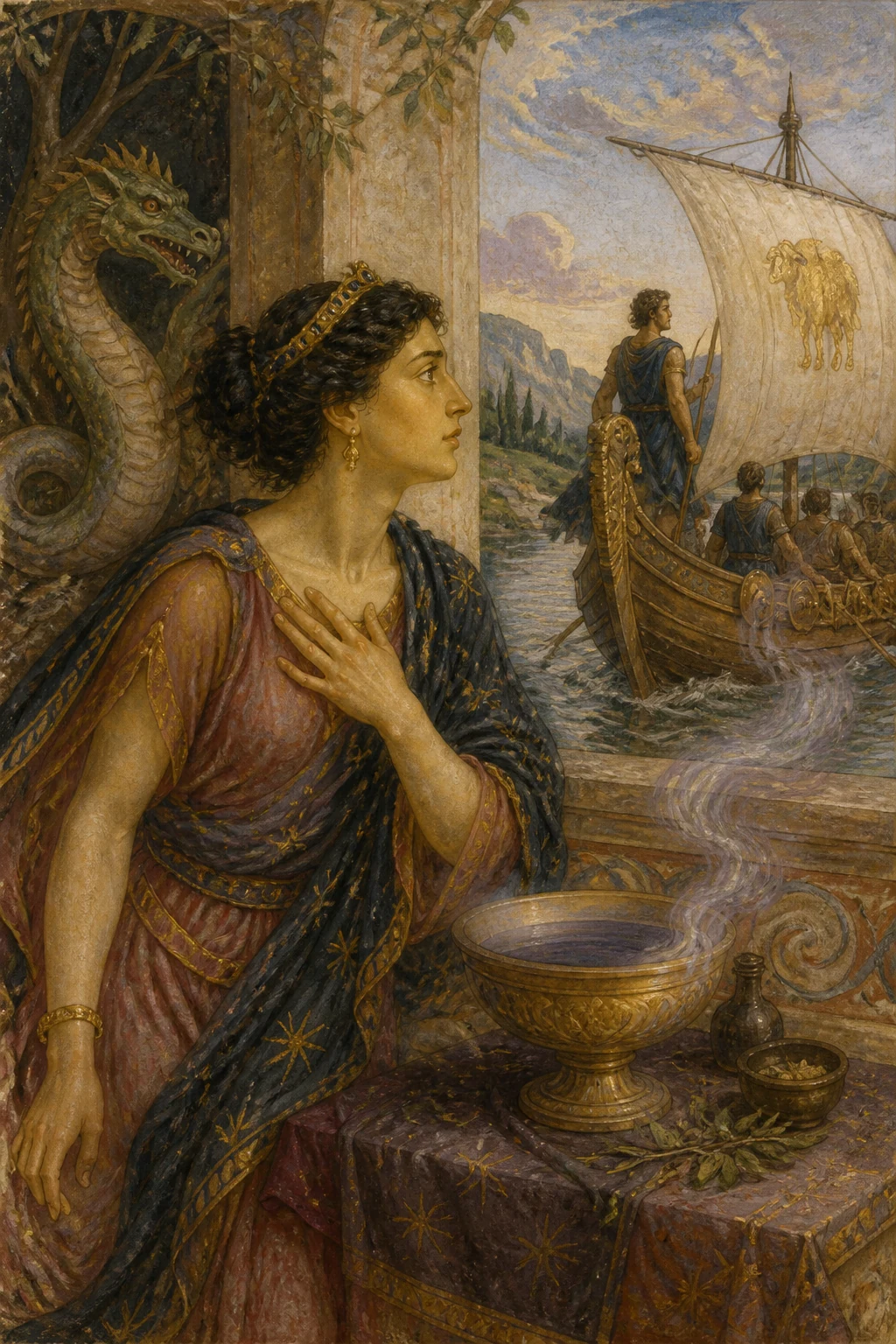
But Hera cast a most grievous fear into the maiden’s heart. She trembled like a light-footed fawn startled in the thickets of a deep forest by the baying of hounds. At once she felt certain that her help had not escaped her father’s notice and that she would soon suffer every misery.
She feared that her handmaids knew; her eyes filled with fire, and a dreadful roaring sounded in her ears. Again and again she clutched at her throat; again and again she tore at her hair and groaned in an agony of grief.
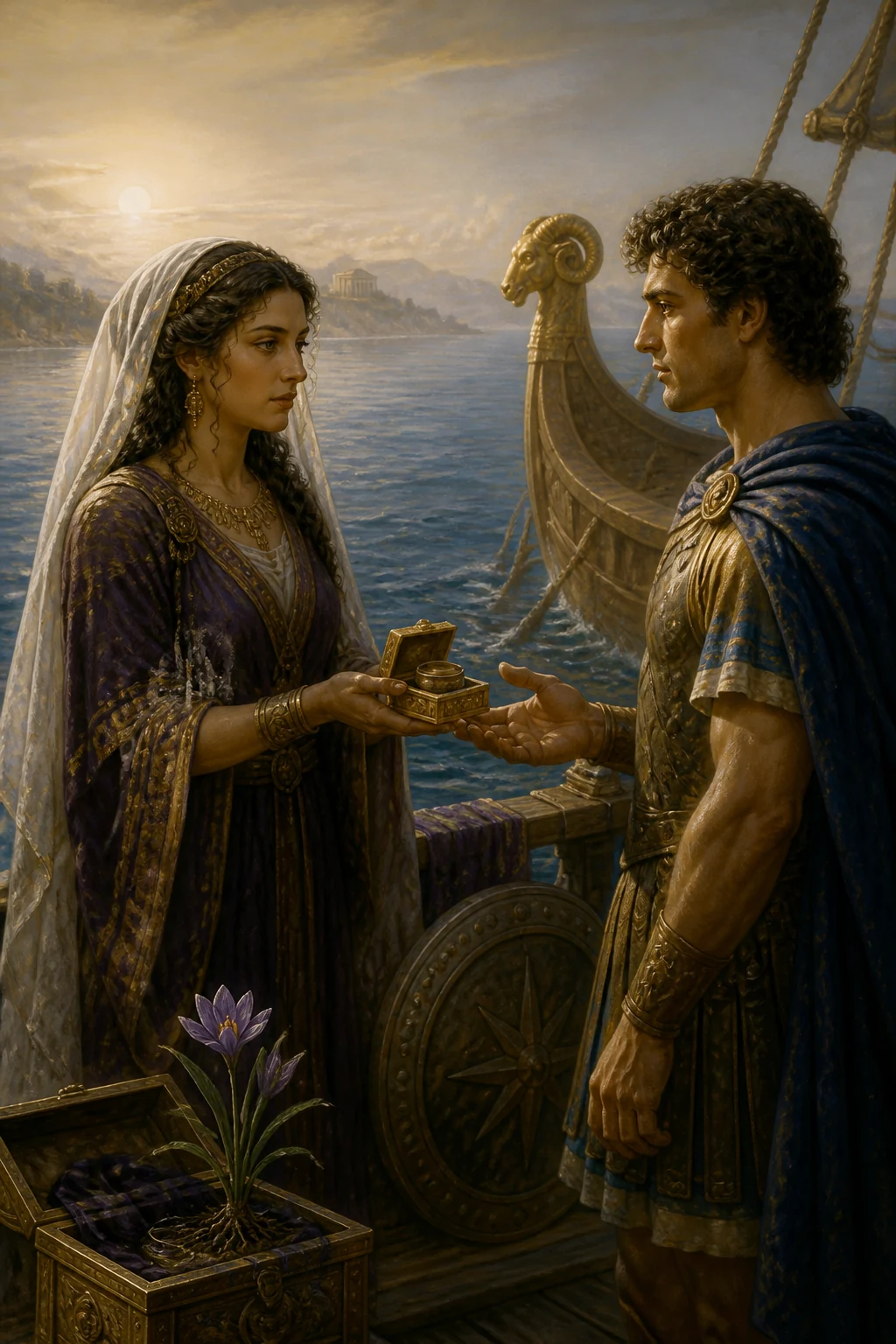
And then the maiden would have died there before her destined time, tasting poison and thwarting Hera’s purpose, had not the goddess stirred her in her terror to flee with the sons of Phrixus. Her fluttering spirit took comfort, and she quickly poured all her drugs together from the casket into the folds of her robe.
She kissed her bed and the posts on either side of the double doors, and touched the walls. Tearing out a long lock of hair with her hands, she left it in her chamber for her mother as a remembrance of her maidenhood, and lamented in a piercing voice: “In place of myself I leave you this long lock as I go, my mother. Farewell, though I am going far away from you; farewell, Chalciope, and all this house. Stranger, would that the sea had shattered you before you reached the land of Colchis!”
So she spoke, and tears streamed from her eyes. As a captive woman slips out of a wealthy house, newly torn by fate from her homeland, who has not yet tasted the misery of toil but, still unaccustomed to suffering and a slave’s work, goes in terror beneath her mistress’s cruel hands, so the lovely maiden hurried from her home.
The bolts of the doors yielded of their own accord, springing back at her swift spells. Barefoot she ran along the narrow paths, with her left hand drawing her mantle across her brow and lovely cheeks, while with her right she held the hem of her tunic high.
Swiftly in her fear she followed an obscure track beyond the towers of the spacious city. None of the guards recognized her; she set out unseen. From there she planned to make her way to the temple, for she knew the roads well, having often wandered them before in search of corpses and baneful roots of the earth, as witches do. Yet her heart quivered with shuddering fear.
The Titan goddess, the Moon, newly risen from the far horizon, saw her wandering and rejoiced eagerly at the sight, saying within herself: “So I am not the only one who strays to the Latmian cave, nor do I alone burn for handsome Endymion. Often, remembering my love, I have yielded to your cunning spells, so that in the darkness of night you might work your enchantments undisturbed, those deeds so dear to you.
“Now you too have a share in the same madness. Some god of sorrow has made Jason a grievous affliction to you. Go, then, and, wise though you are, endure the burden of a grief that will bring you many tears.”
So she spoke, and the maiden’s feet swiftly bore her on as she hastened. Gladly she reached the riverbank and looked across at the gleam of the fire which the heroes kept burning all night as they celebrated the trial’s success.
Then through the darkness she called in a clear, piercing voice to the youngest of Phrixus’s sons across the river, Phrontis. He and his brothers, and the son of Aeson himself, recognized the maiden’s voice. Their companions marvelled in silence when they understood what had indeed happened.
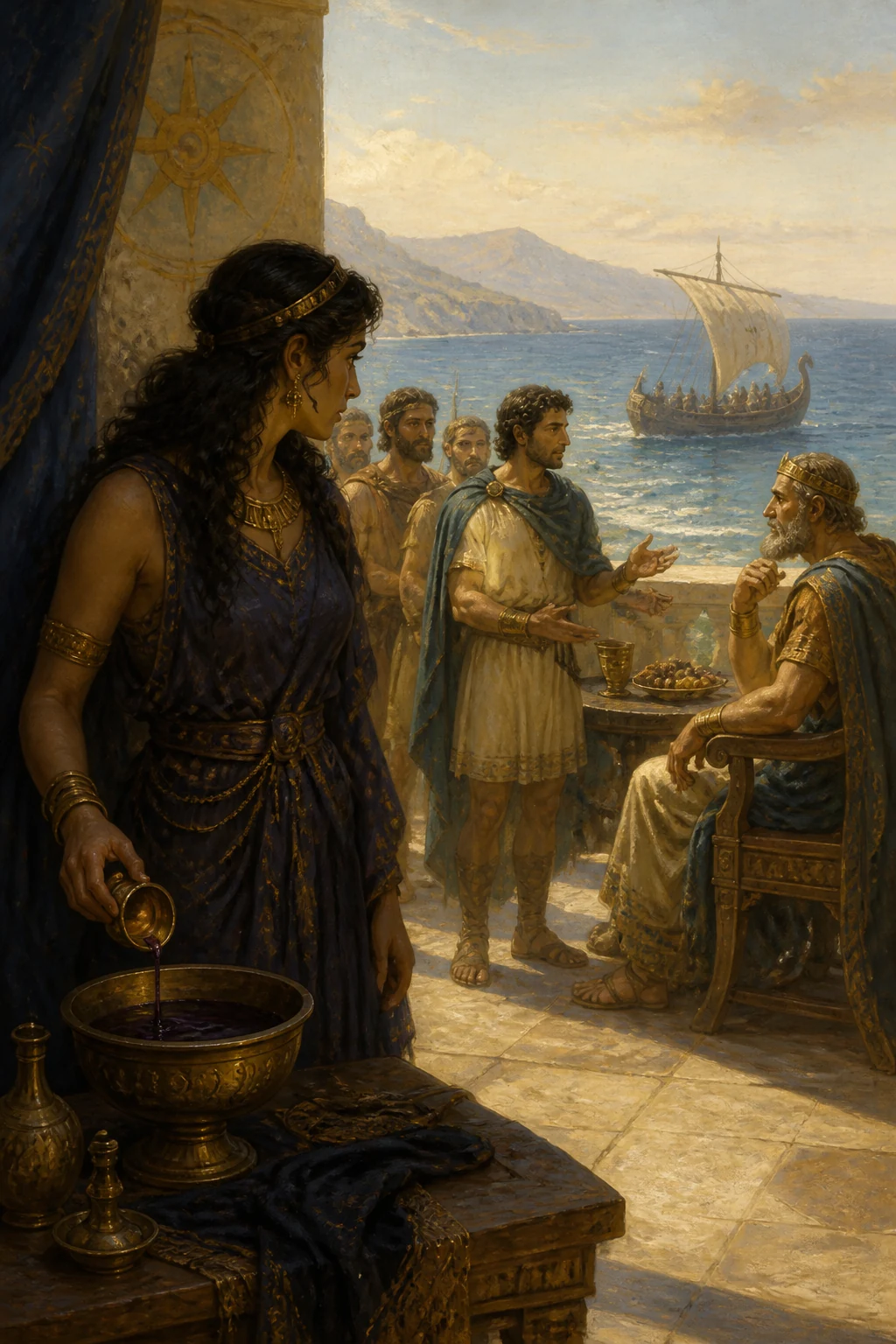
Three times she called; three times Phrontis, urged on by the company, called back in answer. Meanwhile the heroes drove towards her with swift strokes of their oars. Before they had cast the ship’s mooring ropes onto the opposite shore, Jason sprang nimbly to land from the high deck. After him Phrontis and Argus, the two sons of Phrixus, leapt ashore. Clasping their knees with both hands, she said: “Friends, save me in my misery, and yourselves as well, from Aeetes. Everything has now been plainly revealed, and no remedy is left. Let us flee aboard the ship before he mounts his swift chariot.
“I will give you the golden fleece, putting its guardian serpent to sleep. But you, stranger, before your companions, make the gods witnesses to the promises you gave me. Do not leave me, once I have gone far from here without protectors, to shame and dishonour.”
So she spoke in anguish, but the heart of Aeson’s son rejoiced greatly. Gently raising her from where she crouched at his knees, he embraced her and reassured her: “Dear lady, let Olympian Zeus himself witness my oath, and Hera, guardian of marriage, the wife of Zeus: I will establish you in my house as my lawful wife when we return to the land of Greece.”
So he spoke, and clasped her right hand in his. She urged them to row the swift ship straight to the sacred grove, so that they might take the fleece and carry it away while it was still night, without Aeetes knowing.
For them, in their haste, word and deed were one. They went aboard and at once thrust the ship away from the shore. Loud was the tumult as the heroes laboured urgently at their oars. But she turned back towards the land and stretched out her hands in helpless grief. Jason comforted her with words and restrained her anguish.
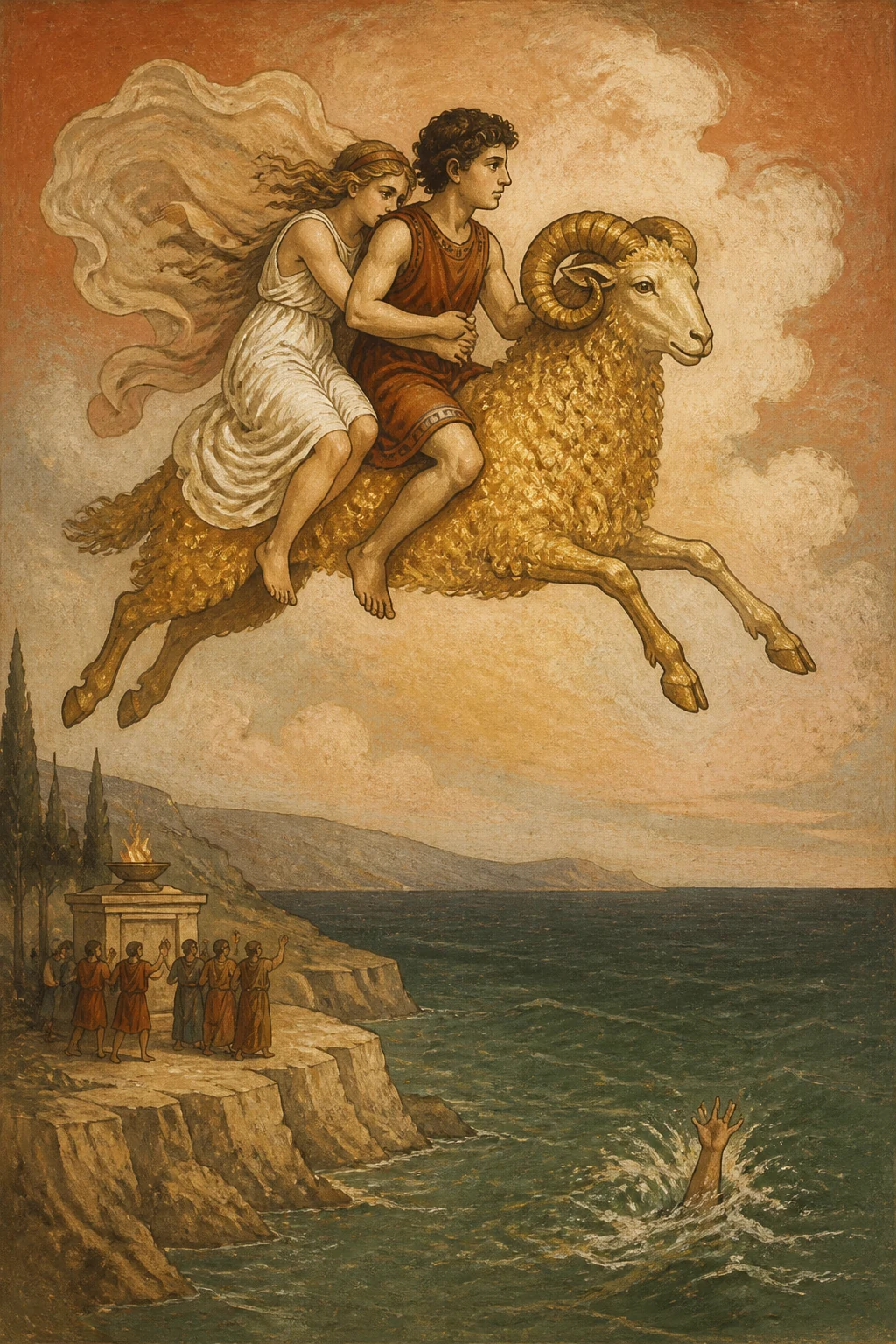
At the hour when hunters shake sleep from their eyes—men who, trusting in their hounds, never slumber through the last hours of darkness, lest dawn’s light should strike with its white rays and obliterate the tracks and scent of the beasts—then the son of Aeson and the maiden stepped ashore in a grassy place called the Ram’s Rest, where the ram had first bent its weary knees, bearing on its back the Minyan son of Athamas.
Near by stood the smoke-blackened foundations of an altar—πελεν corrected diacritic error (πελεν) in the source text—which Phrixus, descendant of Aeolus, had once built to Zeus, guardian of fugitives, when he sacrificed that wondrous creature, all of gold, as Hermes had bidden him when he met him graciously. There, at Argus’s suggestion, the heroes put the two ashore.
They followed a path to the sacred grove, seeking the immense oak on which the fleece was spread, like a cloud reddened by the fiery rays of the rising sun.
But the serpent, keen-eyed and sleepless, saw them coming and stretched its long neck straight towards them, hissing monstrously. The river’s long banks and the vast grove echoed all around.
Even those who dwelt far from Titanian Aea in the Colchian land, beside the mouths of the Lycus, heard it—the Lycus, which branches from the roaring Araxes and joins its sacred stream to the Phasis, until both rivers, flowing into one, pour into the Caucasian sea.
Mothers newly delivered woke in terror and anxiously threw their arms around the little children sleeping in their embrace, who trembled at the hissing. As above a smouldering forest countless sooty coils of smoke whirl upward, one rising swiftly after another, always mounting from below in circling spirals, so then that monster rolled its endless coils, sheathed in dry, hard scales.
As it writhed, the maiden advanced before its eyes, calling in a sweet voice upon Sleep, highest of gods, to help her and enchant the monster. She invoked the queen who wanders by night beneath the earth, asking her to grant success to their undertaking.
The son of Aeson followed in fear. Already beguiled by the song, the serpent was loosening the long ridge of its earth-born coils and stretching out its countless rings, like a dark wave rolling over a gentle sea, mute and soundless. Yet still it held its dreadful head aloft, eager to enfold them both in its deadly jaws.
But she dipped a freshly cut sprig of juniper into her potion and, chanting spells, sprinkled potent drugs over its eyes. All around, the strong fragrance of the drug spread sleep, and the serpent lowered its jaw to rest upon the very spot where it lay. Far behind, its endless coils stretched through the many-trunked forest.
Then, at the maiden’s urging, Jason took the golden fleece from the oak. She stood firm, stroking the monster’s head with her drug, until Jason himself bade her return to his ship, and he left the deeply shadowed grove of Ares.
As a maiden catches in her fine robe the brightness of the full moon shining high above her chamber beneath the roof, and her heart rejoices as she gazes at its lovely radiance, so Jason joyfully lifted the great fleece in his hands. Over his fair cheeks and forehead the shimmering wool cast a ruddy glow like flame.
As large as the hide of a yearling ox or of the stag that hunters call a brocket, so broad was the fleece, golden all over. It was heavy with its thick wool, and as he walked the earth beneath his feet flashed continually with its light.
As he went, now he wore it over his left shoulder, hanging from his neck to his feet; now he gathered it up again and stroked it. For he was greatly afraid that some man or god might meet him and take it away.
Dawn was spreading over the earth when they reached their companions. The young men marvelled at the great fleece, shining like the lightning of Zeus. Each sprang up, longing to touch it and take it into his own hands.
But the son of Aeson held them back and threw a fresh-woven cloth over it. He brought the maiden aboard and seated her in the stern, then spoke before them all: “Friends, delay no longer now in returning to our homeland.
“For the task for which we endured this grievous voyage, toiling in misery, has now been easily accomplished through this maiden’s counsels. With her consent I will take her home as my lawful wife. But you must protect her, for she has been a noble helper to all Achaea and to yourselves. Already, I am sure, Aeetes will be coming with his host to stop us from leaving the river for the sea.
“Let half of you take your places at the oars, man by man on alternate benches throughout the ship, and row; let the other half hold up your oxhide shields, a ready defence against the enemy’s missiles, and guard our homeward voyage. Now we hold in our hands our children, our dear homeland, and our aged parents. On our efforts rests whether Greece will win shame or mighty glory.”
So he spoke and put on his armour of war. They raised a tremendous shout in their eagerness. Drawing his sword from its sheath, he cut the ship’s stern cables. Armed, he took his place beside the maiden, near Ancaeus the helmsman, and the ship sped on under their oars as they strained with all their might to drive her swiftly out of the river.