Waltey
Maščevanje poglavarja plemena Accabee
175 Revenge of the Accabee
Myths and Legends of Our Own Land · Charles M. SkinnerO besedilu
Maščevanje poglavarja plemena Accabee
- Vir
- Myths and Legends of Our Own Land
- Avtor
- Charles M. Skinner
- Jezik branja
- Slovenščina
- Jezik izvirnika
- English
- Čas branja
- 4 min branja
- Obseg
- 3 strani
- Naslov izvirnika
- 175 Revenge of the Accabee
O izvirniku
Myths and Legends of Our Own Land
Obsežna zgodovinska zbirka ameriških legend, ki jih je Skinner zbral in avtorsko rekonstruiral. Bralni jezik je Slovenščina, izvirnik pa prihaja iz vira Myths and Legends of Our Own Land v jeziku English.
Besedilo
Maščevanje poglavarja plemena Accabee
Naselbino, ki jo je lord Cardross ustanovil blizu Beauforta v Južni Karolini, so napadli Španci in Indijanci, jo požgali do tal in pobili vse prebivalce razen ene deklice. Ta trinajstletni otrok je v mladem poglavarju plemena Accabee, ki je šel mimo skozi dim, videl svojega očeta in se mu vrgel v objem. Divjak je dvignil sekiro, da bi udaril, toda ko je ujel pogled njenih modrih oči, uprtih vanj bolj z žalostjo in začudenjem kakor s strahom, mu je grozeča roka omahnila ob telo. Deklico si je lahkotno posadil na ramo in odkorakal v gozd. Miljo za miljo jo je nosil, in kadar je zaspala, jo je stisnil k prsim, kakor oče drži dojenčka. Ko se je prebudila, je bila v njegovem bivališču ob reki Ashley in on se ji je smehljal v obraz. Poglavar je postal njen zaščitnik; toda tisti, ki so sčasoma opazili, kako se je njegova divjost umirila, so vedeli, da mu pomeni več kot hči. Leta so minevala, deklica je odrasla v žensko in njen ugrabitelj ji je izpovedal ljubezen. Zdelo se je, da ji to ni bilo neljubo, saj je privolila, da postane njegova žena. Po zaroki se je poglavar pridružil lovski odpravi in ga nekaj časa ni bilo. Ko se je vrnil, je dekle izginilo. Trgovec, ki je menjal blago za krzno, jo je zagledal, se zanjo razvnel in si z uglajenim vedenjem ter belo poltjo v enem dnevu pridobil večjo naklonjenost, kot si jo je Indijanec lahko obetal po letih ljubeče skrbi.
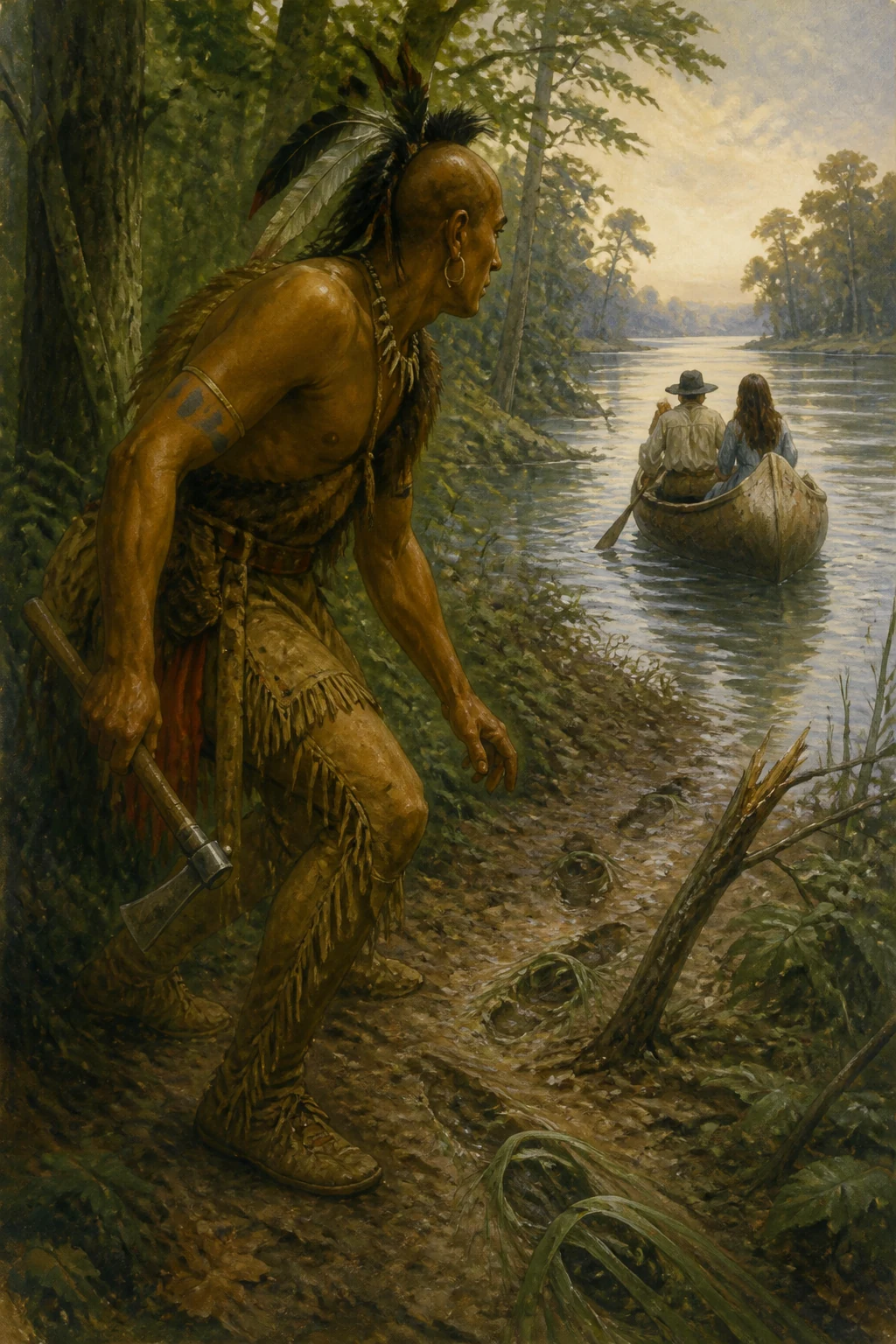
Ko je poglavar to odkril, se je brez besede odpravil po njuni sledi. Po zlomljenih vejicah, poležani travi in stopinjah ob potoku jima je sledil, dokler ju ni našel počivati pod drevesom. Ko se je divjak z nožem in tomahavkom za pasom prikazal pred njima, je dekle s prestrašenim krikom skočilo iz objema novega ljubimca in mu hotelo objeti kolena, a jo je s kretnjo odgnal. Nato jima je ukazal, naj nadaljujeta pot, in hodil za njima, dokler niso prišli do rodovitnega kraja ob reki Ashley, blizu današnjega Charlestona, kjer se je ustavil. »Čeprav si kriva, ne boš umrla,« je rekel ženski; nato pa svojemu tekmecu: »Poročil se boš z njo in bel duhovnik bo sklenil vajini roki. Tu bo vajin prihodnji dom. Dajem ti mnogo akrov svoje zemlje, toda glej, da boš skrbel zanjo. Kakor sem bil jaz usmiljen do tebe, bodi ti dober do nje. Če boš z njo grdo ravnal, ne bom daleč.«
Poročila sta se in se naselila na zemlji, ki jima je bila tako velikodušno odstopljena. Nekaj časa je šlo vse dobro, a kmalu se je začela razkrivati moževa prava narava, čemerna in sebična. Prišlo je do nesoglasij, nato do prepirov; nazadnje je mož ženo udaril, pograbil listino o zemlji plemena Accabee in papir, ki jo ga je prisilil podpisati, ne da bi vedela, kaj piše v njem, ter se odpravil proti naselbinam, da bi posest prodal in odplul v Anglijo. Na robu vasi mu je beg preprečila visoka postava, ki mu je stopila na pot — Indijanec. »Vse sem ti dal,« je rekel poglavar, »žensko, ki bi morala postati moja žena, potem pa še svojo zemljo. Tako se mi zahvaljuješ. Ne boš šel naprej.«
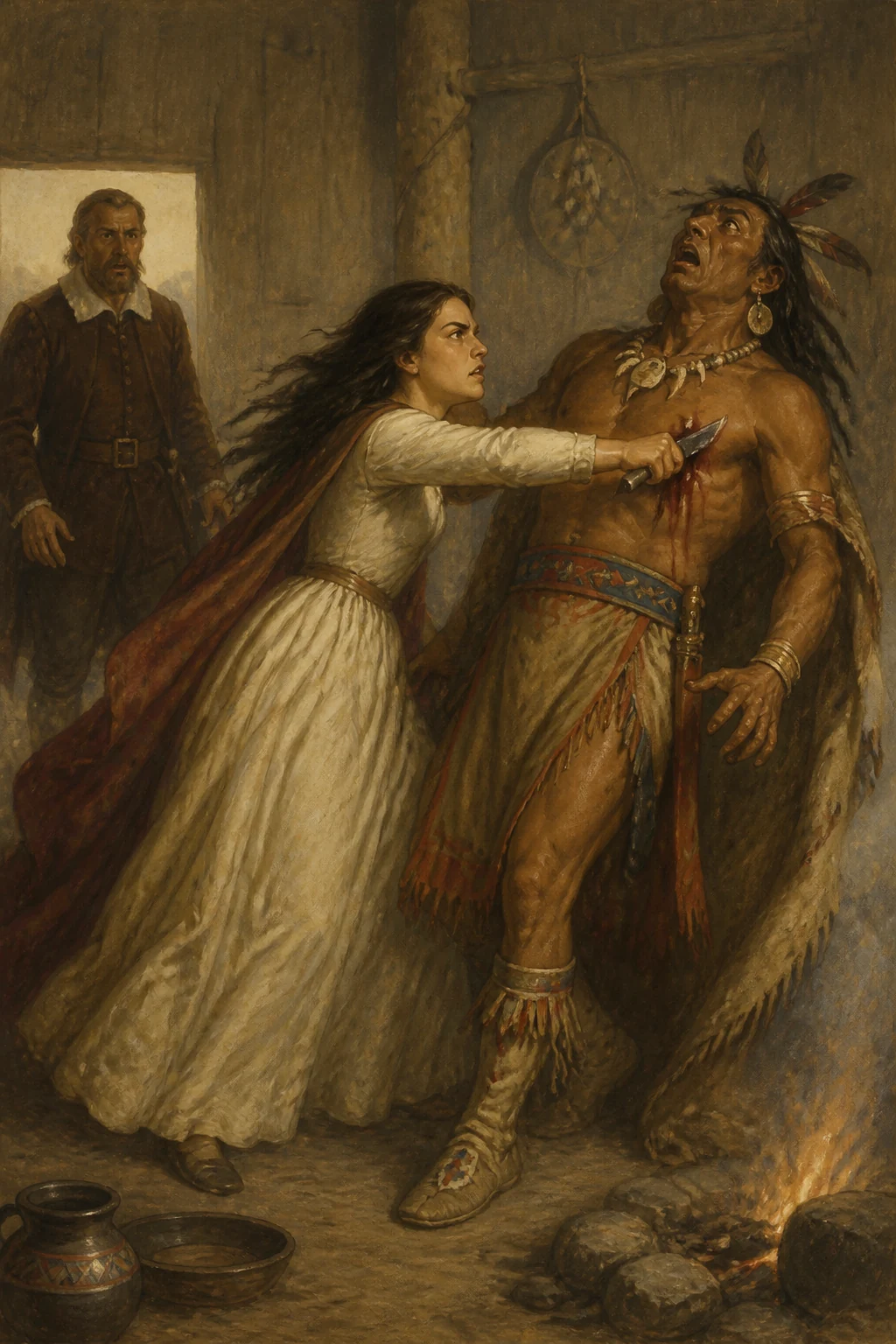
S hitrim udarcem sekire je razklal lobanjo trepetajočega bednika, mu odrezal skalp in stekel do koče, kjer je zapuščena žena sedela pred žerjavico svojega ognjišča in jokala. Zdramil jo je, ko je na ogenj naložil sveže kurivo, toda ko je videla, kdo je prišel k njej, se je v žalosti in sramu umaknila. »Ne boj se,« je rekel. »Mož, ki te je udaril, je hotel tvoj dom prodati tujcem,« in položil je prodajno listino prednjo, »toda nikoli več te ne bo izdal ali dvignil roke nadte. Poglej!« Na papir je vrgel skalp, s katerega je kapljala kri. »Zdaj te zapuščam za vedno. Ne morem te odpeljati nazaj med svoje ljudstvo, ki ne pozna takšne prevare, kakršna je tvoja, niti te ne bi mogel nikoli več ljubiti kakor nekoč.« Obrnil se je in brez nadaljnjega slovesa odšel skozi vrata. Ko so to podarjeno zemljo plemena Accabee prodali — ženska namreč ni več prenesla življenja na njej in je odšla v neko severno mesto — je novi lastnik zgradil lepo hišo ter posesti dodal lovski rezervat in sprehajalne vrtove, vendar je na njej »strašila žalost«. Nakupu sta sledili bolezen in nesreča, hiša pa je propadla.
Izvirnik
175 Revenge of the Accabee
Naslednje strani prikazujejo izvirno besedilo za primerjavo.
The settlement made by Lord Cardross, near Beaufort, South Carolina, was beset by Spaniards and Indians, who laid it in ashes and slew every person in it but one. She, a child of thirteen, had supposed the young chief of the Accabees to be her father, as he passed in the smoke, and had thrown herself into his arms. The savage raised his axe to strike, but, catching her blue eye raised to his, more in grief and wonder than alarm, the menacing hand fell to his side, and, tossing the girl lightly to a seat on his shoulder, he strode off into the forest. Mile after mile he bore her, and if she slept he held her to his breast as a father holds a babe. When she awoke it was in his lodge on the Ashley, and he was smiling in her face. The chief became her protector; but those who marked, with the flight of time, how his fierceness had softened, knew that she was more to him than a daughter. Years passed, the girl had grown to womanhood, and her captor declared himself her lover. She seemed not ill pleased at this, for she consented to be his wife. After the betrothal the chief joined a hunting party and was absent for a time. On his return the girl was gone. A trader who had been bartering merchandise for furs had seen her, had been inspired by passion, and, favored by suave manners and a white skin, he had won in a day a stronger affection than the Indian could claim after years of loving watchfulness.
When this discovery was made the chief, without a word, set off on the trail, and by broken twig, by bended grass and footprints at the brook-edge, he followed their course until he found them resting beneath a tree. The girl sprang from her new lover's arms with a cry of fear as the savage, with knife and tomahawk girt upon him, stepped into view, and she would have clasped his knees, but he motioned her away; then, ordering them to continue their march, he went behind them until they had reached a fertile spot on the Ashley, near the present site of Charleston, where he halted. “Though guilty, you shall not die,” said he to the woman; then, to his rival, “You shall marry her, and a white priest shall join your hands. Here is your future home. I give you many acres of my land, but look that you care for her. As I have been merciful to you, do good to her. If you treat her ill, I shall not be far away.”
The twain were married and went to live on the acres that had been so generously ceded to them, and for a time all went well; but the true disposition of the husband, which was sullen and selfish, soon began to disclose itself; disagreements arose, then quarrels; at last the man struck his wife, and, seizing the deed of the Accabee land and a paper that he had forced her to sign without knowing its contents, he started for the settlements, intending to sell the property and sail for England. On the edge of the village his flight was stayed by a tall form that arose in his path-that of the Indian. “I gave you all,” said the chief, “the woman who should have been my wife, and then my land. This is your thanks. You shall go no farther.”
With a quick stroke of the axe he cleft the skull of the shrinking wretch, and then, cutting off his scalp, the Indian ran to the cottage where sat the abandoned wife, weeping before the embers of her fire. He roused her by tossing on fresh fuel, but she shrank back in grief and shame when she saw who had come to her. “Do not fear,” he said. “The man who struck you meant to sell your home to strangers”--and he laid the deed of sale before her, “but he will never play you false or lay hands on you again. Look!” He tossed the dripping scalp upon the paper. “Now I leave you forever. I cannot take you back among my people, who do not know deceit like yours, nor could I ever love you as I did at first.” Turning, without other farewell he went out at the door. When this gift of Accabee land was sold--for the woman could no longer bear to live on it, but went to a northern city--a handsome house was built by the new owner, who added game preserves and pleasure grounds to the estate, but it was “haunted by a grief.” Illness and ill luck followed the purchase, and the house fell into ruin.
Nadaljuj z branjem