Prevod
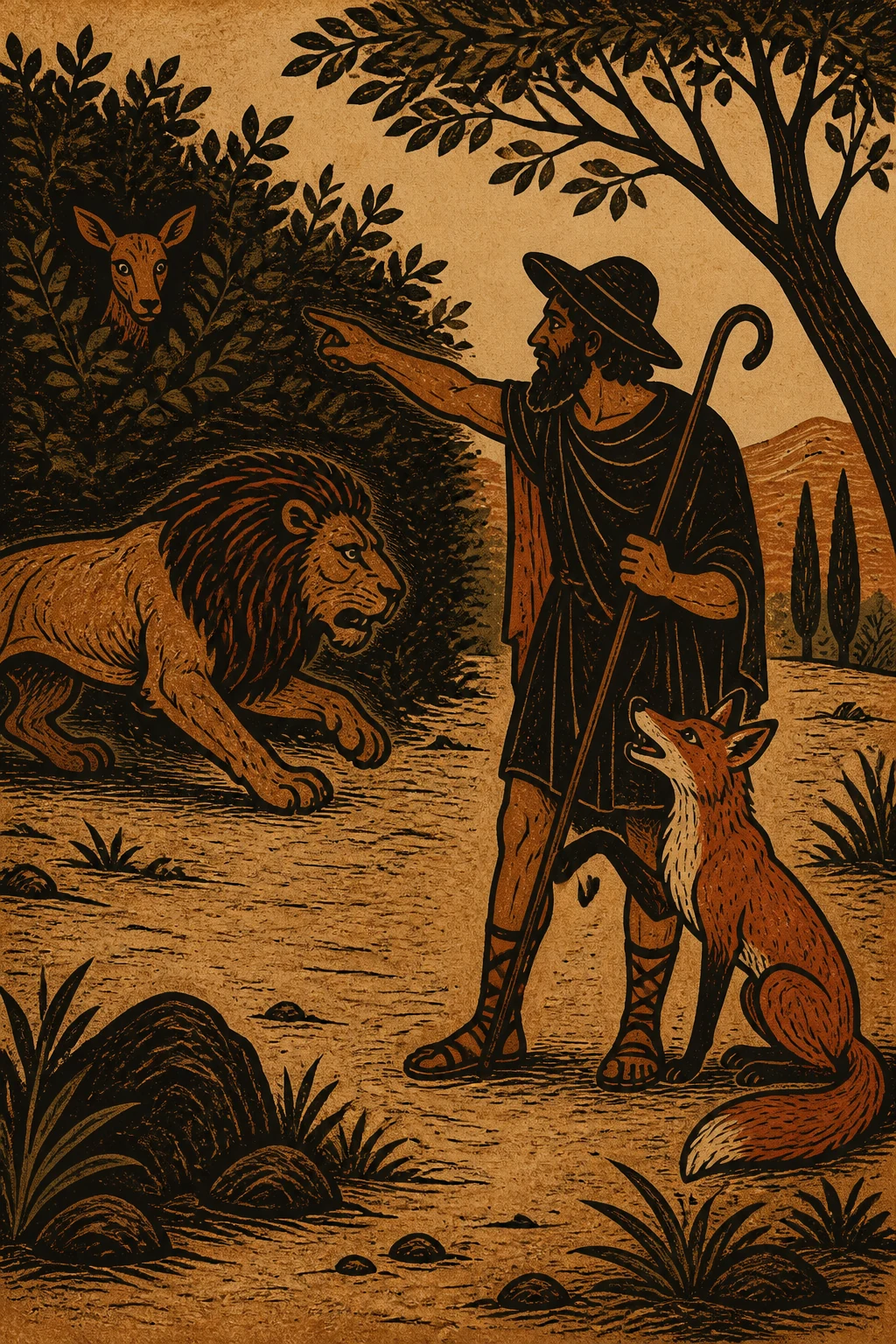
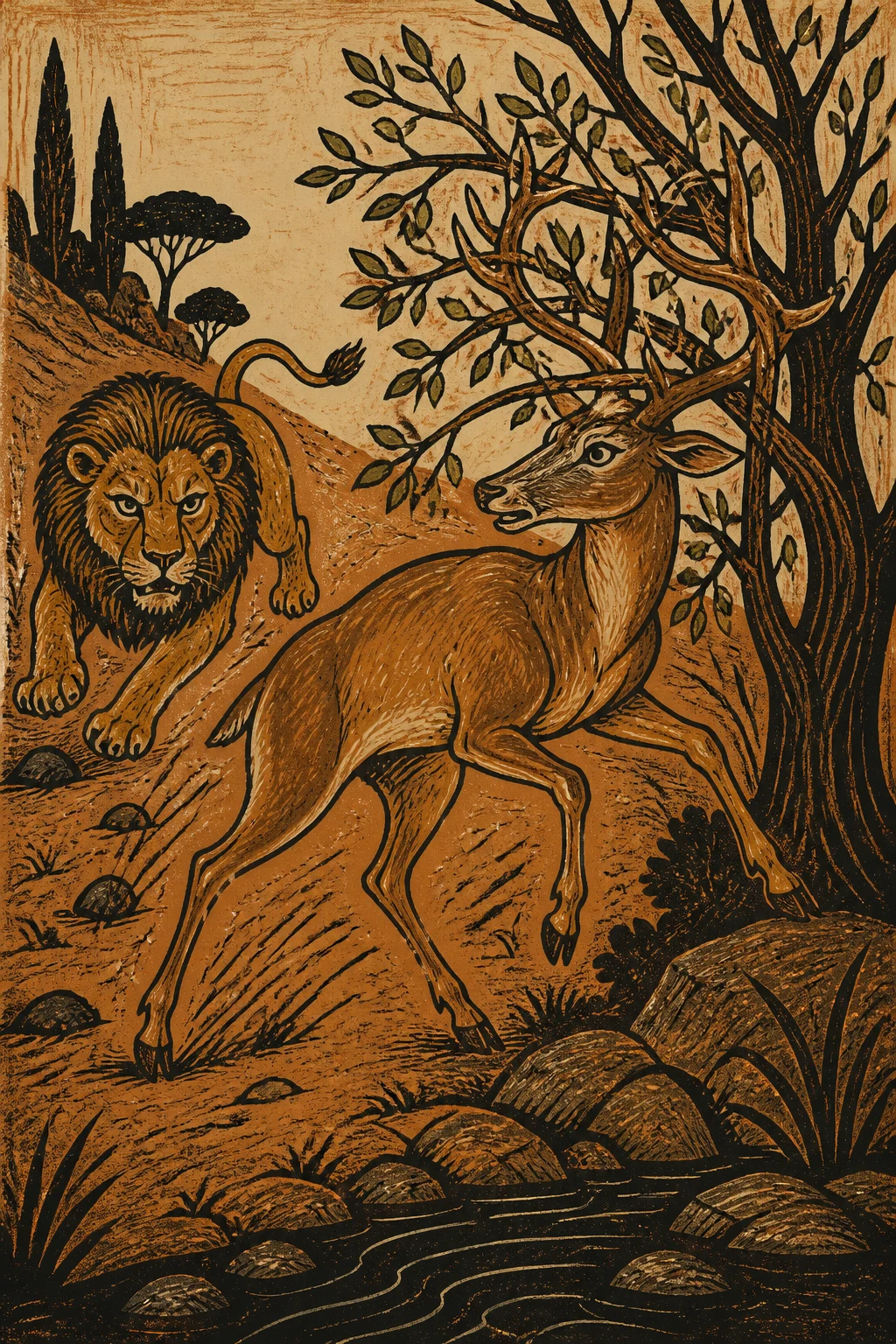
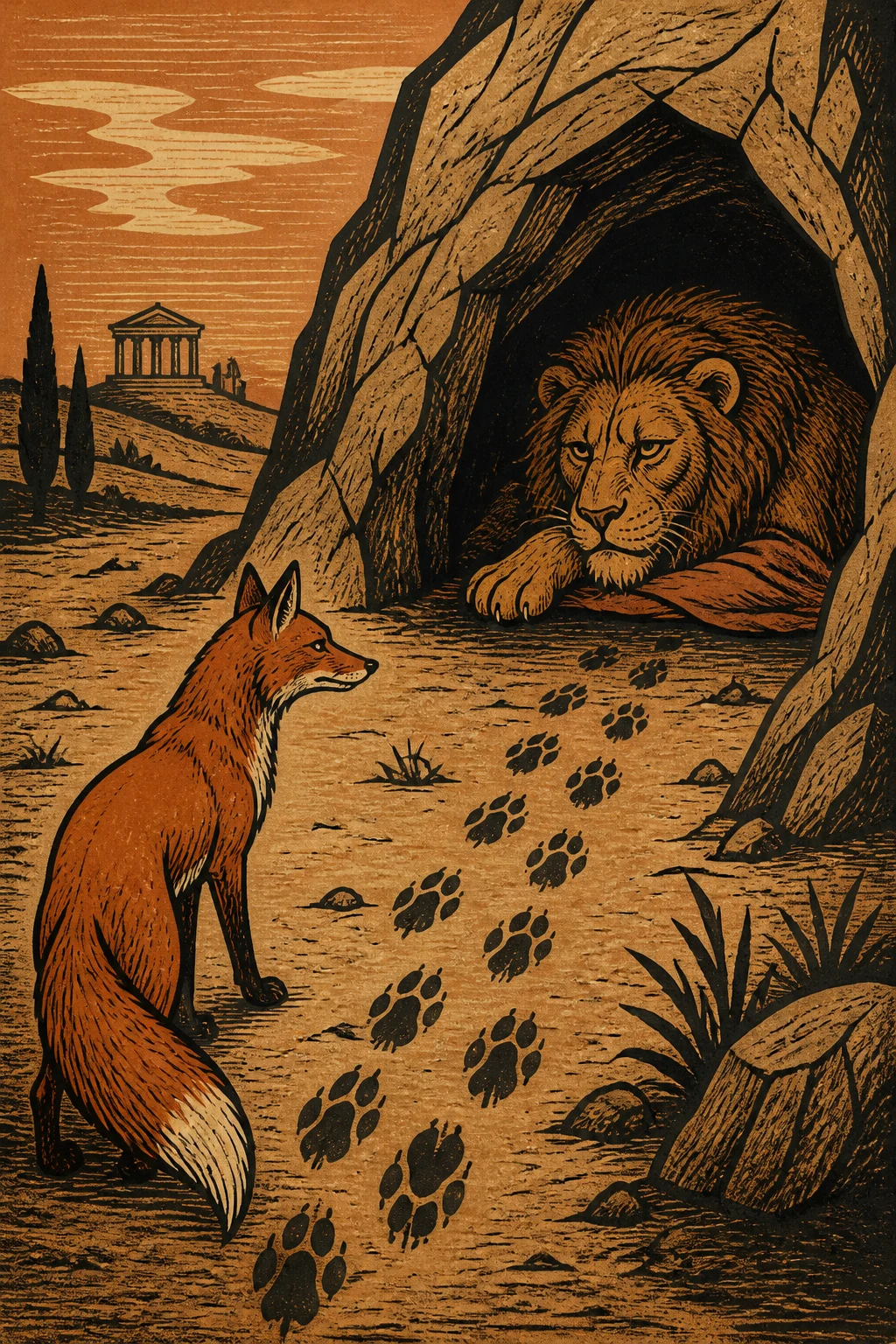
A lion lay sick in a ravine. He said to a fox who was his dear friend and companion, “If you want me to recover and live, use your sweet words to beguile the great deer who lives in the forest and bring her into my clutches, for I crave her entrails and her heart.” The fox went off and found the deer frisking among the trees. She approached her playfully, greeted her, and said, “I have come to bring you good news. You know that our king, the lion, is my neighbour. He is ill and close to death, and he has been considering which of the beasts should reign after him. He said that the boar lacks judgment, the bear is sluggish, the leopard hot-tempered, and the tiger boastful. The deer is best fitted to be queen, for she is stately in appearance, lives for many years, and has antlers that terrify snakes. But why say more? Your succession is settled. What will you give me for being the first to tell you? Now wish me well as I hurry back, lest he should already be looking for me, for he needs my advice in everything. Still, if you will listen to an old woman like me, I advise you to come too and stay beside him as he dies.” So spoke the fox, and her words so clouded the deer’s judgment with vanity that she went into the cave, unaware of what awaited her. The lion sprang at her in such haste that his claws merely tore her ears. She fled swiftly into the woods. The fox clapped her paws in vexation at having laboured in vain, while the lion groaned with a mighty roar, tormented by hunger and disappointment. He begged the fox to try once more and trick the deer into returning. “You are asking something hard and troublesome of me,” she said, “but I will help you nevertheless.” And so she followed the trail like a tracking hound, weaving fresh deceits. She asked some shepherds whether they had seen a bloodied deer, and they pointed her out in the woods. The fox found her recovering there and brazenly stood before her. Bristling with anger, the deer said, “You wretch! You will not get me into your power again. Come any closer, and you will not live to regret it. Play your fox’s tricks on others who know no better; make them kings and stir up their ambitions.” But the fox replied, “Are you so faint-hearted and cowardly? Is this how you mistrust your friends? The lion took hold of your ear because, being near death, he meant to give you advice and instructions about so great a kingdom. Yet you could not endure even the feeble scratch of his paw! And now he is far angrier than you are and means to make the wolf king. Alas, what a wicked master we shall have! Come, then, have no fear, and be as gentle as a lamb. I swear to you by all the leaves and springs that you will suffer no harm from the lion, and I will serve you alone.” With these deceptions she persuaded the poor creature to return a second time. Once the deer entered the cave, the lion had his feast, devouring bones, marrow, and entrails, while the fox stood watching. When the heart fell out, she snatched it up unseen and ate it as payment for her trouble. The lion searched through everything, but the heart alone was missing, and he kept asking for it. Standing at a safe distance, the fox said, “She truly had no heart, so look no further. For what heart could she have had, when she twice entered a lion’s den and put herself into his clutches?” Thus the craving for glory clouds people’s judgment, leaving them blind to the disasters that danger brings.