Prevod
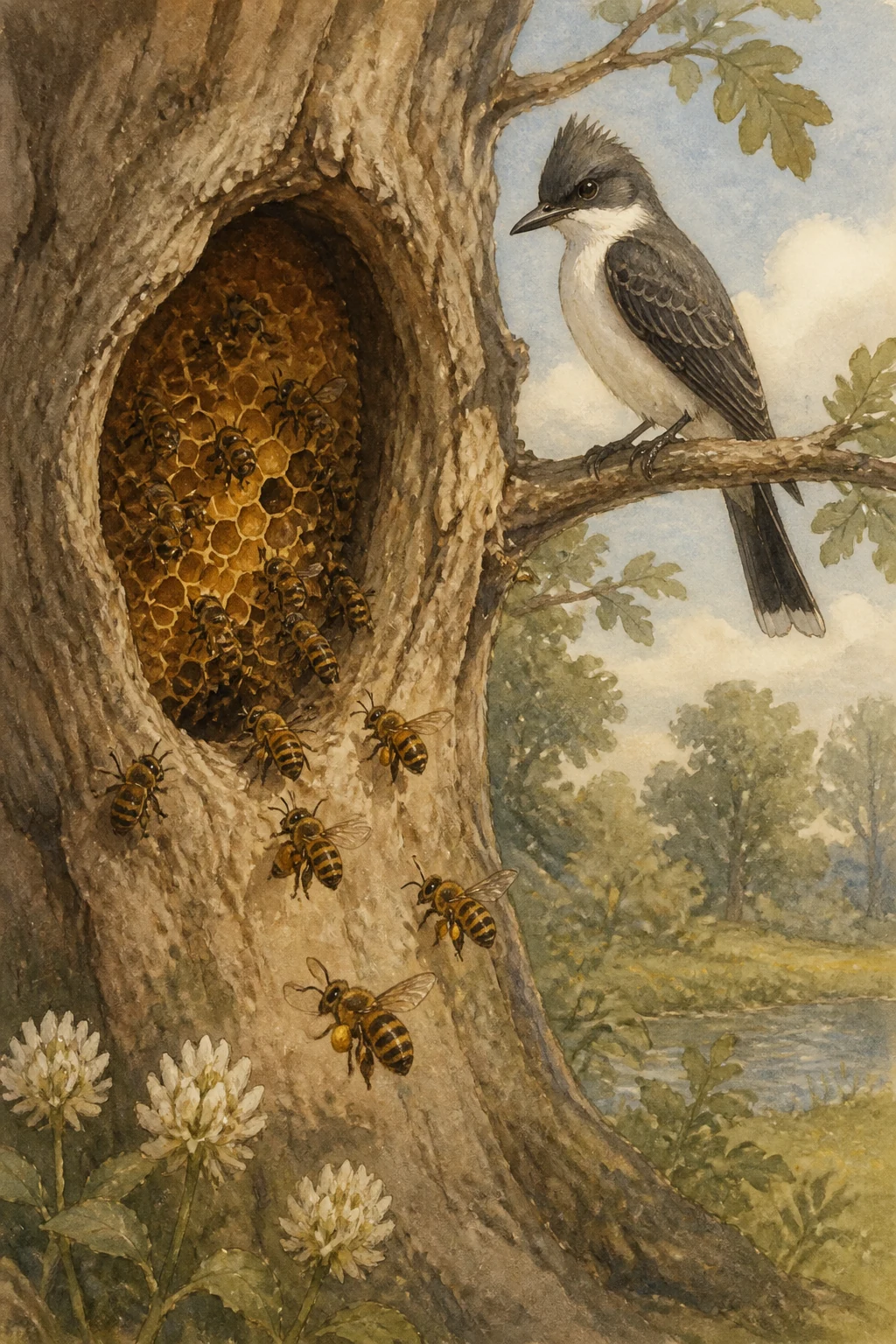
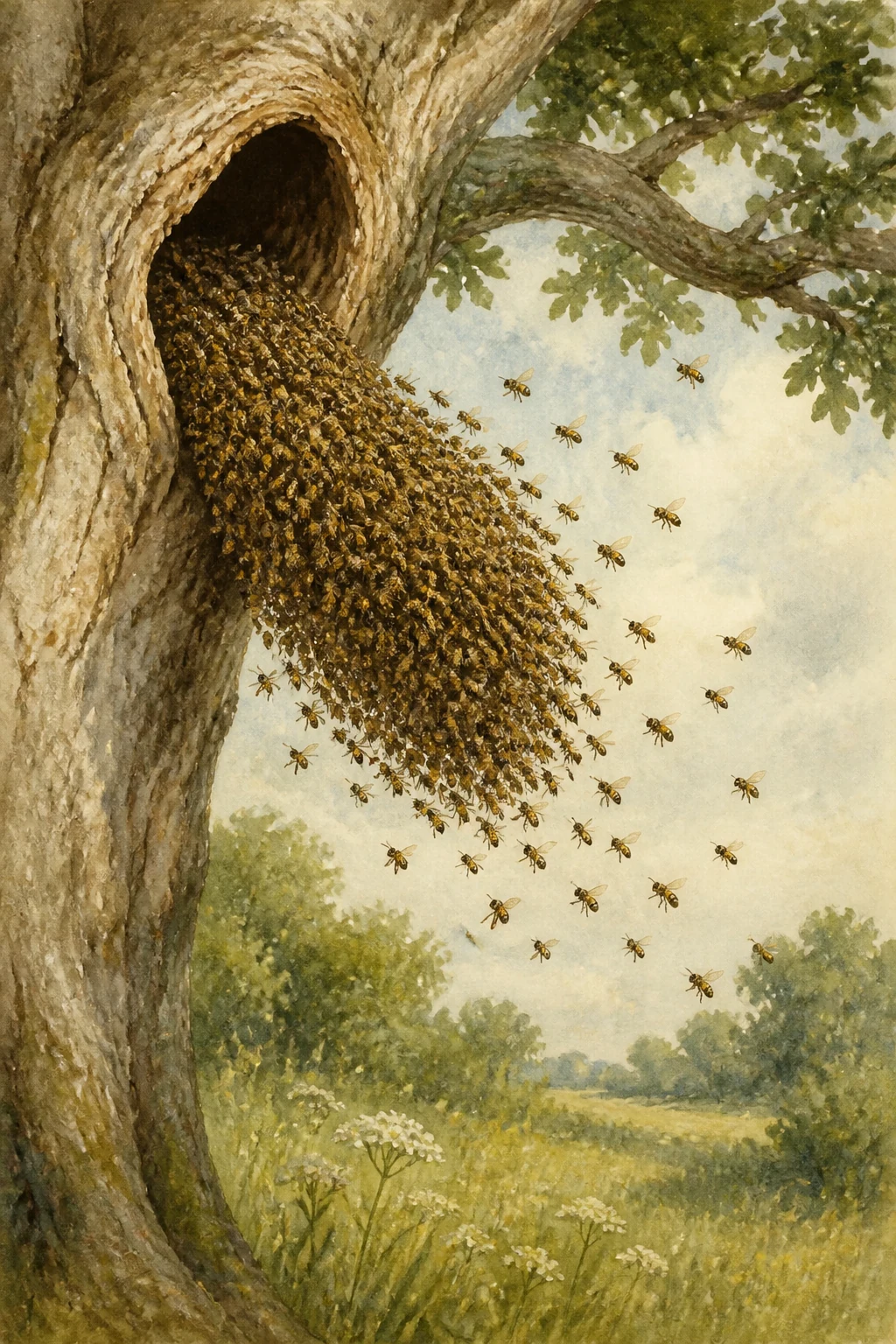
Once upon a time, in a hive, there lived a bee who did not want to work. That is to say, she went from tree to tree gathering nectar from the flowers, but instead of saving it to turn into honey, she drank it all herself.
She was, in short, a lazy bee. Every morning, as soon as the sun warmed the air, the little bee would peek out of the hive, see that the weather was fine, comb herself with her legs, as flies do, and then take wing, delighted with the lovely day. She buzzed from flower to flower in sheer delight, went into the hive, came out again, and spent the whole day that way, while the other bees worked themselves to death filling the hive with honey, because honey is the food of newborn bees.
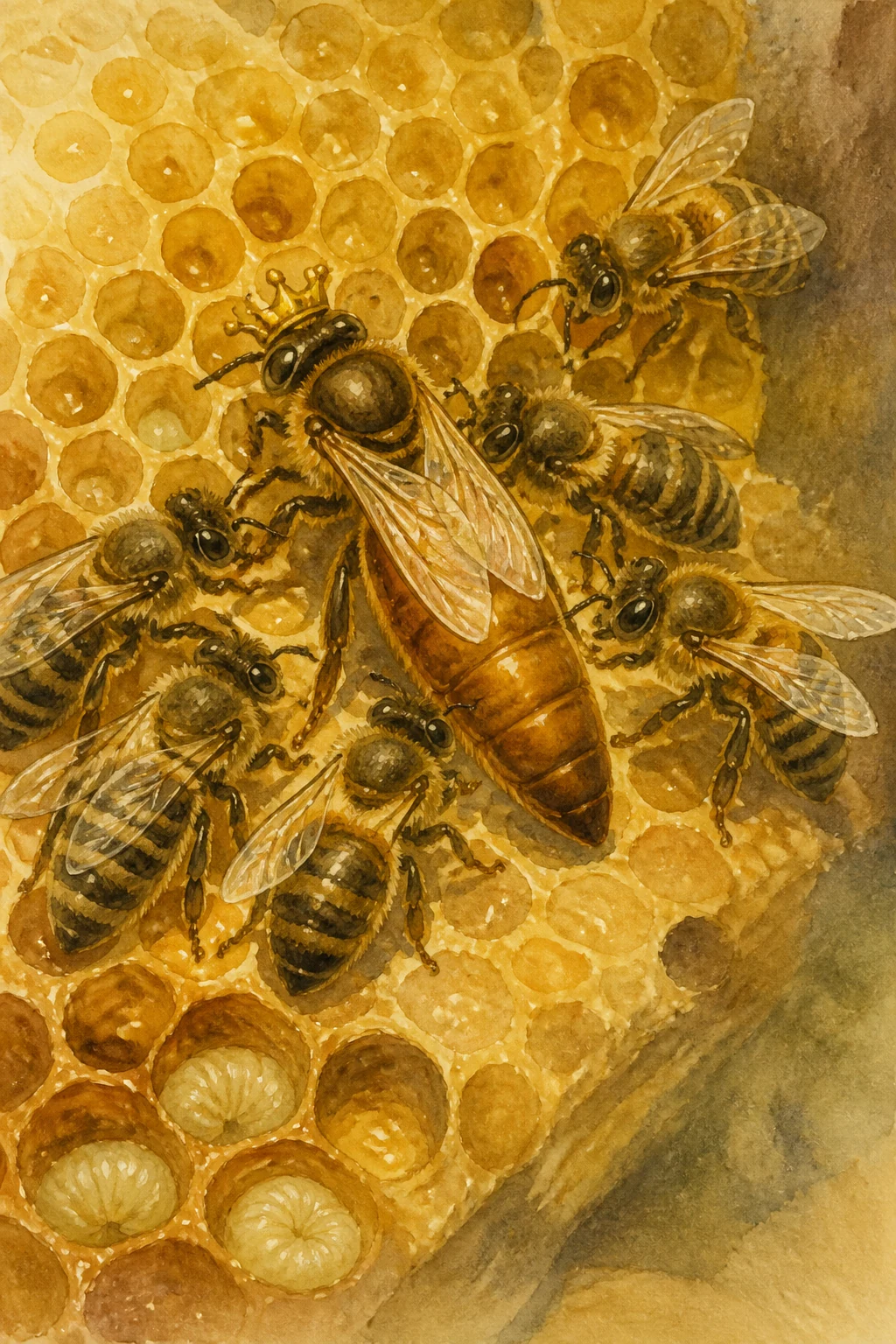
Since bees are very earnest creatures, they began to resent their lazy sister’s behavior. There are always a few bees standing guard at the entrance to a hive, making sure that no other creatures get in. These bees are usually very old, with a great deal of experience of life, and their backs are bare because all their hairs have worn away from so much rubbing against the hive entrance.
One day, then, they stopped the lazy bee as she was about to enter and said, “Sister, you must work, because all of us bees must work.”
The little bee replied, “I fly around all day, and I get very tired!” “It is not a question of getting very tired,” they answered, “but of doing a little work. This is your first warning.”
And with that they let her through. But the lazy bee did not mend her ways. So the following afternoon, the bees on guard said to her:
“You must work, sister.” And she answered at once, “One of these days I will!” “It is not a question of doing it one of these days,” they replied, “but tomorrow. Remember that.”
And they let her through. At dusk the next day, the same thing happened again. Before they could say anything, the little bee exclaimed, “Yes, yes, sisters! I remember what I promised!”
“It is not a question of remembering what you promised,” they replied, “but of working. Today is April 19. Very well: see to it that tomorrow, the twentieth, you bring back at least one drop of honey. Now come in.”
And with that they stepped aside to let her enter. But April 20 was wasted like all the other days. The only difference was that at sunset the weather turned bad and a cold wind began to blow.
The lazy little bee hurried back to her hive, thinking how warm it would be inside. But when she tried to enter, the bees on guard barred her way.
“No admittance,” they told her coldly. “I want to come in!” cried the little bee. “This is my hive.” “This is the hive of some poor, hardworking bees,” the others replied. “There is no room here for idlers.”
“Tomorrow I’ll work without fail!” the little bee insisted. “There is no tomorrow for those who do not work,” replied the bees, who know a good deal of philosophy.
And with that they pushed her out. Not knowing what to do, the little bee flew about for a while longer, but night was falling, and she could barely see. She tried to cling to a leaf and fell to the ground. Her body was numb from the cold air, and she could fly no farther.
So she crawled along the ground, climbing up and down little sticks and stones that seemed like mountains to her, until she reached the hive entrance just as cold drops of rain began to fall.
“Oh, dear God!” cried the helpless little creature. “It’s going to rain, and I’ll freeze to death!” And she tried to enter the hive. But once again they barred her way.
“Forgive me!” the bee moaned. “Let me in!” “It is too late,” they replied. “Please, sisters! I’m sleepy!” “It is later still.” “Sisters, have mercy! I’m cold!”
“Impossible.” “Just this once! I’m going to die!” Then they told her, “No, you will not die. In a single night you will learn what it means to earn your rest through work. Go.”
And they drove her away. Then, shivering with cold, her wings wet and her feet stumbling, the bee crawled and crawled until suddenly she tumbled into a hole—or rather, tumbled down to the bottom of a cavern.
She thought she would never stop falling. At last she reached the bottom and suddenly found herself face-to-face with a snake, a green snake with a brick-red back, coiled up and watching her, ready to strike.
In fact, this cavern was the hole left by a tree that had been transplanted some time before, and the snake had chosen it for her den. Snakes eat bees and are very fond of them. So when the little bee found herself facing her enemy, she closed her eyes and murmured:
“Farewell, my life! This is the last time I shall ever see the light.” But much to her surprise, the snake not only refrained from devouring her, but said:
“Well, little bee? You can’t be much of a worker to be here at this hour.” “That’s true,” murmured the bee. “I don’t work, and I have only myself to blame.”
“In that case,” the snake added mockingly, “I shall rid the world of a good-for-nothing like you. I’m going to eat you, bee.” Trembling, the bee exclaimed:
“That isn’t fair! It isn’t fair! It isn’t fair for you to eat me just because you’re stronger than I am. Human beings know what justice is.” “Aha!” exclaimed the snake, swiftly coiling herself up. “You know human beings well, do you? You think the people who steal your honey are fairer than I am, you great fool?”
“No, that isn’t why they take our honey,” replied the bee. “Then why?” “Because they’re more intelligent.” So said the little bee. But the snake burst out laughing and exclaimed:
“Very well! Fair or not, I’m going to eat you. Get ready.” And she drew back to strike at the bee. But the bee cried, “You’re doing that because you’re less intelligent than I am.”
“Me, less intelligent than you, you little brat?” laughed the snake. “That’s right,” the bee declared. “Very well,” said the snake, “we shall see. We shall each perform a feat. Whoever performs the more remarkable one wins. If I win, I eat you.” “And if I win?” asked the little bee.
“If you win,” her enemy replied, “you have the right to spend the night here until daylight. Does that suit you?” “Agreed,” answered the bee.
The snake laughed again, because she had thought of something a bee could never do. And here is what she did: she slipped outside for a moment, so quickly that the bee had no time to do anything, and came back carrying a eucalyptus seed capsule from a eucalyptus tree that stood beside the hive and shaded it.
Children spin these capsules like tops and call them little eucalyptus tops. “This is what I’m going to do,” said the snake. “Watch closely! Pay attention!”
And briskly winding her tail around the little top like a string, she unwound it at full speed, so fast that the top spun and hummed like mad.
The snake laughed, and with good reason, for no bee has ever set a little top spinning, or ever will. But when the top, which had been spinning so steadily that it seemed asleep, humming all the while as orange-wood tops do, finally fell to the ground, the bee said:
“That is a very fine feat, and I shall never be able to do it.” “Then I shall eat you,” exclaimed the snake. “One moment! I can’t do that, but I can do something no one else can.”
“What is that?” “Disappear.” “What?” exclaimed the snake, giving a start of surprise. “Disappear without leaving this place?” “Without leaving this place.” “And without hiding in the earth?”
“Without hiding in the earth.” “Very well, do it! And if you don’t, I’ll eat you at once,” said the snake. The fact was that while the little top was spinning, the bee had had time to examine the cavern and had noticed a little plant growing there. It was a tiny shrub, scarcely more than a weed, with broad leaves the size of a two-centavo coin.
The bee approached the little plant, taking care not to touch it, and said, “Now it is my turn, Mrs. Snake. Kindly turn around and count to three. When I say ‘three,’ look for me everywhere. I shall be gone!”
And that was just what happened. The snake quickly said, “One... two... three,” then turned around and opened her mouth as wide as it would go in astonishment: there was no one there. She looked up, down, and from side to side, searched the corners and the little plant, and felt everywhere with her tongue. All in vain: the bee had disappeared.
The snake realized then that, though her feat with the little top had been very good, the bee’s feat was simply extraordinary. What had become of her? Where was she?
There was no way to find her. “Very well!” she exclaimed at last. “I admit defeat. Where are you?” A barely audible voice—the little bee’s voice—came from the middle of the cave.
“You won’t hurt me?” said the voice. “Can I have your solemn promise?” “Yes,” replied the snake. “I swear it. Where are you?” “Here,” answered the little bee, suddenly emerging from within one of the plant’s closed leaves.
What had happened? Something very simple: the little plant in question was a sensitive plant, which is also very common here in Buenos Aires, and whose leaves have the peculiar habit of closing at the slightest touch. But this adventure took place in Misiones, where the vegetation is very lush and the leaves of sensitive plants are therefore very large. So when the bee touched them, the leaves closed, hiding her completely.
The snake had never been clever enough to notice this phenomenon, but the bee had observed it and was using it to save her life.
The snake said nothing, but she was so annoyed at her defeat that the bee spent the whole night reminding her enemy of her promise not to harm her.
It was a long, endless night, which the two of them spent huddled against the highest wall of the cavern, for the storm had broken and water was pouring in like a river.
It was very cold, too, and utterly dark inside. From time to time the snake felt an urge to spring at the bee, and then the bee thought the end of her life had come.
Never, ever had the little bee imagined that a night could be so cold, so long, so dreadful. She remembered her former life, sleeping night after night in the warm hive, and wept silently.
When daylight came and the sun rose, for the weather had cleared, the little bee flew back and once again wept silently before the entrance to the hive built by her family’s labor. The bees on guard let her through without a word, because they understood that the bee returning was not the lazy wanderer, but one who had learned a hard lesson about life in a single night.
And so it proved. From then on, no bee gathered more pollen or made more honey than she did. And when autumn came, and with it the end of her days, she still had time before she died to give one last lesson to the young bees gathered around her:
“It is not our intelligence but our work that makes us so strong. I used my intelligence only once, and that was to save my life. I would never have needed to make that effort if I had worked like everyone else. I grew just as tired flying here and there as I did working. What I lacked was a sense of duty, and that was what I gained that night.
“Work, sisters, remembering that the goal of our efforts—the happiness of all—is far greater than the weariness of each. This is what human beings call an ideal, and they are right. There is no other philosophy in the life of a human being or a bee.”
Izvirnik
H abía una vez en una colmena una abeja que no quería trabajar. Es decir, recorría los árboles uno por uno para tomar el jugo de las flores; pero en vez de conservarlo para convertirlo en miel, se lo tomaba del todo.
Era, pues, una abeja haragana. Todas las mañanas, apenas el sol calentaba el aire, la abejita se asomaba a la puerta de la colmena, veía que hacía buen tiempo, se peinaba con las patas, como hacen las moscas, y echaba entonces a volar, muy contenta del lindo día. Zumbaba muerta de gusto de flor en flor, entraba en la colmena, volvía a salir, y así se lo pasaba todo el día, mientras las otras abejas se mataban trabajando para llenar la colmena de miel, porque la miel es el alimento de las abejas recién nacidas.
Como las abejas son muy serias, comenzaron a disgustarse con el proceder de la hermana haragana. En la puerta de las colmenas hay siempre unas cuantas abejas que están de guardia, para cuidar que no entren bichos en la colmena. Estas abejas suelen ser muy viejas, con gran experiencia de la vida, y tienen el lomo pelado porque han perdido los pelos de tanto rozar contra la puerta de la colmena.
Un día, pues, detuvieron a la abeja haragana cuando iba a entrar, diciéndole:
—Compañera: es necesario que trabajes, porque todas las abejas debemos trabajar.
La abejita contestó:
—Yo ando todo el día volando, y me canso mucho!
—No es cuestión de que te canses mucho —le respondieron— sino de que trabajes un poco. Es la primera advertencia que te hacemos.
Y diciendo así la dejaron pasar.
Pero la abeja haragana no se corregía. De modo que a la tarde siguiente, las abejas que estaban de guardia le dijeron:
—Hay que trabajar, hermana.
Y ella respondió en seguida:
—¡Uno de estos días lo voy a hacer!
—No es cuestión de que lo hagas uno de estos días —le respondieron— sino mañana mismo.— Acuérdate de esto.
Y la dejaron pasar.
Al anochecer siguiente se repitió la misma cosa. Antes que le dijeran nada, la abejita, exclamó:
—Sí, sí, hermanas! Ya me acuerdo de lo que he prometido!
—No es cuestión de que te acuerdes de lo prometido —le respondieron— sino de que trabajes. Hoy es 19 de abril. Pues bien: trata de que mañana, 20, hayas traído una gota siquiera de miel. Y ahora pasa.
Y diciendo esto se apartaron para dejarla entrar.
Pero el 20 de abril pasó en vano como todos los demás. Con la diferencia de que al caer el sol el tiempo se descompuso y comenzó a soplar un viento frío.
La abejita haragana voló apresurada hacia su colmena, pensando en lo calentito que estaría allá adentro. Pero cuando quiso entrar, las abejas que estaban de guardia se lo impidieron.
—No se entra —le dijeron fríamente.
—¡Yo quiero entrar! —clamó la abejita.— Esta es mi colmena.
—Esta es la colmena de una pobres abejas trabajadoras —le contestaron las otras.— No hay entrada para las haraganas.
—Mañana sin falta voy a trabajar! —insistió la abejita.
—No hay mañana para las que no trabajan —respondieron las abejas, que saben mucha filosofía.
Y esto diciendo la empujaron afuera.
La abejita, sin saber qué hacer, voló un rato aún; pero ya la noche caía, y se veía apenas. Quiso cogerse de una hoja, y cayó al suelo. Tenía el cuerpo entumecido por el aire frío, y no podía volar más.
Arrastrándose entonces por el suelo, trepando y bajando de los palitos y piedritas, que le parecían montañas, llegó a la puerta de la colmena, a tiempo que comenzaban a caer frías gotas de lluvia.
—¡Ay, mi Dios! —exclamó la desamparada.— Va a llover, y me voy a morir de frío!
Y tentó entrar en la colmena.
Pero de nuevo le cerraron el paso.
—¡Perdón! —gimió la abeja— Déjenme entrar!
—Ya es tarde —le respondieron.
—¡Por favor, hermanas! ¡Tengo sueño!
—Es más tarde aún.
—¡Compañeras, por piedad! ¡Tengo frío!
—Imposible.
—¡Por última vez! ¡Me voy a morir!
Entonces le dijeron:
—No, no morirás Aprenderás en una sola noche lo que es el descanso ganado con el trabajo. Vete.
Y la echaron.
Entonces, temblando de frío, con las alas mojadas y tropezando, la abeja se arrastró, se arrastró, hasta que de pronto rodó por un agujero —cayó rodando, mejor dicho, al fondo de una caverna.
Creyó que no iba a concluir nunca de bajar. Al fin llegó al fondo, y se halló bruscamente ante una víbora, una culebra verde de lomo color ladrillo, que la miraba enroscada y presta a lanzarse sobre ella.
En verdad, aquella caverna era el hueco de un árbol que habían trasplantado hacía tiempo, y que la culebra había elegido de guarida.
Las culebras comen abejas, que les gustan mucho. Por esto la abejita, al encontrarse ante su enemiga, murmuró cerrando los ojos:
—Adiós, mi vida! Esta es la última hora que yo veo la luz.
Pero con gran sorpresa suya, la culebra no solamente no la devoró sino que le dijo:
—Qué tal, abejita? No has de ser muy trabajadora para estar aquí a estas horas.
—Es cierto —murmuró la abeja.— No trabajo, y yo tengo la culpa.
—Siendo así —agregó la culebra burlona— voy a quitar del mundo a un mal bicho como tú. Te voy a comer, abeja.
La abeja, temblando, exclamó entonces:
—No es justo, eso, no es justo! No es justo que usted me coma porque es más fuerte que yo. Los hombres saben lo que es justicia.
—¡Ah, ah! —exclamó la culebra, enroscándose ligero·— ¿Tú conoces bien a los hombres? Tú crees que los hombres, que les quitan la miel a ustedes, son más justos, grandísima tonta?
—No, no es por eso que nos quitan la miel —respondió la abeja.
—Y por qué, entonces?
—Porque son más inteligentes.
Así dijo la abejita. Pero la culebra se echó a reir, exclamando:
—¡Bueno! Con justicia o sin ella, te voy a comer; apróntate.
Y se echó atrás, para lanzarse sobre la abeja. Pero ésta exclamó:
—Usted hace eso porque es menos inteligente que yo.
—¿Yo, menos inteligente que tú, mocosa? —se rió la culebra.
—Así es —afirmó la abeja.
—Pues bien, —dijo la culebra,— vamos a verlo. Vamos a hacer dos pruebas. El que haga la prueba más rara, ese gana. Si gano yo, te como
—¿Y si gano yo? —preguntó la abejita.
—Si ganas tú, —repuso su enemiga— tienes el derecho de pasar la noche aquí, hasta que sea de día. ¿Te conviene?
—Aceptado —contestó la abeja.
La culebra se echó a reir de nuevo, porque se le había ocurrido una cosa que jamás podría hacer una abeja. Y he aquí lo que hizo:
Salió un instante afuera, tan velozmente que la abeja no tuvo tiempo de nada. Y volvió trayendo una cápsula de semillas de eucalipto, de un eucalipto que estaba al lado de la colmena, y que le daba sombra.
Los muchachos hacen bailar como trom pos esas cápsulas, y les llaman trompitos de eucalipto.
—Esto es lo que voy a hacer —dijo la culebra.— Fíjate bien, atención!
Y arrollando vivamente la cola alrededor del trompito como un piolín, la desenvolvió a toda velocidad, con tanta rapidez que el trompito quedó bailando y zumbando como un loco.
La culebra se reía, y con mucha razón, porque jamás una abeja ha hecho ni podrá hacer bailar a un trompito.
Pero cuando el trompito, que se había quedado dormido zumbando, como les pasa a los trompos de naranjo, cayó por fin al suelo, la abeja dijo:
—Esta prueba es muy linda, y yo nunca podré hacer eso.
—Entonces, te como —exclamó la culebra.
—Un momento! Yo no puedo hacer eso; pero hago una cosa que no hace nadie.
—-Qué es eso?
—Desaparecer.
—Cómo? exclamó la culebra dando un salto de sorpresa.—¿Desaparecer sin salir de aquí?
—Sin salir de aquí.
—Y sin esconderte en la tierra?
—Sin esconderme en la tierra.
—¡Pues bien, hazlo! Y si no lo haces, te como en seguida —dijo la culebra.
El caso es que mientras el trompito bailaba, la abeja había tenido tiempo de examinar la caverna, y había visto una plantita que crecía allí. Era un arbustillo, casi un yuyito, con grandes hojas del tamaño de una moneda de dos centavos.
La abeja se arrimó a la plantita, teniendo cuidado de no tocarla, y dijo así:
—Ahora me toca a mí, señora Culebra. Me va a hacer el favor de darse vuelta, y contar hasta tres. Cuando yo diga "tres", búsqueme por todas partes ¡ya no estaré más!
Y así pasó, en efecto. La culebra dijo rápidamente: "uno..., dos... tres", y se volvió y abrió la boca cuan grande era, de sorpresa: allí no había nadie. Miro arriba, abajo, a los lados, recorrió los rincones, la plantita, tanteó todo con la lengua. Inútil: la abeja había desaparecido.
La culebra comprendió entonces que si su prueba del trompito era muy buena, la prueba de la abeja era simplemente extraordinaria. ¿Qué se había hecho? ¿Dónde estaba?
No había modo de hallarla.
—Bueno! —exclamó al fin.— Me doy por vencida. ¿Dónde estás?
Una voz que apenas se oía —la voz de la abejita— salió del medio de la cueva.
—¿No me vas a hacer nada? —dijo la voz.— ¿Puedo contar con tu juramento?
—Sí,-respondió la culebra.—Te lo juro. ¿Dónde estás?
—Aquí —respondió la abejita, apareciendo súbitamente de entre una hoja cerrada de la plantita.
¿Qué había pasado? Una cosa muy sencilla: La plantita en cuestión era una sensitiva, muy común también aquí en Buenos Aires, y que tiene la particularidad de que sus hojas se cierran al menor contacto. Solamente que esta aventura pasaba en Mi siones, donde la vegetación es muy rica, y por lo tanto muy grandes las hojas de las sensitivas. De aquí que al contacto de la abeja, las hojas se cerraran, ocultando completamente al insecto.
La inteligencia de la culebra no había alcanzado nunca a darse cuenta de ese fenómeno; pera la abeja lo había observado, y se aprovechaba de él para salvar su vida.
La culebra no dijo nada, pero quedó muy irritada con su derrota, tanto que la abeja pasó toda la noche recordando a su enemiga la promesa que había hecho de respetarla.
Fué una noche larga, interminable, que las dos pasaron arrimadas contra la pared más alta de la caverna, porque la tormenta se había desencadenado, y el agua entraba como un río adentro.
Hacía mucho frío, además, y adentro reinaba la oscuridad más completa. De cuando en cuando la culebra sentía impulsos de lanzarse sobre la abeja, y ésta creía entonces llegado el término de su vida.
Nunca, jamás, creyó la abejita que una noche podría ser tan fría, tan larga, tan horrible. Recordaba su vida anterior, durmiendo noche a noche en la colmena bien calentita, y lloraba entonces en silencio.
Cuando llegó el día, y salió el sol, porque el tiempo se había compuesto, la abejita voló y lloró otra vez en silencio ante la puerta de la colmena hecha por el esfuerzo de la familia. Las abejas de guardia la dejaron pasar sin decirle nada, porque comprendieron que la que volvía no era la paseandera haragana sino una abeja que había hecho en sólo una noche un duro aprendizaje de la vida.
Así fué, en efecto. En adelante ninguna como ella recogió tanto polen ni fabricó tanta miel. Y cuando el Otoño llegó, y llegó también el término de sus días, tuvo aún tiempo de dar una última lección antes de morir, a las jóvenes abejas que la rodeaban:
—No es nuestra inteligencia sino nuestro trabajo quien nos hace tan fuertes. Yo usé una sola vez de mi inteligencia, y fué para salvar mi vida. No habría necesitado de ese esfuerzo, si hubiera trabajado como todas. Me he cansado tanto volando de aquí para allá, como trabajando. Lo que me faltaba era la noción del deber, que adquirí aquella noche.
Trabajen, compañeras, pensando que el fin a que tieden nuestros esfuerzos —la felicidad de todos— es muy superior a la fatiga de cada uno. A esto los hombres llaman ideal, y tienen razón. No hay otra filosofía en la vida de un hombre y de una abeja.