O besedilu
Konj, jelen in lovec
- Vir
- Ezopove basni
- Avtor
- Ezop / Karl Halm
- Jezik branja
- English
- Jezik izvirnika
- Ancient Greek
- Čas branja
- 2 min branja
- Obseg
- 1 stran
- Naslov izvirnika
- 175b. Ἄλλως. (C. 313. ex Cononis Narrat. 42.)
O izvirniku
Ezopove basni
Kratke basni, kjer živali v nekaj potezah razkrijejo človeške slabosti. Bralni jezik je English, izvirnik pa prihaja iz vira Ezopove basni v jeziku Ancient Greek.
Besedilo
Konj, jelen in lovec
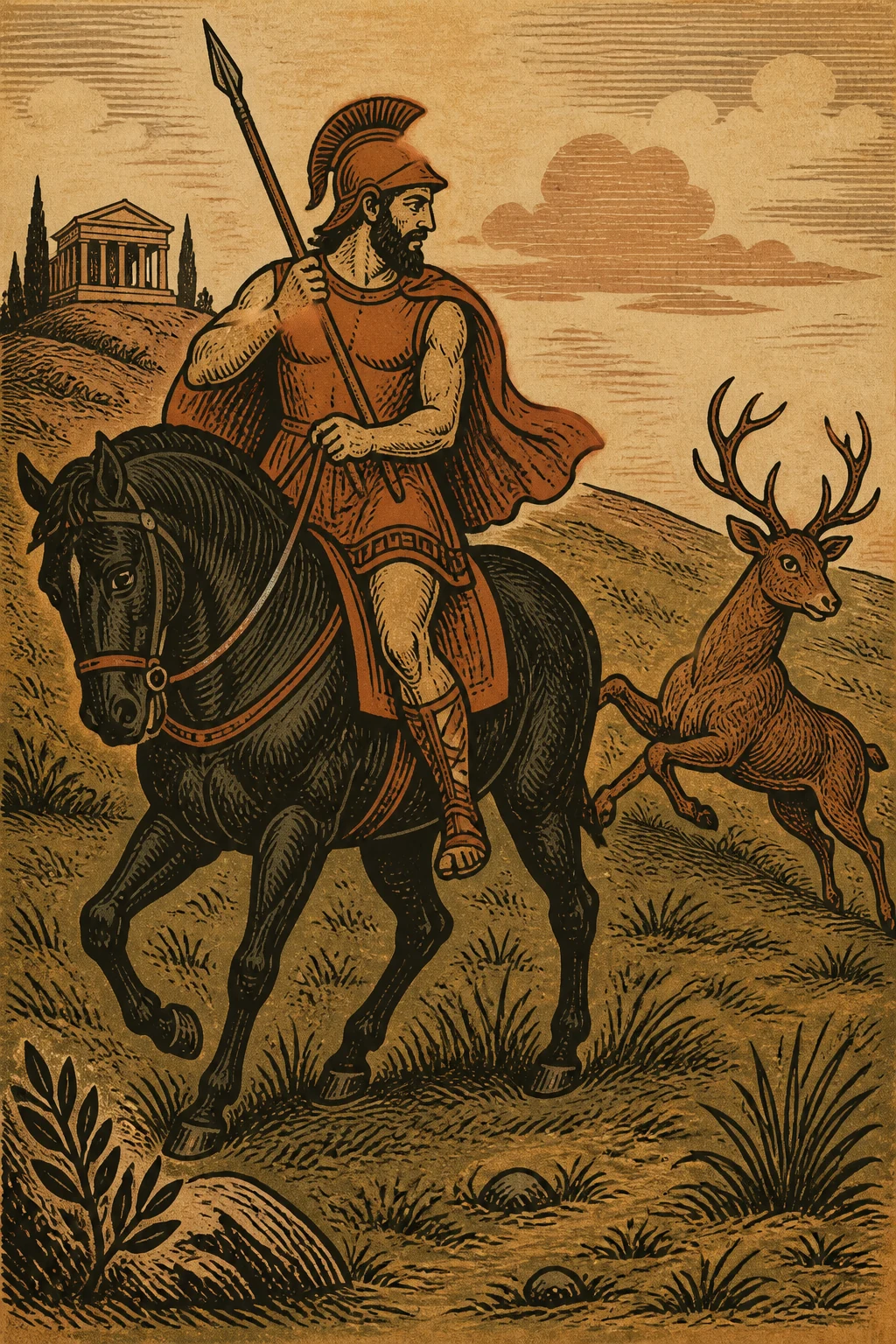
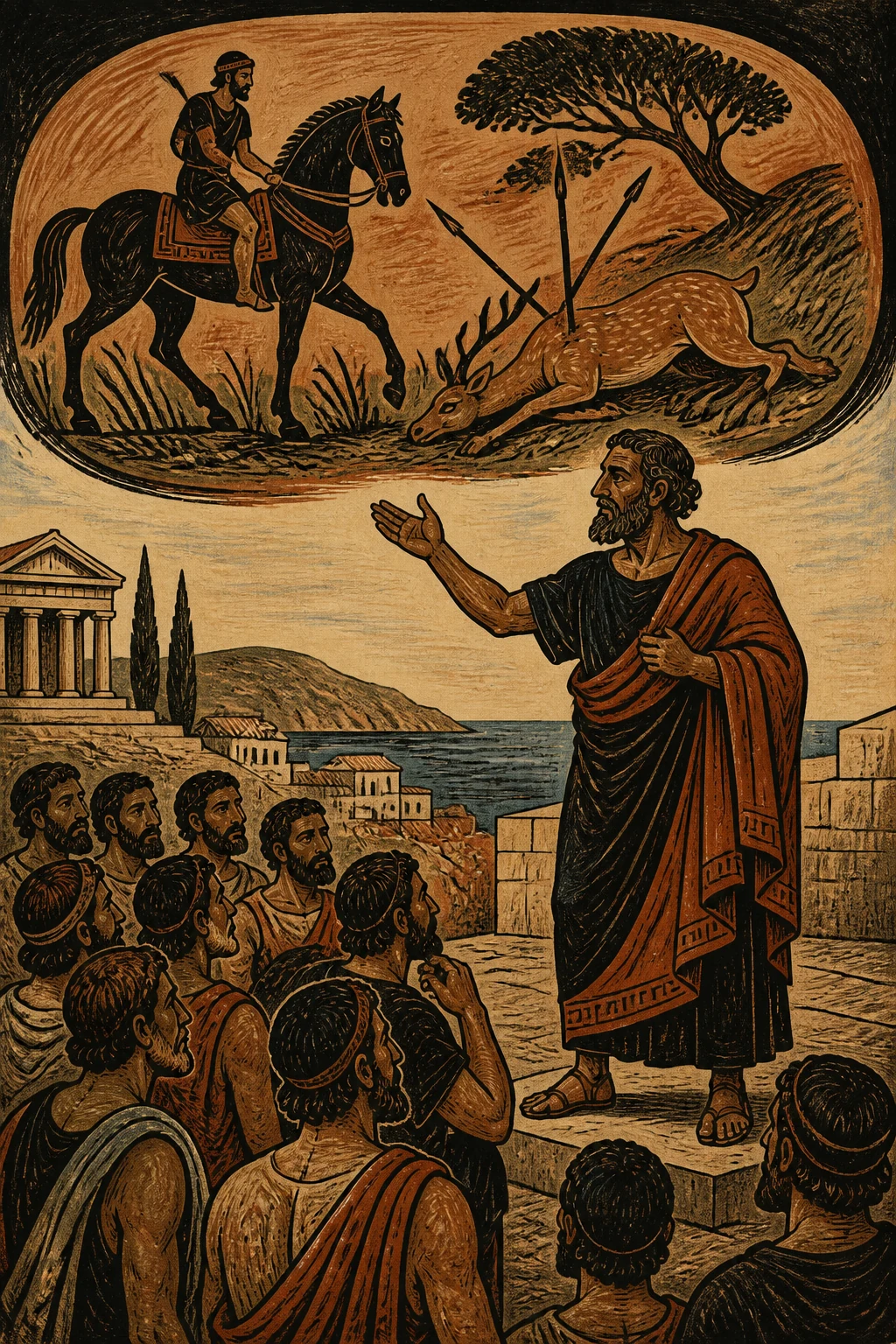
Gelon the Sicilian, intending to make himself tyrant of Himera, courted the people and championed their cause against the powerful. The common people loved him, and when he asked for a bodyguard, they were eager to grant him one. But Stesichorus, the poet of Himera, suspected that he was aiming at tyranny. He stood before the people and told them a fable, an image of the fate that awaited them. “A horse,” he said, “used to graze in a meadow and go to a spring to drink. But a deer running across the plain trampled the grass and muddied the water. The horse wanted to punish the creature that was wronging him, but, being slower on his feet, he called upon a hunter for help. The man promised that he could easily avenge him, provided the horse would accept a bridle and a rider. And so it was done. The deer lay struck down by javelins, but the horse found that he had become the hunter’s slave.” “This,” he said, “is what I fear for you too, people of Himera: that, though you are now free citizens, you may overcome your enemies through Gelon, only to become Gelon’s slaves afterward. For power of every kind tends to be turned by its recipient against the one who gave it, once the giver can no longer take it back as freely as he bestowed it.”
Izvirnik
175b. Ἄλλως. (C. 313. ex Cononis Narrat. 42.)
Naslednje strani prikazujejo izvirno besedilo za primerjavo.
Γέλων ὁ Σκελιώτης τυραννίδι ἐπιθέσθαι διανοούμενυς Ἱμεραίων ἐθεράπευε τὸν δῆμον, καὶ κατὰ τῶν δυνατῶν ὑπερεμάχει· καὶ αὐτὸν ἠγάπα τὸ πλῆθος, καὶ φυλακὴν τοῦ σώματος αἰτοῦντι ὡρμᾶτο διδόναι. Στησίχορος δʼ ὁ Ἱμεραῖος ποιητὴς ὑποτοπήσας ἐπιχειρεῖν αὐτὸν τυραννίδι, στὰς αἶνον ἔλεξεν εἰς τὸ πλῆθος, εἰκόνα τοῦ μέλλοντος πάθους. „Ἵππος “ φησὶ ,,νεμόμενος ἐφοίτα πιούμενος ἐπὶ κρήνην, ἔλαφος δὲ τὸ πεδίον διαθέουσα τήν τε πόαν κατέστειβε καὶ τὸ νᾶμα ἐτάραττε. Καὶ ὁ ἵππος ποθῶν τὴν ἀδικοῦσαν τιμωρῆσαι, τάχει δὲ ποδῶν λειπόμενος, ἄνδρα κυνηγέτην βοηθὸν ἐκάλει· ὁ δὲ, εἰ χαλινὸν δέξοιτο καὶ ἀναβάτην, ῥᾷστα ἀμύνειν αὐτῷ ὑπισχνεῖτο. Καὶ ἐγίνετο οὕτως. Καὶ ἡ μὲν ἔλαφος ἀκοντίοις ἔκειτο βληθεῖσα, ὁ δʼ ἵππος ᾔσθετο δεδουλωμένος τῷ κυνηγέτῃ.“ „Τοῦτ’“ ἔφη „δέδοικα καὶ αὐτὸς, ὦ Ἱμεραῖοι, μὴ νῦν δῆμος ὄντες τῶν ἐχθρῶν μὲν διὰ Γέλωνος περιγένησθε, αὐτοὶ δʼ ὕστερον Γέλωνι δουλεύσητε· φιλεῖν γὰρ ἅπασαν δύναμιν τῷ λαβόντι ἐπὶ τὸν δόντα εἶναι, ὅταν, ὥσπερ δοῦναι αὐτὴν, μηκέτι ἐκ τοῦ ὁμοίου κομίσασθαι ἔχῃ.“
Nadaljuj z branjem