Waltey
Jež in grivar
Tisoč in ena noč · arabska pripovedna tradicijaO besedilu
Jež in grivar
- Vir
- Tisoč in ena noč
- Avtor
- arabska pripovedna tradicija
- Jezik branja
- English
- Jezik izvirnika
- Arabic
- Čas branja
- 11 min branja
- Obseg
- 9 strani
- Naslov izvirnika
- حكاية القنفذ والورشان - الليلة ١٥٢
O izvirniku
Tisoč in ena noč
Zgodbe v zgodbah, polne trgovcev, dvorov, preoblek in nočnih zapletov. Bralni jezik je English, izvirnik pa prihaja iz vira Tisoč in ena noč v jeziku Arabic.
Besedilo
Jež in grivar
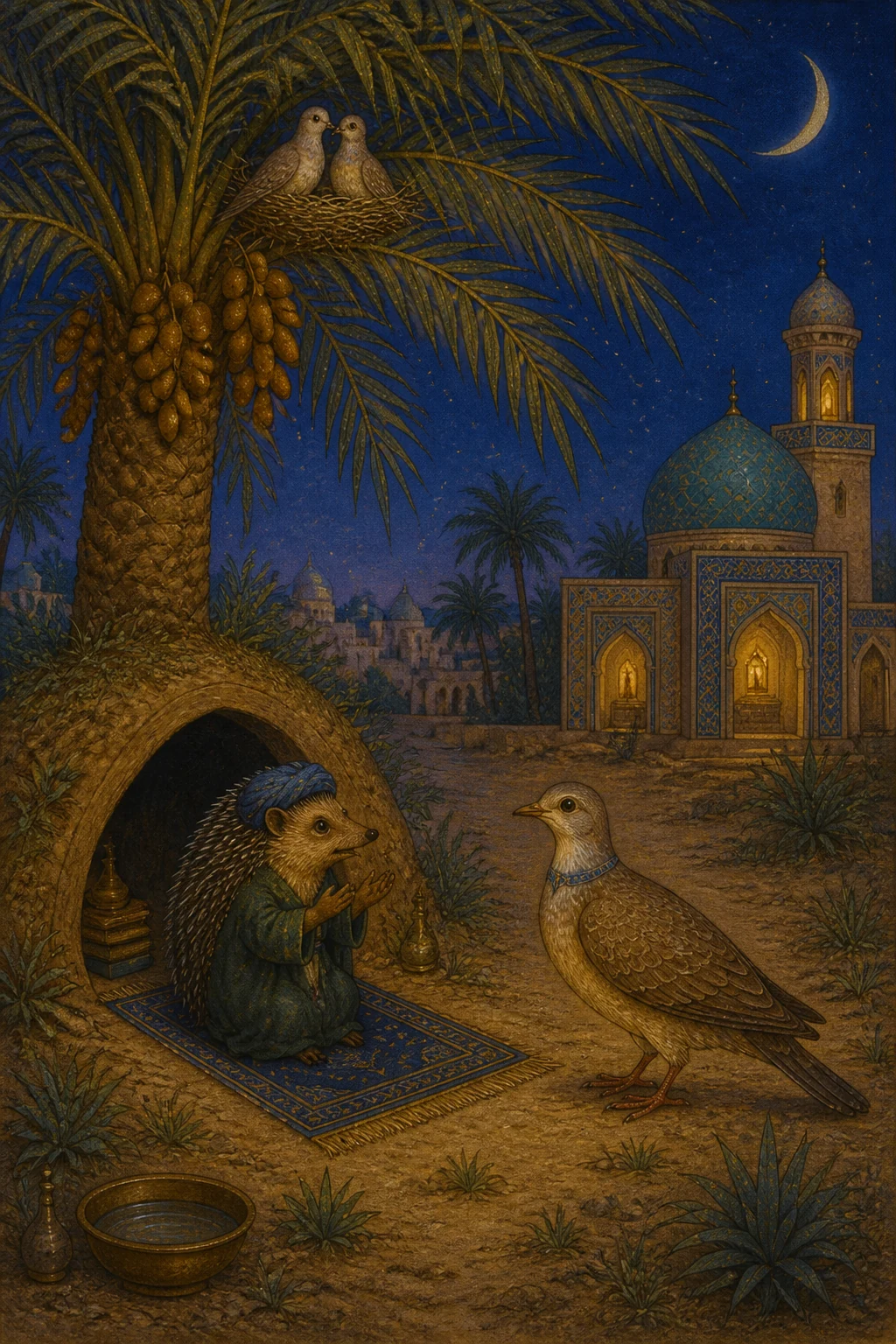
She said: It is told that a hedgehog made his home beside a palm tree, in which a wood pigeon and his wife had built their nest and lived in ease and plenty. The hedgehog said to himself, “The wood pigeon eats the fruit of the palm, while I have no way of reaching it. I must resort to a trick.” So he dug a dwelling at the foot of the palm and made it a home for himself and his wife. Beside it he built a mosque, where he secluded himself, making a show of devotion, worship, and renunciation of the world. The wood pigeon would see him praying and keeping his devotions, and his heart was moved by such austerity. He asked him, “How many years have you lived like this?” “Thirty years,” he replied. “What do you eat?” “Whatever falls from the palm.” “What do you wear?” “Thorns, whose roughness serves me well.” “And why did you choose this place rather than another?” “I chose it beside a path so that I might guide the lost and instruct the ignorant.” The wood pigeon said, “I had thought you quite otherwise, but now I long to share in what you possess.” The hedgehog replied, “I fear your deeds may belie your words, and you will be like the farmer who, when sowing time came, neglected to sow his seed, saying, ‘I fear the season for sowing has already passed, and I should only squander my money by sowing in haste.’ But when harvest time came and he saw the people reaping, he regretted what he had lost through his neglect and delay, and died of sorrow and remorse.”
The wood pigeon said to the hedgehog, “What must I do to free myself from worldly attachments and devote myself to worshipping my Lord?” The hedgehog replied, “Begin preparing for the life to come, and content yourself with no more provisions than you need.” The wood pigeon said, “How can I do that? I am a bird, and cannot leave the palm that provides my food. Even if I could, I should not know where to settle.” The hedgehog answered, “You can shake down enough fruit from the palm to feed yourself and your wife for a year, and settle in a nest beneath the tree, where you may seek sound guidance. Then gather all the fruit you have shaken down and store it against a time of want. When the fruit is gone and the wait grows long, live on no more than will sustain you.” The wood pigeon said, “May God reward you for reminding me of the life to come and guiding me to the right path.” Then he and his wife laboured at shaking down the fruit until nothing remained on the palm. The hedgehog, delighted to find so much to eat, filled his dwelling with the fruit and stored it for his own provisions. He said to himself, “When the wood pigeon and his wife need food, they will ask me for it and covet what I have, trusting in my piety and self-denial. As they listen to my counsel and admonitions, they will draw close, and I shall seize them and eat them. Then I shall have this place to myself, and whatever fruit falls from the palm will be enough for me.”
After shaking down all the fruit, the wood pigeon and his wife descended from the palm and found that the hedgehog had carried everything into his burrow. The wood pigeon said to him, “O righteous hedgehog, wise preacher and faithful counsellor, we can find no trace of the fruit, and we know of no other fruit on which to live.” He replied, “Perhaps the winds have carried it away. To turn from sustenance to the Sustainer is the very essence of salvation, for He who fashioned mouths will not leave them without food.” He continued to admonish them in this fashion, displaying his piety in fine and flowery phrases, until they trusted him and drew near. They entered the mouth of his burrow, feeling safe from his deceit, whereupon he sprang to the entrance and snapped his teeth. When the wood pigeon saw his treachery plainly revealed, he said, “How different tonight is from last night! Do you not know that the oppressed have a defender? Beware of cunning and deceit, lest you suffer the fate of the tricksters who plotted against the merchant.” The hedgehog asked, “And what was that?” The wood pigeon replied, “I have heard that a merchant from a city called Sindah, a man of great wealth, packed his loads and prepared his wares, then set out for another city to sell them there. Two rogues followed him, carrying a little money and merchandise and pretending to be merchants themselves. They travelled with him, and when they reached their first stopping place, they agreed to trick him and take all he had. But each secretly planned to betray the other as well, saying to himself, ‘If I trick my companion after we have tricked the merchant, I shall have everything my own way and take all the money.’ Thus each harboured evil intentions towards the other. Each took some food, put poison in it, and offered it to his companion, and so they killed one another. They had been in the habit of sitting and talking with the merchant, and when they were slow to return, he went in search of them to discover what had happened. He found them both dead and understood that they had been swindlers who meant to deceive him, but whose deceit had recoiled upon themselves. The merchant escaped unharmed and took everything they had with them.”
The king said, “Shahrazad, you have opened my eyes to something I had overlooked. Will you not tell me more such tales?” She replied, “I have heard, O King, that there was once a man who owned a monkey. He was a thief, and never entered any market in his city without returning with a handsome profit. Now it happened that another man took some pieces of cloth to market to sell. He went about crying his wares, but no one made him an offer, and everyone to whom he showed them refused to buy. The thief with the monkey chanced to see this man, who had put the pieces of cloth into a bundle and sat down to rest from his exertions. The monkey began to perform before him, distracting him with the spectacle, while the thief made off with the bundle. Then he took the monkey to a deserted spot, opened the bundle, and saw the pieces of cloth. He wrapped them in a costly cloth and went to another market, where he offered the bundle and its contents for sale on condition that it should not be opened. Its low price tempted people, and one man, struck by the richness of the wrapping, bought it on those terms and took it home to his wife. When she saw it, she asked, ‘What is this?’ He replied, ‘Valuable merchandise that I bought for less than it is worth, so that I can sell it at a profit.’ She said, ‘You dupe! Would such merchandise be sold below its value unless it were stolen? Do you not know that a man who buys something without examining it is making a mistake, and is like the weaver?’ He asked her, ‘And what happened to him?’
“She replied, ‘I have heard that there was a weaver in a certain village who could barely earn his daily bread, despite all his toil. One day a rich man who lived nearby gave a banquet and invited the people to it. The weaver attended and saw that those dressed in fine clothes were served exquisite dishes, while the master of the house treated them with great respect because of their handsome attire. He said to himself, “If I exchanged my trade for one that required less effort and paid better, I could amass a fortune and buy fine clothes. Then my standing would rise, and I should be held in high esteem.” He noticed one of the entertainers at the feast climb a lofty wall, leap to the ground, and spring to his feet. “I must do as he has done,” he said to himself. “Surely I am no less capable.” So he climbed the wall and threw himself down, but when he struck the ground his neck broke, and he died. I have told you this only to keep evil from gaining a hold over you and tempting you to meddle in what is not your business.’ Her husband replied, ‘Not every learned man is saved by his knowledge, nor does every ignorant man perish through his ignorance. I have seen a snake charmer, skilled and versed in the ways of serpents, bitten and killed by a snake, while a man who knows nothing of them or their habits may overcome one.’ So he disregarded his wife, bought the goods, and made a habit of such dealings, purchasing things from thieves for less than their value, until at last he fell under suspicion and was ruined. In his time there was a sparrow who visited a king of the birds every day, coming and going so constantly that he was the first to enter his presence and the last to leave. Now it happened that a flock of birds assembled on a high mountain, and they said to one another, ‘Our numbers have grown, and so have our quarrels. We must have a king to oversee our affairs, so that we may be united and our differences brought to an end.’ The sparrow passed by and advised them to make the peacock king—the very king whom he used to visit. They chose the peacock and set him over them. He treated them well and appointed the sparrow his secretary and minister, so that at times the sparrow would leave his side to attend to affairs.
“One day the sparrow was absent, and the peacock became greatly troubled. While he was fretting, the sparrow appeared, and the peacock asked him, ‘What has delayed you, when you are the closest of all my followers?’ The sparrow replied, ‘I saw something that puzzled and frightened me.’ ‘What did you see?’ asked the peacock. The sparrow said, ‘I saw a man with a net, which he set up near my nest, securing its pegs and scattering grain in the middle. Then he sat down some distance away. I stayed to watch what he would do, and as I watched, fate and destiny brought a crane and his wife down into the middle of the net. They began to cry out, and the hunter rose and took them. This distressed me, and that is why I have been absent from you, O King of the Age. I shall no longer live in that nest, for fear of the net.’ The peacock replied, ‘Do not leave your home, for caution is powerless against fate.’ The sparrow obeyed him, saying, ‘I shall be patient and stay, in obedience to the king.’ Yet he remained watchful for his own safety. He brought food to the peacock, who ate his fill and drank water after his meal; then the sparrow departed. One day, as he was looking about, he saw two sparrows fighting on the ground. He said to himself, ‘How can I be the king’s minister and allow sparrows to fight in my neighbourhood? By God, I shall make peace between them!’ He went over to reconcile them, but the hunter cast his net over them all, and the sparrow was caught in its midst. The hunter rose, seized him, and handed him to a companion, saying, ‘Keep a firm hold on him. He is fat; I have never seen a finer bird.’ The sparrow said to himself, ‘I have fallen into the very danger I feared, while the peacock alone remained safe. My caution could not save me when fate descended, for no wary creature can escape what is decreed. How well the poet said:
“‘What is not to be, no artifice can bring to pass; and what is to be shall surely come. All that is destined will arrive in its appointed hour, while the ignorant man is ever the loser.’” The king said, “Shahrazad, tell me more of these tales.” She replied, “Tomorrow night, if the king—may God exalt him—spares my life.” Then dawn overtook Shahrazad, and she fell silent, ceasing her permitted speech.
Izvirnik
حكاية القنفذ والورشان - الليلة ١٥٢
Naslednje strani prikazujejo izvirno besedilo za primerjavo.
فلما كانت الليلة ١٥٢
قالت: ويُحكَى أن قنفذًا اتخذ مسكنًا بجانب نخلة، وكان الورشان هو وزوجته قد اتخذَا عشًّا في تلك النخلة، وعاشَا فوقها عيشًا رغدًا، فقال القنفذ في نفسه: إن الورشان يأكل من ثمر النخلة، وأنا لا أجد إلى ذلك سبيلًا، ولكن لا بد من استعمال الحيلة. ثم حفر في أسفل النخلة بيتًا واتخذه مسكنًا له ولزوجته، واتخذ جانبه مسجدًا، وانفرد فيه وأظهَرَ النسكَ والعبادةَ وترْكَ الدنيا، وكان الورشان يراه متعبدًا مصليًا، فرَقَّ له من شدة زهده، وقال له: كم سنة وأنت هكذا؟ قال: مدة ثلاثين سنة. قال: ما طعامك؟ قال: ما يسقط من النخلة. قال: ما لباسك؟ قال: شوك أنتفع بخشونته. فقال: وكيف اخترت مكانك هذا على غيره؟ قال: اخترته على غير طريق لأجل أن أرشد الضال وأُعلِم الجاهل. فقال له الورشان: كنت أظن أنك على غير هذه الحالة، ولكني الآن رغبت فيما عندك. فقال القنفذ: إني أخشى أن يكون قولك ضد فعلك، فتكون كالزرَّاع الذي لما جاء وقت الزرع قصر في بذره وقال: إني أخشى أن يكون أوان الزرع قد فات؛ فأكون قد أضعتُ المال بسرعة البذر. فلما جاء وقت الحصاد ورأى الناس وهم يحصدون، ندم على ما فاته من تقصيره ومن تخلُّفه، ومات أسفًا وحزنًا.
فقال الورشان للقنفذ: وماذا أصنع حتى أتخلص من علائق الدنيا، وأنقطع إلى عبادة ربي؟ قال له القنفذ: خذ في الاستعداد للمعاد، والقناعة بالكفاف من الزاد. فقال الورشان: كيف لي بذلك وأنا طائر لا أستطيع أن أتجاوز النخلة التي فيها قوتي، ولو استطعت ذلك ما عرفت موضعًا أستقر فيه؟ فقال القنفذ: يمكنك أن تنثر من ثمر النخلة ما يكفيك مئونة عام أنت وزوجتك، وتسكن في وكر تحت النخلة لالتماس حسن إرشادك، ثم مِلْ إلى ما نثرته من الثمر فانقله جميعه وادَّخره قوتًا للعدم، وإذا فرغتِ الثمار وطال عليك المطال، صر إلى كفاف من العيش. فقال الورشان: جزاك الله خيرًا حيث ذكَّرتني بالمعاد، وهديتني إلى الرشاد. ثم تعب الورشان هو وزوجته في طرح الثمر حتى لم يَبْقَ في النخلة شيء، فوجد القنفذ ما يأكل، وفرح به وملأ مسكنه من الثمر وادَّخره لقوته، وقال في نفسه: إن الورشان هو وزوجته إذا احتاجَا إلى مئونتهما طلباها مني، وطمعَا فيما عندي، وركنا إلى تزهُّدي وورعي، فإذا سمعَا نصيحتي ووعظي دنَيَا مني فأقتنصهما وآكلهما ويخلو لي هذا المكان، وكل ما تساقط من ثمر النخلة يكفيني.
ثم إن الورشان نزل هو وزوجته من فوق النخلة بعد أن نثرَا ما عليها من الثمر، فوجدَا القنفذ قد نقل جميع ذلك إلى جحره، فقال له الورشان: أيها القنفذ الصالح والواعظ الناصح، إنَّا لم نجد للثمر أثرًا، ولا نعرف لقوتنا غيره ثمرًا. فقال: لعله طارت به الرياح، والإعراض عن الرزق إلى الرازق عين الفلاح؛ فالذي شقَّ الأشداق لا يتركها بلا أرزاق. وما زال يعظهما بتلك المواعظ ويُظهِر لهما الورعَ بزخرف الملافظ حتى ركنَا إليه وأقبلَا عليه، ودخلَا باب وكره وأمنَا من مكره، فوثب إلى الباب وقرع الأنياب، فلما رأى الورشان منه الخديعة لائحة، قال له: أين الليلة من البارحة؟ أَمَا تعلم أن للمظلومين ناصرًا؟ فإياك والمكر والخديعة؛ لئلا يصيبك ما أصاب الخداعين الذين مكروا بالتاجر. فقال القنفذ: وكيف ذلك؟ قال: بلغني أن تاجرًا من مدينة يقال لها «سنده»، كان ذا مال واسع، فشدَّ أحمالًا، وجهز متاعًا، وخرج به إلى بعض المدن ليبيعه فيها، فتبعه رجلان من المَكَرة، وحملَا شيئًا من مال ومتاع، وأظهرَا للتاجر أنهما من التجار وسارَا معه، فلما نزلَا أول منزل اتفقَا على المكر به، وأخذ ما معه، ثم إن كل واحد منهما أضمر المكر لصاحبه، وقال في نفسه: لو مكرت بصاحبي بعد مكرنا بالتاجر لصفا لي الوقت وأخذت جميع المال. ثم أضمرَا لبعضهما على نيَّة فاسدة، وأخذ كلٌّ منهما طعامًا وجعل فيه سمًّا وقرَّبه لصاحبه، فقتلَا بعضهما، وكانا يجلسان مع التاجر ويحدثانه، فلما أبطآ عليه فتَّشَ عليهما ليعرف خبرهما، فوجدهما ميِّتين، فعلم أنهما كانا محتالين، وأرادَا المكر به، فعاد عليهما مكرهما، وسَلِم التاجر وأخذ ما كان معهما.
فقال الملك: نبَّهتِني يا شهرزاد على شيء كنت غافلًا عنه، أفلا تزيديني من هذه الأمثال؟
قالت: بلغني أيها الملك أن رجلًا كان عنده قرد، وكان ذلك الرجل سارقًا لا يدخل سوقًا من أسواق المدينة التي هو فيها إلا ويرجع بكسب عظيم، فاتفق أن رجلًا حمل أثوابًا مقطوعة لبيعها، فذهب بها إلى السوق وصار ينادي عليها فلا يسومه أحد، وكان لا يعرضها على أحد إلا امتنع من شرائها؛ فاتفق أن السارق الذي معه القرد رأى الشخص الذي معه الثياب المقطَّعة، وكان قد وضعها في بقجة وجلس يستريح من التعب، فلعب القرد قدَّامه حتى أشغله بالفرجة عليه، واختلس منه تلك البقجة، ثم أخذ القرد وذهب إلى مكان خالٍ، وفتح البقجة فرأى تلك الثياب المقطعة، فوضعها في بقجة نفيسة، وذهب بها إلى سوق آخَر، وعرض البقجة للبيع بما فيها، واشترط ألَّا تُفتَح، ورغب الناس فيها لقلَّة الثمن، فرآها رجل وأعجبه نفاستها، فاشتراها بهذا الشرط وذهب بها إلى زوجته، فلما رأت ذلك امرأته قالت: ما هذا؟ قال: متاع نفيس اشتريتُه بدون القيمة لأبيعه وآخذ فائدته. فقالت: أيها المغبون، أيباع هذا المتاع بأقل من قيمته إلا إذا كان مسروقًا؟ أَمَا تعلم أن مَن اشترى شيئًا ولم يعاينه كان مخطئًا، وكان مثله مثل الحايك؟ فقال لها: وكيف كان ذلك؟
فقالت: بلغني أن حايكًا كان في بعض القرى، وكان يعمل فلا ينال القوت إلا بجهد، فاتفق أن رجلًا من الأغنياء كان ساكنًا قريبًا منه قد أولم وليمة ودعا الناس إليها، فحضر الحايك فرأى الناس الذين عليهم الثياب الناعمة يُقدَّم لهم الأطعمة الفاخرة، وصاحب المنزل يعظِّمهم لما يرى من حسن زيِّهم، فقال في نفسه: لو بدلت تلك الصنعة بصنعة أخف مئونةً منها وأكثر أجرةً، لَجمعت مالًا كثيرًا، واشتريت ثيابًا فاخرة، ولَارتفَعَ شأني وعظمتُ في أعين الناس. ثم نظر إلى بعض أهل الملاعب الحاضرين في الوليمة وقد صعد سورًا شاهقًا، ثم رمى بنفسه إلى الأرض، ونهض قائمًا، فقال في نفسه: لا بد أن أعمل مثل ما عمل هذا ولا أعجز عنه. ثم صعد إلى السور ورمى نفسه، فلما وصل إلى الأرض اندقَّت رقبته فمات، وإنما أخبرتك بذلك لئلا يتمكَّن منك الشر فترغب فيما ليس من شأنك. فقال لها زوجها: ما كل عالم يسلم بعلمه، ولا كل جاهل يعطب بجهله، وقد رأيت الحاوي الخبير بالأفاعي العالم بها ربما نهشته الحية فقتلته، وقد يظفر بها الذي لا معرفةَ له بها، ولا علم عنده بأحوالها. ثم خالَفَ زوجته واشترى المتاع وأخذ في تلك العادة، فصار يشتري من السارقين بدون القيمة إلى أن وقع في تهمة فهلك فيها. وكان في زمنه عصفور يأتي كل يوم إلى ملك من ملوك الطيور، ولم يزل غاديًا ورائحًا عنده بحيث كان أول داخل عليه وآخر خارج من عنده، فاتفق أن جماعة من الطير اجتمعوا في جبل عالٍ من الجبال، فقال بعضهم لبعض: إنا قد كثرنا وكثر الاختلاف بيننا، ولا بد لنا من ملك ينظر في أمورنا، فتجتمع كلمتنا ويزول الاختلاف عنَّا. فمرَّ بهم ذلك العصفور، فأشار عليهم بتمليك الطاوس، وهو الملك الذي يتردد إليه، فاختاروا الطاوس وجعلوه عليهم ملكًا، فأحسن إليهم وجعل ذلك العصفور كاتبه ووزيره، فكان تارة يترك الملازمة وينظر في الأمور.
ثم إن العصفور غاب يومًا عن الطاوس فقلق قلقًا عظيمًا، فبينما هو كذلك إذ دخل عليه العصفور فقال له: ما الذي أخَّرك وأنت أقرب أتباعي إليَّ؟ فقال العصفور: رأيت أمرًا واشتبه عليَّ فتخوفت منه. فقال له الطاوس: ما الذي رأيت؟ قال العصفور: رأيت رجلًا معه شبكة قد نصبها عند وكري، وثبَّتَ أوتادها، وبذر في وسطها حبًّا، وقعد بعيدًا عنها، فجلست أنظر ما يفعل، فبينما أنا كذلك وإذا بكركي هو وزوجته قد ساقهما القضاء والقدر حتى سقطَا في وسط الشبكة، فصارَا يصرخان، فقام الصياد وأخذهما، فأزعجني ذلك، وهذا سبب غيابي عنك يا ملك الزمان، وما بقيت أسكن هذا الوكر حذرًا من الشبكة. فقال له الطاوس: لا ترحل من مكانك؛ لأنه لا ينفع الحذر من القدر. فامتثَلَ أمره، وقال: سأصبر ولا أرحل طاعةً للملك. ولم يزل العصفور حذرًا على نفسه، وأخذ الطعام إلى الطاوس فأكل حتى اكتفى، وتناول على الطعام ماء، ثم ذهب العصفور. فبينما هو في بعض الأيام شاخص، وإذا بعصفورين يقتتلان في الأرض، فقال في نفسه: كيف أكون وزير الملك وأرى العصافير تقتتل في جواري؟ والله لأصلحن بينهما. ثم ذهب إليهما ليصلح بينهما، فقلب الصياد الشبكة على الجميع فوقع ذلك العصفور في وسطها، فقام إليه الصياد وأخذه ودفعه إلى صاحبه، وقال له: استوثق به فإنه سمين لم أرَ أحسن منه. فقال العصفور في نفسه: قد وقعت فيما كنتُ أخافه، وما كان آمنًا إلا الطاوس، ولم ينفعني الحذر من نزول القدر، فلا مفرَّ من القضاء لمحاذر، وما أحسن قول الشاعر:
مَا لَا يَكُونُ فَلَا يَكُونُ بِحِيلَةٍ أَبَدًا وَمَا هُوَ كَائِنٌ فَيَكُونُ
سَيَكُونُ مَا هُوَ كَائِنٌ فِي وَقْتِهِ وَأَخُو الْجَهَالَةِ دَائِمًا مَغْبُونُ
فقال الملك: يا شهرزاد، زيديني من هذا الحديث. فقالت: الليلة القابلة إن أبقاني الملك أعزَّه الله. وأدرك شهرزاد الصباح فسكتَتْ عن الكلام المباح.
Nadaljuj z branjem