Waltey
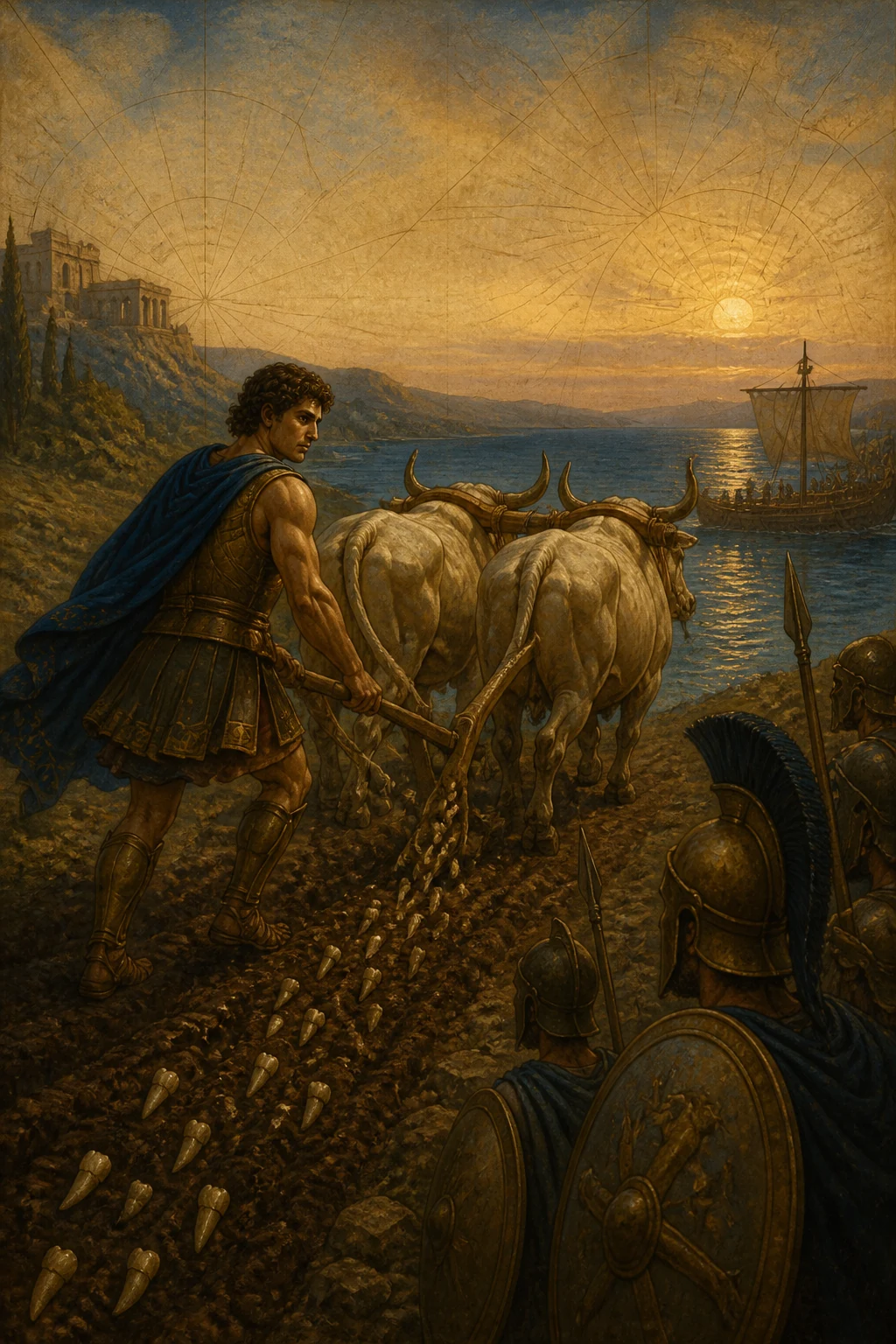
Jazon vpreže bike in poseje zmajeve zobe
Argonavtika · Apolonij RodoškiO besedilu
Jazon vpreže bike in poseje zmajeve zobe
- Vir
- Argonavtika
- Avtor
- Apolonij Rodoški
- Jezik branja
- English
- Jezik izvirnika
- Ancient Greek
- Čas branja
- 12 min branja
- Obseg
- 10 strani
- Naslov izvirnika
- Jason Yokes the Bulls and Sows the Teeth
O izvirniku
Argonavtika
Morska odprava za zlatim runom, med junaštvom, čarovnijo in Medejino odločitvijo. Bralni jezik je English, izvirnik pa prihaja iz vira Argonavtika v jeziku Ancient Greek.
Besedilo
Jazon vpreže bike in poseje zmajeve zobe
When Aeson’s son rejoined his companions at the place where he had left them before turning aside, he set off with them toward the company of heroes, recounting everything that had happened. Together they reached the ship.
At the sight of him they welcomed him warmly and plied him with questions. He told them all of the maiden’s counsel and showed them the potent drug. Idas alone among his companions sat apart, nursing his anger. The others rejoiced, and for the time being, as the darkness of night closed in, peacefully went about their own affairs. But at dawn they sent two men to Aeetes to ask for the seed: first Telamon, beloved of war, and with him Aethalides, the renowned son of Hermes.
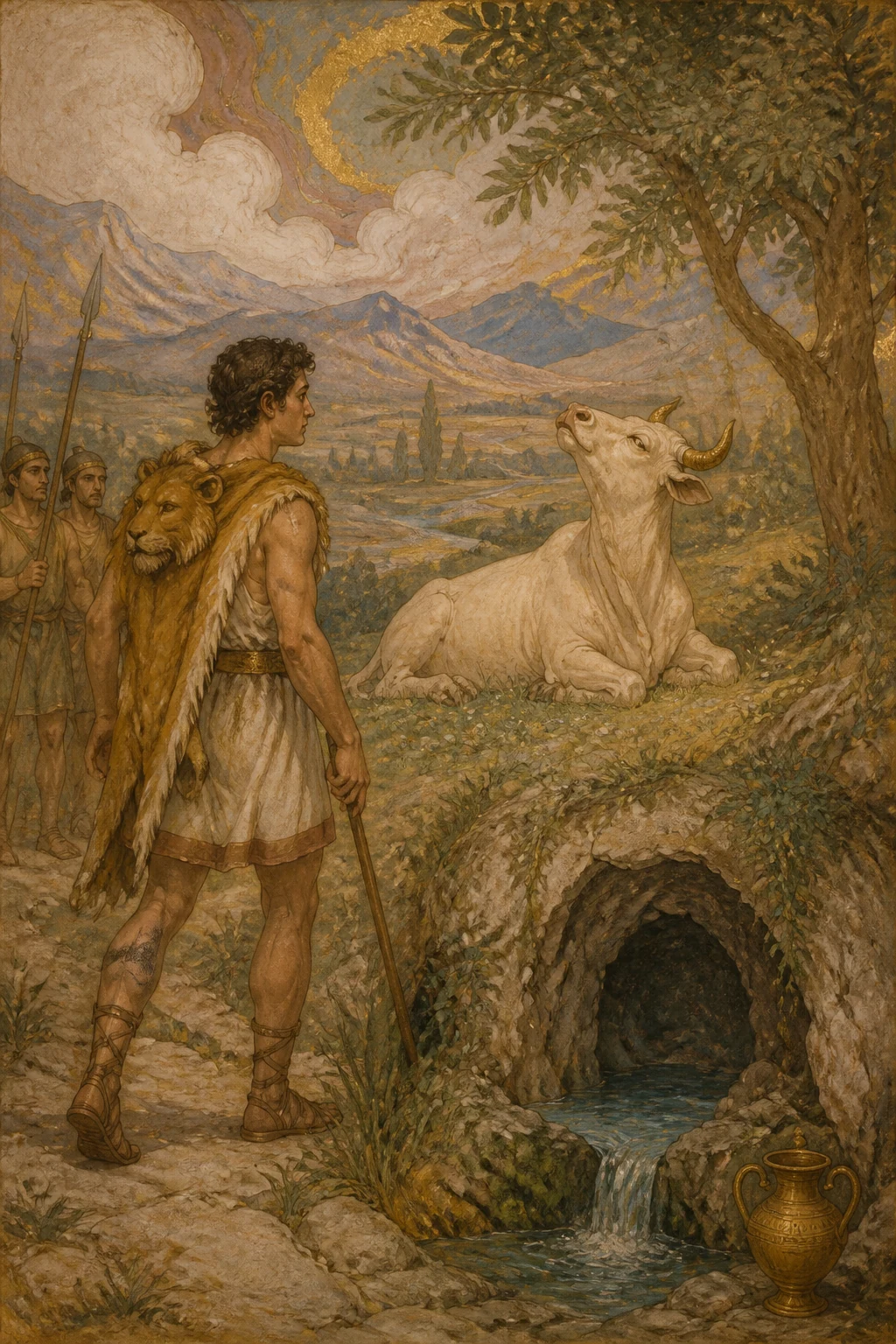
They set out, and their journey was not in vain. When they came, lord Aeetes gave them, for the deadly contest, the teeth of the Aonian dragon which Cadmus had slain at Ogygian Thebes when he arrived there in search of Europa. It had guarded the spring of Ares. There Cadmus also settled, guided by the cow which Apollo, through his oracle, had appointed to lead him on his way.
The goddess Tritonis had torn the teeth from its jaws and given them as gifts both to Aeetes and to the dragon’s slayer. Cadmus, Agenor’s son, sowed his share in the Aonian plain and founded a people from the earthborn men who survived the spear of Ares as he reaped them down. The rest Aeetes now gladly gave the envoys to carry back to the ship, for he did not believe that Jason would accomplish the task, even if he managed to set the yoke upon the bulls.
Far away, beyond the outermost heights of the Ethiopians, the evening sun was sinking beneath the dark earth. Night was laying the yoke upon her horses, and the heroes were preparing their beds beside the ship’s hawsers. But Jason, as soon as the stars of the bright Bear, Helice, had declined and all the heavens had grown still, went out into the solitude like a furtive thief, taking everything he needed. He had made all his preparations during the day: Argus had gone to fetch a ewe and milk from a flock, and Jason had taken the other things from the ship itself.
When he found a place beyond the paths of men, in open meadows beneath a clear sky, he first bathed his tender body reverently in the sacred river. Then he wrapped himself in the dark robe which Hypsipyle of Lemnos had once given him in remembrance of their passionate embrace.
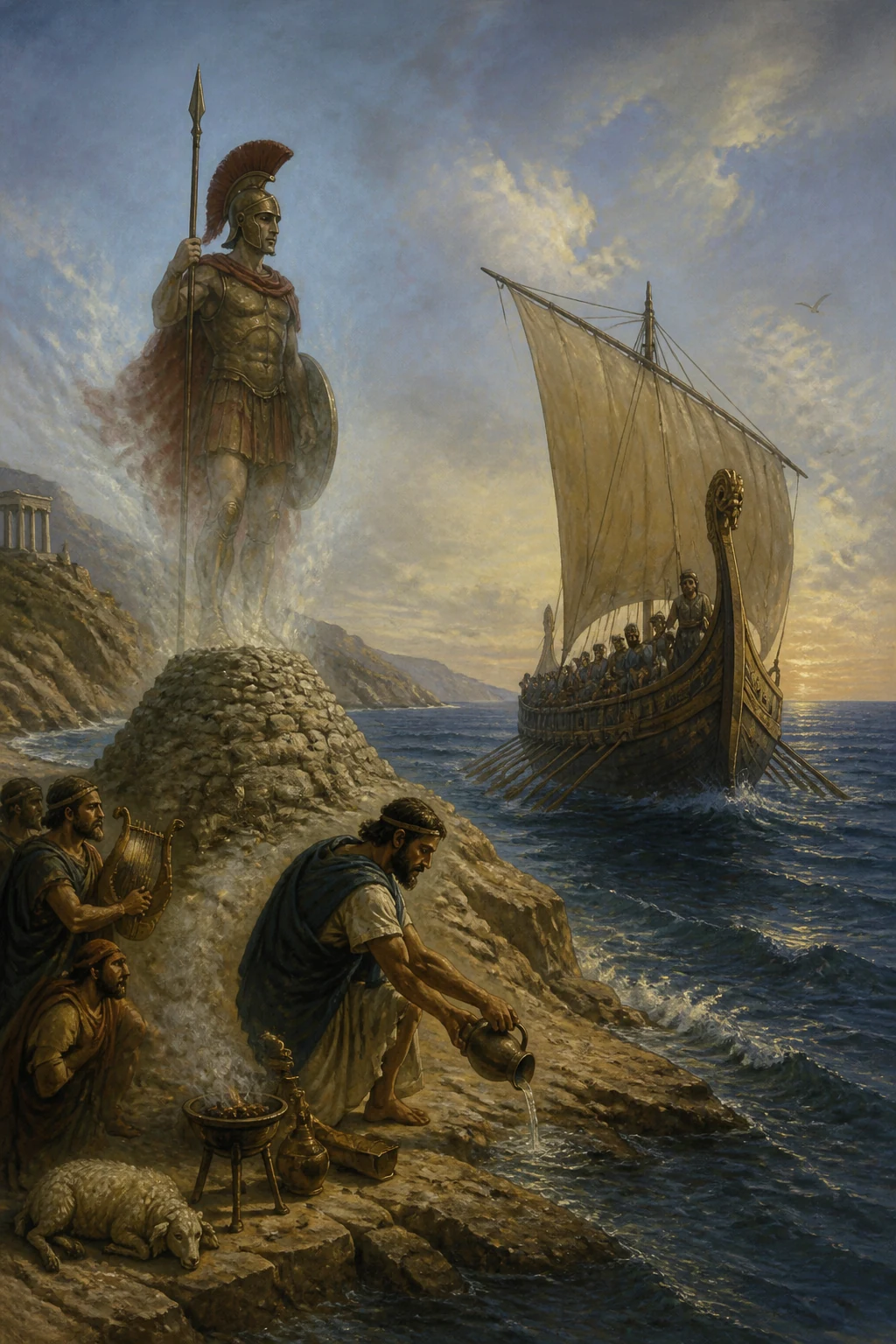
Next he dug a pit a cubit deep in the earth and heaped split wood within it. Over this he cut the sheep’s throat and carefully stretched its body on top. He kindled the logs by setting fire beneath them, and poured mingled libations over the offering, calling upon Hecate Brimo to help him in his trials.
When he had invoked her, he turned and went away. Hearing him, the dread goddess came from her deepest hiding places to receive the sacrifice of Aeson’s son. Terrible serpents twined about her amid branches of oak.
The radiance of countless torches flashed around her, and hounds of the underworld bayed shrilly at her side. Every meadow trembled beneath her tread, and the river nymphs who haunt the marshes, wheeling about that meadow of Amarantian Phasis, cried aloud.
Fear seized Aeson’s son, yet even so his feet carried him onward without a backward glance until he reached his companions. Already Dawn, born of the morning, was rising and casting her light above snowy Caucasus.
Then Aeetes put about his breast the close-fitting corselet which Ares had given him after stripping it from Phlegraean Mimas, whom he had slain with his own hands. Upon his head he set a golden helmet with four bosses, gleaming like the encircling radiance of the sun when it first rises from Ocean.
He lifted his shield of many hides, and lifted too his terrible, irresistible spear. Not one of the other heroes could have stood against it, now that they had left Heracles far away—Heracles, who alone could have faced him in battle.
Phaethon brought the well-built chariot and its swift-footed horses close for him to mount. Then he climbed aboard himself and took the reins in his hands. Out of the city he drove along the broad highway, so that Aeetes might attend the trial, and a countless multitude hurried along with them.
As Poseidon rides in his chariot to the Isthmian games, or to Taenarum, or the waters of Lerna, or through the grove of Hyantian Onchestus, and often journeys with his horses to Calaureia, to the Haemonian Rock, or wooded Geraestus—such was the sight of Aeetes, leader of the Colchians.
Meanwhile Jason, following Medea’s instructions, moistened the drug and smeared it over his shield, his mighty spear, and his sword. His companions gathered round and put his weapons to the test with all their strength. Yet they could not bend the spear even a little: it remained rigid and unbroken in their powerful hands.
Then Idas, son of Aphareus, still fiercely angry with them, struck at the shaft near its butt with his great sword. The blade sprang back from the blow like a hammer from an anvil, and the heroes shouted for joy, full of hope for the trial.
Afterward Jason anointed himself as well. A terrible strength entered him, unspeakable and unflinching, and his arms on either side swelled and surged with power. As a warhorse, longing for battle, neighs and bounds and strikes the ground, proudly lifting its neck with ears erect, so Aeson’s son exulted in the strength of his limbs.
Again and again he leaped high into the air, this way and that, brandishing his bronze shield and ashen spear. You would have thought it the incessant flashing of winter lightning through the dark sky, darting from clouds that bring the blackest rain.
They were not to hold back much longer from the trial. Seating themselves in order at the rowing benches, they sped toward the plain of Ares. It lay across the river, as far beyond the city as a chariot’s turning post stands from the starting line when the kinsmen of a dead king establish games for runners and horsemen.
There they found Aeetes and the gathered Colchians, the people stationed upon the crags of Caucasus, the king himself moving along the river’s winding bank. Once his companions had made fast the stern cables, Aeson’s son sprang from the ship and went forth to the trial with spear and shield. He also took the gleaming bronze helmet filled with sharp teeth, and slung his sword over his shoulders. His body was bare, and he looked now like Ares, now like Apollo of the golden sword.
Looking over the fallow field, he saw the bronze yoke of the bulls and, beside it, a plough of solid adamant, its beam and share fashioned in one piece. He approached, planted his mighty spear upright on its butt, and set down his helmet, propping it securely.
Then, with only his shield, he went farther forward, searching out the bulls’ countless tracks. Both beasts emerged together, breathing a blaze of fire, from an unseen cavern underground, where their stout stalls stood shrouded in sooty smoke.
The heroes shuddered at the sight. But Jason planted his feet wide and awaited their onset, as a rocky reef in the sea awaits the waves driven by unending storms. He held his shield before him, and both bulls bellowed and crashed against it with their mighty horns. Yet their charge did not move him even a little.
As the stout leather bellows of smiths, working upon pierced furnaces, now kindle a deadly fire into brilliance and now cease their blast, while a dreadful roar rises from below as the flame leaps up, so the two bulls roared as they blew swift flames from their mouths. The consuming heat enveloped him, striking like lightning, but the maiden’s drug preserved him.
He seized the tip of the right-hand bull’s horn and dragged it with all his strength toward the bronze yoke. Then, with a quick kick at its brazen foot, he brought it to its knees upon the ground. In the same way, with a single thrust, he felled the other as it charged.
He flung his broad shield to the ground and, striding this way and that, held both bulls bowed upon their foreknees, passing swiftly through the flames. Aeetes marvelled at the man’s strength. Meanwhile the sons of Tyndareus, who had long since been told what to do, came close and lifted the yoke from the ground for him to fit upon the beasts.
He secured their necks firmly, raised the bronze pole between them, and fastened it to the yoke with its ready pin. The two brothers withdrew from the fire and returned to the ship. Jason took up his shield again and slung it behind him on his back, then grasped the heavy helmet full of sharp teeth and his irresistible spear. With this he struck the bulls beneath their flanks, as a ploughman pricks them with a Pelasgian goad, and steadily guided the firmly fitted handle of the adamant plough.
At first the bulls raged beyond measure, breathing fierce blasts of fire. Their breath rose with a roar like the gusting winds which sailors dread most of all, hastening to furl their great sail.
But before long they moved forward under the urging of his spear, and the rough fallow ground broke open behind them, cleft by the force of the bulls and the sturdy plough. Great clods, each a man’s burden, shattered with a dreadful crash along the furrows. Jason followed, pressing his strong foot upon the ploughshare. Continually he turned and cast the teeth far from him into the broken earth, lest the deadly crop of earthborn men should rise to confront him first. The bulls struggled onward, bracing their bronze hooves against the ground.
When only a third remained of the day that had begun at dawn, and weary labourers call for the sweet hour when the oxen are unyoked, the tireless ploughman had finished the field, though it measured four acres, and was loosening the plough from the bulls.
He frightened them off across the plain and went back to the ship, while the furrows were still empty of earthborn men. His companions gathered round and encouraged him with their words. Scooping water from the river’s stream in the helmet itself, he quenched his thirst. He flexed his nimble knees and filled his great heart with courage, raging like a boar that sharpens its tusks against the hunters, while plentiful foam runs from its angry mouth to the ground.
Already the earthborn men were sprouting over the whole field. The precinct of death-dealing Ares bristled with sturdy shields, double-pointed spears, and shining helmets, and their radiance flashed up from the earth through the air to Olympus.
As when deep snow has fallen upon the earth and storm winds scatter the winter clouds in the blackness of night, so that all the stars shine out together, glittering through the darkness, so they gleamed as they rose above the ground. Then Jason remembered the counsel of resourceful Medea. He seized a huge round stone from the plain, a fearsome discus fit for Ares, lord of war. Four strong young men could not have lifted it even a little from the earth.
Taking it in his hand, he rushed forward and hurled it far into their midst, then boldly crouched out of sight beneath his shield. The Colchians gave a great shout, like the roaring of the sea against sharp reefs, and Aeetes was struck dumb by the casting of that mighty stone. Like swift hounds, the earthborn men sprang upon one another and slew with savage cries. Beneath their own spears they fell upon their mother earth, like pines or oaks shaken by the sudden blasts of wind.
As a fiery star darts from heaven, trailing light behind it, a portent to those who see it flash through the dark air, so Aeson’s son rushed upon the earthborn men. He drew his naked sword from its sheath and struck on every side, mowing them down: many while only half their bodies, as far as the belly and flanks, had risen into the air; others as they emerged to the shoulders; others newly upright; and others already hastening on their feet to battle.
As a farmer, when war breaks out along his borders, fears that the enemy will reap his fields before him, and takes in hand a newly sharpened, well-curved sickle, hurrying to cut the unripe grain without waiting for the sun’s rays to dry it in due season, so Jason reaped the crop of earthborn men. The furrows filled with blood like irrigation channels with the flowing waters of a spring.
They fell, some headlong, biting the rough clods with their teeth, others upon their backs, others upon their palms and sides, looking like a heap of sea monsters.
Many, struck before they could lift their feet from beneath the earth, sank back as far as they had risen into the air, their limp heads weighed down against the ground. So young shoots in an orchard, the labour of those who tend them, droop to the earth, snapped at the root, when Zeus has poured down boundless rain; and shame and ruinous grief seize the master of the land who nurtured them. Such heavy anguish now entered the heart of King Aeetes.
He turned back toward the city amid the Colchians, brooding on how he might most swiftly thwart the heroes. The day sank, and Jason’s trial was accomplished.
Izvirnik
Jason Yokes the Bulls and Sows the Teeth
Naslednje strani prikazujejo izvirno besedilo za primerjavo.
Αἰσονίδης δʼ ὅτε δὴ ἑτάροις ἐξαῦτις ἔμικτο ἐν χώρῃ, ὅθι τούσγε καταπρολιπὼν ἐλιάσθη, ὦρτʼ ἰέναι σὺν τοῖσι, πιφαυσκόμενος τὰ ἕκαστα, ἡρώων ἐς ὅμιλον· ὁμοῦ δʼ ἐπὶ νῆα πέλασσαν. οἱ δέ μιν ἀμφαγάπαζον, ὅπως ἴδον, ἔκ τʼ ἐρέοντο. αὐτὰρ ὁ τοῖς πάντεσσι μετέννεπε δήνεα κούρης, δεῖξέ τε φάρμακον αἰνόν· ὁ δʼ οἰόθεν οἶος ἑταίρων Ἴδας ἧστʼ ἀπάνευθε δακὼν χόλον· οἱ δὲ δὴ ἄλλοι γηθόσυνοι τῆμος μέν, ἐπεὶ κνέφας ἔργαθε νυκτός, εὔκηλοι ἐμέλοντο περὶ σφίσιν. αὐτὰρ ἅμʼ ἠοῖ πέμπον ἐς Αἰήτην ἰέναι σπόρον αἰτήσοντας ἄνδρε δύω, πρὸ μὲν αὐτὸν ἀρηίφιλον Τελαμῶνα,
σὺν δὲ καὶ Αἰθαλίδην, υἷα κλυτὸν Ἑρμείαο. βὰν δʼ ἴμεν, οὐδʼ ἁλίωσαν ὁδόν· πόρε δέ σφιν ἰοῦσιν κρείων Αἰήτης χαλεποὺς ἐς ἄεθλον ὀδόντας Ἀονίοιο δράκοντος, ὃν Ὠγυγίῃ ἐνὶ Θήβῃ Κάδμος, ὅτʼ Εὐρώπην διζήμενος εἰσαφίκανεν, πέφνεν Ἀρητιάδι κρήνῃ ἐπίουρον ἐόντα· ἔνθα καὶ ἐννάσθη πομπῇ βοός, ἥν οἱ Ἀπόλλων ὤπασε μαντοσύνῃσι προηγήτειραν ὁδοῖο. τοὺς δὲ θεὰ Τριτωνὶς ὑπὲκ γενύων ἐλάσασα Αἰήτῃ πόρε δῶρον ὁμῶς αὐτῷ τε φονῆι.
καί ῥʼ ὁ μὲν Ἀονίοισιν ἐνισπείρας πεδίοισιν Κάδμος Ἀγηνορίδης γαιηγενῆ εἵσατο λαόν, Ἄρεος ἀμώοντος ὅσοι ὑπὸ δουρὶ λίποντο· τοὺς δὲ τότʼ Αἰήτης ἔπορεν μετὰ νῆα φέρεσθαι προφρονέως, ἐπεὶ οὔ μιν ὀίσσατο πείρατʼ ἀέθλου ἐξανύσειν, εἰ καί περ ἐπὶ ζυγὰ βουσὶ βάλοιτο. Ἠέλιος μὲν ἄπωθεν ἐρεμνὴν δύετο γαῖαν ἑσπέριος, νεάτας ὑπὲρ ἄκριας Αἰθιοπήων· Νὺξ δʼ ἵπποισιν ἔβαλλεν ἔπι ζυγά· τοὶ δὲ χαμεύνας ἔντυον ἥρωες παρὰ πείσμασιν. αὐτὰρ Ἰήσων αὐτίκʼ ἐπεί ῥʼ Ἑλίκης εὐφεγγέος ἀστέρες Ἄρκτου ἔκλιθεν, οὐρανόθεν δὲ πανεύκηλος γένετʼ αἰθήρ,
βῆ ῥʼ ἐς ἐρημαίην, κλωπήιος ἠύτε τις φώρ, σὺν πᾶσιν χρήεσσι· πρὸ γάρ τʼ ἀλέγυνεν ἕκαστα ἠμάτιος· θῆλυν μὲν ὄιν, γάλα τʼ ἔκτοθι ποίμνης Ἄργος ἰὼν ἤνεικε· τὰ δʼ ἐξ αὐτῆς ἕλε νηός. ἀλλʼ ὅτε δὴ ἴδε χῶρον, ὅτις πάτου ἔκτοθεν ἦεν ἀνθρώπων, καθαρῇσιν ὑπεύδιος εἱαμενῇσιν, ἔνθʼ ἤτοι πάμπρωτα λοέσσατο μὲν ποταμοῖο εὐαγέως θείοιο τέρεν δέμας· ἀμφὶ δὲ φᾶρος ἕσσατο κυάνεον, τό ῥά οἱ πάρος ἐγγυάλιξεν Λημνιὰς Ὑψιπύλη, ἀδινῆς μνημήιον εὐνῆς.
πήχυιον δʼ ἄρʼ ἔπειτα πέδῳ ἔνι βόθρον ὀρύξας νήησε σχίζας, ἐπὶ δʼ ἀρνειοῦ τάμε λαιμόν, αὐτόν τʼ εὖ καθύπερθε τανύσσατο· δαῖε δὲ φιτροὺς πῦρ ὑπένερθεν ἱείς, ἐπὶ δὲ μιγάδας χέε λοιβάς, Βριμὼ κικλήσκων Ἑκάτην ἐπαρωγὸν ἀέθλων. καί ῥʼ ὁ μὲν ἀγκαλέσας πάλιν ἔστιχεν· ἡ δʼ ἀίουσα κευθμῶν ἐξ ὑπάτων δεινὴ θεὸς ἀντεβόλησεν ἱροῖς Αἰσονίδαο· πέριξ δέ μιν ἐστεφάνωντο σμερδαλέοι δρυΐνοισι μετὰ πτόρθοισι δράκοντες.
στράπτε δʼ ἀπειρέσιον δαΐδων σέλας· ἀμφὶ δὲ τήνγε ὀξείῃ ὑλακῇ χθόνιοι κύνες ἐφθέγγοντο. πίσεα δʼ ἔτρεμε πάντα κατὰ στίβον· αἱ δʼ ὀλόλυξαν νύμφαι ἑλειονόμοι ποταμηίδες, αἳ περὶ κείνην Φάσιδος εἱαμενὴν Ἀμαραντίου εἱλίσσονται. Αἰσονίδην δʼ ἤτοι μὲν ἕλεν δέος, ἀλλά μιν οὐδʼ ὧς ἐντροπαλιζόμενον πόδες ἔκφερον, ὄφρʼ ἑτάροισιν μίκτο κιών· ἤδη δὲ φόως νιφόεντος ὕπερθεν Καυκάσου ἠριγενὴς Ἠὼς βάλεν ἀντέλλουσα.
καὶ τότʼ ἄρʼ Αἰήτης περὶ μὲν στήθεσσιν ἕεστο θώρηκα στάδιον, τόν οἱ πόρεν ἐξεναρίξας σφωιτέραις Φλεγραῖον Ἄρης ὑπὸ χερσὶ Μίμαντα· χρυσείην δʼ ἐπὶ κρατὶ κόρυν θέτο τετραφάληρον, λαμπομένην οἷόν τε περίτροχον ἔπλετο φέγγος ἠελίου, ὅτε πρῶτον ἀνέρχεται Ὠκεανοῖο. ἂν δὲ πολύρρινον νώμα σάκος, ἂν δὲ καὶ ἔγχος δεινόν, ἀμαιμάκετον· τὸ μὲν οὔ κέ τις ἄλλος ὑπέστη ἀνδρῶν ἡρώων, ὅτε κάλλιπον Ἡρακλῆα τῆλε παρέξ, ὅ κεν οἶος ἐναντίβιον πολέμιξεν.
τῷ δὲ καὶ ὠκυπόδων ἵππων εὐπηγέα δίφρον ἔσχε πέλας Φαέθων ἐπιβήμεναι· ἂν δὲ καὶ αὐτὸς βήσατο, ῥυτῆρας δὲ χεροῖν ἔχεν. ἐκ δὲ πόληος ἤλασεν εὐρεῖαν κατʼ ἀμαξιτόν, ὥς κεν ἀέθλῳ παρσταίη· σὺν δέ σφιν ἀπείριτος ἔσσυτο λαός. οἷος δʼ Ἴσθμιον εἶσι Ποσειδάων ἐς ἀγῶνα ἅρμασιν ἐμβεβαώς, ἢ Ταίναρον, ἢ ὅγε Λέρνης ὕδωρ, ἠὲ κατʼ ἄλσος Ὑαντίου Ὀγχηστοῖο, καί τε Καλαύρειαν μετὰ δῆθʼ ἅμα νίσσεται ἵπποις, Πέτρην θʼ Αἱμονίην, ἢ δενδρήεντα Γεραιστόν· τοῖος ἄρʼ Αἰήτης Κόλχων ἀγὸς ἦεν ἰδέσθαι.
τόφρα δὲ Μηδείης ὑποθημοσύνῃσιν Ἰήσων φάρμακα μυδήνας ἠμὲν σάκος ἀμφεπάλυνεν ἠδὲ δόρυ βριαρόν, περὶ δὲ ξίφος· ἀμφὶ δʼ ἑταῖροι πείρησαν τευχέων βεβιημένοι, οὐδʼ ἐδύναντο κεῖνο δόρυ γνάμψαι τυτθόν γέ περ, ἀλλὰ μάλʼ αὔτως ἀαγὲς κρατερῇσιν ἐνεσκλήκει παλάμῃσιν. αὐτὰρ ὁ τοῖς ἄμοτον κοτέων Ἀφαρήιος Ἴδας κόψε παρʼ οὐρίαχον μεγάλῳ ξίφει· ἆλτο δʼ ἀκωκὴ ῥαιστὴρ ἄκμονος ὥστε, παλιντυπές· οἱ δʼ ὁμάδησαν γηθόσυνοι ἥρωες ἐπʼ ἐλπωρῇσιν ἀέθλου.
καὶ δʼ αὐτὸς μετέπειτα παλύνετο· δῦ δέ μιν ἀλκὴ σμερδαλέη ἄφατός τε καὶ ἄτρομος· αἱ δʼ ἑκάτερθεν χεῖρες ἐπερρώσαντο περὶ σθένεϊ σφριγόωσαι. ὡς δʼ ὅτʼ ἀρήιος ἵππος ἐελδόμενος πολέμοιο σκαρθμῷ ἐπιχρεμέθων κρούει πέδον, αὐτὰρ ὕπερθεν κυδιόων ὀρθοῖσιν ἐπʼ οὔασιν αὐχένʼ ἀείρει· τοῖος ἄρʼ Αἰσονίδης ἐπαγαίετο κάρτεϊ γυίων. πολλὰ δʼ ἄρʼ ἔνθα καὶ ἔνθα μετάρσιον ἴχνος ἔπαλλεν, ἀσπίδα χαλκείην μελίην τʼ ἐν χερσὶ τινάσσων.
φαίης κε ζοφεροῖο κατʼ αἰθέρος ἀίσσουσαν χειμερίην στεροπὴν θαμινὸν μεταπαιφάσσεσθαι ἐκ νεφέων, ὅτʼ ἔπειτα μελάντατον ὄμβρον ἄγωνται. καὶ τότʼ ἔπειτʼ οὐ δηρὸν ἔτι σχήσεσθαι ἀέθλων μέλλον· ἀτὰρ κληῖσιν ἐπισχερὼ ἱδρυνθέντες ῥίμφα μάλʼ ἐς πεδίον τὸ Ἀρήιον ἠπείγοντο. τόσσον δὲ προτέρω πέλεν ἄστεος ἀντιπέρηθεν, ὅσσον τʼ ἐκ βαλβῖδος ἐπήβολος ἅρματι νύσσα γίγνεται, ὁππότʼ ἄεθλα καταφθιμένοιο ἄνακτος κηδεμόνες πεζοῖσι καὶ ἱππήεσσι τίθενται.
τέτμον δʼ Αἰήτην τε καὶ ἄλλων ἔθνεα Κόλχων, τοὺς μὲν Καυκασίοισιν ἐφεσταότας σκοπέλοισιν, τὸν δʼ αὐτοῦ παρὰ χεῖλος ἑλισσόμενον ποταμοῖο. Αἰσονίδης δʼ, ὅτε δὴ πρυμνήσια δῆσαν ἑταῖροι, δή ῥα τότε ξὺν δουρὶ καὶ ἀσπίδι βαῖνʼ ἐς ἄεθλον, νηὸς ἀποπροθορών· ἄμυδις δʼ ἕλε παμφανόωσαν χαλκείην πήληκα θοῶν ἔμπλειον ὀδόντων καὶ ξίφος ἀμφʼ ὤμοις, γυμνὸς δέμας, ἄλλα μὲν Ἄρει εἴκελος, ἄλλα δέ που χρυσαόρῳ Ἀπόλλωνι.
παπτήνας δʼ ἀνὰ νειὸν ἴδε ζυγὰ χάλκεα ταύρων αὐτόγυόν τʼ ἐπὶ τοῖς στιβαροῦ ἀδάμαντος ἄροτρον. χρίμψε δʼ ἔπειτα κιών, παρὰ δʼ ὄβριμον ἔγχος ἔπηξεν ὀρθὸν ἐπʼ οὐριάχῳ, κυνέην δʼ ἀποκάτθετʼ ἐρείσας. βῆ δʼ αὐτῇ προτέρωσε σὺν ἀσπίδι νήριτα ταύρων ἴχνια μαστεύων· οἱ δʼ ἔκποθεν ἀφράστοιο κευθμῶνος χθονίου, ἵνα τέ σφισιν ἔσκε βόαυλα καρτερὰ λιγνυόεντι πέριξ εἰλυμένα καπνῷ, ἄμφω ὁμοῦ προγένοντο πυρὸς σέλας ἀμπνείοντες.
ἔδδεισαν δʼ ἥρωες, ὅπως ἴδον. αὐτὰρ ὁ τούσγε, εὖ διαβάς, ἐπιόντας, ἅ τε σπιλὰς εἰν ἁλὶ πέτρη μίμνει ἀπειρεσίῃσι δονεύμενα κύματʼ ἀέλλαις. πρόσθε δέ οἱ σάκος ἔσχεν ἐναντίον· οἱ δέ μιν ἄμφω μυκηθμῷ κρατεροῖσιν ἐνέπληξαν κεράεσσιν· οὐδʼ ἄρα μιν τυτθόν περ ἀνώχλισαν ἀντιόωντες. ὡς δʼ ὅτʼ ἐνὶ τρητοῖσιν ἐύρρινοι χοάνοισιν φῦσαι χαλκήων ὁτὲ μέν τʼ ἀναμαρμαίρουσιν, πῦρ ὀλοὸν πιμπρᾶσαι, ὅτʼ αὖ λήγουσιν ἀυτμῆς, δεινὸς δʼ ἐξ αὐτοῦ πέλεται βρόμος, ὁππότʼ ἀίξῃ νειόθεν· ὧς ἄρα τώγε θοὴν φλόγα φυσιόωντες ἐκ στομάτων ὁμάδευν, τὸν δʼ ἄμφεπε δήιον αἶθος
βάλλον ἅ τε στεροπή· κούρης δέ ἑ φάρμακʼ ἔρυτο. καί ῥʼ ὅγε δεξιτεροῖο βοὸς κέρας ἄκρον ἐρύσσας εἷλκεν ἐπικρατέως παντὶ σθένει, ὄφρα πελάσσῃ ζεύγλῃ χαλκείῃ, τὸν δʼ ἐν χθονὶ κάββαλεν ὀκλάξ, ῥίμφα ποδὶ κρούσας πόδα χάλκεον. ὧς δὲ καὶ ἄλλον σφῆλεν γνὺξ ἐπιόντα, μιῇ βεβολημένον ὁρμῇ. εὐρὺ δʼ ἀποπροβαλὼν χαμάδις σάκος, ἔνθα καὶ ἔνθα τῇ καὶ τῇ βεβαὼς ἄμφω ἔχε πεπτηῶτας γούνασιν ἐν προτέροισι, διὰ φλογὸς εἶθαρ ἐλυσθείς.
θαύμασε δʼ Αἰήτης σθένος ἀνέρος. οἱ δʼ ἄρα τείως Τυνδαρίδαι—δὴ γάρ σφι πάλαι προπεφραδμένον ἦεν— ἀγχίμολον ζυγά οἱ πεδόθεν δόσαν ἀμφιβαλέσθαι. αὐτὰρ ὁ εὖ ἐνέδησε λόφους· μεσσηγὺ δʼ ἀείρας χάλκεον ἱστοβοῆα, θοῇ συνάρασσε κορώνῃ ζεύγληθεν. καὶ τὼ μὲν ὑπὲκ πυρὸς ἂψ ἐπὶ νῆα χαζέσθην. ὁ δʼ ἄρʼ αὖτις ἑλὼν σάκος ἔνθετο νώτῳ ἐξόπιθεν, καὶ γέντο θοῶν ἔμπλειον ὀδόντων πήληκα βριαρὴν δόρυ τʼ ἄσχετον, ᾧ ῥʼ ὑπὸ μέσσας ἐργατίνης ὥς τίς τε Πελασγίδι νύσσεν ἀκαίνῃ οὐτάζων λαγόνας· μάλα δʼ ἔμπεδον εὖ ἀραρυῖαν τυκτὴν ἐξ ἀδάμαντος ἐπιθύνεσκεν ἐχέτλην.
οἱ δʼ εἵως μὲν δὴ περιώσια θυμαίνεσκον, λάβρον ἐπιπνείοντε πυρὸς σέλας· ὦρτο δʼ ἀυτμὴ ἠύτε βυκτάων ἀνέμων βρόμος, οὕς τε μάλιστα δειδιότες μέγα λαῖφος ἁλίπλοοι ἐστείλαντο. δηρὸν δʼ οὐ μετέπειτα κελευόμενοι ὑπὸ δουρὶ ἤισαν· ὀκριόεσσα δʼ ἐρείκετο νειὸς ὀπίσσω, σχιζομένη ταύρων τε βίῃ κρατερῷ τʼ ἀροτῆρι. δεινὸν δʼ ἐσμαράγευν ἄμυδις κατὰ ὦλκας ἀρότρου βώλακες ἀγνύμεναι ἀνδραχθέες· εἵπετο δʼ αὐτὸς λαῖον ἐπὶ στιβαρῷ πιέσας ποδί· τῆλε δʼ ἑοῖο βάλλεν ἀρηρομένην αἰεὶ κατὰ βῶλον ὀδόντας ἐντροπαλιζόμενος, μή οἱ πάρος ἀντιάσειεν
γηγενέων ἀνδρῶν ὀλοὸς στάχυς· οἱ δʼ ἄρʼ ἐπιπρὸ χαλκείῃς χηλῇσιν ἐρειδόμενοι πονέοντο. ἦμος δὲ τρίτατον λάχος ἤματος ἀνομένοιο λείπεται ἐξ ἠοῦς, καλέουσι δὲ κεκμηῶτες ἐργατίναι γλυκερόν σφιν ἄφαρ βουλυτὸν ἱκέσθαι, τῆμος ἀρήροτο νειὸς ὑπʼ ἀκαμάτῳ ἀροτῆρι, τετράγυός περ ἐοῦσα· βοῶν τʼ ἀπελύετʼ ἄροτρα. καὶ τοὺς μὲν πεδίονδε διεπτοίησε φέβεσθαι· αὐτὰρ ὁ ἂψ ἐπὶ νῆα πάλιν κίεν, ὄφρʼ ἔτι κεινὰς γηγενέων ἀνδρῶν ἴδεν αὔλακας. ἀμφὶ δʼ ἑταῖροι θάρσυνον μύθοισιν. ὁ δʼ ἐκ ποταμοῖο ῥοάων αὐτῇ ἀφυσσάμενος κυνέῃ σβέσεν ὕδατι δίψαν·
γνάμψε δὲ γούνατʼ ἐλαφρά, μέγαν δʼ ἐμπλήσατο θυμὸν ἀλκῆς, μαιμώων συῒ εἴκελος, ὅς ῥά τʼ ὀδόντας θήγει θηρευτῇσιν ἐπʼ ἀνδράσιν, ἀμφὶ δὲ πολλὸς ἀφρὸς ἀπὸ στόματος χαμάδις ῥεῖ χωομένοιο. οἱ δʼ ἤδη κατὰ πᾶσαν ἀνασταχύεσκον ἄρουραν γηγενέες· φρίξεν δὲ περὶ στιβαροῖς σακέεσσιν δούρασί τʼ ἀμφιγύοις κορύθεσσί τε λαμπομένῃσιν Ἄρηος τέμενος φθισιμβρότου· ἵκετο δʼ αἴγλη νειόθεν Οὔλυμπόνδε διʼ ἠέρος ἀστράπτουσα.
ὡς δʼ ὁπότʼ ἐς γαῖαν πολέος νιφετοῖο πεσόντος ἂψ ἀπὸ χειμερίας νεφέλας ἐκέδασσαν ἄελλαι λυγαίῃ ὑπὸ νυκτί, τὰ δʼ ἀθρόα πάντʼ ἐφαάνθη τείρεα λαμπετόωντα διὰ κνέφας· ὧς ἄρα τοίγε λάμπον ἀναλδήσκοντες ὑπὲρ χθονός. αὐτὰρ Ἰήσων μνήσατο Μηδείης πολυκερδέος ἐννεσιάων, λάζετο δʼ ἐκ πεδίοιο μέγαν περιηγέα πέτρον, δεινὸν Ἐνυαλίου σόλον Ἄρεος· οὔ κέ μιν ἄνδρες αἰζηοὶ πίσυρες γαίης ἄπο τυτθὸν ἄειραν.
τόν ῥʼ ἀνὰ χεῖρα λαβὼν μάλα τηλόθεν ἔμβαλε μέσσοις ἀίξας· αὐτὸς δʼ ὑφʼ ἑὸν σάκος ἕζετο λάθρῃ θαρσαλέως. Κόλχοι δὲ μέγʼ ἴαχον, ὡς ὅτε πόντος ἴαχεν ὀξείῃσιν ἐπιβρομέων σπιλάδεσσιν· τὸν δʼ ἕλεν ἀμφασίη ῥιπῇ στιβαροῖο σόλοιο Αἰήτην. οἱ δʼ ὥστε θοοὶ κύνες ἀμφιθορόντες ἀλλήλους βρυχηδὸν ἐδήιον· οἱ δʼ ἐπὶ γαῖαν μητέρα πῖπτον ἑοῖς ὑπὸ δούρασιν, ἠύτε πεῦκαι ἢ δρύες, ἅς τʼ ἀνέμοιο κατάικες δονέουσιν.
οἷος δʼ οὐρανόθεν πυρόεις ἀναπάλλεται ἀστὴρ ὁλκὸν ὑπαυγάζων, τέρας ἀνδράσιν, οἵ μιν ἴδωντοι μαρμαρυγῇ σκοτίοιο διʼ ἠέρος ἀίξαντα· τοῖος ἄρʼ Αἴσονος υἱὸς ἐπέσσυτο γηγενέεσσιν, γυμνὸν δʼ ἐκ κολεοῖο φέρε ξίφος, οὖτα δὲ μίγδην ἀμώων, πολέας μὲν ἔτʼ ἐς νηδὺν λαγόνας τε ἡμίσεας ἀνέχοντας ἐς ἠέρα· τοὺς δὲ καὶ ἄχρις ὤμων τελλομένους· τοὺς δὲ νέον ἑστηῶτας, τοὺς δʼ ἤδη καὶ ποσσὶν ἐπειγομένους ἐς ἄρηα.
ὡς δʼ ὁπότʼ ἀμφʼ οὔροισιν ἐγειρομένου πολέμοιο, δείσας γειομόρος, μή οἱ προτάμωνται ἀρούρας, ἅρπην εὐκαμπῆ νεοθηγέα χερσὶ μεμαρπὼς ὠμὸν ἐπισπεύδων κείρει στάχυν, οὐδὲ βολῇσιν μίμνει ἐς ὡραίην τερσήμεναι ἠελίοιο· ὧς τότε γηγενέων κεῖρε στάχυν· αἵματι δʼ ὁλκοὶ ἠύτε κρηναῖαι ἀμάραι πλήθοντο ῥοῇσιν. πῖπτον δʼ, οἱ μὲν ὀδὰξ τετρηχότα βῶλον ὀδοῦσιν λαζόμενοι πρηνεῖς, οἱ δʼ ἔμπαλιν, οἱ δʼ ἐπʼ ἀγοστῷ καὶ πλευροῖς, κήτεσσι δομὴν ἀτάλαντοι ἰδέσθαι.
πολλοὶ δʼ οὐτάμενοι, πρὶν ὑπὸ χθονὸς ἴχνος ἀεῖραι, ὅσσον ἄνω προύτυψαν ἐς ἠέρα, τόσσον ἔραζε βριθόμενοι πλαδαροῖσι καρήασιν ἠρήρειντο. ἔρνεά που τοίως, Διὸς ἄσπετον ὀμβρήσαντος, φυταλιῇ νεόθρεπτα κατημύουσιν ἔραζε κλασθέντα ῥίζηθεν, ἀλωήων πόνος ἀνδρῶν· τὸν δὲ κατηφείη τε καὶ οὐλοὸν ἄλγος ἱκάνει κλήρου σημαντῆρα φυτοτρόφον· ὧς τότʼ ἄνακτος Αἰήταο βαρεῖαι ὑπὸ φρένας ἦλθον ἀνῖαι.
ἤιε δʼ ἐς πτολίεθρον ὑπότροπος ἄμμιγα Κόλχοις, πορφύρων, ᾗ κέ σφι θοώτερον ἀντιόῳτο. ἦμαρ ἔδυ, καὶ τῷ τετελεσμένος ἦεν ἄεθλος.
Nadaljuj z branjem