O besedilu
Gospa Pehta
- Vir
- Grimmove pravljice
- Avtor
- Jacob in Wilhelm Grimm
- Jezik branja
- English
- Jezik izvirnika
- Deutsch
- Čas branja
- 6 min branja
- Obseg
- 5 strani
- Naslov izvirnika
- Frau Holle
O izvirniku
Grimmove pravljice
Gozdovi, čarobni predmeti in ljudska logika evropske pripovedne tradicije. Bralni jezik je English, izvirnik pa prihaja iz vira Grimmove pravljice v jeziku Deutsch.
Besedilo
Gospa Pehta
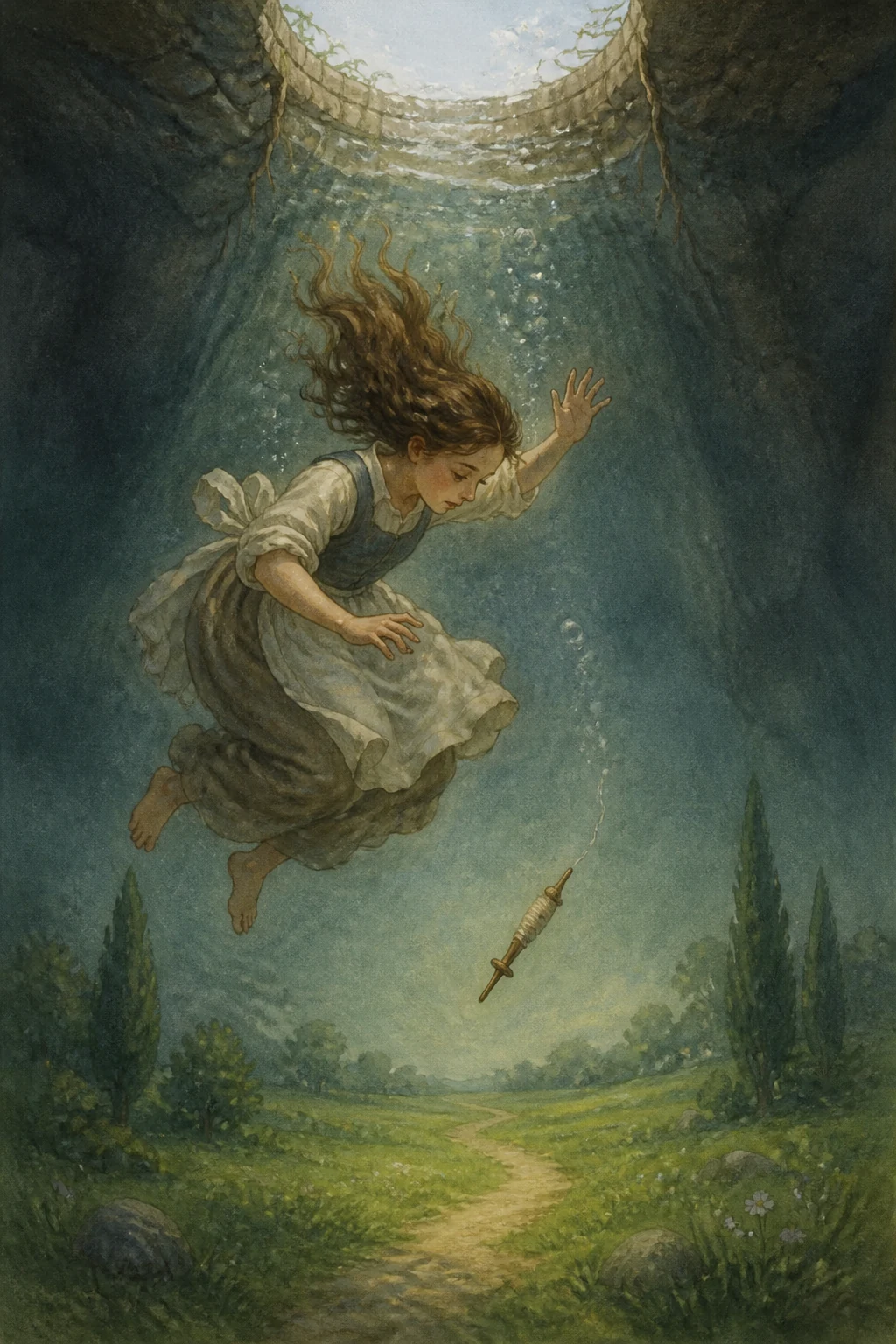
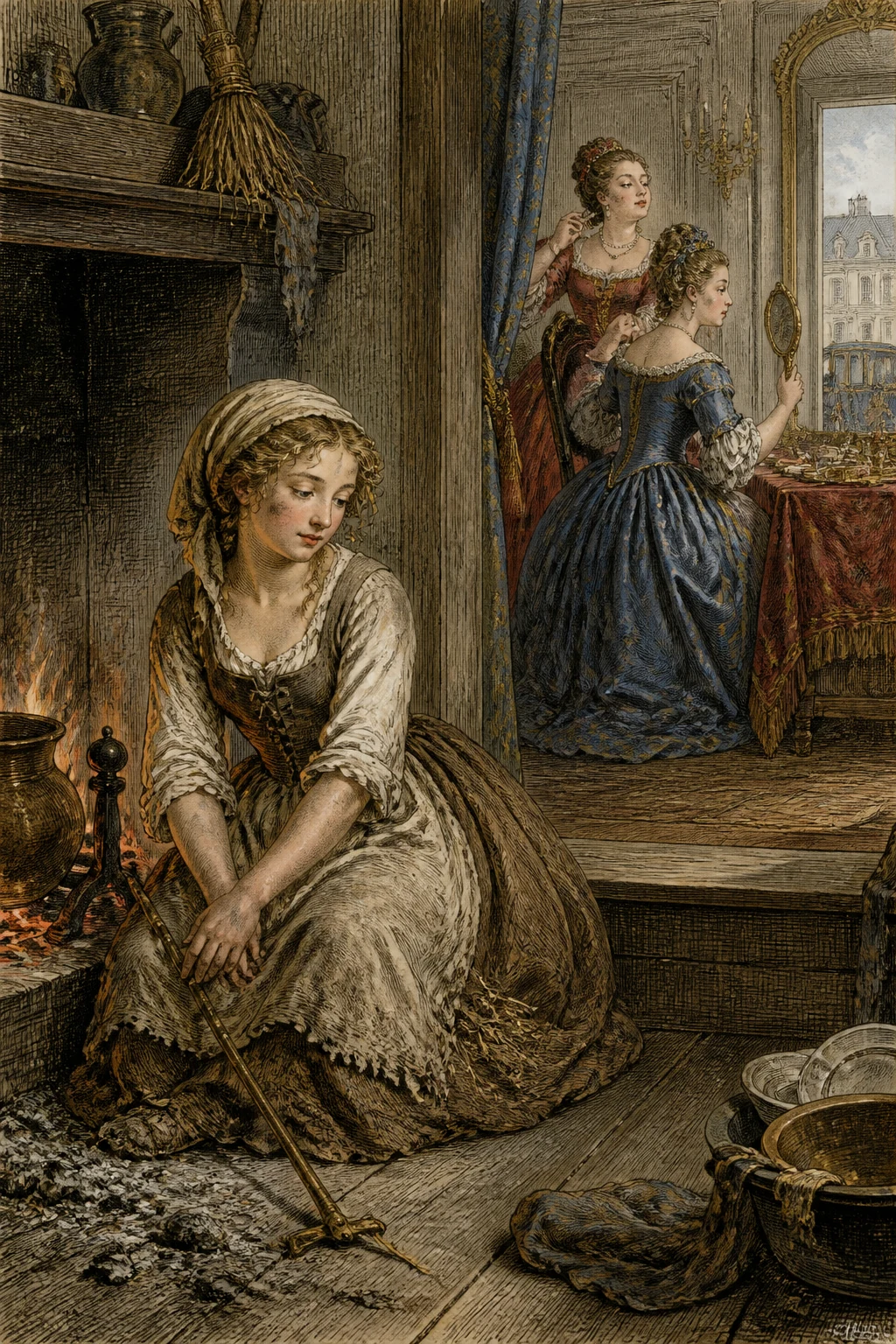
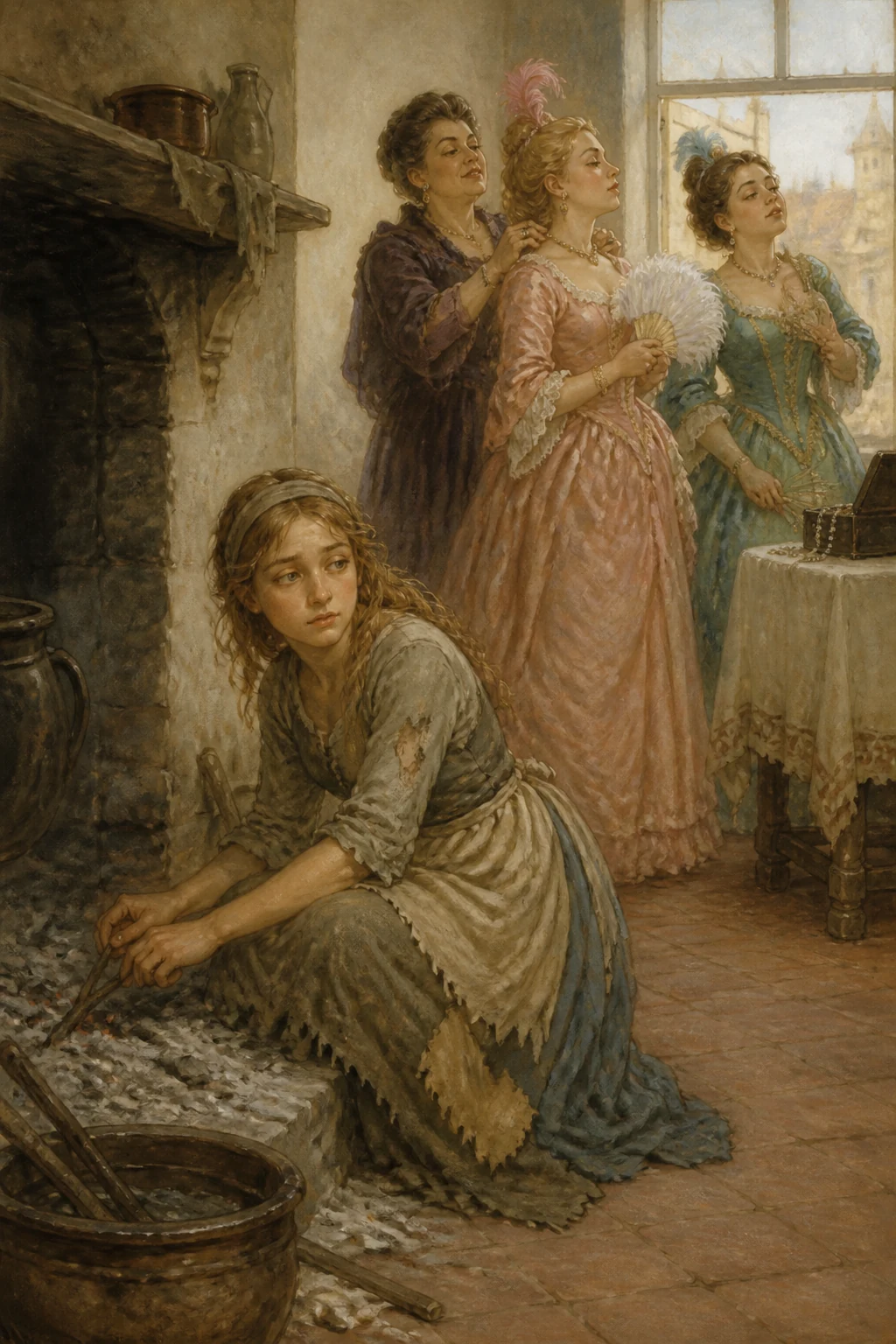
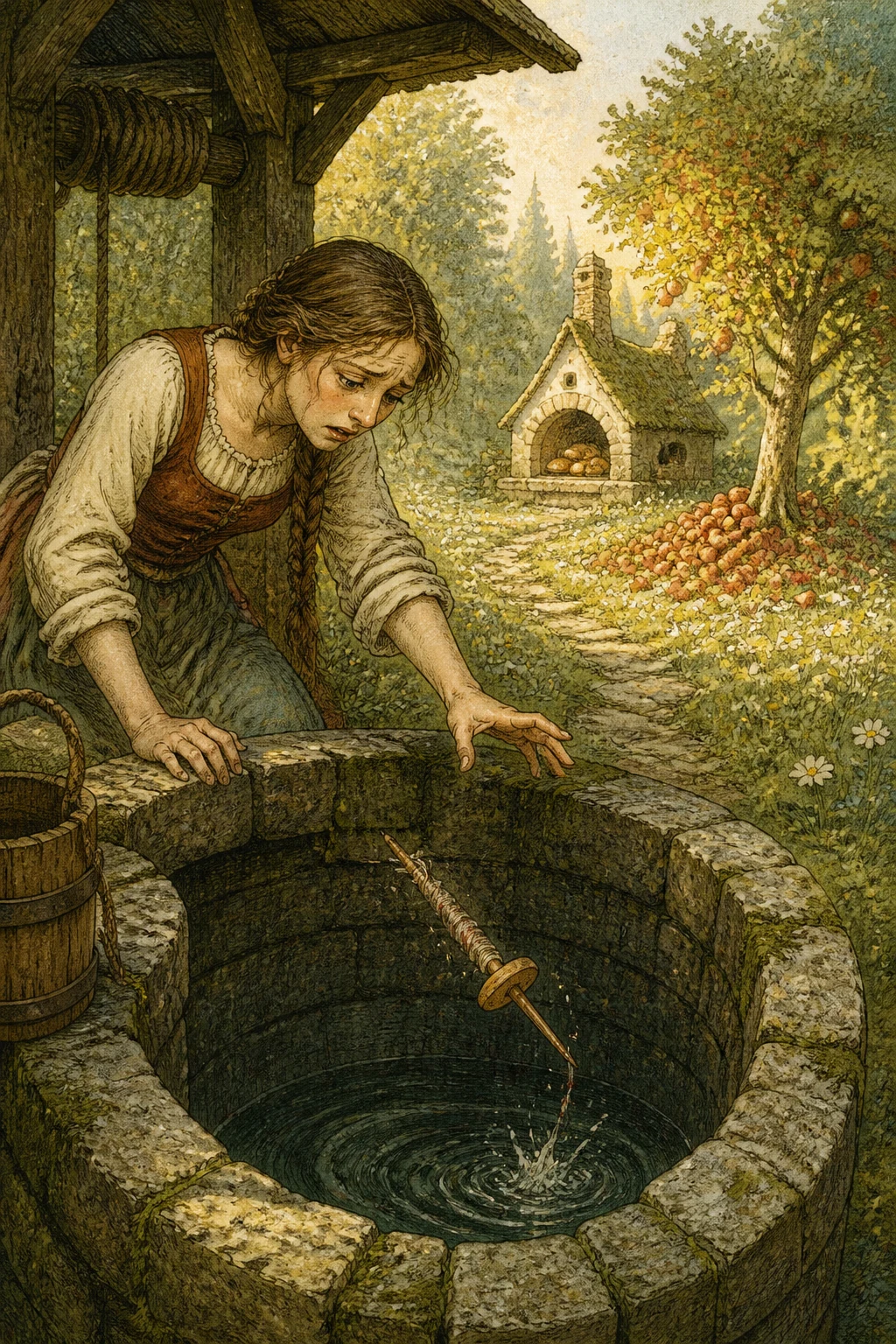
A widow had two daughters: one was beautiful and hardworking, the other ugly and lazy. But she loved the ugly, lazy one far more, because she was her own daughter, while the other had to do all the work and be the Cinderella of the household. Every day the poor girl had to sit beside a well on the main road and spin until her fingers bled. Now it happened one day that the spool was covered in blood, so she leaned over the well to wash it; but it slipped from her hand and fell to the bottom. Weeping, she ran to her stepmother and told her of the mishap. But her stepmother scolded her fiercely and was so pitiless that she said, "Since you let the spool fall in, you can fetch it out again." So the girl went back to the well and did not know what to do; and in her anguish she jumped into the well to fetch the spool. She lost consciousness, and when she awoke and came to her senses again, she was in a lovely meadow where the sun was shining and many thousands of flowers were blooming. She walked across the meadow and came to an oven full of bread. The bread cried out, "Oh, take me out, take me out, or I shall burn! I have been baked through for ages." So she went over and took all the loaves out, one after another, with the baker's peel. Then she went on and came to a tree laden with apples, which called to her, "Oh, shake me, shake me! We apples are all ripe." So she shook the tree until the apples fell like rain, and went on shaking until not one was left in its branches. When she had gathered them all into a heap, she went on her way. At last she came to a little house, and an old woman was looking out of it. But the woman had such large teeth that the girl grew frightened and was about to run away. The old woman called after her, "What are you afraid of, dear child? Stay with me. If you do all the housework properly, you shall have a good life here. Only take care to make my bed well and shake it out thoroughly, so that the feathers fly, for then it snows in the world. I am Frau Holle." Since the old woman spoke so kindly to her, the girl took courage, agreed, and entered her service. She did everything to the old woman's satisfaction, and always shook her bed so vigorously that the feathers flew about like snowflakes. In return she had a good life with her, never a harsh word, and boiled and roasted meat every day. After she had been with Frau Holle for some time, she grew sad, and at first she herself did not know what was wrong. At last she realized that she was homesick. Though she was a thousand times better off here than at home, she still longed to return. Finally she said to her, "I have grown homesick, and however well I fare down here, I cannot stay any longer. I must go back up to my own people." Frau Holle said, "I am glad that you long to go home again, and because you have served me so faithfully, I shall take you back up myself." She took the girl by the hand and led her to a great gateway. The gate was opened, and just as the girl stood beneath it, a mighty shower of gold fell, and all the gold clung to her, covering her from head to foot. "This is yours because you have been so hardworking," said Frau Holle, and she also gave her back the spool that had fallen into the well. Then the gate was closed, and the girl found herself back up in the world, not far from her mother's house. When she entered the yard, the rooster was sitting on the well and cried:
"Cock-a-doodle-doo! Our golden maiden is back anew." Then she went inside to her mother, and because she arrived covered in gold, both her mother and her sister welcomed her warmly.
The girl told them everything that had happened to her, and when the mother heard how she had come by such great riches, she wanted to secure the same good fortune for her other daughter, the ugly, lazy one. She had to sit beside the well and spin; and to make her spool bloody, she pricked her fingers and thrust her hand into the thorn hedge. Then she threw the spool into the well and jumped in after it. Like the other girl, she came to the lovely meadow and followed the same path. When she reached the oven, the bread cried out again, "Oh, take me out, take me out, or I shall burn! I have been baked through for ages." But the lazy girl answered, "As if I wanted to get myself dirty!" and went on. Soon she came to the apple tree, which called, "Oh, shake me, shake me! We apples are all ripe." But she answered, "Not likely! One of you might fall on my head," and went on her way. When she reached Frau Holle's house, she was not afraid, because she had already heard about her large teeth, and she entered her service at once. On the first day she made an effort, worked hard, and obeyed Frau Holle whenever she told her to do anything, for she was thinking of all the gold she would give her. But on the second day she already began to idle, and on the third she was lazier still and would not even get up in the morning. Nor did she make Frau Holle's bed as she ought, or shake it so that the feathers flew. Frau Holle soon grew tired of this and dismissed her. The lazy girl was quite content, thinking that now the shower of gold would come. Frau Holle did indeed lead her to the gateway, but as she stood beneath it, a great cauldron of pitch was poured over her instead of gold. "This is the reward for your service," said Frau Holle, and shut the gate. So the lazy girl came home, but she was covered all over in pitch, and when the rooster on the well saw her, he cried:
"Cock-a-doodle-doo! Our dirty maiden is back anew." But the pitch clung fast to her and would not come off as long as she lived.
Izvirnik
Frau Holle
Naslednje strani prikazujejo izvirno besedilo za primerjavo.
Ein Märchen der Brüder Grimm
Eine Witwe hatte zwei Töchter, davon war die eine schön und fleißig, die andere häßlich und faul. Sie hatte aber die häßliche und faule, weil sie ihre rechte Tochter war, viel lieber, und die andere mußte alle Arbeit tun und der Aschenputtel im Hause sein. Das arme Mädchen mußte sich täglich auf die große Straße bei einem Brunnen setzen und mußte so viel spinnen, daß ihm das Blut aus den Fingern sprang. Nun trug es sich zu, daß die Spule einmal ganz blutig war, da bückte es sich damit in den Brunnen und wollte sie abwaschen; sie sprang ihm aber aus der Hand und fiel hinab. Es weinte, lief zur Stiefmutter und erzählte ihr das Unglück. Sie schalt es aber so heftig und war so unbarmherzig, daß sie sprach: "Hast du die Spule hinunterfallen lassen, so hol sie auch wieder herauf." Da ging das Mädchen zu dem Brunnen zurück und wußte nicht, was es anfangen sollte; und in seiner Herzensangst sprang es in den Brunnen hinein, um die Spule zu holen. Es verlor die Besinnung, und als es erwachte und wieder zu sich selber kam, war es auf einer schönen Wiese, wo die Sonne schien und vieltausend Blumen standen. Auf dieser Wiese ging es fort und kam zu einem Backofen, der war voller Brot; das Brot aber rief: "Ach, zieh mich raus, zieh mich raus, sonst verbrenn ich: ich bin schon längst ausgebacken." Da trat es herzu und holte mit dem Brotschieber alles nacheinander heraus. Danach ging es weiter und kam zu einem Baum, der hing voll Äpfel, und rief ihm zu: "Ach, schüttel mich, schüttel mich, wir Äpfel sind alle miteinander reif." Da schüttelte es den Baum, daß die Äpfel fielen, als regneten sie, und schüttelte, bis keiner mehr oben war; und als es alle in einen Haufen zusammengelegt hatte, ging es wieder weiter. Endlich kam es zu einem kleinen Haus, daraus guckte eine alte Frau, weil sie aber so große Zähne hatte, ward ihm angst, und es wollte fortlaufen. Die alte Frau aber rief ihm nach: "Was fürchtest du dich, liebes Kind? Bleib bei mir, wenn du alle Arbeit im Hause ordentlich tun willst, so soll dir's gut gehn. Du mußt nur achtgeben, daß du mein Bett gut machst und es fleißig aufschüttelst, daß die Federn fliegen, dann schneit es in der Welt; ich bin die Frau Holle." Weil die Alte ihm so gut zusprach, so faßte sich das Mädchen ein Herz, willigte ein und begab sich in ihren Dienst. Es besorgte auch alles nach ihrer Zufriedenheit und schüttelte ihr das Bett immer gewaltig, auf daß die Federn wie Schneeflocken umherflogen; dafür hatte es auch ein gut Leben bei ihr, kein böses Wort und alle Tage Gesottenes und Gebratenes. Nun war es eine Zeitlang bei der Frau Holle, da ward es traurig und wußte anfangs selbst nicht, was ihm fehlte, endlich merkte es, daß es Heimweh war; ob es ihm hier gleich vieltausendmal besser ging als zu Haus, so hatte es doch ein Verlangen dahin. Endlich sagte es zu ihr: "Ich habe den Jammer nach Haus gekriegt, und wenn es mir auch noch so gut hier unten geht, so kann ich doch nicht länger bleiben, ich muß wieder hinauf zu den Meinigen." Die Frau Holle sagte: "Es gefällt mir, daß du wieder nach Haus verlangst, und weil du mir so treu gedient hast, so will ich dich selbst wieder hinaufbringen." Sie nahm es darauf bei der Hand und führte es vor ein großes Tor. Das Tor ward aufgetan, und wie das Mädchen gerade darunter stand, fiel ein gewaltiger Goldregen, und alles Gold blieb an ihm hängen, so daß es über und über davon bedeckt war. "Das sollst du haben, weil du so fleißig gewesen bist," sprach die Frau Holle und gab ihm auch die Spule wieder, die ihm in den Brunnen gefallen war. Darauf ward das Tor verschlossen, und das Mädchen befand sich oben auf der Welt, nicht weit von seiner Mutter Haus; und als es in den Hof kam, saß der Hahn auf dem Brunnen und rief:
"Kikeriki,
Unsere goldene Jungfrau ist wieder hie."
Da ging es hinein zu seiner Mutter, und weil es so mit Gold bedeckt ankam, ward es von ihr und der Schwester gut aufgenommen.
Das Mädchen erzählte alles, was ihm begegnet war, und als die Mutter hörte, wie es zu dem großen Reichtum gekommen war, wollte sie der andern, häßlichen und faulen Tochter gerne dasselbe Glück verschaffen. Sie mußte sich an den Brunnen setzen und spinnen; und damit ihre Spule blutig ward, stach sie sich in die Finger und stieß sich die Hand in die Dornhecke. Dann warf sie die Spule in den Brunnen und sprang selber hinein. Sie kam, wie die andere, auf die schöne Wiese und ging auf demselben Pfade weiter. Als sie zu dem Backofen gelangte, schrie das Brot wieder: "Ach, zieh mich raus, zieh mich raus, sonst verbrenn ich, ich bin schon längst ausgebacken." Die Faule aber antwortete: "Da hätt ich Lust, mich schmutzig zu machen," und ging fort. Bald kam sie zu dem Apfelbaum, der rief: "Ach, schüttel mich, schüttel mich, wir Äpfel sind alle miteinander reif." Sie antwortete aber: "Du kommst mir recht, es könnte mir einer auf den Kopf fallen," und ging damit weiter. Als sie vor der Frau Holle Haus kam, fürchtete sie sich nicht, weil sie von ihren großen Zähnen schon gehört hatte, und verdingte sich gleich zu ihr. Am ersten Tag tat sie sich Gewalt an, war fleißig und folgte der Frau Holle, wenn sie ihr etwas sagte, denn sie dachte an das viele Gold, das sie ihr schenken würde; am zweiten Tag aber fing sie schon an zu faulenzen, am dritten noch mehr, da wollte sie morgens gar nicht aufstehen. Sie machte auch der Frau Holle das Bett nicht, wie sich's gebührte, und schüttelte es nicht, daß die Federn aufflogen. Das ward die Frau Holle bald müde und sagte ihr den Dienst auf. Die Faule war das wohl zufrieden und meinte, nun würde der Goldregen kommen; die Frau Holle führte sie auch zu dem Tor, als sie aber darunterstand, ward statt des Goldes ein großer Kessel voll Pech ausgeschüttet. "Das ist zur Belohnung deiner Dienste," sagte die Frau Holle und schloß das Tor zu. Da kam die Faule heim, aber sie war ganz mit Pech bedeckt, und der Hahn auf dem Brunnen, als er sie sah, rief:
"Kikeriki,
Unsere schmutzige Jungfrau ist wieder hie."
Das Pech aber blieb fest an ihr hängen und wollte, solange sie lebte, nicht abgehen.
Nadaljuj z branjem