Prevod
From my father I inherited the best of all legacies: a cheerful disposition. And who was my father? Well, that has nothing to do with my disposition! He was lively and hearty, plump and round, and both his outward appearance and his inner nature were quite at odds with his office. And what was his office, his position in society? Well, if it were written down and printed at the very beginning of a book, quite a few readers would probably put the book aside and say, “That looks too gruesome for me; I want none of that sort of thing.” Yet my father was neither a knacker nor an executioner; on the contrary, his office often placed him at the head of the town’s most honourable men, and he was perfectly entitled to be there, perfectly in his proper place. He had to go first, ahead of the bishop, ahead of princes of the blood—and first he went: he was a hearse driver!
Now it is out! And this I can tell you: when you saw my father sitting up there, high on the front of death’s omnibus, wearing his long, flowing black cloak and his three-cornered hat with its black fringe, and then looked at his face, which was the very image of the sun as people draw it, round and laughing, you could not think of sorrow and the grave. That face said, “Never mind! It will all turn out much better than you think!”
You see, it is from him that I have my cheerful disposition and my habit of taking frequent walks in the churchyard; and a very pleasant place it is, provided you go there in good spirits—and then I subscribe to Adresseavisen, just as he did.
I am no longer quite young—I have neither wife nor children nor library, but, as I said, I subscribe to Adresseavisen. It is enough for me; to my mind it is the best of papers, and my father thought so too. It serves a useful purpose and contains everything a person needs to know: who is preaching in the churches and who is preaching in the new books! Where to find lodgings, servants, clothes and food; who is selling out and who is passing on; and then you see so much charity and so many innocent verses that do no harm! Marriages sought, and assignations that people agree to or decline! All so simple and natural! Indeed, you can live quite happily and get yourself buried by subscribing to Adresseavisen—and at the end of your life you have such a lovely heap of paper that you can lie softly upon it, if you do not care to lie on wood shavings.
Adresseavisen and the churchyard: these are, and always have been, my two most stimulating excursions, my two most blessed bathing places for the spirits.
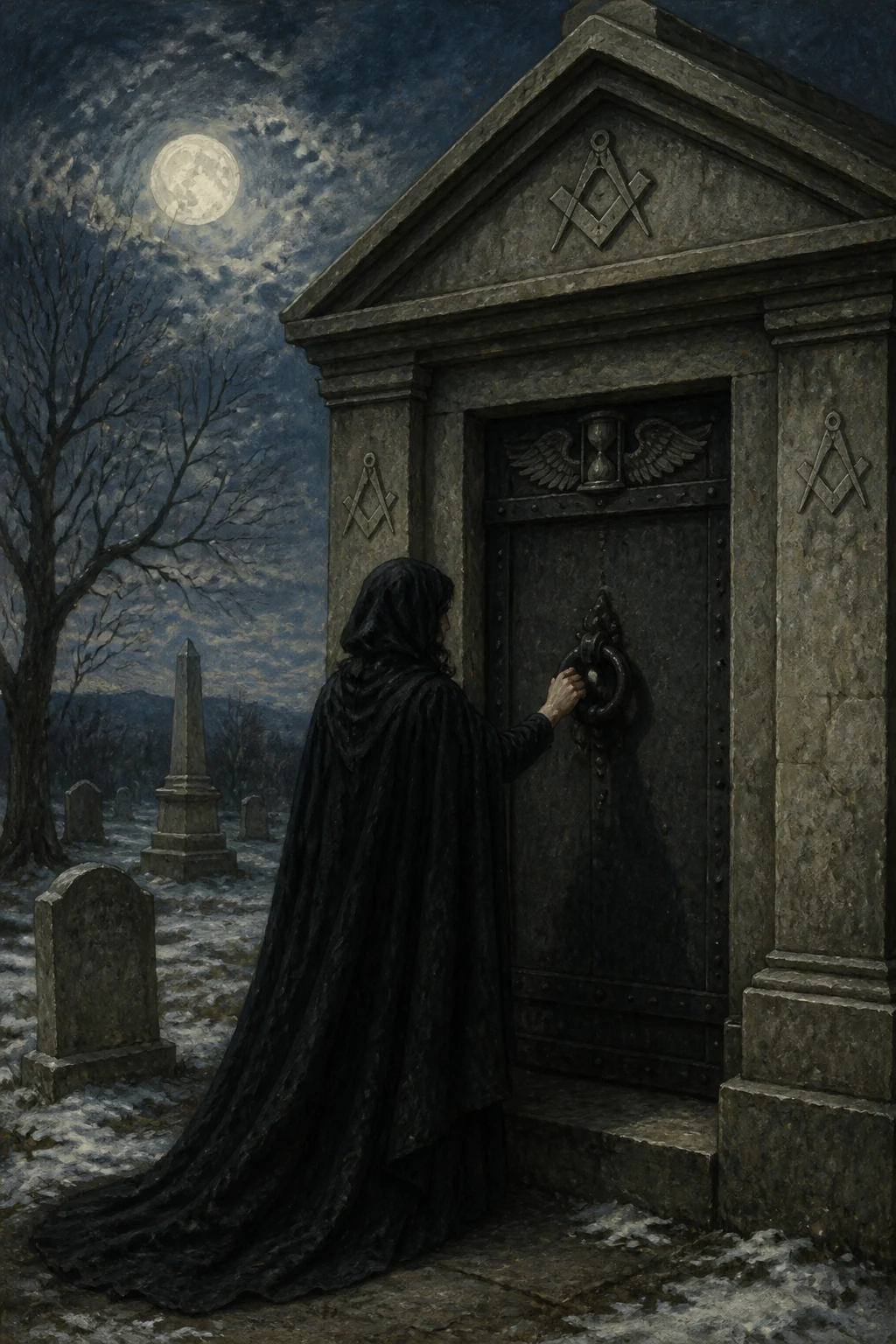
Anyone can make his own way into Adresseavisen; but come with me to the churchyard. Let us go there when the sun is shining and the trees are green; let us walk among the graves! Each is like a closed book with its spine turned upwards: you can read the title, which tells you what the book contains and yet tells you nothing. But I know all about them, from my father and from my own experience. I have it all in my book of graves, a book I have made myself, for use and pleasure; there they all lie, and a few more besides!
Now we are in the churchyard. Here, behind the white-painted wooden railings, where a rose tree once grew—now it is gone, but a little evergreen from the neighbouring grave reaches its green finger inside, just to lend a touch of finery—rests a very unhappy man. And yet, while he lived, he was comfortably off, as they say, had a good livelihood and a little to spare; but he took the world too much to heart, by which I mean the arts. If he sat in the theatre one evening, ready to enjoy it with all his soul, he was quite beside himself if the stage machinist so much as put too strong a light in either cheek of the moon, or the sky border hung in front of the wing when it ought to have hung behind it, or a palm tree appeared on Amager, a cactus in the Tyrol, or beech trees far up in Norway! Surely it makes no difference; who thinks about such things? It is only a play, after all, and you are meant to enjoy it. Then the audience applauded too much, or else it applauded too little. “It is wet firewood,” he would say. “It will not catch tonight!” And then he would turn round to see what sort of people they were, and find that they were laughing in the wrong places, laughing where they ought not to laugh, and it vexed him and made him suffer, and he was an unhappy man, and now he is in his grave.
Here rests a very fortunate man—that is to say, a very distinguished man of noble birth, and that was his good fortune, for otherwise nothing would ever have become of him. But everything in nature is so wisely arranged that it is a pleasure to think of it. He went about embroidered front and back, and was installed in the drawing room just as one installs a costly, pearl-embroidered bellpull, which always has a good stout cord behind it to do the work. He too had a good cord behind him, a deputy who did the work, and still does it behind another new, embroidered bellpull. Everything is so wisely arranged that one can easily keep cheerful.
Here rests—yes, this really is very sad!—here rests a man who for sixty-seven years had been trying to think of something witty to say. He lived for nothing but to come up with a witticism, and at last he really did, or so he believed, and was so delighted that he died of it, died of joy at having thought of it; and nobody benefited, nobody ever heard the witticism. Now I should think he can hardly rest easy in his grave on account of it, for suppose it was a remark that had to be made at breakfast to have its proper effect, and, being dead, he can only appear at midnight, as people generally believe: then the remark does not suit the hour, nobody laughs, and he can go back to his grave with his witticism. That is a sorrowful grave.
Here rests a very miserly woman. While she was alive she used to get up in the night and mew, so that the neighbours would think she kept a cat; that was how miserly she was!
Here rests a young lady of good family. Whenever she was in company she had to let everyone hear her singing voice, and so she would join in with “mi manca la voce”! It was the only truth she ever uttered!
Here rests a maiden of another kind! When the heart’s canary begins to shriek, reason puts its fingers in its ears. The fair maiden stood in the halo of matrimony! It is an everyday story—but that is a nice way of putting it. Let the dead rest!
Here rests a widow who had swan song on her lips and owl’s gall in her heart. She went prowling among families in search of her neighbours’ shortcomings, just as “Politivennen” used to go about in the old days looking for a missing plank across a gutter.
Here is a family vault. Every generation of that family held so firmly together in its beliefs that even if the whole world and the newspaper said, “This is how it is,” and the little son came home from school and said, “I have heard it this way!” then his way was the only right one, because he belonged to the family. And it is certain that if the family’s barnyard cock happened to crow at midnight, then it was morning, even though the watchman and every clock in town said it was midnight.
The great Goethe ends his “Faust” by saying that it “may be continued,” and so may our walk here in the churchyard. I come here often! If one or another of my friends or non-friends makes life too trying for me, I come out here, find a patch of turf and consecrate it to the man or woman I want buried; then I bury them at once, and there they lie, dead and powerless, until they return as new and better people. Their lives and doings, as seen from my side, I enter in my book of graves; and that is how everyone ought to go about it—not get angry when someone behaves too badly, but bury them at once, hold on to a cheerful disposition and keep up a subscription to Adresseavisen, that paper written by the people themselves, though often with someone guiding their pen.
When the time comes for me and the story of my life to be bound up in the grave, let the inscription be: “A cheerful disposition!” That is my story.