Waltey
Deček, ki ga je rešila riba
Uji Shūi Monogatari · anonimna srednjeveška zbirkaO besedilu
Deček, ki ga je rešila riba
- Vir
- Uji Shūi Monogatari
- Avtor
- anonimna srednjeveška zbirka
- Jezik branja
- English
- Jezik izvirnika
- 日本語
- Čas branja
- 3 min branja
- Obseg
- 2 strani
- Naslov izvirnika
- 178 魚養事
O izvirniku
Uji Shūi Monogatari
Srednjeveške japonske pripovedi o menihih, duhovih, čudežih, prevarah in vsakdanjih presenečenjih. Bralni jezik je English, izvirnik pa prihaja iz vira Uji Shūi Monogatari v jeziku 日本語.
Besedilo
Deček, ki ga je rešila riba
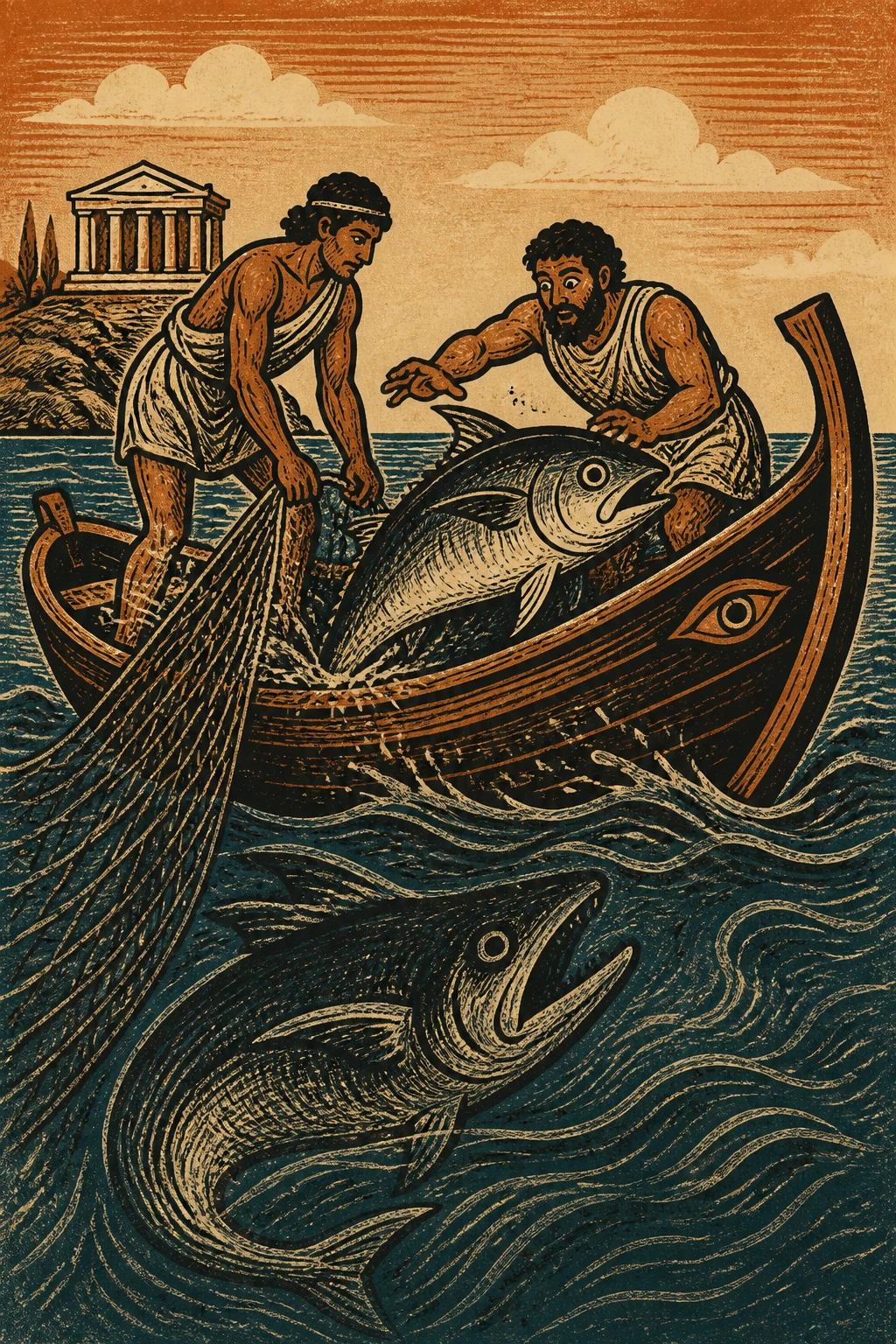
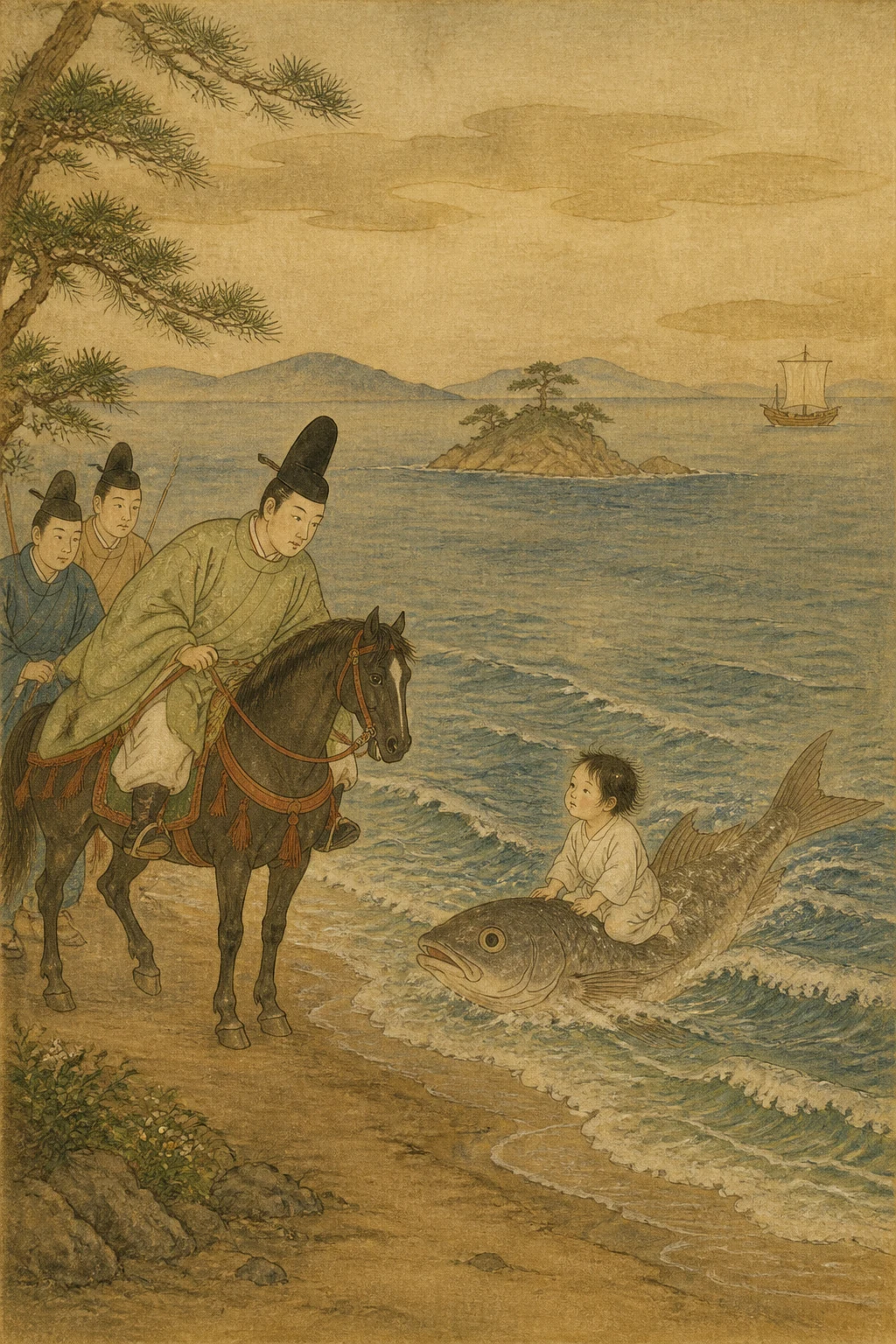
Long ago, an envoy to Tang China took a wife during his stay there, and she bore him a child. While the child was still very young, he returned to Japan. Before leaving, he promised his wife, “I shall send you word whenever the envoys travel between our countries. And when the child is old enough to leave his nurse, I shall send for him.” With this pledge, he went home. Whenever envoys arrived from Japan, the mother asked whether there was any word for her, but there was never so much as a message. Deeply resentful, she took the child in her arms and faced toward Japan. She wrote on a wooden tag, “The son of such-and-such, envoy to Tang China,” and tied it around his neck. “If you and your father are bound by a bond from a former life, you will surely meet,” she said, then cast him into the sea and went home. One day, as the father was riding along the shore at Naniwa, he saw something white out at sea, looking like an island afloat upon the water. As it drew nearer, he made out the shape of a child. Astonished, he reined in his horse and watched. Coming close on the waves was a fair, lovely boy of about four. He rode nearer the water and saw that the child was sitting on the back of a great fish. He had an attendant lift the boy into his arms, and when he looked, he found a tag around the child’s neck. On it was written, “The son of such-and-such, envoy to Tang China.” “Then this must be my own son,” he thought. “His mother must have grown angry because I sent no word about the child I promised to bring over from China, and cast him into the sea. Some bond of destiny must have brought him here on this fish.” His heart filled with tenderness, and he brought the boy up with the greatest love. When an envoy next went to Tang China, he sent a letter telling the mother what had happened. By then she had given her child up for lost, and when she heard the news, she rejoiced at so extraordinary a wonder. As the boy grew to manhood, he became a splendid calligrapher. Because a fish had saved him, he was given the name Uokai, “Fish-Nurtured.” It was he who wrote the inscriptions on the name plaques of the Seven Great Temples.
Izvirnik
178 魚養事
Naslednje strani prikazujejo izvirno besedilo za primerjavo.
いまはむかし遣唐使のもろこしにあるあひたに妻をまうけて子を生せつその子いまたいとけなき程に日本に帰る妻に契ていはくこと遣唐使いかんにつけて消息やるへし又此子乳母はなれん程にはむかへとるへしと契て帰朝しぬ母遣唐使のくることに消息やあると尋ぬれとあへてをともなし母おほきに恨てこの児をいたきて日本へむきて児のくひに遣唐使それかしか子といふ簡を書てゆひつけてすく世あらは親子の中は行逢なんといひて海になけ入て帰ぬ父あるとき難波の浦のへんを行に沖のかたに島のうかひたるやうにて白き物みゆちかくなるままにみれは童にみなしつあやしけれは馬をひかへてみれはいとちかくよりくるに四はかりなる児のしろくおかしけなる浪につきてよりきたり馬をうちよせてみれは大なる魚のせなかにのれり従者をもちていたきとらせてみけれはくひにふたあり
遣唐使それかしか子とかけりさは我子にこそありけれもろこしにていひ契し児をとはすとて母か腹たちて海になけ入てけるかしかるへき縁ありてかく魚にのりてきたるなめりとあはれにおほえていみしうかなしくてやしなふ遣唐使のいきけるに付て此よしをかきやりたりけれは母も今ははかなき物に思けるにかくとききてなん希有の事なりと悦けるさてこの子おとなに成ままに手をめてたく書けり魚にたすけられたりけれは名をは魚養とそ付たりける七大寺の額共はこれか書たる也けり
Nadaljuj z branjem