Prevod
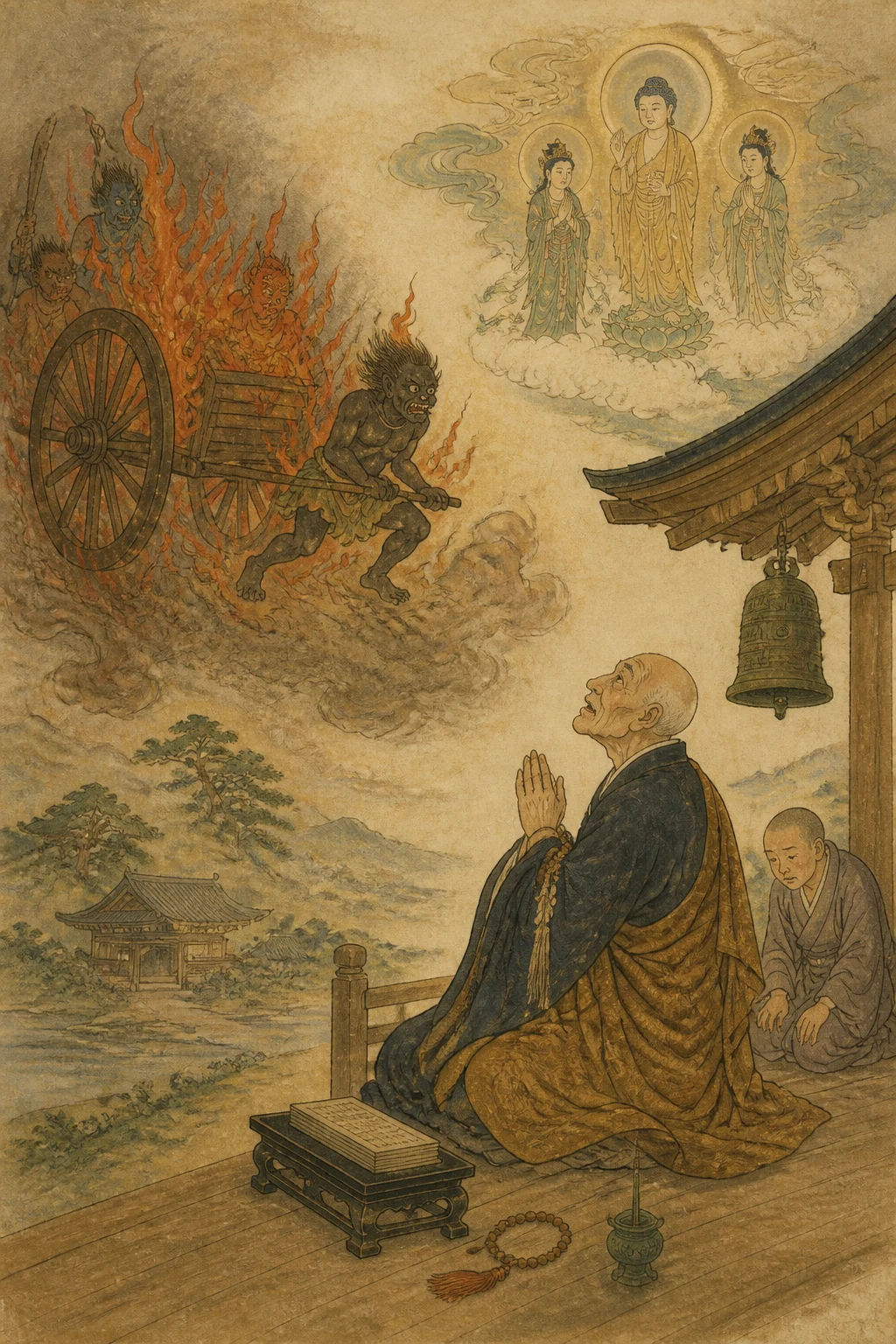
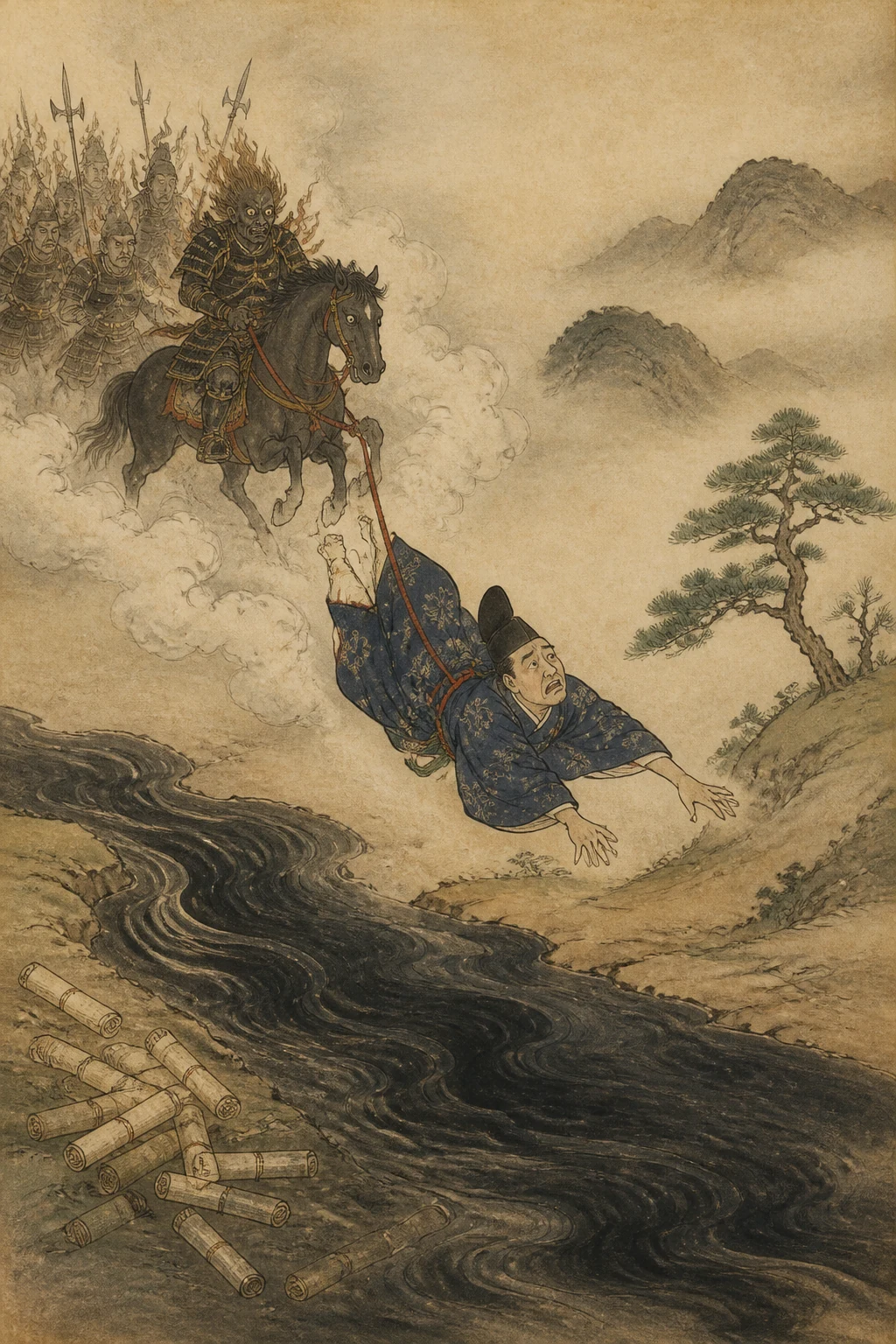
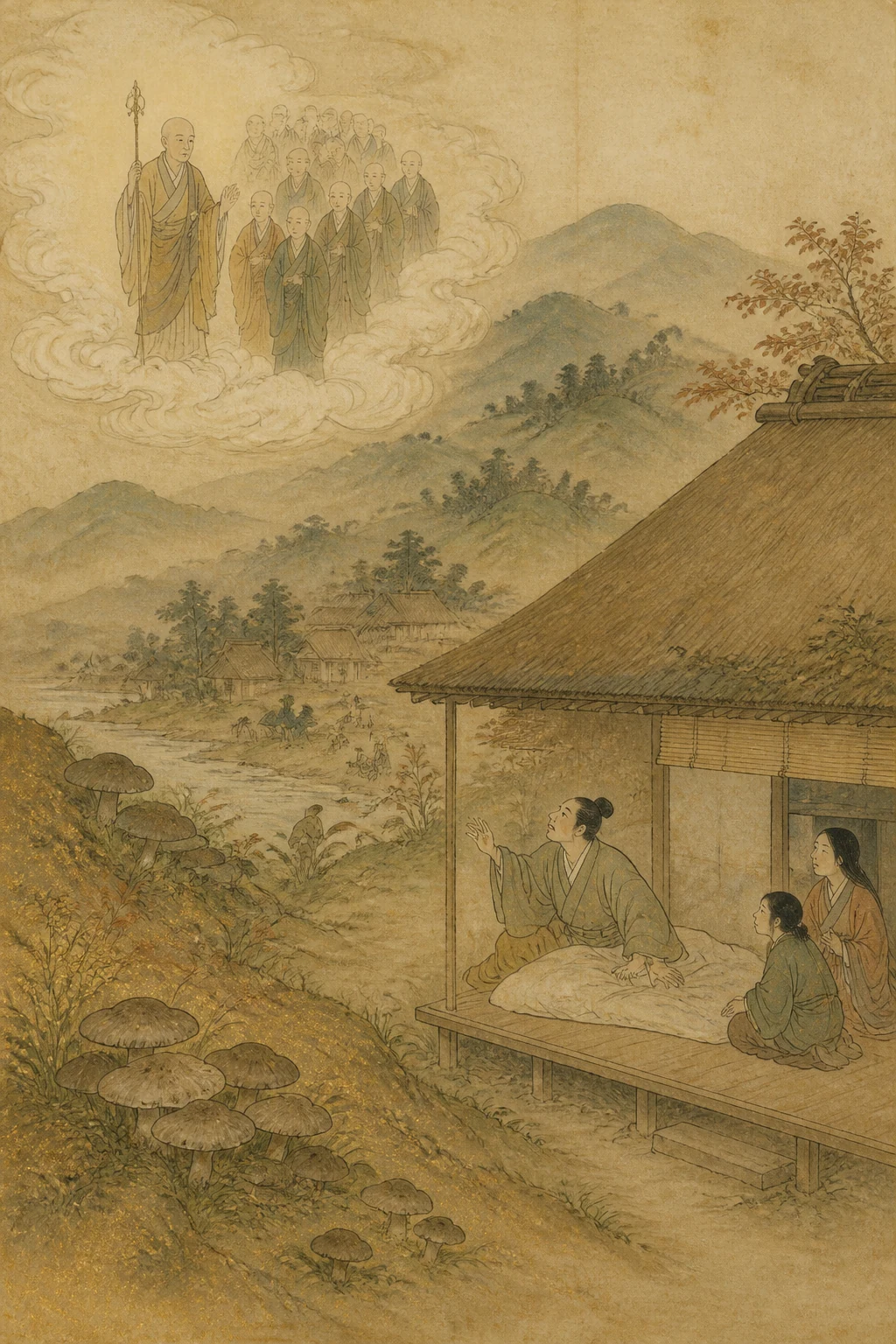
This, too, happened long ago. At Yokawa on Mount Hiei there was a monk called Kanō Chiin, an utterly shameless breaker of the precepts who spent his days and nights doing nothing but appropriating temple property for his own use. He served as the administrator of Yokawa. On his way to the administrative office, he would often pass the foot of the pagoda. There he noticed an old image of Jizō that had been cast aside among some odds and ends. Sometimes, as he passed, he would remove the cloth covering his head, incline his head a little, and offer a modest bow of reverence. In time, Kanō died. When his master, a high-ranking priest, heard the news, he was deeply grieved and filled with boundless pity. “That monk was a shameless breaker of the precepts,” he thought. “There can be no doubt that he will fall into hell in the life to come.” Around this time, people in the monastery began saying to one another, “The Jizō at the foot of the pagoda has not been seen lately. What can have happened to it?” Some suggested that someone might have taken it away to have it repaired. Then the high priest had a dream. In it he asked, “Why has this Jizō disappeared?” A monk standing nearby replied, “This Bodhisattva Jizō went into the Hell of Unceasing Torment with Kanō Chiin on the very day he fell there, intending to save him.” Even in his dream, the priest was utterly astonished. “Why would he accompany such a sinner into hell?” he asked. “Because, whenever Kanō passed the foot of the pagoda, he would look toward Jizō and sometimes bow before him,” came the reply. When the priest awoke, he went himself to the foot of the pagoda and found that Jizō was indeed gone. “Then has he truly gone with that monk?” he wondered. Some time later, the high priest had another dream. He went to the foot of the pagoda and found Jizō standing there. “You are the Jizō who disappeared,” he said. “How have you come back?” Someone answered, “He went into hell with Kanō, saved him, and returned. That is why his feet are burned.” When the priest looked, Jizō’s feet were indeed burned black. His amazement, even in the dream, knew no bounds. He awoke with tears streaming down his face and hurried to the foot of the pagoda. There, in waking life, Jizō stood. When he looked at the feet, he found that they were indeed burned. At the sight, he was overcome with sorrow and tenderness. Weeping, he lifted the image in his arms and carried it out from where it stood. It is said to survive to this day and to stand about two shaku and five sun high. The person who told this story had himself worshipped before it.