Waltey
Cesarjeva hči ovca
Srpske narodne pripovijetke · Vuk Stefanović KaradžićO besedilu
Cesarjeva hči ovca
- Vir
- Srpske narodne pripovijetke
- Avtor
- Vuk Stefanović Karadžić
- Jezik branja
- English
- Jezik izvirnika
- Српски
- Čas branja
- 6 min branja
- Obseg
- 5 strani
- Naslov izvirnika
- 028 Царева кћи овца
O izvirniku
Srpske narodne pripovijetke
Srbske ljudske pripovedi o junakih, čudežnih bitjih, preizkušnjah in ljudski modrosti. Bralni jezik je English, izvirnik pa prihaja iz vira Srpske narodne pripovijetke v jeziku Српски.
Besedilo
Cesarjeva hči ovca
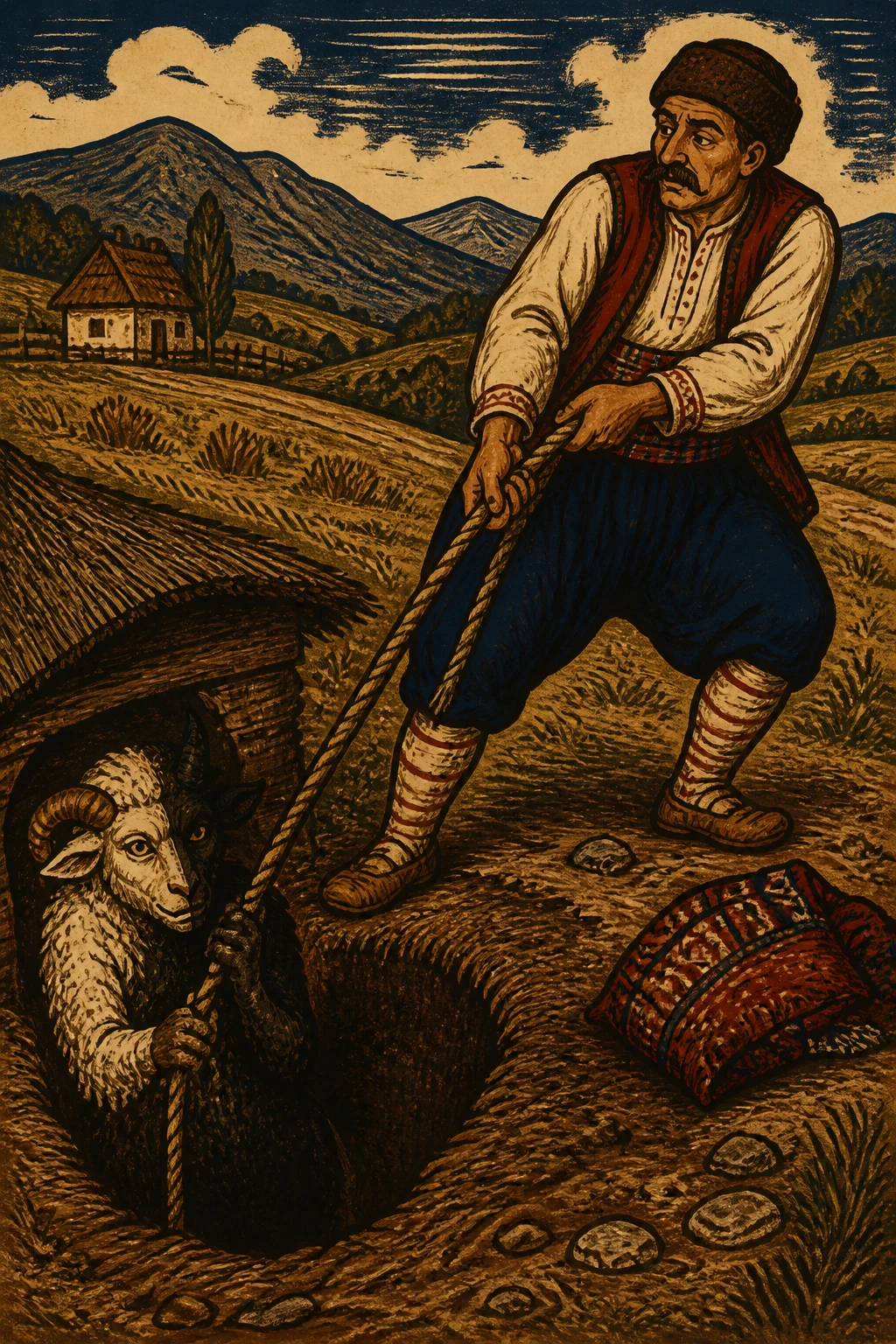
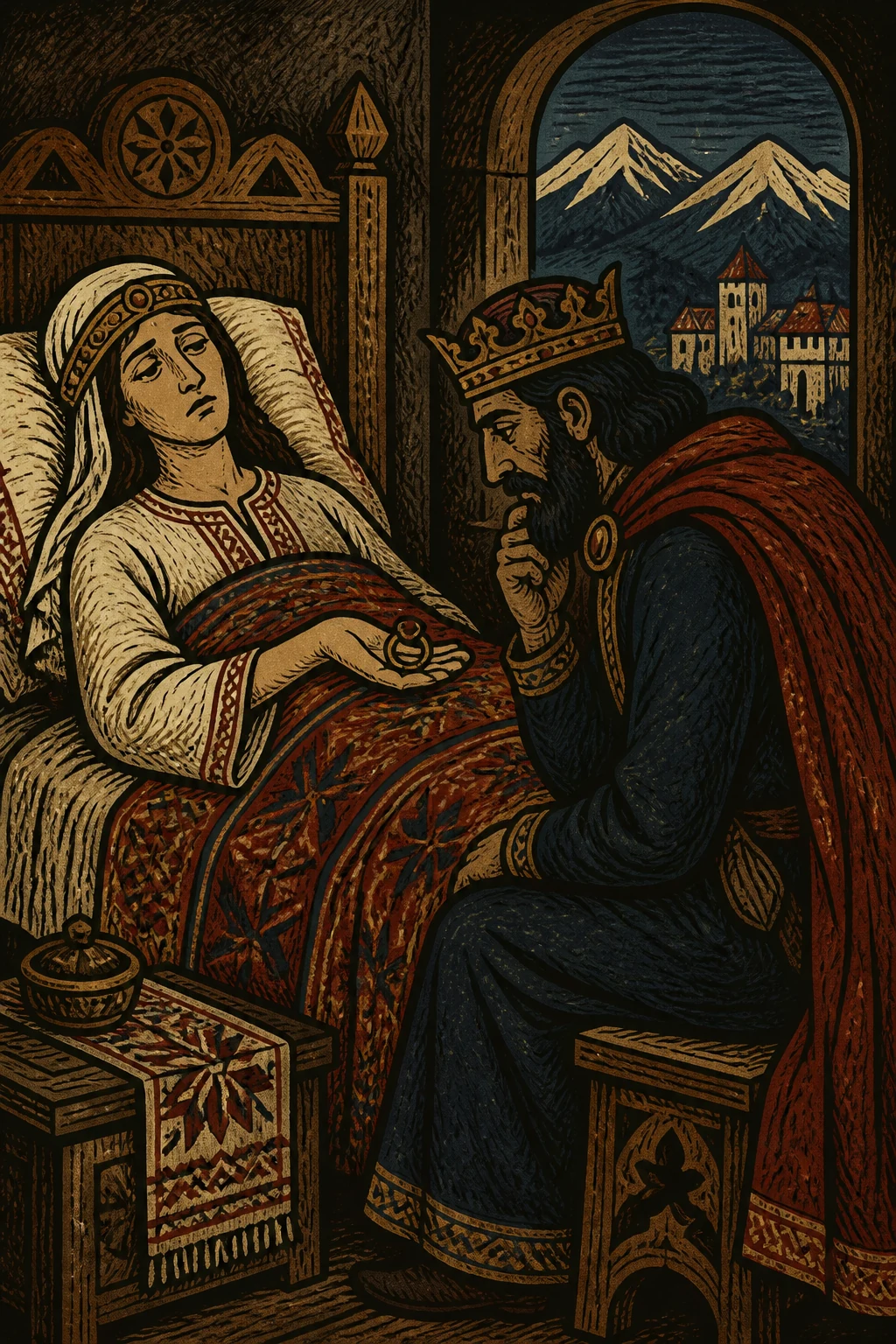
There was once an emperor who loved his wife beyond all measure. They had no children but an only daughter, who was already of an age to marry. The empress fell ill, and when she saw that she would not recover but must die, she called her husband to her and, weeping, spoke to him in private: “The last hour of my allotted time is drawing near, and I shall die before the cocks crow for the third time. I know you cannot go without marrying again, and may good fortune attend you! May God and I, sinner that I am, freely grant you leave! But by this world and the next, hear me and heed what I am about to tell you. Here is a ring. Whatever maiden you find and ask to marry you, do not wed her unless this ring fits her well on the forefinger of her right hand. Three times I adjure you, by heaven and earth, to take in my place the maiden on whose hand it sits most becomingly. If you do not heed me, may all you do and all you pray to God for come to nothing and turn against you, and may no trace of you remain.” The emperor promised her and swore that he would marry no maiden unless the ring fitted her well, and that if he could find no such maiden, he would never marry again. The empress answered, “You will find her. Only do not break your oath, lest a venomous serpent bite you.” No sooner had she spoken than she breathed her last. After his wife’s death, the emperor sent servants throughout the city to visit all the maidens and see whether the ring would fit any of them. When they found none in the city, he sent them out into the wide world to search, in the hope that fortune might lead them to one, but all in vain. After a great length of time, the servants returned and told the emperor that nowhere in the world had they found a maiden for whom the ring was not either too large or too small. The emperor was at his wits’ end, not knowing what to do or which way to turn. He wished to marry, but there was no maiden; he wished to break his oath, but dared not, for fear that the curse would overtake him. Tormented by these thoughts, he flung the ring away—and where should it go but bounce up from the floor into his own daughter’s lap? Seeing the lovely golden ring, she took it and slipped it onto the forefinger of her right hand, then held out her hand to her father and said, “Look, Father, how pretty it looks on me.” At the sight, the emperor fainted with astonishment, and for half a day he could not be brought to his senses. His daughter sprang to him, held him up in her arms and embraced him, weeping over him in her distress, until at last he came to himself and said to her, “You are my wife. So, it seems, God has decreed, and you shall be empress in your late mother’s place.” His daughter marvelled at what he was saying and thought he must have lost his reason. But after much arguing, she saw that there was no escape. What could she do to keep her father from marrying her, and prevent their story from being told as a thing of horror from generation to generation? She resolved to kill herself, and so she did: she took her father’s dagger and plunged it into her heart. When her father saw what had happened, he sent for a wise woman, who told him, “Here is a flute. Play it over her head from dawn till dark, and she will come back to life.” The emperor did as she said, and no sooner had he begun piping beside his dead daughter than she sat up. Her father embraced her and at once ordered that everything be made ready for the wedding the following day. When his daughter heard this, she took her father’s sabre and cut off her own left hand, then burned her right hand away in the fire. In the morning, while the servants were preparing for the wedding, one of them told the emperor that he had seen his daughter without her hands. Her father ran to her, and when he saw her, he hastily sent for the wise woman again. She gave him some herbs, and as soon as he rubbed them on the stumps of his daughter’s wrists, her hands grew back just as they had been. Then the emperor placed his daughter under guard, lest she again do herself some harm. Unable now to do anything, she paced to and fro about her chamber, until she caught sight of a rod of pure gold standing in a corner of the house. Written upon it in letters of blood were the words: “Do not touch me.” Wondering what it could be, she took the rod in her hands, and the moment she began twirling it over her finger, she turned into a sheep and went bleating through the house. When the servants saw her, they were struck with fear and amazement, and ran to tell the emperor. Then the emperor himself saw her and hurriedly sent for the wise woman once more. But she answered that she knew no remedy, and told him to summon other wise women. The emperor consulted many of them, but each replied that she knew no remedy for this. And so, unable to restore his daughter to her former shape, he never married again. From then on, the sheep was always skipping and bleating at the emperor’s side, and he tended and cherished her as his own child. And on the day the emperor died, the sheep died too.
Izvirnik
028 Царева кћи овца
Naslednje strani prikazujejo izvirno besedilo za primerjavo.
Имаше некакав цар жену коју преко начина миловаше. Они од свога срца немадијаху ништа друго до једну јединицу шћер, која већ бјеше приспјела за удају. Ова царица разболи се и кад види да не ће остати, него да ће умријети, зазове мужа цара, и сузе ронећи, на четири ока рече му: "Ево се приближила пошљедња ура моје чаше, и ја ћу умријети приђе но трећи кокоти запоју, и ја знам да се ти не можеш проћи да се не жениш, и била ти срећа! и просто ти било од Бога и од мене грешнице! али тако ти овога и онога свијета, чуј ме и послушај ме што ћу ти рећи: ево ти прстен, и коју ђевојку нађеш и испросиш, немој је вјенчати ако јој ови прстен не узме добро на први прст десне руке, и заклињем те по трипут од неба до земље, да ону ђевојку себе вјенчаш мјесто мене којој пристане најљепше на руку, а ако ме не послушаш, све што радио и о чему се Богу молио све ти узалуд и наопако обршило, и од тебе не остало трага." Цар јој се обећа и закуне да не ће вјенчати никакве ђевојке ако јој добро не узиде они прстен, и ако је не би нашао, да се не ће ни оженити. Царица му на то одговори: "Наћи ћеш је, само не преступи клетве да те љута змија не увједе," и тек што ово изрече, издахну. Цар по смрти жениној пошље слуге по ономе граду да обидују све ђевојке хоће ли којој они прстен добро ићи, али кад у граду не нађоше, посла их по бијеломе свијету да траже еда би се по срећи која нашла, али све залуду. Слуге се врнуше наком толико силе времена и кажу цару да у свијету ђевојке не нађоше којој не би или превелик или преузак ови прстен. Цар се на чуду нађе шта ће како ли ће: хтио би се женити, а ђевојке нема, хтио би клетву преступити, али не смије од страха да га не постигне, и онако узмучен у мислима, баци они прстен, те ђе ће? него одскочи с долине те његовој истој шћери на скут, а она видећи златни и лијепи прстен, узме га те стави на први прст од десне руке, и пружајући руку пут свога оца рече му: "Виђи тата, како ми лијепо стоји." Кад виђе цар, онесвјесну од чуда, и за цијело по дана разабрати се није могао, док његова шћер у то скочи и као да га рукама поткријепи и загрли, почне од жалости над њим плакати, док се на један пут освијести и рече шћери: "Ти си моја жена, тако је зар Бог осудио, и ти ћеш бити царица мјесто своје покојне матере." Шћер му се стане чудити шта збори, и као за луда и несвијесна чоека цијенити га, али наком дугога препирања виђе већ да није куђ камо, те она шта ће, да је отац не вјенча и да пас пасу као приказаније не казује, науми да убије сама себе, те тако и учини: узме очин ханџар те њиме сама себе усред срца. Отац пошто виђе поручи за бајалицу те му она рече: "Ево ти свирала, пак јој над главом свири од жрака до мрака, и оживљеће ти." Цар тако и учини, и теке стане звијукати около мртве шћери, она сједе, а отац је загрли и одмах нареди да се сјутрадан приправи што треба за свадбу. Кад шћер ово дочује, узме очину сабљу те сама себе лијеву руку осијече, а десну у огњу изгори. У јутру слуге приправљају свадбу, а један од њих докаже цару како му је видио шћер без, рука. Отац јој потече и кад је види, опет брже боље за бајалицу, те му она да некакве траве, и теке јој ручне патељке намаза, изникоше руке какве су и биле. Цар ондар стави шћер под стражу да не би опет што од свога живота сама себи учинила, те тако не могући већ ништа, шетајући се тамо амо кроз камару угледа негђе у некаквоме ћошку од куће некакав штап вас од сухога злата, на којему пише крвавијем словима: "Не тичи ме." Она се зачуди шта то може бити, прихвати штап у руке, и тек што га поче превртати преко прста од руке, у они исти час она се прометну овца, и поче кроз кућу блејати. Кад виђеше слуге, сви се од страха и од чуда препадоше и побјегоше казујући цару, док и сам цар виђе, и брже боље опет за бајалицу, а она му одговори да лијека не зна никакога, него да друге бајалице добавља. Цар по том хођаше на многе бајалице, али му свака одговори да томе лијека не зна и тако не могући шћери своје повратити, више се не ожени. По том је овца свеђер уз цара скакутала и блејала, а он је њивио и гојио као своје дијете, и кад цар умре, у они дан умре и овца.
Nadaljuj z branjem