Prevod
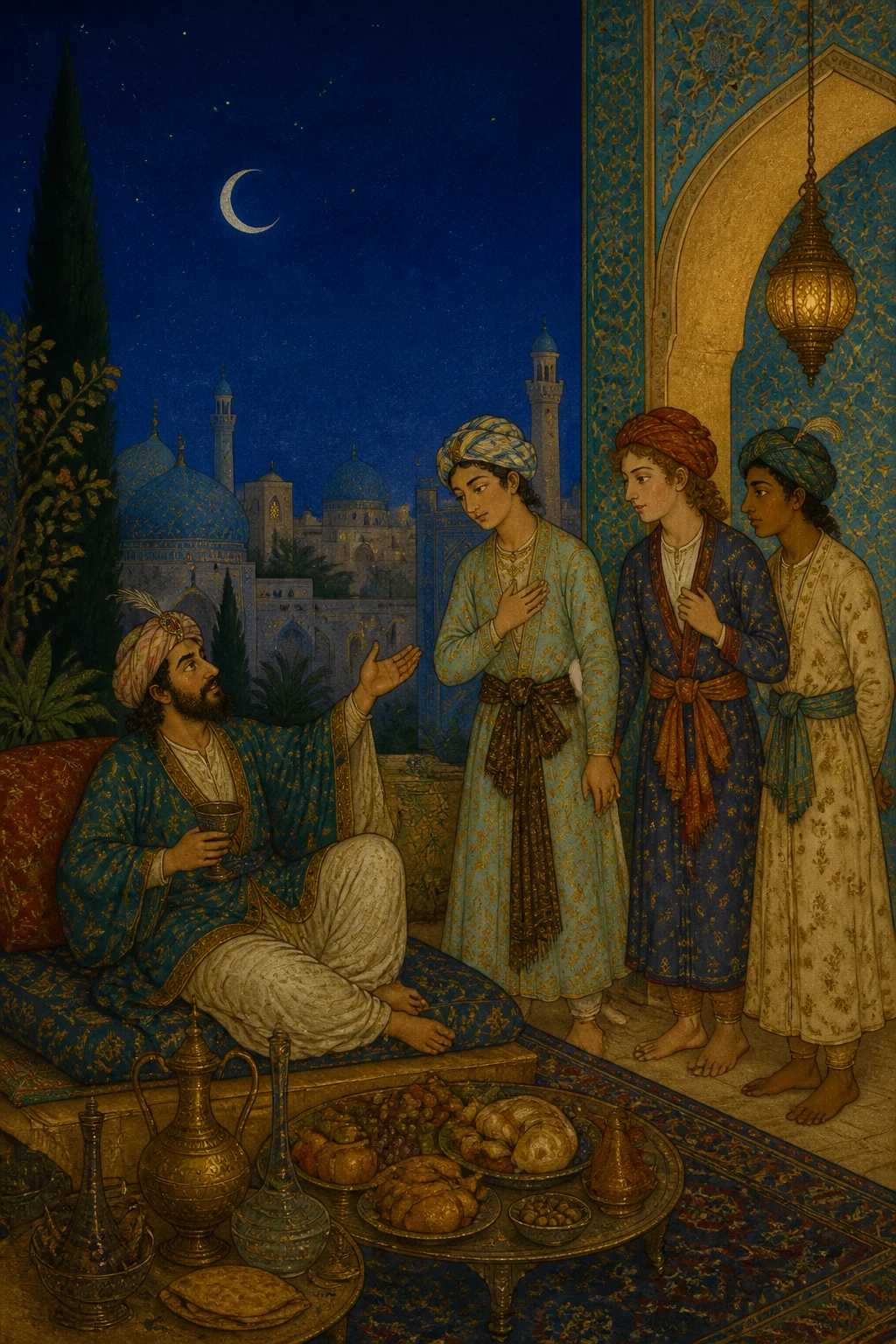
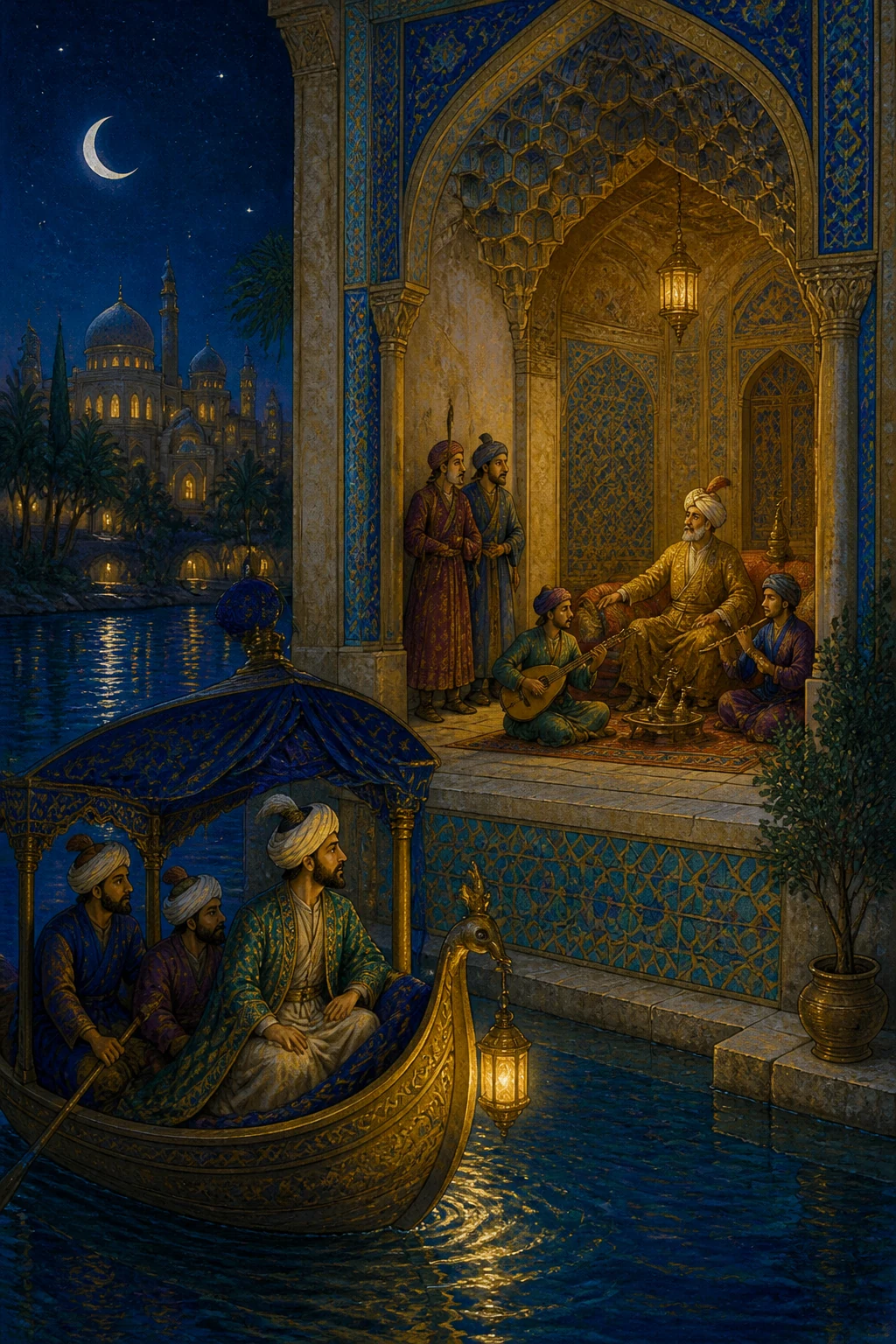
It is also related that one night the Commander of the Faithful, Harun al-Rashid, was sorely troubled by sleeplessness. He rose from his bed and wandered from chamber to chamber, yet his mind remained deeply restless. When morning came, he said, “Bring me al-Asma‘i.” The eunuch went out to the doorkeepers and said, “The Commander of the Faithful bids you send for al-Asma‘i.” When he arrived, the Commander of the Faithful was informed, and ordered that he be admitted. He seated him, welcomed him, and said, “Asma‘i, I want you to tell me the finest stories and verses of women that you have ever heard.” “To hear is to obey,” he replied. “I have heard much, but nothing has pleased me so much as three verses recited by three maidens.” Then dawn overtook Shahrazad, and she fell silent, leaving off her permitted tale.
When it was the six hundred and eighty-seventh night,
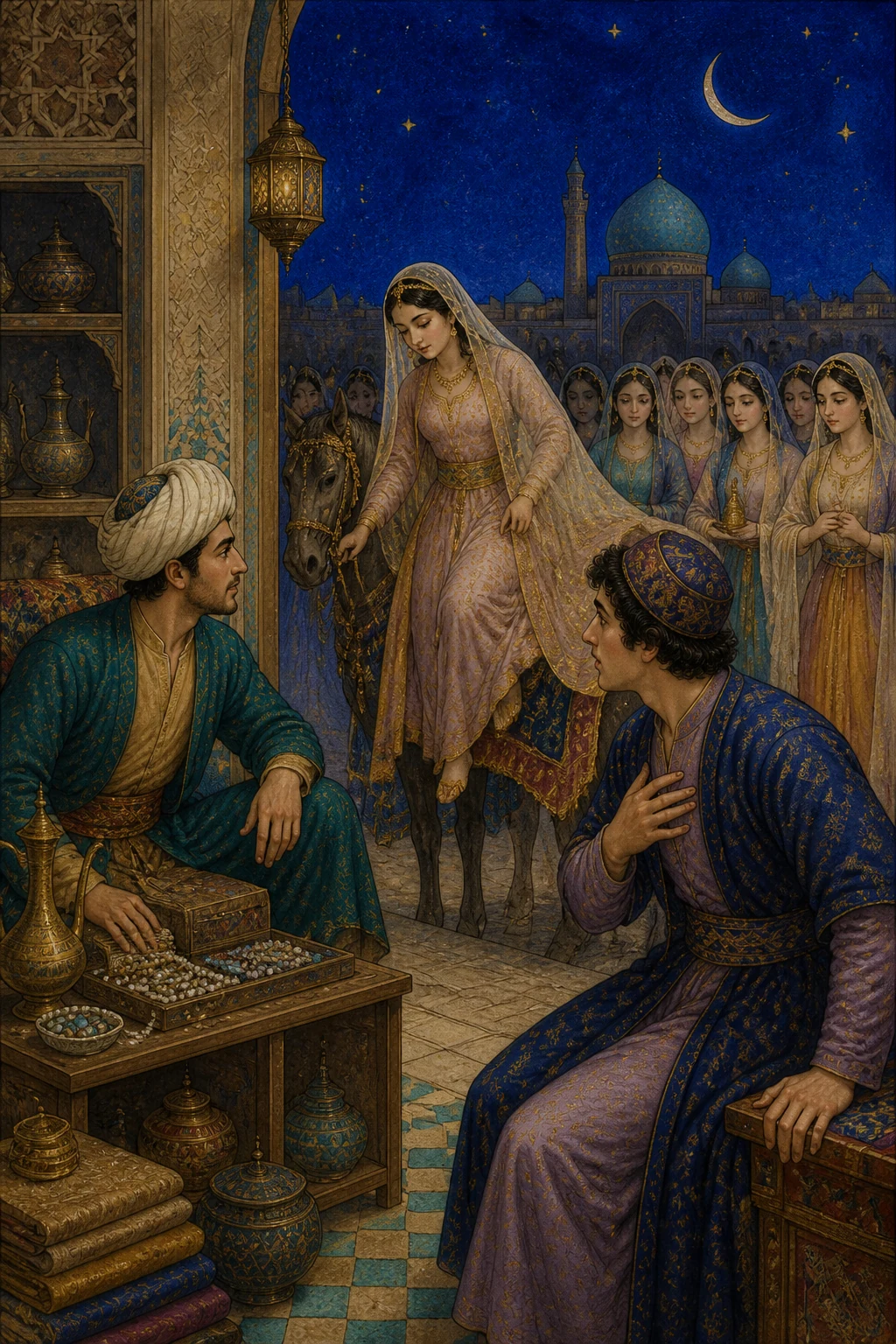
She said: It has reached me, O fortunate King, that al-Asma‘i said to the Commander of the Faithful, “I have heard much, but nothing has pleased me so much as three verses recited by three maidens.” “Tell me their story,” said the caliph. Al-Asma‘i replied, “Know, O Commander of the Faithful, that one year I was staying in Basra, and the heat became so oppressive that I sought somewhere to take my midday rest, but could find none. As I was looking to right and left, I came upon a covered passage, swept clean and sprinkled with water. In it stood a wooden bench, with an open lattice window above it, through which wafted the scent of musk. I entered the passage and sat down on the bench, intending to lie down, when I heard the sweet voice of a maiden saying, ‘Sisters, we have gathered today to enjoy one another’s company. Come, let us put up three hundred dinars, and let each of us recite a verse. Whoever composes the sweetest and most graceful verse shall have the three hundred dinars.’ ‘Gladly, and with all our hearts,’ they replied. Then the eldest recited this verse:
“‘I marvelled that he came in sleep to visit me in bed; had he come to me awake, the marvel would have been greater.’ Then the middle sister recited this verse: ‘Only his phantom came to visit me in sleep; I said to him, “Welcome, a thousand welcomes!”’ Then the youngest recited this verse:
“‘My life and kin I’d ransom him with, whom every night I see beside me in my bed, his fragrance sweeter than musk.’ I said, ‘If beauty matches verses such as these, then nothing more is needed.’ I climbed down from the bench and was about to leave when the door opened and a maid came out, saying, ‘Sit down, venerable sir.’ So I climbed back onto the bench and sat down. She handed me a paper on which I saw handwriting of exquisite beauty, with straight alifs, hollow has, and rounded waws. It read: ‘We would inform the venerable gentleman—may God prolong his life—that we are three sisters who have gathered to enjoy one another’s company. We have put up three hundred dinars, on condition that whichever of us composes the sweetest and most graceful verse shall have them. We have appointed you our judge in this matter, so give judgment as you think fit. Peace be upon you.’ I said to the maid, ‘Bring me an inkwell and paper.’ She disappeared for a little while, then returned with a silver-mounted inkwell and gilded pens, and I wrote these verses:
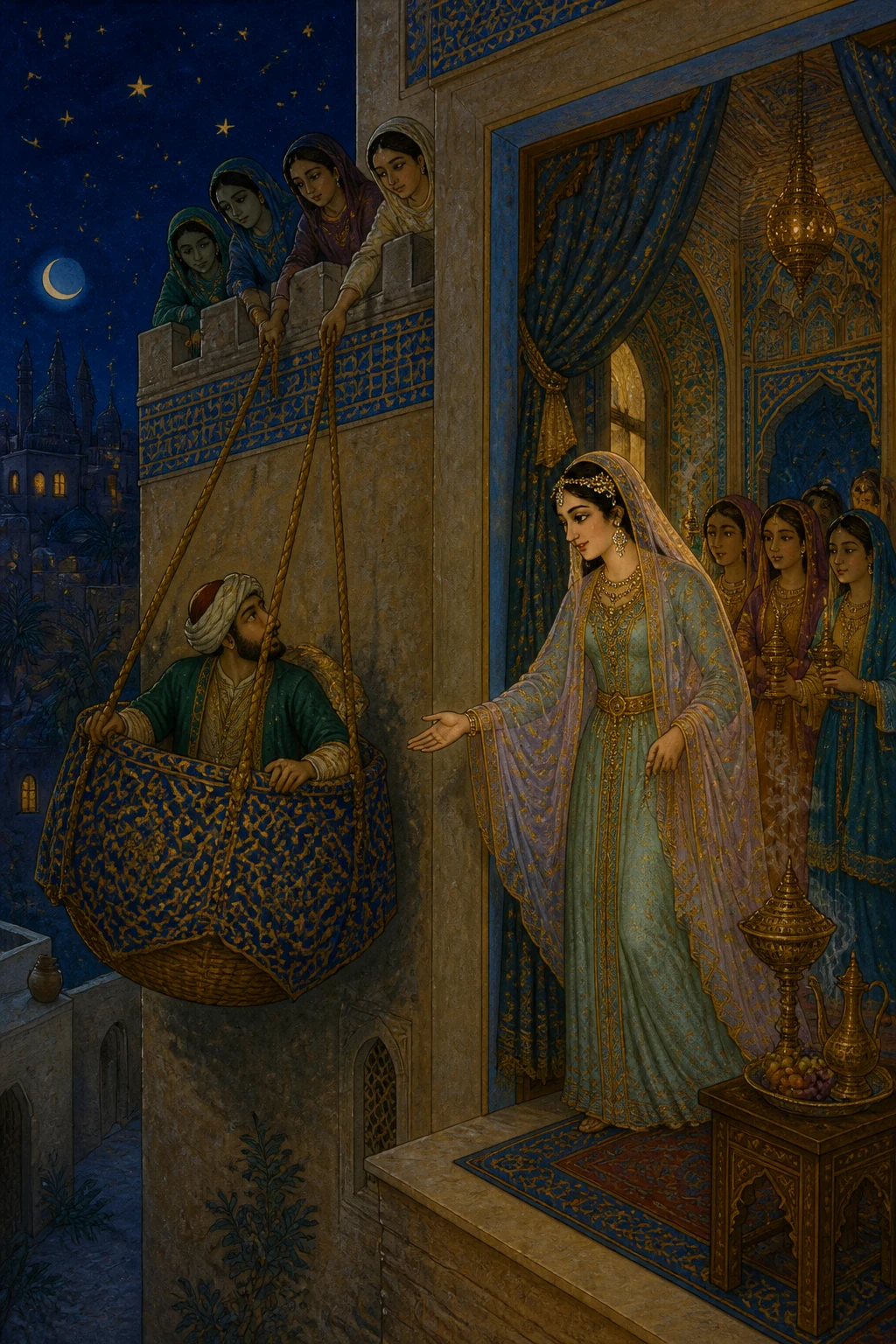
“‘I tell of maidens who once conversed, as one who has weighed the world and proved its ways: three fair as the first light of morning, who took possession of a heart tormented by love. Alone together, while many eyes lay sleeping, they turned away from those who kept aloof, and laid bare the secrets hidden in their breasts, making poetry their pastime and their play. A proud and cherished beauty, full of love, smiled to reveal cool, gleaming teeth and sweetly said: “I marvelled that he came in sleep to visit me in bed; had he come to me awake, the marvel would have been greater.” When she had finished her laughing embellishments, the middle sister sighed and said in rapture: “Only his phantom came to visit me in sleep; I said to him, ‘Welcome, a thousand welcomes!’” The youngest answered beautifully, in words more pleasing and more sweet: “My life and kin I’d ransom him with, whom every night I see beside me in my bed, his fragrance sweeter than musk.” When I considered what they had said, and judgment fell to me, I left no room for any man of sense to dispute it. I judged the youngest best in verse, for what she said seemed nearest to the truth.’” Al-Asma‘i continued: “Then I handed the paper to the maid, who went back upstairs into the palace. At once there arose dancing, clapping, and a tremendous commotion. I said to myself, ‘It is time I was gone.’ I climbed down from the bench and was about to leave when the girl called out, ‘Sit down, Asma‘i!’ ‘Who told you I was al-Asma‘i?’ I asked. ‘Venerable sir,’ she replied, ‘though your name was unknown to us, your poetry was not.’ So I sat down. The door opened, and the first maid came out with a platter of fruit and another of sweetmeats. I ate some fruit and sweets, thanked her for her kindness, and was about to leave when the girl called out again, ‘Sit down, Asma‘i!’ I raised my eyes toward her and saw a rosy hand emerging from a yellow sleeve, so lovely that I thought it the full moon shining out from beneath the clouds. She tossed down a purse containing three hundred dinars and said, ‘This is mine, and I give it to you as a gift in return for your judgment.’” The Commander of the Faithful asked him, “Why did you judge in favour of the youngest?” He replied, “O Commander of the Faithful, may God prolong your life! The eldest said, ‘I marvelled that he came in sleep to visit me in bed.’ He remained veiled from her, and her words hung upon a condition that might or might not be fulfilled. As for the middle sister, a phantom passed before her in sleep, and she greeted it. But in the youngest sister’s verse, she declared that she had truly lain beside him, breathed a fragrance from him sweeter than musk, and offered her own life and her family to ransom him. No one offers their life as ransom save for one dearer than life itself.” “Well said, Asma‘i!” replied the caliph, and he gave him another three hundred dinars as a reward for his tale.