Waltey

Prevod

Atlas felt the weight.—Nor had Eurystheus, son of Sthenelus, yet put aside his anger; he fiercely pursued the son with the hatred he had borne the father. But Alcmene of Argos, troubled by long years of care, now had Iole to hear an old woman’s laments, to whom she could recount her son’s labors, witnessed by all the world, and her own misfortunes. At Hercules’ command, Hyllus had welcomed Iole into his bed and heart and filled her womb with noble seed. And so Alcmene began: “May the gods at least be kind to you and cut short your delays when, your time fulfilled, you call on Ilithyia, who watches over fearful women in childbirth, whom Juno’s influence made so cruel to me.

For when the birth of Hercules, destined for toil, was near, and the sun had reached its tenth sign, my burden stretched my womb, and what I carried was so great that you could have guessed that Jove had fathered that hidden weight. I could no longer bear the pains: even now, as I speak, a cold shudder seizes my limbs, and remembering is part of the pain. For seven nights and as many days I lay in torment, worn out by suffering, stretching my arms to heaven, loudly calling on Lucina and her companions, the Nixi.

She came indeed, but already bribed, eager to give my life as a gift to unjust Juno. When she heard my groans, she sat upon that altar before the door, her left knee crossed beneath her right, her fingers interlocked like the teeth of a comb, and halted the birth. In a low voice she also uttered spells, and those spells checked the labor already begun. I strained, and in my madness hurled useless reproaches at ungrateful Jove, longing to die, pouring out complaints that would have moved the hardest flint. The women of Thebes stood by, offering vows and urging me on through my suffering.

One of my attendants, Galanthis, a woman of humble birth with golden hair, was there, quick to carry out my wishes, and dear to me for her service. She sensed that cruel Juno was contriving some mischief, and as she passed in and out of the doorway, she saw the goddess seated on the altar, her arms resting on her knees, her fingers clasped together. ‘Whoever you are,’ she said, ‘congratulate my mistress: Alcmene of Argos has given birth; her prayers are answered.’ The goddess who rules the womb sprang up in alarm and unclasped her hands: those bonds released, I too was delivered.

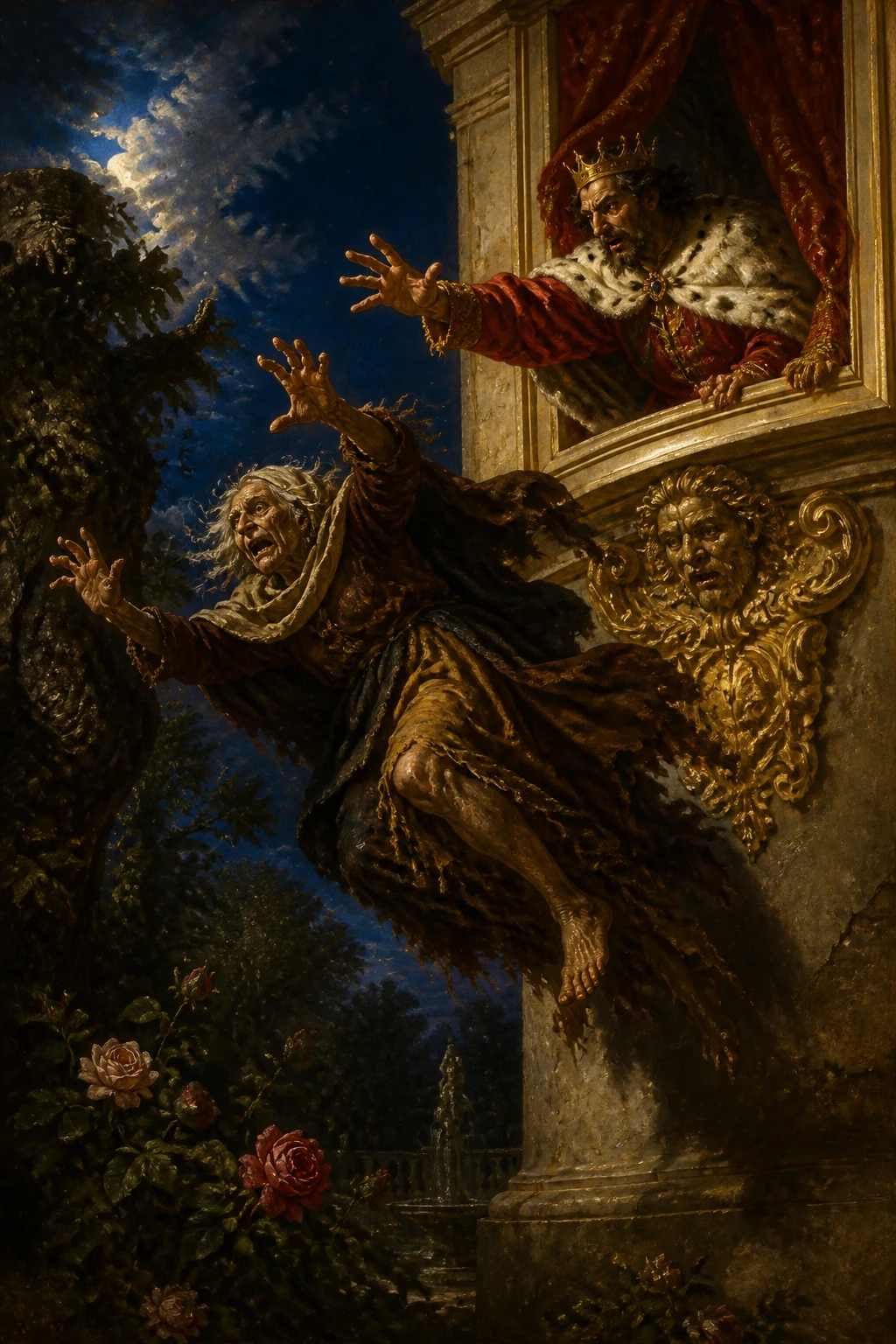
They say Galanthis laughed at having tricked a goddess. As she laughed, the savage goddess seized her by the hair and dragged her down; when she tried to lift her body from the ground, the goddess stopped her and changed her arms into forelegs. Her former quickness remains, and her back has kept its color, but her shape is no longer what it was. And since she helped a woman give birth by lying with her mouth, she gives birth through her mouth, and still haunts our homes as before.”
Izvirnik

Source ID: ovid_metamorphoses_story_062 Citation: Ovid, Metamorphoses 9.273-9.323 Original language: Latin Source: PerseusDL canonical-latinLit Source URL: https://github.com/PerseusDL/canonical-latinLit/blob/master/data/phi0959/phi006/phi0959.phi006.perseus-lat2.xml Segmentation certainty: medium 273: Sensit Atlas pondus.—Neque adhuc Stheneleius iras 274: solverat Eurystheus odiumque in prole paternum 275: exercebat atrox. At longis anxia curis 276: Argolis Alcmene, questus ubi ponat aniles, 277: cui referat nati testatos orbe labores, 278: cuive suos casus, Iolen habet. Herculis illam

279: imperiis thalamoque animoque receperat Hyllus 280: inpleratque uterum generoso semine, cum sic 281: incipit Alcmene: “Faveant tibi numina saltem 282: conripiantque moras, tum cum matura vocabis 283: praepositam timidis parientibus Ilithyiam, 284: quam mihi difficilem Iunonis gratia fecit. 285: Namque laboriferi cum iam natalis adesset 286: Herculis et decimum premeretur sidere signum, 287: tendebat gravitas uterum mihi, quodque ferebam, 288: tantum erat, ut posses auctorem dicere tecti 289: ponderis esse Iovem. Nec iam tolerare labores 290: ulterius poteram: quin nunc quoque frigidus artus,

291: dum loquor, horror habet, parsque est meminisse doloris. 292: Septem ego per noctes, totidem cruciata diebus, 293: fessa malis tendensque ad caelum bracchia magno 294: Lucinam Nixosque pares clamore vocabam. 295: Illa quidem venit, sed praecorrupta meumque 296: quae donare caput Iunoni vellet iniquae. 297: Utque meos audit gemitus, subsedit in illa 298: ante fores ara dextroque a poplite laevum 299: pressa genu digitis inter se pectine iunctis 300: sustinuit partus. Tacita quoque carmina voce 301: dixit, et inceptos tenuerunt carmina partus.

302: Nitor et ingrato facio convicia demens 303: vana Iovi cupioque mori moturaque duros 304: verba queror silices. Matres Cadmeides adsunt 305: votaque suscipiunt exhortanturque dolentem. 306: Una ministrarum, media de plebe, Galanthis, 307: flava comas, aderat, faciendis strenua iussis, 308: officiis dilecta suis. Ea sensit iniqua 309: nescio quid Iunone geri, dumque exit et intrat 310: saepe fores, divam residentem vidit in ara 311: bracchiaque in genibus digitis conexa tenentem, 312: et “quaecumque es,” ait “dominae gratare: levata est 313: Argolis Alcmene potiturque puerpera voto.”

314: Exsiluit iunctasque manus pavefacta remisit 315: diva potens uteri: vinclis levor ipsa remissis. 316: Numine decepto risisse Galanthida fama est: 317: ridentem prensamque ipsis dea saeva capillis 318: traxit, et e terra corpus relevare volentem 319: arcuit inque pedes mutavit bracchia primos. 320: Strenuitas antiqua manet, nec terga colorem 321: amisere suum: forma est diversa priori.

322: Quae quia mendaci parientem iuverat ore, 323: ore parit nostrasque domos, ut et ante, frequentat.”

Nalagam bralnik