Prevod
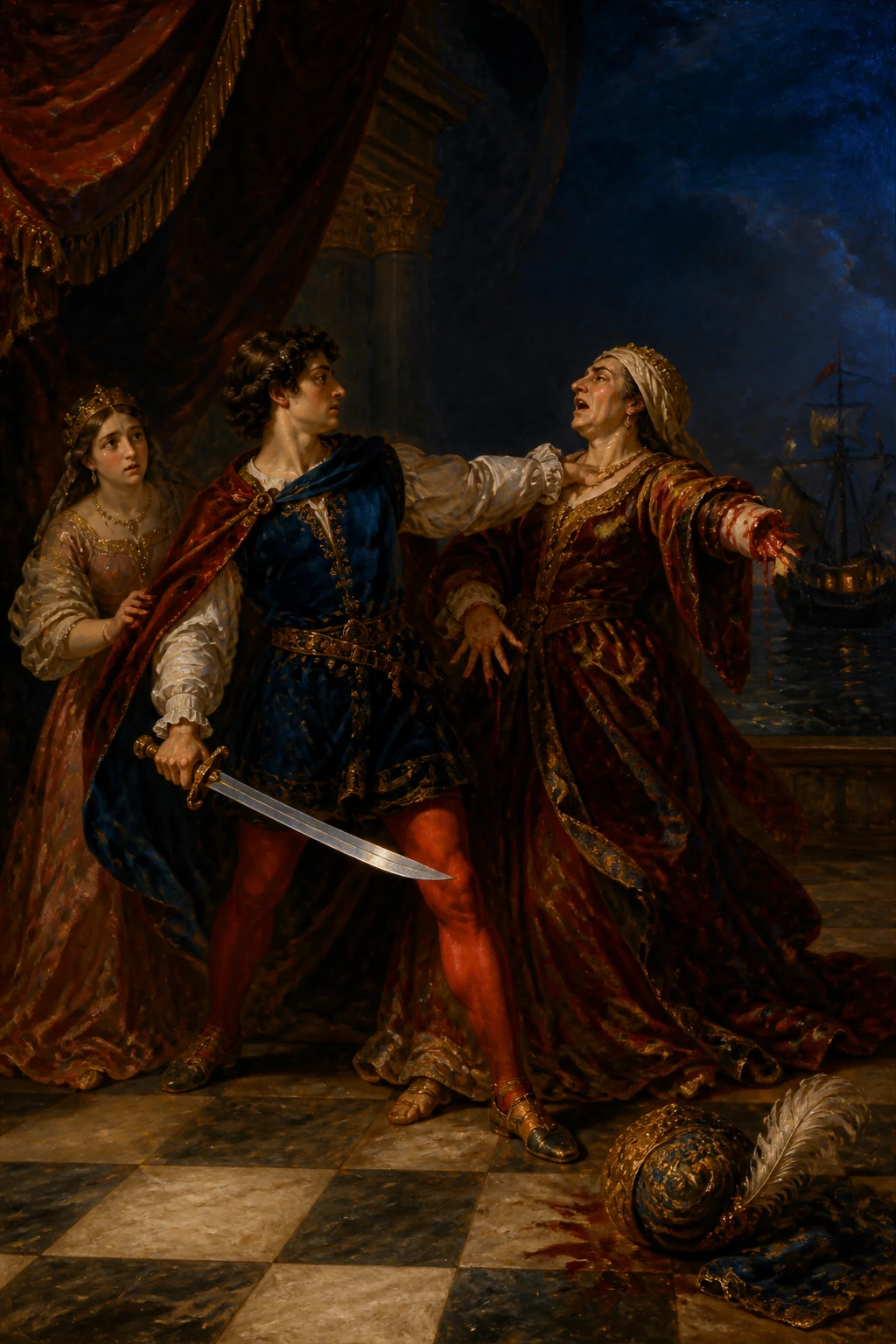
There was once a poor man. One morning he set out from home to find some bread for his little children and his wife. As he walked along the road, he saw a little brightly coloured bird fluttering its wings and looking at him, so he caught it and took it home. He covered it with a sieve to keep it from escaping, then went out again in search of bread. But finding none anywhere, he returned home wretched and sorrowful, without so much as a morsel. No sooner had he entered the house than his hungry children gathered round him and told him that the bird had laid two eggs. One of the children said he should take the eggs to market and sell them, and buy them bread with whatever he got. The father smiled at the child, but sighed as well, saying, “Poor child! What could I get for two such tiny eggs?” But the child answered that he would get a great deal indeed. So he took the two eggs to market, and at the town gate he met a man who, the moment he saw the eggs, hurried up and asked what he wanted for them. “Whatever you will give,” he answered, “so long as I can buy bread for myself and my family.” The man held out a gold ducat, saying, “Here is a ducat for them, and here is another if you will tell me where you got these eggs.” He told him everything, and when the stranger asked whether he would sell the bird as well, he answered that he would, for a good price. So they went back together. When they reached the house and the stranger saw the bird, he said, “Here are a hundred gold ducats for it!” And the poor man gave it to him. The stranger killed the bird, cut off its head, and took out its heart, then said, “Roast this head and this heart for me to eat.” They put the heart and the head on a spit and gave it to one of the children to turn. The stranger became engrossed in conversation with the rest of the household, while the children gathered round the roasting meat. Before it was even properly cooked, two of the boys, hungry as they were, ate it up—one the head and the other the heart—and ran away. A little later the merchant came to see whether it was ready. When he saw what had happened, he struck his forehead with his fist and wailed at the top of his voice, grieving not for the hundred ducats he had paid for the bird, but because he had been duped and had lost his good fortune both in this world and the next. And he went home lamenting. The next morning the two boys woke to find that a hundred gold ducats had appeared beneath the head of the one who had eaten the heart, while the one who had eaten the head began telling his father and mother what everyone in the world was doing, and even what kings were thinking. And so, every morning, the first boy found a hundred ducats beneath his head, while the other knew what everyone thought and did. Thus they grew rich and bribed the people to make one of them king, and the choice fell on the one who had eaten the heart. His brother, who had eaten the head and was the wisest man in the world, grew envious and began to hate his brother the king. He pondered how to rid the world of him, and resolved to kill him and reign in his place. One evening, when his brother had fallen asleep, he murdered him, cut him open, and found the bird’s heart inside him. He ate it, then sewed up his brother’s belly again. The next day word spread among the people: “The king is dead! Who shall be king now?” There was talk this way and that, back and forth, a great clamour and commotion, but in the end it was his brother, and no one else would do. Once he had become king, and a hundred ducats began appearing beneath his head every morning, he asked the emperor for his daughter’s hand. The emperor gave her to him, and they were duly married. When the new queen saw, on the first morning and again on the second, that a hundred ducats appeared beneath her husband’s head, she was astonished. On the third morning she secretly took fifty, leaving him the other fifty. But when her husband woke and did not find the full hundred, he flew at her to kill her. In her terror she flung the ducats at him, and he fell senseless and began to vomit, bringing up the heart as well. At that very moment a hand as white as snow on the mountain appeared and snatched up the heart, and a voice cried out, “This was mine, and now I forgive you.” It was his brother’s soul, and the hand belonged to his shade. A little later the king came to his senses, and when he saw what had happened and understood it all, he began to repent of his sins. And to the day of his death he continued to repent and to give alms to the poor.