Waltey
Zgodba o slepcu in dečku
Tisoč in ena noč · arabska pripovedna tradicijaO besedilu
Zgodba o slepcu in dečku
- Vir
- Tisoč in ena noč
- Avtor
- arabska pripovedna tradicija
- Jezik branja
- English
- Jezik izvirnika
- Arabic
- Čas branja
- 15 min branja
- Obseg
- 12 strani
- Naslov izvirnika
- حكاية الأعمى وابن ثلاث وخمس سنين - الليالي ٦٠٣ إلى ٦٠٦
O izvirniku
Tisoč in ena noč
Zgodbe v zgodbah, polne trgovcev, dvorov, preoblek in nočnih zapletov. Bralni jezik je English, izvirnik pa prihaja iz vira Tisoč in ena noč v jeziku Arabic.
Besedilo
Zgodba o slepcu in dečku
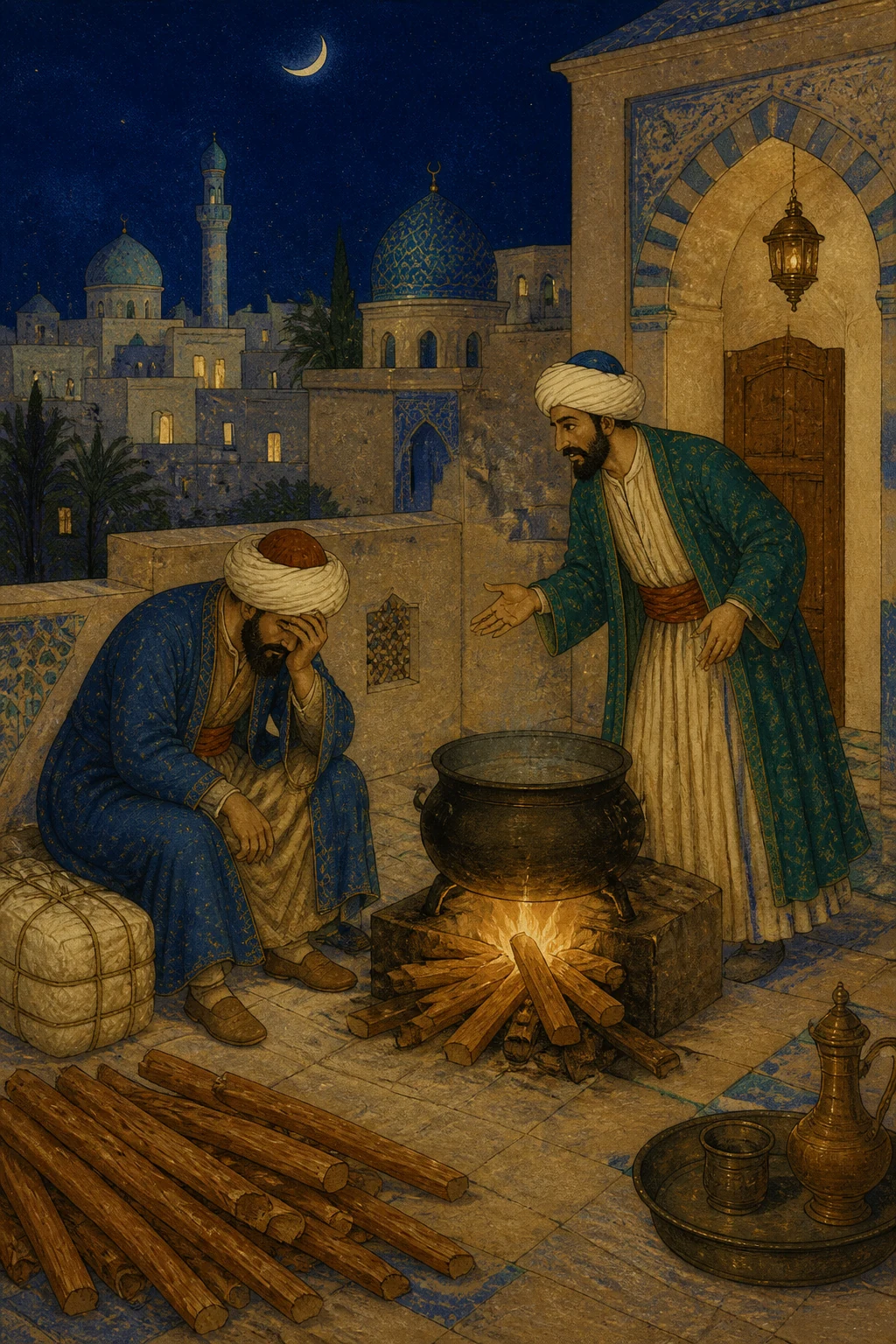
The king’s son said to them, “I have heard that there was once a merchant of great wealth who traveled to every land. Wishing to journey to a certain country, he questioned some people who had come from there, asking, ‘What merchandise brings the greatest profit there?’ They answered, ‘Sandalwood, for it sells at a high price.’ So the merchant spent all his money on sandalwood and set out for that city. He reached it toward the end of the day and came upon an old woman driving a flock of sheep. When she saw him, she asked, ‘Who are you, sir?’ He answered, ‘I am a merchant, a stranger here.’ She said, ‘Beware of the people of this town, for they are cunning thieves. They deceive strangers so as to get them into their clutches and devour whatever they possess. I have given you fair warning.’ Then she left him. The next morning, a townsman met him, greeted him, and asked, ‘Sir, where have you come from?’ ‘From such-and-such a country,’ he replied. ‘And what goods have you brought?’ ‘Sandalwood, for I heard it fetches a good price here.’ The man said, ‘Whoever advised you to bring it was mistaken. We burn nothing but sandalwood beneath our cooking pots, and here it is worth no more than ordinary firewood.’
“When the merchant heard this, he was filled with regret and remorse, not knowing whether to believe it or not. He then took lodgings at one of the city’s inns and began burning sandalwood beneath his pot. When that same man saw him, he asked, ‘Will you sell this sandalwood, each measure for a measure of whatever you please?’ ‘I will,’ said the merchant. The man carried all the sandalwood away to his house, while the seller intended to take an equal measure of gold in return. The next morning the merchant went walking through the city and met a blue-eyed townsman who had only one eye. The fellow seized him and said, ‘You are the man who destroyed my eye, and I shall never let you go!’ The merchant denied it, saying, ‘This claim cannot stand.’ A crowd gathered around them and asked the one-eyed man to allow him until the next day to pay compensation for his eye. The merchant found someone to stand surety for him, and they let him go. He went on his way, but his sandal had broken in his struggle with the one-eyed man. Stopping at a cobbler’s shop, he handed it over and said, ‘Mend this, and I shall give you what will satisfy you.’ Then he walked away and came upon some men sitting at a game. In his sorrow and distress, he sat down with them. They invited him to play, and he joined them, but they contrived to defeat him. Having won, they gave him a choice: either drink up the sea or surrender all his wealth. The merchant rose and said, ‘Give me until tomorrow.’ Then he went away, grieving over what he had done and not knowing what would become of him. He sat down somewhere, sunk in anxious thought, and just then the old woman passed by. Looking at him, she said, ‘The townspeople must have got you into their clutches, for I can see how troubled you are by what has happened.’ He told her everything from beginning to end. She asked, ‘Who cheated you over the sandalwood? Here it is worth ten dinars a pound. But I shall devise a plan for you by which I hope you may save yourself. Go to such-and-such a gate. There you will find a blind old man who cannot walk, a man of great learning, knowledge, and experience. People come to ask his advice about whatever they wish, and he tells them what will best serve their purpose. He is versed in trickery, sorcery, and fraud, and is himself a master rogue. The rogues gather around him at night. Go there and hide from your adversaries where you can hear their words without their seeing you. He will tell them how they may win or lose, and perhaps you will hear an argument that will free you from their claims.’” And dawn overtook Shahrazad, and she fell silent, leaving her tale untold.
When it was the six hundred and fourth night
She said, “I have heard, O fortunate king, that the old woman said to the merchant, ‘Go tonight to the learned man around whom the townspeople gather, and hide yourself. Perhaps you will hear an argument that will free you from your adversaries.’ The merchant left her and went to the place she had described, where he concealed himself. He caught sight of the old man and sat down nearby. Before long, the company who brought their disputes before him arrived. They greeted the old man and one another, then sat around him. The merchant saw that all four of his adversaries were among them. The old man set some food before them, and they ate. Then each began to tell him what had happened that day. The sandalwood buyer came forward and told the old man how he had bought sandalwood from a man for less than its value, agreeing to pay a measureful of whatever the seller wished. The old man said, ‘Your opponent has defeated you.’ ‘How can he defeat me?’ he asked. The old man said, ‘If he tells you, “I will take a measureful of gold or silver,” will you give it to him?’ ‘Yes,’ he replied, ‘and I shall still make a profit.’ ‘But suppose he says, “I will take a measureful of fleas, half male and half female.” What will you do then?’ And the man knew he was beaten.
“Then the one-eyed man came forward and said, ‘Master, today I saw a blue-eyed stranger. I bullied him and seized hold of him, saying, “You are the man who destroyed my eye.” I would not let him go until some people stood surety that he would return and satisfy my claim for my eye.’ The old man said, ‘If he wished to defeat you, he could.’ ‘How could he defeat me?’ ‘He could say, “Pluck out your eye, and I shall pluck out mine, and we shall weigh them both. If my eye weighs the same as yours, then your claim is true.” You would then have to pay compensation for his eye, and you would be blind, while he could still see with his other eye.’ The man realized that this argument would defeat him.
“Then the cobbler came forward and said, ‘Master, I saw a man who gave me his sandal and said, “Mend it.” I asked him, “Will you not pay me?” He replied, “Mend it, and I shall give you what will satisfy you.” Now nothing will satisfy me but all his wealth.’ The old man said, ‘If he wishes to take his sandal from you without giving you anything, he can.’ ‘How is that?’ he asked. The old man replied, ‘He can say to you, “The sultan’s enemies have been defeated, his foes weakened, and his sons and supporters have multiplied. Are you satisfied or not?” If you say, “I am satisfied,” he will take his sandal and leave. If you say, “No,” he will take his sandal and strike you across the face and the back of the neck with it.’ And the cobbler knew he was beaten.
“Then the man who had played against the merchant for a wager came forward and said, ‘Master, I met a man today, made a wager with him, and defeated him. I told him, “If you drink up this sea, I shall surrender all my wealth to you; but if you do not drink it, you must surrender all your wealth to me.”’ The old man said, ‘If he wished to defeat you, he could.’ ‘How is that?’ he asked. ‘He could say, “Hold the mouth of the sea in your hand and bring it to me, and I shall drink it.” You would be unable to do so, and he would defeat you with that argument.’
“When the merchant heard all this, he knew what arguments to use against his adversaries. The men rose and left the old man, and the merchant returned to his lodgings. The next morning, the man who had wagered with him over drinking the sea came to him. The merchant said, ‘Bring me the mouth of the sea, and I shall drink it.’ The man could not, and the merchant defeated him. He paid a hundred dinars to free himself from the wager and went away. Then the cobbler came and demanded what would satisfy him. The merchant said, ‘The sultan has defeated his enemies, destroyed his foes, and been blessed with many sons. Are you satisfied or not?’ ‘Yes, I am satisfied,’ he replied. So the merchant took his sandal without paying a fee and went away. Then the one-eyed man came and demanded compensation for his eye. The merchant said, ‘Pluck out your eye, and I shall pluck out mine, and we shall weigh them. If they are equal, your claim is true, and you may take compensation for your eye.’ The one-eyed man said, ‘Give me time.’ Then he settled with the merchant for a hundred dinars and went away. Next came the sandalwood buyer, who said, ‘Take the price of your sandalwood.’ The merchant asked, ‘What will you give me?’ He replied, ‘We agreed on a measure of something else for each measure of sandalwood. If you wish, take a measureful of gold or silver.’ The merchant said, ‘I will take nothing but a measureful of fleas, half male and half female.’ ‘I can do nothing of the kind,’ the man replied. Thus the merchant defeated him, and the buyer paid a hundred dinars to free himself, after returning the sandalwood. The merchant sold it on his own terms, collected its price, and left that city for his own country.” And dawn overtook Shahrazad, and she fell silent, leaving her tale untold.
When it was the six hundred and fifth night
She said, “I have heard, O fortunate king, that when the merchant had sold his sandalwood and collected its price, he left that city and returned to his own. Then the king’s son continued, ‘As for the three-year-old boy, there was once a dissolute man much given to women. He heard of a beautiful woman who lived in another city, and he traveled there, taking a gift with him. He wrote her a letter describing the anguish he suffered from longing and passion, and saying that his love for her had driven him to leave his home and come to her. She gave him permission to visit her. When he reached her house and entered, she rose to welcome him with honor and respect, kissed his hands, and entertained him with the finest food and drink. She had a little son of three, whom she left while she busied herself with the cooking. The man said to her, “Come, let us lie down together.” She replied, “My son is sitting there watching us.” He said, “He is only a little boy. He understands nothing and does not know how to speak.” She answered, “If you knew how much he understood, you would not say that.” When the boy realized that the rice was cooked, he began to cry loudly. His mother asked, “Why are you crying, my son?” He said, “Serve me some rice and put clarified butter on it.” She served him some and added the butter, and the boy ate. Then he cried again, and his mother asked, “Why are you crying, my son?” He said, “Mother, put some sugar on it for me.” The man, annoyed with him, said, “What a wretched child you are!” The boy replied, “By God, you are the wretched one! You have wearied yourself traveling from one country to another in pursuit of fornication. As for me, I cried because there was something in my eye, and I washed it out with my tears. Then I ate rice with butter and sugar, and now I have had my fill. Which of us is the wretched one?” When the man heard this, he was ashamed at the little boy’s words. He took the lesson to heart, mended his ways that very hour, and returned to his own country without making any further advances to the woman. He remained repentant until he died.
“Then the king’s son said, ‘As for the five-year-old boy, I have heard, O king, that four merchants once pooled a thousand dinars, mixing their money together and putting it in a single purse. They set out to buy merchandise, but on their way they came upon a beautiful garden. They entered it, leaving the purse with the woman who kept the garden. Once inside, they strolled about, ate, drank, and enjoyed themselves. One of them said, “I have some perfume with me. Let us wash our hair in this running water and perfume ourselves.” Another said, “We need a comb.” A third said, “Let us ask the keeper; perhaps she has one.” One of them rose, went to the woman, and said, “Give me the purse.” She replied, “Not until you are all here, or your companions tell me to give it to you.” His companions were sitting where the woman could see them and hear their voices, so he called out to them, “She will not give me anything!” They said to her, “Give it to him.” Hearing this, she handed him the purse. He took it and fled. When he had been gone too long, his companions came to the woman and asked, “Why did you not give him the comb?” She replied, “He asked me only for the purse, and I gave it to him only with your permission. He left here and went on his way.” When they heard this, they struck their faces in dismay, seized her, and said, “We only gave you permission to hand him the comb!” She replied, “He never mentioned a comb to me.” They took her before the judge and told him the story. He ruled that the keeper must make good the purse and bound her over to a number of those who had claims against her.’” And dawn overtook Shahrazad, and she fell silent, leaving her tale untold.
When it was the six hundred and sixth night
She said, “I have heard, O fortunate king, that when the judge ruled that the garden keeper must make good the purse and bound her over to those who had claims against her, she went out bewildered, not knowing which way to turn. A boy of five met her and, seeing her distress, asked, ‘What is the matter, mother?’ She did not answer him, thinking little of him because of his tender age. But he asked her again and again, until at last she said, ‘Some men came into my garden and left a purse containing a thousand dinars in my keeping. They stipulated that I must not give it to any one of them unless they were all present. Then they went into the garden to stroll about and enjoy themselves. One of them came out and said, “Give me the purse.” I replied, “Not until your companions are here.” He said, “I have their permission.” Still I refused to give him the purse, so he called out to his companions, “She will not give me anything!” They were close by and said to me, “Give it to him.” So I handed him the purse, and he took it and went away. His companions grew tired of waiting and came out to ask me, “Why did you not give him the comb?” I said, “He never mentioned a comb to me; he spoke only of the purse.” So they seized me and took me before the judge, who ordered me to make good the purse.’ The boy said, ‘Give me a dirham to buy sweets, and I shall tell you something that will save you.’ The keeper gave him a dirham and asked, ‘What have you to say?’ The boy replied, ‘Go back to the judge and tell him, “Our agreement was that I should not hand over the purse unless all four of them were present.”’ So the keeper returned to the judge and repeated the boy’s words. The judge asked the men, ‘Was that your agreement with her?’ ‘Yes,’ they replied. He said, ‘Then bring me your companion and take the purse.’ Thus the keeper escaped unharmed and went on her way.
“When the king, the viziers, and all those present at the gathering had heard his son’s words, they said to the king, ‘Our lord, your son is the most gifted man of his age.’ They prayed for him and for the king. The king clasped his son to his breast, kissed him between the eyes, and questioned him about the affair with the slave girl. The prince swore by Almighty God and His noble Prophet that it was she who had sought to seduce him. The king believed him and said, ‘I give you judgment over her. Kill her if you wish, or do with her whatever you please.’ The son said to his father, ‘Banish her from the city.’ Thereafter the king’s son lived with his father in the greatest ease and happiness, until there came to them the Destroyer of Delights and the Sunderer of Companies. This is the end of what has come down to us of the tale of the king, his son, the slave girl, and the seven viziers.”
Izvirnik
حكاية الأعمى وابن ثلاث وخمس سنين - الليالي ٦٠٣ إلى ٦٠٦
Naslednje strani prikazujejo izvirno besedilo za primerjavo.
فلما كانت الليلة ٦٠٣
فقال لهم ابن الملك: بلغني أنه كان تاجر من التجار كثير الأموال والأسفار إلى جميع البلدان، فأراد المسير على بعض البلدان، فسأل مَن جاء منها وقال لهم: أي بضاعة فيها كثيرة المكسب؟ فقالوا له: حطب الصندل، فإنه فيها يباع غاليًا. فاشترى التاجر بجميع ما عنده من المال حطب صندل، وسافر إلى تلك المدينة، فلما وصل إليها كان قدومه إليها آخر النهار، وإذا بعجوز تسوق غنمًا لها، فلما رأت التاجر قالت له: مَن أنت أيها الرجل؟ فقال لها: أنا رجل تاجر غريب. فقالت له: احذر من أهل البلد، فإنهم قوم مكَّارون لصوص، وإنهم يخدعون الغريب ليظفروا به ويأكلوا ما كان معه، وقد نصحتك. ثم فارقته، فلما أصبح الصباح تلقاه رجل من أهل المدينة، فسلَّمَ عليه وقال له: يا سيدي، من أين قدمت؟ فقال له: قدمت من البلد الفلانية. قال له: ما حملت معك من التجارة؟ قال له: خشب صندل، فإني سمعت أن له قيمة عندكم. فقال له الرجل: لقد أخطأ مَن أشار عليك بذلك؛ فإننا لم نوقد تحت القدر إلا بذلك الحطب الصندل، فقيمته عندنا هو والحطب سواء.
فلما سمع التاجر كلام الرجل تأسَّفَ وندم وصار بين مصدِّق ومكذِّب، ثم نزل ذلك التاجر في بعض حانات المدينة يقيد بالصندل تحت القدر، فلما رآه ذلك الرجل قال له: أتبيع هذا الصندل؟ كل صاع بما تريده نفسك. فقال له: بعتك. فَحَوَّلَ الرجل ما عنده من الصندل في منزله، وقصد البائع أن يأخذ ذهبًا بقدر ما يأخذ المشتري، فلما أصبح الصباح تمشى التاجر في المدينة، فلقيه رجل أزرق العينين من أهل تلك المدينة وهو أعور، فتعلَّقَ بالتاجر وقال له: أنت الذي أتلفتَ عيني فلا أطلقك أبدًا. فأنكر التاجر ذلك وقال له: إن هذا الأمر لا يتم. فاجتمع الناس عليهما، وسألوا الأعور المهلة إلى غدٍ ويعطيه ثمن عينه، فأقام الرجل التاجر له ضامنًا حتى أطلقوه، ثم مضى التاجر وقد انقطع نعله من مجاذبة الرجل الأعور، فوقف على دكان الإسكافي ودفعه له، وقال له: أصلحه ولك عندي ما يرضيك. ثم انصرف عنه، وإذا بقومٍ قاعدين يلعبون فجلس عندهم من الهم والغم، فسألوه اللعب فلعب معهم، فأوقعوا عليه الغلب وغلبوه، وخيروه إما أن يشرب البحر، وإما أن يخرج من ماله جميعًا، فقام التاجر وقال: أمهلوني إلى غدٍ. ثم مضى التاجر وهو مغموم على ما فعل، ولا يدري كيف يكون حاله، فقعد في موضع متفكِّرًا مغمومًا مهمومًا، وإذا بالعجوز جائزة عليه، فنظرت نحو التاجر فقالت له: لعل أهل المدينة ظفروا بك، فإني أراك مهمومًا من الذي أصابك. فحكى لها جميع ما جرى من أوله إلى آخره، قالت له: مَن الذي عمل عليك في الصندل؟ فإن الصندل عندنا قيمته كل رطل بعشرة دنانير، ولكن أنا أدبِّر لك رأيًا أرجو به أن يكون لك فيه خلاص نفسك، وهو أن تسير نحو الباب الفلاني، فإن في ذلك الموضع شيخًا أعمى مقعدًا، وهو عالم عارف كبير خبير، وكل الناس تحضر عنده يسألونه عمَّا يريدونه، فيشير إليهم بما يكون لهم فيه الصلاح؛ لأنه عارف بالمكر والسحر والنصب، وهو شاطر، فتجتمع الشطار عنده بالليل، فاذهب عنده واخفِ نفسك من غرمائك بحيث تسمع كلامهم ولا يرونك؛ فإنه يخبرهم بالغالبية والمغلوبة؛ لعلك تسمع منه حجَّة تخلِّصك من غرمائك. وأدرك شهرزاد الصباح فسكتَتْ عن الكلام المباح.
فلما كانت الليلة ٦٠٤
قالت: بلغني أيها الملك السعيد، أن العجوز قالت للتاجر: اذهب الليلة إلى العالم الذي يجتمع عليه أهل البلد واخفِ نفسك، لعلك تسمع منه حجَّة تخلِّصك من غرمائك. فانصرف التاجر من عندها إلى الموضع الذي أخبرته به وأخفى نفسه، ثم نظر إلى الشيخ وجلس قريبًا منه، فما كان إلا ساعة وقد حضر جماعته الذين يتحاكمون عنده، فلما صاروا بين يدي الشيخ سلَّموا عليه وسلَّم بعضهم على بعض وقعدوا حوله، فلما رآهم التاجر وجد غرماءه الأربعة من جملة الذين حضروا، فقدم لهم الشيخ شيئًا من الأكل فأكلوا، ثم أقبل كل واحد منهم يخبره بما جرى له في يومه، فتقدَّمَ صاحب الصندل وأخبر الشيخ بما جرى له في يومه، من أنه اشترى صندلًا من رجل بغير قيمته، واستقر البيع بينهما على ملء صاع مما يحب، فقال له الشيخ: قد غلبك خصمك. فقال له: كيف يغلبني؟ قال الشيخ: فإذا قال لك أنا آخذ ملئه ذهبًا أو فضة، فهل أنت تعطيه؟ قال: نعم أعطيه وأنا أكون الرابح. فقال له الشيخ: فإذا قال لك: أنا آخذ ملء صاع براغيث، النصف ذكور والنصف إناث، فماذا تصنع؟ فعلم أنه مغلوب.
ثم تقدَّمَ الأعور وقال: يا شيخ، إني رأيت اليوم رجلًا أزرق العينين وهو غريب البلاد، فتقاويت عليه وتعلقت به وقلت له: أنت قد أتلفتَ عيني. وما تركته حتى ضمنه لي جماعة أنه يعود إليَّ ويرضيني في عيني. فقال له الشيخ: لو أراد غلبك لغلبك. قال: وكيف يغلبني؟ قال: يقول لك اقلع عينك وأنا أقلع عيني، ونزن كل منهما، فإن تساوت عيني بعينك فأنت صادق فيما ادَّعَيْتَه، ثم تغرم دية عينه وتكون أنت أعمى، ويكون هو بصيرًا بعينه الثانية. فعلم أنه يغلبه بهذه الحجة.
ثم تقدَّمَ الإسكافي وقال له: يا شيخ، إني رأيت رجلًا أعطاني نعله، وقال لي: أَصْلِحْه. فقلت له: ألن تعطيني الأجرة؟ فقال لي: أَصْلِحْه ولك عندي ما يرضيك. وأنا لا يرضيني إلا جميع ماله. فقال له الشيخ: إذا أراد أخذ نعله منك ولا يعطيك شيئًا أخذه. فقال له: وكيف ذلك؟ قال: يقول لك إن السلطان هُزِمت أعداؤه، وضعفت أضداده، وكثرت أولاده وأنصاره، أرضيتَ أم لا؟ فإن قلت: رضيتُ. أخذ نعله منك وانصرف، وإن قلت: لا. أخذ نعله وضرب به وجهك وقفاك. فعلم أنه مغلوب.
ثم تقدَّمَ الرجل الذي لعب معه بالمراهنة وقال له: يا شيخ، إني لقيت رجلًا فراهنته وغلبته، فقلت له: إن شربت هذا البحر فأنا أخرج عن جميع مالي لك، وإن لم تشربه فاخرج عن جميع مالك لي. فقال له الشيخ: لو أراد غلبك لغلبك. فقال له: وكيف ذلك؟ قال: يقول لك أمسك لي فم البحر بيدك، وناوله لي وأنا أشربه. فلا تستطيع ويغلبك بهذه الحجة.
فلما سمع التاجر ذلك عرف ما يحتجُّ به على غرمائه، ثم قاموا من عند الشيخ وانصرف التاجر إلى محله، فلما أصبح الصباح أتاه الذي راهنه على شرب البحر، فقال له التاجر: ناولني فم البحر وأنا أشربه. فلم يقدر فغلبه التاجر، وفدى الراهن نفسه بمائة دينار وانصرف. ثم جاءه الإسكافي وطلب منه ما يرضيه، فقال له التاجر: إن السلطان غلب أعداءه، وأهلك أضداده، وكثرت أولاده، أرضيت أم لا؟ قال له: نعم رضيتُ. فأخذ مركوبه بلا أجرة وانصرف. ثم جاءه الأعور وطلب منه دية عينه. فقال له التاجر: اقلع عينك وأنا أقلع عيني ونزنهما، فإن استوتا فأنت صادق فخذ دية عينك. فقال له الأعور: أمهلني. ثم صالح التاجر على مائة دينار وانصرف. ثم جاءه الذي اشترى الصندل فقال له: خذ ثمن صندلك. فقال له: أي شيء تعطيني؟ فقال له: قد اتفقنا على أن صاعًا صندلًا بصاعٍ من غيره، فإن أردتَ خذ ملؤه ذهبًا أو فضة. فقال له التاجر: أنا لا آخذ إلا ملؤه براغيث، النصف ذكور والنصف إناث. فقال له: أنا لا أقدر على شيء من ذلك. فغلبه التاجر وفدى المشتري نفسه منه بمائة دينار بعد أن رجَّعَ له صندله، وباع التاجر الصندل كيف أراد، وقبض ثمنه وسافر من تلك المدينة إلى بلده. وأدرك شهرزاد الصباح فسكتَتْ عن الكلام المباح.
فلما كانت الليلة ٦٠٥
قالت: بلغني أيها الملك السعيد، أن الرجل التاجر لما باع صندله وقبض ثمنه سافر من تلك المدينة إلى مدينته، ثم قال ابن الملك: وأما ابن الثلاث سنين، فإنه كان رجلًا فاسقًا مغرمًا بالنساء، قد سمع بامرأة ذات حُسْن وجمال، وهي ساكنة في مدينة غير مدينته، فسافَرَ إلى المدينة التي هي فيها، وأخذ معه هدية، وكتب لها رقعة يصف لها شدة ما يقاسيه من الشوق والغرام، وقد حمله حبه إياها على المهاجرة إليها والقدوم عليها، فأذنت له في الذهاب إليها، فلما وصل إلى منزلها ودخل عليها قامت له على قدميها وقد تلقَّتْه بالإكرام والاحترام، وقبَّلَتْ يديه وضيَّفته ضيافة لا مزيد عليها من المأكول والمشروب. وقد كان لها ولد صغير له من العمر ثلاث سنين، فتركته واشتغلت بطهي الطبائخ، فقال لها الرجل: قومي بنا ننام. فقالت له: إن ولدي قاعد ينظرنا. فقال لها: هذا ولد صغير لا يفهم ولا يعرف أن يتكلَّم. فقالت له: لو علمت معرفته ما تكلمتَ. فلما علم الولد أن الأرز استوى بكى بكاءً شديدًا، فقالت له أمه: ما يبكيك يا ولدي؟ فقال لها: اغرفي لي من الأرز، واجعلي لي فيه سمنًا. فغرفت له وجعلت عليه السمن، فأكل الولد. ثم بكى ثانيًا، فقالت له أمه: ما يبكيك يا ولدي؟ فقال لها: يا أماه اجعلي لي عليه سكرًا. فقال له الرجل وقد اغتاظ منه: ما أنت إلا ولد مشئوم. فقال له الولد: والله ما مشئوم إلا أنت؛ حيث تعبت وسافرت من بلد إلى بلد في طلب الزنا، وأما أنا فبكائي من أجل شيء كان في عيني فأخرجته بالدموع، وأكلتُ بعد ذلك أرزًا وسمنًا وسكرًا، وقد اكتفيتُ؛ فمَن المشئوم منَّا؟ فلما سمعه الرجل خجل من كلام ذلك الولد الصغير، ثم أدركته الموعظة فتأدَّبَ من وقته وساعته ولم يتعرَّض لها بشيء وانصرف إلى بلده، ولم يزل تائبًا إلى أن مات.
ثم قال ابن الملك: وأما ابن الخمس سنين، فإنه بلغني أيها الملك أن أربعة من التجار اشتركوا في ألف دينار، وقد خلطوها بينهم وجعلوها في كيس واحد، فذهبوا بها ليشتروا بضاعةً، فلقوا في طريقهم بستانًا حسنًا فدخلوه وتركوا الكيس عند حارسة ذلك البستان، فلما دخلوا تفرجوا في ناحية البستان، فأكلوا وشربوا وانشرحوا، فقال واحد منهم: أنا معي طيب، تعالوا نغسل رءوسنا من هذا الماء الجاري ونتطيَّب. قال آخَر: نحتاج إلى مشط. قال آخَر: نسأل الحارسة لعل أن يكون عندها مشط. فقام واحد منهم إلى الحارسة وقال لها: ادفعي لي الكيس. فقالت له: حتى تحضروا كلكم أو يأمرني رفقاؤك أن أعطيك إياه. وكان رفقاؤه في مكان بحيث تراهم الحارسة وتسمع كلامهم، فقال الرجل لرفقائه: ما هي راضية أن تعطيني شيئًا. فقالوا لها: أَعْطيه. فلما سمعت كلامهم أعطته الكيس، فأخذه الرجل وخرج هاربًا منهم، فلما أبطأ عليهم جاءوا إلى الحارسة، وقالوا لها: ما لكِ لم تُعْطِه المشط؟ قالت لهم: ما طلب مني إلا الكيس، ولم أعطه إياه إلا بإذنكم، وخرج من هنا إلى حال سبيله. فلما سمعوا كلام الحارسة لطموا على وجوههم، وقبضوا عليها بأيديهم وقالوا لها: نحن ما أذنَّاكِ إلا بإعطاء المشط. فقالت لهم: ما ذكر لي مشطًا. فقبضوا عليها، ورفعوها إلى القاضي، فلما حضروا بين يديه قصُّوا عليه القصة، فألزم الحارسة بالكيس، وألزم بها جماعة من غرمائها. وأدرك شهرزاد الصباح فسكتَتْ عن الكلام المباح.
فلما كانت الليلة ٦٠٦
قالت: بلغني أيها الملك السعيد، أن القاضي لما ألزم الحارسة بالكيس وألزم بها جماعة من غرمائها، خرجت وهي حيرانة لم تعرف طريقًا، فلقيها غلامٌ له من العمر خمسُ سنين، فلما رآها الغلام وهي حيرانة قال لها: ما لكِ يا أماه؟ فلم تردَّ عليه جوابًا، واستحقرته لصِغَر سنه، فكرَّرَ عليها الكلام أولًا وثانيًا وثالثًا، فقالت له: إن جماعةً دخلوا عليَّ البستان ووضعوا عندي كيسًا فيه ألف دينار، وشرطوا عليَّ ألَّا أعطي أحدًا الكيس إلا بحضرتهم كلهم، ثم دخلوا البستان يتفرجون ويتنزهون فيه، فخرج واحد منهم وقال لي: أعطني الكيس. فقلت له: حتى يحضر رفقاؤك. فقال لي: قد أخذتُ الإذن منهم. فلم أرضَ أن أعطيه الكيس، فصاح على رفقائه وقال لهم: ما هي راضية أن تعطيني شيئًا؟ فقالوا لي: أعطيه. وكانوا بالقرب مني، فأعطيته الكيس، فأخذه وخرج إلى حال سبيله، فاستبطأه رفقاؤه فخرجوا إليَّ وقالوا: لأي شيء لم تعطه المشط؟ فقلت لهم: ما ذكر لي مشطًا، وما ذكر لي إلا الكيس. فقبضوا عليَّ ورفعوني إلى القاضي، وألزمني بالكيس. فقال لها الغلام: أعطيني درهمًا آخذ به حلاوة، وأنا أقول لك شيئًا يكون لكِ فيه الخلاص. فأعطته الحارسة درهمًا وقالت له: ما عندك من القول؟ فقال لها الغلام: ارجعي إلى القاضي وقولي له: كان بيني وبينهم أني لا أعطيهم الكيس إلا بحضرتهم الأربعة. قال: فرجعَتِ الحارسة إلى القاضي وقالت له ما قاله لها الغلام، فقال لهم القاضي: أكان بينكم وبينها هكذا؟ قالوا: نعم. فقال لهم القاضي: أحضروا لي رفيقكم وخذوا الكيس. فخرجت الحارسة سالمةً ولم يحصل لها ضرر، وانصرفت إلى حال سبيلها.
فلما سمع الملك كلام ولده والوزراء، ومَن حضر ذلك المجلس، قالوا للملك: يا مولانا الملك، إن ابنك هذا أبرع أهل زمانه. فدعوا له وللملك، فضمَّ الملك ولده إلى صدره وقبَّلَه بين عينيه، وسأله عن قضيته مع الجارية، فحلف ابن الملك بالله العظيم وبنبيه الكريم أنها هي التي راودته عن نفسه، فصدَّقه الملك في قوله، وقال له: قد حكَّمْتُك فيها إنْ شئتَ فاقتلها أو فافعل بها ما تشاء. فقال الولد لأبيه: انْفِها من المدينة. وقعد ابن الملك مع والده في أرغد عيش وأهناه، إلى أن أتاهم هادم اللذات ومفرق الجماعات. وهذا آخِر ما انتهى إلينا من قصة الملك وولده والجارية والوزراء السبعة.
Nadaljuj z branjem