Waltey
Zgodba o peričevem oslu
Swahili Tales · Edward Steere; pripovedovalci z ZanzibarjaO besedilu
Zgodba o peričevem oslu
- Vir
- Swahili Tales
- Avtor
- Edward Steere; pripovedovalci z Zanzibarja
- Jezik branja
- English
- Jezik izvirnika
- Kiswahili
- Čas branja
- 6 min branja
- Obseg
- 5 strani
- Naslov izvirnika
- 001 Kisa cha Punda wa Dobi
O izvirniku
Swahili Tales
Svahilijske pripovedi z Zanzibarja o zvijači, živalih, vladarjih in nenavadnih preobratih. Bralni jezik je English, izvirnik pa prihaja iz vira Swahili Tales v jeziku Kiswahili.
Besedilo
Zgodba o peričevem oslu
Once a monkey struck up a friendship with a shark. There was a great fig tree growing in deep water, with half its branches stretching over the town and half over the sea. Every day the monkey would go there to eat figs, and his friend the shark would wait beneath the tree. “Throw me some food too, my friend,” he would say. And the monkey would throw him figs, day after day and month after month.
At last, one day, the shark said to the monkey, “You have shown me so much kindness. I should like you to come home with me so that I may repay you.” The monkey answered, “How can I go? We do not go into the water; we are creatures of the land.” The shark said, “I shall carry you, and not a drop of water will touch you.” “Then let us go,” said the monkey.
They set off, and when they were halfway there, the shark said, “My friend, I must tell you the truth.” “Tell me,” said the monkey. “At the place we are going to, our Sultan is very ill, and we have been told that the cure is a monkey’s heart.” The monkey answered, “You have done wrong not to tell me while we were still back there.” “How so?” asked the shark.
The monkey thought to himself, “I am as good as dead. Now I must make up a lie; perhaps it will save me.” The shark asked, “Why have you fallen silent? Have you nothing to say?” “There is nothing I can say,” replied the monkey. “Why did you not tell me back there, so that I could bring my heart?” “Then is your heart not here?” asked the shark.
“Do you not know our ways? When we go wandering, we leave our hearts in the trees and take only our bodies with us. But you will not believe me; you will say I am afraid. So let us go on to your home, and you may slaughter me and see whether you find my heart.”
The shark believed him and said, “Let us go back now, so that you can fetch your heart.” “No,” said the monkey, “let us go on to your home.” “Let us go back first and fetch your heart,” said the shark, “and then we can set out again.”
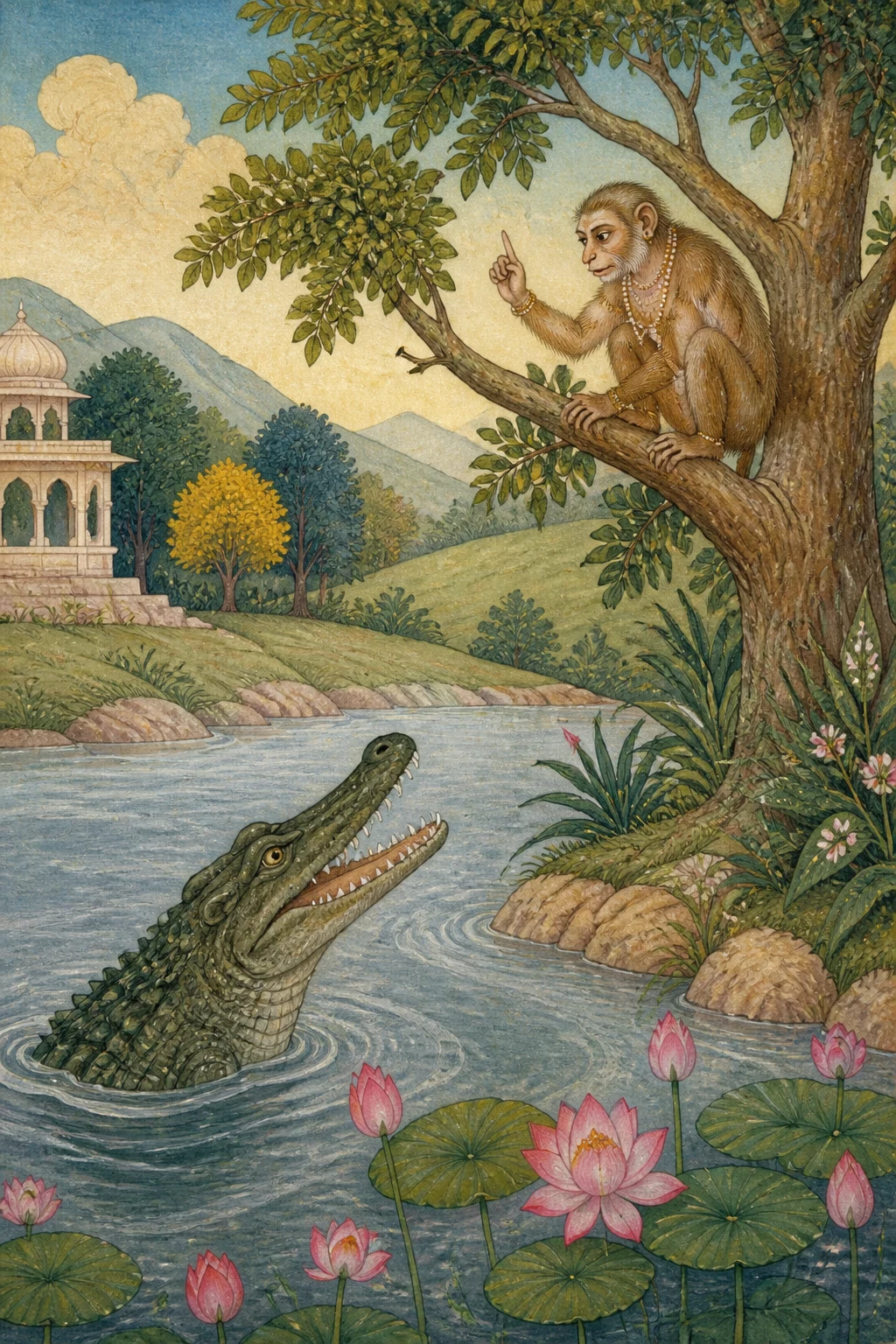
The monkey thought, “I had better go along with him until we reach the tree. Once I am there, I shall know what to do.” So they turned back, and when they reached the tree, the monkey climbed up and said, “Wait here for me, Shark. I am going to fetch my heart, and then we can be off.”
He climbed into the tree and sat there quietly. The shark called him. He said nothing. The shark called again. “Let us go.” The monkey answered, “Go where?” “Let us go to my home.” “Are you mad?” said the monkey. “How so?” asked the shark. “Do you take me for the washerman’s donkey?” said the monkey. “What do you mean by the washerman’s donkey?” asked the shark. “That was a creature with neither a heart nor ears.” “What is the story of the washerman’s donkey?” asked the shark. “Tell me, my friend, so that I may understand.”
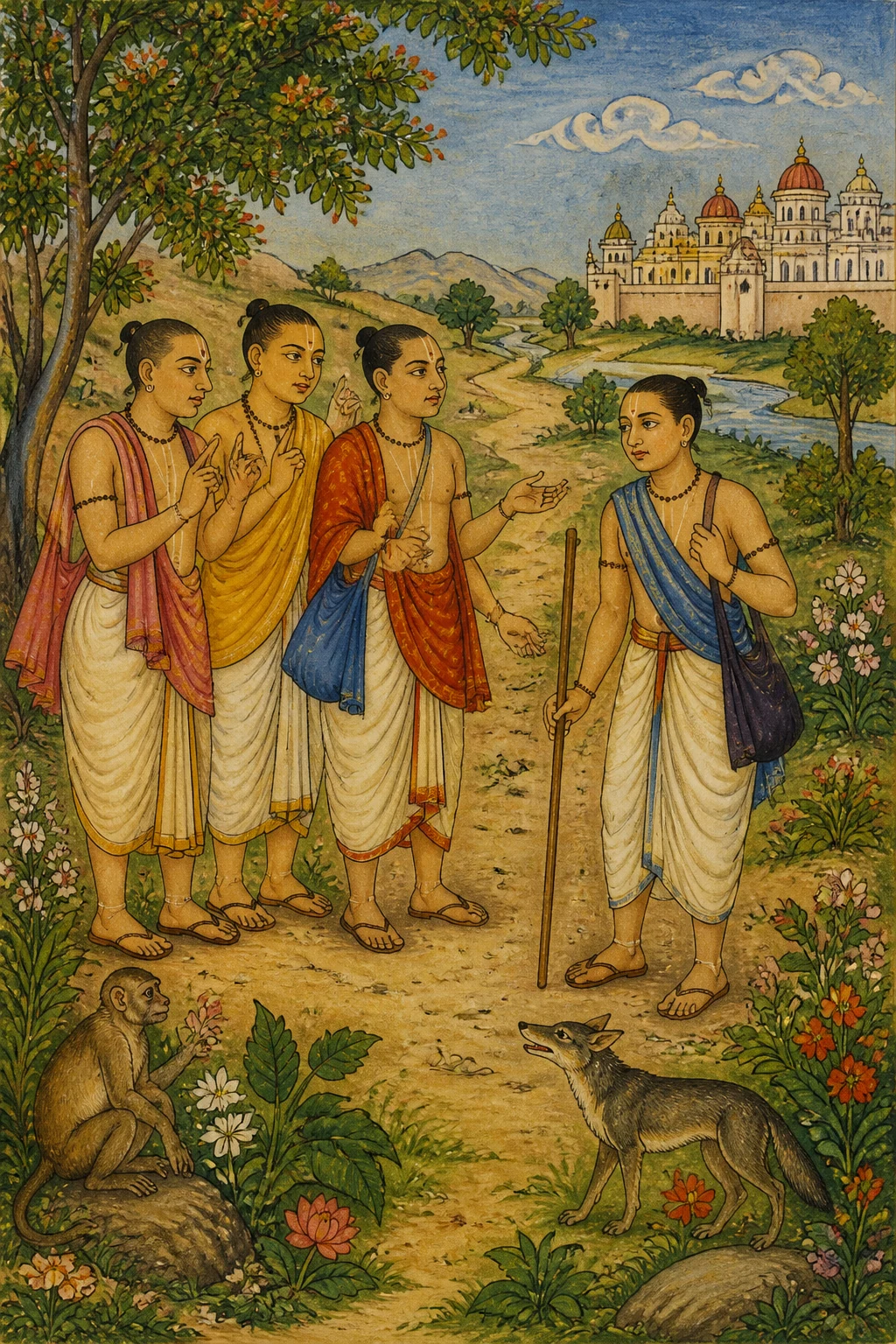
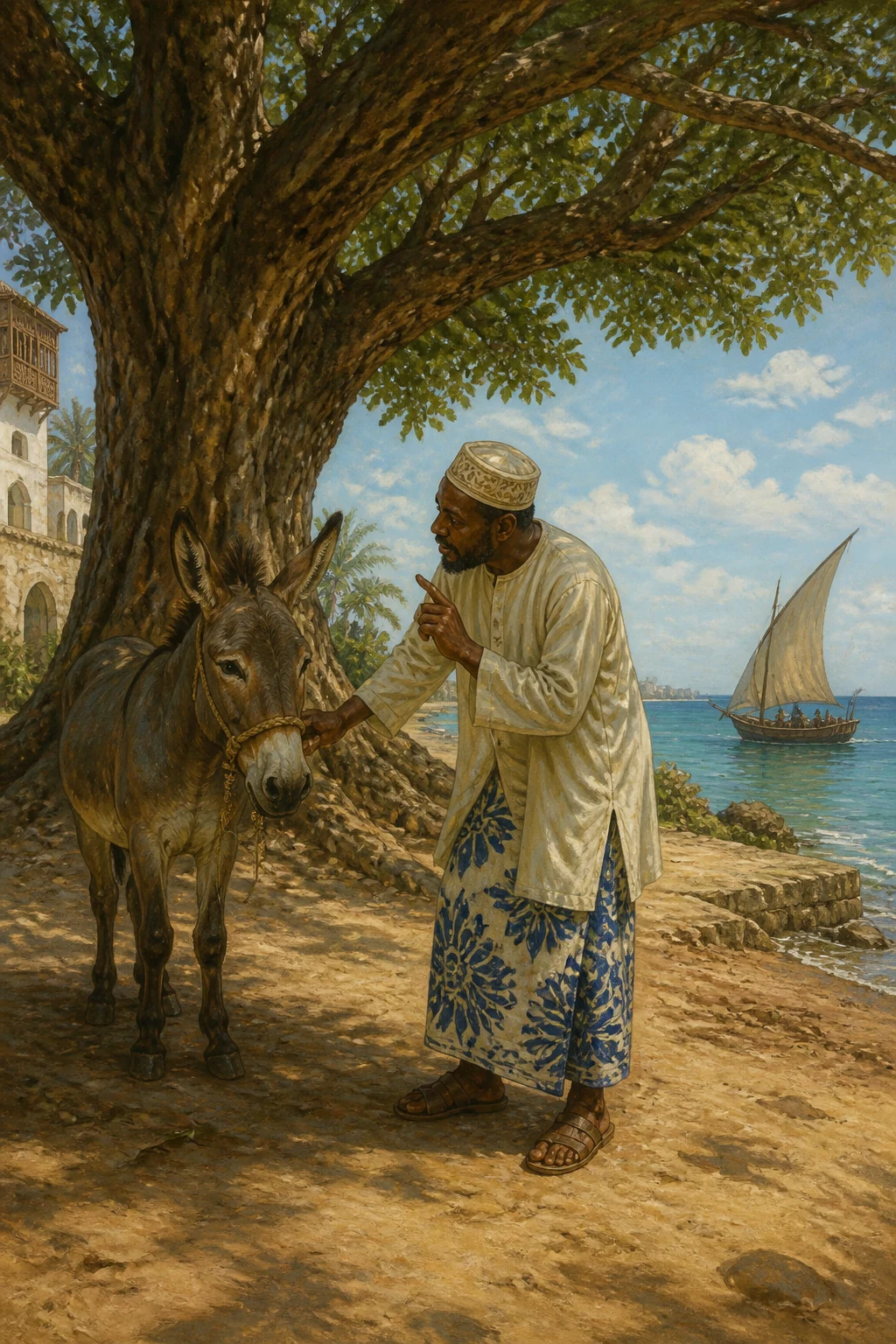
The monkey said, “There was a washerman who had a donkey of which he was very fond. The donkey ran away into the forest and stayed there so long that her owner, the washerman, forgot all about her. Out in the forest she grew very fat.
“One day a hare passed by and saw the donkey. His mouth watered, and he said, ‘What fat meat this is!’ He went and told the lion. Now the lion was recovering from an illness and had grown very thin. The hare said to him, ‘Tomorrow I shall bring you some meat, and we shall feast.’ ‘Very good,’ said the lion.
“The hare went off into the forest and found the donkey, who was a female. ‘I have been sent to ask for your hand in marriage,’ he told her. ‘By whom?’ she asked. ‘By the lion,’ he replied. The donkey agreed and was delighted. ‘Then let us go,’ said the hare.
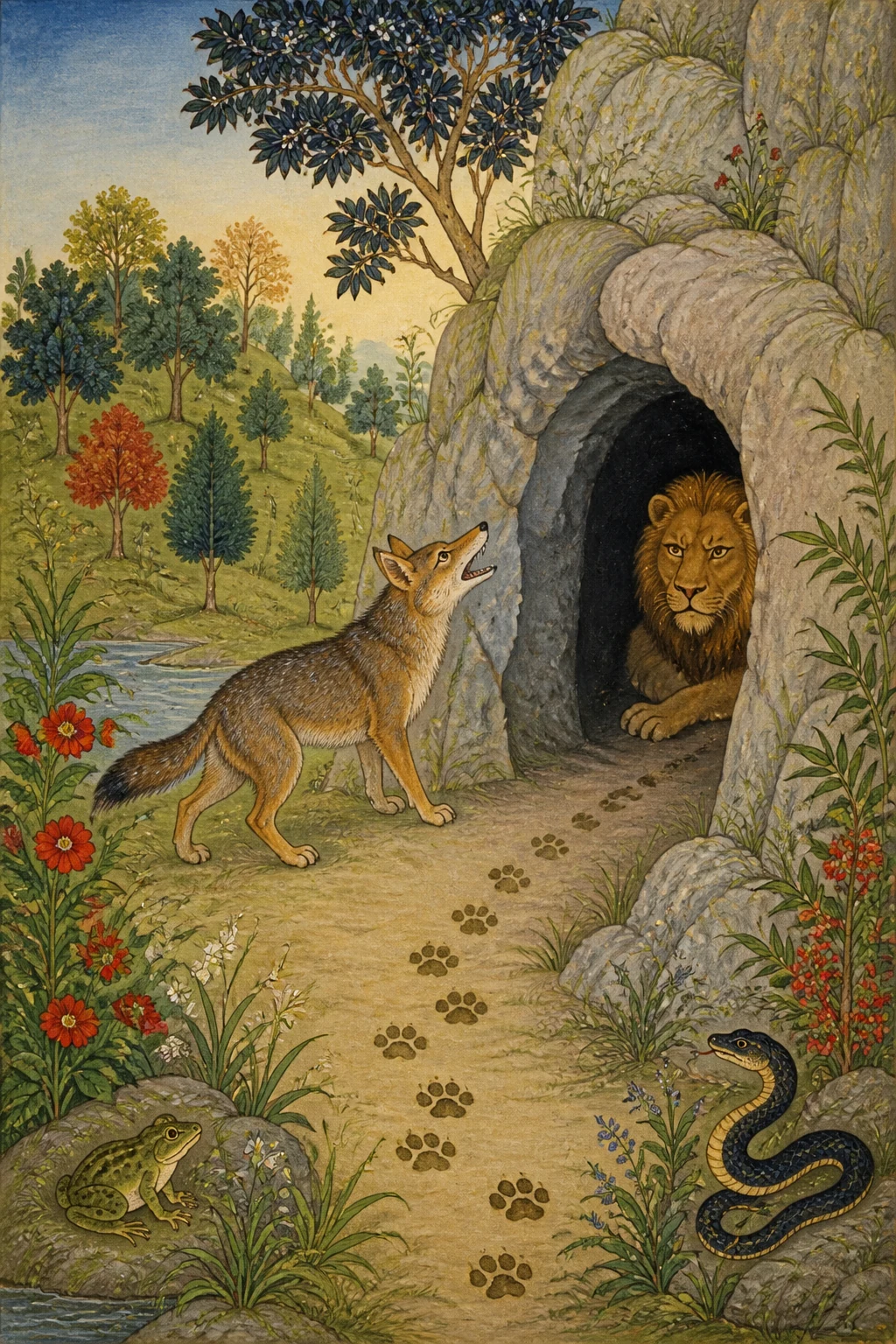
“They set off and came to the lion’s home. The lion welcomed them, and they sat down. The hare winked at the lion and said, ‘Your meat has arrived, and now I am leaving.’ Then he told the donkey, ‘I am going to relieve myself. Stay here and talk with your husband.’
“The lion sprang at her, and they fought. The donkey gave him a terrible kicking, while he raked her with his claws. She knocked the lion down and fled back into the forest. When the hare returned, he asked, ‘Well, Lion, did you catch her?’ ‘No,’ he replied. ‘She kicked me and escaped. I gave her plenty of wounds, but I had no strength.’ The hare said to the lion, ‘Just be patient.’
“Many days passed. The donkey’s wounds healed, and the lion grew strong again. The hare went to the lion and asked, ‘How do you feel now? Shall I bring you your meat?’ ‘Go and bring it,’ said the lion. ‘I shall tear it in two.’
“The hare went into the forest. The donkey welcomed him and asked for news. ‘Your bridegroom is calling for you,’ he said. The donkey answered, ‘That day you took me to him, he clawed me terribly. Now I am afraid.’
“‘There is nothing to fear,’ said the hare. ‘That is simply the way lions court.’ ‘Then let us go,’ she said. They went off, and when they arrived, the lion caught sight of her, sprang upon her, and tore her in two.
“When the hare came up, the lion said, ‘Take that meat and roast it. I want nothing but the donkey’s heart and ears.’ ‘Certainly,’ said the hare. He went some distance away to roast the meat, where the lion could not see him. He took the heart and ears and ate them himself, until he was satisfied. The rest of the meat he set aside.
“The lion came and said, ‘Bring me the heart and ears.’ ‘Where are they?’ asked the hare. ‘What do you mean?’ asked the lion. ‘This is the washerman’s donkey—do you not know?’ ‘How could she have had no heart or ears?’ asked the lion. The hare replied, ‘Lion, a grown fellow like you, and you cannot understand? If this donkey had possessed a heart and ears, would she ever have come back here? The first time she came, she saw that she was going to be killed and ran away. Yet she came a second time. If she had had a heart, would she have come?’ ‘What you say is true,’ said the lion.”
Then the monkey said to the shark, “And you want to make a washerman’s donkey of me! Be off and go home. You will never catch me again, and our friendship is over. Farewell.”
Izvirnik
001 Kisa cha Punda wa Dobi
Naslednje strani prikazujejo izvirno besedilo za primerjavo.
Aliondokea kima akafanya ui-afiki na papa. Pana mti mkubwa, jina lake mkuyu, umeota katika kilindi, matawi yake nussu yako mjini, na nussu yako bakarini. Yule kima kulla siku kwenda akila kuyu, na yule rafiki yake papa huwapo cliini ya mti. Humwambia, utupie nami rafiki yangu vyakula; bumtupia siku nyingi na miezi mingi.
Hatta siku biyo papa akamwambia kima, f;ithili zako uyingi, nataka twende kwetu nikakulipe fathili. Kima akamjibu, ntakwendaje, nasi batuingii majini, nyama wa barra, Akamwambia, ntakuchukua, tone la maji lisikupate. Akamwambia, twende.
Wakaenda zao hatta nussu ya njia. Papa akamwambia, rafiki yangu weye, ntakwambia kweli. Akamwambia, niambie. Akamwambia, buko kwetu tunakokwenda, Sultani wetu hawezi sana, na dawa tumeambiwa ni moyo wa kima. Kima akamjibu, bukufanya vema usiniambie kulekule. Papa akamwuliza, ginsi gani ?
Akafikiri kima akaoua, nimekwisha kufa ; sasa utaueua uwougo, labuda utauifaa.
Papa akamwuliza, umenyamaza buncui ? Akamwambia, sina la kuucua, kwani usiniambie kulekule, nikapata ku-
cliukua moyo wangu. Papa akamwuliza, liapa, kunao moyo wako ?
Huna kliabari yetu? Sisi tukitembea niioyo yctu huaclia mitini tukatembea viwiliwili tu, wallakiui Imtaiiisadiki, utaniambia nimeogopa, sasa twende zetu liatta huko kwenu, ukanichinje kama utauona moyo wangu.
Papa akasadiki, akamwambia kima, turudi sasa, ukatwae moyo wako. Kima akamwambia, sikubali, ela twende Icwenu. Akamwambia, turudi kwauza ukatwae moyo wako, tupate kuenenda.
Kima akawaza — ni liori kumfuata batta mtini, akili nnayo mwenyewe nikiisha fika. Wakaenda wakarudi hatta mtini, akapanda juu yule kima akamwambia, ningoje hapa, i^apa, naenda twaa moyo wangu, tujsate kwenda zetu.
Akapanda mtini akakaa kitako kimya. Papa akamwita. Akanyamaza. Akamwita tcua. Akamwambia, twende zetu. Kima akamjibu, twende wapi ? Akamwambia, twende kwetu. Akamwambia, una wazimo? Papa akamwuliza, ginsi gani ? Kima akamwambia, unionifanya pimda wa dobi ? Papa akamwuliza kima, ginsi gani punda wa dobi V Akamwambia, Ndiye hana moyo, wala liana masliikio. Papa akamwuliza, ginsi gana Icisa clia punda wa dobi ? Nambie, rafiki yangu, nipate kujua maana.
Akamwambia, Dobi alikuwa na punda wake, akirapenda sana mwenyewe, Akakimbia punda akaingia mwituni siku nyingi, batta akamsabao mwenyewe dobi. Akanenepa sana kule mwituni.
Akapita sungura, akamwona yule punda, mate yaka-
mtoka, akanena, nyama imenona liii. Akaenda akamwambia simba. Na simba atoka ugonjwani, amekoncla sana. Sungura akamwambia, ntakuleta nyama kesho, tuje tule. Akamwambia, vema.
Sungura akaondoka, akaenda mwituni, akamwona punda, na yule piinda mke. Akamwambia, nimetumwa kuja kukuposa. Na nani? akamwuliza. Akamwambia, na simba. Akakubali, akafurahi sana punda. Akamwambia, Twende zetu, bass.
Wakaenda zao, hatta wakafika kwa simba. Akawakaribisba simba. Wakakaa kitako. Sungura akamkonyeza simba, akamwambia, nyama yako biyo imekwislia kuja, nami naondoka. Akamwambia punda, nnakwenda cbooni mimi, zumgumzeni hapo na mnmeo.
Simba akamrukia, wakapigana, akapigwa sana simba kwa mateke, naye akampiga makucba mengi. Akaangusba simba akakimbia punda, akaenda zake mwituni. Akaja sungura, akamwambia, Je ! simba, umempata ? Akamwambia, sikumpata, amenipiga kwa mateke amekwenda zake, na mimi nimemtia madonda mengi, sababu sina nguvu. Sungura akamwambia simba, tulia we.
Wakakaa siku nyingi, hatta punda akapona madonda yale, na simba akapata nguvu sana. Akaenda sungura kwa simba, akamwambia, waonajc sasa, nikuletce nyama yako ? Akamwambia, kanilctca ntaikata vijiandc viwili.
Akaenda sungura mwituni. Punda akamkaribisha sungura, akamwuliza kbabari. Akamwambia, na mcbumba wako anakwita. Punda akamwambia, siku ile umenipeleka, amenipiga sana kwa makucba, naogopa sasa.
Akamwambia, liajxana ueuo yalio ndio nuizumgiimzo ya simba. Akamwambia, twende zetu, bass.
Wakaeuda liatta wakafika. Simba alip()m\yfma tn, akamriikia akamkata vipande viwili.
Hatta sungura alipoknja, akamwambia, chukiia nyama hiyo iikaokc, wallakini sitaki kitu mimi, ela moyo na mashikio ya pimda. Sungiira akamwambia, marababa. Akaenda akaoka nyama mabala mbali, simba hamwoni. Akatwaa moyo i;le na masliikio akala yeye sungura, hatta akashiba. Na nyama ngine akaziweka.
Akaja simba, 'akamwambia, niletee moyo na masliikio. Akamwambia, yako wapi ? Simba akamwuliza, kwa niui ? Akamwambia, huyu punda wa dol)i, buna kbabari ? Akamwambia, ginsi gani kutoa kuwa na moyo na masliikio? Akamwambia, wewe simba mtu mzima bayakuelei ? Kama ana moyo huyu na mashikio, angalikuja tena hapa ? Kwani marra ya kwanza amekuja akaona atakuuawa, akakimbia, marra ya pili amekuja tena, bassi kama ana moyo angalikuja ? Simba akamwambia, kweli
maneuo yako.
Bassi kima akamwambia papa, nawe wataka unifanye
mimi punda wa dobi, sliika njia wende zako kwenu,
niimi bunipati tena, na urafiki wetu umekwisha. Kua
heri.
Nadaljuj z branjem