Waltey
Zgodba o Dubilu al Huzaju, sužnji in Ibn al Validu
Tisoč in ena noč · arabska pripovedna tradicijaO besedilu
Zgodba o Dubilu al Huzaju, sužnji in Ibn al Validu
- Vir
- Tisoč in ena noč
- Avtor
- arabska pripovedna tradicija
- Jezik branja
- English
- Jezik izvirnika
- Arabic
- Čas branja
- 4 min branja
- Obseg
- 3 strani
- Naslov izvirnika
- حكاية دعبل الخزاعي والجارية وابن الوليد - الليلة ٤٠٧
O izvirniku
Tisoč in ena noč
Zgodbe v zgodbah, polne trgovcev, dvorov, preoblek in nočnih zapletov. Bralni jezik je English, izvirnik pa prihaja iz vira Tisoč in ena noč v jeziku Arabic.
Besedilo
Zgodba o Dubilu al Huzaju, sužnji in Ibn al Validu
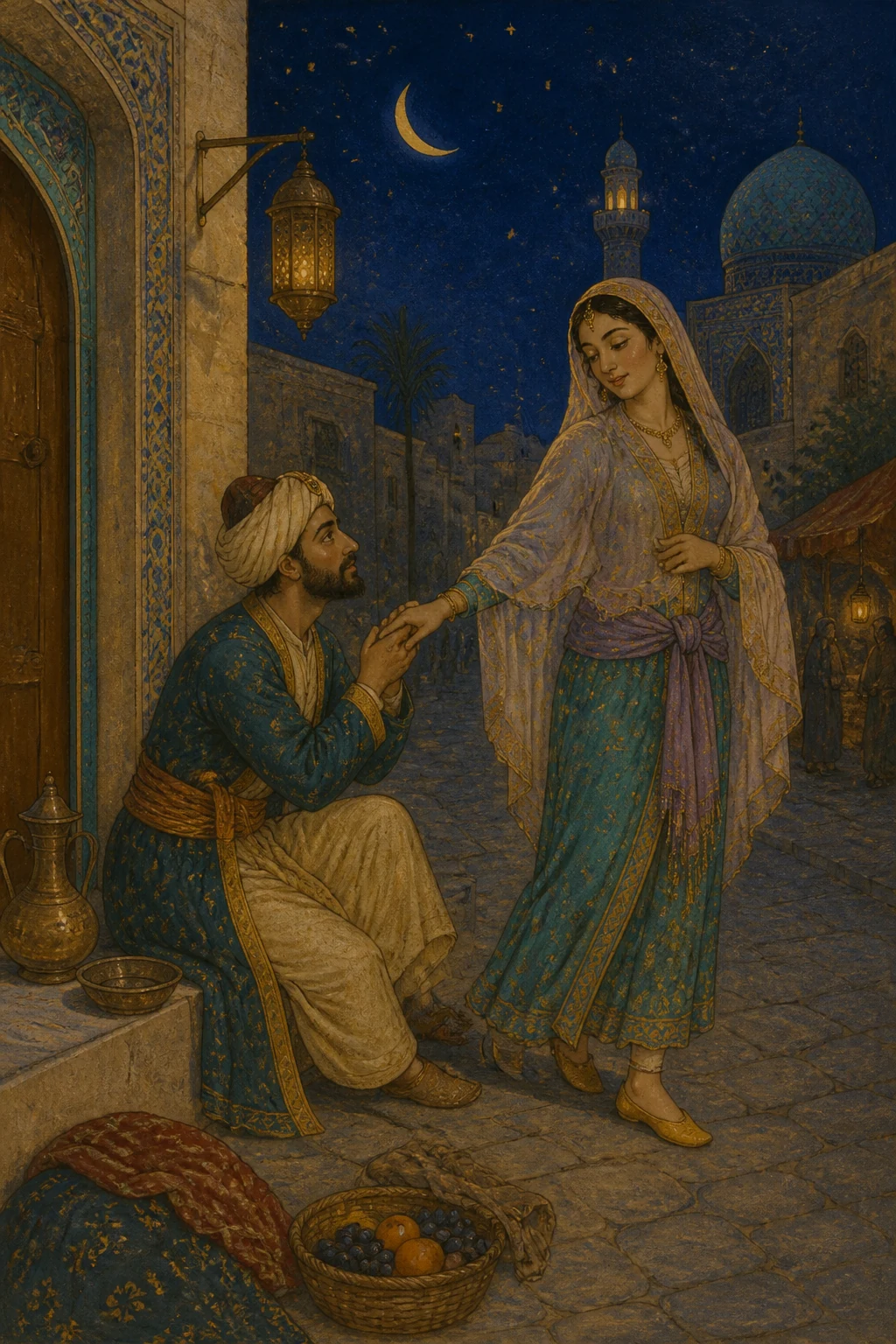
It is told that Di‘bil al-Khuza‘i said: I was sitting at the gate of al-Karkh when a young woman passed me, more beautiful and finely proportioned than any I had ever seen. She swayed as she walked, captivating all who watched her. The moment my eyes fell upon her, I was enchanted; my heart trembled, and I felt it fly from my breast. I recited this verse, intending it for her:
“My eyes let loose their streaming tears; my eyelids draw away from sleep.” She turned her face toward me and promptly answered with this verse: “And that is little enough for one whom languid eyes have summoned with a glance.” Astonished by her ready answer and graceful speech, I recited another verse to her:
“Has my sovereign no tenderness of heart for one whose tears flow freely?” Without a moment’s hesitation she answered: “If you desire affection from us, love between us is a venture shared.” Never had anything sweeter than her words entered my ears, nor had I seen a face more radiant. Marveling at her speech, I changed the rhyme to put her to the test, and recited:
“Will Time, I wonder, gladden us with a meeting, and bring one yearning lover to another?” She smiled, and never had I seen a lovelier mouth or sweeter lips. Without a moment’s hesitation she answered:
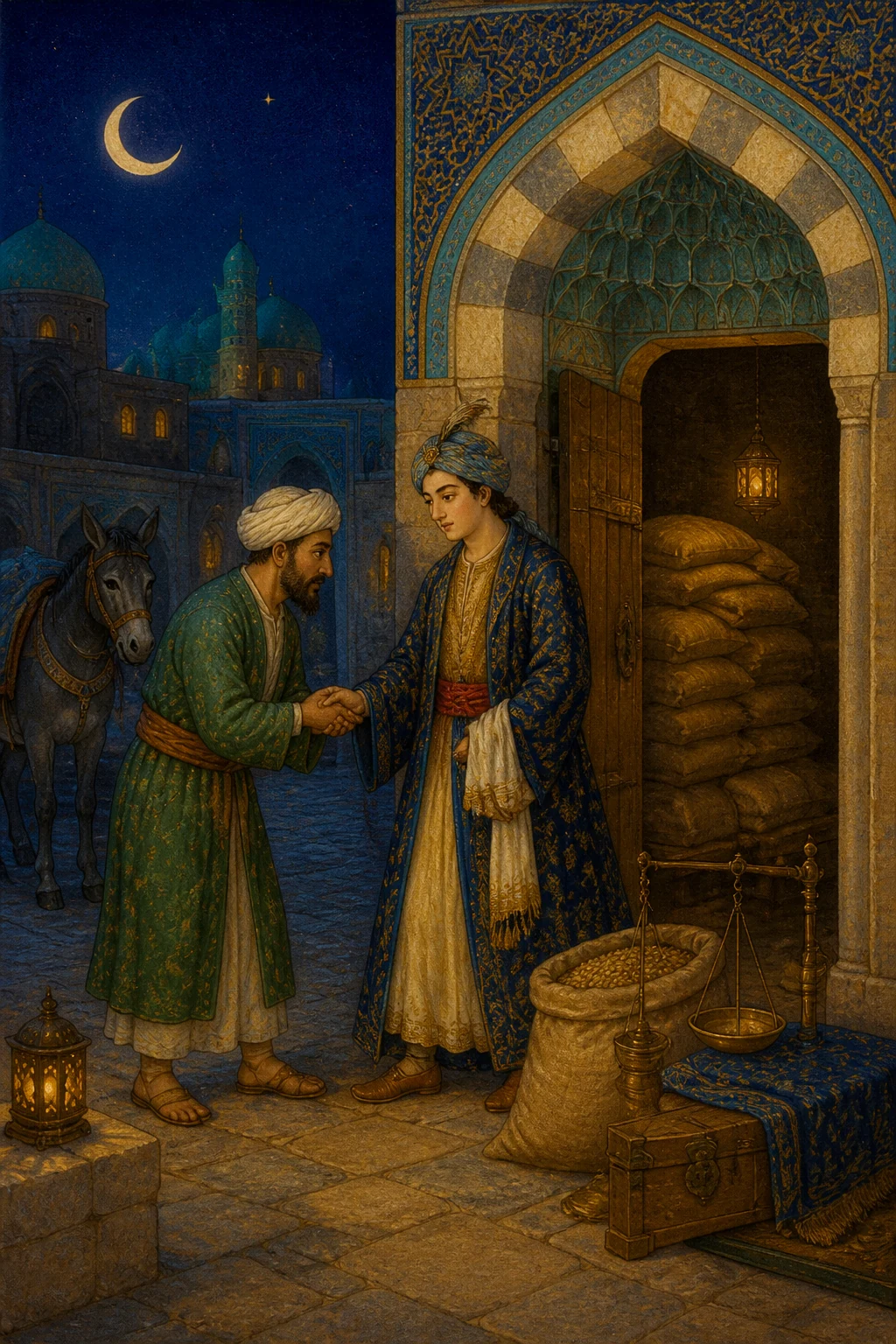
“What business has Time deciding between us? You are Time: gladden us with a meeting.” I sprang up and began kissing her hands. “I never thought,” I told her, “that Time would grant me such an opportunity. Follow me—not at my command, nor under any constraint, but out of your own kindness and compassion for me.” Then I set off, with her following behind. At that time I had no lodging that I thought fit to receive her in. But Muslim ibn al-Walid was a friend of mine and had a fine house, so I made for it. When I knocked, he came out, and I greeted him, saying, “It is for moments like these that a man keeps friends.” “With love and honor,” he replied. “Come in.” We entered, but found him short of money. He handed me a kerchief and said, “Take this to the market, sell it, and buy whatever food and other things you need.” I hurried to the market, sold it, and bought the food and other things we needed. When I returned, I found that Muslim had secluded himself with her in a cellar. Hearing me, he sprang up and came to meet me. “May God reward you, Abu ‘Ali,” he said, “for the kindness you have done me. May He grant you its recompense and count it among your good deeds on the Day of Resurrection.” Then he took the food and drink from me and shut the door in my face. His words enraged me, and I did not know what to do, while he stood behind the door, quivering with delight. Seeing the state I was in, he said, “By my life, Abu ‘Ali, who composed this verse:
“‘I spent the night within her shift, while my companion lay with a heart defiled and limbs untouched’?” My anger flared still hotter, and I answered, “The same man who composed this verse: ‘He bears a thousand horns within his belt, towering above the lofty heights of Manaf.’” Then I began cursing and abusing him for his vile conduct and utter lack of honor, while he remained silent and said nothing. When I had exhausted my abuse, he smiled and said, “Damn you, you fool! I have merely entered my own house, sold my own kerchief, and spent my own money. Who are you angry with, you pimp?” Then he left me and went back to her. “By God,” I called after him, “you were right to call me both a fool and a pimp.” I left his door in such misery that I feel its mark upon my heart to this day. I never won her, nor did I ever hear any news of her.
Izvirnik
حكاية دعبل الخزاعي والجارية وابن الوليد - الليلة ٤٠٧
Naslednje strani prikazujejo izvirno besedilo za primerjavo.
فلما كانت الليلة ٤٠٧
ومما يُحكَى أن دعبل الخزاعي قال: كنتُ جالسًا بباب الكرخ إذ مرَّتْ بي جارية لم أَرَ أحسن منها ولا أعدل قَدًّا، وهي تنثني في مشيتها وتسبي الناظرين بتثنيها، فلما وقع بصري عليها افتتنتُ بها وارتجف فؤادي، وآنست أنه قد طار قلبي من صدري، فأنشدتُ معرضًا لها هذا البيت:
دُمُوعُ عَيْنِي بِهَا انْفِضَاضُ وَنَوْمُ جَفْنِي بِهِ انْقِبَاضُ
فنظرَتْ إليَّ واستدارَتْ بوجهها، وأجابتني بسرعة بهذا البيت:
وَذَا قَلِيلٌ لِمَنْ دَعَتْهُ بِلَحْظِهَا الْأَعْيُنُ الْمِرَاضُ
فأدهشتني بسرعة جوابها وحُسْن منطقها، فأنشدتُها ثانيًا هذا البيت:
فَهَلْ لِمَوْلَاي عَطْفُ قَلْبٍ عَلَى الَّذِي دَمْعُهُ مُفَاضُ
فأجابتني بسرعة من غير توقُّف بهذا البيت:
إِنْ كُنْتَ تَهْوَى الْوِدَادَ مِنَّا فَالْوُدُّ مَا بَيْنَنَا قِرَاضُ
فما دخل في أذني قطُّ أحلى من كلامها، ولا رأيت أبهج من وجهها، فعدلتُ بالشعر عن القافية امتحانًا لها وعجبًا بكلامها، فقلتُ لها هذا البيت:
أَتَرَى الزَّمَانَ يَسُرُّنَا بِتَلَاقِ وَيَضُمُّ مُشْتَاقًا إِلَى مُشْتَاقِ
فتبسَّمَتْ فما رأيتُ أحسن من فمها، ولا أحلى من ثَغْرها، وأجابتني بسرعة من غير توقُّف بهذا البيت:
مَا لِلزَّمَانِ وَلِلتَّحَكُّمِ بَيْنَنَا أَنْتَ الزَّمَانُ فَسُرُّنَا بِتَلَاقِ
فنهضتُ مسرعًا وصرتُ أقبِّل يديها، وقلت لها: ما كنتُ أظن أن الزمان يسمح لي بمثل هذه الفرصة، فاتَّبعي أثري غير مأمورة ولا مستكرهة، بل بفضلٍ منك تعطُّفًا عليَّ، ثم وليتُ وهي خلفي، ولم يكن إليَّ في ذلك الوقت منزل أرضاه لمثلها، وكان مسلم بن الوليد صديقًا لي وله منزل حسن فقصدته، فلما قرعتُ عليه الباب خرج إليَّ فسلَّمْتُ عليه وقلتُ: لمثل هذا الوقت تُدَّخَر الإخوان. فقال: حبًّا وكرامةً، ادخل. فدخلنا فصادفنا عنده عسرة، فدفع لي منديلًا وقال: اذهب به إلى السوق وبِعْه وخُذْ ما تحتاج إليه من طعام وغيره. فمضيتُ مسرعًا إلى السوق وبِعْتُه وأخذت ما نحتاج إليه من طعام وغيره، ثم رجعت فرأيت مسلمًا قد خلا بها في سرداب، فلما أحَسَّ بي وثب إليَّ وقال لي: كافاكَ الله يا أبا عليٍّ على جميل ما صنعتَ معي، ولقاك ثوابه وجعله حسنةً في حسناتك يومَ القيامة. ثم تناوَلَ مني الطعام والشراب، وأغلَقَ البابَ في وجهي، فغاظني قوله ولم أَدْرِ ما أصنع وهو قائم خلف الباب يهتَزُّ سرورًا، فلما رآني على تلك الحالة قال: بحياتي يا أبا عليٍّ، مَن الذي أنشأ هذا البيت:
بِتُّ فِي دَرْعِهَا وَبَاتَ رَفِيقِي جُنُبَ الْقَلْبِ طَاهِرَ الْأَطْرَافِ
فاشتدَّ غيظي منه وقلتُ: هو منشئ هذا البيت:
مَنْ لَهُ فِي حِزَامِهِ أَلْفُ قَرْنٍ قَدْ أَنَافَتْ عَلَى عُلُوِّ مَنَافِ
ثم جعلت أشتمه وأسبُّه على قبيح فعله وقلة مروءته، وهو ساكت لا يتكلم، فلما فرغت من سبِّي له، تبسَّمَ وقال: ويلك يا أحمق، إنما دخلتُ منزلي وبعتُ منديلي وأنفقتُ دراهمي، فعلى مَن تغضب يا قوَّاد؟ ثم تركني وانصرف إليها، فقلتُ له: أَمَا والله لقد صدقتَ في نسبتي إلى الحماقة والقوادة. وانصرفتُ عن بابه وأنا في همٍّ شديدٍ أجد أثره في قلبي إلى يومي هذا، ولم أظفر بها ولا سمعتُ لها خبرًا.
Nadaljuj z branjem