Waltey
Prebrisani služabnik reši gospodarja
Uji Shūi Monogatari · anonimna srednjeveška zbirkaO besedilu
Prebrisani služabnik reši gospodarja
- Vir
- Uji Shūi Monogatari
- Avtor
- anonimna srednjeveška zbirka
- Jezik branja
- English
- Jezik izvirnika
- 日本語
- Čas branja
- 5 min branja
- Obseg
- 4 strani
- Naslov izvirnika
- 027 季通欲逢事事
O izvirniku
Uji Shūi Monogatari
Srednjeveške japonske pripovedi o menihih, duhovih, čudežih, prevarah in vsakdanjih presenečenjih. Bralni jezik je English, izvirnik pa prihaja iz vira Uji Shūi Monogatari v jeziku 日本語.
Besedilo
Prebrisani služabnik reši gospodarja
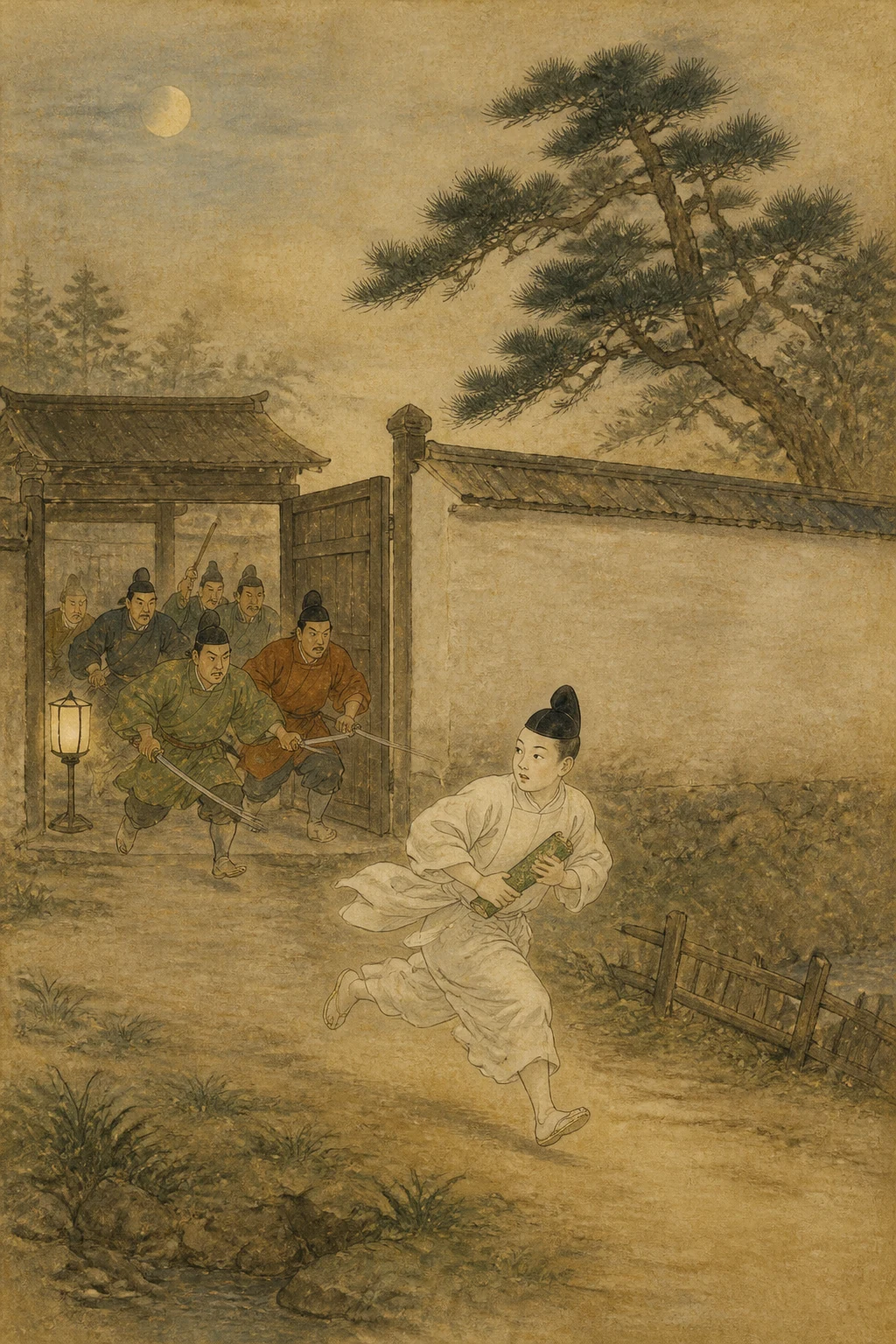
Long ago there lived a man named Tachibana no Suemichi, a former governor of Suruga. When he was young, he used to pay secret visits to a lady in a household of some standing. The samurai there took counsel together. “It’s intolerable that some paltry fellow of the sixth rank, a mere retainer, should come slipping into this mansion at dawn on business that is none of his. Let’s shut him in and give him a beating.” Knowing nothing of this, Suemichi came as usual with a single page and entered the lady’s room. He sent the boy away, telling him to return for him at dawn. The men who meant to beat him were keeping watch, and word soon passed among them: “The fellow has come and gone into her room.” They went about shutting the gates on every side and securing them with bolts. Then, staves in hand, they stationed themselves at the gaps in the earthen wall and guarded them. A little maid in the lady’s service noticed what was happening and told her mistress. “Something strange is going on. Whatever can it mean?” The lady was alarmed. She and Suemichi had been lying together, but now they rose, and he dressed and sat waiting. She went up to the main house to inquire. Though she was told that the samurai had arranged it among themselves, it appeared that the master of the house knew perfectly well and was merely pretending ignorance. There was nothing she could do. She returned to her room and sat weeping. “What a dreadful business,” Suemichi thought. “I’m going to be disgraced.” Yet he could see no way out. He sent the little maid to look for even the narrowest opening through which he might escape, but she came back saying, “Wherever there is a gap, four or five men are standing guard. They have hitched up their clothes and tucked in the skirts, and every one of them has a sword at his waist and a staff under his arm. There is no way to get out.” Now this former governor of Suruga was a man of tremendous strength. “What am I to do?” he thought. “Even when day breaks, I’ll stay shut up in this room. If they come in to drag me out, I’ll grapple with them and die fighting. Still, once it is light and they discover who I am, surely they won’t be able to do as they please. I can send for my attendants and leave with them.” But then he thought of his page. The boy would return at dawn, know nothing of what was happening, and knock at the gate. They might realize he was Suemichi’s servant, seize him, and tie him up. It was this thought that troubled him most. He sent the little maid out to keep watch, hoping she might catch the boy’s voice when he arrived, but the samurai shouted so harshly at her that she came back in tears and sat huddled in a corner. Presently, just when Suemichi thought dawn must be drawing near, he heard someone coming in. Somehow his page had found a way inside. “Who are you, boy?” a samurai demanded suspiciously. Suemichi was afraid the boy would give the wrong answer, but he replied, “I am the attendant of a priest who is here to recite the sutras.” “Then get along with you. Be quick.” “What a clever answer!” Suemichi thought. Then he began to worry again. “He’ll come over here and call out as he usually does, or call the little maid by name.” But the boy did not approach the room. He went straight past. “So he has understood!” Suemichi thought. “A sharp little fellow. If he knows what is happening, surely he will think of some way out.” Knowing the boy’s resourcefulness, he began to feel hopeful. Just then a woman’s voice rang out from the street: “A robber! He’s killing me!” The samurai on guard heard her and cried, “Catch him! This is no petty thief!” They all rushed off. Unable to get the gate open quickly enough, they scrambled out through the broken wall, shouting, “Which way did he go?” “Over here!” “Over there!” Amid the commotion, Suemichi thought, “This must be the boy’s doing,” and ran out of the room. The gates were shut, but with some of the men still lingering by the breach in the wall, talking this way and that, he did not risk going there. Instead he ran to a gate, braced himself, and wrenched out the bolt. The instant it opened, he slipped through and ran along the earthen wall. There the boy came running to meet him. Together they fled for some three hundred yards, then slowed to an easy walk, as though nothing had happened. “What did you do?” Suemichi asked. “The gates were all shut, which was unusual,” the boy replied, “and the samurai were blocking the gaps in the wall and questioning everyone so fiercely that I told them I was the attendant of a priest who had come to recite the sutras. That got me inside. I thought of turning back and trying one thing or another, but it seemed a bad idea to leave without letting you know I had come. So I let you hear my voice, then went out again. There was a woman from next door squatting to relieve herself. I seized her by the head, pushed her over, and stripped off her clothes. She screamed, and the men came rushing out at the sound. I thought that surely you would be able to escape now, so I came this way to meet you.” Young though he was, a clever, resourceful boy could accomplish a thing like this.
Izvirnik
027 季通欲逢事事
Naslednje strani prikazujejo izvirno besedilo za primerjavo.
むかし駿河前司橘季通といふ物ありきそれかわかかりける時さるへき所なりける女房を忍て行かよひける程にそこに有ける侍ともなま六位の家人にてあらぬかよひ暁にこの殿へ出入事わひしこれたてこめてかうせんといふ事をあつまりていひあはせけりかかる事をもしらて例の事なれは小舎人童一人具して局に入ぬ童をは暁迎にこよとて返しやりつ此うたんとするをのこともうかかひまもりけれは例のぬしきて局に入ぬるはと告けまはしてかなたこなたの門ともをさしまはしてかきとりをきて侍ともひき杖して築地のくつれなとのある所に立ふたかりてまもりけるをその局のめの童けしきとりて主の女房にかかる
事のさふらふはいかなる事にか候らんと告けけれは主の女房もきき驚ふたりふしたりけるかおきて季通も装束してゐたり女房うへにのほりて尋ぬれは侍ともの心合せてするとはいひなから主の男も空しらすしておはする事と聞えてすへきやうなくて局に帰りてなきゐたり季通いみしきわさかな恥をみてんすと思へともすへきやうなしめの童を出して出ていぬへきすこしのひまやあるとみせけれともさやうのひまある所には四五人つつくくりをあけそはをはさみて太刀をはき杖をわきはさみつつみなたてりけれは出へきやうもなしといひけりこの駿河前司はいみしう力そつよかりけるいかかせん明ぬともこの局にこもりゐてこそはひきいてに入こんものと取あひてしなめさりとも夜明て後我そ人そとしりなん後にはともかくもえせしすんさともよひにやりてこそ出てもゆかめと思ゐたりけり暁にこの童のきて心もえす門たたきなとしてわか小舎人童と心えられてとらへしはられや
せんすらんとそれそ不便に覚けれはめの童を出してもしや聞つくるとうかかひけるをも侍ともはしたなくいひけれはなきつつ帰てかかまりゐたりかかる程に暁方になりぬらんとおもふほとに此童いかにしてか入けん入くるをとするを侍たそその童はとけしきとりてとへはあしくいらへなんすと思ゐたるほとに御と経の僧の童子に侍となのるさなのられてとく過よといふかしこくいらへつる物かなよりきてれいよふめの童の名やよはんすらんと又それを思ゐたる程によりもこて過ていぬ此童も心えてけりうるせきやつそかしさ心えてはさりともたはかる事あらんすらんと童の心をしりたれはたのもしく思たる程に大路に女こゑしてひはきありて人ころすやとをめくそれをききてこのたてる侍ともあれからめよやけしうはあらしといひてみなはしりかかりて門をもえあけあへすくつれよりはしりいてつついつかたへいぬるそこなたかなたと尋さはく程に此童のはかる事よと思けれは走出て
見るに門をさしたれは門をはうたかはすくつれのもとにかたへはとまりてとかくいふ程に門のもとに走よりてしやうをねして引ぬきてあくるままに走のきて築地はしりすくる程にそ此童ははしりあひたるくして三町斗走のひてれいのやうにのとかにあゆみていかにしたりつる事そといひけれは門ともの例ならすさされたるにあはせてくつれに侍共の立ふたかりてきひしけに尋とひさふらひつれはそこにては御読経の僧の童子と名のり侍りつれはいて侍つるをそれよりまかり帰てとかくやせましと思給つれともまいりたりとしられたてまつらてはあしかりぬへくおほえ侍りつれは声をきかれたてまつりてて帰出て此隣なるめらはのくそまりゐて侍をしゃ頭をとりてうちふせてきぬをはき侍りつれはおめき候つるこゑにつきて人々いてまうてきつれは今はさりとも出させ給ぬらんと思てこなたさまにまいりあひつるなりとそいひける童なれともかしこくうるせきものはかかる事をそしける
Nadaljuj z branjem